How To: Bluebird Photography

IMG_3828a

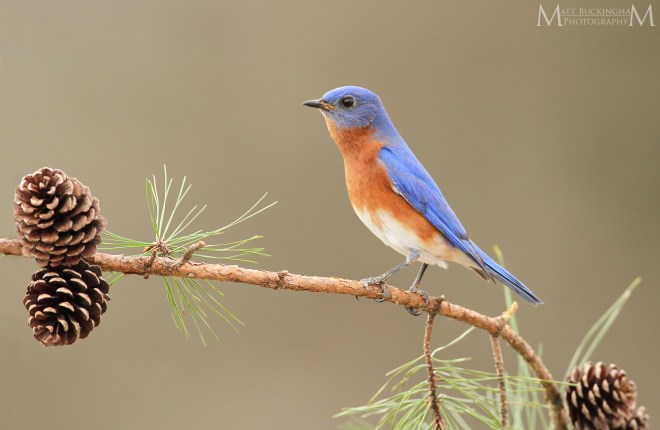
Eastern Bluebird Male

For the past several years I’ve been collecting images for a book I hope to publish on the natural history of the Pineywoods.  I have set out to capture images of species both common and rare, and those unknown and iconic.  Some of our more iconic birds, however, can be difficult to capture in a natural setting.

Take one of our most iconic American birds, the Eastern Bluebird (Sialia sialis), for example.  This member of the thrush family can be found open areas, such as pastures, fallow fields, rural residences, golf courses, etc. provided that there are at least some trees in the vicinity.  They are most often seen perched on fence posts, telephone wires, or similar human constructs.  For my book, however, I wanted to capture them in a setting that would mimic their habitat prior to human settlement.

Before I get into how we went about creating the images, I would like to share a little information on my subject.  The story of the Eastern Bluebird is a long an interesting one, filled with ups and downs. Historic accounts indicate that as the first settlers pushed into the bluebird’s habitat they were restricted to open pine savannahs, mature woodlands with open understories, prairie inclusions within broader expanses of forests, and similar habitats. The bluebird likely benefited from the these early settlers, as they cleared small patches of forests, resulting in an increase of the open habitat preferred by the birds.

Bluebirds are secondary cavity nesters, meaning that they nest in cavities that have already been excavated by primary cavity nesters like woodpeckers. Historically they would have selected abandoned tree cavities. Unfortunately for the bluebird, in the late 19th century two invasive cavity nesters, the European Starling and the House Sparrow, were introduced from the Old World. They quickly proliferated and outcompeted native Bluebirds for cavity sites.

As the 20th century wore on land conversion continued, and in increased urbanization eliminated the habitats that the bluebird, and so many other species depend on. The one-two punch of habitat loss and competition from the invading cavity nesters caused a sharp decline in bluebird populations, until by the 1970s naturalists noted that they had become exceedingly scarce.

Around this time bluebird boxes began to gain in popularity, and landowners who were enthralled by the striking beauty of the little thrushes established “bluebird trails” on their property. Bluebird boxes are crafted in a way that they are unsuitable for use by European Starlings. This, coupled with increased environmental awareness and regulations enacted to protect native wildlife, has resulted in a steady increase in bluebird populations. Today this iconic species is once again a common sight throughout much of the American countryside.

Armed with the knowledge of their historic habitat, James and I set out to capture them in a naturalistic setting.  James has a large group of bluebirds that utilize the bluebird trail around the cabin on his ranch.  We looked around the area for ideas to create suitable natural perches, and came across a Shortleaf Pine (Pinus echinata), its branches laden with pine cones.  Similar to its cousin the Longleaf Pine, shortleaf often occurred in open, occassionally savannah-like uplands alongside scattered oaks and hickories.  I speculate that in their old growth condition, these forests would have been ideal Eastern Bluebird habitat.

So we selected some prime looking shortleaf boughs and fastened them to the back of the bluebird boxes and adjacent fence posts.  We then set up a portable blind and waited.  Once again James lent me his Canon 600mm lens.  A note on the photo below, following our photo session I forgot to take an image of the setup, so I asked James to grab one for me the next time he was at his property.  When he set out to do so he realized that his cows had pulled down all of our perches.  He set them back up the best he could, and the setup in the image is essentially the same as the one we used to capture the image.

Bluebird Setup

Bluebird Photography Setup

We waited for some time before the male bluebird came in to check on his box.  Almost immediately he landed on one of the perches.  Excitedly I rattled off a series of shots and as soon as he had arrived, he hopped down to the fence.

IMG_3745

Eastern Bluebird Male

Ecstatic that our idea had worked so effectively, we anticipated that any moment he would hop back up onto one of the perches for more opportunities, but instead he just sat on the fence.  Occasionally he went to examine his nest box, but soon returned to the fence or to forage on the ground nearby.  After a while a female and a few of last year’s offspring showed up.  They were much more willing to land on the perches than the showier mature male.

IMG_3784

Eastern Bluebird Female

Eventually he did return to some of the perches, each time providing us a few seconds to try and craft an image.  Though a setup like this requires a lot patience and downtime in the blind, ultimately it paid off with the type of images I was seeking.  If we can find a way to keep the cows from pulling down the perches, I think these limbs can also provide some benefit to the bluebirds.  Perhaps they will provide a better means to survey their territory, and attract invertebrates to provide an easy meal to their future offspring.  Either way, I’m happy for the opportunity to provide a glimpse into what the life of the Eastern Bluebird may have been like before the hand of man changed the landscape forever.

IMG_3909a

Eastern Bluebird Male

Witches in Winter

IMG_1663

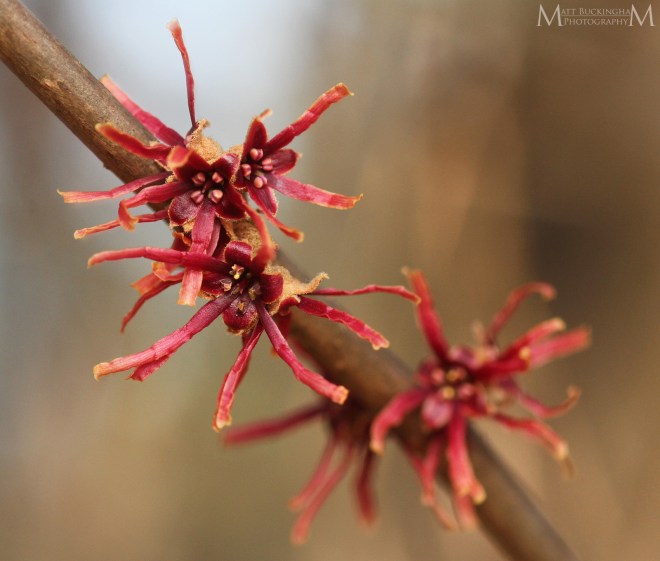
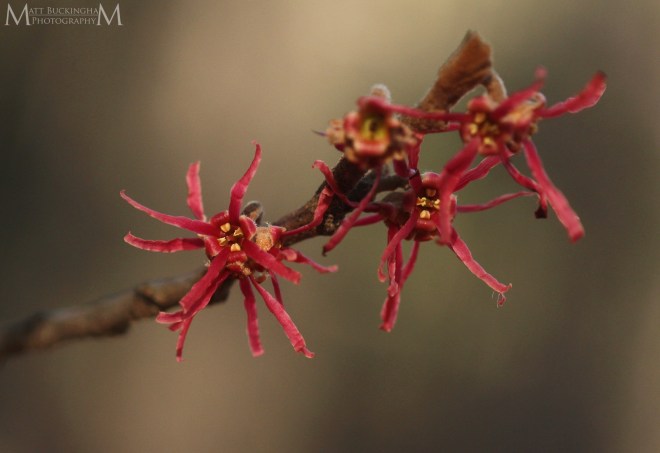
Big-leaf Witch-hazel

There are three species of Hamamelis a.k.a. Witch-hazel in the United States.  All three species occur in East Texas, and today I present two of them.  Witch-hazel was an important plant for native cultures and settlers, both for its wide range of uses and associated folklore.

Witch-hazels contain a variety of medicinal compounds.  Native Americans used witch-hazel extract to treat skin conditions, swelling, inflammation, burns, insect bites, poison ivy, stomach issues, colds, and more.  Early settlers adopted these uses, and with-hazel extract is still used today for a multitude of skin products including aftershave.

Witch-hazel twigs were also frequently used for “witching for water”.  Also known as “divining”, witching involves walking while lightly holding a forked twig at the points of each side of the split.  Legend has it when the twig passes over water, the opposite end will point toward the ground.

Once while visiting an East Texas old graveyard with long-time resident and expert on everything East Texas, Keith Stephens, he told me and the group we were with a legend I hadn’t heard.  This legend states that if one carries a small witch-hazel twig in each hand pointing straight in front of them, the twigs will turn to the right or left when passing over the grave of a woman.  Every member of the group proceeded to try, and it proved true for each of us.  Perhaps there is a little magic in this interesting genus.

Their blooms certainly seem to be magical, blooming at the height of winter when no other plant dares to.  I’ve seen them bloom from mid December to mid January.  It seems foolhardy for a plant to bloom at this time, but by doing so they receive little to no competition from other species for hungry pollinators.  Though few insects are active this time of year I have observed several hover flies visiting the same witch-hazel shrub on a cool January day.

The most common and wide-spread species of witch-hazel in the U.S. is the American Witch-hazel (Hamamelis virginiana).  In Texas it ranges over much of the southern Pineywoods with a disjunct population in the Edward’s Plateau.  It can be identified by its pure yellow flowers.

IMG_1696

American Witch-hazel

The Big-leaf Witch-hazel (Hamamelis ovalis) was only recently discovered in Texas.  This species was first described in 2006.  At the time it was thought to be restricted to just a single site in Mississippi. Shortly after it was discovered at a handful of other sites in Mississippi and Alabama.  A couple of years ago it was found in the rich forested slopes of extreme eastern Texas. Though it may yet be discovered in parts of Louisiana, it appears to exhibit an interesting disjunction noted in a number of other species in the coastal plain.

IMG_1737

Big-leaf Witch-hazel

The flowers of Hamamelis ovalis are generally maroon or wine-colored, however they can occasionally be orange or bi-colored, with orange centers and yellow petal-tips.

IMG_1534

Big-leaf Witch-hazel

Observing the witch-hazel in winter helps to satisfy the wildflower withdrawal that tends to come with winter.  Fortunately here in East Texas our winters are fairly short, and in just a few short weeks we should begin to see the blooms of our brilliant spring ephemerals!

Back to my Roots: Fun with Bird Photography

IMG_9871

Blue-winged Teal

It was birds that first sparked my obsession with photography some 15 or so years ago.  I remember my excitement when I finally got a 3.2 megapixel camera with a 10x optical zoom, when digital cameras were still in their infancy.  Over the next few years I would receive my first digital SLR from my parents, which opened up a whole new world of photographic opportunities, followed shortly by a canon 100-400mm zoom lens.  I spent a lot of time photographing with that lens, and made some images that still rank among my favorites.  But over the years I began to branch out, and learned that photographing less erratic subjects, like reptiles and amphibians, wildflowers, and landscapes, while challenging in its own right, was much less frustrating than bird photography.  It was easier to get “the shot”, as I could control most aspects of the subject, and executing the shot fell largely on my skills as a photographer.  With birds, while one still must rely heavily on skill, we are at the mercy of our flighty subjects.

So bird photography took a back burner.  While I enjoyed the 100-400mm lens, it just didn’t produce the high quality images that I wanted on a regular basis.  Conditions had to be just perfect, and the subject extremely cooperative to get the type of shot I was after.  I honed my macro and landscape skills, and only occasionally returned to my feathered friends.

While I couldn’t say that I like birds more than flora or herps, it is true that in my professional career I have more experience with the Class Aves than any other group.  For my Master’s I studied the avian communities of Iguazú National Park in northeastern Argentina, where I would meet my future wife, Carolina.  I have also studied Snowy Plovers in the salt lakes and playas of the Texas Panhandle, and the rare and declining avifauna of the saltmarshes of the Delmarva Peninsula.  So as bird photography, and coincidentally birdwatching began to vanish from my life, it felt like I was left with some void.

As luck would have it, right around Christmas my good friend James Childress lucked into a fantastic deal on a very lightly used Canon 600mm.  In my book this is THE bird photography lens.  It is the lens that the pros I admired used.  It is the lens I always dreamed about but thought I would never have.  One thing that you need to know about James (and his wife Erin) is that they are extremely generous, and value shared experiences and good times over personal possessions.  Being that James and I spend a great deal of time in the field exploring and photographing together (he often credits (blames?) me for his own obsession for nature photography) , he told me that he would like me to help him test out the lens.  I was, of course, honored and overwhelmed at the thought of this dream come true.

IMG_3015

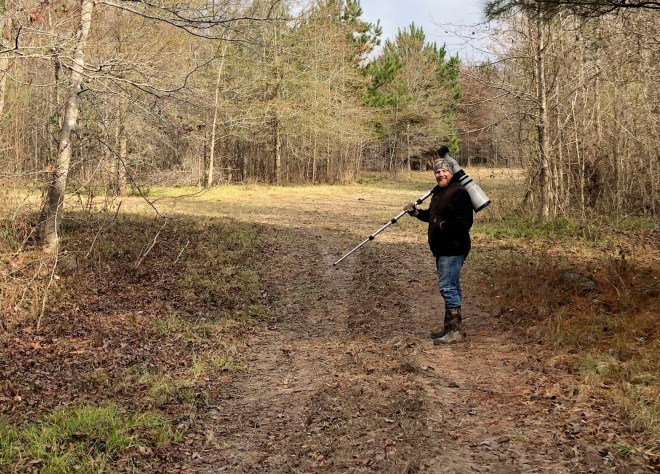
James with his new lens

Wanting to be a good friend, I not-so-reluctantly obliged to James’s generous offer.  So we set out to test the capabilities of the new lens.  While I will only be posting my images in this blog, I HIGHLY recommend that you check out James’s Flickr photostream (click here).

We took a weekend trip to the coast, where we first found several Ring-necked Ducks (Aythya collaris).

IMG_9433

Ring-necked Duck

IMG_9623

Ring-necked Duck

I was supremely impressed with how the lens captured the handsome diving ducks.  But wondered how it would work on smaller, more active birds.  I would soon get my chance.  It’s hard to imagine a bird much smaller or more active than the Ruby-Crowned Kinglet (Regulus calendula), but the lens captured it beautifully among the Spanish Moss draped on an old Cedar Elm.

IMG_9775

Ruby-crowned Kinglet

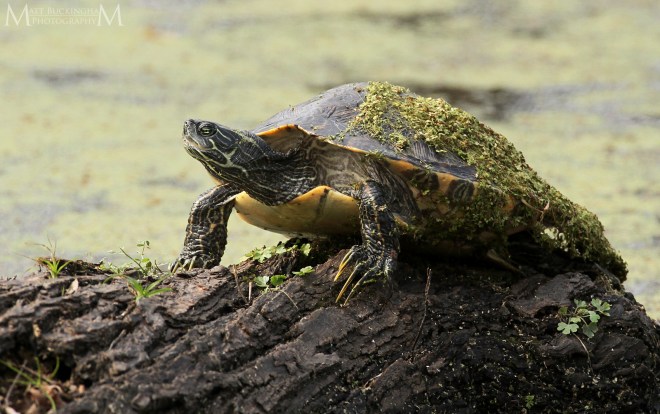
Just because I was growing interested in birds again doesn’t mean I was about to neglect the other photographic subjects I had grown so fond of.  We found this huge River Cooter (Pseudemys concinna) basking on a cold day.

IMG_0038

River Cooter

I was amazed at how well the lens captured the ambient light.  I opted for a low angle on this Common Gallinule (Gallinula galeata) to help isolate it from the wetland plants it was sheltering among.

IMG_0131a

Common Gallinule

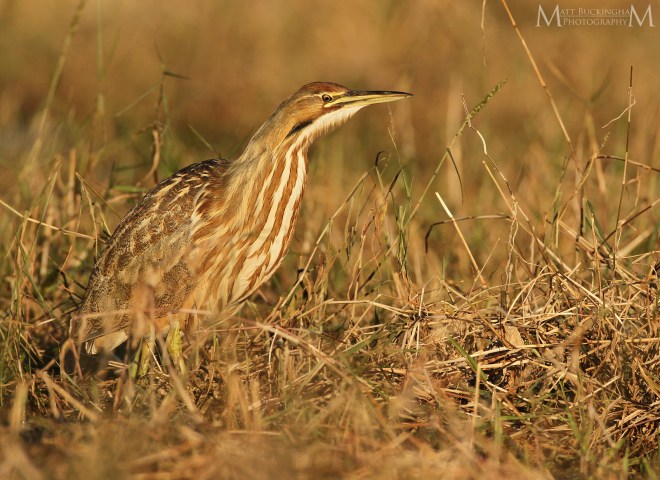
Perhaps the highlight of our weekend trip to the coast was observing several American Bitterns (Botaurus lentiginosus).  Though they are quite large, these are very cryptic birds, and can be hard to isolate from their surroundings.  Thanks to the focal length and low aperture capabilities of this lens, however, getting this master of camouflage to pop was easy.

IMG_0337

American Bittern

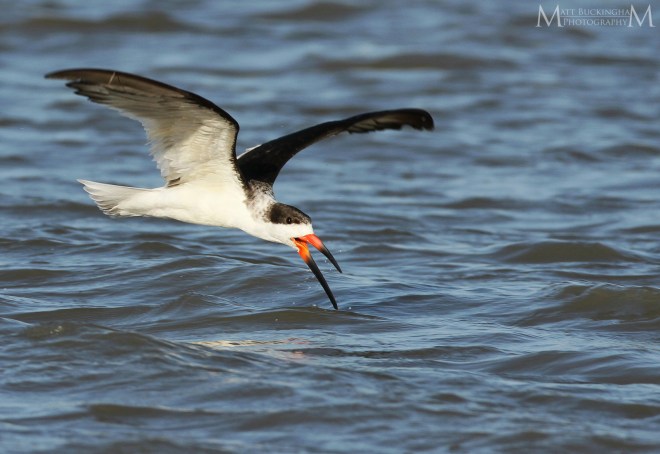
We also tried our hand at capturing some in flight images along the Gulf of Mexico.  Admittedly, with the extreme focal length this was a bit challenging, however we soon began to get the hang of it and honed our skills on dozens of Black Skimmers (Rhynchops niger) that patrolled just off shore, skimming the shallows with their specially adapted lower mandible.  When it feels a fish it snaps shut with lightning-like speed, trapping a meal for this unique member of the gull family.

IMG_0754a

Black Skimmer

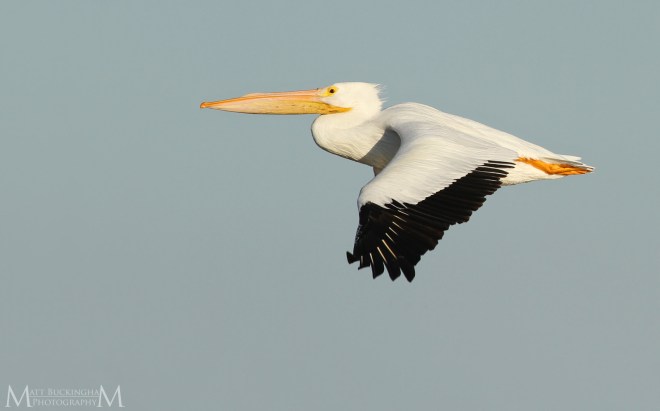
Nearby we saw waves of American White Pelicans (Pelecanus erythrorhynchos) coming in to roost.

IMG_1016

American White Pelican

As the tide began to creep in we spotted a group of small shorebirds bouncing around in the sand.  Among the mixed species group were a few Snowy Plovers (Charadrius nivosus), the species I had spent a summer collecting data on in the Panhandle.  The lens allowed us to create images where the foreground and background seemed to blend together.

IMG_1133a

Snowy Plover

Still reeling from the success of our trip to the coast, James and I wanted to try the lens out on our home turf.  So we spend several days exploring his expansive property in Angelina County, and documenting the birds as best we could.  I captured this American Goldfinch (Spinus tristus) on a frigid morning, when puddles from recent rains froze solid and frost clung to the leaves.

IMG_2035

American Goldfinch

I shot this Great Egret (Ardea alba) at a local park.  I couldn’t believe how far away from this bird I had to be to get the entire animal in the frame.  And even at a distance, the level of detail that the 600mm captures is astonishing.

IMG_2153

Great Egret

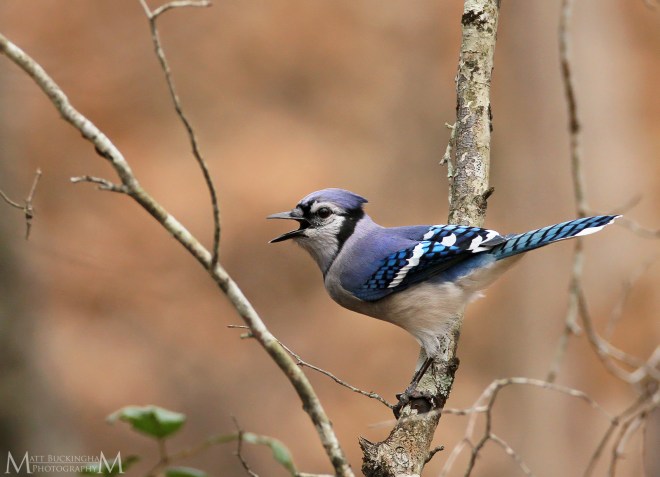
Back at James’s farm we spend some time strolling through the woods in search of resident and wintering birds.  Though they are common, I have always wanted to capture a good image of a Blue Jay (Cyanocitta cristata).  I think they are beautiful, and they are iconic woodland birds.  I captured this one as it called from a branch that was swaying in the breeze.  Utilizing high speed continuous shooting, I was able to catch it as the branched swayed away from the twig in the foreground, providing a clear shot at the bird.

IMG_2320

Blue Jay

I’m quite fond of this shot of a Tufted Titmouse (Baeolophus bicolor), another familiar bird of the eastern United States.

IMG_2794

Tufted Titmouse

This Chipping Sparrow (Spizella passerina) was one of a large group foraging on seed near James’s cabin.

IMG_3049

Chipping Sparrow

As we were wandering through the woods we saw and heard a Hermit Thrush (Catharus guttatus) foraging in the underbrush.  We found a spot to conceal ourselves as best we could and waited for over an hour while the bird teased us by flitting back and forth through dense vegetation before us.  Unable to get a clear shot, we were about ready to give up when it hopped out onto a large vine in the open.  Remarkably it sat still on this perch long enough for both James and I to take several shots.  See one of James’s photos here.

IMG_2937

Hermit Thrush

While we were busy photographing the songbirds, we heard a haunting call ring out above us.  It was a Barred Owl (Strix varia).  We came to realize that there was a pair in the treetops around us.  I struggled to get a clear shot until one of the owls flew and provided me a relatively unobstructed view.

IMG_2512

Barred Owl

Carolina and I are lucky to have friends like James and Erin Childress.  I know that James will make good use of his new lens, and look forward to spending many more hours with him in the field capturing images of the natural world we both love so much.


Looking Back: 2017 Highlights in Biodiversity

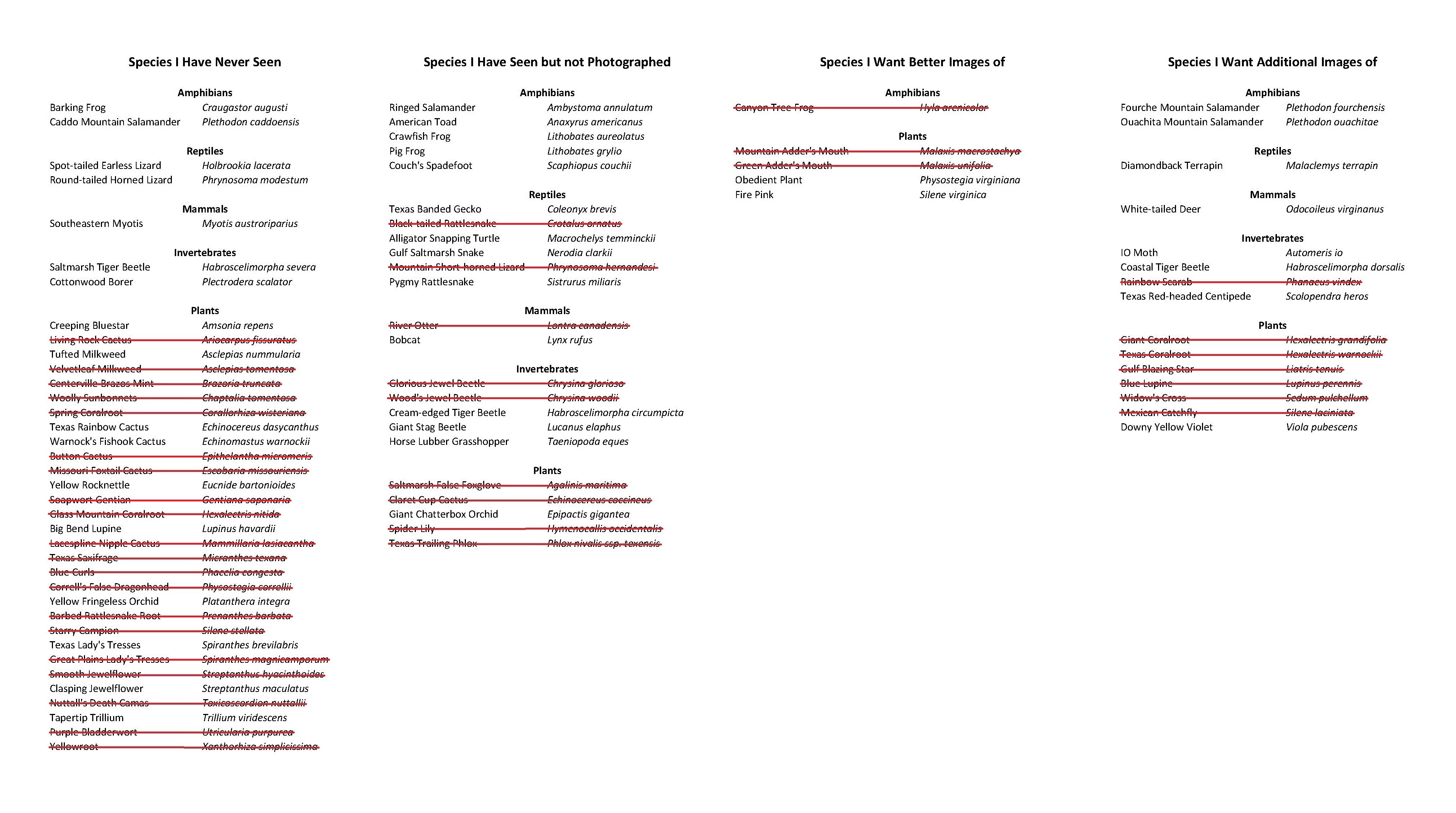
I managed to photograph 39 of 80 species on my 2017 biodiversity list.  Just to break down some stats on the list, I was able to check off:

20 of 37 species I had never seen

9 of 23 species I had seen but not photographed

3 of 5 species I wanted better photographs of

7 of 15 species I wanted additional photographs of

1 of 10 amphibians

2 of 9 reptiles

1 of 4 mammals

3 of 11 invertebrates

32 of 46 plants

2017GoalsNov

Most importantly, I was able to photograph over 150 species that I had not previously captured through the lens, and hundreds of new images of some of my favorite organisms.  Below are some of the highlights:

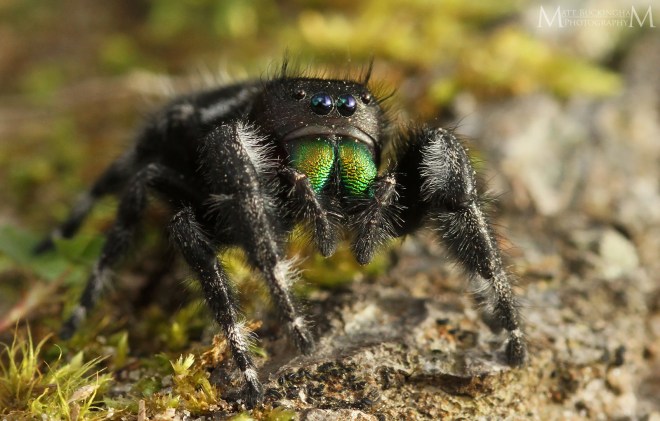
In January Carolina spotted this Regal Jumping Spider (Phidippus regius) in the parking lot of a local park.  Fortunately I had my camera with me and took the opportunity to photograph this crazy looking creature.

img_4151

Regal Jumping Spider

Wolly Sunbonnets (Chaptalia tomentosa) was the first species I checked off my 2017 biodiversity list.  It is a specialist of the coastal plain that occurs in herbaceous seeps and wetland pine savannahs.

img_5282

Woolly Sunbonnets

In February I photographed the blooms of the Texas Trailing Phlox (Phlox nivalis ssp. texensis), one of 6 or so Federally Endangered plants occurring in the Pineywoods.

img_6126

Texas Trailing Phlox

Despite having probably seen hundreds of Smallmouth Salamanders (Ambystoma texanum), I can never resist the opportunity to photograph these charismatic amphibians.

img_4801

Smallmouth Salamander

For my money, there is no finer place to be in Spring than the rich mesic forests along river bluffs and steep ravines.  Here many species of spring ephemeral plants bloom before the hardwood canopy has a chance to leave out.  Pictured below are the Louisiana Wakerobin (Trillium ludovicianum) and Wild Blue Phlox (Phlox divaricata), two species which are rare in East Texas.

img_6838

Mesic Forest in Spring

In March I spotted a spectacular scene while driving across the Attoyac River Floodplain: thousands of Butterweeds (Packera glabella) blooming in the late evening light.  I had to stop to capture a few images.

img_7340

Butterweed in the Attoyac River Floodplain

In March I took a team of botanists to survey the rich forests on the property of some friends.  It was here that I discovered the 2nd known Texas population of False Rue Anemone (Enemion biternatum) a couple of years ago.  We found a wealth of botanical treasures, including several species that are rare in the state.

IMG_8081

False Rue Anemone

During Spring Break Carolina and I traveled with my brother and my parents to South Texas.  Here we observed many typically Latin American species that are on the periphery of their range, barely entering the U.S. in southern Texas.  One of the most cryptic and difficult to see is the Common Pauraque (Nyctidromus albicollis).

IMG_0715

Common Pauraque

One of my favorite aspects of South Texas is the cactus community.  We observed many species found nowhere else in the country.  Perhaps the most spectacular of these was the Lady Finger Cactus (Echinocereus pentalophus)

IMG_0948

Lady Finger Cactus

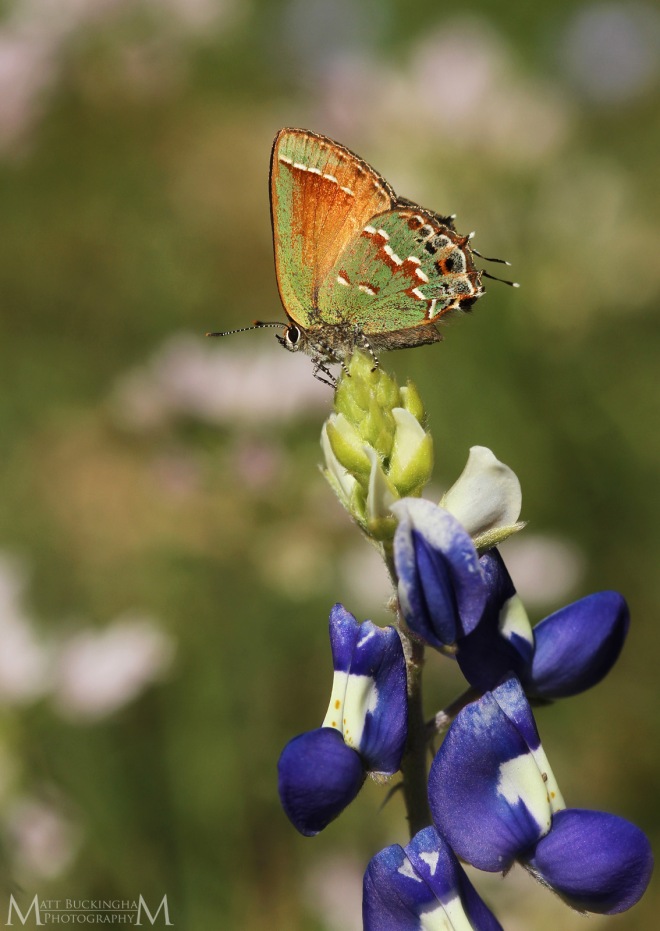
For our anniversary Carolina and I did some camping in the Texas Hill Country.  We visited many beautiful places and saw several interesting species, my favorite of which was the Juniper Hairstreak (Callophrys gryneus).

IMG_1717

Juniper Hairstreak

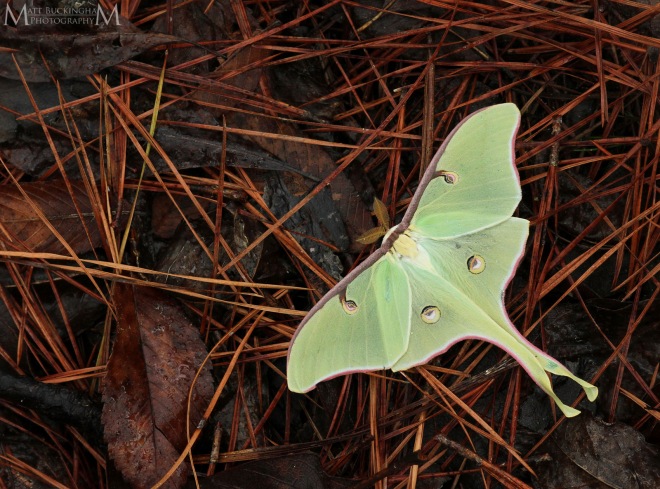
Back in East Texas I found this beautiful male Luna Moth (Actias luna) after a spring rain shower.

IMG_7982

Luna Moth

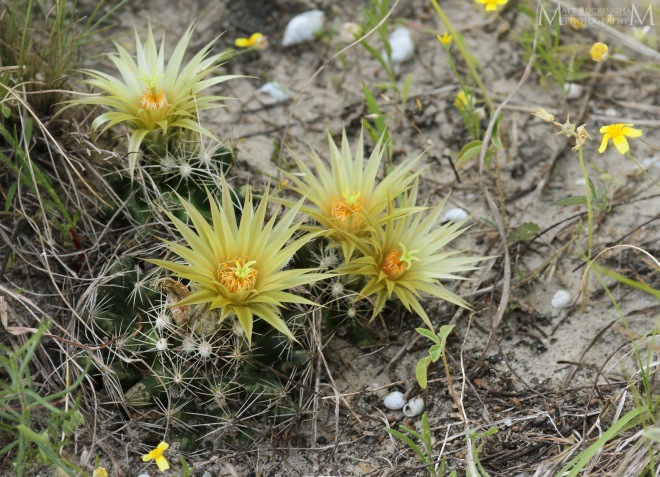
In April Carolina and I traveled a couple of hours west to find the charming little Missouri Foxtail Cactus (Escobaria missouriensis) in bloom in some unique sandstone outcrops in the post oak savannah.

IMG_3277

Missouri Foxtail Cactus

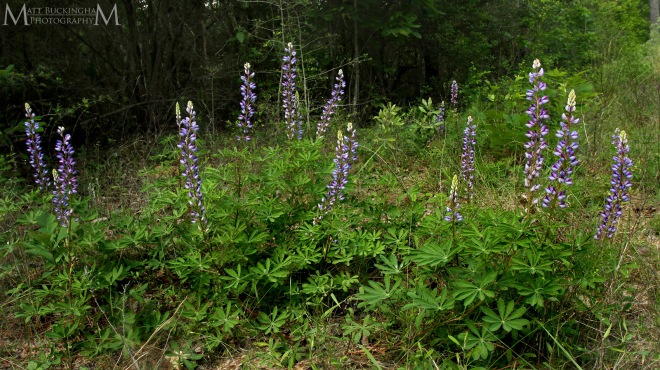
Keeping with the state mantra of “everything is bigger in Texas,” Texas actually has several state flowers.  All members of the genus Lupinus occurring in the state have received the designation.  The rarest lupine in Texas is the Wild Lupine (Lupinus perennis).  It has been extirpated from much of the state, and now occurs in only a few sites in the Big Thicket region.

IMG_3718

Wild Lupine

Right up there with my favorite finds of 2017 was this Promethea Moth (Callosamia promethea).  One of the largest moths in the country, the Promethea Moth reaches the southwestern extent of its range in East Texas where it’s rare.

IMG_3649

Promethea Moth

I was thrilled to capture this Spicebush Swallowtail (Papilio troilus) nectaring on butterfly weed (Asclepias tuberosa)

IMG_6100

Spicebush Swallowtail

This year Carolina and I spent a lot of time at our close friend James and Erin’s property in the heart of the Pineywoods.  The “farm” as we like to call it has hundreds of acres of habitat for a variety of plants and animals.  I photographed this handsome Yellow-bellied Water Snake (Nerodia erythrogaster flavigaster) at a scenic creek that winds its way through the property.

IMG_8493

Yellow-bellied Water Snake

One of the most exciting, and certainly the most unexpected find of the year was a large Chicken Turtle (Deirochelys reticularia) near a series of pothole wetlands in a coastal prairie.  The Chicken Turtle is rare and declining throughout most of its range, and Texas is no exception.

IMG_8744

Chicken Turtle

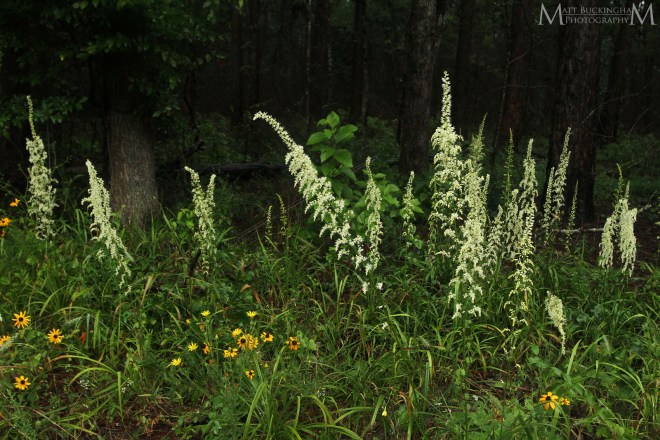
I loved the look of this patch of Featherbells (Stenanthium gramineum) blooming in the faint light of dusk.

IMG_0308

The Enchanted Forest

In June Carolina and I explored some high quality carnivorous plant “bogs”.  Not bogs in the true sense, they are more appropriately characterized as hillside seeps.  These seeps are unique habitats that exhibit a variety of rare species.

IMG_9495

Hillside Seep

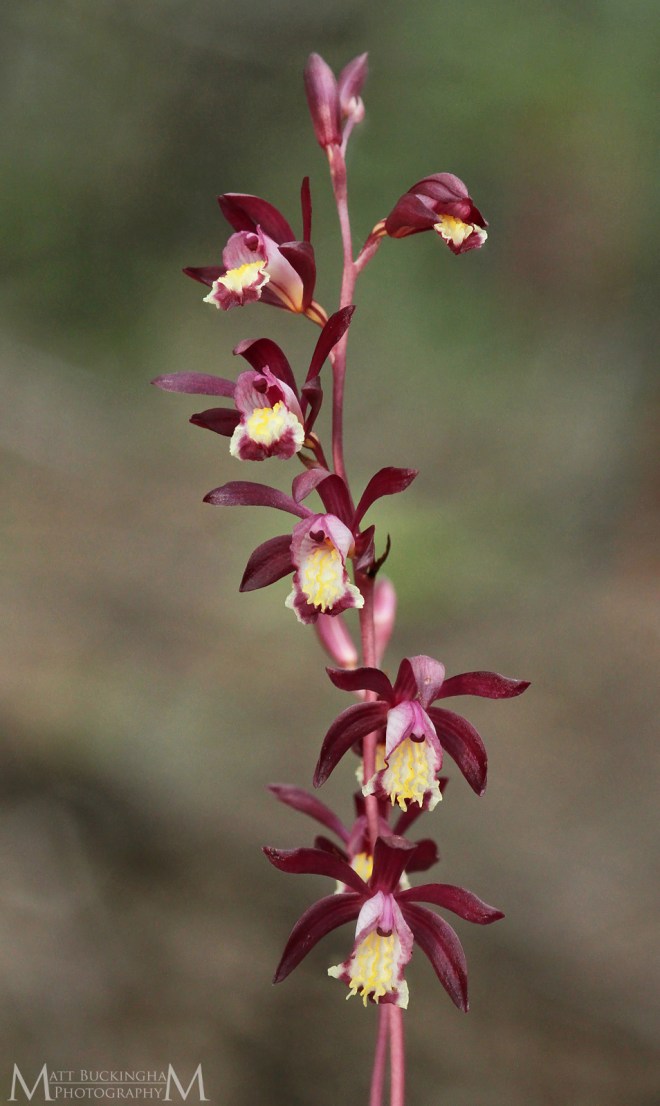
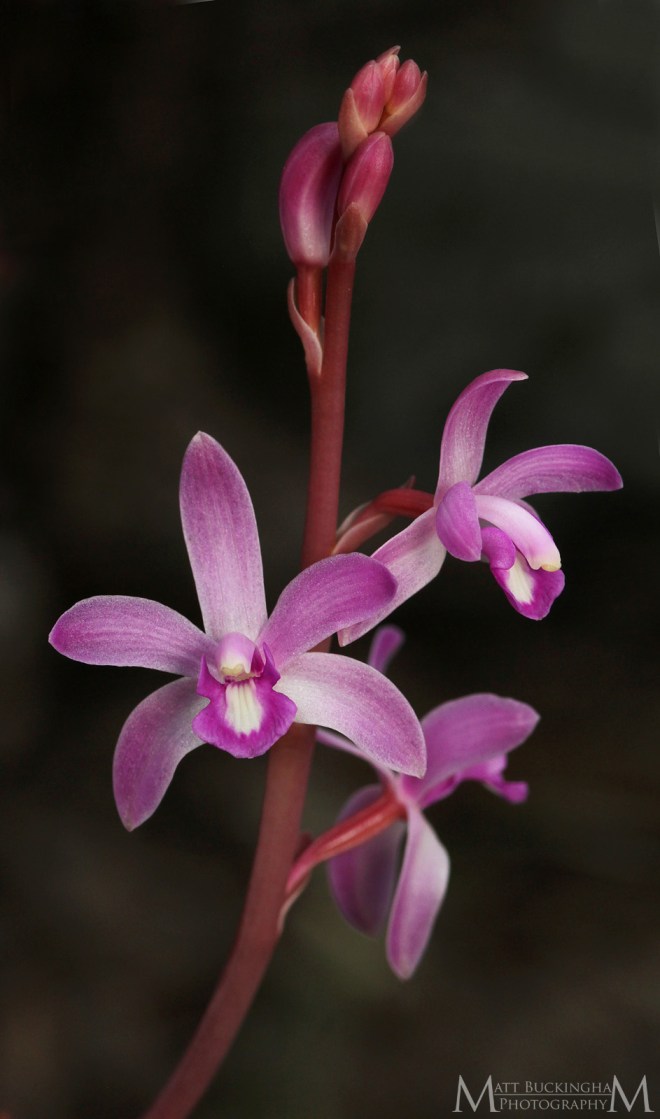
In the sweltering heat of July Carolina and I visited the limbestone hills of the White Rock Escarpment, where we observed the spectacular Texas Coralroot (Hexalectris warnockii).

IMG_1545

Texas Coralroot

The highlight of 2017 were a couple of trips to the Davis Mountains during the summer monsoon.  The biodiversity of these “sky islands” is staggering, and mixes Rocky Mountain species with rare Mexican specialties.

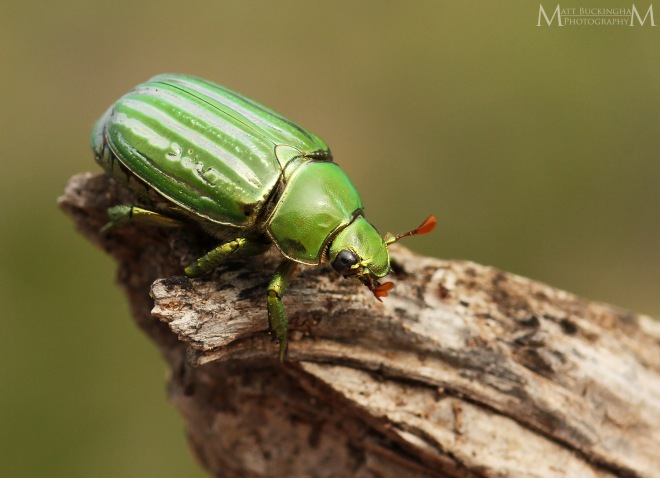
Our first trip was in July, and I was finally able to photograph a species that I had admired in field guides since I was a child, the Glorious Scarab (Chrysina gloriosa)

IMG_2995

Glorious Scarab

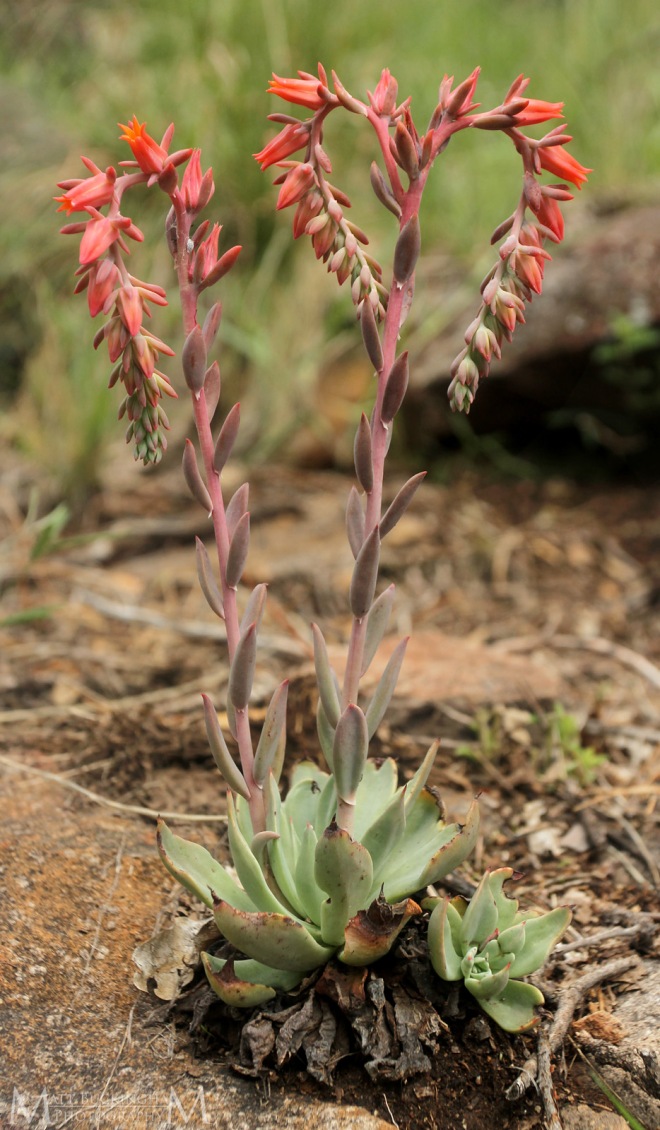
Also in July we observed the spectacular Desert Savior (Echeveria strictiflora) in bloom along a series of steep, rocky canyons.

IMG_2721

Desert Savior

In August we returned with our friends James and Erin.  We were lucky enough to find some perfect specimens of the Mountain Adder’s Mouth (Malaxis macrostachya).  In Texas this species is only known from the high elevation woodlands of the Davis Mountains.

IMG_3598

Mountain Adder’s Mouth

We also observed what is, in my opinion, one of the most spectacular orchids in the country, the Giant Coralroot (Hexalectris grandiflora). It is primarily Mexican in its distribution, occurring int he U.S. only in Texas.

IMG_4795

Giant Coralroot

We were also lucky enough to find and photograph the spectacular Wood’s Jewel Scarab (Chrysina woodii).

IMG_4473

Wood’s Jewel Beetle

After seeing several hatchling Greater Horned Lizards (Phrynosoma hernandesi), Erin finally spotted a large adult.  One of three species of horned lizard in Texas, Phrynosoma hernandesi occurs throughout much of the western U.S., but occurs in Texas only in a few isolated populations in the mountains of the Trans Pecos.

IMG_4424

Greater Horned Lizard

As summer transitioned into fall I finally caught the Barbed Rattlesnake Root (Prenanthes barbata) in bloom.  This plant of mesic forested slopes is rare in Texas.

IMG_6384

Barbed Rattlesnake Root

James spotted this Giant Ichneumon (Megarhyssa macrurus) on the trunk of a Sweetbay Magnolia.  These large wasps parasitize the larvae of the wood boring horntail wasps.  The female probes the horntails’ burrows with her long ovipositors and lays her eggs on the juicy larvae.  Her eggs than hatch and her own larvae feed on those of the horntails.

IMG_5426

Giant Ichneumon

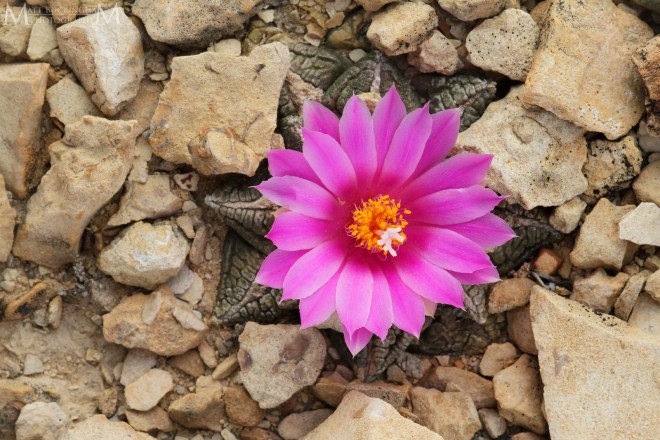
In October Carolina and I returned to West Texas in hopes of finding the Living Rock Cactus (Ariocarpus fissuratus) in bloom.  After some trials and tribulations we finally found a few.

IMG_6987

Living Rock Cactus

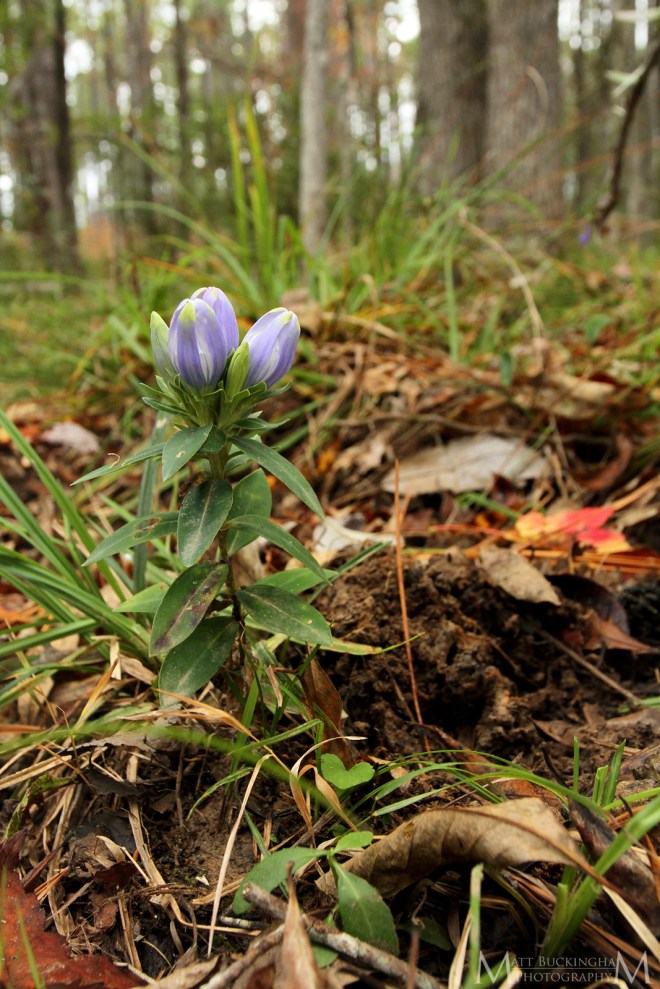
The Soapwort Gentian (Gentiana saponaria) would be the last species I checked off my 2017 list.  This rare beauty is known from only a few sites in the Pineywoods.

IMG_7662

Soapwort Gentian

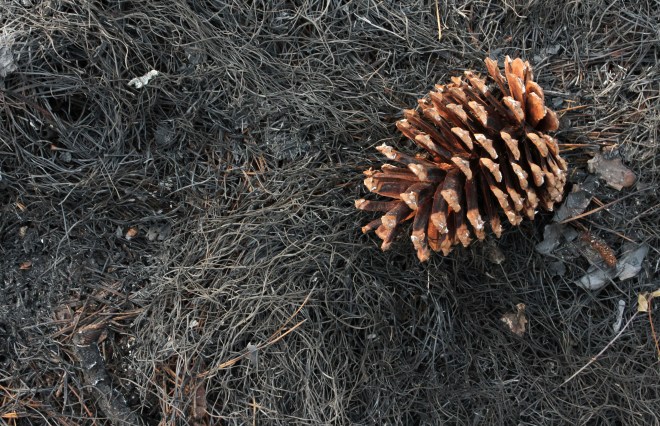
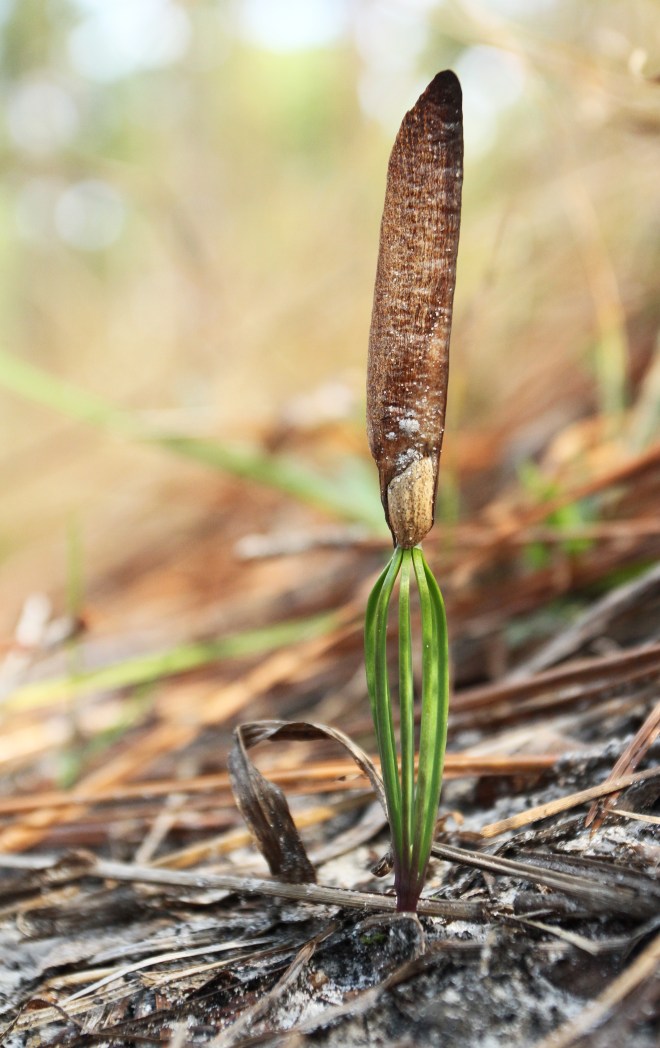
In December Carolina and I spent some time in one of our favorite places, the Longleaf Pine Savannah.  I found this freshly fallen cone on a bed of ash and charred remains of needles following a prescribed burn.

IMG_8506

Borne of Ashes

I haven’t quite decided how I want to continue with my list in 2018, however one thing is certain, I plan to spend as much time as I can in pursuit of biodiversity and wild places.

Fall into Winter: November and December Recap

IMG_8117

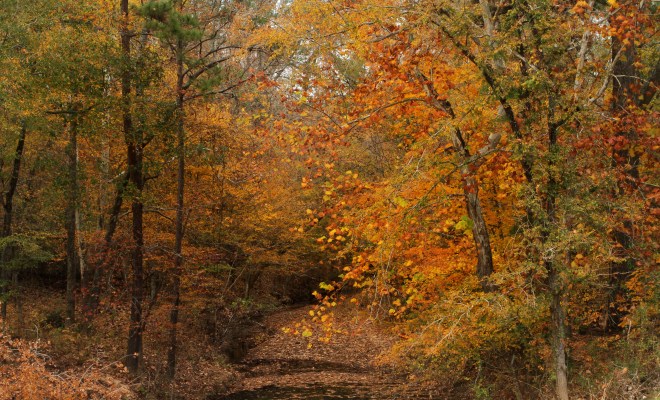
Fall color along a forest stream

We’re in the heat of winter here in the Pineywoods, and I’ve got a backlog of posts to catch up on.  Soapwort Gentian ended up being the last species checked off my list in 2017.  Though I would not see any more of my “target species”, my November and December were still filled with incredible biodiversity and natural beauty.

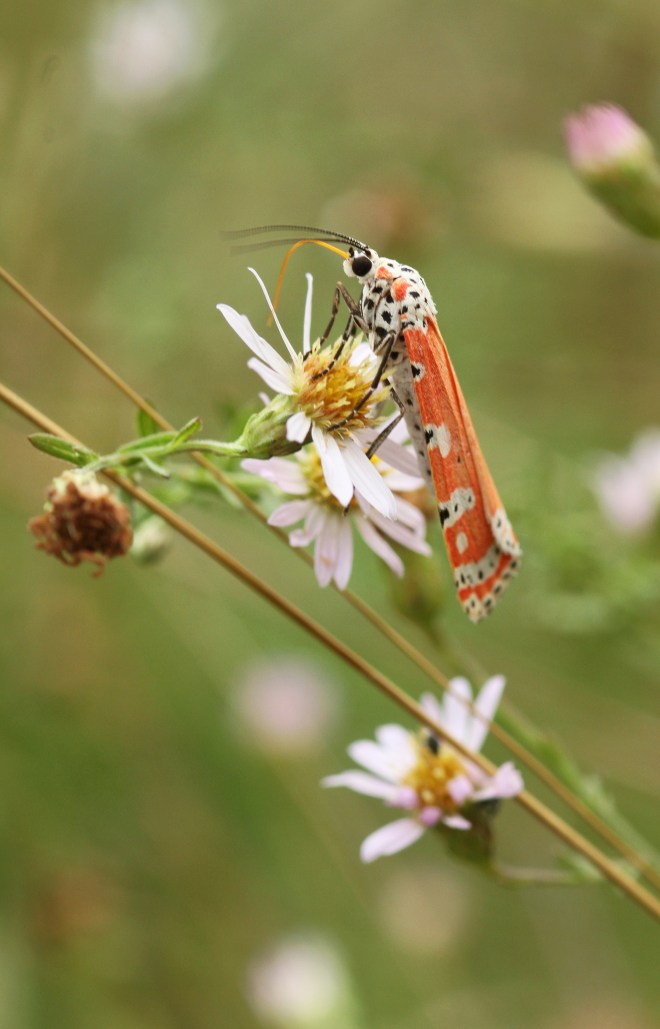
In mid November Carolina and I met up with our friend Skip Pudney in the Big Thicket.  We were hoping to photograph the rare orchid Spiranthes longilabris in bloom.  While we did find a single plant, the true show was put on by the invertebrates – pollinators taking advantage in a flush in late season flowers.  We noticed several Yellowjacket Hover Flies (Milesia virginiensis), Ornate Bell Moths (Utetheisa ornatrix), Common Buckeyes (Junonia coenia), Blister Beetles (Epicauta sp.) and more.

IMG_7751

Yellowjacket Hover Fly

IMG_7755

Ornate Bell Moth

IMG_7709

Common Buckeye

IMG_7687

Blister Beetle

By mid-November the leaves had begun to change.  This was a good year for fall color in East Texas.  The leaves of deciduous trees begun to change color in the falls when the days are sunny and the evenings are crisp.  These cues, along with the shortening photoperiod trigger a chemical reaction within the leaves.  Production of chlorophyll halts, and slowly this green pigment begins to break down and is rendered clear.  As the green fades, other colors such as carotenoids and anthocyanins, which have been active in the leaves all along, now become dominant, and the forest turns from green to brilliant hues of yellow, orange, and red.

In late November I spent a foggy morning photographing the maples, oaks, hickories, and elms of a rich hardwood stream bottom.

IMG_7847

Fall color in the fog

IMG_7917

Hickories and maples provide the yellows in this fall forest

I then went on to a steep bluff over the upper reaches of the Neches River, where the Red Maples lived up to their name.

IMG_7982

Fall color on a bluff over the Neches River

While I find broad views of a fall forest to be especially beautiful, the subtle beauty of fall can be observed up close, like in the leaves of poison ivy, as seen below…

IMG_8128

Fall color in poison ivy

…and in the layers of Florida Maple leaves on branches draped around the trunks of pine trees.

IMG_8140

Florida maples display their fall colors.

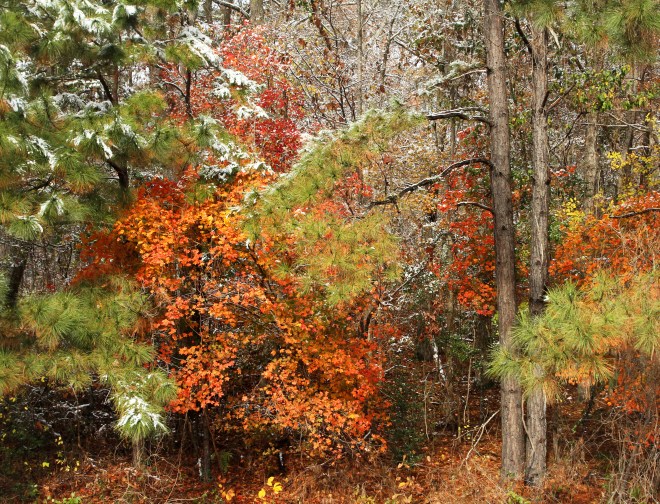
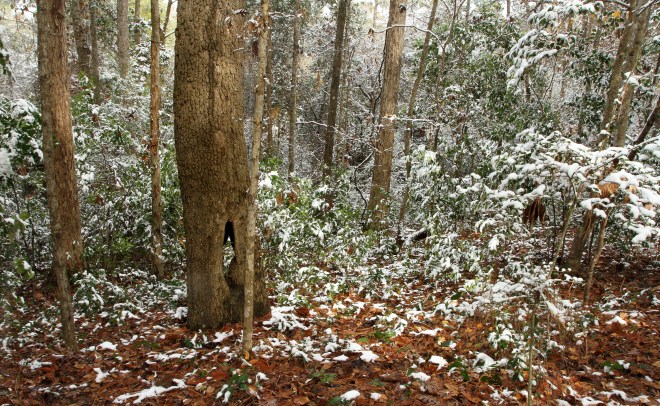
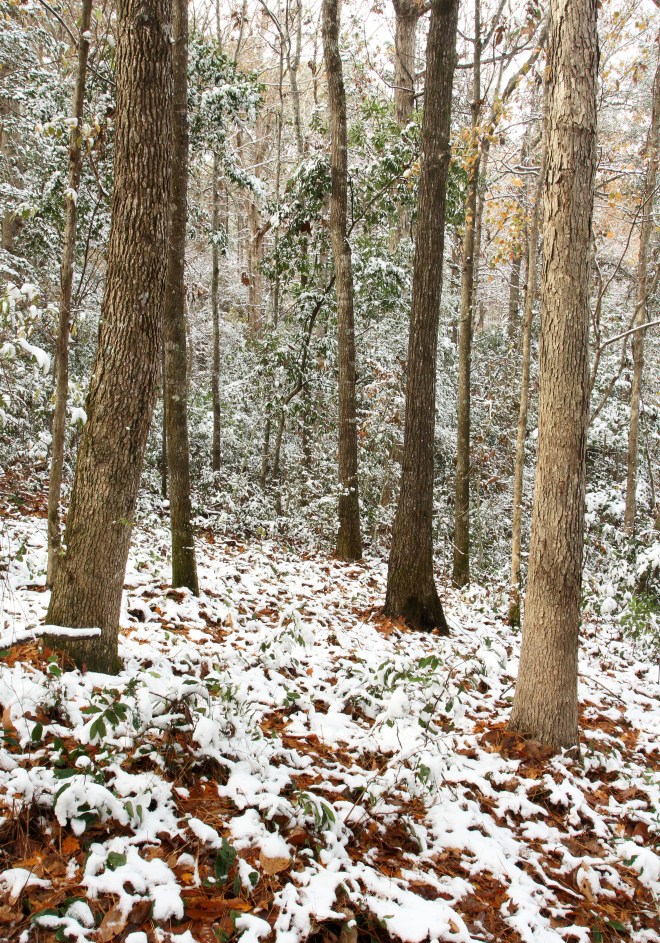
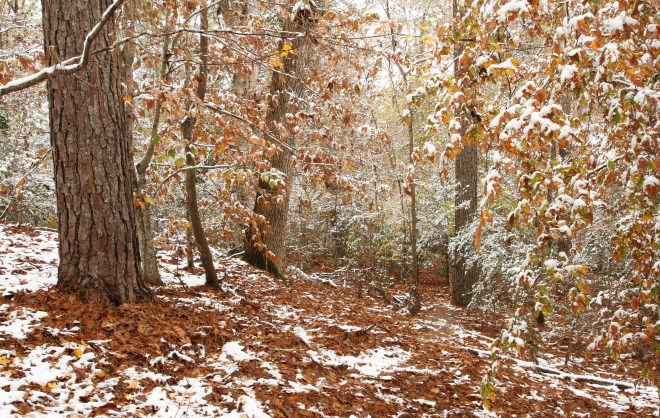
In early December much of East Texas was hit with an uncharacteristic snow storm.  In over 20 years in the region, I have only seen snow a handful of times, and of those only a fraction actually stuck.  This was one of the finest in recent memories.  In East Texas fall color lingers well into December, and the result was what looked to be a battle between fire and ice.

IMG_8153

Fire and Ice

Deeper in the forest, the landscape appeared a winter wonderland.

IMG_8207

Pineywoods Snowscape

IMG_8213

My Winter Wonderland

IMG_8227

Snow in the Beechwoods

IMG_8162

Dressed in White

Having grown up in Chicago, I experienced harsh, snow-filled winters in my childhood.  It was good to spend some time walking and playing in the snow again – like reuniting with an old friend.  I think that for Caro it was even more special, as she seldom saw snow in her native province of Entre Rios, Argentina.

IMG_8217

Carolina in the Snow

Later in December we visited a longleaf pine savannah shortly after a prescribed fire.  Here we saw fresh cones on the torched leaf litter…

IMG_8506

Borne of Ashes

…and a freshly germinated seedling rising from the ashes. With luck, this tiny seedling will grow into a stately tree in this longleaf pine savannah. Perhaps it will one day harbor the cavity of a Red-cockaded Woodpecker, and Bachman’s Sparrows and Brown-headed Nuthatches will sing from its boughs while Louisiana Pine Snakes and Wild Turkey patrol among its roots.

IMG_8372

New Beginnings

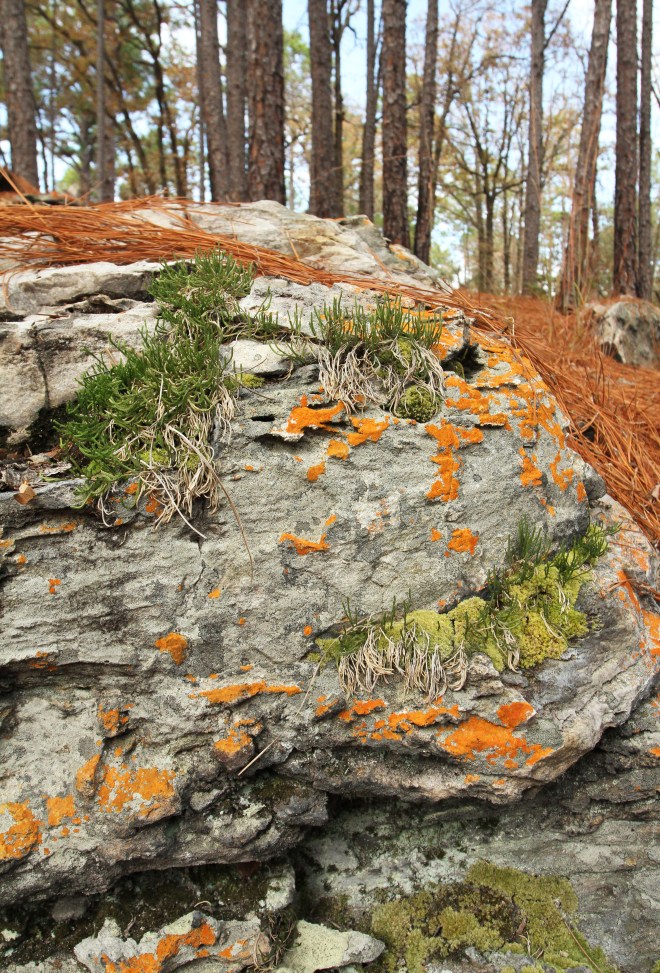
Within the longleaf pine savannah we found Riddell’s Spike-Moss (Selaginella corallina) growing in the crevices of exposed boulders of the Catahoula Formation.  S. corallina is a primitive vascular plant that is typically included with the “fern-allies”, and despite its name is more closely related to ferns than mosses. It has an interesting disjunct range, with one population in central and east Texas, northwestern Louisiana, western Arkansas and Eastern Oklahoma, and another in Alabama and Georgia. I seldom encounter them in East Texas. When I do, it is generally growing off the faces of sandstone outcrops or in areas of deep sand.

IMG_8416

Riddell’s Spike Moss

IMG_8401

Ridell’s Spike Moss

After exploring the savannah we ventured to the bluffs along the Neches River.  Here we found patches of fall color lingering in the American Beech trees on the bluffs’ slopes.  American Beech is one of the last trees to turn in the fall, and they brighten the otherwise gray December forest.  In the photo below the Neches River is visible in the distance.

IMG_8520

The Bluff’s Edge

In late December our friend Scott Wahlberg, Carolina, and I spent the day scouting salamander locations for the spring.  Though the conditions for finding a salamander weren’t ideal, we did turn up a single, apparently gravid, female Spotted Salamander (Ambystoma maculatum).

IMG_8626

Spotted Salamander

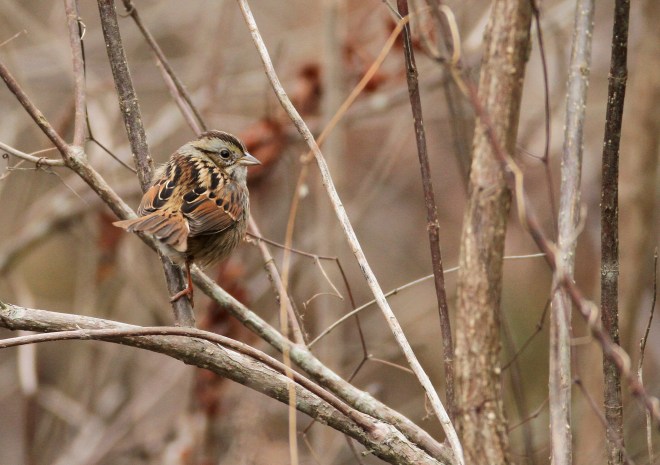
Toward the end of December James and I spent some time looking for birds in a local park.  There I was able to capture an image of a Swamp Sparrow (Melospiza georgiana) in the dense underbrush along the margins of a pond using James’s new 600mm lens (more on that in the future).  These striking sparrows are “skulkers” – small birds that prefer dense cover.  I was lucky to get a shot of one as it momentarily paused in its dense domain of tangles.

IMG_8690

Swamp Sparrow

I was also able to photograph a Yellow-rumped Warbler (Setophaga coronata) there.  The birds that winter in East Texas are members of the “myrtle” race, so named because they are one of the few birds that will regularly eat wax-myrtle berries.

IMG_8663

Yellow-rumped Warbler

On December 30, Carolina and I found a Broad-banded Water Snake (Nerodia fasciata confluens) while exploring the bottomlands off the Neches River.  The temperatures hovered just above freezing, and the snake could barely move, yet it was alive and well.  After taking a few photos we left it to weather the cold, as it and its kind have done for countless generations.

IMG_8812

Christmas in November

IMG_7662

Soapwort Gentian

Target Species: Soapwort Gentian (Gentiana saponaria)

One of our country’s more enigmatic plant genera is Gentiana.  Spring may be more often associated with wildflower blooming, but many of the brightly colored species of this genus bloom in the fall, and in the case of Gentiana saponaria in Texas, into the winter.  The genus is also unusual in that many of its flowers do not open, remaining forever in a bud-like state, despite having fully developed sexual organs hidden within the closed petals.

IMG_7636

Soapwort Gentian

Gentiana saponaria is one of a suite of species that reach the southwestern extent of their range in extreme Eastern Texas.  In Texas it is very rare, probably occurring in five or less populations.  While elsewhere within its range it might occur in prairie remnants and moist woodlands, in East Texas they seem to be confined to a few mature forested seeps nestled within longleaf pine savannahs.  Associated species include Pinus palustrisMagnolia virginianaNyssa bifloraAcer rubrumPlatanthera ciliarisVeratrum virginicumEutrichium fistulosumOsmundastrum cinnamomeum, and more.

County-level distribution of Gentiana saponaria.  Yellow counties indicate that the species is present and rare.

Soapwort Gentian has been on my radar for several years now.  Very few pictures from Texas exist, and I suspect that reflects that very few people have seen this plant in Texas.  Being at the periphery of its range, suitable habitat in East Texas is likely at a premium.  Despite their preferred habitat appearing to be relatively common in Deep East Texas, this plant persists at only a handful of sites.  It is likely that there are other factors influencing its distribution that we don’t fully understand.

IMG_7619

Soapwort Gentian

The perpetually closed nature of this gentian’s blooms has always intrigued me.  It is likely pollinated primarily by bumble bees and large beetles, which are strong enough to push their way through the closed petal lobes.  It may also, however, be pollinated by tiny beetles that are small enough to work their way between the tiny gaps at the tip of the blooms.  Throughout its range the flowers of Gentiana saponaria vary from white to electric blue to purple.  In Texas, the buds are lime green as the develop, and as the flower matures it turns sky blue.  Then, as it fades, it gradually turns to deep purple and ultimately tan before it withers.  My friend and author of Wild Orchids of Texas, Joe Liggio likened the blooms to a cluster of Christmas lights, a fitting description if you ask me.

IMG_7614

Soapwort Gentian

The genus Gentiana has long history of utilization for its medicinal properties.  The root has a multitude of purported uses including as an remedy for snakebite, digestive issues, and a variety of other ailments.  Compounds from the roots have proven to be anti-inflammatory, antiseptic, and beneficial for the treatment of liver disease.

IMG_7602

Soapwort Gentian

To see this plant, I communicated with some contacts with the National Forests and Grasslands of Texas.  They pointed us in the right direction, and the first weekend of November Carolina, our friend Scott and I set out to look for them.  We found dozens of plants scattered along the upper reaches of a baygall within a fairly extensive rolling longleaf pine savannah.  The baygall is partially fed by a small springfed stream.  The plants were growing along the banks of the stream and in the drier portions of the baygall.

IMG_7646

Soapwort Gentian

After spending some time at this site, we explored some other baygalls in the area.  After striking in several areas, we found a handful of plants at what we suspect is a new location for this species in Texas.  I sent the information to the Forest Service, and they confirmed that it had not been previously documented in that area.

IMG_7595

Soapwort Gentian

An added bonus of searching for wildflowers in autumn is the fall foliage, set ablaze by the annual process where leaves break down chlorophyll to reveal their other brightly colored pigments.  Though it was still early in the season, that day we admired the changing colors of elms, maples and hickories.  Perhaps most striking were the fronds of Cinnamon Fern within the baygalls, that looked more like flickering flames than once lush Pteridophytes.  Though there are a few more species that may bloom into December, photographing Gentiana saponaria essentially brings a close to the East Texas wildflower season, and I can definitively say that I went out on a high note.

IMG_7670

Autumn in the Baygall

October Recap

IMG_7302

A rich mesic forest dominated by American Beech and other hardwoods

October was a productive month.  I was able to photograph another six species on my biodiversity list:

Rainbow Scarab (Phanaeus vindex)

Black-tailed Rattlesnake (Crotalus ornatus)

Button Cactus (Epithelantha micromeris)

Lacespine Nipple Cactus (Mammillaria lasiacantha)

Living Rock Cactus (Ariocarpus fissuratus)

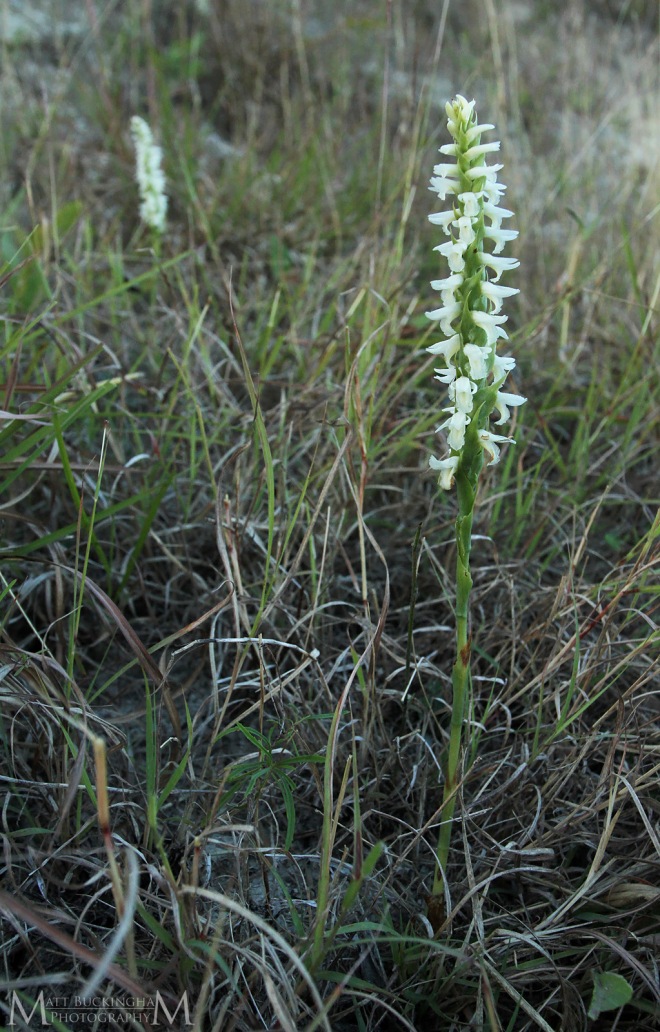
Great Plains Ladies’ Tresses (Spiranthes magnicamporum)

2017GoalsOct

East Texas generally experiences its first significant cold fronts in October, providing our first real relief from the sweltering summers.  These cool days are the perfect time to wander around in the woods.  This year Carolina and I spent a few days in the rich mesic American beech slopes, where we searched for rare plants and early signs of fall color.

Though not particularly rare, the American Strawberry Bush (Euonymus americanus) displays its bizarre fruits in the fall.  Also known as “Hearts-a-burstin”, the fruits of this small shrub generally resemble strawberries when closed, but are hard and inedible.  In the early fall the break open to reveal the large red seeds within.

IMG_6280

Fruits of the American Strawberry bush

The Tall Rattlesnake Root, or Tall Wild Lettuce (Prenanthes altissima) is very rare in Texas, known only from a few sites in Jasper and Newton Counties.  Here it is at the southwestern extent of its range.  It occurs along small streams in rich mature hardwood dominated forests.

IMG_7277a

Tall Rattlesnake Root

Always found among the roots of its host plant, Beechdrops (Epifagus virginiana) is parasitic on the roots of American Beech.  This bizarre plant lacks chlorophyll and is entirely dependent on its host for energy.

IMG_7137

Beechdrops

After a long day of botanizing, I spotted the unmistakable form of a Canebrake Rattlesnake (Crotalus horridus) crossing the road. The sighting was remarkable, and special to me, in that it occurred on the 2nd busiest highway in my county. It had made it most of the way across two lanes of traffic, and was nearly across the shoulder when I spotted it. I quickly turned around, worried that some vehicle would come from behind and purposely put an end to this beautiful creature, an all too common occurrence here, perpetrated by the unsympathetic and uninformed. Fortunately it made it safely across the pavement, and I watched as it inched across the right-of-way toward the dense forest beyond.

This encounter also helped remind me that sometimes there are more important things than getting the shot. I’ll admit, I hoped very much to capture a spectacular image of this three and a half foot beauty. But as I tried to balance poor light, a multitude of onlookers passing by at 70 miles an hour, and issues with trespassing, I realized that not only was it futile, but completely unnecessary. Simply spending a few moments with this incredible creature was more than enough.

IMG_7368

Canebrake Rattlesnake

Ladies on the Prairie

IMG_7574

Great Plains Ladies’ Tresses

Target Species: Great Plains Ladies’ Tresses (Spiranthes magnicamporum).

Fingers of prairie penetrate central and eastern Texas like roots in the form of the Blackland Prairies and pockets of grasslands in the Pineywoods, Post Oak Savannah, and Edward’s Plateau.  In scattered areas within these prairies, where the soil conditions are just right, the fall air is filled with the sweet fragrance of the Great Plains Ladies’ Tresses (Spiranthes magnicamporum).  From mid October through November, spirals of delicate white flowers push their way through a sea of prairie grasses and deliver their aroma to the wind.

IMG_7538

Great Plains Ladies’ Tresses

Commonly referred to as ladies’ tresses, the genus  Spiranthes is named in reference to the spiral arrangement of  flowers along the inflorescence.  Spiranthes orchids are a confusing group to identify, particularly those of the Spiranthes cernua complex, to which the Great Plains Ladies’ Tresses belongs.  There are, however, several ways to differentiate S. magnicamporum from the much more common and widespread S. cernua, which I will outline below.

IMG_7520

Great Plains Ladies’ Tresses

The first, most readily observable difference is in the habitat.  Spiranthes cernua is fairly catholic in its preference, occurring in a variety of disturbed habitats including moist roadside ditches, utility right-of-ways, fallow fields, and even residential lawns.  Spiranthes magnicamporum, however, occurs under much more specific conditions.  In Texas they generally occur in prairies with soils that are both alkaline (basic) and calcareous (composed of calcium carbonate).  They can tolerate dryer conditions, and can be found on exposed outcrops of limestone and sandstone.

IMG_7474

Great Plains Ladies’ Tresses

Another difference is in the fragrance.  While S. cernua has little to no odor, S. magnicamporum is intensely fragrant.  It gives off a rich scent of coumarin which can sometimes be detected before the plant is seen.  In fact, as I photographed some of these orchids from several feet away I enjoyed the pleasant aroma filling the air.

IMG_7457

Great Plains Ladies’ Tresses

There are some that will say that a careful examination of the seeds is required to differentiate S. cernua and S. magnicamporum.  There are, however, several morphological aspects of the plant and its flowers that are often used to identify S. magnicamporum in the field.  In general, S. magnicamporum appears more robust, with a thicker stem and slightly larger flowers.  The lateral sepals of S. magnicamporum are generally spreading, and arch above the rest of the flower, especially as the blooms age.  In S. cernua, the sepals are adpressed, held tightly against the rest of the flower.  The lip of S. magnicamporum is also slightly elongated and thickened.  The lip of S. magnicamporum also displays a faint yellow wash, in contrast with the typically pure white lip of S. cernua.  See the photo of Spiranthes cernua below for comparison.

IMG_0466

Spiranthes cernua taken in November 2016.

Carolina and I first looked for Spiranthes magnicamporum in a number of Weches Outcrops in East Texas.  Having no luck there, the next day we traveled to a series of sandstone outcrops in the Blackland Prairie in East-Central Texas.  Here we found them to be quite common, but only in areas where the underlying sandstone approached the surface.  It was quite a treat to see them growing directly on exposed sandstone alongside a variety of cacti and yucca.  The Great Plains Ladies’ Tresses are frost hardy, with reports of blooming as late (early?) as January.  Indeed, the night before we set out had dipped into the low 30s, yet the flowers remained fresh and fragrant.  Searching for these lovely orchids among the prairie with my wife was the perfect way to spend a brisk fall day.  As we headed back to the dense forests of the Pineywoods we marveled at prairie skyscape, painted pink and orange by the setting sun.

IMG_7569

Great Plains Ladies’ Tresses

Living Rocks, Golf Balls, and Other Strangely Named Cacti of the Trans-Pecos.

IMG_6987a

Living Rock Cactus

Target Species:

Black-tailed Rattlesnake (Crotalus ornatus)

Button Cactus (Epithelantha micromeris)

Lacespine Nipple Cactus (Mammillaria lasiacantha)

Living Rock Cactus (Ariocarpus fissuratus)

The landscape of Big Bend is striking for its vastness; famous for its sweeping views that stretch from horizon to horizon, and seemingly beyond.  Stepping into this rugged wilderness, one is immediately hit with the harshness of this land.  Brutal conditions created by lack of rainfall and extreme temperatures.  It is easy to think that this seemingly inhospitable land  would be devoid of life, but despite its harshness it is incredibly diverse, harboring a rich flora and fauna unlike anywhere else on the planet.  And as remarkable as this vastness is, equally astounding is the beauty and variety that can be found in just one small patch of the desert floor.

Big Bend, that large peninsula of Texas that dips down into Mexico as it follow a bend in the Rio Grande, has the greatest cactus diversity in the country.  It was that diversity that brought Carolina and I to the region this October.  Specifically we were hoping to find the Living Rock Cactus (Ariocarpus fissuratus) in bloom.

Big Bend is part of the Chihuahuan Desert.  It is the highest, wettest desert in North America, and the most biodiverse in the world.  The Big Bend Region includes a multitude of natural and cultural attractions, including Big Bend National Park, Big Bend Ranch State Park, and Terlingua.  We planned to explore these areas in pursuit of our succulent quarries, and hoped that our pursuit would bring with it other natural wonders.

Cactus hunting is not without its hazards.  Aside from the obvious risk of an errant spine in the skin, there are other denizens of cactus country that pack a punch.  One such inhabitant is the Black-tailed Rattlesnake (Crotalus ornatus).  Yet despite this creatures fearsome reputation as a venomous marauder, it is one of the most docile snake species I have had the good fortune to encounter.

As I scoured a rock cut in search of spiny succulents, my eyes caught a familiar outline – a striking (as in attractive) Crotalus ornatus coiled at the mouth of a deep crevice in the limestone.  It was sitting, I presumed, waiting for some unsuspecting rodent to wander within its grasp.  Generally speaking, I think that the threat of rattlesnakes to your average desert-goer is greatly exaggerated, however seeing this beauty hidden away in the perfect hand or foot hold certainly reinforced the old adage “look before you step”.  The photo below depicts the animal as I found it.
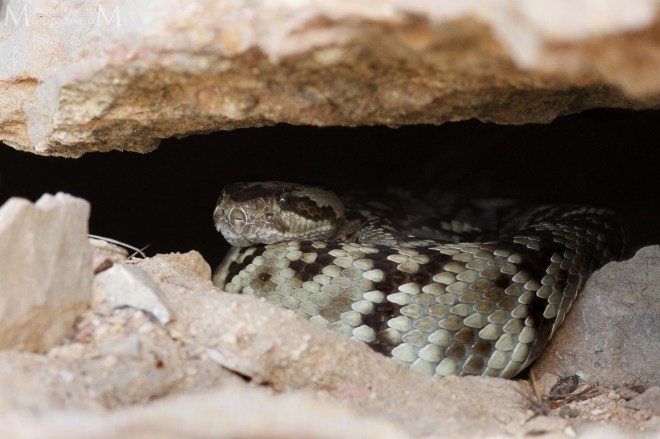
IMG_6762

Black-tailed Rattlesnake

After spending a few moments with the black-tail I continued my search for cacti.  After a moment I heard Carolina call out that she had found something.  How she spotted them, I’ll never know, but she had found a population of the diminutive Button Cactus (Epithelantha micromeris).  This diminutive cactus seldom protrudes more than 2 inches above the rocky substrate it calls home.  It occurs primarily in Mexico, but also throughout much of West Texas, southern New Mexico, and extreme southeastern Arizona.

Though they were not in flower, I found these small, rock-like cacti to be quite photogenic.  They flower primarily in late winter and early spring.  Later in the year an elongated red fruit appears.  Caro likened the fruit to a particular part of an excited dog’s anatomy.

IMG_6711abc

Button Cactus

IMG_6719ab

Button Cactus

Nestled in a few populations along the Pecos/Brewster County line, one may find a particularly formidable looking cactus.  The Icicle Cholla (Cylindropuntia tunicata) is a wide ranging species, occurring in deserts throughout much of Latin America.  In the United States, however, it is known only from these few places in the Trans-Pecos of Texas.  Admiring the afternoon light filtering through its intimidating spines, it was easy to see how it earned its common name.

IMG_6772

Icicle Cactus

After a long day of travelling and exploring we finally made it to Marathon, but not before stopping at an extensive Black-tailed Prairie Dog town, where we admired their antics as the day began to fade.  We made our camp in Marathon, and I found myself deep in thought as we laid in our sleeping bags looking up at the twinkling wonder of space.  Along with the prerequisite existential questions inspired by such a vista, I pondered on the days to come, and the natural wonders that awaited us.

The next morning I spotted a remarkable creature on the stucco outside the campground’s bathrooms.  It was a male Chihuahuan Agapema (Agapema dyari).  A lovely member of the giant silkmoth family (Saturniidae).  I gently moved it to a nearby tree trunk, where I hoped it would be less obvious to the hoard of House Sparrows that were scouring the area.

IMG_6787

Chihuahuan Agapema

As the sun warmed the desert we broke our condensation-laden camp and set out for Big Bend National Park.  As we crossed into the park we immediately took notice of the diverse cactus community.  The most obvious were the abundant clumps of Strawberry Cactus (Echinocereus stramineus), the heavily armed Eagle’s Claw Cactus (Echinocactus horizonthalonius), and the ubiquitous prickly pears (Opuntia spp.).

Finding the smaller, more cryptic species, took a bit more work.  We found the Lacespine Nipple Cactus (Mammillaria lasiacantha) to be quite common.  Also known as the Golf Ball Cactus, this tiny succulent is quite similar to the Button Cactus.  Cacti of Texas, A Field Guide by Powell, et. al discusses some of the differences.

IMG_6913

Lacespine Nipple Cactus

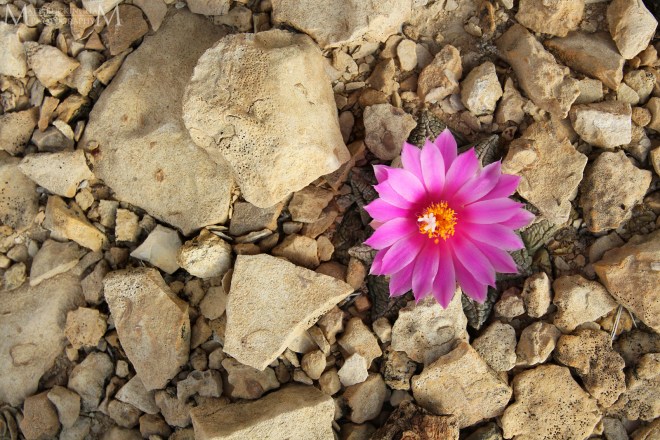
The real reason for our trip, however, was to try to catch the Living Rock Cactus (Ariocarpus fissuratus) in bloom.  This bizarre cactus is, in my opinion, one of the most spectacular plants in the country.  Hardly recognizable as a cactus, it is spineless, and consists of rough tubercles arranged in concentric rings around a center of soft fuzz.

For most of the year the dull green to gray Living Rock blends perfectly with the scattered stones that litter its limestone home, relying on camouflage rather than piercing spines for defense.  For a few short weeks in the fall, however, the limestone hills of the Trans-Pecos explode with color as thousands upon thousands of Living Rocks open their bright pink blooms to the world.

It was just such a scene that I was hoping Carolina and I would encounter in Big Bend.  We were soon to find, however, that finding these jewels of the Chihuahuan Desert in bloom would be far more difficult than we anticipated.  We spent all day scouring limestone ridges, bluffs along the Rio Grande, and flats in the low desert.  We jumped for joy when we found our first plant.  We knew we were were in the right area.  Even without their blooms, the Living Rock is a beautiful, bizarre plant and photographic subject.
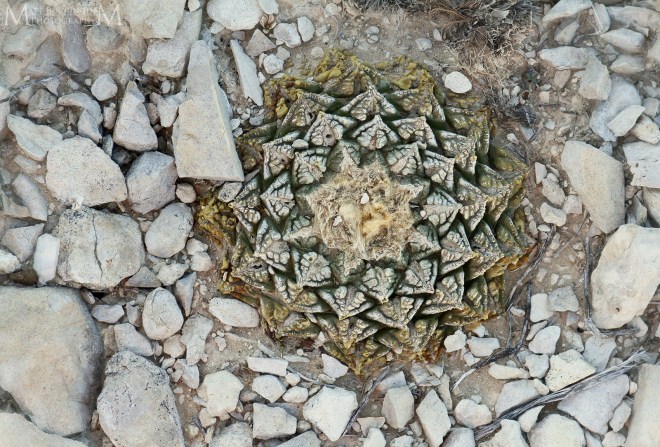
IMG_6857

Living Rock Cactus

The desert sun is relentless, even in mid October.  Our spirits refreshed by finding our first Living Rock, we pushed on, scouring the bleached white limestone hills as the temperatures flirted with 100 degrees.  It was truly brutal, but we knew that the payoff of seeing the blooms would be well worth our suffering.  After several hours, and several hundred more Living Rocks sighted, however, the blooms did not come.  We were dismayed.  We had become proficient at spotting the near invisible cacti on the desert floor, but despite finding so many individuals in several different areas, we did not find a single bloom.  I began to think that this would not be the trip that we would see the exquisite flowers of Ariocarpus fissuratus.

IMG_7024a

Living Rock Cactus

That night we hoped to camp in the park, but alas, all of the campgrounds were full.  We debated between staying at a primitive campsite along a backcountry road, or driving to the campground in Study Butte.  In the end we opted for the latter, and made the drive from the Rio Grande to Study Butte in the darkness, with nothing but the Common Poorwhills, Black-tailed Jackrabbits, and Western Diamondbacks to keep us company.

When we arrived at the campground, the attendant informed us that there was a party going on that would last well into the night, and recommended that we select a site on the other  side of the property.  We happily agreed.  We made camp, ate dinner, and settled in for the evening.  The “party” turned out to be a music festival that blared across the desert until after 1 am, after which the multitude of bikers attending continued to keep us awake for at least another hour.  Finally, at some point in the wee hours before dawn we drifted off.

We were awoken around 6 am to gale force wind violently shaking our tent.  The temperature had dropped by tens of degrees, and as we stepped out from behind the nylon the air met us with a chill.  I must admit, as I broke camp with powerful wind gusts and stinging dust beating down on me, I was hating life.  “Not every trip can be a success,” I reminded myself, and I tried to take solace in the incredible organisms we had thusfar encountered, and the memories we had created.  In that moment, however, it was hard to do.

We decided to spend the morning and early afternoon exploring the area, before beginning our long journey back to the Pineywoods.  The habitat at our first stop looked promising, but after a lack of blooms the previous day, I took care not to get my hopes up.  We soon saw our first Living Rock, like a star etched into the talus.  I found myself once again admiring their bizarre firm when I heard Carolina shout out in glee.  I knew.  The memory of the brutal previous night faded as I made my way to her, and saw the bright pink bloom seemingly emerging from nothing.  We did it.  It was not long before we found another, and another.

IMG_6946

Living Rock Cactus

The Living Rock is one of three spineless cacti in Texas.  Their lack of spines means that they must rely on camouflage to avoid predation.  They also contain foul-tasting alkaloids which likely deter would be predators.  These alkaloids, however, have made this plant popular with the Tarahumara and other early tribes and settlers.  Though they do not contain mescaline like the similarly spineless Peyote, they contain other mildly hallucinogenic compounds like hordenine, and were reportedly used as a substitute when preferable psychoactive cacti weren’t available.  Hordenine also made the Living Rock useful for a number of medicinal purposes, including a disinfectant for wounds and burns.
IMG_6948

Living Rock Cactus

Ariocarpus fissuratus is  endemic to the Chihuahuan Desert.  They barely enter the U.S. in West Texas.  They are incredibly tough, even for a cactus.  We found that they would grow in the harshest parts of the landscape, often where even other succulents could not survive.  They owe their success to their uncanny capacity to store water, and their ability to shrivel away to virtually nothing in times of extreme drought.  Indeed, they often times seem to be more stone than plant.  Carolina and I admired them for some time, and reluctantly bid them farewell, content with the short moment in time we were fortunate enough to spend among their fleeting blooms.

IMG_6965

Living Rock Cactus

There are some songs that serve to inspire us and remind of of those things in this world that are most important to us.  For me, one such song is Stubborn Love by the Lumineers, and it came up on the playlist just as the Chisos Mountains began to fade in our rearview.  I looked about the desert that stretched beyond the horizons around us, and I was filled with a sense of contentment.  It’s easy to feel sad at the end of a great trip, but I take comfort in the fact that no matter where I am, if nature is near there is some great wonder waiting to be discovered.

Keep Rolling

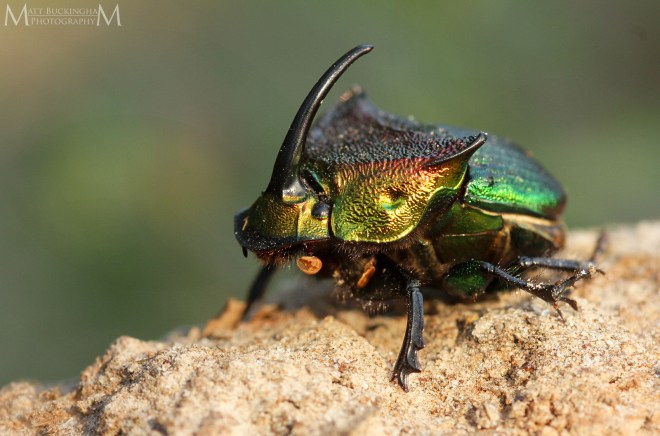
Target Species: Rainbow Scarab (Phanaeus vindex)

IMG_6560

Male Rainbow Scarab

Since I was a child I have had a fascination with beetles.  They are the most diverse group of animals on the planet, and come in an extraordinary array of shapes, sizes, and colors.  Some have iridescent, metallic carapaces, some have impressive weaponry like horns and toothed mandibles.  And some, like the Rainbow Scarab, have both.

The Rainbow Scarab is a dung beetle.  They feed on the refuse of mammals, and in doing so help to prevent an unsafe build up of animal feces.  Feces can be a vector for diseases, and by removing it from the earth’s surface, the Rainbow Scarab and other dung feeding beetles help to prevent the spread of feces-borne illnesses, some of which can be fatal.

IMG_6650

Male Rainbow Scarab

The benefits of dung beetles do not end there.  Rainbow Scarabs dig burrows below dung piles.  They then roll bits of the dung into balls and drag it below the surface.  The female then lays her eggs on the fecal matter, which will serve as nourishment for the developing larvae.  By spreading and depositing feces within the soil, the Rainbow Scarab is in effect fertilizing the landscape.

Rainbow Scarabs are broadly distributed east of the Rocky Mountains.  In East Texas they seem to prefer sandy soils, however elsewhere they have been documented in a variety of soil types.  The individuals pictured are from a longleaf pine savannah.

The strikingly beautiful Phanaeus vindex has been a favorite of mine since childhood.  I have observed and had the opportunity to photograph them on numerous occasions, however I have never been happy with the resulting images.  This year i hoped to capture some images that really showed off their brilliant iridescence.  Try as I might, I found that the age-old adage that “pictures can’t do them justice” really does apply with the Rainbow Scarab.  Their color seems to change depending on the angle of the light, and I found it impossible to capture their true brilliance, though I sure had fun trying.
For more on these fascinating creatures and the benefits they provide I strongly recommend this link:

http://entnemdept.ufl.edu/creatures/BENEFICIAL/BEETLES/Phanaeus_vindex.htm