Spring in the Pineywoods

IMG_3303a

Kentucky Lady’s Slippers – A Gift of Spring

As I sit here typing, we are in the height of August, which has the misfortune of traditionally being our most miserable month – at least climatically speaking.  So as the dried grass crunches beneath my feet and my skin bakes under triple digit temperatures, it’s easy to escape back to a day over four months ago.

It was the last day of March.  There was a definite chill in the air as I set out into the forest.  The gray of dawn was made darker by the the canopy of beech and oak towering one hundred feet above my head.  I worried for a moment that I may not see them – my elusive botanical quarry.  But despite the dim light of the understory, the yellow egg-sized blooms of the Kentucky Lady’s Slipper (Cypripedium kentuckiense) caught my eye like a beacon sent out to some wayfaring sailor, and drew me to them with a siren’s song of its enigmatic beauty.

A few days prior my friend Peter Loos had called and told me that the slippers were out early this year, a full two weeks early.  He also told me that one population, which typically has only a plant or two in flower, was displaying six perfect blooms this year.  If it weren’t for his call, I would have likely missed out on a very special experience.

The soil was cold and damp as I sat, saturated from a previous day’s rain.  It was still to early for photography, the forest too dark to properly render the color of the scene.  So I sat and waited in the company of the forest.  I admired the slippers and the ferns that grew around them.  I listen to the familiar songs of Red-eyed Vireos, Summer Tanagers and Hooded Warblers, and the distant trill of a Northern Parula.  After some time I could see hints of dappled sun in the highest leaves in the canopy.  The forest grew brighter, its colors warmed.  In this new light I could see distant azalea blooms lining the creek downslope.

I had to pay close attention to the light.  There would only be a brief moment for me to capture the image I was after.  That time when the ambient light early morning sun illuminated the forest, but before its rays penetrated the canopy, casting sun spots and uneven light on the forest floor.  Finally the moment was right, and I captured the image above.

Though the end of March may have been the height of the season, spring itself had begun nearly two months prior, when the first of the spring ephemerals pushed their way through the leaf litter.  Perhaps my favorite of these is the Bloodroot (Sanguinaria canadensis), so named for the red sap of its roots that has long been used for a wide range of medicinal purposes.  Bloodroot is now rare in Texas, where it hold on in a few remnant patches of mature hardwood forest.

IMG_5185

Bloodroot – An Ode to Spring

Like the Bloodroot, the White Trout Lily (Erythronium albidum) is one of our first harbingers of spring.  White Trout Lily can be found throughout the Pineywoods.  Though it is common nowhere, it is more frequently encountered in the northern and western portions of this forested ecoregion.  Elsewhere in the state it can be found in some Post Oak Savannah and Cross Timber woodlands.

IMG_5425

Trout Lily

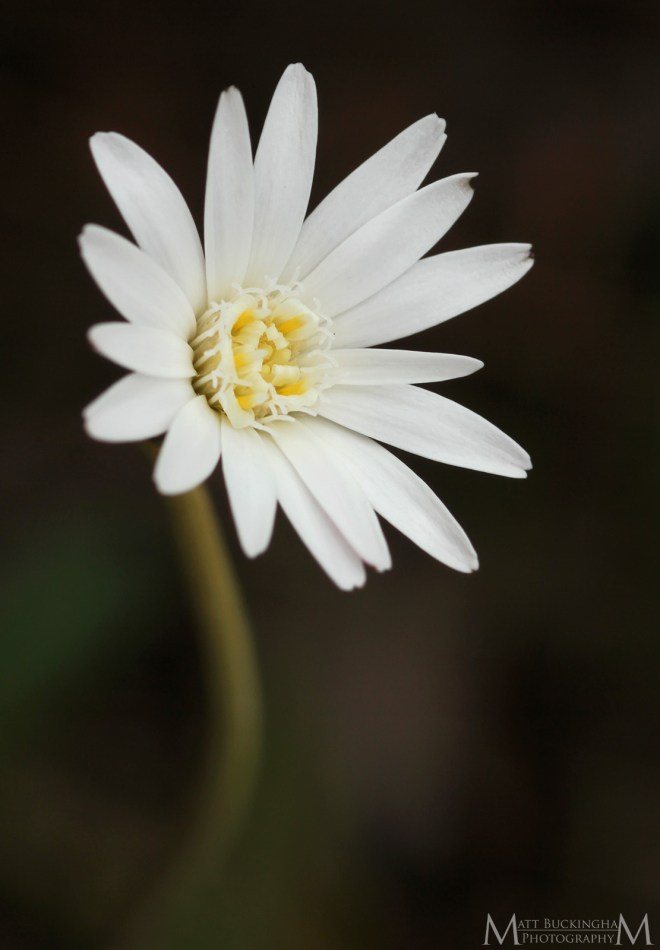
It is not just the rich woods that experience a flush in early spring activity.  In mid February the wetland pine savannahs of East Texas appear bleak, their grasses turned brown by the short days and biting cold of winter.  But it is in that time that the Woolly Sunbonnet (Chaptalia tomentosa) emerges, opening its blooms in the midday sun.
IMG_4921

Woolly Sunbonnet

Though the forest floor may be coming to life, early spring still finds the trees leafless and dreary.  I captured the haunting scene below as a fog rolled in over the Angelina River on a cold day in mid February.

IMG_4637

The Angelina River looks to be a dismal place in early spring.

Even in early March the forest still seems gripped in winter.  At least from a distance…

IMG_6327

A rare waterfall in one of the last patches of old growth forest in East Texas.

IMG_6344

A small stream flows, fueled by spring rains

But closer examination shows that by early March the forest has come alive.  The scene below was captured at our friends Susan and Viron’s land.  Under their stewardship, a spectacular patch of rich mesic forest has persisted.  Here nearly all of the plants that have become exceedingly rare elsewhere in the states, still thrive.  Their forest contains colonies of Yellow Trout Lily (Erythronium rostratum) that cover acres!

IMG_6294

Yellow Trout Lilies – Ephemeral

IMG_6161

Yellow Trout Lilies

Their land is also home to one of only two known populations of False Rue Anemone (Enemion biternatum) in the state.

IMG_6229

False Rue Anemone

Spring Beauties (Claytonia virginica) flourish here as well.  They are one of our most common spring ephemeral, but that in no way diminishes their beauty.

IMG_6248

Spring Beauty

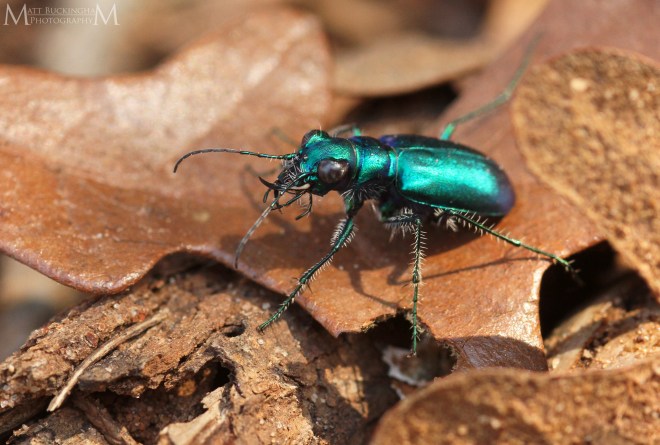
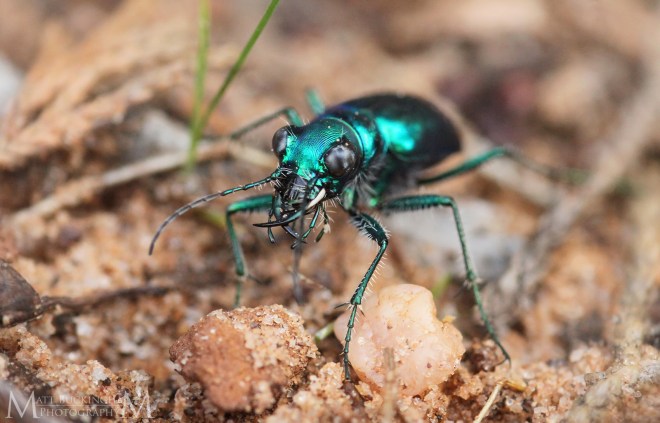
One of the more unexpected denizens of early spring is the Wrinkled Festive Tiger Beetle (Cicindela scutellaris rugata).  Unlike most tiger beetles, which are most active during the summer, the Wrinkled Festive Tiger Beetle is active in the early spring, and by late May are almost impossible to find.
IMG_6089

Wrinkled Festive Tiger Beetle

This jewel-like beetle is restricted to eastern Texas, western Louisiana, and extreme southwestern Arkansas and southeastern Louisiana. Here it occurs in areas with vast expanses of bare sand such as xeric sandhills and sand “blowouts” in the Pineywoods and Post Oak Savannah.
IMG_6099

Wrinkled Festive Tiger Beetle

By mid-March most of the woodlands in the southern Pineywoods had begun to leaf-out.  The scene below was captured in a vast floodplain adjacent Big Sandy Creek in the Big Thicket.

IMG_6062

Vernal

As the freshly emerging leaves hardwoods begin to turn the slopes and floodplains green, a different explosion of color is occurring in a precious few longleaf pine savannahs in the Big Thicket.  At the few sites where it still occurs, the Federally Endangered Texas Trailing Phlox (Phlox nivalis ssp. texensis) reaches peak bloom in mid-March.

IMG_2597

Texas Trailing Phlox

Around the same time, a very different phlox species blooms in the shade American Beech and other hardwoods of rich forested slopes.  Though common throughout much of its range in eastern North America, Wild Blue Phlox (Phlox divaricata) is rare in Texas.  The combination of pale blue blooms, feathery fern fronds and a gnarly old hornbeam created a scene that seemed like something more suited for a Tolkien novel than the Pineywoods.

IMG_2690

Mirkwood

While we’re on the topic of phlox, one can’t drive the backroads of the Big Thicket without admiring the recently described Texas endemic Big Thicket Phlox (Phlox pulcherrima), a member of the Phlox pilosa complex.

IMG_2734

Big Thicket Phlox

With March in full swing, color was coming to all of the vegetative communities of the Pineywoods.  Wright’s Lily (Schoenolirion wrightii), a rare species of glades and barrens came into bloom over deposits of Catahoula Sandstone.

IMG_2666

Wright’s Lily

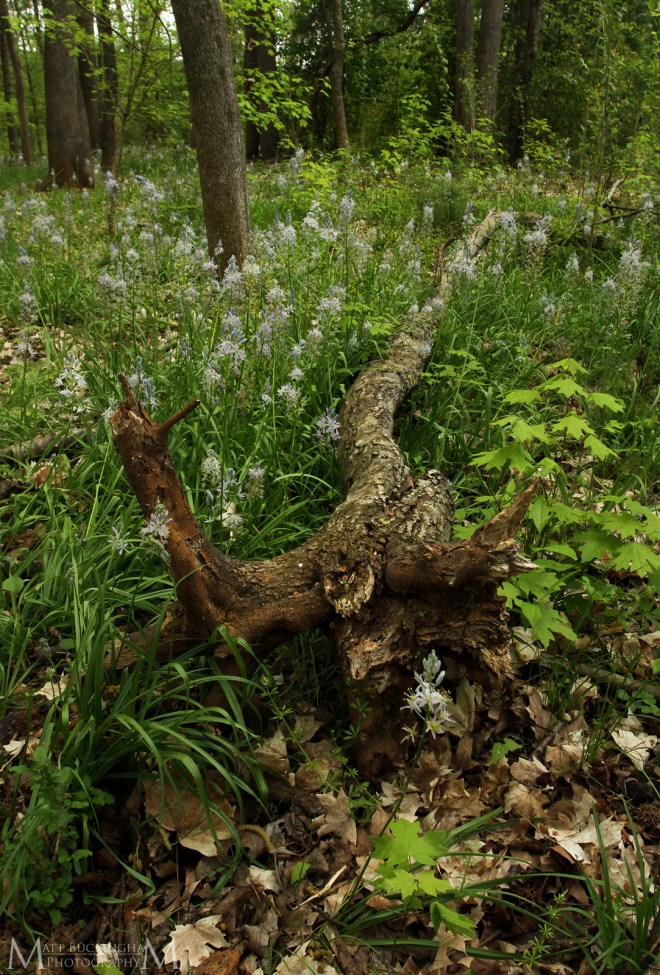
And expansive drifts of Wild Hyacinth (Camassia scilloides) turned the forest floor blue in this woodland in the northern Pineywoods.
IMG_2625

Rebirth

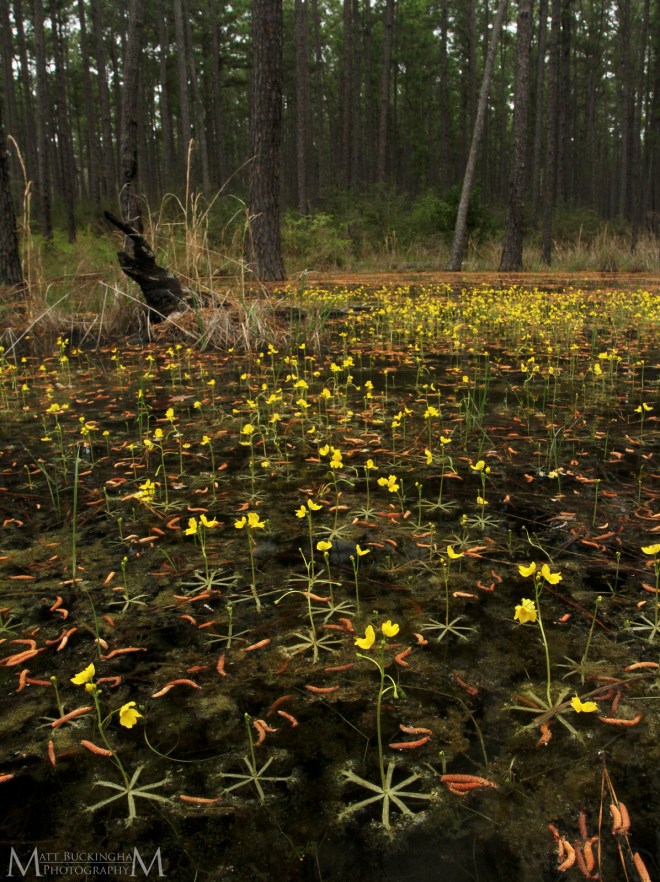
One afternoon, as we were exploring the longleaf pine savannahs of the Angelina National Forest, Carolina spotted a splash of yellow in the distance.  It turned out to be a small flatwoods pond decorated with the blooms of thousands of Floating Bladderworts (Utricularia radiata).  These plants are carnivorous, and I couldn’t help but think that below the surface was something akin to a minefield for the unfortunate aquatic invertebrates that dwell within.
IMG_2744

Floating Bladderworts – Minefield

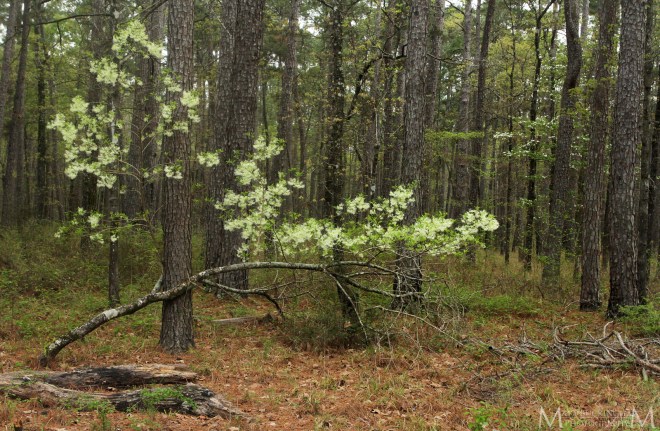
Not all of spring’s palate is painted on the forest floor however, and a multitude of trees and shrubs put on an impressive display as they come into flower.  In the picture below White Fringetree (Chionanthus virginicus) flowers in the foreground while Flowering Dogwood (Cornus florida) blooms in the distance.
IMG_2764

White Fringetree – Old Man of the Woods

By late March the Mayapples (Podophyllum peltatum) have taken over the forest floor.  One of my favorite spring ephemerals, Mayapple is still quite easy to find in certain parts of East Texas, unlike so many other species of rich woods that have become increasingly rare.

IMG_2801

Mayapple – Sea of Green

The large umbrella-shaped leaves of Mayapple are actually toxic.  Only the ripe fruit is edible.  The downy white blooms hang beneath the leaves.  Non-blooming plants always sport a single leaf, while those that bloom have two.

IMG_2817

Mayapples

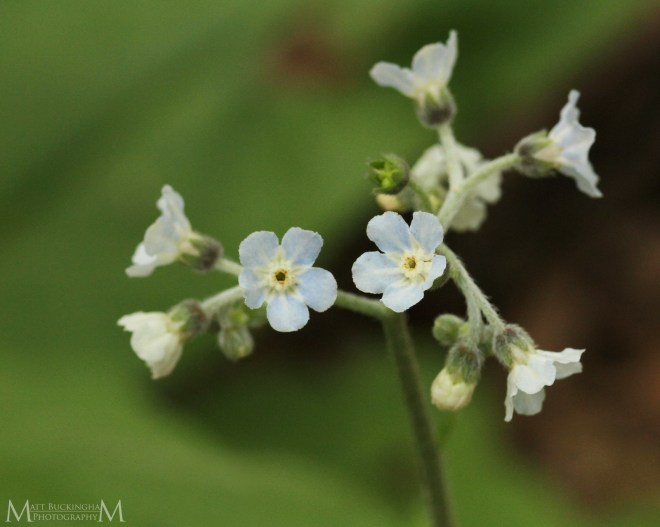
Along the bluffs lining the Angelina River, Carolina and I found a large colony of Wild Comfrey (Cynoglossum virginianum).  These wildflowers, with their downy basal leaves and tiny sky-blue blooms have become quite uncommon in Texas.  They often occur in the company of the Kentucky Lady’s Slipper, and I couldn’t help but wonder of the enigmatic orchid once called these hills home.

IMG_2872

Wild Comfrey Hills

IMG_2925

Wild Comfrey Blooms

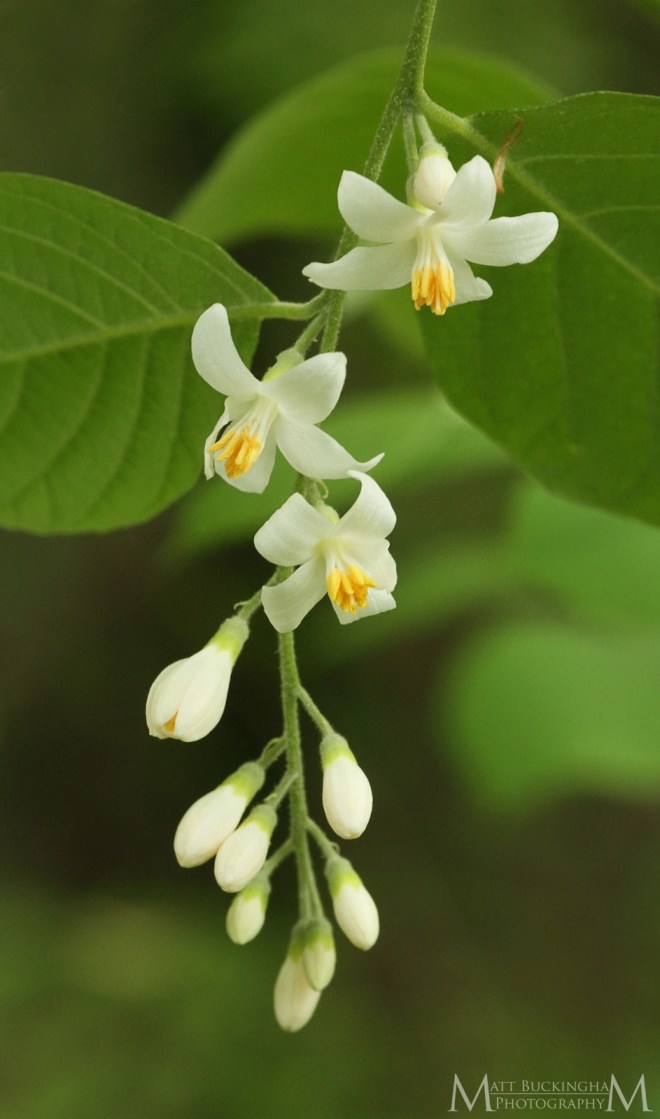
Another uncommon species often found in the presence of the lady’s slipper is the Bigleaf Snowbell (Styrax grandifolia).  It’s easy to see how this species gets its common name, as thousands of small white blooms may dangle from its branches in early April.
IMG_3006

Bigleaf Snowbell

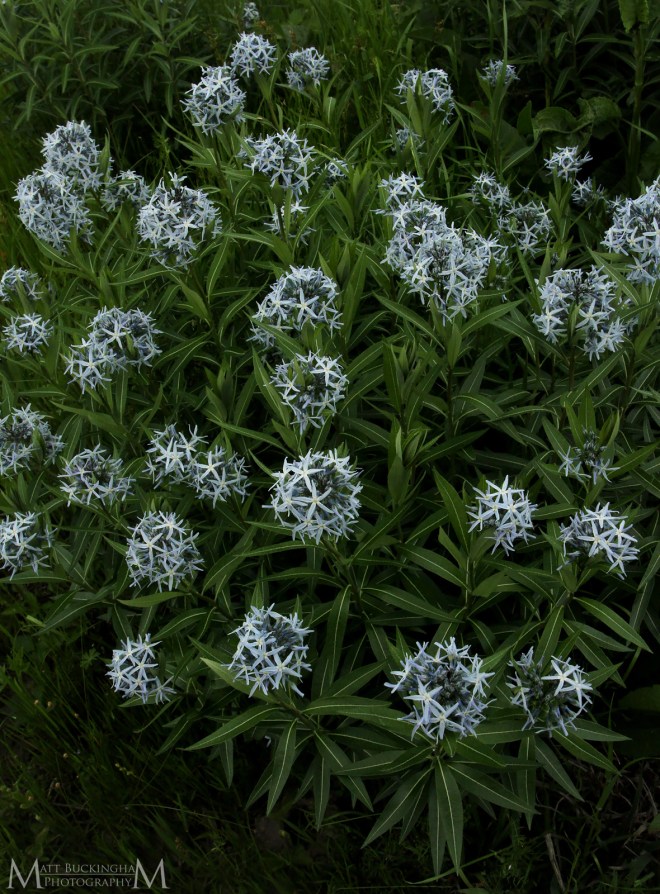
In the vast floodplain of the Neches River I spotted a large colony of Eastern Bluestar (Amsonia tabernaemontana), and I stood in the flood waters to photograph its delicate blooms in the evening light.

IMG_3166

Eastern Bluestar

Every spring I look forward to the emergence of the trilliums.  This year I found this large colony of Sabine River Wakerobin (Trillium gracile) in a rich hardwood forest in Sabine County.

IMG_3598

Sabine River Wakerobin

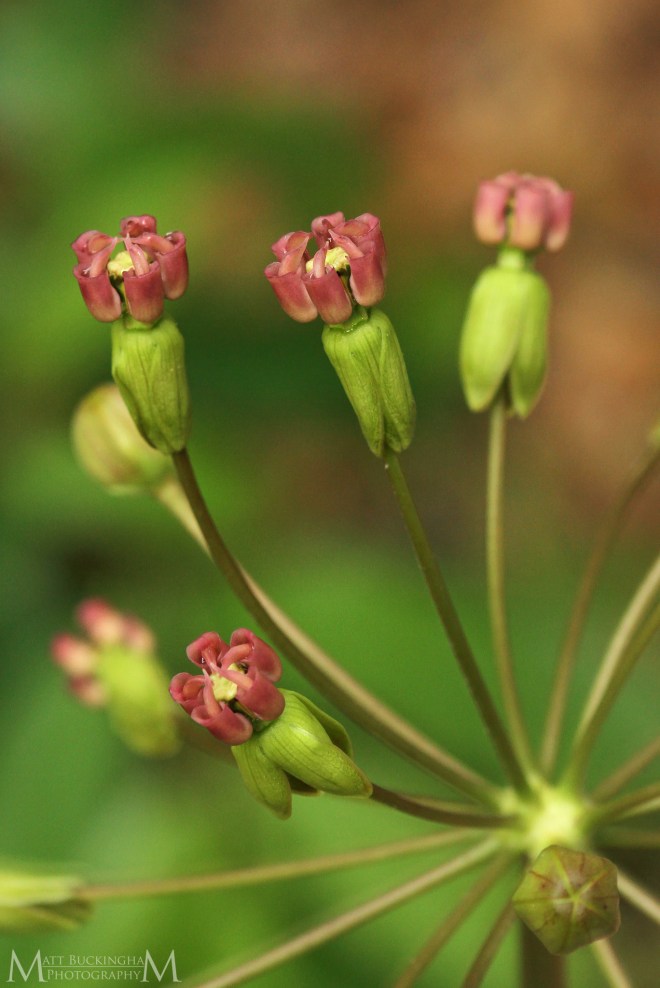
By mid-April many of the spring ephemerals have already faded, and a new cast of floral characters appears on the scene.  Clasping Milkweed (Asclepias amplexicaulis) emerges from deep sands and displays its bizarre blooms for all the pollinating world to see.
IMG_5627

Clasping Milkweed

Deep in the forest a very different milkweed was blooming.  By mid April the White (A.K.A Redring) Milkweed was beginning to come into flower.

IMG_5374

White Milkweed

The Zigzag Iris (Iris brevicaulis) can be found on the margins of wetlands in the Pineywoods.

IMG_5309

Zigzag Iris

Flowering Dogwood is one of the most familiar small trees of East Texas.  Lesser known are the other species of dogwood that occur here.  This spring we found several Roughleaf Dogwoods (Cornus drummondii) in bloom along a small stream in Houston County.

IMG_5233

Roughleaf Dogwood

The Rose Pogonia (A.K.A. Snakemouth Orchid) (Pogonia ophioglossoides) is always a crowd-pleaser.  I found several blooming in late April with my friend James Childress in a remote seep on private land.

IMG_4995

Rose Pogonia

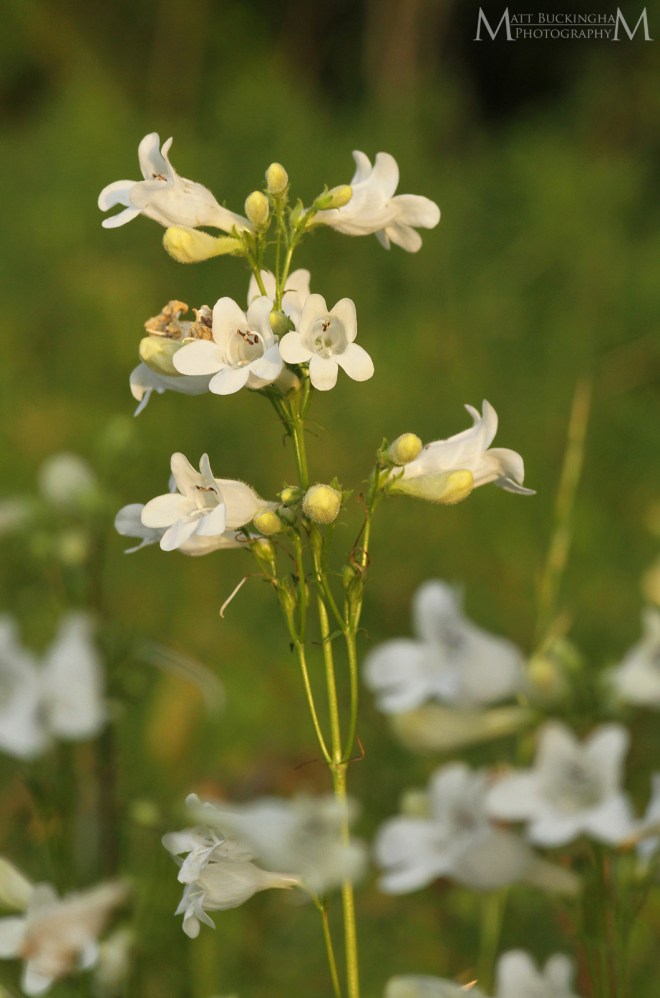
One evening in April I received a call from my friend, and author of The Wild Orchids of Texas, Joe Liggio.  He told me that while returning home from a long day of botanizing, he spotted an uncommon wildflower along a remote road in Liberty County.  It was the Foxglove Penstemon (Penstemon digitalis).  Shortly after photographing the plants at Joe’s site, I found it growing in similar remoteness in Sabine County.  This penstemon has a fairly broad distribution in the eastern third of the state, occurring in scattered populations in rich, open woodlands and their margins. There is some debate as to whether it is native outside northeast Texas, while others question whether or not its native to the state at all.  The plants that Joe and I discovered were, in my opinion, unlikely candidates for escapees from cultivation.  This leads me to believe that is in fact native to East Texas.

IMG_4905

Foxglove Penstemon

IMG_4833

Foxglove Penstemon

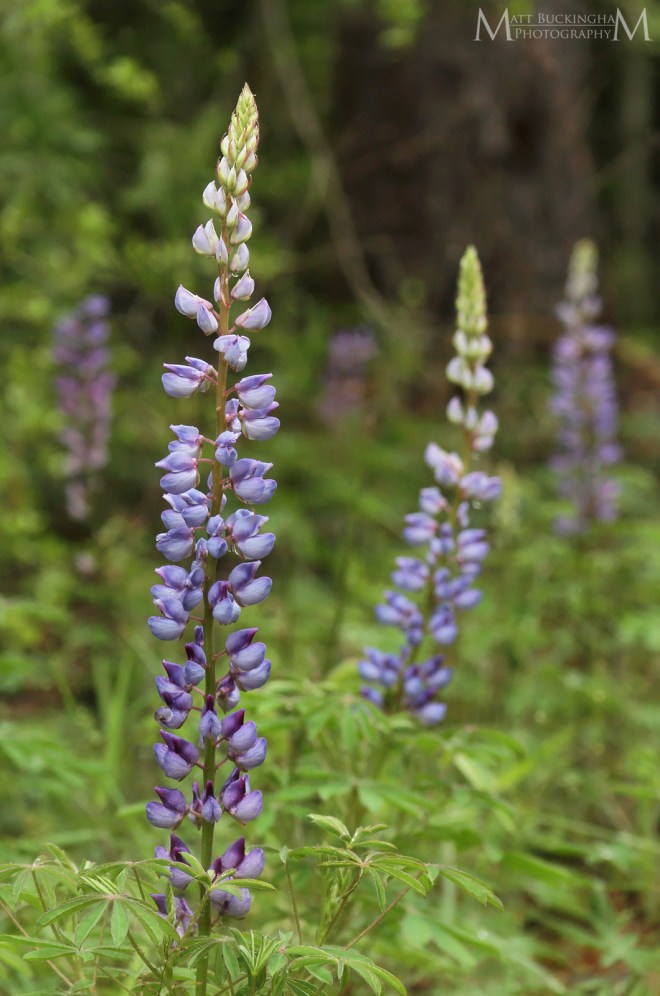
Also in April, my friend Scott Wahlberg and I visited a site in the Big Thicket where last year I was able to track down Wild Blue Lupine (Lupinus perennis).  I went into some detail on this species in a blog post last year, so I won’t say much here, save to mention it’s striking beauty.

IMG_4621

Wild Blue Lupine

IMG_4758

Wild Blue Lupine

Another species that I pursued last year was the Green Adder’s Mouth (Malaxis unifolia).  Carolina and I found them again this year, and I photographed them to the sound of the thunder of a rapidly approaching storm.

IMG_4331

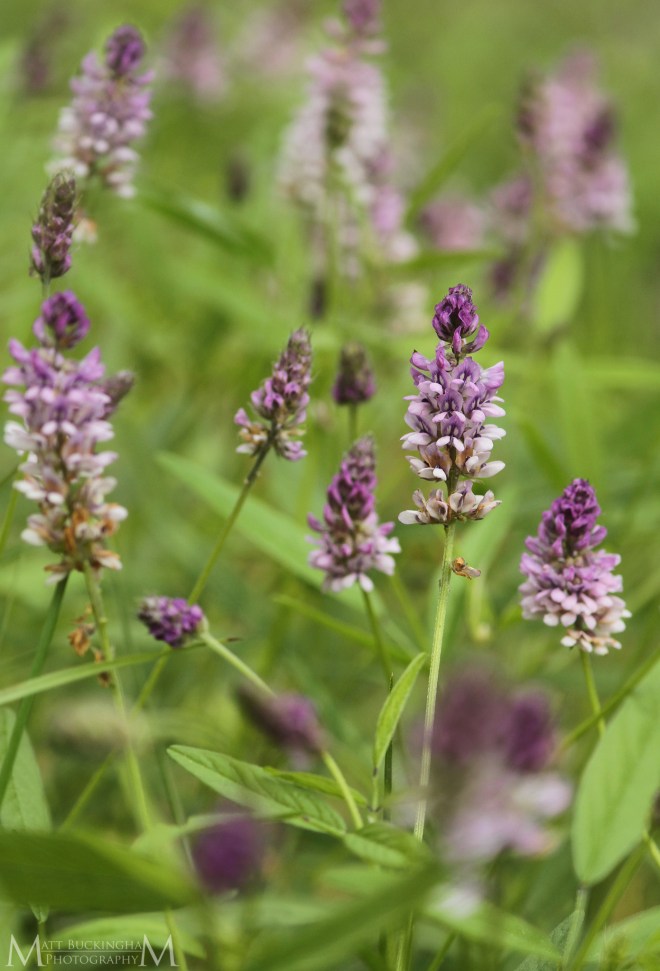
En-route to photograph the adder’s mouth, we spotted a striking little purple legume flowering alongside the road.  It was a patch of Sampson’s Snakeroot (Orbexilum pedunculatum), a plant I only occasionally encounter in the Pineywoods.
IMG_4307

Sampson’s Snankeroot

Though it’s pushing the limits of late spring and flirting with early summer, late May still has a lot to offer, botanically speaking.  One warm evening in late May, Caro and I drove out to Walker County to photograph the Bush’s Purple Coneflower (Echinacea paradoxa var. neglecta).  This puzzling population was found growing in a calcareous prairie remnant by my friend Eric Keith.  Echinacea paradoxa is a species of coneflower found in the Ozark Plateau and isolated populations in southern Oklahoma and southeast Texas. While typically yellow, E. paradoxa var. neglecta range from pale purple to deep pink.  The population here in southeast Texas is disjunct from other known populations by hundreds of miles.

IMG_7617

So it was that the Spring of 2018 came to a close and gave way to summer.  It was hard to say goodbye to the cool, gray days of Spring, but as a naturalist I find some joy in each of our seasons.  Soon the sun would be blaring, the cicadas would be trilling, and a whole new cast of plants and animals would make themselves known.

The Jewel of the Weches Formation

Target Species: Clasping Jewelflower (Streptanthus maculatus)

IMG_7078

The bad news is that I’ve fallen way behind in my blogging.  The good news, however is that the last few months have been full of incredible experiences in the natural world that I look forward to sharing.  So as we are sweltering under near record heat waves, I will share a few posts from this spring, and reminisce about cooler times.

This first post addresses the third, and unfortunately last species from my list of biodiversity goals that I have checked off this year.  In early May I photographed the spectacular Clasping Jewelflower (Streptanthus maculatus) in East Texas.  This member of the mustard family (Brassicaceae) is very rare in Texas, known from only a few sites over the Weches formation in the eastern part of the state.  Here it occurs in a few scattered populations where the iron-rich formation has been exposed.  I learned of this particular population near the Anderson/Henderson County line from my friend Trey Anderson who had found them a few years ago while performing some work in the area.  They occur on a steep exposed hill with a mix of artificial clearings and stunted forest over gravelly Weches substrate.  This soil is extremely rich in iron and it shows in the color of the hillside.

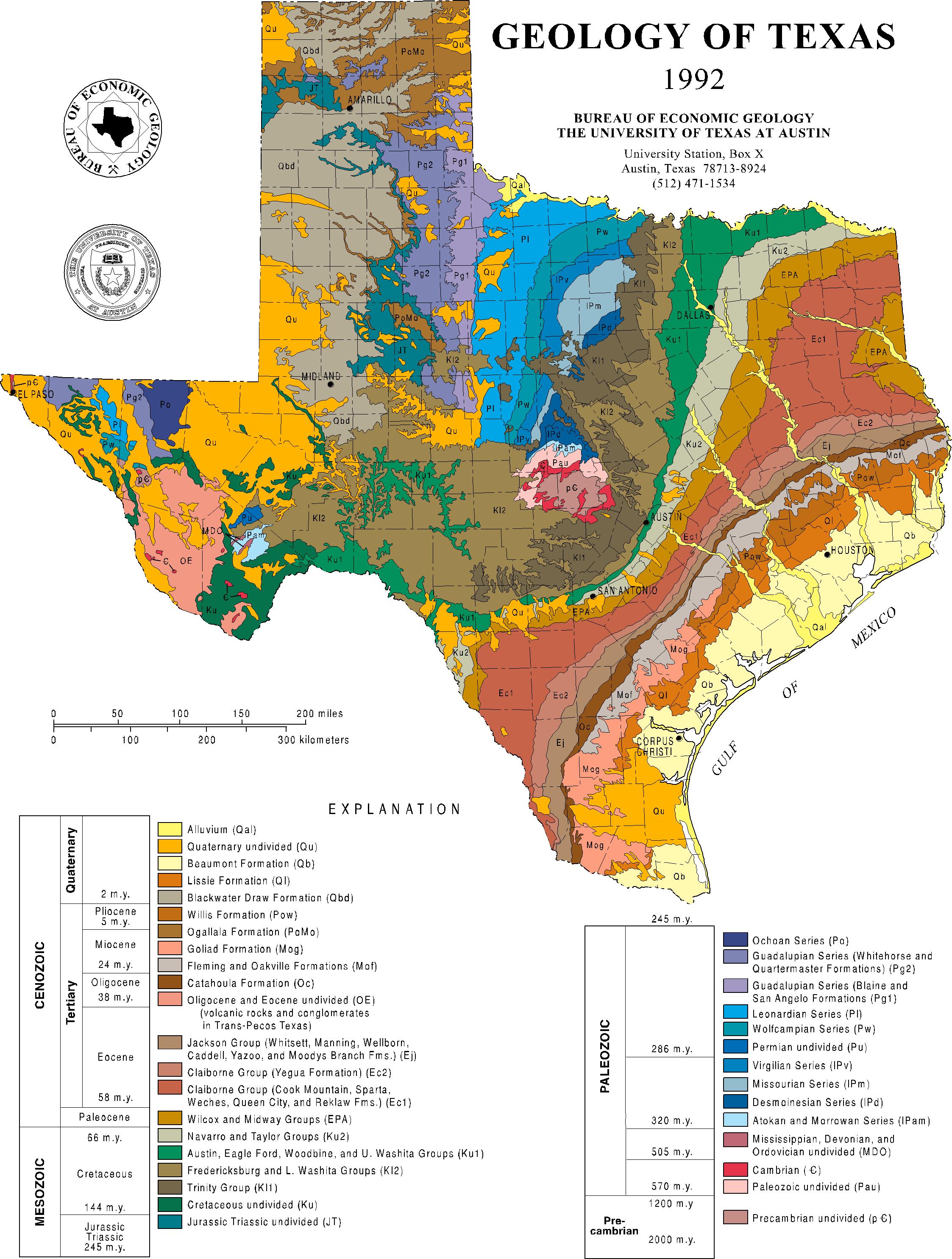
The Weches Formation is part of a broader collection of geologic formations known as the Claiborne Group.  This group also includes the Yegua, Cook Mountain, Sparta, Queen City, and Reklaw Formations.  These occur along with the Weches Formation as a matrix in a broad area that encompasses a narrow band that stretches from Cass, Marion, Harrison, Rusk, Nacogdoches, San Augustine and Sabine Counties in the east along a curve down to Webb and Zapata Counties in South Texas.  (See a map here).

I have previously written a blog post about Weches Glades, a unique vegetative community that occur at a few sites in Nacogdoches, San Augustine, and Sabine Counties.  Streptanthus maculatus once occurred here as well, and can probably still be found at a few existing sites.  Many populations have been lost, however, to land use conversion and extensive glauconite mining.  Elsewhere in its range S. maculatus occurs over similarly iron-rich deposits in eastern Oklahoma and western Arkansas.

I was a bit late in seeking these jewels out this year, as most were already spent or in fruit.  The individual pictured was the only one I found in decent shape.  I’m not complaining though, for it gives me something to look forward to next year, and will afford me another visit to the unique, disappearing communities of the Weches Formation.

Hidden Wonders in the Forests of Northeast Texas

IMG_4141

Rich Hardwood Forest

Target Species: 

Tapertip Trillium (Trillium viridescens)

Downy Yellow Violet (Viola pubescens)

It’s been some time since I’ve posted about one of my “Biodiversity Targets”, those species that I included on my 2017 list of biodiversity goals.  At the end of 2017, I had only tracked down around half of the species on that list, but along the way I amassed a wealth of incredible observations, adventures, and experienced more of our states biodiversity than I ever could have imagined.  So I decided that instead of creating a new list or adding to the existing list, I would work over the next couple of years to finish the list I made at the start of 2017; a list that was a bit more ambitious than I had anticipated.

In early April 2018 my pursuit of these species would take me to the far northeast corner of Texas, near the Oklahoma border in search of two species that I have long wanted to see in the state.  Joining me in this quest was my friend Scott Wahlberg.  We set out early, in the gray of a perfect spring morning.

The counties of far northeast Texas feature a mingling of habitats typical of both the Post Oak Savannah and Pineywoods.  Some communities, like the rich hardwood forests of the Sulphur River and Red River and their tributaries are unique to this part of Texas, and more similar to the forests of the Ouachita Mountains of Oklahoma and Arkansas than they are to those of the heart of the Pineywoods in Deep East Texas.  Here a sweet of species reach the southwestern limit of their range.  Among these are several species that are either absent from, or are very scarce elsewhere in the Pineywoods.  Examples of these include trees like Silver Maple (Acer saccharinum), Black Oak (Quercus velutina), Shingle Oak (Quercus imbricaria), and Nutmeg Hickory (Carya myristiciformis).  Examples also include woodlands forbs such as Fire Pink (Silene virginica), Rue Anemone (Thalictrum thalictroides), Downy Yellow Violet (Viola pubescens), Tapertip Trillium (Trillium viridescens), and more.

The latter two were the focus of this trip.  In Texas, Trillium viridescens occurs in rich hardwood forests on steep river bluffs and in the damp alluvium of  riparian woodlands.  Here we found it growing among other interesting woodland forbs like Mayapple (Podophyllum peltatum), Veiny Pea (Lathyrus venosus), Wild Hyacinth (Camassia scilloides), and White Trout Lily (Erythronium albidum).

Trillium viridescens is a species of the central United States, primarily occurring in the Ozark Plateau, and the Boston and Ouachita Mountains. It barely enters Texas in northeastern portion of the state. The plants in the northern portions of its range generally have petals that grade from purple at the base to bright greenish yellow at the tips. Most Texas individuals, however, tend to be solid maroon to greenish purple.


IMG_3723

Tapertip Trillium

The sessile-flowered trilliums can be a tricky group. In Texas, three species, T. gracile, T. ludovicianum, and T. viridescens are superficially similar in many ways, however when I first saw T. viridescens in the field it was immediately clear that this species was obviously different from the other two. The T. viridescens plants we observed were much larger and more robust than any T. gracile or T. ludovicianum I had ever seen. Their faintly mottled, broadly ovate leaves were much different than the state’s other trillium species, which have narrower, more heavily mottled leaves. The petals were also much larger. There are other characteristics that can be used to differentiate T. viridescens from the other two species such as a scabrous vs glabrous scape and a number of differences in flower morphology.

Seeing Trillium viridescens in the field certainly left a lasting impression.   It was a special moment for me, as it was the last of our state’s five species of trillium that I had left to see.  Like all of our other trillium species, T. viridescens is at risk, and is likely declining from a number of factors such as climate change and land use conversion.

Viola pubescens another characteristically eastern species that barely enters Texas in the far northeastern part of the state.  It is a yellow-flowered violet that occurs through most also occurs in parts of central United States as far west as the Black Hills of western South Dakota and eastern Wyoming.  While I have seen and photographed this species in the southern Appalachians, I had long wanted to see it in Texas.

On that fine spring day, we found it in a mature riparian forest along a small order stream.  Shaded by an overstory of Silver Maple, Red Maple, Shumard Oak and Sweegtum,  we found it growing alongside a variety of other woodland herb including Podophyllum peltatum, Packera glabella, Packera obovata, Viola sororia, and Erythronium albidum.

IMG_3991

Downy Yellow Violet

IMG_4090

Downy Yellow Violet

While exploring the backgrounds of northeast Texas we spotted several large clumps of Eastern Bluestar (Amsonia tabernaemontana) growing in a remnant prairie.  Scott and I stopped a moment to photograph them, and discussed what the area must have looked like before the hand of man left it forever changed.  We also pondered the possibility that prairie species like the Southern Crawfish Frog might just still hang on here.  Though I haven’t spent much time in this part of the state, I quickly gained an appreciation of just how diverse it really is.

IMG_3935

While most of northeast Texas remains rural and relatively undeveloped, there is little public land, and most of these populations are on private land and vulnerable. There is still hope, however.   Through conservation efforts with and by private landowners there is hope that these lovely members of our flora remains for future generations to enjoy.

Witches in Winter

IMG_1663

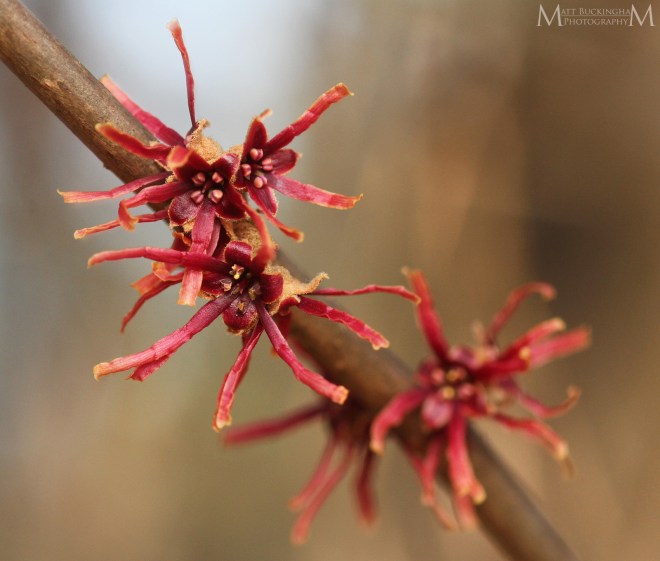
Big-leaf Witch-hazel

There are three species of Hamamelis a.k.a. Witch-hazel in the United States.  All three species occur in East Texas, and today I present two of them.  Witch-hazel was an important plant for native cultures and settlers, both for its wide range of uses and associated folklore.

Witch-hazels contain a variety of medicinal compounds.  Native Americans used witch-hazel extract to treat skin conditions, swelling, inflammation, burns, insect bites, poison ivy, stomach issues, colds, and more.  Early settlers adopted these uses, and with-hazel extract is still used today for a multitude of skin products including aftershave.

Witch-hazel twigs were also frequently used for “witching for water”.  Also known as “divining”, witching involves walking while lightly holding a forked twig at the points of each side of the split.  Legend has it when the twig passes over water, the opposite end will point toward the ground.

Once while visiting an East Texas old graveyard with long-time resident and expert on everything East Texas, Keith Stephens, he told me and the group we were with a legend I hadn’t heard.  This legend states that if one carries a small witch-hazel twig in each hand pointing straight in front of them, the twigs will turn to the right or left when passing over the grave of a woman.  Every member of the group proceeded to try, and it proved true for each of us.  Perhaps there is a little magic in this interesting genus.

Their blooms certainly seem to be magical, blooming at the height of winter when no other plant dares to.  I’ve seen them bloom from mid December to mid January.  It seems foolhardy for a plant to bloom at this time, but by doing so they receive little to no competition from other species for hungry pollinators.  Though few insects are active this time of year I have observed several hover flies visiting the same witch-hazel shrub on a cool January day.

The most common and wide-spread species of witch-hazel in the U.S. is the American Witch-hazel (Hamamelis virginiana).  In Texas it ranges over much of the southern Pineywoods with a disjunct population in the Edward’s Plateau.  It can be identified by its pure yellow flowers.

IMG_1696

American Witch-hazel

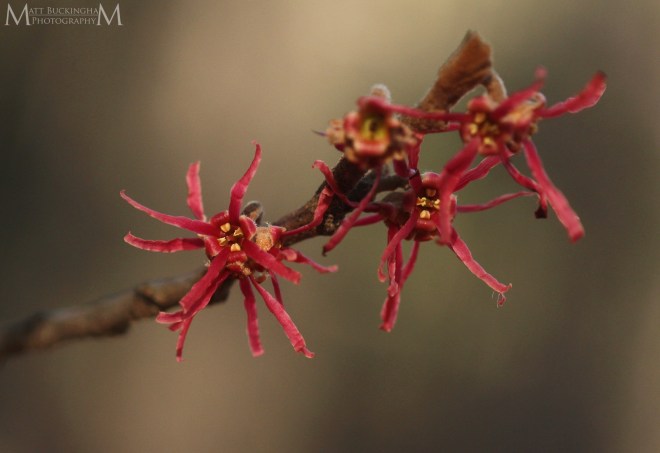
The Big-leaf Witch-hazel (Hamamelis ovalis) was only recently discovered in Texas.  This species was first described in 2006.  At the time it was thought to be restricted to just a single site in Mississippi. Shortly after it was discovered at a handful of other sites in Mississippi and Alabama.  A couple of years ago it was found in the rich forested slopes of extreme eastern Texas. Though it may yet be discovered in parts of Louisiana, it appears to exhibit an interesting disjunction noted in a number of other species in the coastal plain.

IMG_1737

Big-leaf Witch-hazel

The flowers of Hamamelis ovalis are generally maroon or wine-colored, however they can occasionally be orange or bi-colored, with orange centers and yellow petal-tips.

IMG_1534

Big-leaf Witch-hazel

Observing the witch-hazel in winter helps to satisfy the wildflower withdrawal that tends to come with winter.  Fortunately here in East Texas our winters are fairly short, and in just a few short weeks we should begin to see the blooms of our brilliant spring ephemerals!

Christmas in November

IMG_7662

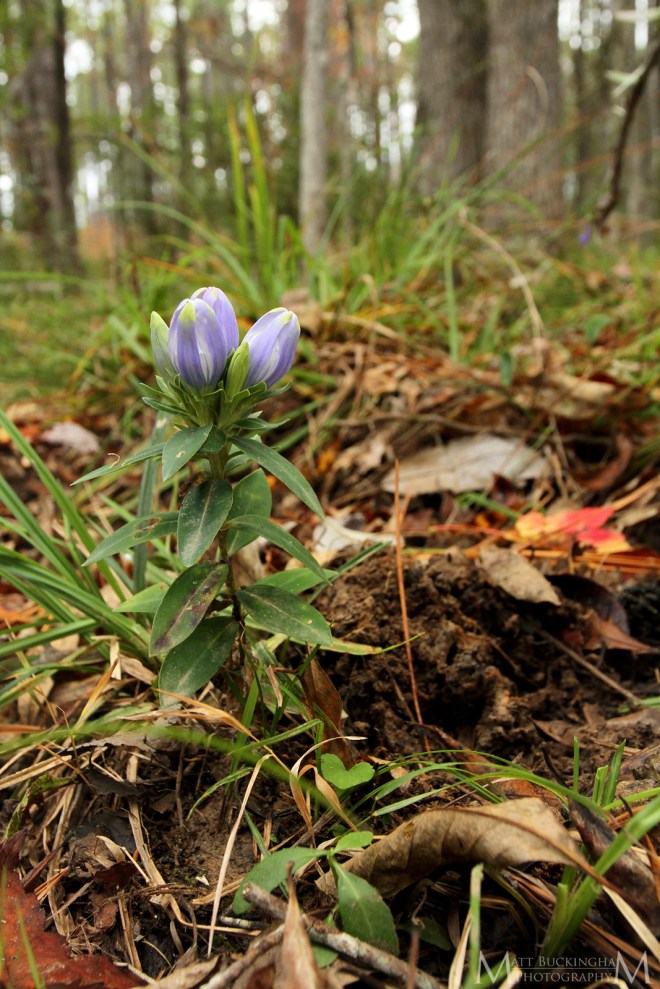
Soapwort Gentian

Target Species: Soapwort Gentian (Gentiana saponaria)

One of our country’s more enigmatic plant genera is Gentiana.  Spring may be more often associated with wildflower blooming, but many of the brightly colored species of this genus bloom in the fall, and in the case of Gentiana saponaria in Texas, into the winter.  The genus is also unusual in that many of its flowers do not open, remaining forever in a bud-like state, despite having fully developed sexual organs hidden within the closed petals.

IMG_7636

Soapwort Gentian

Gentiana saponaria is one of a suite of species that reach the southwestern extent of their range in extreme Eastern Texas.  In Texas it is very rare, probably occurring in five or less populations.  While elsewhere within its range it might occur in prairie remnants and moist woodlands, in East Texas they seem to be confined to a few mature forested seeps nestled within longleaf pine savannahs.  Associated species include Pinus palustrisMagnolia virginianaNyssa bifloraAcer rubrumPlatanthera ciliarisVeratrum virginicumEutrichium fistulosumOsmundastrum cinnamomeum, and more.

County-level distribution of Gentiana saponaria.  Yellow counties indicate that the species is present and rare.

Soapwort Gentian has been on my radar for several years now.  Very few pictures from Texas exist, and I suspect that reflects that very few people have seen this plant in Texas.  Being at the periphery of its range, suitable habitat in East Texas is likely at a premium.  Despite their preferred habitat appearing to be relatively common in Deep East Texas, this plant persists at only a handful of sites.  It is likely that there are other factors influencing its distribution that we don’t fully understand.

IMG_7619

Soapwort Gentian

The perpetually closed nature of this gentian’s blooms has always intrigued me.  It is likely pollinated primarily by bumble bees and large beetles, which are strong enough to push their way through the closed petal lobes.  It may also, however, be pollinated by tiny beetles that are small enough to work their way between the tiny gaps at the tip of the blooms.  Throughout its range the flowers of Gentiana saponaria vary from white to electric blue to purple.  In Texas, the buds are lime green as the develop, and as the flower matures it turns sky blue.  Then, as it fades, it gradually turns to deep purple and ultimately tan before it withers.  My friend and author of Wild Orchids of Texas, Joe Liggio likened the blooms to a cluster of Christmas lights, a fitting description if you ask me.

IMG_7614

Soapwort Gentian

The genus Gentiana has long history of utilization for its medicinal properties.  The root has a multitude of purported uses including as an remedy for snakebite, digestive issues, and a variety of other ailments.  Compounds from the roots have proven to be anti-inflammatory, antiseptic, and beneficial for the treatment of liver disease.

IMG_7602

Soapwort Gentian

To see this plant, I communicated with some contacts with the National Forests and Grasslands of Texas.  They pointed us in the right direction, and the first weekend of November Carolina, our friend Scott and I set out to look for them.  We found dozens of plants scattered along the upper reaches of a baygall within a fairly extensive rolling longleaf pine savannah.  The baygall is partially fed by a small springfed stream.  The plants were growing along the banks of the stream and in the drier portions of the baygall.

IMG_7646

Soapwort Gentian

After spending some time at this site, we explored some other baygalls in the area.  After striking in several areas, we found a handful of plants at what we suspect is a new location for this species in Texas.  I sent the information to the Forest Service, and they confirmed that it had not been previously documented in that area.

IMG_7595

Soapwort Gentian

An added bonus of searching for wildflowers in autumn is the fall foliage, set ablaze by the annual process where leaves break down chlorophyll to reveal their other brightly colored pigments.  Though it was still early in the season, that day we admired the changing colors of elms, maples and hickories.  Perhaps most striking were the fronds of Cinnamon Fern within the baygalls, that looked more like flickering flames than once lush Pteridophytes.  Though there are a few more species that may bloom into December, photographing Gentiana saponaria essentially brings a close to the East Texas wildflower season, and I can definitively say that I went out on a high note.

IMG_7670

Autumn in the Baygall

October Recap

IMG_7302

A rich mesic forest dominated by American Beech and other hardwoods

October was a productive month.  I was able to photograph another six species on my biodiversity list:

Rainbow Scarab (Phanaeus vindex)

Black-tailed Rattlesnake (Crotalus ornatus)

Button Cactus (Epithelantha micromeris)

Lacespine Nipple Cactus (Mammillaria lasiacantha)

Living Rock Cactus (Ariocarpus fissuratus)

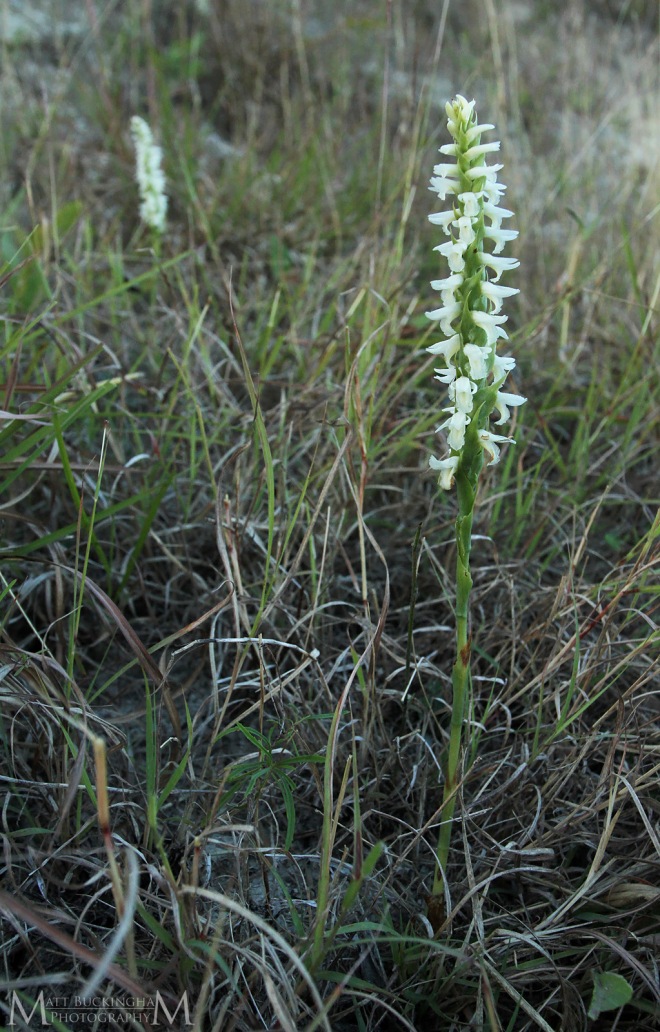
Great Plains Ladies’ Tresses (Spiranthes magnicamporum)

2017GoalsOct

East Texas generally experiences its first significant cold fronts in October, providing our first real relief from the sweltering summers.  These cool days are the perfect time to wander around in the woods.  This year Carolina and I spent a few days in the rich mesic American beech slopes, where we searched for rare plants and early signs of fall color.

Though not particularly rare, the American Strawberry Bush (Euonymus americanus) displays its bizarre fruits in the fall.  Also known as “Hearts-a-burstin”, the fruits of this small shrub generally resemble strawberries when closed, but are hard and inedible.  In the early fall the break open to reveal the large red seeds within.

IMG_6280

Fruits of the American Strawberry bush

The Tall Rattlesnake Root, or Tall Wild Lettuce (Prenanthes altissima) is very rare in Texas, known only from a few sites in Jasper and Newton Counties.  Here it is at the southwestern extent of its range.  It occurs along small streams in rich mature hardwood dominated forests.

IMG_7277a

Tall Rattlesnake Root

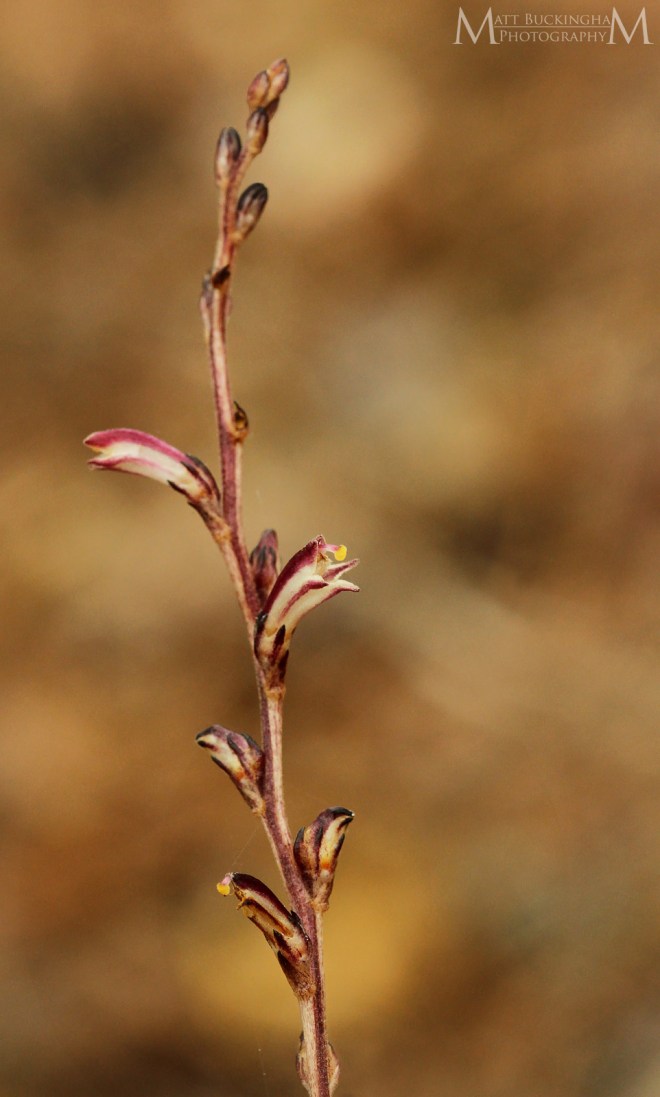
Always found among the roots of its host plant, Beechdrops (Epifagus virginiana) is parasitic on the roots of American Beech.  This bizarre plant lacks chlorophyll and is entirely dependent on its host for energy.

IMG_7137

Beechdrops

After a long day of botanizing, I spotted the unmistakable form of a Canebrake Rattlesnake (Crotalus horridus) crossing the road. The sighting was remarkable, and special to me, in that it occurred on the 2nd busiest highway in my county. It had made it most of the way across two lanes of traffic, and was nearly across the shoulder when I spotted it. I quickly turned around, worried that some vehicle would come from behind and purposely put an end to this beautiful creature, an all too common occurrence here, perpetrated by the unsympathetic and uninformed. Fortunately it made it safely across the pavement, and I watched as it inched across the right-of-way toward the dense forest beyond.

This encounter also helped remind me that sometimes there are more important things than getting the shot. I’ll admit, I hoped very much to capture a spectacular image of this three and a half foot beauty. But as I tried to balance poor light, a multitude of onlookers passing by at 70 miles an hour, and issues with trespassing, I realized that not only was it futile, but completely unnecessary. Simply spending a few moments with this incredible creature was more than enough.

IMG_7368

Canebrake Rattlesnake

Ladies on the Prairie

IMG_7574

Great Plains Ladies’ Tresses

Target Species: Great Plains Ladies’ Tresses (Spiranthes magnicamporum).

Fingers of prairie penetrate central and eastern Texas like roots in the form of the Blackland Prairies and pockets of grasslands in the Pineywoods, Post Oak Savannah, and Edward’s Plateau.  In scattered areas within these prairies, where the soil conditions are just right, the fall air is filled with the sweet fragrance of the Great Plains Ladies’ Tresses (Spiranthes magnicamporum).  From mid October through November, spirals of delicate white flowers push their way through a sea of prairie grasses and deliver their aroma to the wind.

IMG_7538

Great Plains Ladies’ Tresses

Commonly referred to as ladies’ tresses, the genus  Spiranthes is named in reference to the spiral arrangement of  flowers along the inflorescence.  Spiranthes orchids are a confusing group to identify, particularly those of the Spiranthes cernua complex, to which the Great Plains Ladies’ Tresses belongs.  There are, however, several ways to differentiate S. magnicamporum from the much more common and widespread S. cernua, which I will outline below.

IMG_7520

Great Plains Ladies’ Tresses

The first, most readily observable difference is in the habitat.  Spiranthes cernua is fairly catholic in its preference, occurring in a variety of disturbed habitats including moist roadside ditches, utility right-of-ways, fallow fields, and even residential lawns.  Spiranthes magnicamporum, however, occurs under much more specific conditions.  In Texas they generally occur in prairies with soils that are both alkaline (basic) and calcareous (composed of calcium carbonate).  They can tolerate dryer conditions, and can be found on exposed outcrops of limestone and sandstone.

IMG_7474

Great Plains Ladies’ Tresses

Another difference is in the fragrance.  While S. cernua has little to no odor, S. magnicamporum is intensely fragrant.  It gives off a rich scent of coumarin which can sometimes be detected before the plant is seen.  In fact, as I photographed some of these orchids from several feet away I enjoyed the pleasant aroma filling the air.

IMG_7457

Great Plains Ladies’ Tresses

There are some that will say that a careful examination of the seeds is required to differentiate S. cernua and S. magnicamporum.  There are, however, several morphological aspects of the plant and its flowers that are often used to identify S. magnicamporum in the field.  In general, S. magnicamporum appears more robust, with a thicker stem and slightly larger flowers.  The lateral sepals of S. magnicamporum are generally spreading, and arch above the rest of the flower, especially as the blooms age.  In S. cernua, the sepals are adpressed, held tightly against the rest of the flower.  The lip of S. magnicamporum is also slightly elongated and thickened.  The lip of S. magnicamporum also displays a faint yellow wash, in contrast with the typically pure white lip of S. cernua.  See the photo of Spiranthes cernua below for comparison.

IMG_0466

Spiranthes cernua taken in November 2016.

Carolina and I first looked for Spiranthes magnicamporum in a number of Weches Outcrops in East Texas.  Having no luck there, the next day we traveled to a series of sandstone outcrops in the Blackland Prairie in East-Central Texas.  Here we found them to be quite common, but only in areas where the underlying sandstone approached the surface.  It was quite a treat to see them growing directly on exposed sandstone alongside a variety of cacti and yucca.  The Great Plains Ladies’ Tresses are frost hardy, with reports of blooming as late (early?) as January.  Indeed, the night before we set out had dipped into the low 30s, yet the flowers remained fresh and fragrant.  Searching for these lovely orchids among the prairie with my wife was the perfect way to spend a brisk fall day.  As we headed back to the dense forests of the Pineywoods we marveled at prairie skyscape, painted pink and orange by the setting sun.

IMG_7569

Great Plains Ladies’ Tresses

Living Rocks, Golf Balls, and Other Strangely Named Cacti of the Trans-Pecos.

IMG_6987a

Living Rock Cactus

Target Species:

Black-tailed Rattlesnake (Crotalus ornatus)

Button Cactus (Epithelantha micromeris)

Lacespine Nipple Cactus (Mammillaria lasiacantha)

Living Rock Cactus (Ariocarpus fissuratus)

The landscape of Big Bend is striking for its vastness; famous for its sweeping views that stretch from horizon to horizon, and seemingly beyond.  Stepping into this rugged wilderness, one is immediately hit with the harshness of this land.  Brutal conditions created by lack of rainfall and extreme temperatures.  It is easy to think that this seemingly inhospitable land  would be devoid of life, but despite its harshness it is incredibly diverse, harboring a rich flora and fauna unlike anywhere else on the planet.  And as remarkable as this vastness is, equally astounding is the beauty and variety that can be found in just one small patch of the desert floor.

Big Bend, that large peninsula of Texas that dips down into Mexico as it follow a bend in the Rio Grande, has the greatest cactus diversity in the country.  It was that diversity that brought Carolina and I to the region this October.  Specifically we were hoping to find the Living Rock Cactus (Ariocarpus fissuratus) in bloom.

Big Bend is part of the Chihuahuan Desert.  It is the highest, wettest desert in North America, and the most biodiverse in the world.  The Big Bend Region includes a multitude of natural and cultural attractions, including Big Bend National Park, Big Bend Ranch State Park, and Terlingua.  We planned to explore these areas in pursuit of our succulent quarries, and hoped that our pursuit would bring with it other natural wonders.

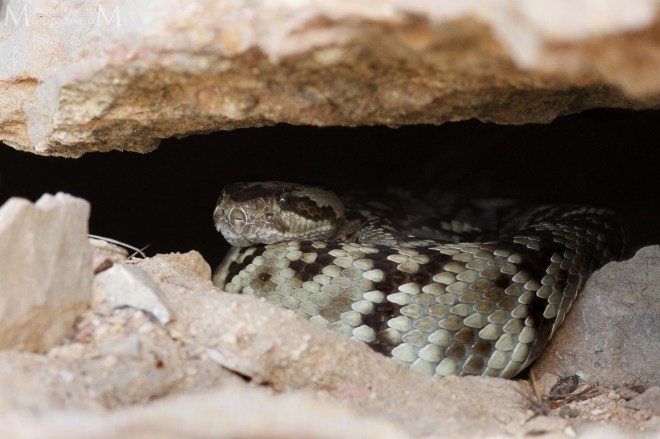
Cactus hunting is not without its hazards.  Aside from the obvious risk of an errant spine in the skin, there are other denizens of cactus country that pack a punch.  One such inhabitant is the Black-tailed Rattlesnake (Crotalus ornatus).  Yet despite this creatures fearsome reputation as a venomous marauder, it is one of the most docile snake species I have had the good fortune to encounter.

As I scoured a rock cut in search of spiny succulents, my eyes caught a familiar outline – a striking (as in attractive) Crotalus ornatus coiled at the mouth of a deep crevice in the limestone.  It was sitting, I presumed, waiting for some unsuspecting rodent to wander within its grasp.  Generally speaking, I think that the threat of rattlesnakes to your average desert-goer is greatly exaggerated, however seeing this beauty hidden away in the perfect hand or foot hold certainly reinforced the old adage “look before you step”.  The photo below depicts the animal as I found it.

IMG_6762

Black-tailed Rattlesnake

After spending a few moments with the black-tail I continued my search for cacti.  After a moment I heard Carolina call out that she had found something.  How she spotted them, I’ll never know, but she had found a population of the diminutive Button Cactus (Epithelantha micromeris).  This diminutive cactus seldom protrudes more than 2 inches above the rocky substrate it calls home.  It occurs primarily in Mexico, but also throughout much of West Texas, southern New Mexico, and extreme southeastern Arizona.

Though they were not in flower, I found these small, rock-like cacti to be quite photogenic.  They flower primarily in late winter and early spring.  Later in the year an elongated red fruit appears.  Caro likened the fruit to a particular part of an excited dog’s anatomy.

IMG_6711abc

Button Cactus

IMG_6719ab

Button Cactus

Nestled in a few populations along the Pecos/Brewster County line, one may find a particularly formidable looking cactus.  The Icicle Cholla (Cylindropuntia tunicata) is a wide ranging species, occurring in deserts throughout much of Latin America.  In the United States, however, it is known only from these few places in the Trans-Pecos of Texas.  Admiring the afternoon light filtering through its intimidating spines, it was easy to see how it earned its common name.

IMG_6772

Icicle Cactus

After a long day of travelling and exploring we finally made it to Marathon, but not before stopping at an extensive Black-tailed Prairie Dog town, where we admired their antics as the day began to fade.  We made our camp in Marathon, and I found myself deep in thought as we laid in our sleeping bags looking up at the twinkling wonder of space.  Along with the prerequisite existential questions inspired by such a vista, I pondered on the days to come, and the natural wonders that awaited us.

The next morning I spotted a remarkable creature on the stucco outside the campground’s bathrooms.  It was a male Chihuahuan Agapema (Agapema dyari).  A lovely member of the giant silkmoth family (Saturniidae).  I gently moved it to a nearby tree trunk, where I hoped it would be less obvious to the hoard of House Sparrows that were scouring the area.

IMG_6787

Chihuahuan Agapema

As the sun warmed the desert we broke our condensation-laden camp and set out for Big Bend National Park.  As we crossed into the park we immediately took notice of the diverse cactus community.  The most obvious were the abundant clumps of Strawberry Cactus (Echinocereus stramineus), the heavily armed Eagle’s Claw Cactus (Echinocactus horizonthalonius), and the ubiquitous prickly pears (Opuntia spp.).

Finding the smaller, more cryptic species, took a bit more work.  We found the Lacespine Nipple Cactus (Mammillaria lasiacantha) to be quite common.  Also known as the Golf Ball Cactus, this tiny succulent is quite similar to the Button Cactus.  Cacti of Texas, A Field Guide by Powell, et. al discusses some of the differences.

IMG_6913

Lacespine Nipple Cactus

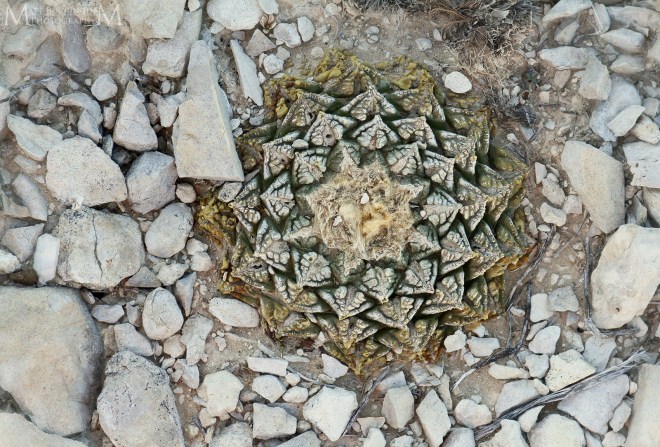
The real reason for our trip, however, was to try to catch the Living Rock Cactus (Ariocarpus fissuratus) in bloom.  This bizarre cactus is, in my opinion, one of the most spectacular plants in the country.  Hardly recognizable as a cactus, it is spineless, and consists of rough tubercles arranged in concentric rings around a center of soft fuzz.

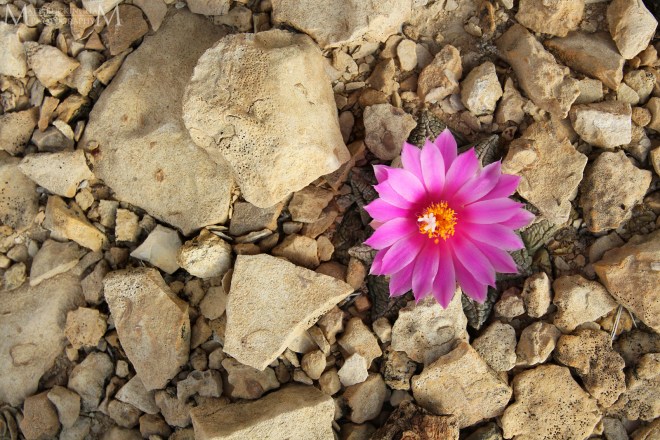
For most of the year the dull green to gray Living Rock blends perfectly with the scattered stones that litter its limestone home, relying on camouflage rather than piercing spines for defense.  For a few short weeks in the fall, however, the limestone hills of the Trans-Pecos explode with color as thousands upon thousands of Living Rocks open their bright pink blooms to the world.

It was just such a scene that I was hoping Carolina and I would encounter in Big Bend.  We were soon to find, however, that finding these jewels of the Chihuahuan Desert in bloom would be far more difficult than we anticipated.  We spent all day scouring limestone ridges, bluffs along the Rio Grande, and flats in the low desert.  We jumped for joy when we found our first plant.  We knew we were were in the right area.  Even without their blooms, the Living Rock is a beautiful, bizarre plant and photographic subject.

IMG_6857

Living Rock Cactus

The desert sun is relentless, even in mid October.  Our spirits refreshed by finding our first Living Rock, we pushed on, scouring the bleached white limestone hills as the temperatures flirted with 100 degrees.  It was truly brutal, but we knew that the payoff of seeing the blooms would be well worth our suffering.  After several hours, and several hundred more Living Rocks sighted, however, the blooms did not come.  We were dismayed.  We had become proficient at spotting the near invisible cacti on the desert floor, but despite finding so many individuals in several different areas, we did not find a single bloom.  I began to think that this would not be the trip that we would see the exquisite flowers of Ariocarpus fissuratus.

IMG_7024a

Living Rock Cactus

That night we hoped to camp in the park, but alas, all of the campgrounds were full.  We debated between staying at a primitive campsite along a backcountry road, or driving to the campground in Study Butte.  In the end we opted for the latter, and made the drive from the Rio Grande to Study Butte in the darkness, with nothing but the Common Poorwhills, Black-tailed Jackrabbits, and Western Diamondbacks to keep us company.

When we arrived at the campground, the attendant informed us that there was a party going on that would last well into the night, and recommended that we select a site on the other  side of the property.  We happily agreed.  We made camp, ate dinner, and settled in for the evening.  The “party” turned out to be a music festival that blared across the desert until after 1 am, after which the multitude of bikers attending continued to keep us awake for at least another hour.  Finally, at some point in the wee hours before dawn we drifted off.

We were awoken around 6 am to gale force wind violently shaking our tent.  The temperature had dropped by tens of degrees, and as we stepped out from behind the nylon the air met us with a chill.  I must admit, as I broke camp with powerful wind gusts and stinging dust beating down on me, I was hating life.  “Not every trip can be a success,” I reminded myself, and I tried to take solace in the incredible organisms we had thusfar encountered, and the memories we had created.  In that moment, however, it was hard to do.

We decided to spend the morning and early afternoon exploring the area, before beginning our long journey back to the Pineywoods.  The habitat at our first stop looked promising, but after a lack of blooms the previous day, I took care not to get my hopes up.  We soon saw our first Living Rock, like a star etched into the talus.  I found myself once again admiring their bizarre firm when I heard Carolina shout out in glee.  I knew.  The memory of the brutal previous night faded as I made my way to her, and saw the bright pink bloom seemingly emerging from nothing.  We did it.  It was not long before we found another, and another.

IMG_6946

Living Rock Cactus

The Living Rock is one of three spineless cacti in Texas.  Their lack of spines means that they must rely on camouflage to avoid predation.  They also contain foul-tasting alkaloids which likely deter would be predators.  These alkaloids, however, have made this plant popular with the Tarahumara and other early tribes and settlers.  Though they do not contain mescaline like the similarly spineless Peyote, they contain other mildly hallucinogenic compounds like hordenine, and were reportedly used as a substitute when preferable psychoactive cacti weren’t available.  Hordenine also made the Living Rock useful for a number of medicinal purposes, including a disinfectant for wounds and burns.

IMG_6948

Living Rock Cactus

Ariocarpus fissuratus is  endemic to the Chihuahuan Desert.  They barely enter the U.S. in West Texas.  They are incredibly tough, even for a cactus.  We found that they would grow in the harshest parts of the landscape, often where even other succulents could not survive.  They owe their success to their uncanny capacity to store water, and their ability to shrivel away to virtually nothing in times of extreme drought.  Indeed, they often times seem to be more stone than plant.  Carolina and I admired them for some time, and reluctantly bid them farewell, content with the short moment in time we were fortunate enough to spend among their fleeting blooms.

IMG_6965

Living Rock Cactus

There are some songs that serve to inspire us and remind of of those things in this world that are most important to us.  For me, one such song is Stubborn Love by the Lumineers, and it came up on the playlist just as the Chisos Mountains began to fade in our rearview.  I looked about the desert that stretched beyond the horizons around us, and I was filled with a sense of contentment.  It’s easy to feel sad at the end of a great trip, but I take comfort in the fact that no matter where I am, if nature is near there is some great wonder waiting to be discovered.

August and September Recap

IMG_5016

Sacred Datura

Between August 1 and September 30 I was able to cross 5 more species off my list, 3 of which came from another trip to the Davis Mountains:

Mountain Adder’s Mouth (Malaxis macrostachya)

Wood’s Jewel Scarab (Chrysina woodii)

Mountain Short-horned Lizard (Phrynosoma hernandesi)

Gulf Blazing Star (Liatris tenuis)

Barbed Rattlesnake Root (Prenanthes barbata)

2017GoalsSepAug

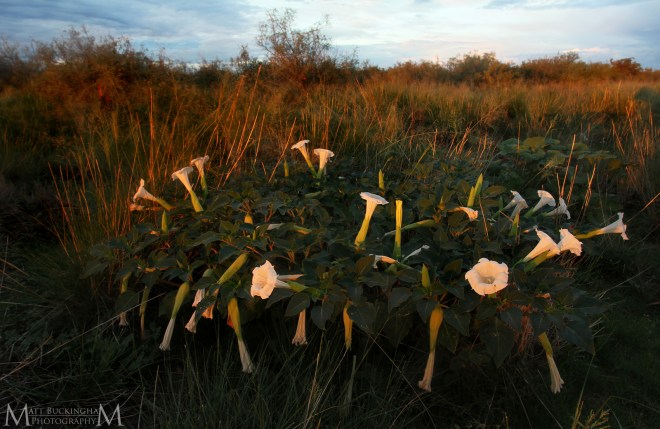
Although we spent most of our time during our August trip to West Texas in the Davis Mountains, we camped the last night on the shore of Lake Balmorhea.  I found the Sacred Datura (Datura wrightii) pictured above right at daybreak as I explored the area around our tent.  The flowers of the Sacred Datura are primarily pollinated by large sphinx moths.  As a result they open in the late evening and close in the early morning.  Sacred Datura has a long history of significance for the people of the southwestern U.S. and Mexico. It is well known for its potentially lethal toxicity. However it has also been used extensively for medicinal purposes. The plant was also used by many native tribes in religious ceremonies, often to induce visions.due to its hallucinogenic properties. Unfortunately, the potency of its toxins resulted in the death of many of its users.

On the drive home we stopped at a few rock outcrops to help break up the drive and stretch our legs.  It was at one of these outcrops that we spotted the Cory’s Dutchman Pipe (Aristolochia coryi).  In the U.S., this bizarre plant can only be found in central and western Texas.

IMG_5024

Cory’s Dutchman Pipe

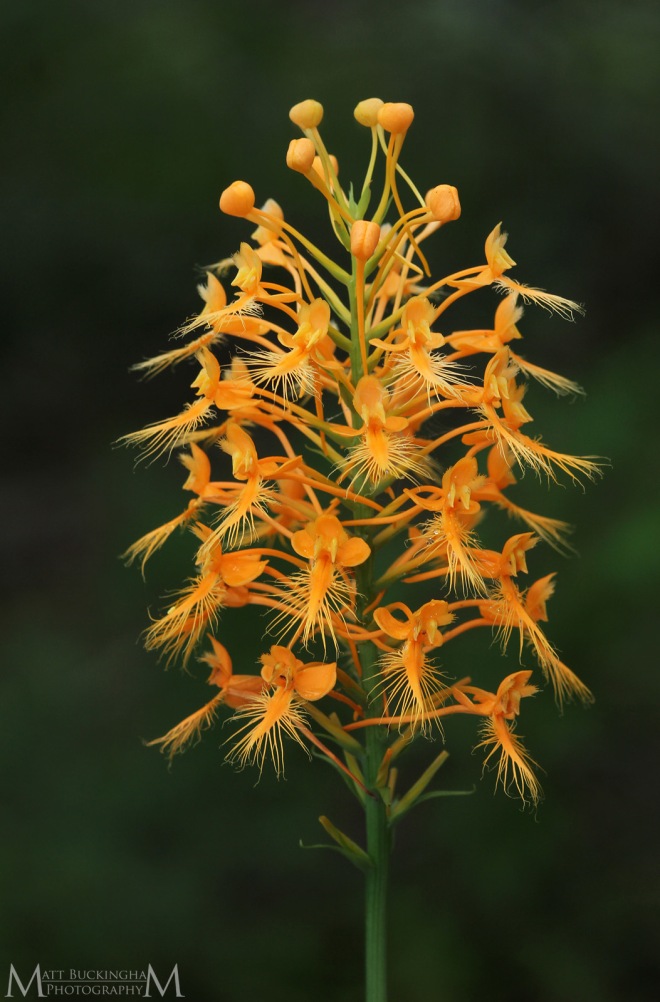
Back in East Texas, my friend James Childress and I went looking for some late summer wildflowers.  Two of my favorites are the Yellow Fringed Orchid (Platanthera ciliaris) and the Carolina Lily (Lilium michauxii).  Both species are uncommon in East Texas.  P. ciliaris occurs in herbaceous seeps, baygall margins, and occasionally wet ditches and prairie remnants.  L. michauxii primarily occurs on the upper slopes of rich mesic ravines, often near the transition zone between slope and upland.

IMG_5088

Yellow Fringed Orchid

IMG_5369.jpg

Carolina Lily

While hunting for wildflowers James spotted a most interesting creature.  The Giant Ichneumon (Megarhyssa macrurus) is a large parasitic wasp with extremely long ovipositors.  They use these ovipositors to probe tunnels created by the larvae of horntail wasps.  Horntails bore into the wood of dead and dying trees.  The female ichneumon seeks out these larvae and with her ovipositor and lays her eggs on or in them.  Her own larvae then parasitize the horntail larvae.  The young ichmeumons will feed only on the horntails, killing them in the process.  They will then pupate and emerge as adults from the tunnel that their host created for them.

IMG_5426

Giant Ichneumon

In late August Hurricane Harvey passed through East Texas and dumped unprecedented amounts of rain on the region.  Following the storm, James and I went looking for reptiles and amphibians, hoping that they would be active following the prolonged period of moisture.

We found a number of Southern Copperheads (Agkistrodon contortrix), the most attractive of which is pictured below.

IMG_5564a

Southern Copperhead

Among the amphibians observed was this enormous Gulf Coast Toad (Incilius nebulifer).

IMG_5589

Gulf Coast Toad

The prolonged rainfall brought out scores of Hurter’s Spadefoots (Scaphiopus hurteri).  These interesting frogs can be extremely abundant in certain areas, but require specific habitat conditions.  These conditions typically consist of areas with deep, undisturbed sand where they can burrow and aestivate during the hottest and driest part of the summer.  This species emerges only after heavy rains, where they may breed by the thousands in small ephemeral wetlands that may be little more than a puddle.  The tadpole stage for these spadefoots is among the shortest of any frog, requiring as little as two weeks to go from an egg to a froglet capable of leaving the water.  This short larval stage is an adaptation to allow them to breed in areas were the presence of water is a limiting factor, and allows them to breed in areas that other species are not capable of utilizing, effectively eliminating the competition.

IMG_5638

Hurter’s Spadefoot

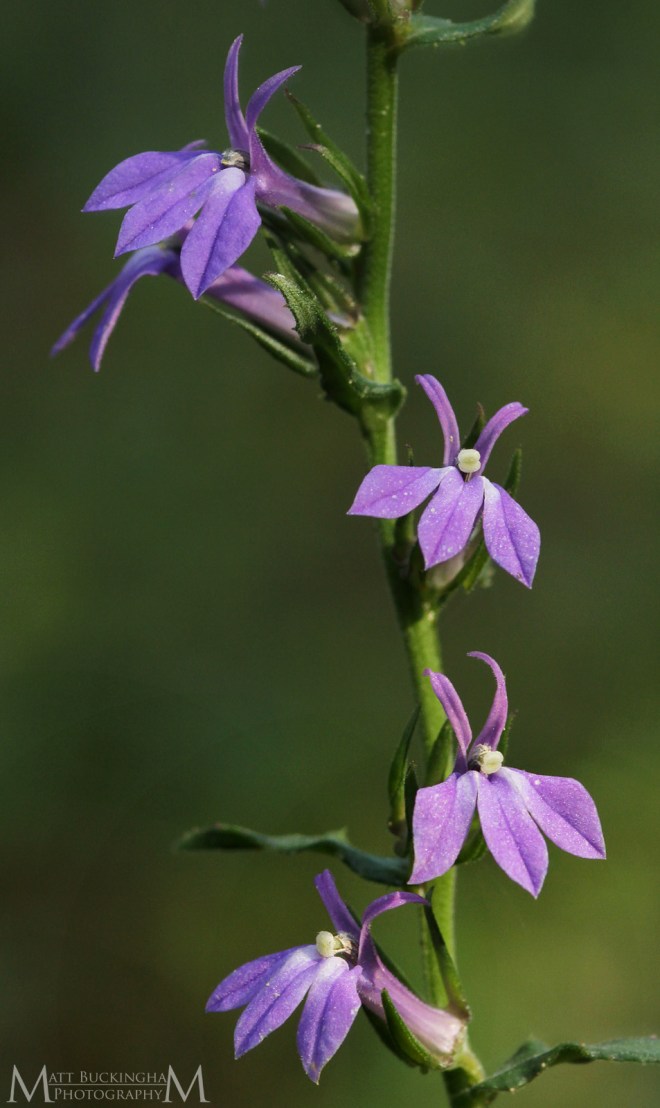
September is perhaps the best time to visit Catahoula Barrens.  Wildflowers such as Texas Blazing Star (Liatris mucronata) and Nuttall’s Rayless Goldenrod (Bigelowia nuttallii) bloom in mass.  Downy Lobelia (Lobelia puberula) is fairly common in wetter areas along the margins of the barrens.

IMG_5750

Downy Lobelia

Small-flowered Fameflower (Phemeranthus parviflorus) occurs sporadically in Catahoula Barrens.  The flowers of this interesting succulent open in late afternoon.

IMG_5790

Small-flowered Fameflower

I leave you with this final shot of a Catahoula Barren.  I captured this shot at dusk and tried to highlight the rich diversity of colors that can be found in these incredible landscapes.

IMG_6024

Catahoula Barren

A Fall Rarity

Target Species: Barbed Rattlesnake Root (Prenanthes barbata)

IMG_6384

Barbed Rattlesnake Root

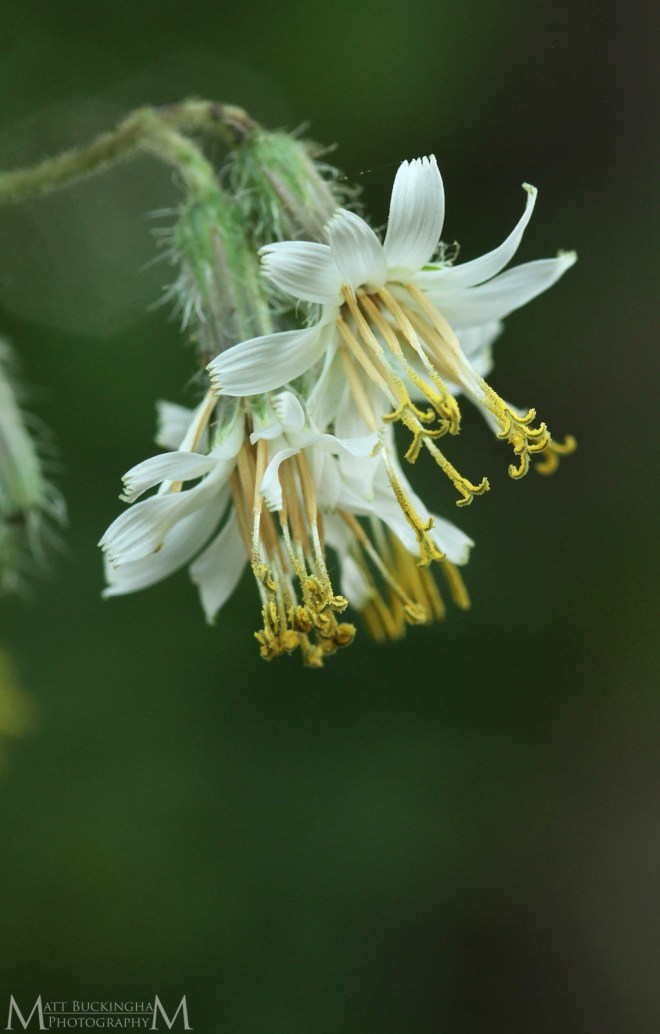
In late summer and early fall the nodding blooms of the Barbed Rattlesnake Root (Prenanthes barbata) unfurl.  It is a member Asteraceae, commonly referred to as the composite or sunflower family.  The genus Prenanthes earned the common name rattlesnake roots from their early use as a treatment for venomous snake bites.  This treatment involved consuming the plants’ milky white sap, a bitter substance produced by the plants to deter predators, and applying a poulstice of the plants’ leaves directly to the wound.  Rattlesnake root has served other medicinal purposes for native tribes and early settlers, including use a treatment for dysentery and diarrhea.  Perhaps most interestingly, some believed that smearing the juice of rattlesnake roots on one’s hands would make them invulnerable to venomous snakes.  I found this quote from William Byrd of early colonial Virginia about a closely related member of the genus Prenanthes:

…the rattlesnake has an utter antipathy to this plant, in-so-much that if you smear your hand with the juice of it, you may handle the viper safely. Thus much can I say of my own experience, that once in July, when these snakes are in their greatest vigor, I besmear’ed a dog’s nose with the powder of this root and made him trample on a large snake several times, which however, was so far from biting him that it perfectly sicken’d at the dog’s approach and turn’d its head from him with the utmost aversion.”

IMG_6346

Barbed Rattlesnake Root

In East Texas Barbed Rattlesnake Root occurs in rich mesic forested slopes and moist flatwoods.  Elsewhere in its range it may occur in dry mesic sandy uplands, prairie remnants, and the margins of barrens and glades.  In general it is found on calcareous soils (those which are rich in calcium carbonate).  It is rare throughout its range, and in Texas it seems to have declined dramatically in recent decades as a result of habitat loss and land use conversion.  In Texas it is often found with other rare and declining species like Bloodroot (Sanguinaria canadensis) and the Kentucky Lady’s Slipper (Cypripedium kentuckiense).

Nabalus barbatus

County level distribution of Prenanthes barbata.  Yellow counties indicate that the species is present and rare.

Prenanthes barbata is a striking plant.  It may reach heights of 5 to 6 feet and a single plant may contain dozens of flowers.  We found them at a few locations in East Texas growing on steep slopes grading into small to mid-sized streams.

IMG_6182

Barbed Rattlesnake Root

Prenanths barbata is one of East Texas’s many interesting fall-blooming plants.  Over the coming weeks I hope to document more of these species before winter all but halts flowering activities until spring comes again, to revive the botanical world.