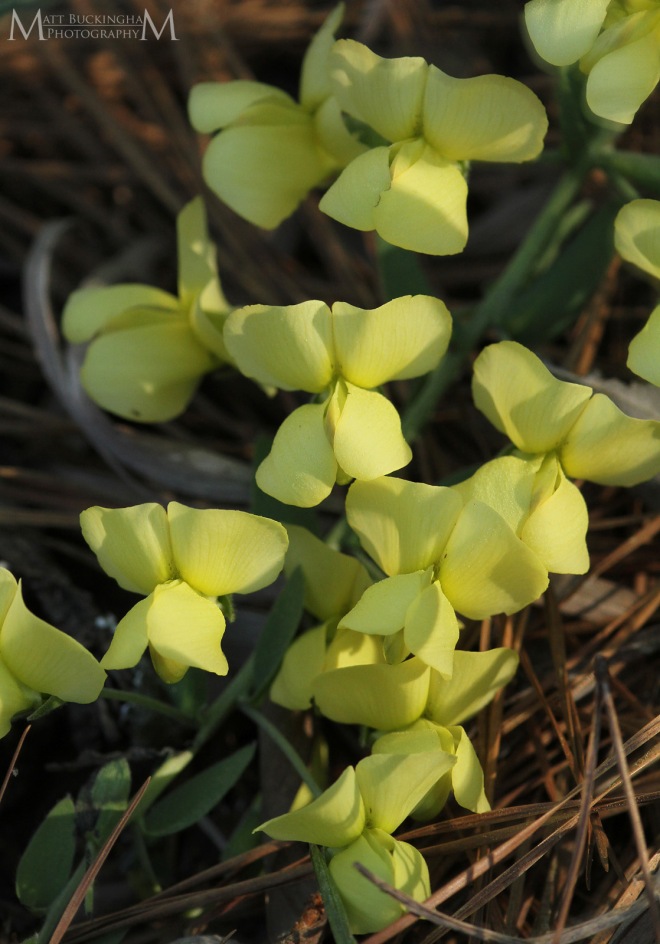
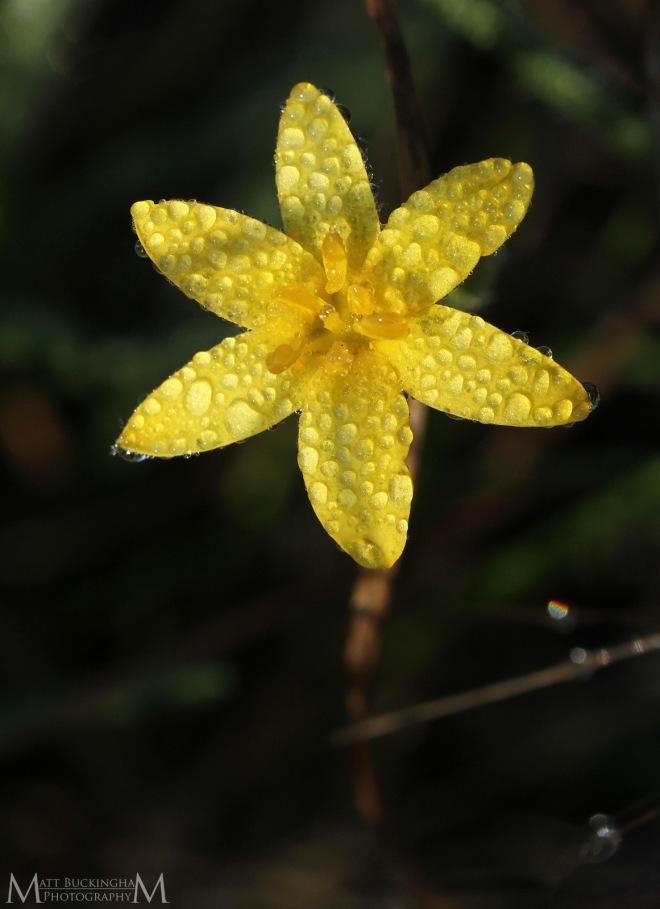
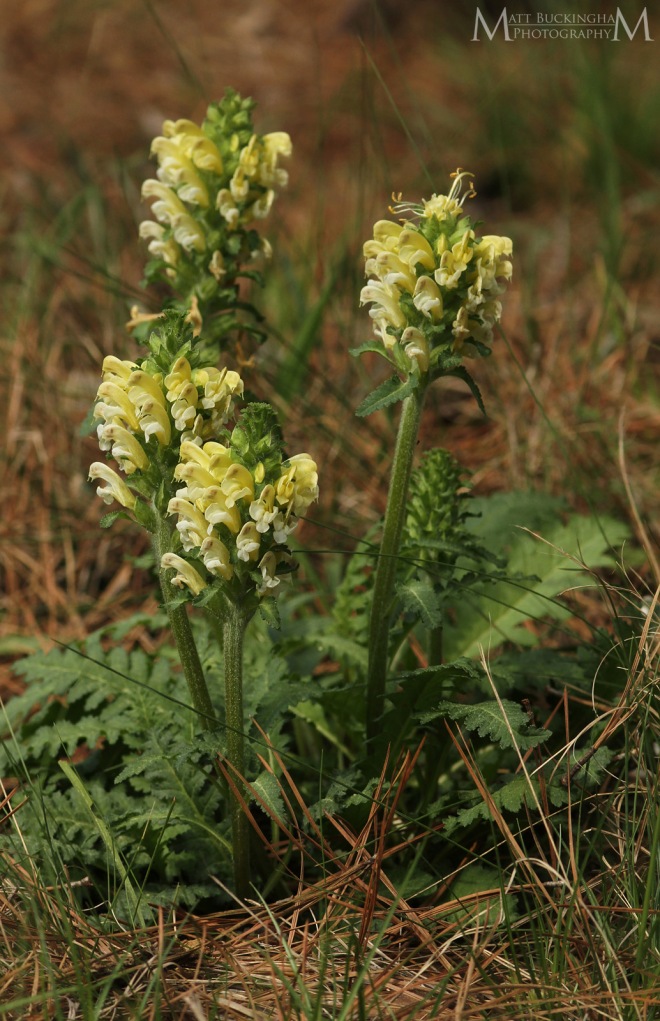
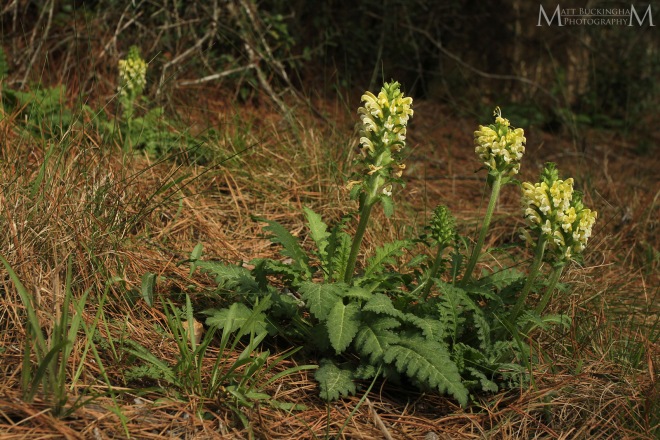
Coralroots of the White Rock Escarpment

Targets Species: Texas Coralroot (Hexalectris warnockii) and Glass Mountain Coralroot (Hexalectris nitida)
IMG_1545

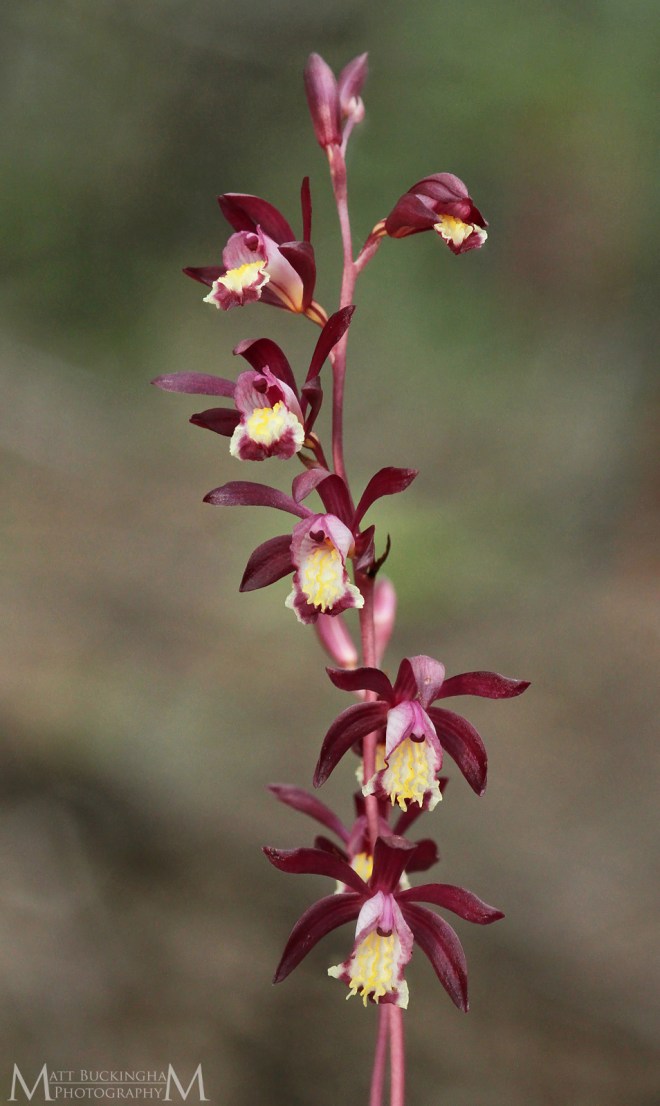
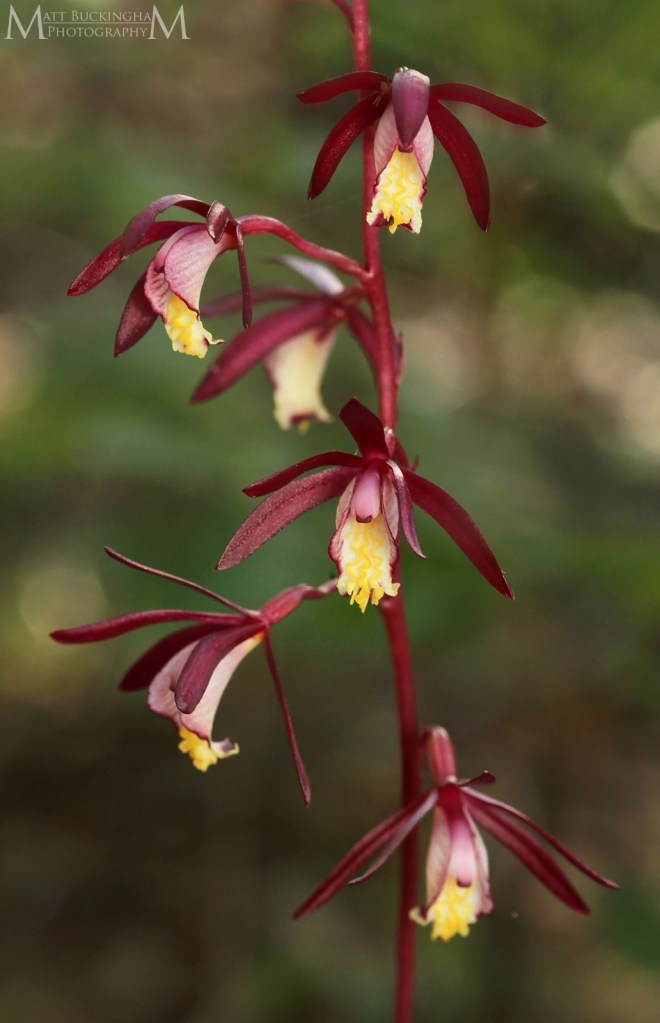
Hexalectris warnockii

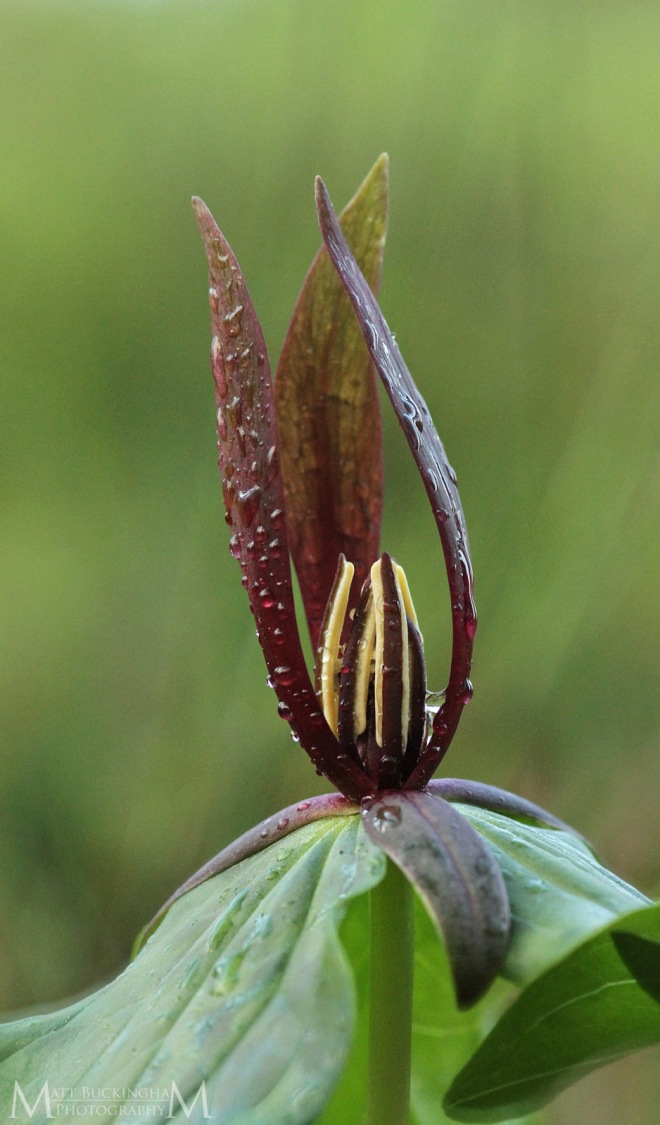
Texas boasts more species of the genus Hexalectris than any other state.  Here 5 of the world’s 8 species can be found (these numbers change to 6 and 9, depending on if you believe that Hexalectris spicata var. arizonica deserves species status).  Hexalectris is a genus of myco-heterotrophic orchids that are generally found in areas with abundant shade and thick, rich leaf litter.  In Texas there are three Hexalectris hotspots.  One is the  mountains of far West Texas, another the shaded canyons and oak/juniper woodlands of the Edward’s Plateau, and the last is the White Rock Escarpment of north-central Texas.  The latter is where I sought my targets.

The diversity of Hexalectris in the White Rock Escarpment was only recently discovered, when in the late 1980’s Hexalectris warnockii was discovered at an area nature preserve.  Since that time H. nitida, and H. spicata var. arizonica have also been found.  In 2005, Hexalectris grandiflora was discovered here as well, marking the first documented occurrence in the United States outside of the Davis and Chisos Mountains of West Texas.  It has since been discovered at a few sights in the Edward’s Plateau.

What makes the White Rock Escarpment so attractive to these orchids are the deposits of Austin Chalk.  This limestone-rich formation created topography and harbors species of oak and juniper that are more typical of West and Central Texas.  It is in the leaf litter under the shade of these species that the orchids grow.  The range of these Hexalectris orchids was probably once continuous and more expansive, but climate change over several millennia has pushed them into progressively smaller patches of suitable habitat, where they now exist as relicts of a once broader population.

IMG_1351

Hexalectris warnockii

Hexalectris warnockii is one of Texas’s showiest orchids.  It is named for Dr. Barton Warnock, a pioneer of Texas botany.  He is best known for exploring the flora of the Trans-Pecos, where he discovered many  new species and many other species that had never been documented in the United States.  Interestingly enough, while Warnock did discover the next species to be highlighted, Hexalectris nitida, he did not discover H. warnockii, which was named in his honor.  For more information on this influential figure in Texas natural history, click here.

I had previously observed Hexalectris warnockii growing at the base of some boulders deep in a secluded canyon in the Chisos Mountains.  It was truly fascinating to find the same species growing so far apart in conditions that were at the same time different, yet similar.  Though H. warnockii has been discovered at several locations since it was initially discovered in the mountains of West Texas, it remains rare and elusive in the state.
IMG_1302

Hexalectris warnockii

There is some mystery as to what triggers Hexalectris orchids to bloom.  The plants spend most of their life as little more than a rhizome and set of roots, and each individual may only bloom a couple of times each decade.  While rainfall is often cited as a trigger for blooming in West Texas, this doesn’t necessarily hold true elsewhere.  In the White Rock Escarpment, for example, some years may provide an excellent bloom for one species, and a sparse bloom for others.  While H. warnockii seemed to be having a banner year this year, our guide, Gary Spicer, informed us that H. nitida seemed to be showing low numbers.

Fortunately we did find a few.  Most of the H. nitida in the Edward’s Plateau and White Rock Escarpment are cleistogamous, meaning that the flowers self-pollinate and thus never open.  Gary, who frequents the area, did say that each year he sees a few plants with an open flower or two, but unfortunately we were unable to find any during out visit.

As I mentioned before, H. nitida was discovered by Barton Warnock.  He found it while working on his PhD dissertation on the vegetation of the Glass Mountains.  H. nitida is also commonly known as the Shining Coralroot due to the reflective sheen it gives off when hit by a stray beam of sun penetrating the canopy.

IMG_1507

Hexalectris nitida

Hexalectris has become one of my favorite plant genera.  They are both challenging to find and breathtakingly beautiful, and I look forward to continuing to explore  Hexalectris habitat in all three of our state’s hot spots.
June Recap

IMG_0308

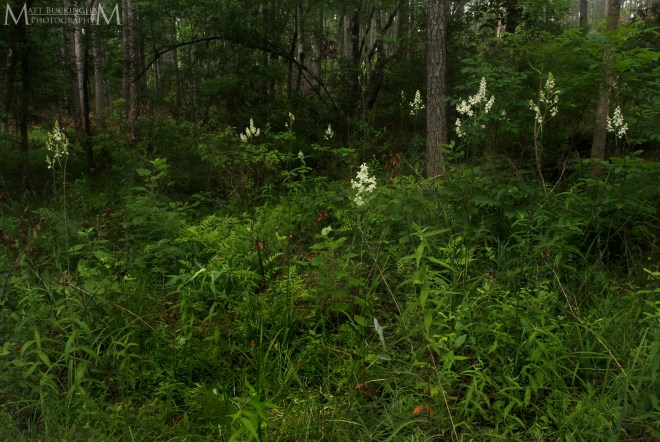
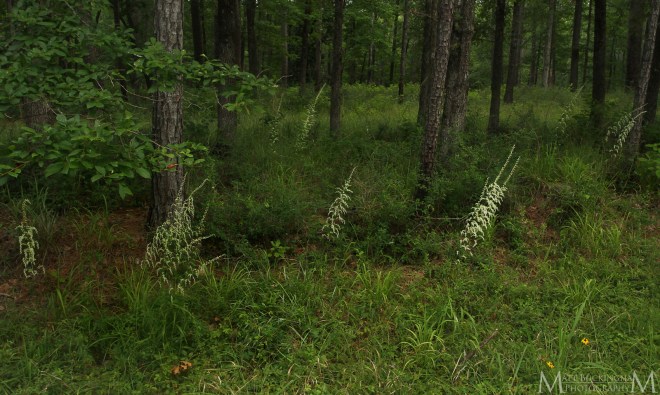
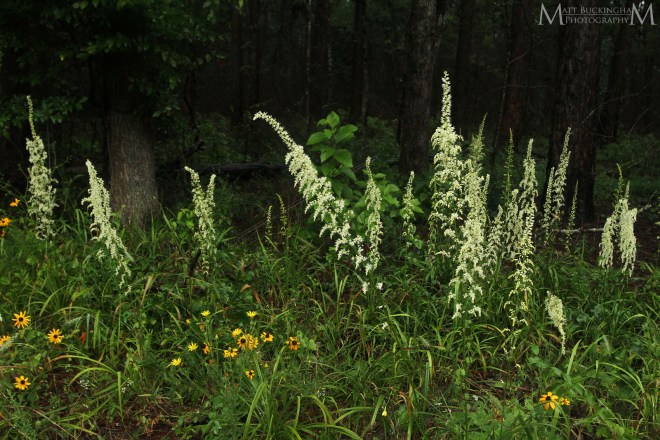
Eastern Featherbells (Stenanthium gramineum) bloom in a mature pine-hardwood forest.

June got off to a slow start, but I finished strong, checking four more species off my list:

Saltmarsh False Foxglove (Agalinis maritima)

Velvetleaf Milkweed (Asclepias tomentosa)

Correll’s False Dragonhead (Physostegia correllii)

Starry Campion (Silene stellata)

2017GoalsJune

In early June I photographed this pair of ox beetles (Strategus antaeus) with my good friend James Childress.  We have two species of ox beetles in East Texas.  Strategus antaeus is smaller, with proportionately longer, pointed horns.  Strategus aloeus is much larger, with blunt tipped horns.  S. antaeus is primarily a species of the coastal plain, with East Texas marking the southwestern limit of its range.  It occurs in open, sandy woodlands, savannahs, and prairie openings.  The large horns of the male are used in combat to with other males to win the favor of a female.

IMG_8577

Strategus antaeus

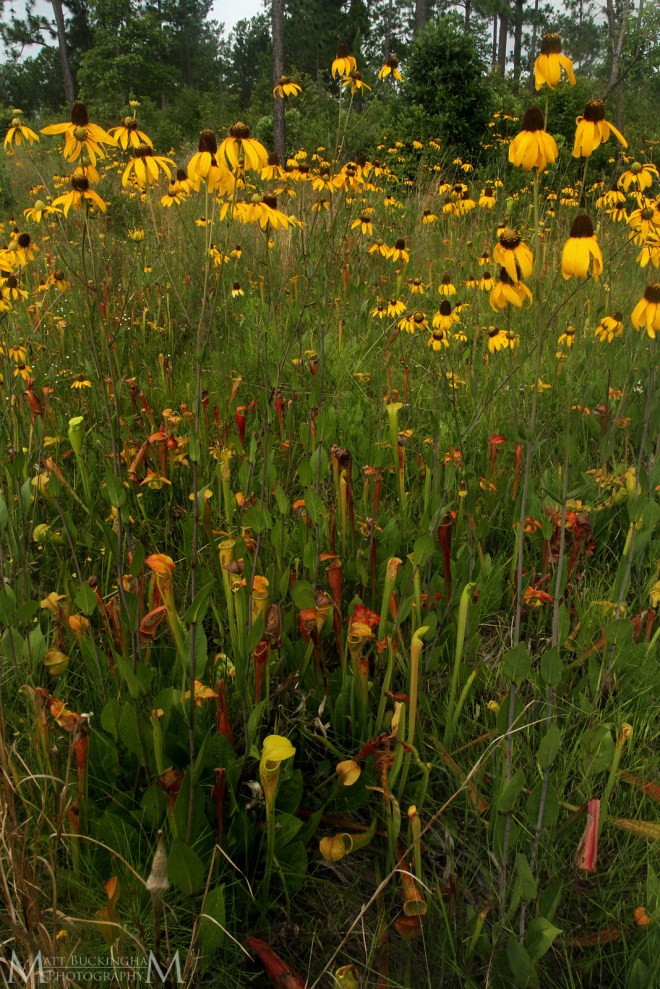
In mid June I visited one of my favorite vegetative communities: the herbaceous hillside seep.  This particular site is on private land that is managed by a combination of fire and mechanical clearing.  Historically these communities would have been kept free from woody vegetation through a combination of frequent lightning-ignited fires and poor, saturated soils.  These communities are home to a variety of rare and interesting species including carnivorous plants and a variety of orchids.  Pictured below are Pale Pitcher Plants (Sarracenia alata) and blooming Pinewoods Rose Gentians (Sabatia gentianoides).  I hope to highlight this community more in a future blog entry.

IMG_9565

Herbaceous Hillside Seep

One of the herbaceous seep’s most striking summer displays comes from the Bog Coneflower (Rudbeckia scabrifolia).  This rare plant is confined to extreme eastern Texas and western Louisiana.  Here it’s habitat has all but disappeared over the past century and a half.

IMG_9506

Bog Coneflowers bloom in a herbaceous hillside seep.

Similar to the herbaceous hillside seep, but occurring in areas where fire historically did not penetrate is the forested seep.  These areas are locally known as “baygalls” in reference to two typically dominant species: Sweetbay Magnolia (Magnolia virginiana) and Tall Gallberry Holly (Ilex coriaceae).  Like the herbaceous seep, baygalls are home to many rare species.  Pictured here are the blooms of the toxic Virginia Bunchflower (Veratrum virginicum).  These handsome plants may reach a height of 7 feet.

IMG_9600

Virginia Bunchflower blooms in an East Texas baygall

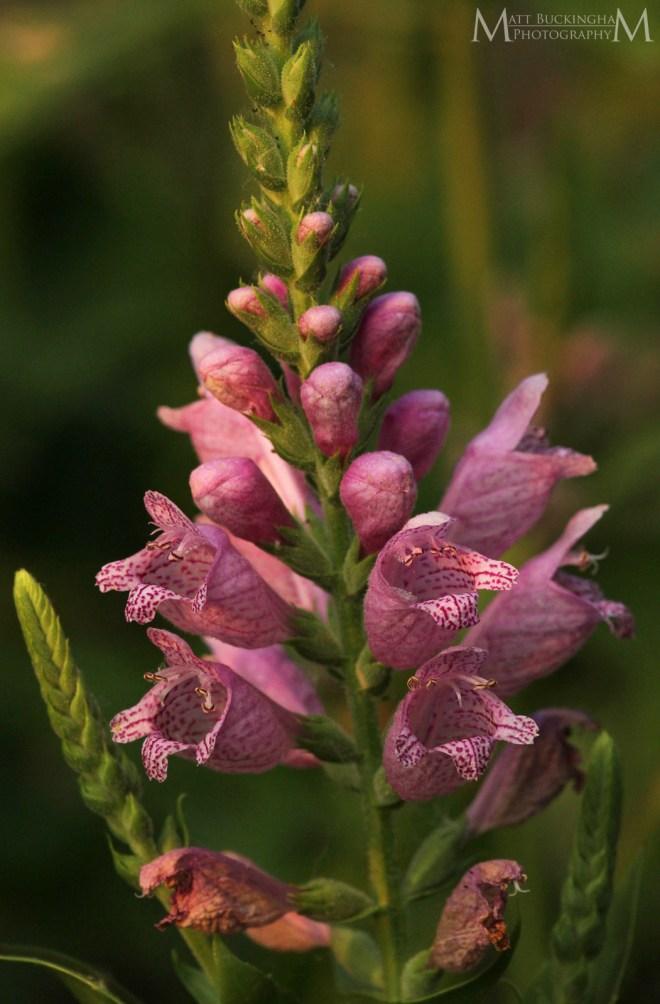
Another impressive summer bloomer is Physostegia digitalis, one of the false dragonheads.  They can reach heights of six feet or more and bear dozens of pale pink flowers.  Like the Bog Coneflowers, they are a species endemic to the West Gulf Coastal Plain, and are limited to East Texas, western Louisiana, and extreme southwestern Arkansas.  They are quite common in East Texas, existing in open sandy woodlands and highway right-of-ways.

IMG_9727

Physostegia digitalis

IMG_9742

Physostegia digitalis

Ongoing survey efforts for the extremely rare Louisiana Pine Snake (Pituophis ruthveni) on private land produced this Northern Scarlet Snake (Cemorphora coccinea copei).  Though they may be locally common in appropriate habitat, their preferred habitat, which includes sandy longleaf pine savannahs, xeric sandhills, and similar habitats has all but disappeared.  Scarlet snakes are specially adapted for burrowing, and they spend most of their time below ground. In East Texas their greatest periods of surface activity seem to coincide with the peak season for reptile nesting. During this time they seek out their favorite prey: reptile eggs.

IMG_9777

Northern Scarlet Snake

IMG_9784

Northern Scarlet Snake

I photographed this jewel beetle (Acmaeodera sp.) as it went about unwittingly pollinating Woodland Poppymallow (Callirhoe papaver).

IMG_9854

Acmeodera sp.

This has been a good year for Eastern Featherbells (Stenanthium gramineum).  I prefer landscape shots that showcase their whispy blooms over detailed shots of individual flowers.  Eastern Featherbells is one of a suite of species typical of the eastern United States that reaches it southwestern limit in the Pineywoods of East Texas.  It seems to be uncommon to rare throughout most of its range.

IMG_9872

Eastern Featherbells in a dry-mesic forest.

A number of milkweed species bloom in the height of summer.  One of the more easily overlooked species is the Whorled Milkweed (Asclepias verticillata), whose tiny flower clusters hardly look like blooms from a distance.

IMG_9975

Whorled Milkweed

The Federally Threatened Neches River Rosemallow (Hibiscus dasycalyx) occurs in just a few East Texas Counties.  It can be differentiated from the similar Halberd-leaved Hibiscus (Hibiscus laevis) by the dense hairs on its calyces.

IMG_0507

Neches River Rosemallow

As the Texas summer wears on, spending time outside becomes more and more unpleasant, however some of our most interesting species are most active and easiest to see in these sweltering months.  I look forward to seeing what July has in store.

Chasing the Dragon

Target Species: Correll’s False Dragonhead (Physostegia correllii)

IMG_0464

To many I’m sure that my relentless, often obsessive pursuit of the natural world seems like an addiction.  I can understand why.  I truly crave spending time in the natural world, and when I go very long without setting foot in some wild place, I begin to have withdrawals, which affect my mood and well-being.  But to me it’s not an addiction, but rather a part of me.  It has been with me since I can remember, the itch to explore nature gnawing at me and pulling me to the wilderness.

Last weekend Carolina and I traveled to Kyle to help my brother move.  We arrived a day early so we would have some time to explore.  First we took the tour at “A Cave Without a Name”.  This cave system really is a hidden gem.  It is not as well known as many of the other cave tours in central Texas, but it was spectacular and the tour guide was very knowledgeable and the tour informative.  Following the cave tour we spent some time swimming in the Guadalupe River nearby.  Here we delighted in the various species of damselflies that would land on our heads.  We soon realized that we could get them to land on our fingertips if we stuck them above the water like a makeshift perch.  Carolina’s sharp eyes also spotted a young Guadalupe Spiny Softshell Turtle (Apalone spinifera guadalupensis) among the rocks in the shallows.

IMG_0416

After a couple of hours we ventured to another river system: the Colorado.  The Colorado River and a handful of tributaries are one of the last strongholds for a rare and seemingly vanishing plant, the Correll’s False Dragonhead.  After several failed searches of stream banks that I thought might harbor this rarity, I finally found it along the mucky banks of the Colorado itself.

IMG_0480

Physostegia correllii is an impressive plant.  Some of the individuals I observed were taller than I was.  This species is a bit of an oddity, as it occurs in a variety of different habitats.  The only common denominator seems to be the presence of some kind of channel.  They grow along rivers and streams like the Rio Grande in South Texas and northern Mexico to drainage ditches along roadways in Louisiana.  It seems strange, then that it has become so rare.  Sometimes we might consider a plant to be rare, when in reality it is only easily overlooked.  This is not the case with the Correll’s False Dragonhead, however.  This plant sticks out like a sore thumb and would immediately capture the attention of anyone passing by it.  That begs the question: why is it so rare.  I don’t believe it has to do with it’s reproductive biology or proclivity to germinate, as it is easily propagated in captivity.  I have been unable to find a good answer to this question, but that certainly doesn’t mean that one doesn’t exist.

Physostegia correllii

Physostegia correllii is named for botanist Donovan Stewart Correll.  Correll was an influential figure in Texas botany.  He was instrumental in developing monumental works like Orchids of North America, North of MexicoAquatic and Wetland Plants of the Southwestern United States; and the Manual of the Vascular Plants of Texas which is the most comprehensive treatment of our flora.

IMG_0492

Finding Correll’s False Dragonhead was particularly special for me, as it was the last species of the genus Physostegia in Texas that I had yet to see.  Texas, particularly southeast Texas, is the center of diversity for Physostegia, with 7 of the 12 recognized species occurring here.  There are records of P. correllii from Harris, Montgomery, Galveston, and Chambers Counties, but to my knowledge they have not been recently observed here.

IMG_0450

I always found members of the genus Physostegia to be extremely photogenic.  They have interesting shapes and most have rich colors and intricate patterns on the blooms.  I enjoyed photographing several individuals in the group I encountered in the fading evening light.

IMG_0457

Growing alongside the dragonheads were several American Water-willows (Justicia americana).  A wetland species, J. americana ranges over much of the eastern United States, reaching the southwestern extent of its range in southwestern Texas and northern Mexico.  To me, the attractive little blooms are reminiscent of orchids.

IMG_0501

With the light quickly fading we traveled further along the Colorado to the Congress Avenue Bridge where we watched in excess of one million Mexican Free-tailed Bats spill out from their daytime roosts into the night sky.  It was the perfect end to a perfect day.


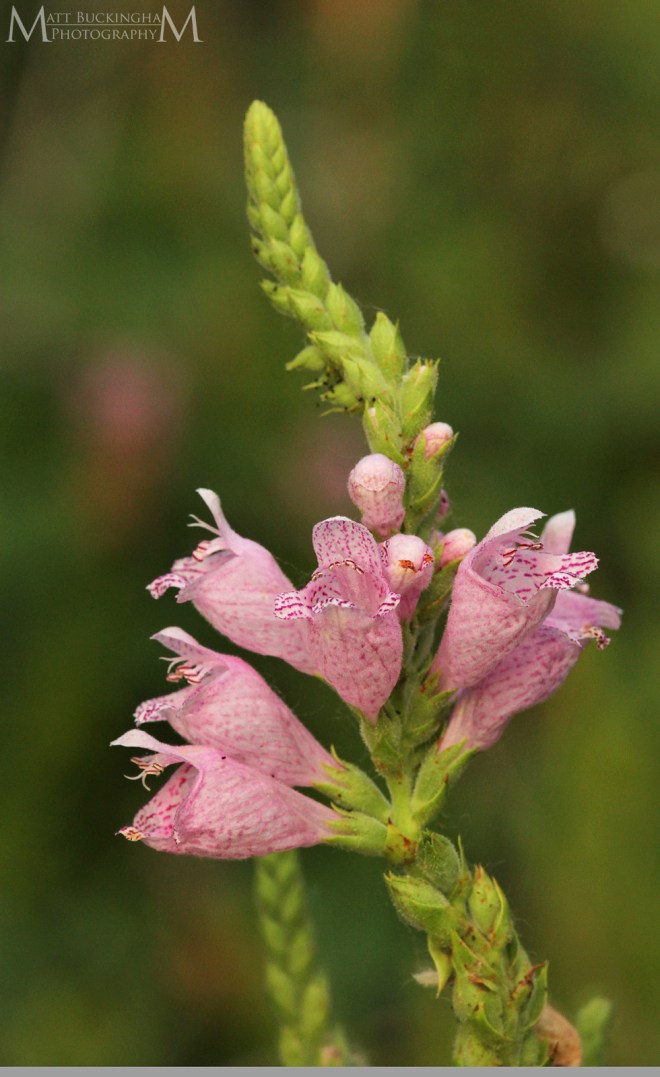
Purple People Eater

Target Species: Purple Bladderwort (Utricularia purpurea)

IMG_7584

Purple Bladderwort

This is one I have wanted to see for a long time.  Utricularia purpurea is an aquatic, carnivorous plant that inhabits much of the Eastern United States.  It barely enters Texas in the extreme southeast portion of the state, where it is rare.  I suspect that very few people have seen the Purple Bladderwort here, as the few known populations are not particularly easy to access.  Pursuing the photographs seen here was a true adventure, and the highlight of my 2017 quest for biodiversity thus far.

IMG_7537

Purple Bladderwort

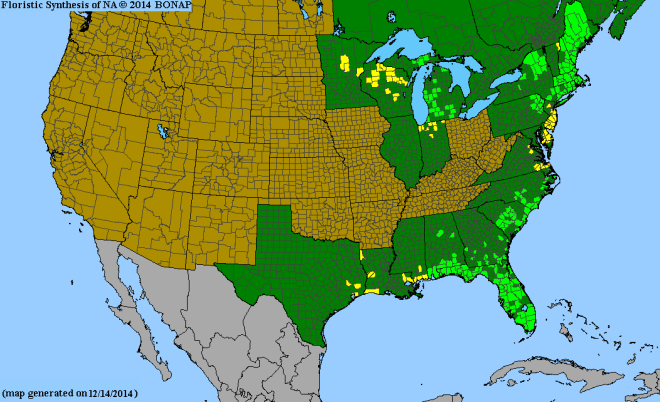
The Purple Bladderwort has a peculiar distribution, not unlike that of another species on my 2017 list, the Blue Lupine.  In the case of the bladderwort I suspect that its distribution can somewhat be explained by the presence of appropriate wetlands in the Gulf and Atlantic coastal plains, and in glacially formed depressions in the Northeast and Great Lakes regions.

Utricularia purpurea

County-level distribution of Utricularia purpurea from http://www.bonap.org.  Yellow counties indicate that the species is present but rare.

To see this rarity, I once again called on the good people of the Nature Conservancy of Texas.  Wendy Ledbetter, Forest Project Manager, told me that U. purpurea had been reported from a series of flatwood ponds on one of the properties they protect.  It was, in fact, very close to where I photographed Streptanthus hyacinthoides a few weeks ago.  She was kind enough to take time from her busy schedule to meet me one morning and show me the areas where it had been reported.  She brought me to two spectacular flatwoods ponds.  We were unsure if any of the elusive carnivores would be in bloom, but sure enough, after minimal effort I spotted one, then another, then another.

IMG_7483

Purple Bladderwort

After showing me around for a couple of hours in the morning, Wendy had to leave to tend to other engagements.  I thanked her profusely, both for her time and consideration, and for the fine work that she and her colleagues at the Nature Conservancy have done to protect so much our great state’s incredible biodiversity.  After Wendy left I returned to the ponds to try to capture some unique images of this spectacular little plant.  I was trudging through water that was mostly between 1 and 3 feet deep.  To capture some of these images I had to sit, kneel, or completely submerge myself in the water, with just my hands and camera above the surface.

IMG_7415

Purple Bladderwort

As previously mentioned, and eluded to in the title, Utricularia purpurea is a carnivorous plant.  It contains intricate leaves that float just below the water’s surface.  These leaves are loaded with small air-filled bladders that help keep the plant afloat.  Each bladder is equipped with a small, hair-like trigger. As tiny aquatic organisms swim by and brush against the trigger, the bladders instantly open, and as the water rushes in to occupy the vacant airspace, the organisms are sucked in.  The bladder then snaps shut, trapping them inside where they are slowly digested.  In the late spring through the summer the lavender flowers emerge from the depths.  U. purpurea is one of several species of Utricularia in Texas, but it is the only one with purple blooms.  The others are all yellow.

IMG_7494

Purple Bladderwort.  If you look closely you can see some of the round bladders under the water.

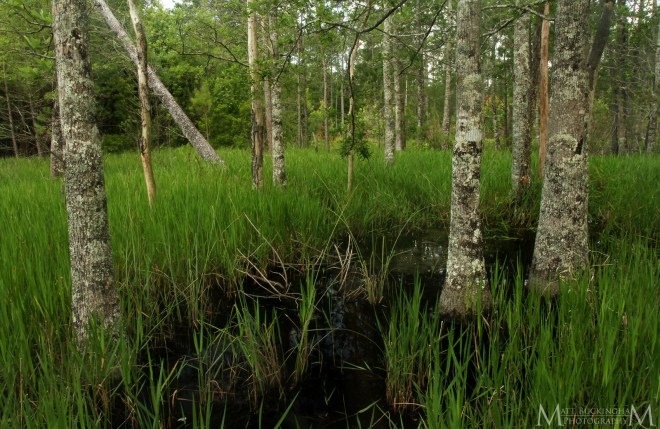
The flatwood ponds in which I photographed the Purple Bladderwort that day were the finest I have ever seen.  These unique aquatic communities occur in clay-bottomed depressions where over the millennia water and organic material have accumulated.  Historically they were dominated by a variety of grasses and sedges, kept free from woody encroachment by regular wildfires.  In the modern era of development and fire suppression, however, high quality examples have all but disappeared.  They have persisted on this Nature Conservancy property, however, as a result of their excellent stewardship which includes frequent burns that penetrate into the ponds.  Scattered trees, mostly Swamp Tupelo (Nyssa biflora) exist on the margins, but the centers of the pond are open for acres.

Unfortunately I did not take any photos looking toward the center of the ponds, however I did capture the photo below looking back to the margins.  I found U. purpurea to be most common among the grasses and trees along the ponds’ margins.

IMG_7448

Flatwoods pond margin

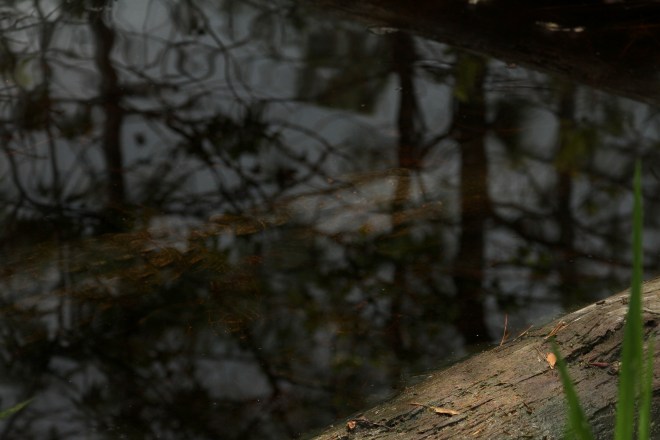
I spent what must have been at least 15-20 minutes lying on my belly, almost completely submerged in the water in order to get a low angle on a particularly attractive grouping of Purple Bladderworts.  After finishing I began to retrace my steps out of the pond.  As I did, I noticed something that was not there on my way in.  There was an 8-9 foot alligator laying on the bottom not 20 feet from where I was laying.  I suspect that its sudden presence was a coincidence, and that it hadn’t been slowly stalking me, but none-the-less it gave my heart a good jump.  Fortunately the water was shallow and clear, giving me a clear view of the magnificent creature, otherwise I was likely to have stepped on it.  I slowly made my way around it, and it never moved.  Though somewhat difficult to see, you can make out its head and part of its back in the photo below.

IMG_7603.jpg

American Alligator

The Purple Bladderwort shared its ponds with its cousin, the Humped Bladderwort (Utricularia gibba).  Like Utricularia purpurea, it also relies on the bladders of its submerged leaves to obtain nutrients from animal prey.

IMG_7683

Humped Bladderwort

There were several other interesting aquatic species in the flatwoods ponds, but the Floatinghearts (Nymphoides aquatica) really stood out.  It is also commonly known as the Banana Plant for its banana-shaped roots.

IMG_7705

Floatingheart

IMG_7730

Floatingheart

The flatwoods ponds were surrounded by a spectacular series of xeric sandhills occurring on ancient sand deposited by rivers as they changed course over time.  I spent some time exploring these beautiful communities, where I found a number of Eastern Prickly Pears in bloom.

IMG_7618

Eastern Prickly Pear blooms in a xeric sandhill

IMG_7641

Eastern Prickly Pear blooms in a xeric sandhill

I also took a moment to photograph the Pickering’s Dawnflower (Stylisma pickeringii), another species typical of deep sands, as it bloomed among the cacti.

IMG_7635

Pickering’s Dawnflower

As if all of the above wasn’t enough, in the morning Wendy and I observed this Eastern Hognose Snake (Heterodon platirhinos) up to its anti-predator high jinks.  It spread the ribs of the anterior portion of its body creating a hood-like effect similar to that of a cobra.  This behavior has earned it the colloquial name of “spreading adder”.  Occasionally it would feign a strike, but never attempted to actually bite me.  Eastern Hognose Snakes feed primarily on toads, and have specially-adapted pointed fangs that can deflate toads that fill themselves with air in an attempt to make themselves larger to avoid being swallowed.  They also contain a mild venom that likely helps subdue their prey, though it is harmless to humans.

IMG_7169

Eastern Hognose Snake

IMG_7196

Eastern Hognose Snake

IMG_7231

Eastern Hognose Snake

Seeing the Purple Bladderwort and exploring these incredible habitats is an experience I will never forget.  I can’t wait to return in the future to spend more time among the carnivores (large and small) of the Big Thicket.

Another Day, Another Sandhill

Target Species: Centerville Brazos Mint (Brazoria truncata var. pulcherrima)

IMG_7068

Centerville Brazos Mint blooms among other rare plants in a high quality xeric sandhill

My pursuit of the Centerville Brazos Mint (Brazoria truncata var. pulcherrima brought me back to the xeric sandhills, the interesting community where I recently photographed the Smooth Jewelflower.  This time, instead of heading southeast to the Big Thicket, I traveled northeast to the transition zone between the Pineywoods and the Post Oak Savannah.  Here I found a community described by Texas Parks and Wildlife as “East-Central Texas Plains Xeric Sandyland.”

The Centerville Brazos Mint is rare.  The entirety of its range is confined to Texas, and it requires very specific conditions – deep sands with an open overstory.  These communities have declined dramatically since the colonization of Texas, and today very few high quality examples remain.  Fortunately I was able to visit some that likely appear as they did before Texas was settled.  Though they may be rare, where they occur, the Centerville Brazos Mint often thrives, forming carpets of pink over the sand.

Brazoria truncata var. pulcherrima is a member of the mint family (Lamiaceae) that is restricted to a handful of counties in East-Central Texas.  The genus Brazoria is named for the Brazos River, where it was first collected.  There are three species, all of which are endemic to Texas.

IMG_7048

Centerville Brazos Mint

Where the Centerville Brazos Mint grows, other good things are sure to be found.  A suite of rare species occur in these sandhills.  Studies of these communities have found that they contain one of the highest levels of endemism in the Western Gulf Coastal Plain.  The day I visited I found another rare Texas endemic mint blooming in profusion – the Texas Sandmint (Rhododon ciliatus).

IMG_6571

Texas Sandmint

IMG_6543

Texas Sandmint

IMG_7059

Texas Sandmint

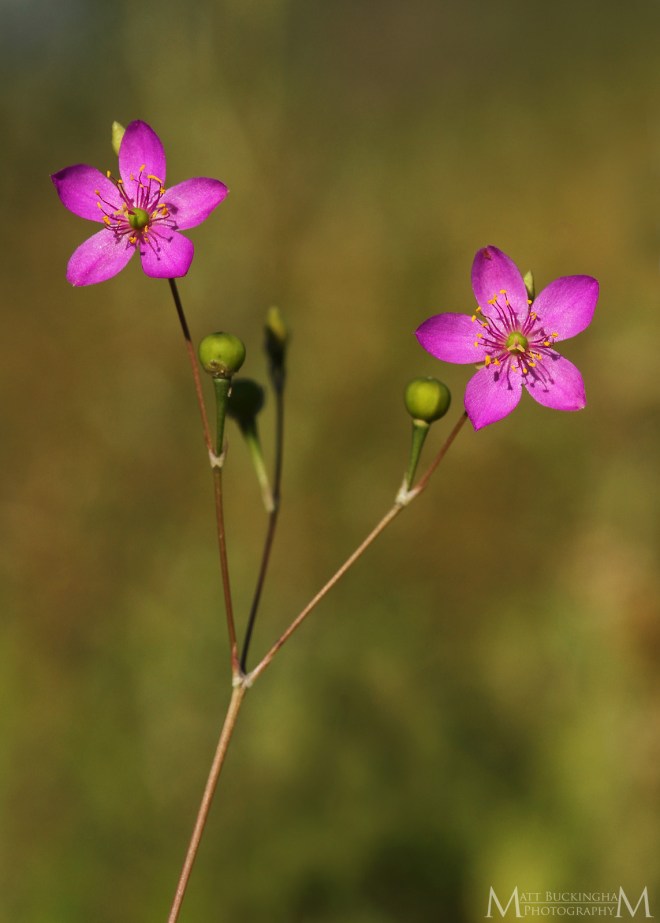
I arrived early, and spent most of the day exploring the sandhills.  At around 4:30 pm I began to see flashes of deep pink.  I recognized them as the blooms of the Prairie Fameflower (Phemeranthus rugospermus).  Another rare species, it occurs in the Central U.S. from Minnesota to East-Central Texas.  It has succulent leaves, an adaptation for the drought-like conditions that occur in the deep sands that it prefers.

IMG_6929

Prairie Fameflower

The Prairie Fameflower is so rare that it was once considered for listing under the Endangered Species Act.  It remains endangered on many state lists.  Most of the flowers I saw were a brilliant deep pink.

IMG_7003

Prairie Fameflower

There were a few, however, that were a light, faded pink.  The flowers of Phemeranthus rugospermus open in the late afternoon, and only for a single day.

IMG_6914

Prairie Fameflower

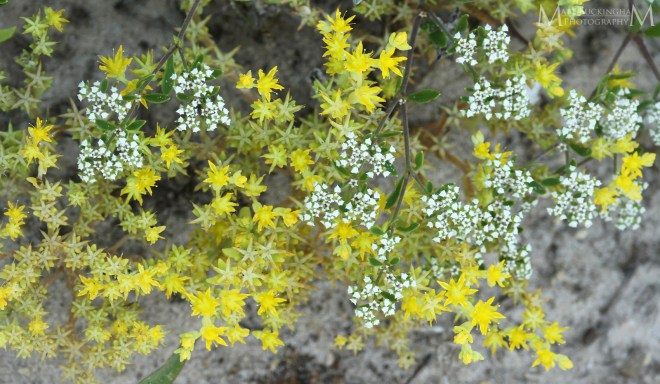
Portions of the sandhill were carpeted by the low, creeping forbs Yellow Stonecrop (Sedum nuttallianum) and Drummond’s Nailwort (Paronychia drummondii).  In some areas the two were growing together.

IMG_6681

Yellow Stonecrop

IMG_6637

Drummond’s Nailwort

IMG_6685

Yellow Stonecrop

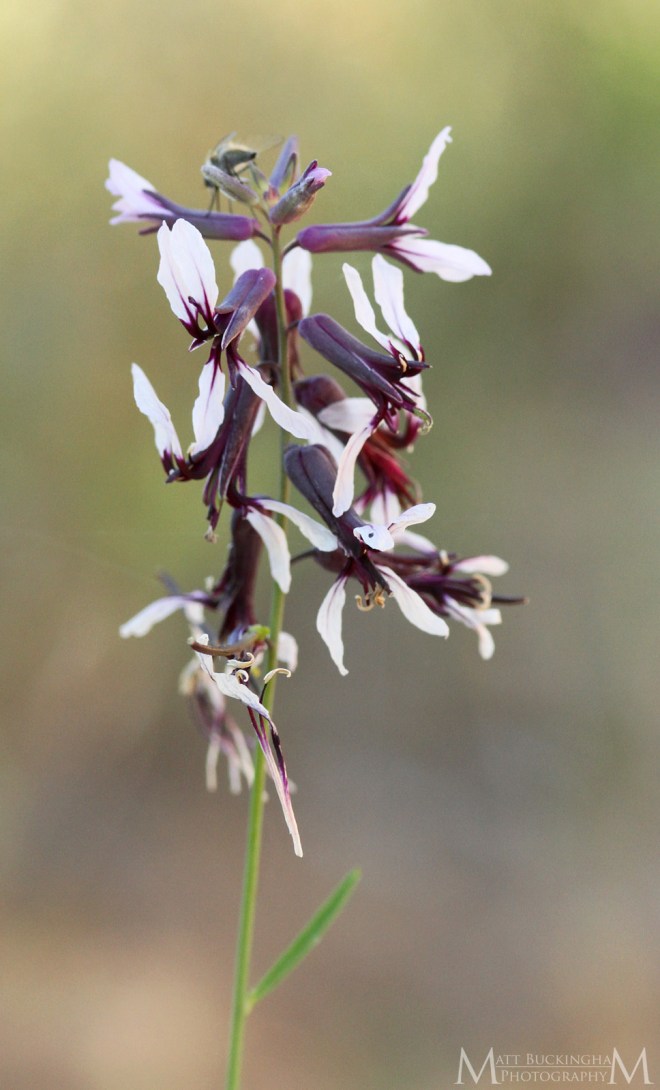
I also saw several Smooth Jewelflowers (Streptanthus hyacinthoides) in bloom.

IMG_6622

Smooth Jewelflower

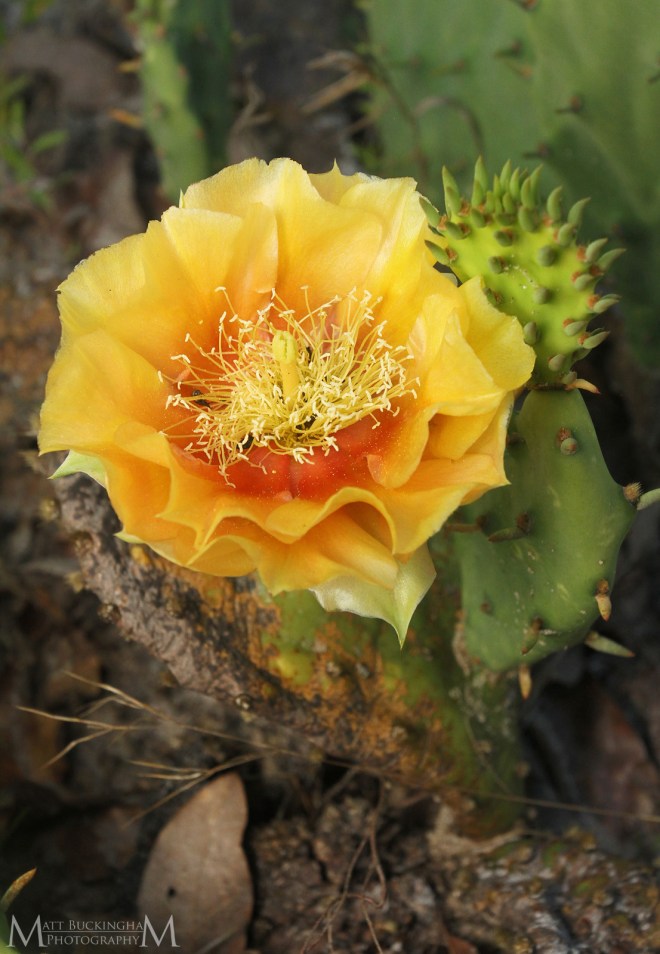
Prickly Pears were abundant in the deep sands.  The individuals here key to Opuntia cespitosa per the new treatment of the Opuntia humifusa complex by Majure, et al.

IMG_6898

Prickly Pear

IMG_6677

Prickly Pear

These sandhills occur in isolated pockets within a broader band of Post Oak Savannah uplands.  These savannahs were beautiful and diverse in their own right.  Though I didn’t have time to explore them properly during this visit, it gives me something to look forward to on my next visit.

IMG_6767

Butterfly Weed (Asclepias tuberosa) blooms in a Post Oak Savannah


The Other State Flower

Target Species: Blue Lupine (Lupinus perennis)

IMG_3817

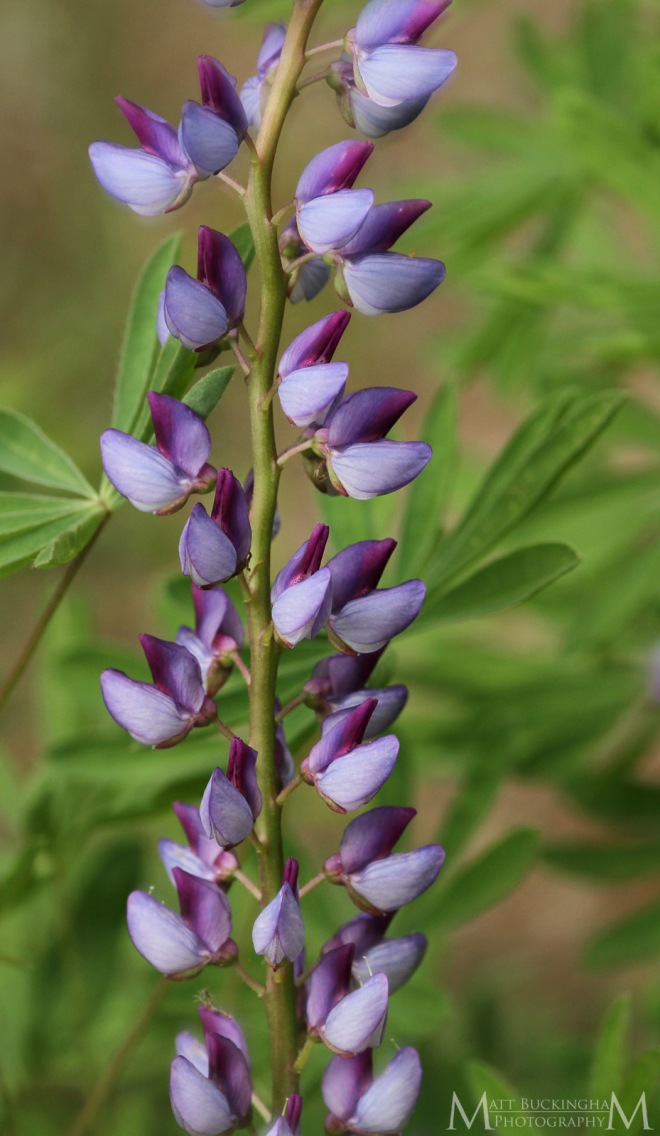
Blue Lupine

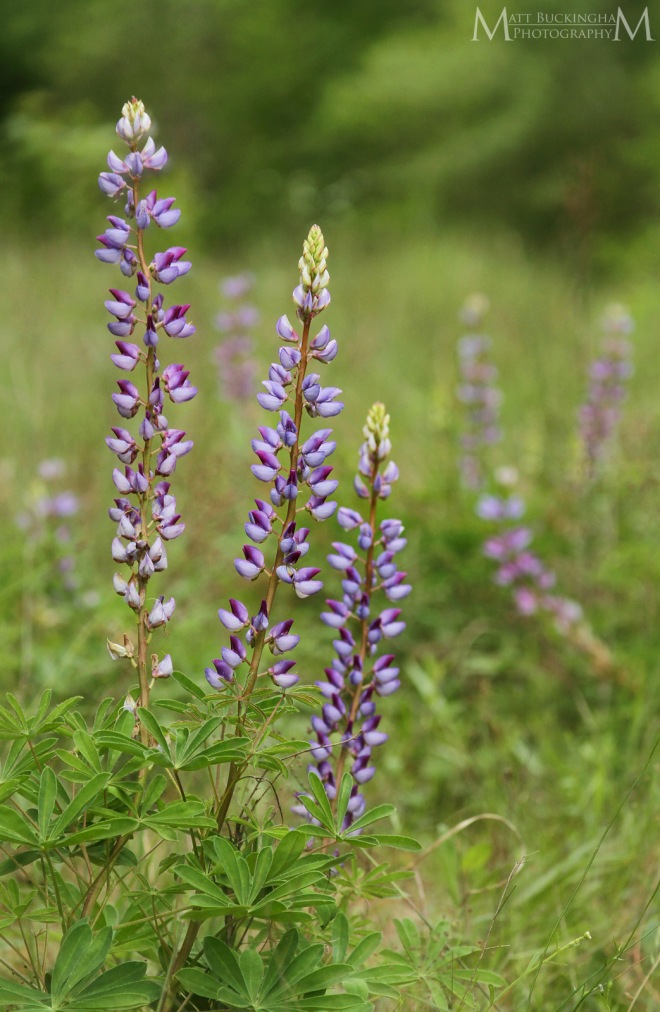
In keeping with the theme of “everything is bigger in Texas”, the Texas Legislature decided in 1971 that the original state flower, Lupinus subcarnosus, which was designated in 1901, simply wasn’t enough.  Instead the Lonestar State decided that we would call any member of the genus Lupinus occurring within the state to be our official state flower.  This would include the rare Blue Lupine (Lupinus perennis), even though it only occurred at a handful of sites in extreme southeastern Texas.

Known by other regional common names like Wild Lupine and Sundial Lupine, Lupinus perennis was first discovered in the 1930s in Orange County but subsequently disappeared from the county.  In the 1970s it was rediscovered by premier East Texas botanist and conservation pioneer Geraldine Watson in the Big Thicket National Preserve.

IMG_3718

Blue Lupine

Geraldine Watson was one of the most important, influential individuals in protecting the Big Thicket.  She spent much of her life fighting to protect this unique area and documenting the flora of East Texas.  Finding Blue Lupine after it was thought to be lost is just one of a long list of exceptional accomplishments attributed to her name.

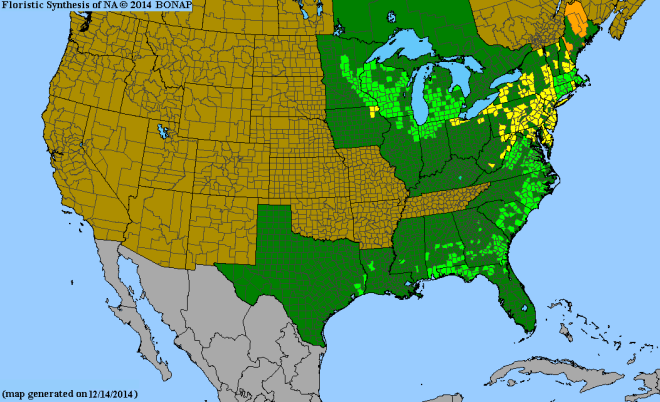
Blue Lupine prefers open, sandy forests and savannahs.  It has a curious distribution, occuring in Eastern North America, it ranges from eastern Minnesota in the west to the east along the Great Lakes into New England, then south and west again along the coastal plain until it reaches Deep East Texas.  It is noticeably absent from the southern Appalachians and most of the South Central states.  Lupinus perennis has been experiencing significant declines throughout its range.  It has been extirpated in Maine, and has been declared as Threatened or Endangered in many of the states where it occurs.  In many of the others where it is not listed, such as Texas, it probably should be.

Lupinus perennis

County-level distribution of Lupinus perennis from http://www.bonap.org.

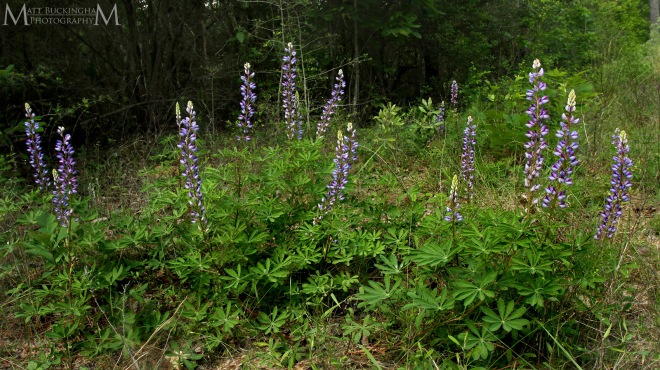
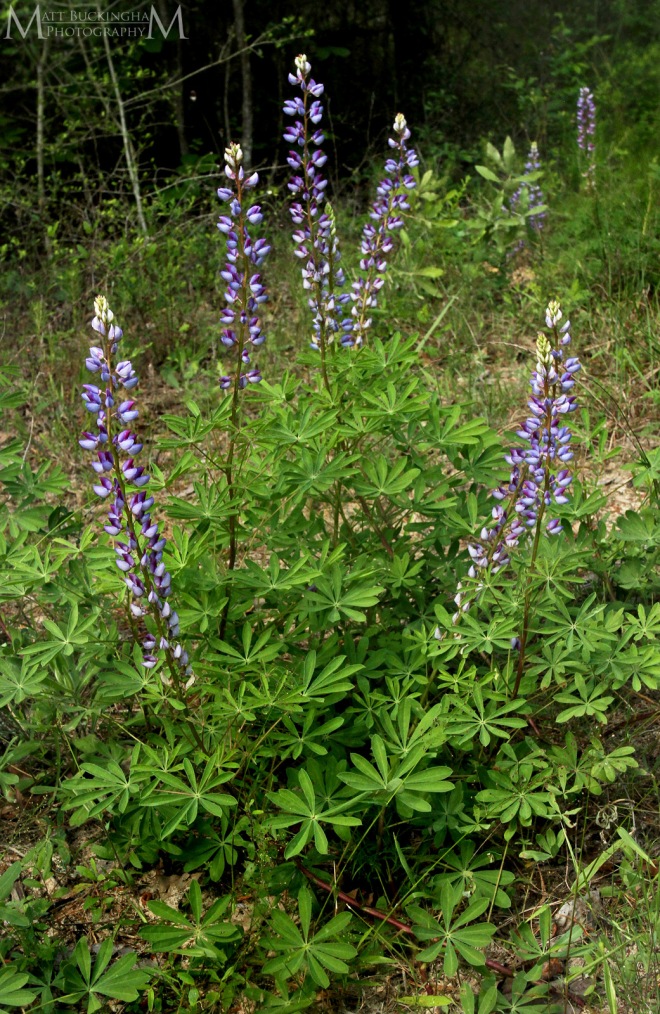
I had previously seen and photographed Lupinus perennis in Maryland, where it is also rare.  It has long been a dream of mine to see it in East Texas.  I researched Geraldine Watson’s herbarium specimens, and though the location information was rather vague I used it to look at aerial imagery and soil maps to determine where I thought they likely occurred.  I contacted the state botanist as a backup, and the area he described was right in the vicinity of the spot I had identified.  Carolina and I set out with some friends, and after an adventure of a trek through sketchy, flooded backroads, we finally found our quarry.

IMG_3721

Blue Lupine

Blue Lupine is a spectacular plant.  Much more robust than the more familiar Texas Bluebonnets, its raceme (flowering body) may be close to a foot long.  The upper petals start out with white centers that turn purple with age.  It is believed that the turn occurs after the flower has been pollinated.  As bees, the primary pollinator for lupines, will more likely visit the fresher, whiter blooms to receive a greater pollen reward.

IMG_3836

Blue Lupine

In my humble opinion, Blue Lupine is one of the most spectacular plants of the Big Thicket.  It is a shame they aren’t more common, but seeing them at peak bloom in East Texas is an experience I will never forget.


A Tribute to an Ice Age Relic

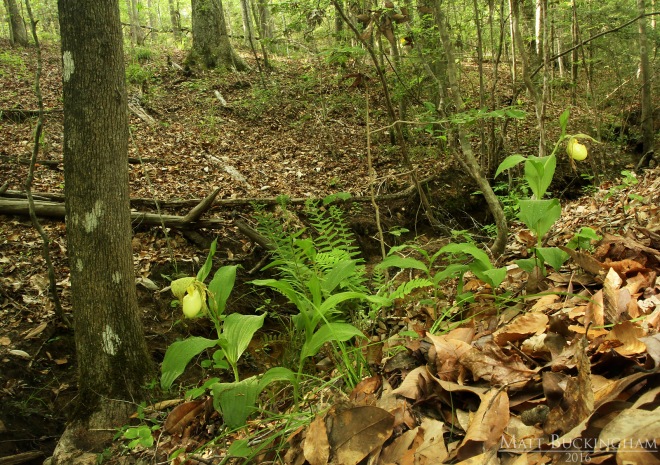
IMG_2973

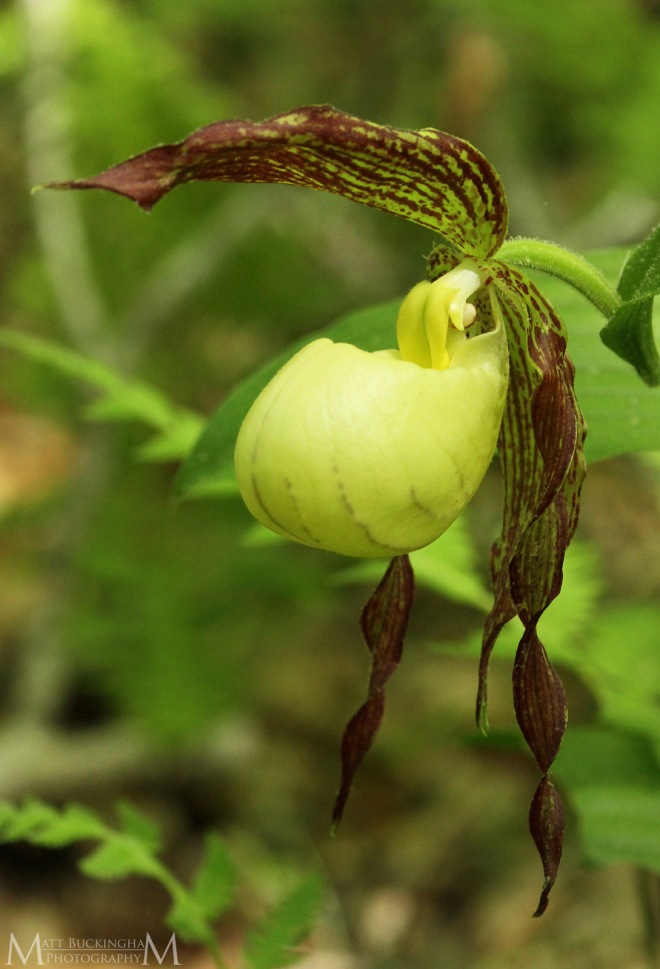
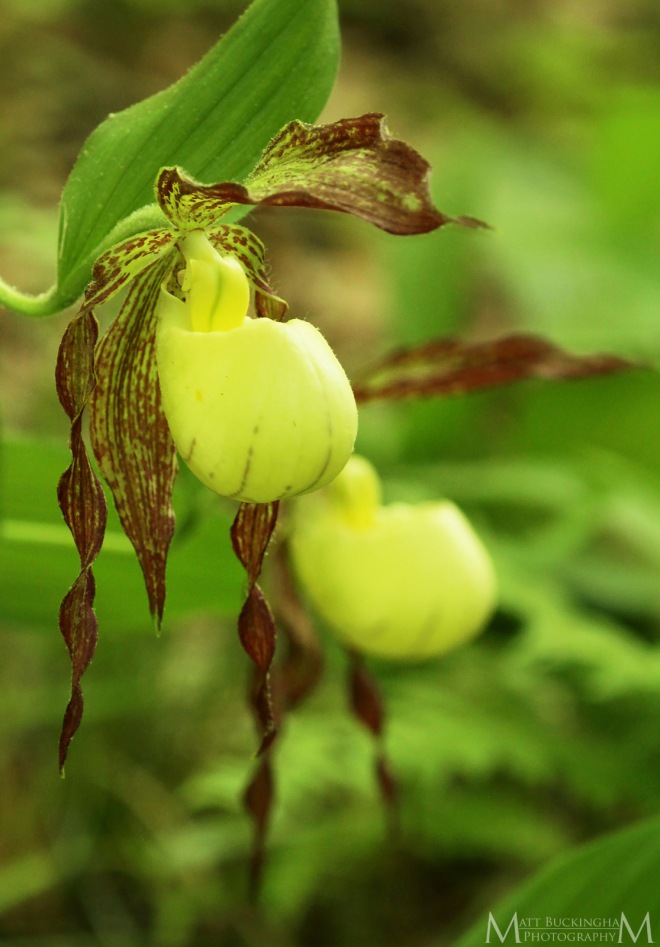
Kentucky Lady’s Slipper

Recently I made the annual trip to see what may be my favorite plant – the Kentucky Lady Slipper (Cypripedium kentuckiense).  This year I was joined by my friends John Williams, Skip Pudney, and Terry Hibbitts, who were anxious for the chance to see and photograph the slippers.

The Kentucky Lady’s Slipper finds refuge deep in the cool, moist ravines of the Pineywoods.  Here the sunlight barely penetrates the canopy, and in April, if the conditions are just right, its curled petals and broad sepals will unfurl, revealing the cream yellow slipper to the world.

IMG_3003

Kentucky Lady’s Slipper

Today this spectacular orchid is rare throughout its range, hanging on as scattered populations from Virginia to East Texas.  It occurs in the dwindling southern hardwood forests that remain as relicts from the last ice age. Here tends to be found adjacent to small, often springfed streams on small benches or the lower terraces of steep slopes.

As the glaciers began their retreat rich hardwood forests with beech, maple, hickory, and oak were likely the dominant cover type in the southern United States. As the glaciers receded and the climate warmed and dried, dominant species like American beech were pushed to these ravines where they remain as relicts – reminders of the forests that once were. They are accompanied by a suite of other species typical of northern and Appalachian hardwood forests.  The Kentucky lady’s slipper is perhaps the most charismatic example of relictual flora in East Texas.
IMG_4027

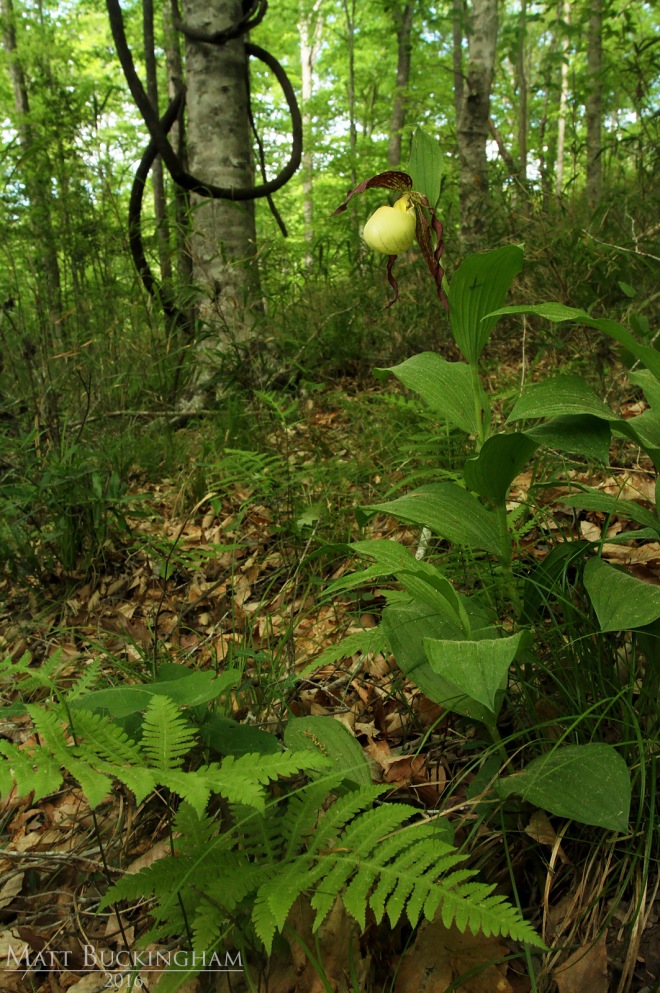
Kentucky Lady’s Slipper in habitat (shot in 2016)

Cypripedium kentuckiense is huge by orchid standards.  The plants may reach close to a meter tall, and the slipper, which is really a modified petal may be the size of a chicken egg.  This orchid is a bit of a trickster, as it lures bees, fully expecting a sweet nectar reward, into the lip.  The bees find no reward inside though, as the orchid does not produce the sugary substance that the pollinators depend on.  It is unlikely that many bees will make the mistake of returning to a lady slipper bloom after this initial disappointment.  Therefore it is believed that the orchids are pollinated primarily by inexperienced individuals.
IMG_4096

Kentucky Lady’s Slipper in habitat (shot in 2016)

The Kentucky Lady’s Slipper truly is one of the most striking inhabitants of the Pineywoods, and for my money one of the most beautiful plants in the country.  Populations continue to decline, however, as these sensitive species succumb to a myriad of pressures from habitat destruction, climate change, increasing isolation of populations which creates a barrier for gene flow, and more.  Fortunately many of the remaining Cypripedium kentuckiense populations in East Texas are protected, at least for the moment.  So at least for now, these botanical treasures will continue to brighten our rich mesic slopes each spring.

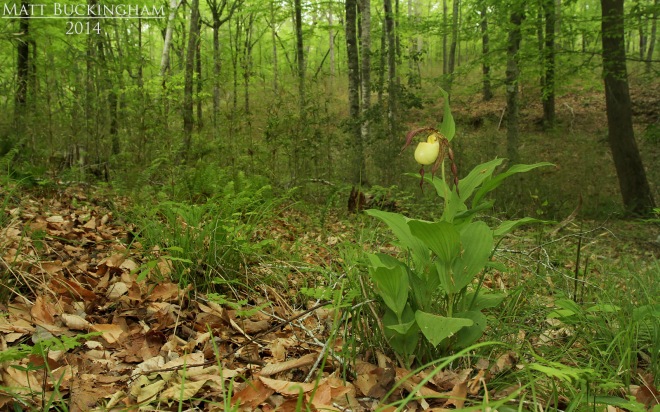
13880644314_de5400d914_o

Kentucky Lady’s Slipper in habitat (shot in 2014)


The Flora of Weches Glades

Target Species: Widow’s Cross (Sedum pulchellum)

IMG_3599

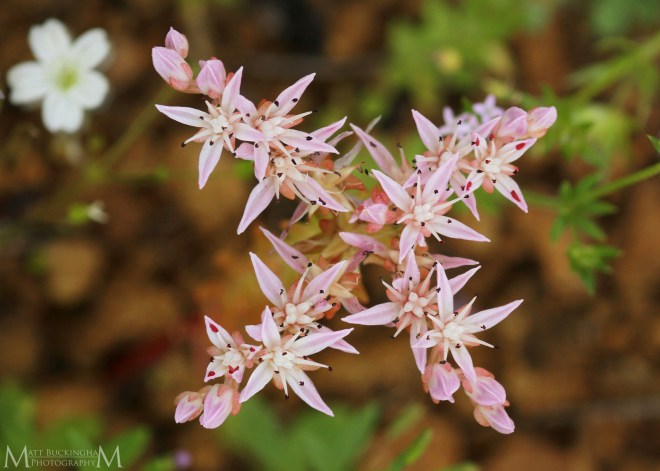
Widow’s Cross

Weches Glades are unique communities in the Pineywoods that occur where the underlying Weches Formation reaches the surface.  Here lie exposed iron rocks and soil that are rich in glauconite, a greenish mineral composed primarily of iron and potassium.  Weches Glades occur in a narrow band stretching across Nacogdoches, San Augustine, and Sabine counties and are home to a unique flora, including species that are found nowhere else on the planet.

The coarse soil of the Weches Glades are often saturated in the spring and summer, occasionally forming shallow pools in small depressions in bare rock.  The heat and sweltering sun of summer quickly evaporates these pools, and leaves the soil dry and brittle.  In the spring the boulders at some of the few remnant glades turn light pink, awash with the blooms of the Widow’s Cross (Sedum pulchellum).

Widow’s Cross is a species of the South-Central states, from extreme Northeast Georgia, Tennesse, and Kentucky in the east to Kansas, Oklahoma, and Texas in the west.  It is generally limited to glades and outcrops, communities where little else can grow.  It thrives under shallow, harsh soil conditions.  As these communities are often limited across the landscape, Sedum pulchellum is generally uncommon to rare throughout its range.  In Texas it occurs in just a handful of counties in the northern and central portions of the state.  In the Pineywoods it is limited to Sabine and San Augustine Counties.

IMG_3117

Widow’s Cross

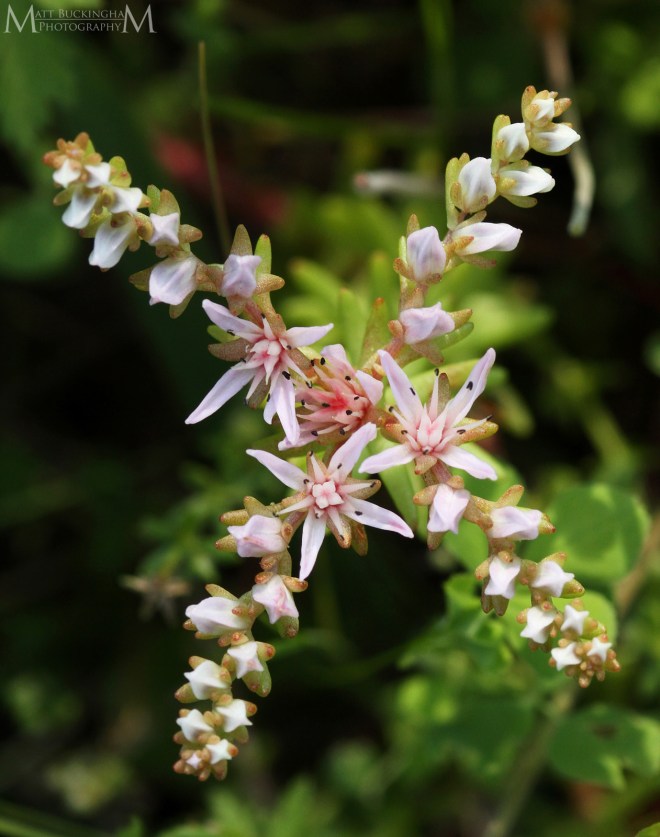
Widow’s Cross owes much of its success in these environments to its succulent leaves, which can quickly absorb and store water from fall and winter rains in order to put on a spectacular spring show.  It’s easy to see how the plant gets its name.  It’s actually named for the cross like shape of the four-petaled flowers, however the inflorescence also often forms in the shape of a cross.

IMG_3592

Widow’s Cross

Though Weches Glades were likely always infrequent and highly localized, a great deal have been lost to glauconite mining.  This mineral which seems critical for some species has long been used for soil enhancement and road filler.  As result small scale surface mining operations have destroyed many of these unique communities.  The vast majority of those that remain are on private land and site unprotected to this day.

IMG_3136

Widow’s Cross

While I had previously photographed this species, I captured it on the tail end of its blooming cycle and the plants were past their prime.  This year I aimed to capture them at their peak.  While they generally bear 3 or 4-pronged racemes, I found some with 5 prongs.

IMG_3587

Widow’s Cross

Weches Glades are also home to 2 endemic, Federally Endangered plants: The Texas Golden Gladecress (Leavenworthia texana) and the White Bladderpod (Lesquerella pallida).  Leavenworthia texana is endemic to Sabine and San Augustine Counties.  Here it occurs almost entirely on private land.  These diminutive plants bloom in early spring, ad by the time Widow’s Cross blooms they have already dispersed their seeds.  I photographed the individuals below in mid-February.  In the second photo the developing stems of Sedum pulchellum can be seen.

IMG_6428

Texas Golden Gladecress

IMG_6447

Texas Golden Gladecress

The White Bladderpod is restricted to a handful of Weches Glades in San Augustine County.  It is named for its spherical seed pods, which can be seen adjacent to the blooms on the photo below.  It was in full bloom at the same time as the Widow’s Cross.  Curiously, the bladderpod and gladecress generally don’t occur at the same outcrops.

IMG_3524

White Bladderpod

IMG_3491

White Bladderpot

While photographing the flora of the Weches Glades, one will immediately note the strong smell of mint that fills the air.  This is a result of dense populations of the Limestone Calamint (Clinopodium arkansanum).

IMG_3139

Limestone Calamint

There are many other interesting species that can be found blooming in Weches Glades.  I leave you with a few of them.

IMG_1543

Comanche Daisy (Astranthium ciliatum)

IMG_1586

Drummond’s Stitchwort (Minuartia drummondii)

IMG_1570

Pitcher’s Stitchwort (Minuartia patula)


March Recap

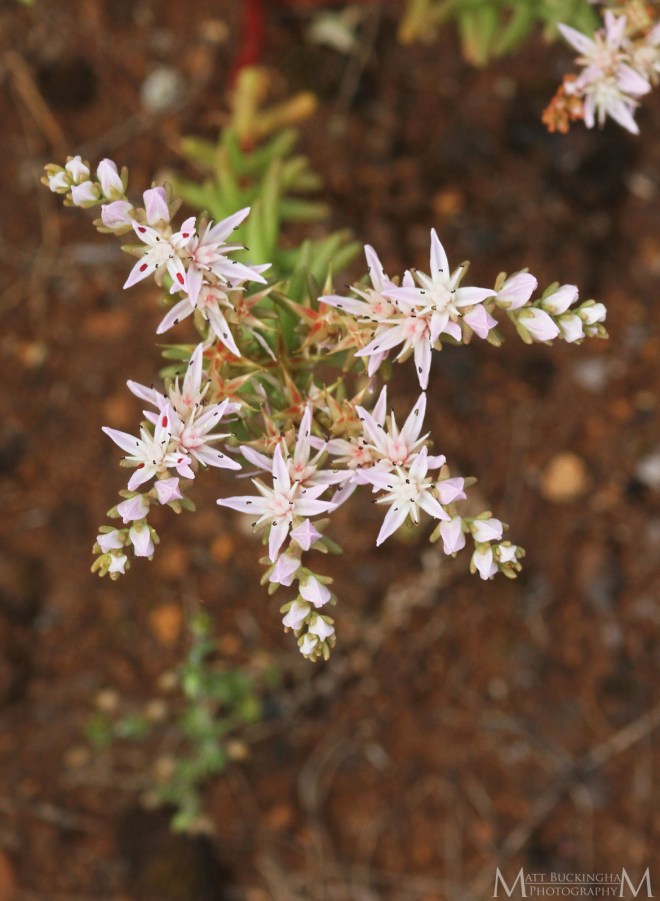
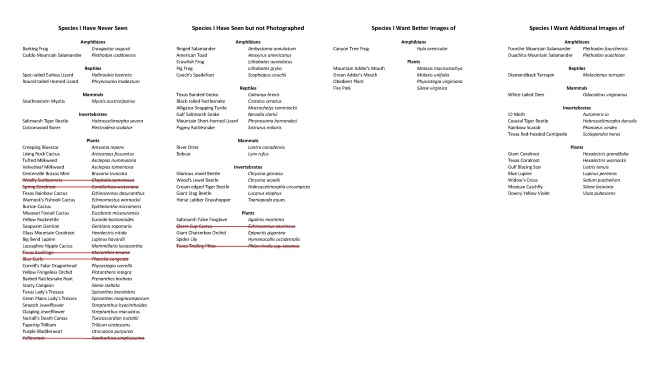
Due to a combination of changed plans and other factors, March was not as productive in terms of 2017 biodiversity goal species as I was expecting.  I was able to check off three species:

Yellowroot (Xanthorhiza simplicissima)

Blue Curls (Phacelia congesta)

Claret Cup Cactus (Echinocereus coccineus)

2017GoalsMar

I spent most of the month of March exploring outside my home turf of the Pineywoods.  From the South Texas Plains to the Edward’s Plateau, I observed an incredible diversity of habitats and species, which are highlighted in previous blog posts.  I did however get to spend some time in the field around here.  To follow are some of March’s highlights from East Texas.

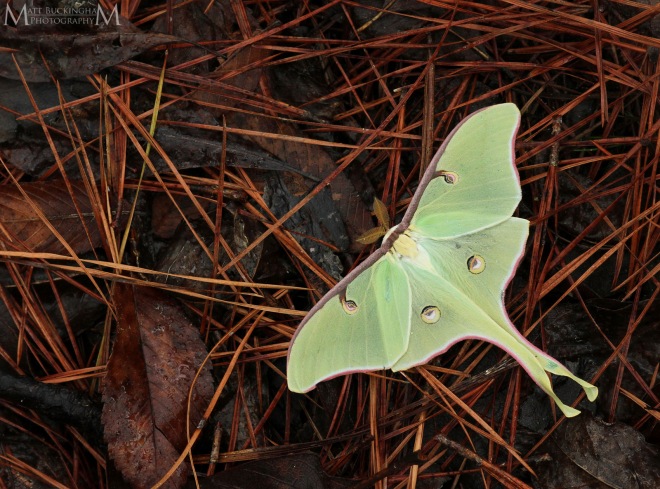
This year has been good for Luna Moths (Actias luna).  I observed several freshly emerged males.  Males utilize their feathery antennae to pick up subtle pheromone cues from females and may fly miles to find a mate.  Adult Luna Moths lack feeding mouth parts, and live on average about a week.  As adults they really are driven by a singular purpose: to breed.

IMG_7982

Luna Moth

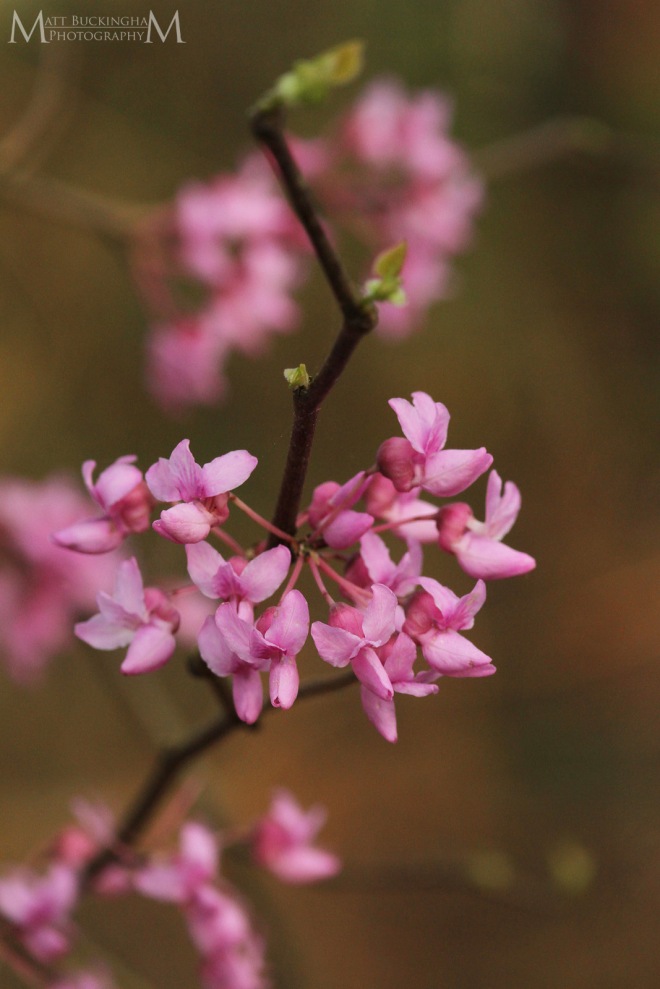
March is a great time to enjoy flowering trees and shrubs in East Texas.  This year most species put on a decent show.  The Eastern Redbud (Cercis canadensis) seemed to peak in late February, however several were still in flower in early March.

IMG_7011

Eastern Redbud

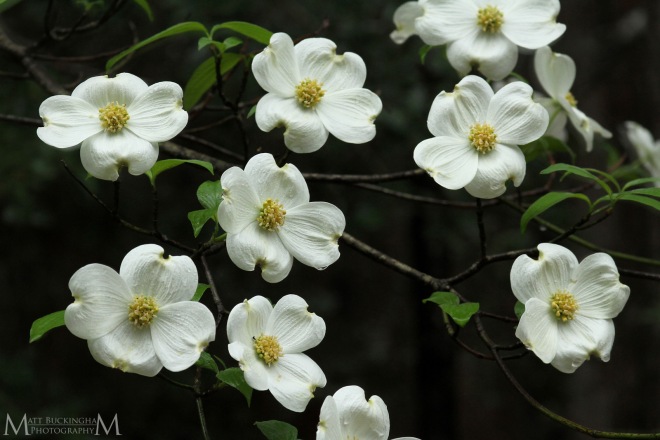
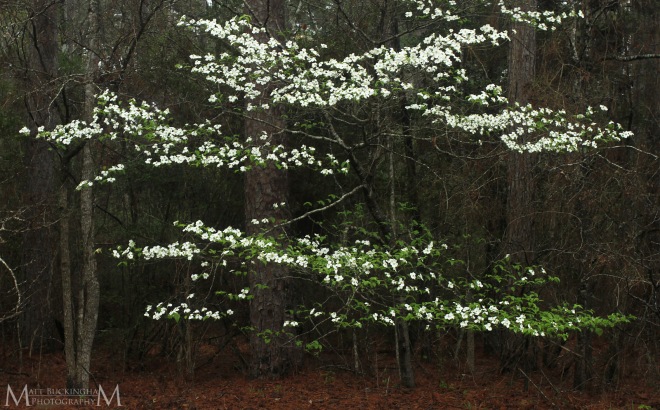
Among my favorite spring displays is that of the Flowering Dogwood (Cornus florida).  This small tree ranges throughout much of the eastern United States.  To me it is one of the emblematic spring blooms of East Texas.  Christian accounts claim that Jesus was crucified on the wood of a dogwood tree.  Story goes that they were once tall, stately trees that Jesus, following his crucifixion, morphed to their current gnarled form – presumably so no others could ever again be crucified upon their wood. Their “flowers” now appear as crosses each spring around Easter.

In reality the white “flowers” are modified leaves called bracts. The flowers are the yellow structures at the bracts’ centers.  In the late summer the tree will bear red fruits that are cherished by wild turkeys.  I also think that their growth form only lends beauty to this already stunning species.

IMG_7865

Flowering Dogwood

IMG_7810

Flowering Dogwood

IMG_8007

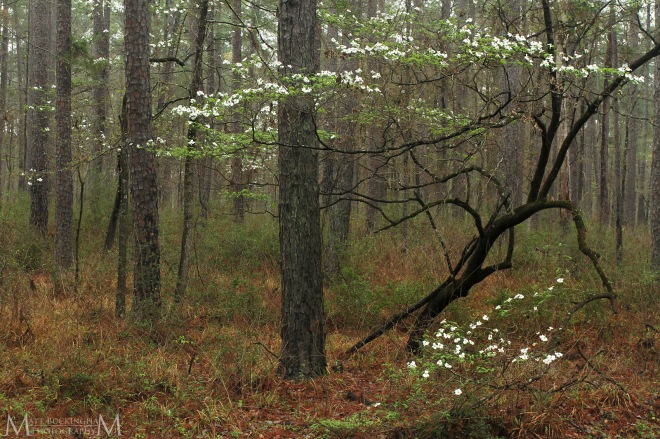
Flowering Dogwood in the understory of a longleaf pine savannah

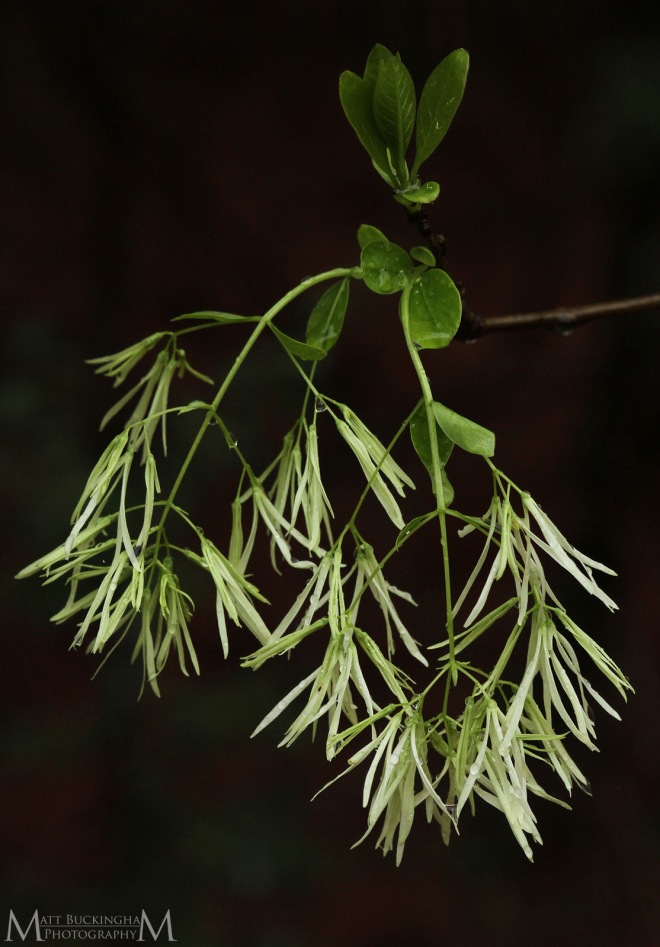
The Fringetrees (Chionanthus virginicus) seem to hit their peak as the dogwoods are beginning to fade.  Their wispy, whitish green blooms light up the forest edge and the understory in open woods.

IMG_7878

Fringetree

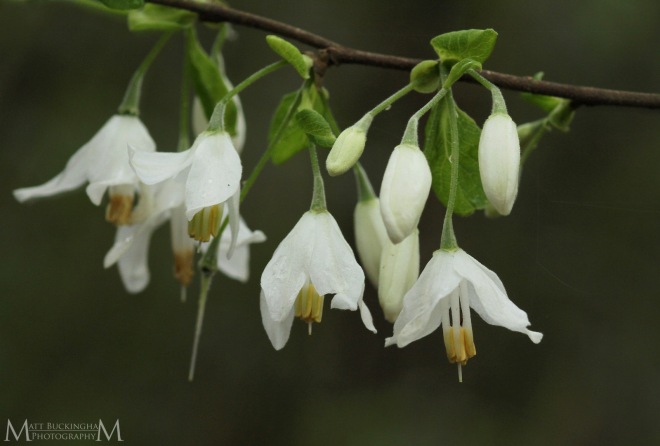
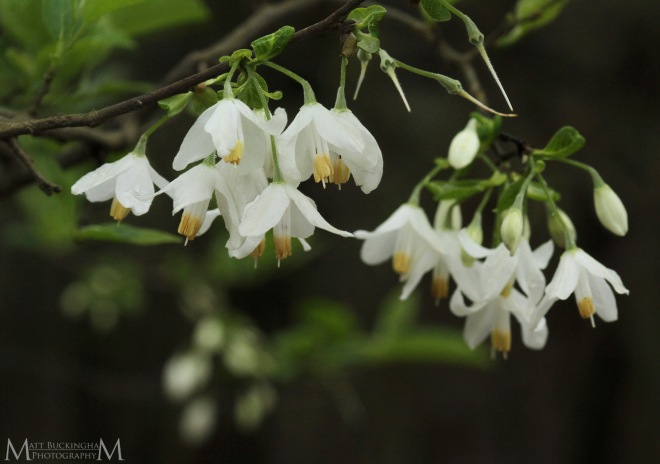
Dangling like little snowdrops are the blooms of the Two-winged Silverbell (Halesia diptera).  These attractive little trees are often found along streams and in moist stream bottoms.

IMG_7947

Two-winged Silverbell

IMG_7955

Two-winged Silverbell

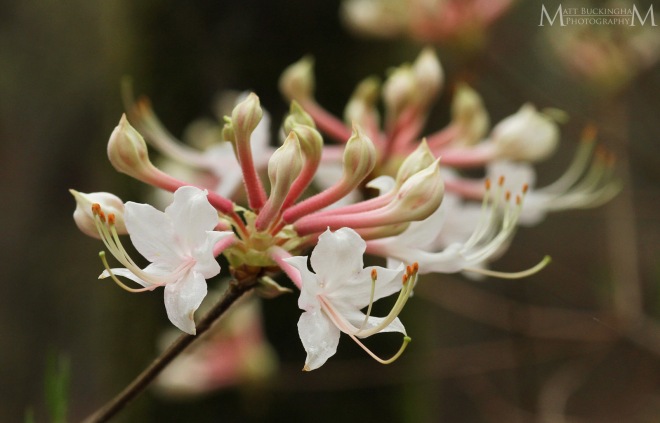
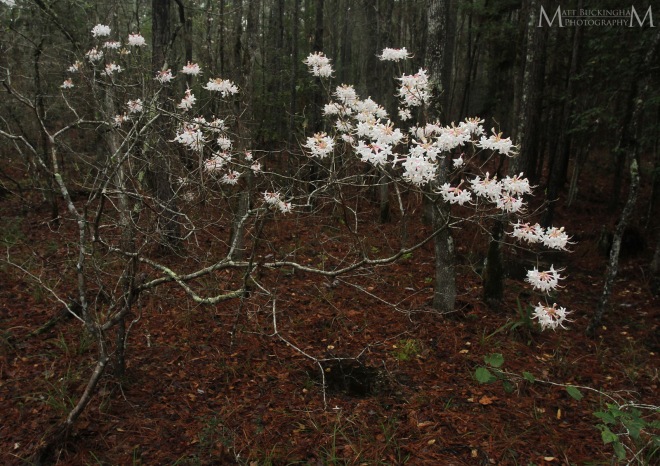
Azaleas are a favorite of gardeners and nature lovers alike.  In East Texas the Hoary Azalea (Rhododendron canescens) reaches the southwestern extent of its range.

IMG_7914

Hoary Azalea

IMG_7938

Hoary Azalea

I couldn’t resist photographing a particularly large Sabine River Wakerobin (Trillium gracile).  This lovely trillium is endemic to rich forests in the Pineywoods of East Texas and western Louisiana.

IMG_8339

Sabine River Wakerobin

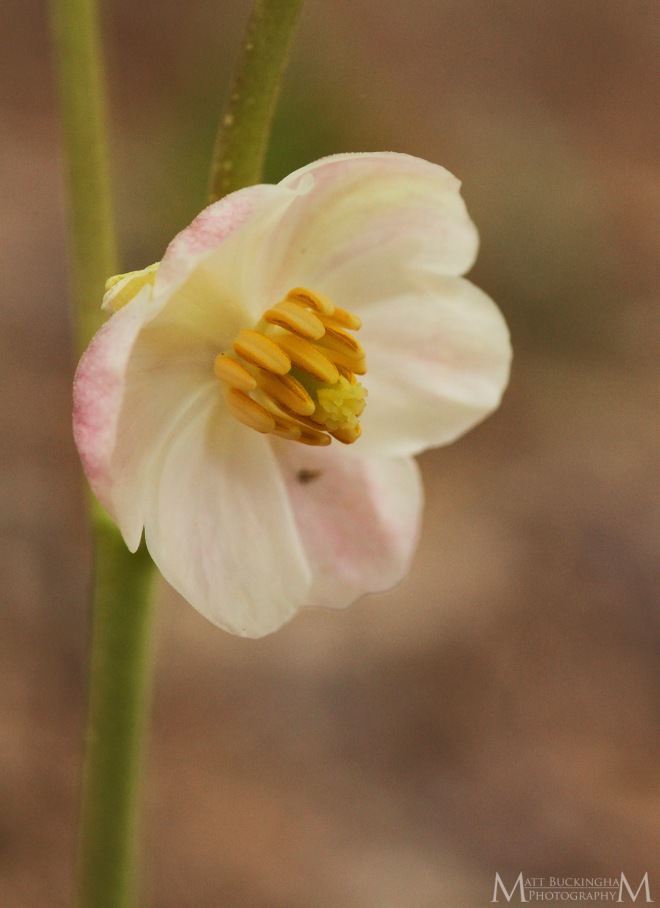
Another springtime favorite of mine is the Mayapple (Podophyllum peltatum).  This characteristic spring ephemeral of eastern forests can form large colonies in East Texas, often carpeting the forest floor.  The fluffy white blooms hang below the large umbrella like leaves.  Occasionally, as pictured below, the flowers may have a pink tinge to them.

IMG_6995

Mayapple

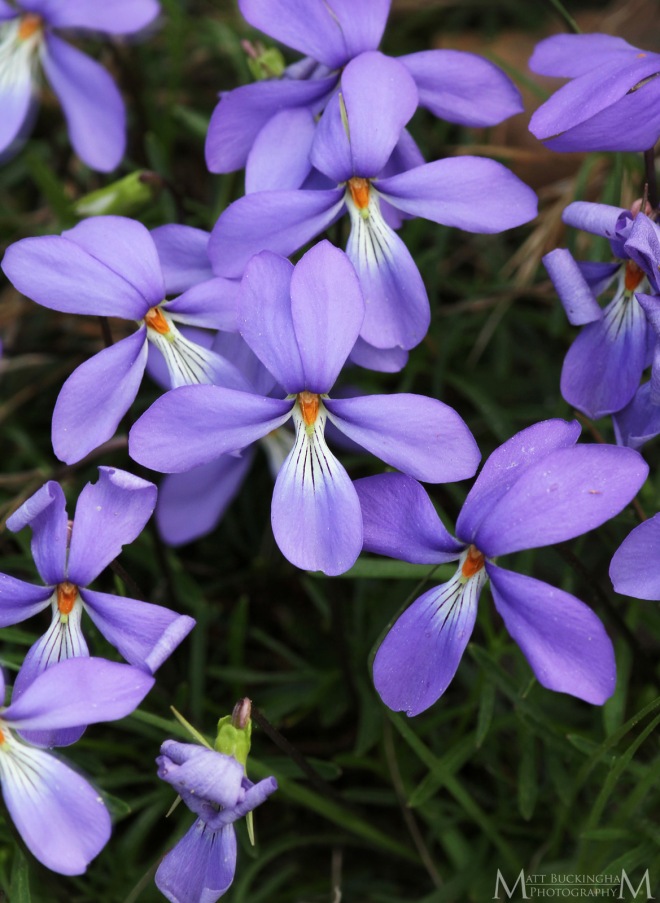
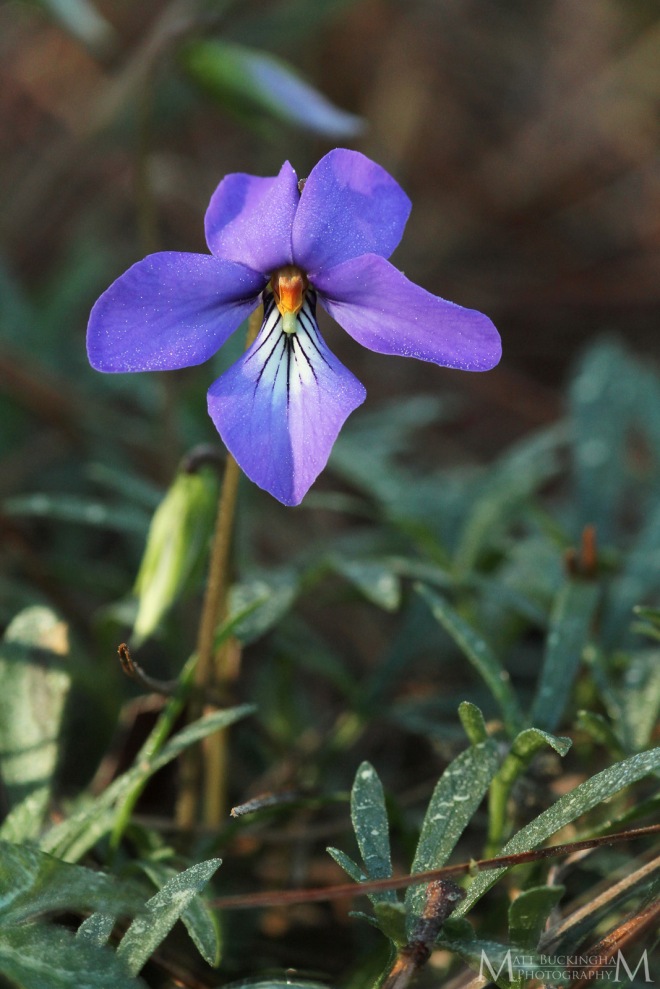
Though I photographed a few in February, I couldn’t resist stopping to photograph some roadside populations of Birdfoot Violets (Viola pedata) in early March.

IMG_1495

Birdfoot Violets

IMG_7368

Birdfoot Violet

Also common along roadways and dry, open woods is the Plains Wild Indigo (Baptisia bracteata).

IMG_7416

Plains Wild Indigo

I photographed this Yellow Star-Grass (Hypoxis hirsuta) with fresh morning dew still clinging to the bloom.

IMG_7450

Yellow Star-Grass

Another characteristically eastern forb that reaches its southwestern extent in East Texas is the Lousewort (Pedicularis canadensis).  Most of the flowers in Texas are yellow, however I have occasionally observed them with hints of maroon.  Lousewort is reported to provide a plethora of medical uses.  It’s roots have long been used to brew a tea that helps treat digestive and stomach problems and ulcers.  Its leaves can also reportedly be ground into a poultice that helps alleviate swelling, muscle pain, and several skin conditions.  Drinking its leaves in a tea is said to sooth sore throats, coughs, and headaches.  It is also said to act as a powerful aphrodisiac.

IMG_7630

Lousewort

IMG_7642

Lousewort

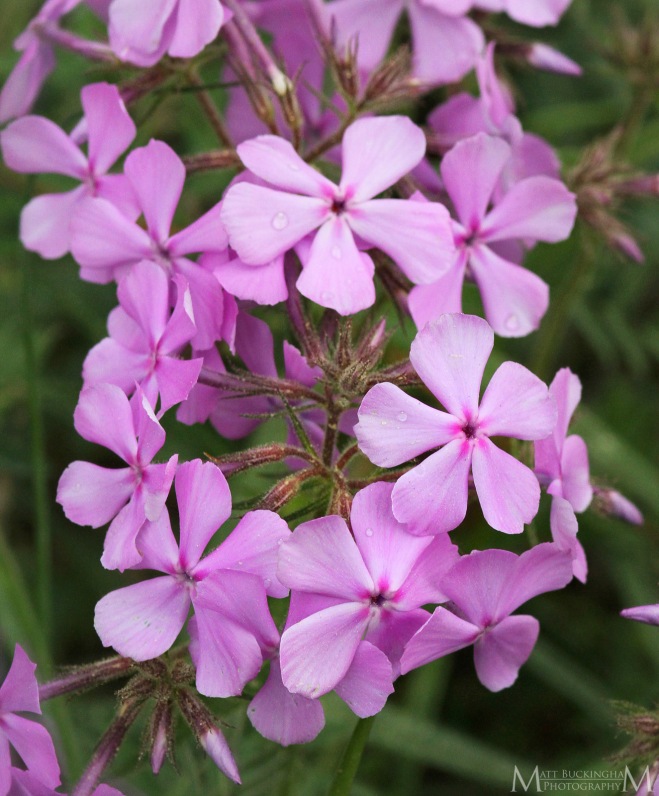
The beautiful Big Thicket Phlox (Phlox pulcherrima) is endemic to the forests of East Texas.  Like so many other species in this area of significant habitat modification by man, it is now most common along roadsides.

IMG_7679

Big Thicket Phlox

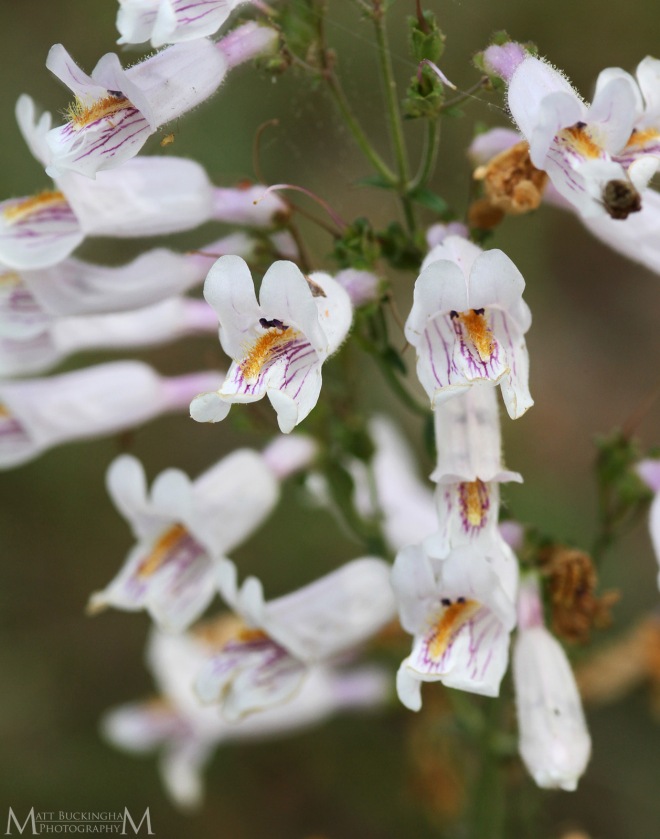
The Nodding Penstemon (Penstemon laxiflorus) is also common along roadsides.  It is so common that I never gave it much thought as a photographic subject, however this native has truly unique, beautiful flowers when viewed up close.

IMG_1479

Nodding Penstemon

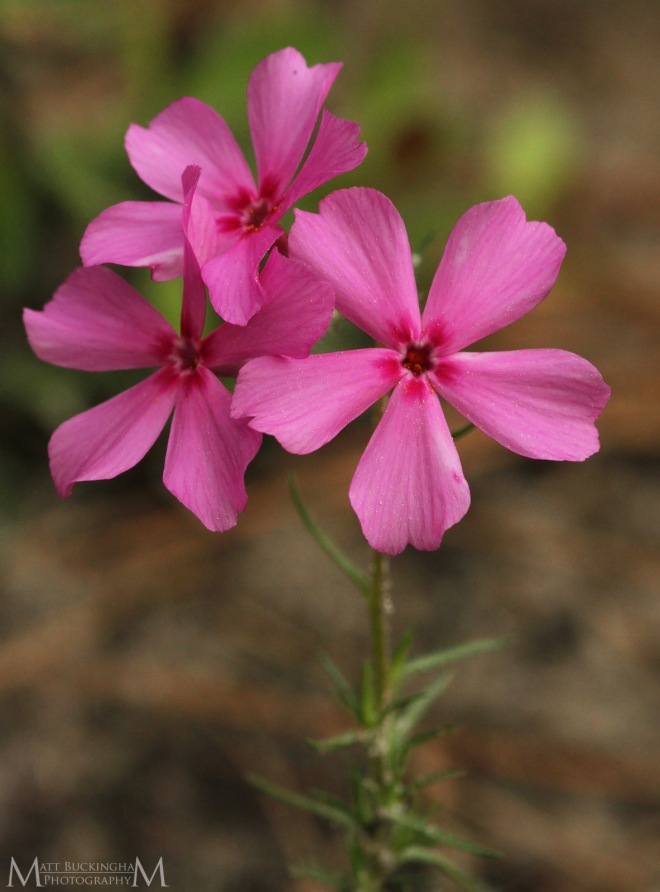
During March I also made a few visits to the Big Thicket to check on a species that I checked off my list in February: The Federally Endangered Texas Trailing Phlox (Phlox nivalis ssp. texensis).  The plants were looking healthy and were still blooming mid-March.

IMG_8446

Texas Trailing Phlox

IMG_1599

Texas Trailing Phlox

Growing near the phlox I saw several Dollarleafs (Rhynchosia reniformis), a species of the coastal plain of the southeastern United States.

IMG_1610

I’ll close out this March recap with a beautiful scene from a longleaf pine savannah near one of the few known locations of Texas Trailing Phlox.  Here Rose Mock Vervain (Glandularia canadensis) thrives following a fire.  These showy blooms are a testament to fire’s ability to maintain and vitalize certain vegetative communities.

IMG_8489

With March of 2017 behind us, it’s time to move into April, where I hope to really start get going on my 2017 list of biodiversity goals.


Spring in the Hill Country

IMG_2151

Giant Spiderwort on a granite outcrop

Three springs ago I was lucky enough to marry the love of my life.  Before and since Carolina and I have shared many adventures in the natural world.  It seemed fitting that we spend our anniversary in these wild places we love so much, so we decided to take a trip to the Texas Hill Country.  It had been years since I spent any time exploring this treasure trove of natural wonders, and Carolina had only previously passed through.  We looked forward to a trip full of searching for rocks, gems, wildflowers, and other wild things.

The rugged Texas Hill Country is part of the Edward’s Plateau, an extensive uplift in central Texas comprised of marine deposit that are 100 million years old or more.  The region is primarily comprised of limestone, however extensive granite outcrops are present in areas.  The variety of substrates harbors an incredible array of plant and animal species, many of which are found nowhere else in the world.  Perhaps no other part of the state is as uniquely Texan as the Hill Country.  The following blog post is a long one that highlights its natural beauty.

IMG_1867

Spring in the Texas Hill Country

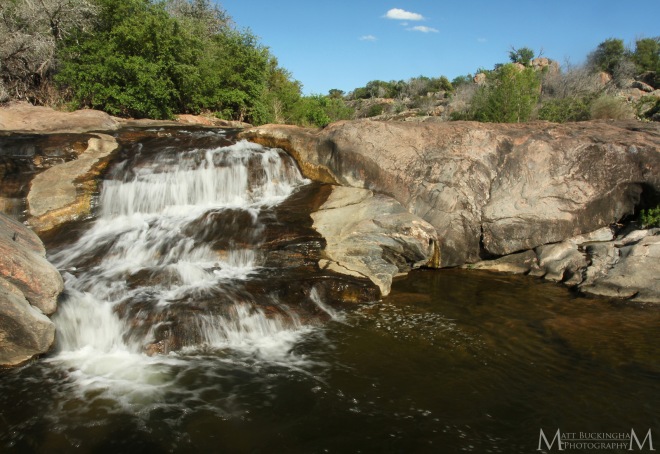
We covered a lot of ground during our trip, trying to see as much as we possibly could.  Recent rains had swollen the clear streams of the region.  While hiking we came across this tributary of the Colorado River, which I suspect is normally fairly tame.  We enjoyed a swim in the cool, clear waters below the fall.

IMG_1818

A Hill Country Waterfall

The wild’s of the Hill Country are full of beautiful sights, like this gnarled live oak growing from the top of a massive granite boulder.

IMG_2108

A gnarled live oak takes hold on a granite outcrop

The Texas Bluebonnet (Lupinus texensis) is certainly the most iconic of all Texas wildflowers.  While I can’t deny their beauty, I am usually reluctant to photograph bluebonnets, as they have been so extensively planted that it’s hard to know when one has encountered a truly wild population.  I found this large population in a clearing in an open oak/mesquite savannah far from any roads or developed areas, and am fairly certain it is a native population.

IMG_2095

Texas Bluebonnets

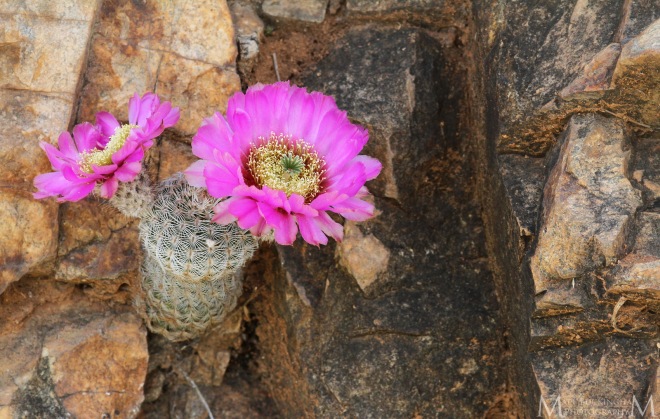
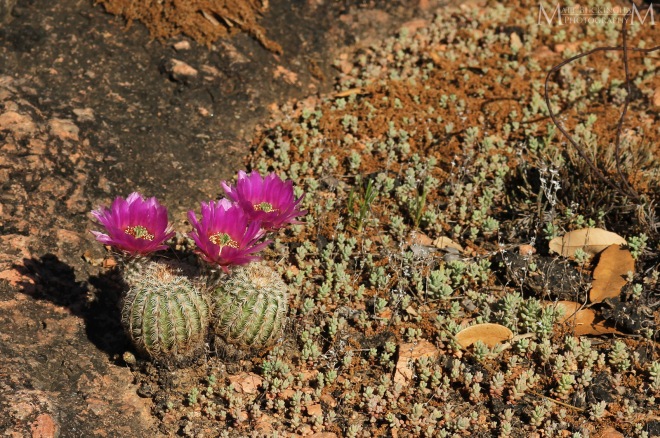
We were lucky that a number of cacti had begun to bloom during our trip.  I posted about the Claret Cup Cactus (Echinocereus coccineus) in my previous blog.  I also mentioned the Lace Cactus (Echinocereus reichenbachii).  The latter deserves mention again here, as we found many in bloom while we were driving back roads in pursuit of Topaz and Celestite.  While we did not find the precious stones, we were rewarded with the brilliant blooms of this spectacular cactus.  The largest, most impressive individuals and groups were on private land well behind fences, however we did find several beautiful individuals within camera range.

IMG_2326

A Lace Cactus clings to a granite outcrop

IMG_2303

Lace Cactus

IMG_2347

Lace Cactus

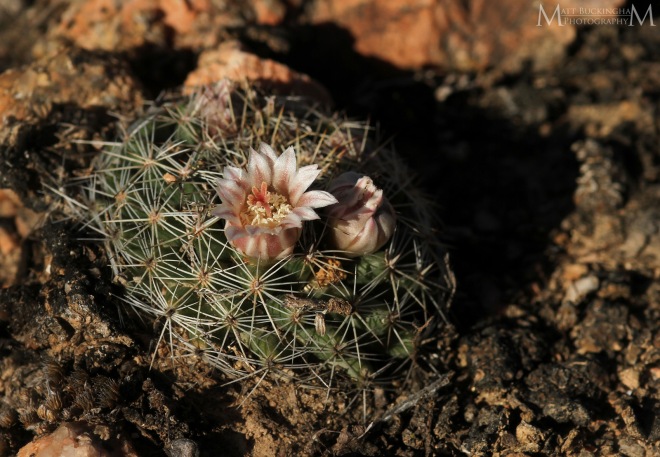
We also found a few Heyder’s Pincushion Cactuses (Mammillaria heyderi), which I had recently photographed in South Texas.

IMG_2362

Heyder’s Pincushion Cactus

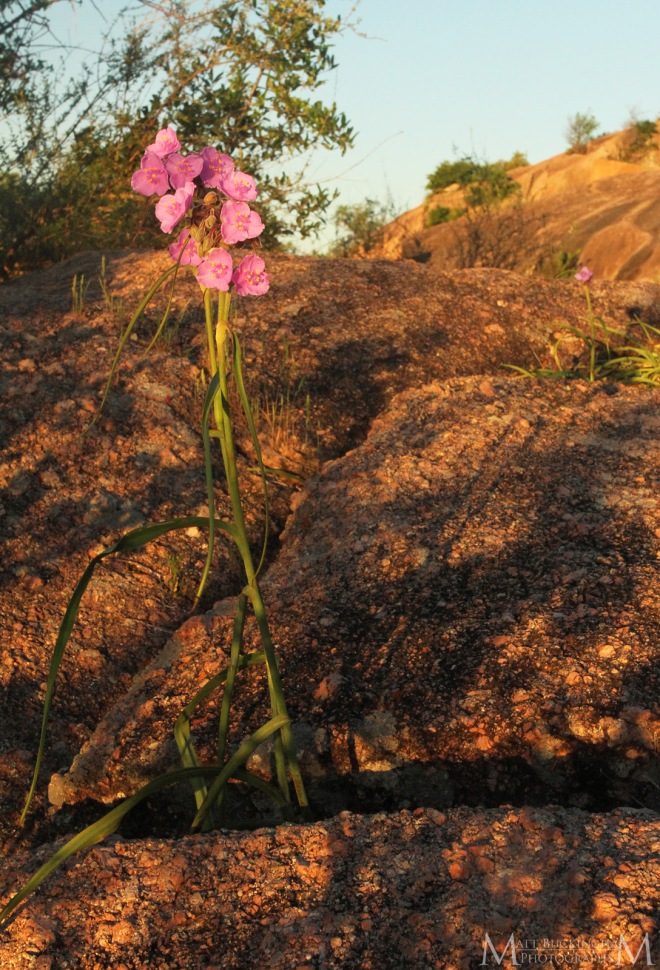
Perhaps one of the most spectacular wildflower displays came from the Giant Spiderwort (Tradescantia gigantea) which seemed to thrive on granite and limestone alike.

IMG_2121

Giant Spiderwort

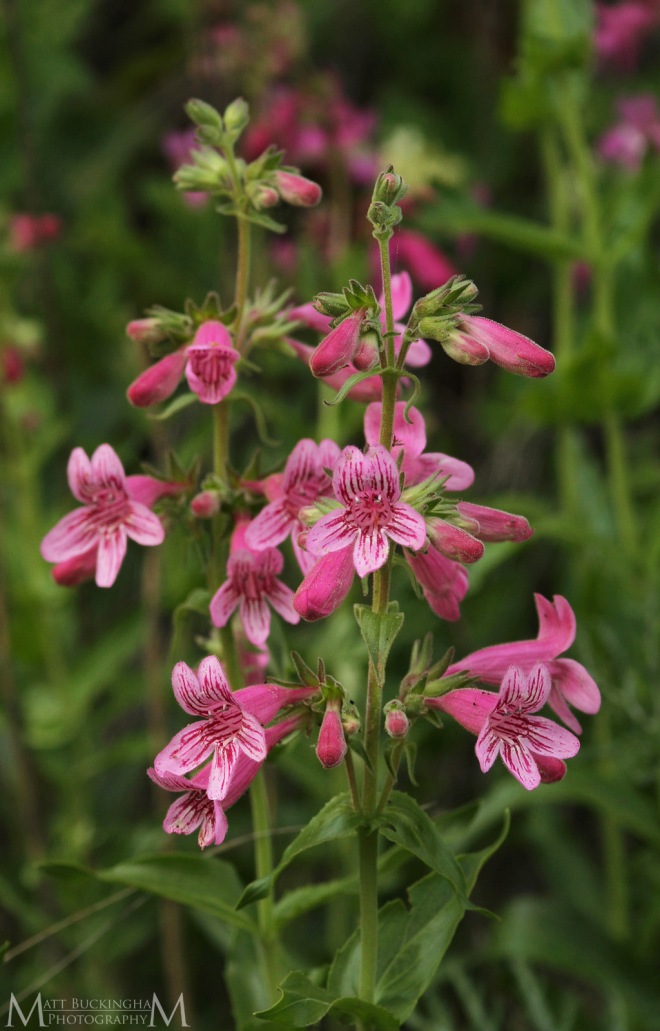
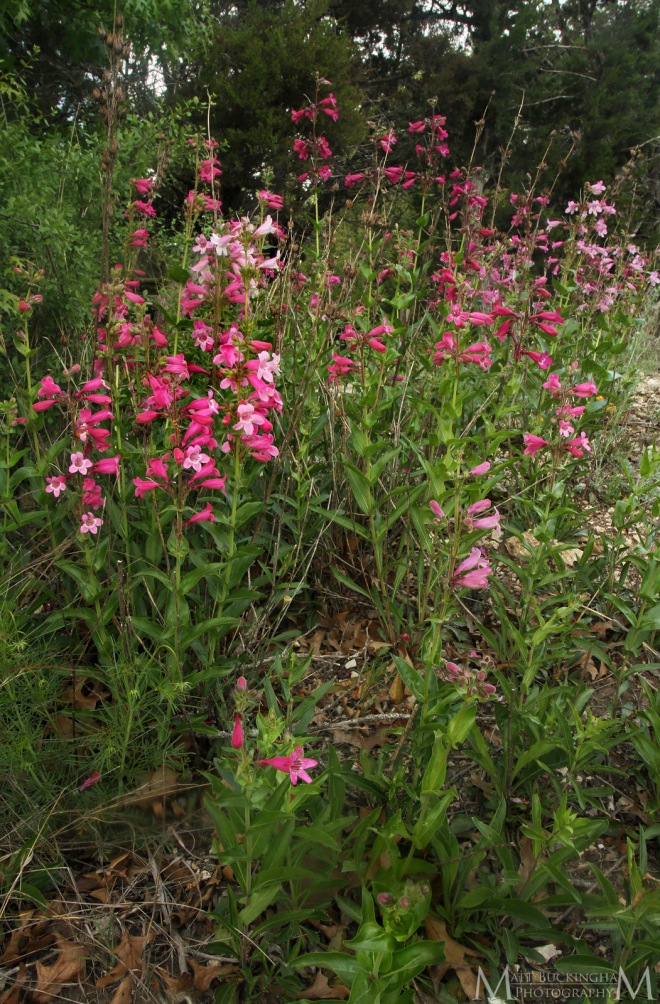
We observed a number of Penstemon species.  The most common and widespread was the Prairie Penstemon (Penstemon cobaea).  It was a treat to see such large, healthy populations of this species, as it is rare in the Pineywoods.

IMG_2423

Prairie Penstemon

We even found a few Prairie Penstemons with a striking lavender wash.

IMG_2009

Prairie Penstemon

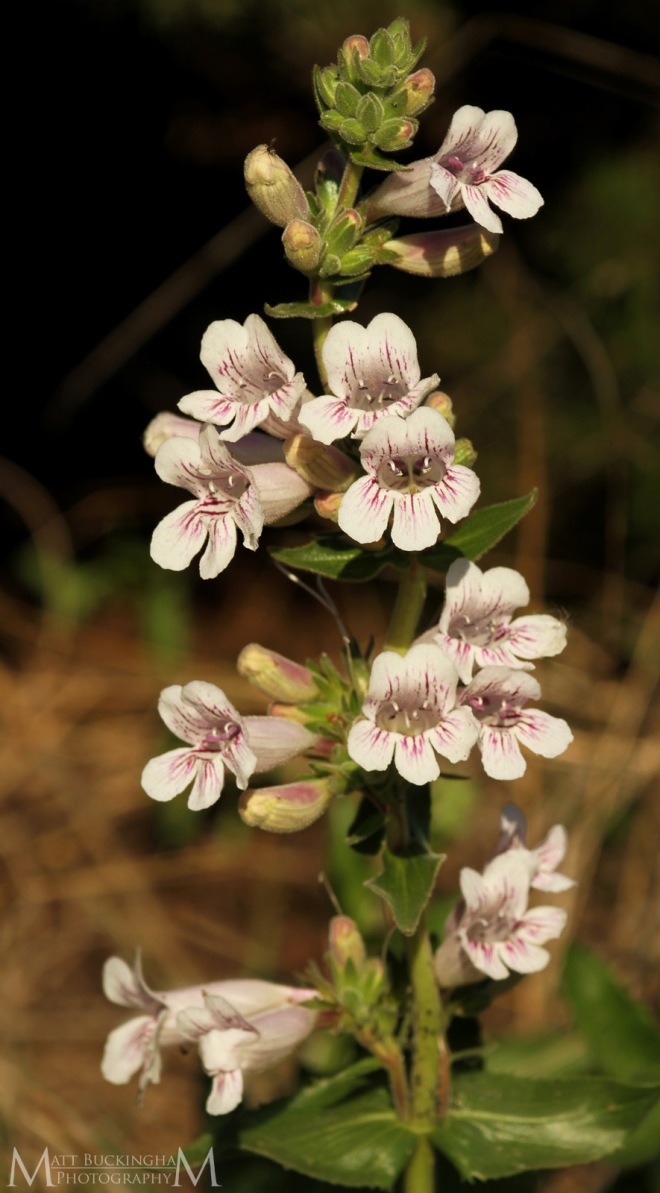
We also found the much less common Guadalupe Penstemon, which is endemic to the Texas Hill Country.

IMG_2399

Guadalupe Penstemon

Penstemon guadalupensis

County level distribution for Penstemon guadalupensis from http://www.bonap.org.  Yellow counties indicate that the species is present but rare.

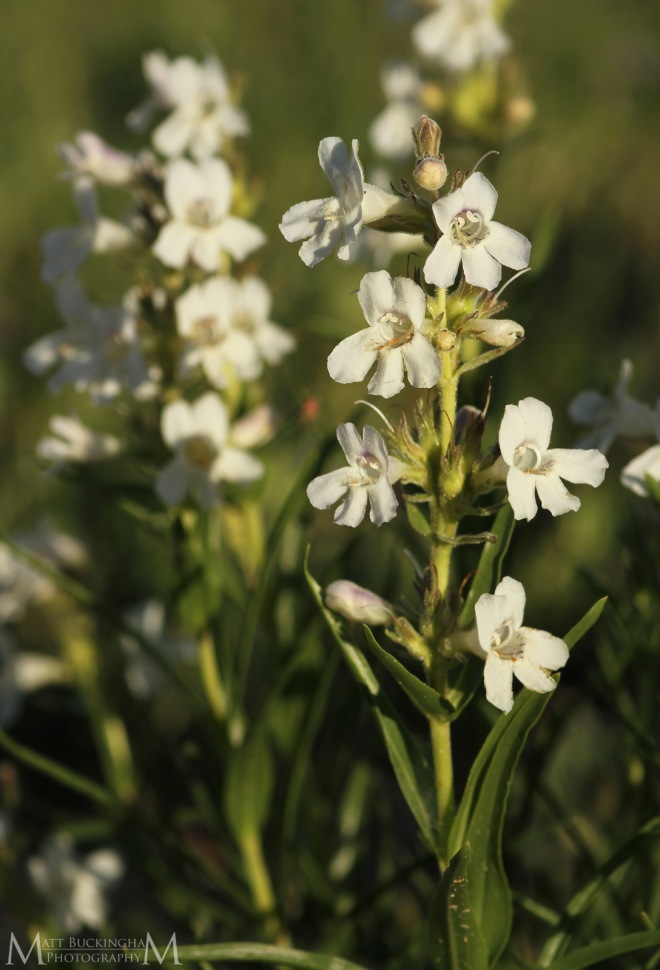
The most spectacular of the Penstemons, however, was the Hill Country Penstemon (Penstemon triflorus), another Edward’s Plateau endemic.

IMG_2645

Hill Country Penstemon

IMG_2634

Hill Country Penstemon

IMG_2650

Hill Country Penstemon

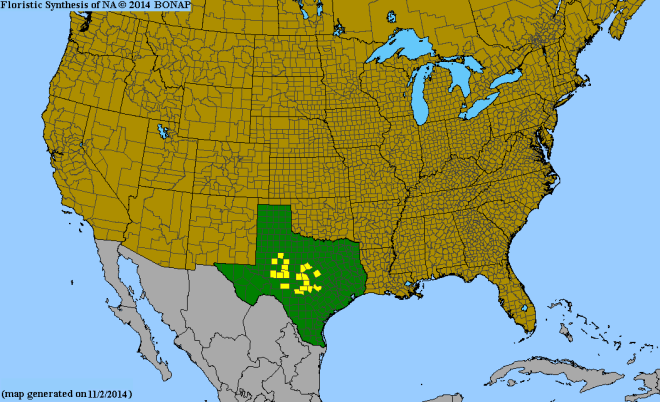
Penstemon triflorus

County-level distribution for Penstemon triflorus from http://www.bonap.org.

The Fringed Bluestar (Amsonia ciliata) was fairly difficult to spot among the grasslands and oak savannahs, despite its bright blue blooms.

IMG_1993

Fringed Bluestar

The Green Milkweed Vine (Matelea reticulata) is native to Texas and northeastern Mexico.  It is easy to see where it gets one of its alternate common names: The Pearl Milkweed Vine.

IMG_2175

Green Milkweed Vine

After spending a couple of nights camping we visited our good friends Scott Wahlberg and Ashley Tubbs in Kerrville.  Scott and I are known for our absurd conversations and hypothetical scenarios.  We are lucky that we have such tolerant women to put up with our shenanigans.  After spending the night at their place, they showed us a beautiful series of canyons that had eroded into the limestone hills.  The Endangered Golden-Cheeked Warbler (Setophaga chrysoparia) serenaded us as we explored its domain.

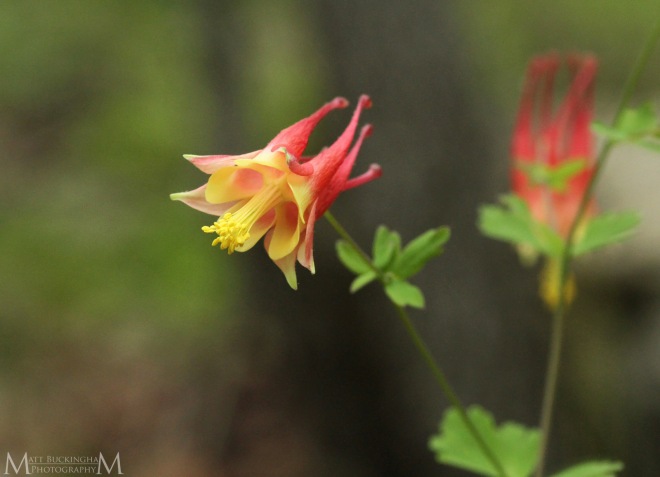
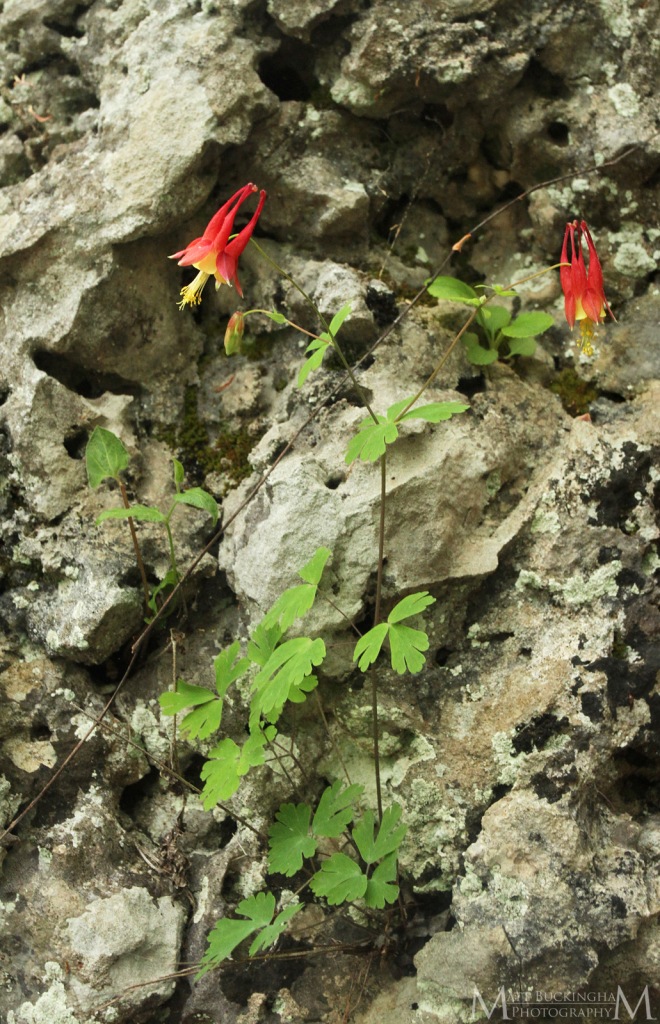
In addition to being rich in endemics, the Texas Hill Country is home to many species typical of the central or Eastern United States that are disjunct from the main portion of their range.  These species generally exist in these cool, moist canyons and are relicts of cooler, wetter times.  Scott has found Western Slimy Salamanders (Plethodon albagula) here.  Luckily I had seen them in the Hill Country before, as we were unable to find any this trip.  We did, however, see several Eastern Red Columbine (Aquilegia canadensis) in bloom.

IMG_2527

Eastern Red Columbine

IMG_2580

Eastern Red Columbine

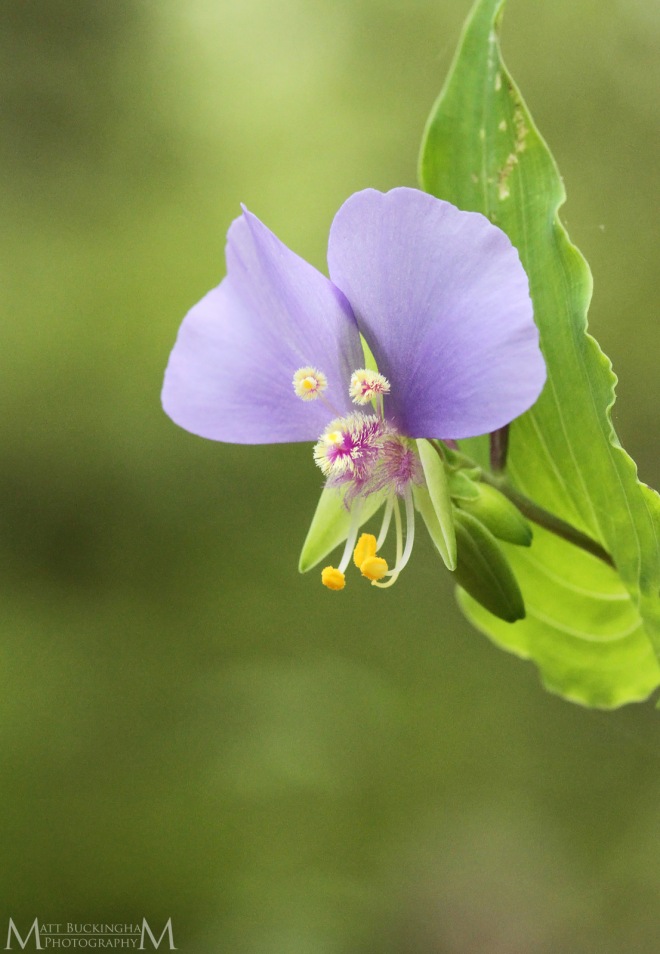
We observed several False Day Flowers (Tinantia anomala) in bloom.  These bizarre blooms reminded me of some alien creature.

IMG_2504

False Day Flower

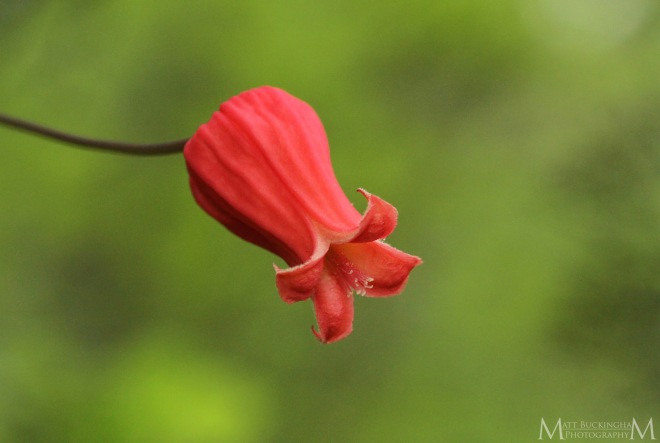
We also found another uncommon endemic growing in these canyons: The Scarlet Clematis (Clematis texensis).

IMG_2570

Scarlet Clematis

Clematis texensis

County-level distribution for Clematis texensis.  Yellow counties indicate that the species is present but rare.

The Texas Madrone (Arbutus xalapensis) is a typical tree of the slopes grading into these canyons.  We were lucky to find a few in bloom.

IMG_2620

Texas Madrone

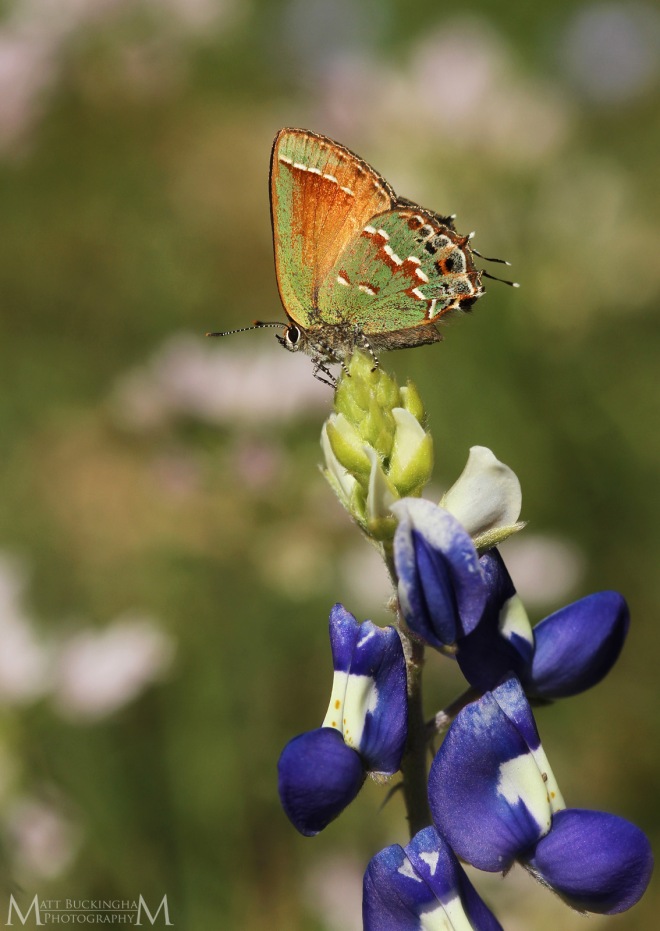
With all of the wildflowers in bloom, the pollinators were out in force as well.  Perhaps the most beautiful, and definitely the most cooperative were the many Juniper Hairstreaks (Callophrys gryneus) that we observed.

IMG_1717

Juniper Hairstreak

IMG_1769

Juniper Hairstreak

As is so often the case for me, as the trip came to an end I was hit with a feeling of sadness.  But it’s hard to be too sad when I was returning to the Pineywoods, where so many interesting species were awaiting me.