Purple People Eater

Target Species: Purple Bladderwort (Utricularia purpurea)

IMG_7584

Purple Bladderwort

This is one I have wanted to see for a long time.  Utricularia purpurea is an aquatic, carnivorous plant that inhabits much of the Eastern United States.  It barely enters Texas in the extreme southeast portion of the state, where it is rare.  I suspect that very few people have seen the Purple Bladderwort here, as the few known populations are not particularly easy to access.  Pursuing the photographs seen here was a true adventure, and the highlight of my 2017 quest for biodiversity thus far.

IMG_7537

Purple Bladderwort

The Purple Bladderwort has a peculiar distribution, not unlike that of another species on my 2017 list, the Blue Lupine.  In the case of the bladderwort I suspect that its distribution can somewhat be explained by the presence of appropriate wetlands in the Gulf and Atlantic coastal plains, and in glacially formed depressions in the Northeast and Great Lakes regions.
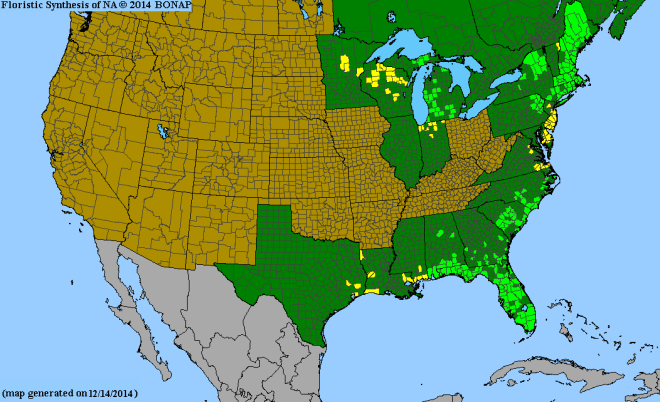
Utricularia purpurea

County-level distribution of Utricularia purpurea from http://www.bonap.org.  Yellow counties indicate that the species is present but rare.

To see this rarity, I once again called on the good people of the Nature Conservancy of Texas.  Wendy Ledbetter, Forest Project Manager, told me that U. purpurea had been reported from a series of flatwood ponds on one of the properties they protect.  It was, in fact, very close to where I photographed Streptanthus hyacinthoides a few weeks ago.  She was kind enough to take time from her busy schedule to meet me one morning and show me the areas where it had been reported.  She brought me to two spectacular flatwoods ponds.  We were unsure if any of the elusive carnivores would be in bloom, but sure enough, after minimal effort I spotted one, then another, then another.

IMG_7483

Purple Bladderwort

After showing me around for a couple of hours in the morning, Wendy had to leave to tend to other engagements.  I thanked her profusely, both for her time and consideration, and for the fine work that she and her colleagues at the Nature Conservancy have done to protect so much our great state’s incredible biodiversity.  After Wendy left I returned to the ponds to try to capture some unique images of this spectacular little plant.  I was trudging through water that was mostly between 1 and 3 feet deep.  To capture some of these images I had to sit, kneel, or completely submerge myself in the water, with just my hands and camera above the surface.

IMG_7415

Purple Bladderwort

As previously mentioned, and eluded to in the title, Utricularia purpurea is a carnivorous plant.  It contains intricate leaves that float just below the water’s surface.  These leaves are loaded with small air-filled bladders that help keep the plant afloat.  Each bladder is equipped with a small, hair-like trigger. As tiny aquatic organisms swim by and brush against the trigger, the bladders instantly open, and as the water rushes in to occupy the vacant airspace, the organisms are sucked in.  The bladder then snaps shut, trapping them inside where they are slowly digested.  In the late spring through the summer the lavender flowers emerge from the depths.  U. purpurea is one of several species of Utricularia in Texas, but it is the only one with purple blooms.  The others are all yellow.

IMG_7494

Purple Bladderwort.  If you look closely you can see some of the round bladders under the water.

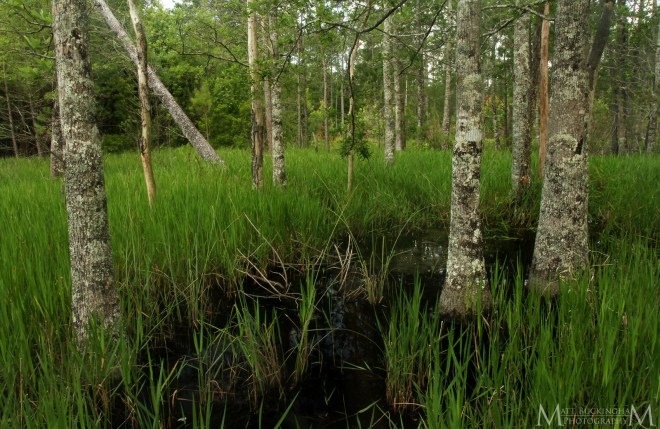
The flatwood ponds in which I photographed the Purple Bladderwort that day were the finest I have ever seen.  These unique aquatic communities occur in clay-bottomed depressions where over the millennia water and organic material have accumulated.  Historically they were dominated by a variety of grasses and sedges, kept free from woody encroachment by regular wildfires.  In the modern era of development and fire suppression, however, high quality examples have all but disappeared.  They have persisted on this Nature Conservancy property, however, as a result of their excellent stewardship which includes frequent burns that penetrate into the ponds.  Scattered trees, mostly Swamp Tupelo (Nyssa biflora) exist on the margins, but the centers of the pond are open for acres.

Unfortunately I did not take any photos looking toward the center of the ponds, however I did capture the photo below looking back to the margins.  I found U. purpurea to be most common among the grasses and trees along the ponds’ margins.
IMG_7448

Flatwoods pond margin

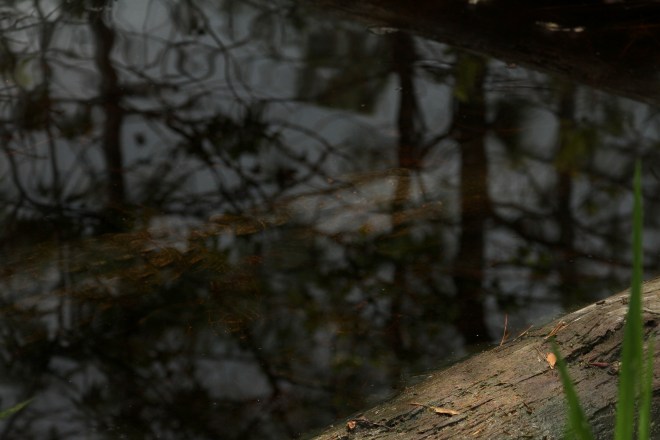
I spent what must have been at least 15-20 minutes lying on my belly, almost completely submerged in the water in order to get a low angle on a particularly attractive grouping of Purple Bladderworts.  After finishing I began to retrace my steps out of the pond.  As I did, I noticed something that was not there on my way in.  There was an 8-9 foot alligator laying on the bottom not 20 feet from where I was laying.  I suspect that its sudden presence was a coincidence, and that it hadn’t been slowly stalking me, but none-the-less it gave my heart a good jump.  Fortunately the water was shallow and clear, giving me a clear view of the magnificent creature, otherwise I was likely to have stepped on it.  I slowly made my way around it, and it never moved.  Though somewhat difficult to see, you can make out its head and part of its back in the photo below.
IMG_7603.jpg

American Alligator

The Purple Bladderwort shared its ponds with its cousin, the Humped Bladderwort (Utricularia gibba).  Like Utricularia purpurea, it also relies on the bladders of its submerged leaves to obtain nutrients from animal prey.

IMG_7683

Humped Bladderwort

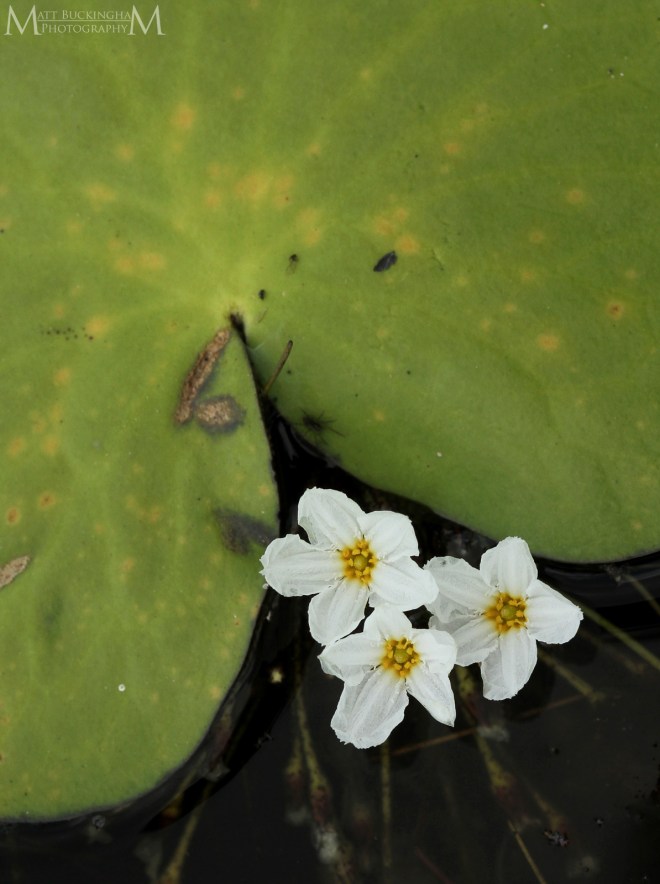
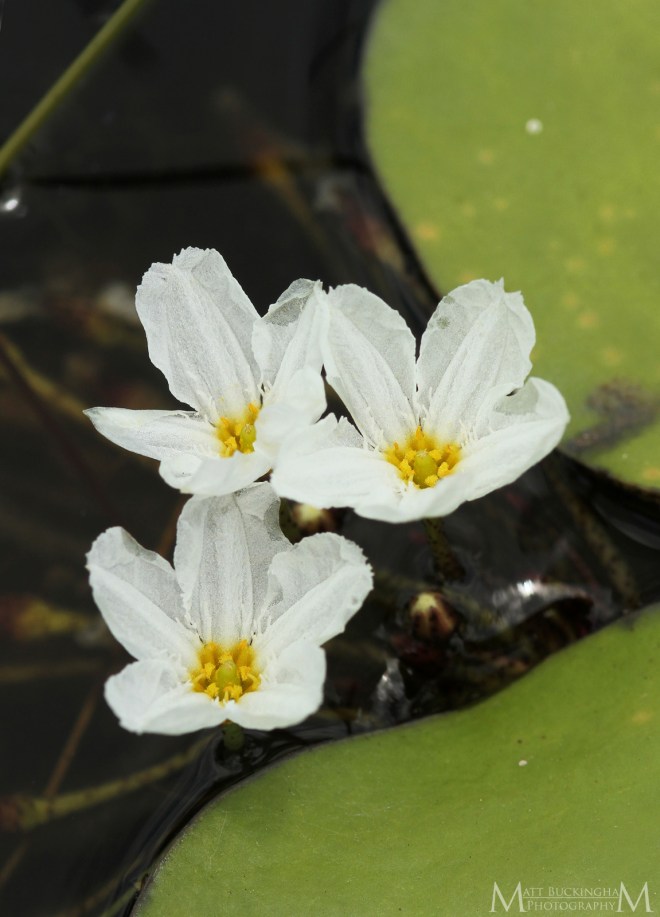
There were several other interesting aquatic species in the flatwoods ponds, but the Floatinghearts (Nymphoides aquatica) really stood out.  It is also commonly known as the Banana Plant for its banana-shaped roots.
IMG_7705

Floatingheart

IMG_7730

Floatingheart

The flatwoods ponds were surrounded by a spectacular series of xeric sandhills occurring on ancient sand deposited by rivers as they changed course over time.  I spent some time exploring these beautiful communities, where I found a number of Eastern Prickly Pears in bloom.

IMG_7618

Eastern Prickly Pear blooms in a xeric sandhill

IMG_7641

Eastern Prickly Pear blooms in a xeric sandhill

I also took a moment to photograph the Pickering’s Dawnflower (Stylisma pickeringii), another species typical of deep sands, as it bloomed among the cacti.

IMG_7635

Pickering’s Dawnflower

As if all of the above wasn’t enough, in the morning Wendy and I observed this Eastern Hognose Snake (Heterodon platirhinos) up to its anti-predator high jinks.  It spread the ribs of the anterior portion of its body creating a hood-like effect similar to that of a cobra.  This behavior has earned it the colloquial name of “spreading adder”.  Occasionally it would feign a strike, but never attempted to actually bite me.  Eastern Hognose Snakes feed primarily on toads, and have specially-adapted pointed fangs that can deflate toads that fill themselves with air in an attempt to make themselves larger to avoid being swallowed.  They also contain a mild venom that likely helps subdue their prey, though it is harmless to humans.

IMG_7169

Eastern Hognose Snake

IMG_7196

Eastern Hognose Snake

IMG_7231

Eastern Hognose Snake

Seeing the Purple Bladderwort and exploring these incredible habitats is an experience I will never forget.  I can’t wait to return in the future to spend more time among the carnivores (large and small) of the Big Thicket.
Jewel of the Sandhills

Target Species: Smooth Jewelflower (Streptanthus hyacinthoides)

IMG_5504

Smooth Jewelflower

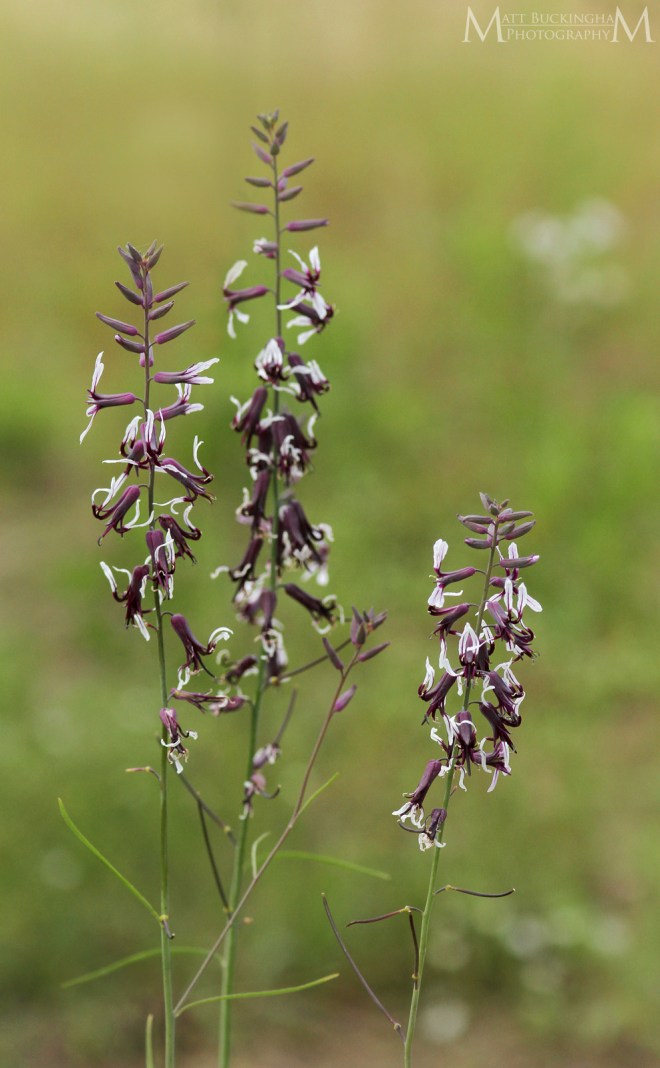
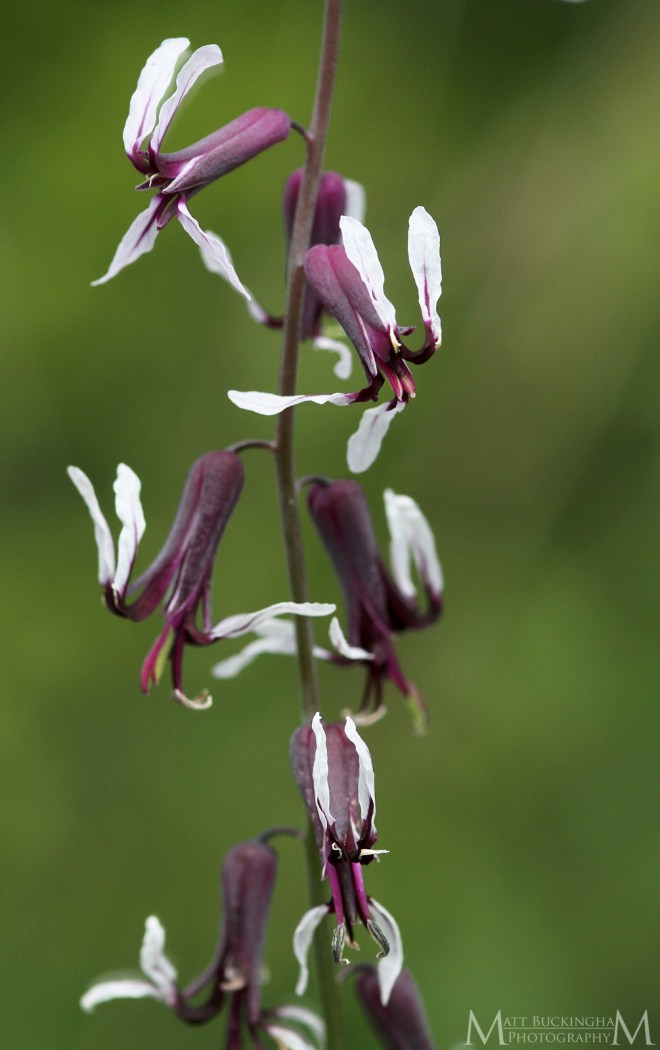
I have long admired the bizarre blooms of the Smooth Jewelflower, but had not previously sought it out.  Though it may be locally abundant, Streptanthus hyacinthoides is uncommon to rare in Texas.  A species of deep sands, it is most frequently encountered in the northern reaches of the Post Oak Savannah.  Globally it occurs from extreme southern Kansas and central Oklahoma through northeast Texas into northwestern Louisiana.  There are also a couple of disjunct populations in the Pineywoods: in the Big Thicket in Hardin and Newton Counties.

IMG_5464

Smooth Jewelflower

It was here that I sought them out.  In the Pineywoods they occur in xeric sandhills.  In the literature, these unique communities are variably referred to as xeric sandhills, oak-farkleberry sandylands, xeric sandylands, sandhill pine forests, etc.  Here soil conditions inhibit the growth of many species.  The deep, coarse sands here ensure that even in times of high rainfall, the water percolates down through the soil very rapidly.  As a result, xeric sandhills exist with perpetual drought-like conditions, and only drought-adapted species persist.

IMG_5437

Smooth Jewelflower

I was able to locate this population thanks to the help of my botanist friend Eric Keith, and Wendy Ledbetter, the Forest Program Manager of the Nature Conservancy in Texas.  Like so many more of our imperiled species, these rare jewels are protected by the Nature Conservancy.  I found them growing in a series of sandy clearings in a xeric sandhill dominated by Longleaf Pine (Pinus palustris) and Bluejack Oak (Quercus incana).

IMG_5521

Smooth Jewelflower

I found the strange flowers somewhat difficult to capture.  I found them strikingly beautiful in their uniqueness.  Beyond habitat preference, I could find little on the life history of this species while researching my 2017 list.  It seems that there is still much to learn about this peculiar jewel of the sandhills.

IMG_5552

Smooth Jewelflower

Xeric sandhills are also home to a variety of other unique and beautiful flowering plants.  Cacti and yucca, typically considered genera of the southwestern states, thrive here.  Traditionally the cactus species of this region was considered to be Opuntia humifusa, however recent work by Majure, et. al. is challenging that (More on that in a later blog post).  Using their new dichotomous key I keyed this species to Opuntia mesacantha.

IMG_5646

Opuntia cf. humifusa

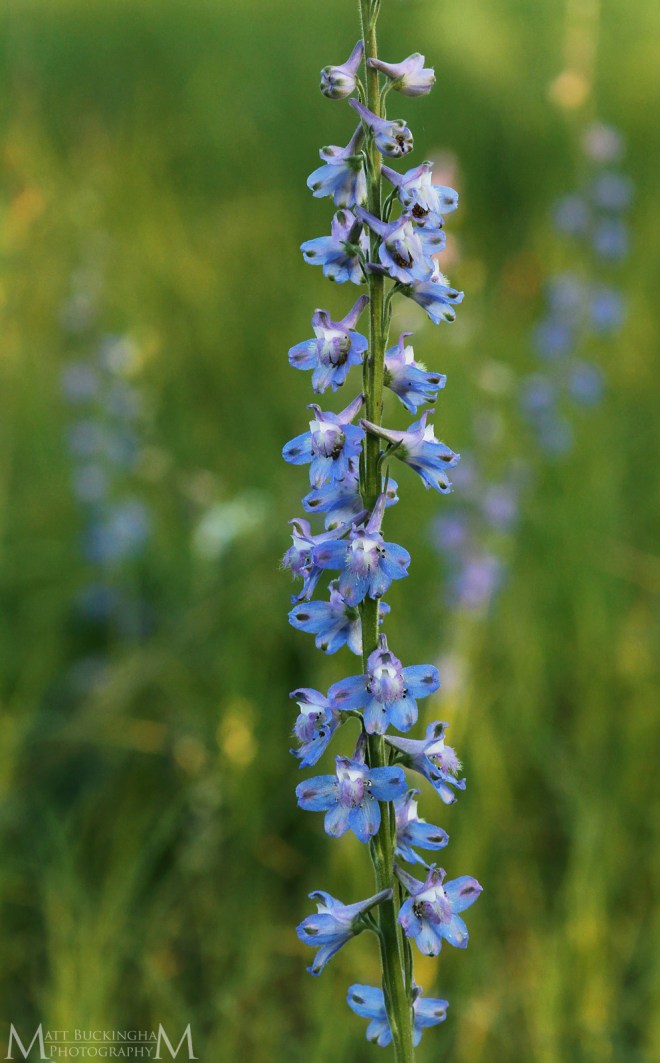
The beautiful Carolina Larkspur (Delphinium carolinianum) was also blooming in profusion.  I photographed the individual below from different angles, to see how the angle of light changed affected their color.

IMG_5559

Carolina Larkspur

IMG_5567

Carolina Larkspur

We also found the bizarre Large Clammyweed (Polanisia erosa) nearby.  I have heard the blooms described as miniature moose heads.  Large Clammyweed, like many species of xeric sandhills, is endemic to the West Gulf Coastal Plain.

IMG_5101

Large Clammyweed

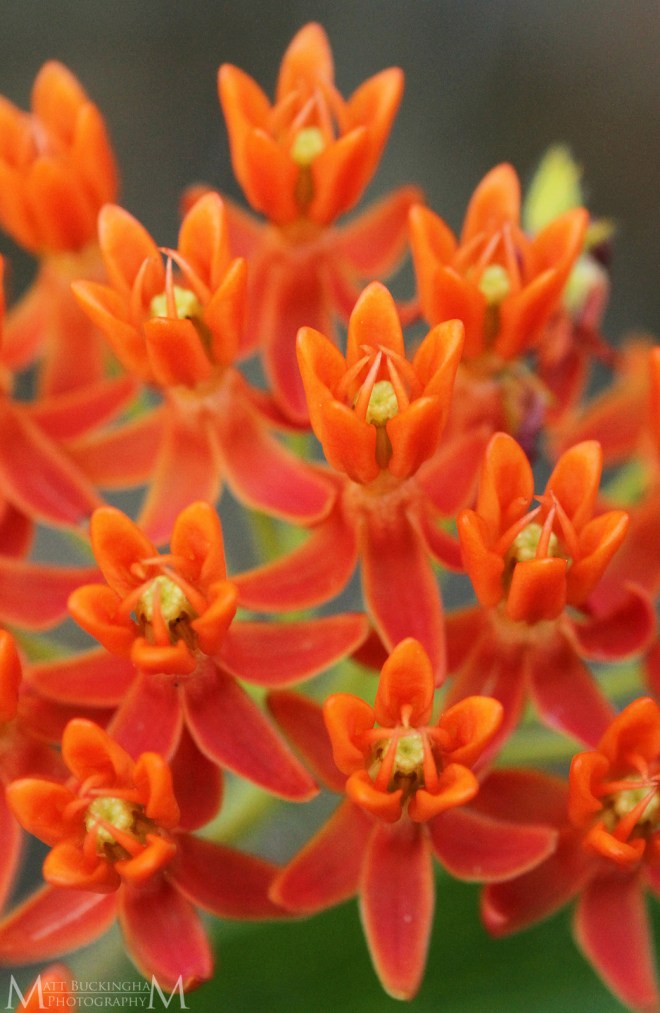
Butterfly Weed (Asclepias tuberosa) was also blooming in profusion.  This striking milkweed is common in sandy habitats throughout much of the United States.

IMG_5581

Butterfly Weed

IMG_5136

Butterfly Weed

Farkleberry (Vaccinium arboreum) is a conspicuous mid and understory component in xeric sandhills.  This blueberries produce edible fruits.  Though they are much smaller and less flavorful than what you might find in your grocery store, they still make for a refreshing treat while wandering across the parched sand.

IMG_5119

Farkleberry

Growing tangled among some of the numerous Farkleberries we found the twining stems of the Netleaf Leather Flower (Clematis reticulatus).

IMG_5532

Netleaf Leather Flower

Xeric sandhills are certainly one of my favorite places to explore.  This post barely scratched the surface of the diverse flora that occurs here, and I didn’t even mention the many rare and interesting animal species that can be found in these deep sands, and I hope to revisit these special places in future blog posts.

IMG_5670

Cacti bloom in a xeric sandhill


April Recap

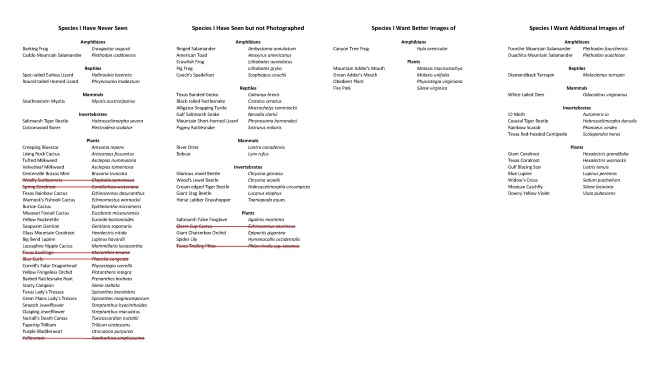
April was off to a good start.  I managed to check off five species early on, and had high hopes for the rest of the month.  Unfortunately I couldn’t keep up the momentum and was unable to find any of my targets in April’s second half.  I tried to locate Clasping Jewelflower (Streptanthus maculatus), Creeping Bluestar (Amsonia repens) and Texas Lady’s Tresses (Spiranthes brevilabris) at some historic sites with no luck.  I hoped to check some locations in northeast Texas for Tapertip Trillium (Trillium viridescens), Fire Pink (Silene virginica), and Downy Yellow Violet (Viola pubescens), but was unable to make it that way.  I doubt that I’ll get a chance to see these species this year…maybe next year!  The following are the species on my 2017 biodiversity list I was able to find and photograph in April:

Missouri Foxtail Cactus (Escobaria missouriensis)

Nuttall’s Death Camas (Toxicoscordion nuttallii)

Widow’s Cross (Sedum pulchellum)

Blue Lupine (Lupinus perennis)

Green Adder’s Mouth Orchid (Malaxis unifolia)

2017GoalsApr

The following are some interesting observations I made in April:

I’ll start this post like March’s recap, with a giant Saturniid moth.  For me, seeing this Promethea Moth (Callosamia promethea) was one of the most exciting of the year thus far.  The Promethea Moth is a species typical of the rich deciduous forests of the Eastern U.S. Though range maps show it entering extreme eastern Texas, I am aware of few records of its occurrence in the state. I certainly have never seen one.  Pictured is a female. Promethea Moths are sexually dimorphic, with males being much darker. I spent some time photographic her in all of her brilliance, and left her to continue pumping pheromones into the evening air, leaving chemical trails for males to seek her out and propagate future generations.

IMG_3649

Promethea Moth

In April I also found a few new populations of the uncommon Indian Pink (Spigelia marilandica) on the rich deciduous slopes of the Pineywoods.

IMG_4344

Indian Pink

While looking for the Kentucky Lady’s Slipper we came across this attractive Three-toed Box Turtle (Terrapene carolina triunguis).  Most box turtles immediately withdraw into their shells when approached.  This individual was fairly bold and allowed us to approach for some portraits.

Box Turtles have an interesting relationship with Mayapple (Podophyllum peltatum), a spring ephemeral of rich eastern forests.  These terrestrial turtles are the primary dispersal mechanism for Mayapple seeds.  Most parts of the plant are toxic, however the ripe fruits are edible.  While other animals will consume, process, and deposit the seeds; studies have shown that those that have passed through the digestive system of the box turtle have the highest rate of germination.  Indeed, the drooping fruits seem to rest at a perfect height for a hungry box turtle.

IMG_2879

Three-toed Box Turtle

16797504067_226652266f_o

Mayapple taken in March 2014

While exploring the Big Thicket we came across the uncommon Piedmont Staggerbush (Lyonia mariana).  A member of the heath family (Ericaceae).

IMG_3887

Piedmont Staggerbush

Carolina spotted this White-eyed Vireo (Vireo griseus) dutifully incubating its eggs.

IMG_3932

White-eyed Vireo

The Carolina Larkspur (Delphinium carolinianum) is Carolina’s favorite Texas native flower.  Every year we seek them out.  This year we found a large population in a xeric sandhill north of San Augustine.  We also observed several Prairie Milkvines (Matelea cynanchoides), another species typical of these woodlands on deep sands.

IMG_4421

Carolina Larkspur

IMG_4455

Prairie Milkvine

We also spent an afternoon in a Fleming Prairie Remnant, where I photographed the Reflexed or Topeka Coneflower (Echinacea atrorubens), and Prairie Penstemon (Penstemon cobaea), two species that are rare in the Pineywoods.

IMG_4057

Reflexed Coneflower

IMG_4070

Prairie Penstemon

I hope to focus on the unique flora and fauna of xeric sandhills and prairie remnants in future blog posts.  As the temperatures warm in May I hope that I will finally be able to check the first animal species off my list, though there are still plenty of plants to seek out, and special places to explore.


An Adder in the Understory

Target Species: Green Adder’s Mouth (Malaxis unifolia)

IMG_4208

Green Adder’s Mouth

The Green Adder’s Mouth is a peculiar orchid of the Eastern United States that reaches its southwestern limit in the Pineywoods of East Texas.  I saw and photographed this species a few years ago, however it was when they were first emerging from the leaf litter and were not yet in bloom.  I have since wanted to photograph them in full bloom.

Last year a friend told me about a population less than an hour from my house.  This year I visited the site in hopes of catching them at peak bloom.  The Green Adder’s Mouth tends to be found on gentle moist slopes adjacent to streams, seeps, and wetland margins.  This particular population is adjacent to a wetland swale deep in a pine-hardwood upland.  The site delivered as promised, and we observed hundreds of individuals in bloom scattered along the gentle slope grading into the wet depression.  We even found a few scattered among the adjacent uplands.

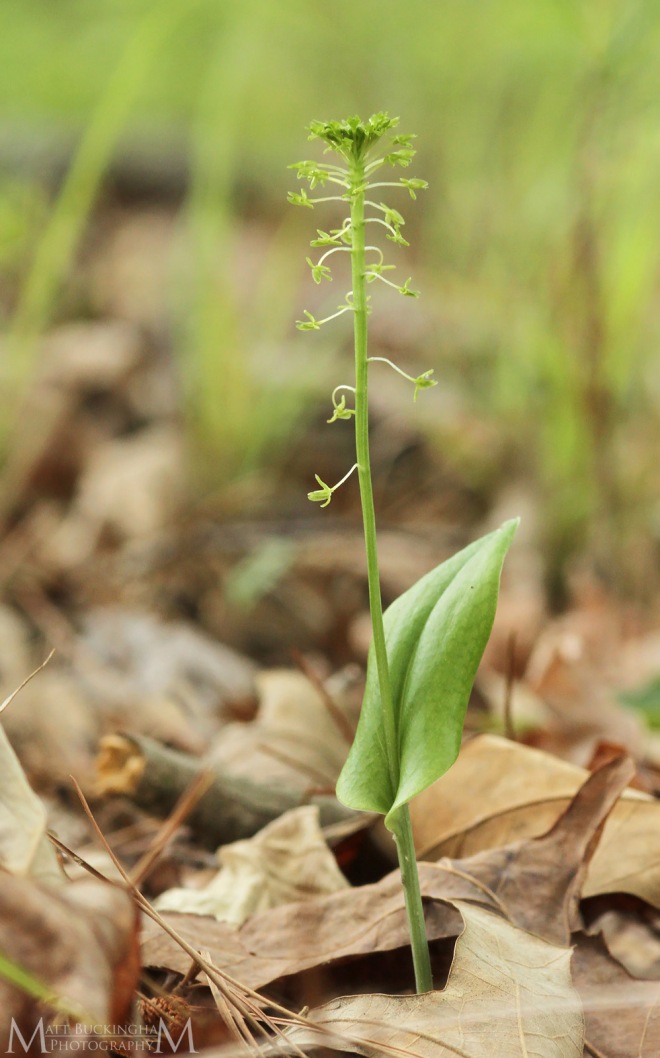
IMG_4253

Green Adder’s Mouth

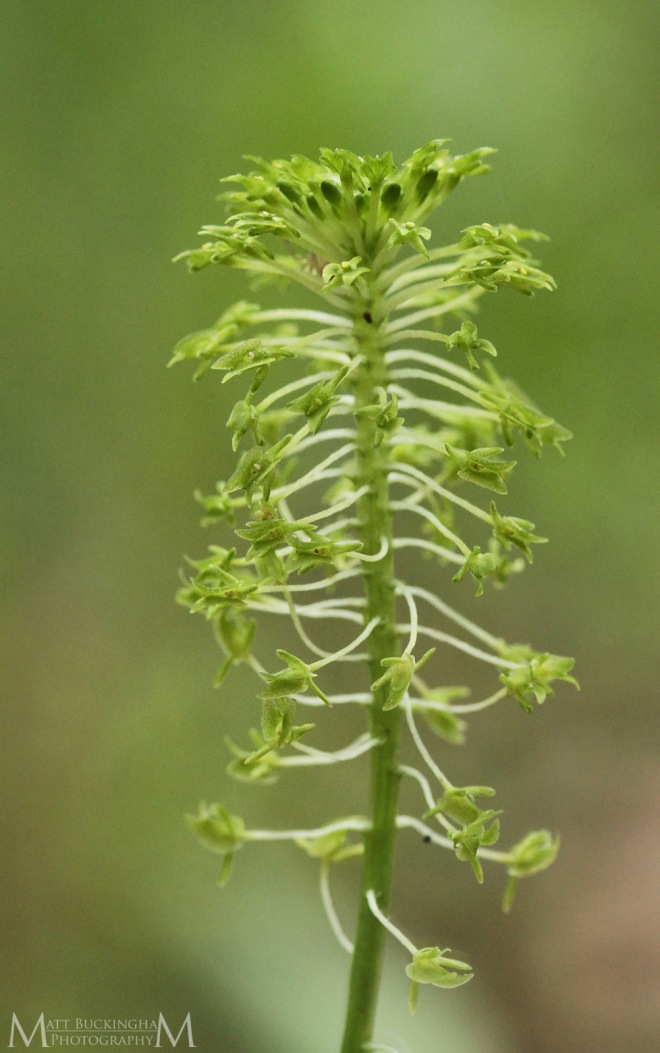
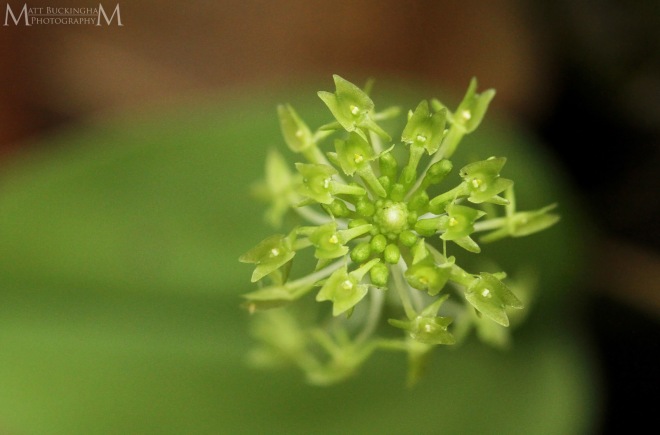
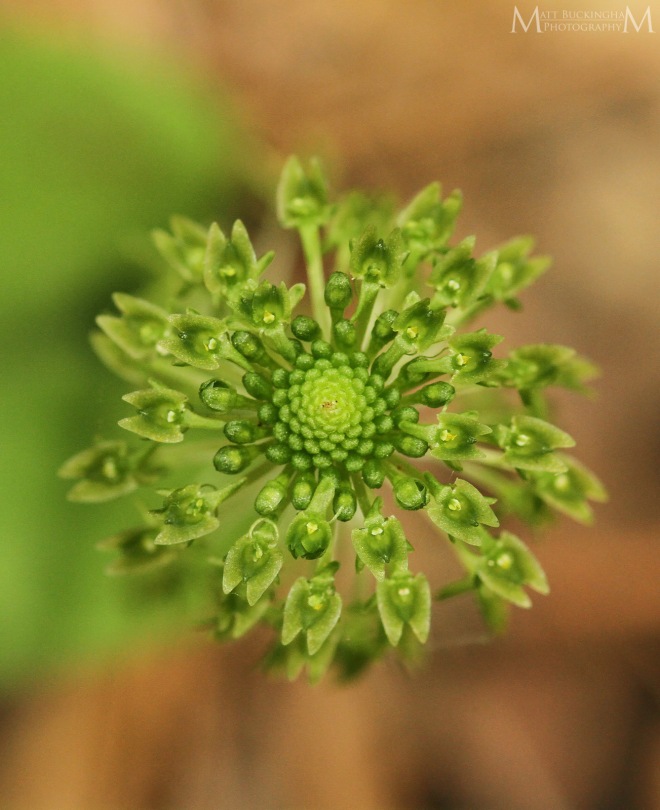
The specific epithet unifolia is in reference to the single leaf that emerges from the leaf litter in later March/Early April.  The leaf emerges with with a developing cluster of flower buds.  As the plant grows the buds begin to spread out and unfurl, revealing the tiny, intricate blooms that lend the plant it’s common name.  Adder’s Mouth is in reference to the pronged lip (lower petal), which is said to appear the fangs of an adder.  The detail of individuals blooms is best appreciated from above, as in the shots that follow.

Though the plants may eventually reach heights of a foot or more, it’s tiny cryptic flowers and generic leaf make it a real challenge to spot.  As Joe Liggio speculates in his book The Wild Orchids of Texas, it may indeed be more common than we currently suspect.

IMG_4258

Green Adder’s Mouth

IMG_4188

Green Adder’s Mouth

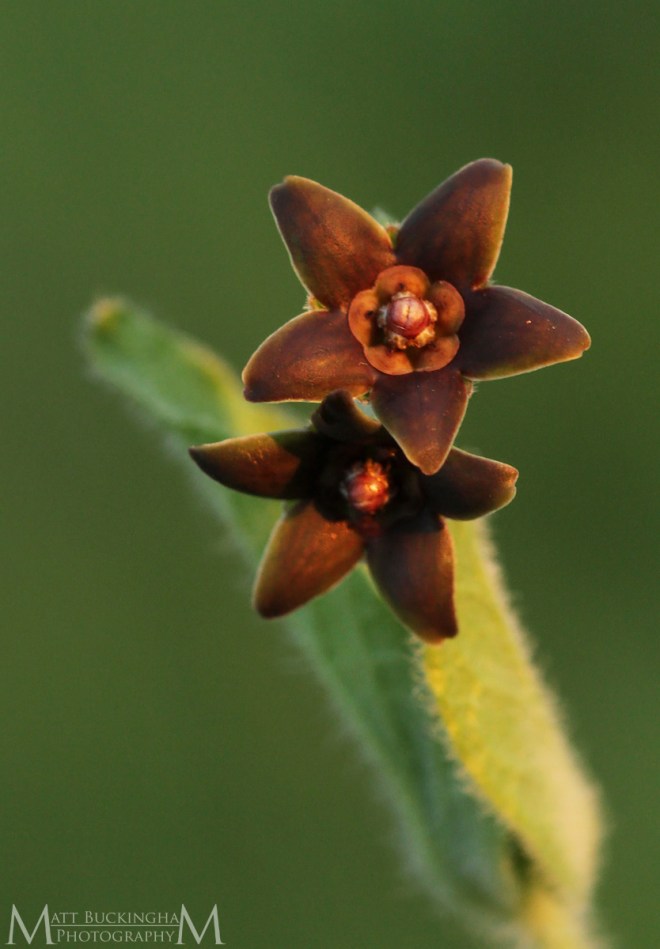
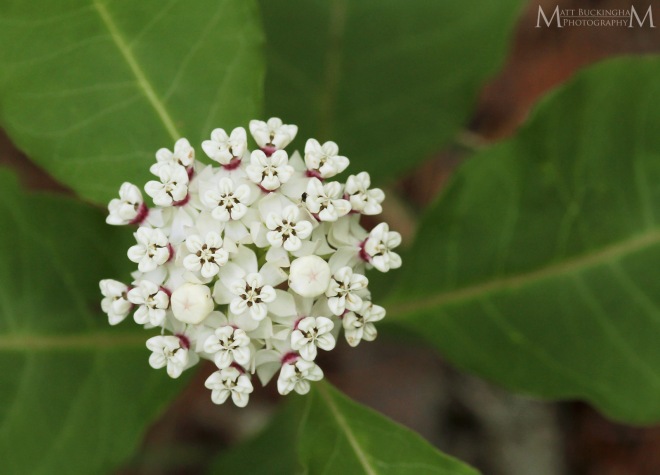
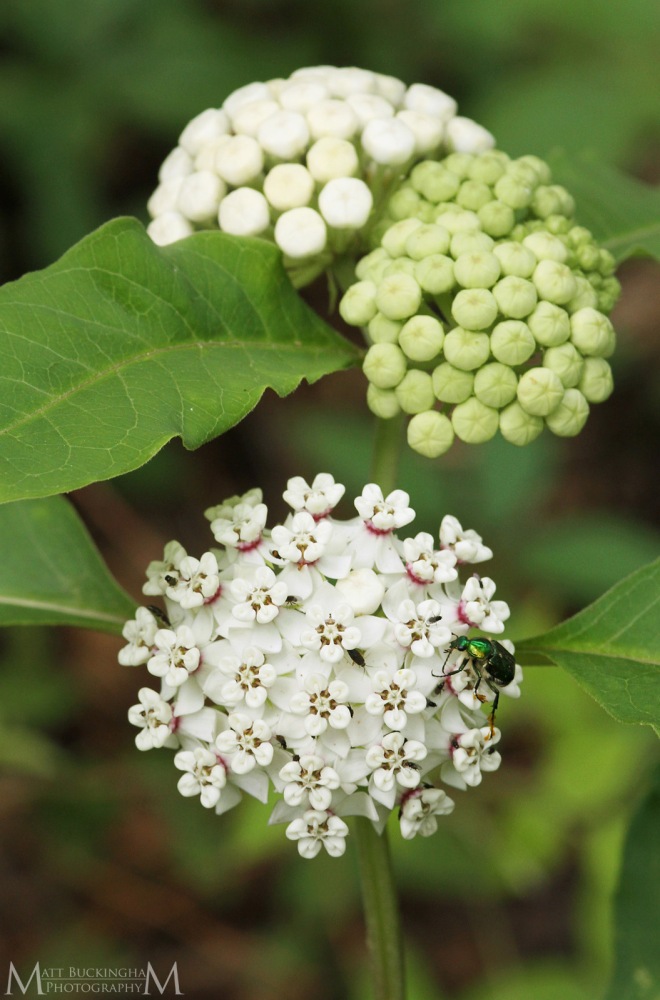
There was little blooming near the orchids, with the exception of the beautiful White Milkweed (Asclepias variegata).  This is one of the earliest milkweeds to bloom in East Texas.  The red band below the flowers’ hoods lends it the alternative common name “Redring Milkweed”

IMG_4279

White Milkweed

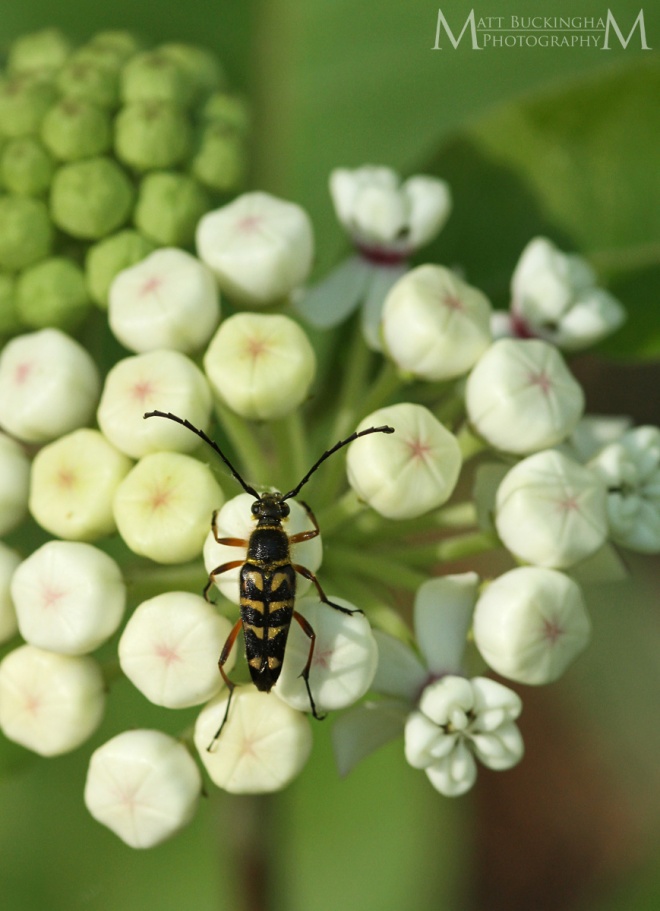
Milkweed blooms are highly popular with pollinators.  Just about every plant had a myriad of flies, bees, and beetles.

IMG_4132

Trichiotinus lunulatus

IMG_2726

Zebra Longhorn Beetle (Typocerus zebra)

It felt good to finally get the photos I have long wanted of the Green Adder’s Mouth, but just as rewarding was exploring an unfamiliar area of the Pineywoods.  I can only hope that my pursuit of my 2017 biodiversity goals will continue to take me to new, exciting (at least to me!) places.

The Other State Flower

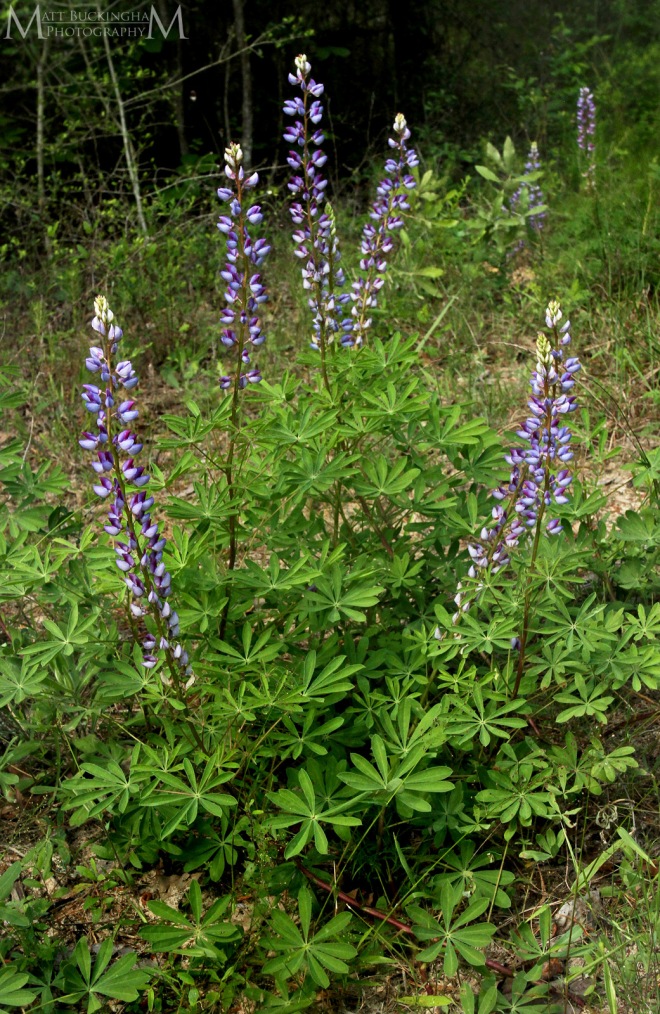
Target Species: Blue Lupine (Lupinus perennis)

IMG_3817

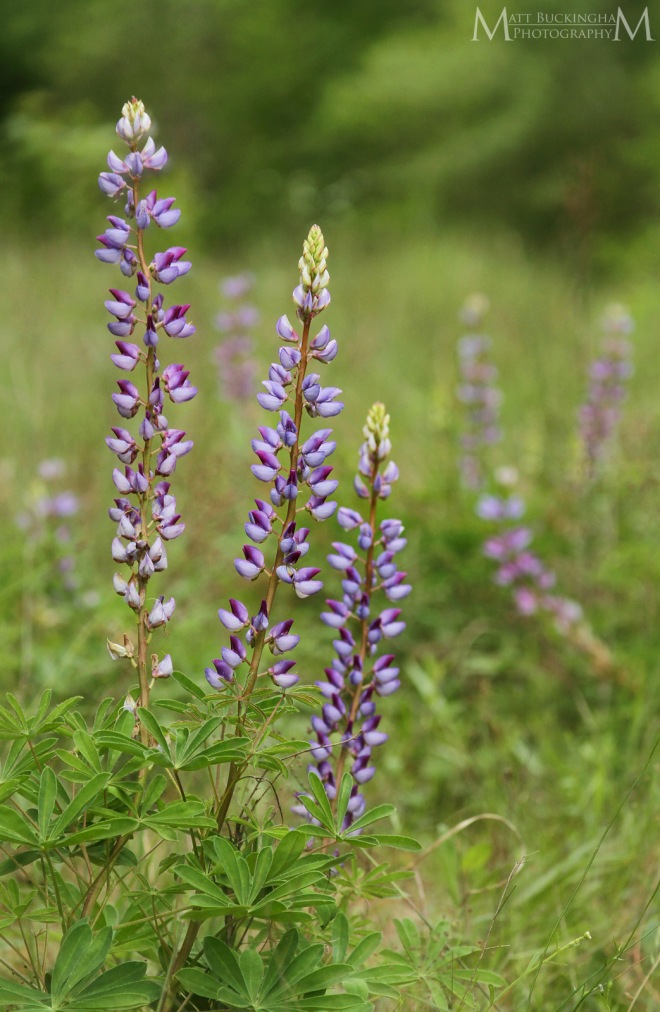
Blue Lupine

In keeping with the theme of “everything is bigger in Texas”, the Texas Legislature decided in 1971 that the original state flower, Lupinus subcarnosus, which was designated in 1901, simply wasn’t enough.  Instead the Lonestar State decided that we would call any member of the genus Lupinus occurring within the state to be our official state flower.  This would include the rare Blue Lupine (Lupinus perennis), even though it only occurred at a handful of sites in extreme southeastern Texas.

Known by other regional common names like Wild Lupine and Sundial Lupine, Lupinus perennis was first discovered in the 1930s in Orange County but subsequently disappeared from the county.  In the 1970s it was rediscovered by premier East Texas botanist and conservation pioneer Geraldine Watson in the Big Thicket National Preserve.

IMG_3718

Blue Lupine

Geraldine Watson was one of the most important, influential individuals in protecting the Big Thicket.  She spent much of her life fighting to protect this unique area and documenting the flora of East Texas.  Finding Blue Lupine after it was thought to be lost is just one of a long list of exceptional accomplishments attributed to her name.

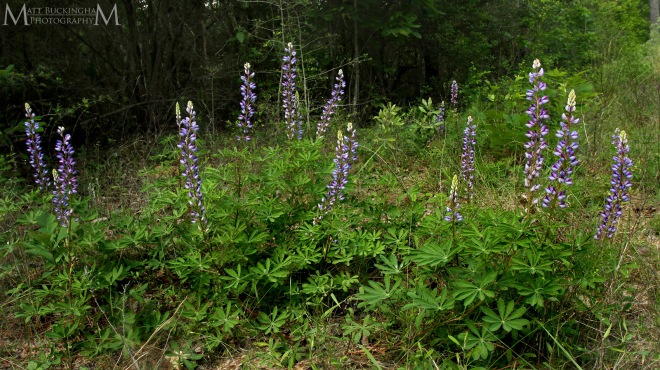
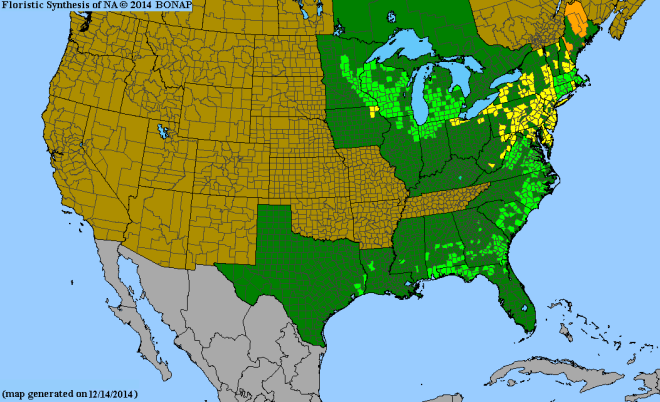
Blue Lupine prefers open, sandy forests and savannahs.  It has a curious distribution, occuring in Eastern North America, it ranges from eastern Minnesota in the west to the east along the Great Lakes into New England, then south and west again along the coastal plain until it reaches Deep East Texas.  It is noticeably absent from the southern Appalachians and most of the South Central states.  Lupinus perennis has been experiencing significant declines throughout its range.  It has been extirpated in Maine, and has been declared as Threatened or Endangered in many of the states where it occurs.  In many of the others where it is not listed, such as Texas, it probably should be.

Lupinus perennis

County-level distribution of Lupinus perennis from http://www.bonap.org.

I had previously seen and photographed Lupinus perennis in Maryland, where it is also rare.  It has long been a dream of mine to see it in East Texas.  I researched Geraldine Watson’s herbarium specimens, and though the location information was rather vague I used it to look at aerial imagery and soil maps to determine where I thought they likely occurred.  I contacted the state botanist as a backup, and the area he described was right in the vicinity of the spot I had identified.  Carolina and I set out with some friends, and after an adventure of a trek through sketchy, flooded backroads, we finally found our quarry.

IMG_3721

Blue Lupine

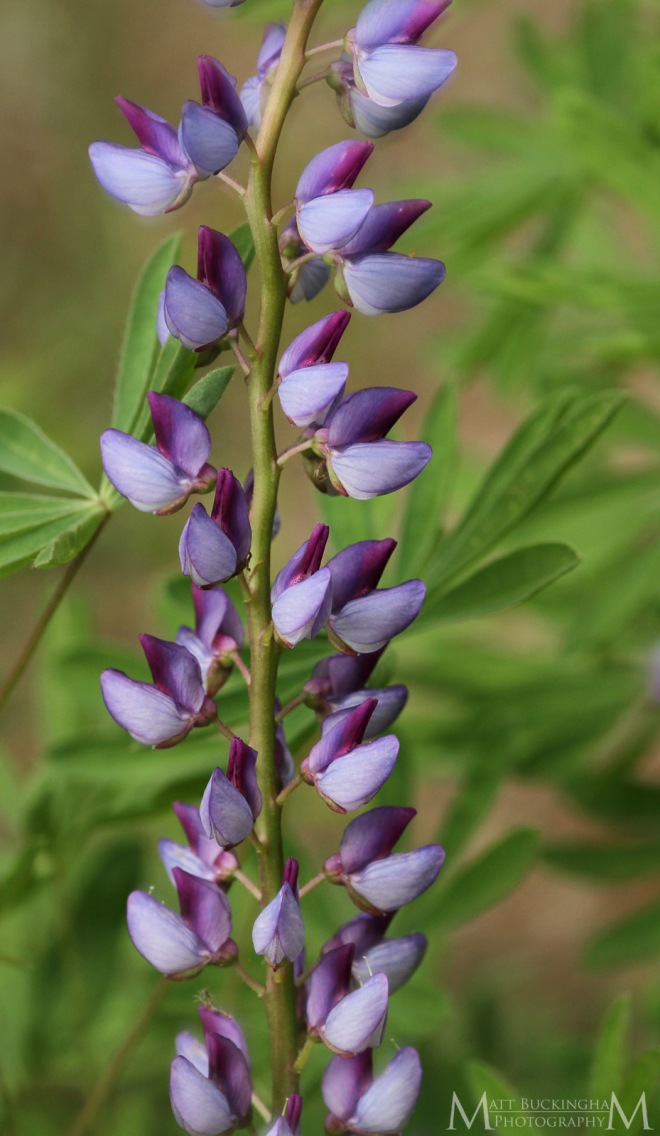
Blue Lupine is a spectacular plant.  Much more robust than the more familiar Texas Bluebonnets, its raceme (flowering body) may be close to a foot long.  The upper petals start out with white centers that turn purple with age.  It is believed that the turn occurs after the flower has been pollinated.  As bees, the primary pollinator for lupines, will more likely visit the fresher, whiter blooms to receive a greater pollen reward.

IMG_3836

Blue Lupine

In my humble opinion, Blue Lupine is one of the most spectacular plants of the Big Thicket.  It is a shame they aren’t more common, but seeing them at peak bloom in East Texas is an experience I will never forget.
 

A Tribute to an Ice Age Relic

IMG_2973

Kentucky Lady’s Slipper

Recently I made the annual trip to see what may be my favorite plant – the Kentucky Lady Slipper (Cypripedium kentuckiense).  This year I was joined by my friends John Williams, Skip Pudney, and Terry Hibbitts, who were anxious for the chance to see and photograph the slippers.

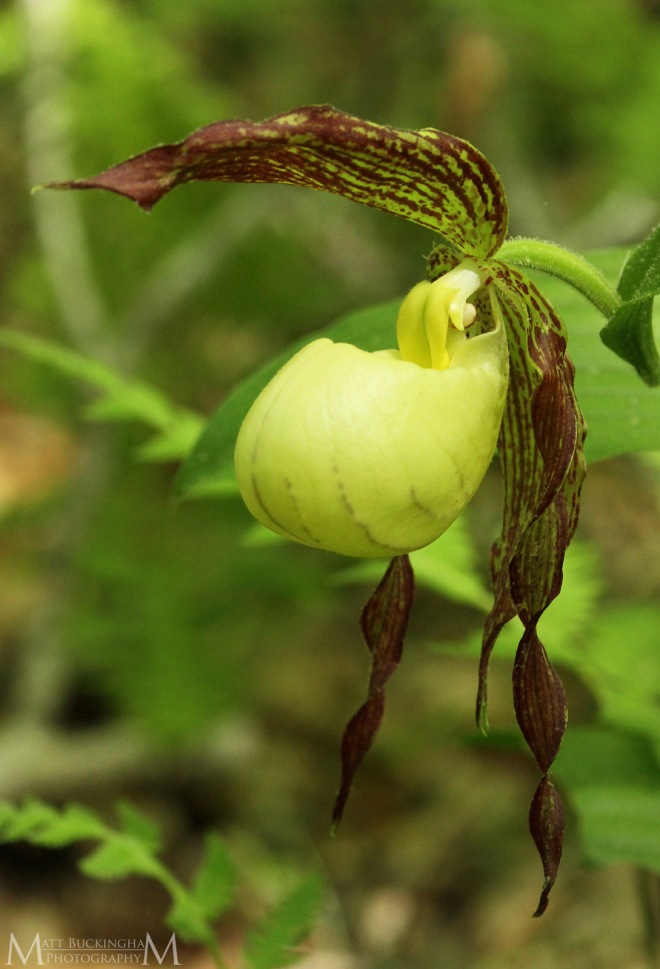
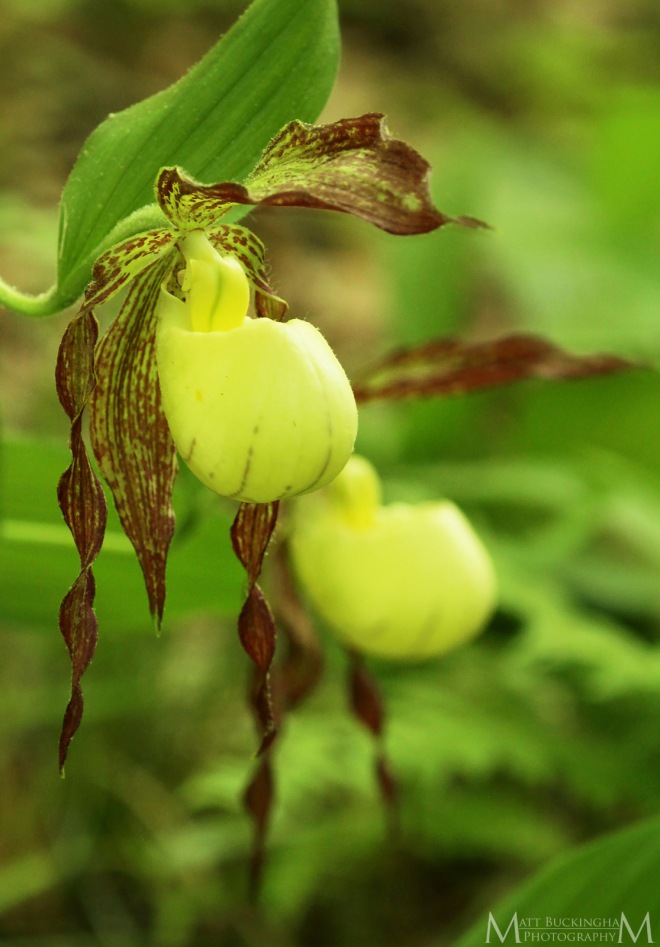
The Kentucky Lady’s Slipper finds refuge deep in the cool, moist ravines of the Pineywoods.  Here the sunlight barely penetrates the canopy, and in April, if the conditions are just right, its curled petals and broad sepals will unfurl, revealing the cream yellow slipper to the world.

IMG_3003

Kentucky Lady’s Slipper

Today this spectacular orchid is rare throughout its range, hanging on as scattered populations from Virginia to East Texas.  It occurs in the dwindling southern hardwood forests that remain as relicts from the last ice age. Here tends to be found adjacent to small, often springfed streams on small benches or the lower terraces of steep slopes.

As the glaciers began their retreat rich hardwood forests with beech, maple, hickory, and oak were likely the dominant cover type in the southern United States. As the glaciers receded and the climate warmed and dried, dominant species like American beech were pushed to these ravines where they remain as relicts – reminders of the forests that once were. They are accompanied by a suite of other species typical of northern and Appalachian hardwood forests.  The Kentucky lady’s slipper is perhaps the most charismatic example of relictual flora in East Texas.

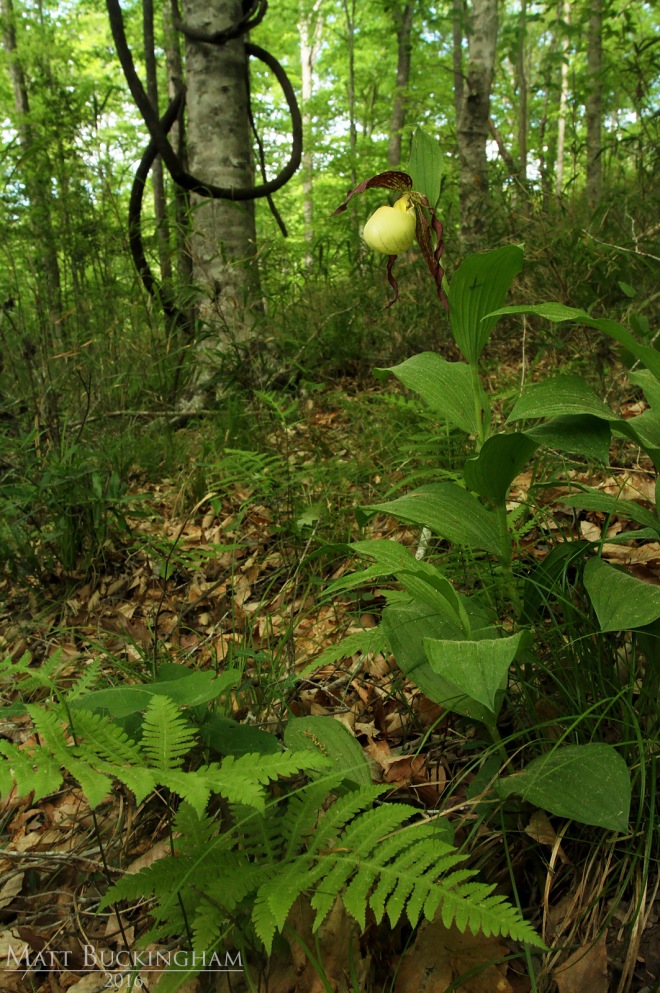
IMG_4027

Kentucky Lady’s Slipper in habitat (shot in 2016)

Cypripedium kentuckiense is huge by orchid standards.  The plants may reach close to a meter tall, and the slipper, which is really a modified petal may be the size of a chicken egg.  This orchid is a bit of a trickster, as it lures bees, fully expecting a sweet nectar reward, into the lip.  The bees find no reward inside though, as the orchid does not produce the sugary substance that the pollinators depend on.  It is unlikely that many bees will make the mistake of returning to a lady slipper bloom after this initial disappointment.  Therefore it is believed that the orchids are pollinated primarily by inexperienced individuals.
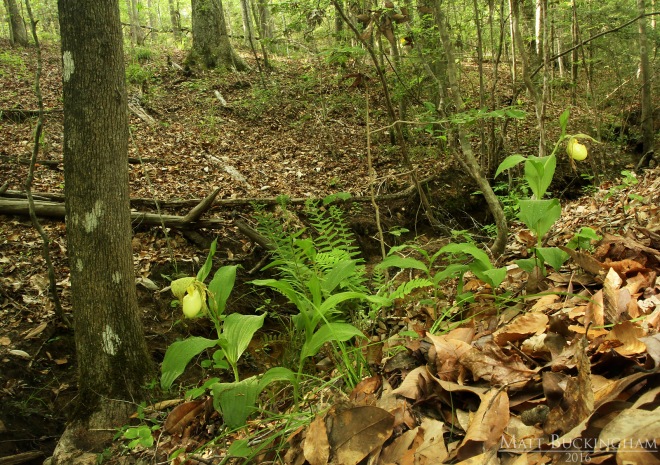
IMG_4096

Kentucky Lady’s Slipper in habitat (shot in 2016)

The Kentucky Lady’s Slipper truly is one of the most striking inhabitants of the Pineywoods, and for my money one of the most beautiful plants in the country.  Populations continue to decline, however, as these sensitive species succumb to a myriad of pressures from habitat destruction, climate change, increasing isolation of populations which creates a barrier for gene flow, and more.  Fortunately many of the remaining Cypripedium kentuckiense populations in East Texas are protected, at least for the moment.  So at least for now, these botanical treasures will continue to brighten our rich mesic slopes each spring.

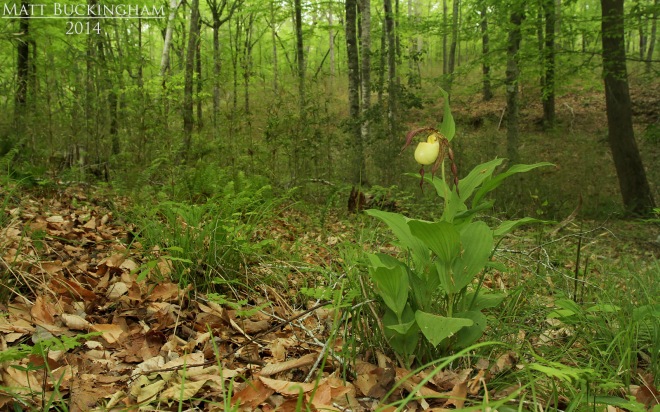
13880644314_de5400d914_o

Kentucky Lady’s Slipper in habitat (shot in 2014)


The Flora of Weches Glades

Target Species: Widow’s Cross (Sedum pulchellum)

IMG_3599

Widow’s Cross

Weches Glades are unique communities in the Pineywoods that occur where the underlying Weches Formation reaches the surface.  Here lie exposed iron rocks and soil that are rich in glauconite, a greenish mineral composed primarily of iron and potassium.  Weches Glades occur in a narrow band stretching across Nacogdoches, San Augustine, and Sabine counties and are home to a unique flora, including species that are found nowhere else on the planet.

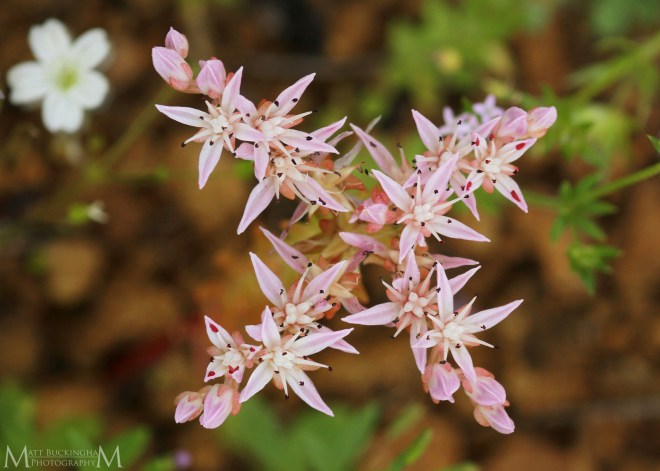
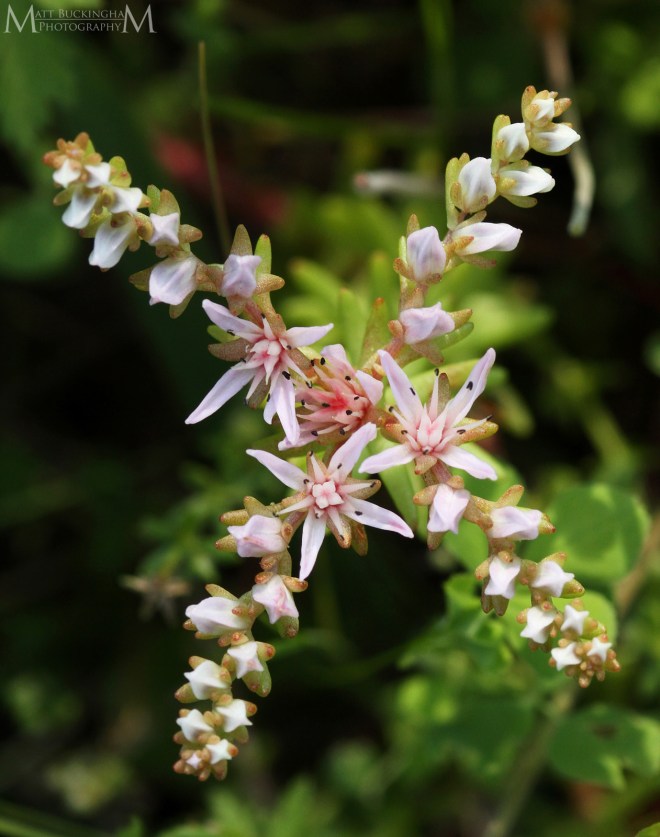
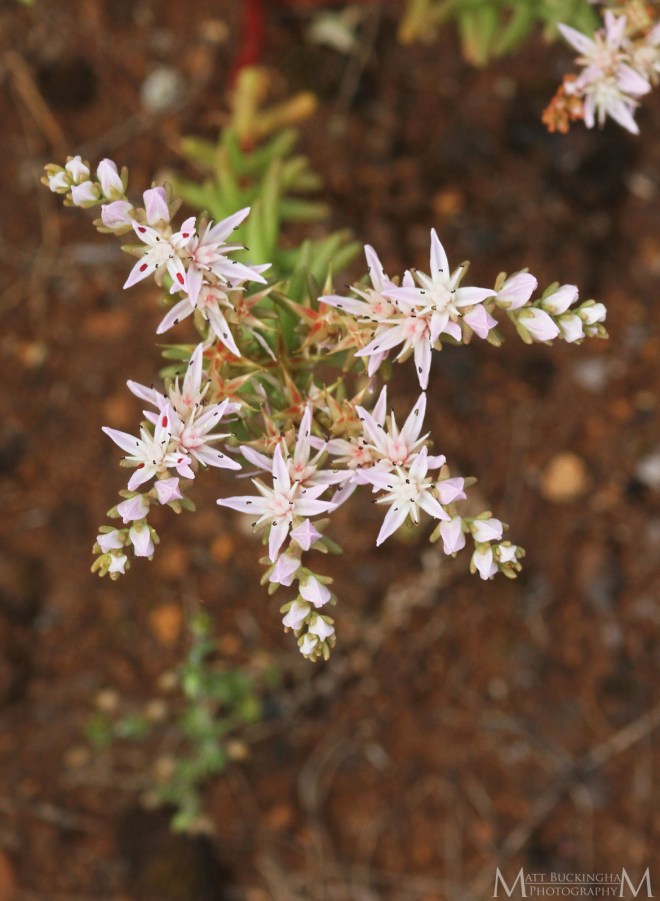
The coarse soil of the Weches Glades are often saturated in the spring and summer, occasionally forming shallow pools in small depressions in bare rock.  The heat and sweltering sun of summer quickly evaporates these pools, and leaves the soil dry and brittle.  In the spring the boulders at some of the few remnant glades turn light pink, awash with the blooms of the Widow’s Cross (Sedum pulchellum).

Widow’s Cross is a species of the South-Central states, from extreme Northeast Georgia, Tennesse, and Kentucky in the east to Kansas, Oklahoma, and Texas in the west.  It is generally limited to glades and outcrops, communities where little else can grow.  It thrives under shallow, harsh soil conditions.  As these communities are often limited across the landscape, Sedum pulchellum is generally uncommon to rare throughout its range.  In Texas it occurs in just a handful of counties in the northern and central portions of the state.  In the Pineywoods it is limited to Sabine and San Augustine Counties.

IMG_3117

Widow’s Cross

Widow’s Cross owes much of its success in these environments to its succulent leaves, which can quickly absorb and store water from fall and winter rains in order to put on a spectacular spring show.  It’s easy to see how the plant gets its name.  It’s actually named for the cross like shape of the four-petaled flowers, however the inflorescence also often forms in the shape of a cross.

IMG_3592

Widow’s Cross

Though Weches Glades were likely always infrequent and highly localized, a great deal have been lost to glauconite mining.  This mineral which seems critical for some species has long been used for soil enhancement and road filler.  As result small scale surface mining operations have destroyed many of these unique communities.  The vast majority of those that remain are on private land and site unprotected to this day.

IMG_3136

Widow’s Cross

While I had previously photographed this species, I captured it on the tail end of its blooming cycle and the plants were past their prime.  This year I aimed to capture them at their peak.  While they generally bear 3 or 4-pronged racemes, I found some with 5 prongs.

IMG_3587

Widow’s Cross

Weches Glades are also home to 2 endemic, Federally Endangered plants: The Texas Golden Gladecress (Leavenworthia texana) and the White Bladderpod (Lesquerella pallida).  Leavenworthia texana is endemic to Sabine and San Augustine Counties.  Here it occurs almost entirely on private land.  These diminutive plants bloom in early spring, ad by the time Widow’s Cross blooms they have already dispersed their seeds.  I photographed the individuals below in mid-February.  In the second photo the developing stems of Sedum pulchellum can be seen.

IMG_6428

Texas Golden Gladecress

IMG_6447

Texas Golden Gladecress

The White Bladderpod is restricted to a handful of Weches Glades in San Augustine County.  It is named for its spherical seed pods, which can be seen adjacent to the blooms on the photo below.  It was in full bloom at the same time as the Widow’s Cross.  Curiously, the bladderpod and gladecress generally don’t occur at the same outcrops.

IMG_3524

White Bladderpod

IMG_3491

White Bladderpot

While photographing the flora of the Weches Glades, one will immediately note the strong smell of mint that fills the air.  This is a result of dense populations of the Limestone Calamint (Clinopodium arkansanum).

IMG_3139

Limestone Calamint

There are many other interesting species that can be found blooming in Weches Glades.  I leave you with a few of them.

IMG_1543

Comanche Daisy (Astranthium ciliatum)

IMG_1586

Drummond’s Stitchwort (Minuartia drummondii)

IMG_1570

Pitcher’s Stitchwort (Minuartia patula)


March Recap

Due to a combination of changed plans and other factors, March was not as productive in terms of 2017 biodiversity goal species as I was expecting.  I was able to check off three species:

Yellowroot (Xanthorhiza simplicissima)

Blue Curls (Phacelia congesta)

Claret Cup Cactus (Echinocereus coccineus)

2017GoalsMar

I spent most of the month of March exploring outside my home turf of the Pineywoods.  From the South Texas Plains to the Edward’s Plateau, I observed an incredible diversity of habitats and species, which are highlighted in previous blog posts.  I did however get to spend some time in the field around here.  To follow are some of March’s highlights from East Texas.

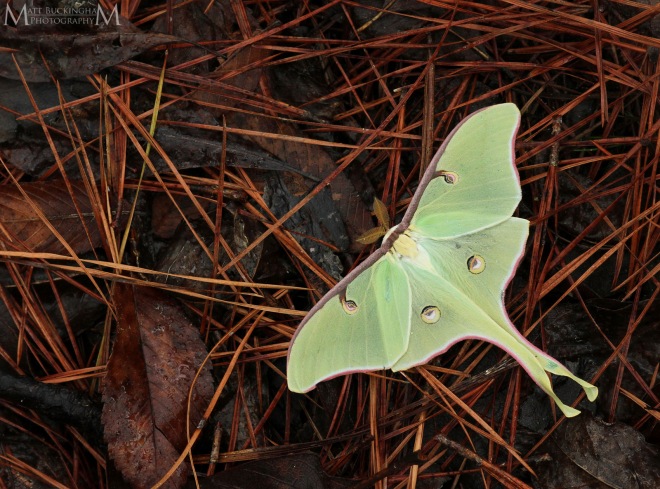
This year has been good for Luna Moths (Actias luna).  I observed several freshly emerged males.  Males utilize their feathery antennae to pick up subtle pheromone cues from females and may fly miles to find a mate.  Adult Luna Moths lack feeding mouth parts, and live on average about a week.  As adults they really are driven by a singular purpose: to breed.

IMG_7982

Luna Moth

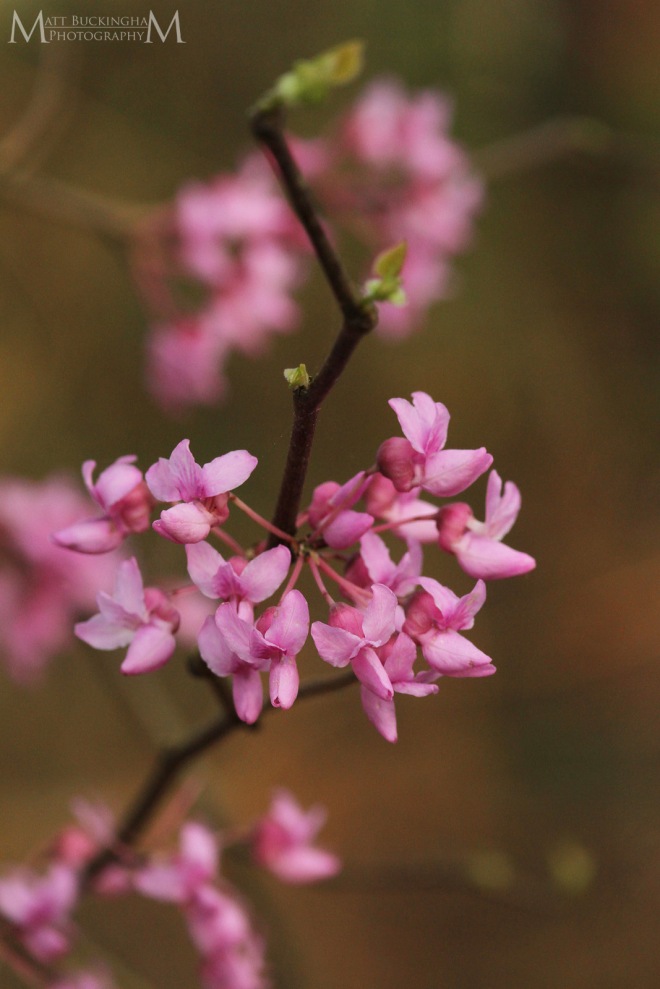
March is a great time to enjoy flowering trees and shrubs in East Texas.  This year most species put on a decent show.  The Eastern Redbud (Cercis canadensis) seemed to peak in late February, however several were still in flower in early March.

IMG_7011

Eastern Redbud

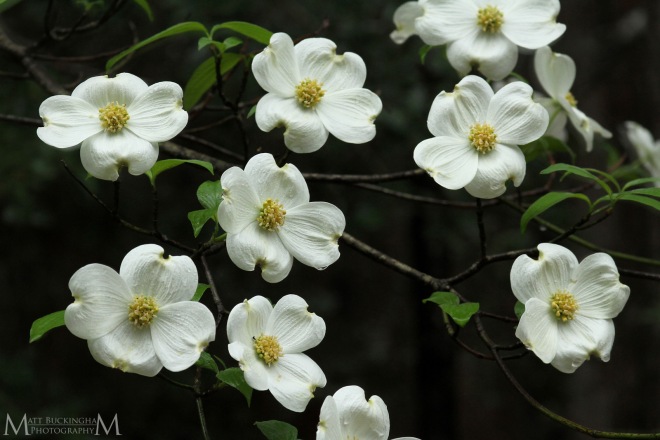
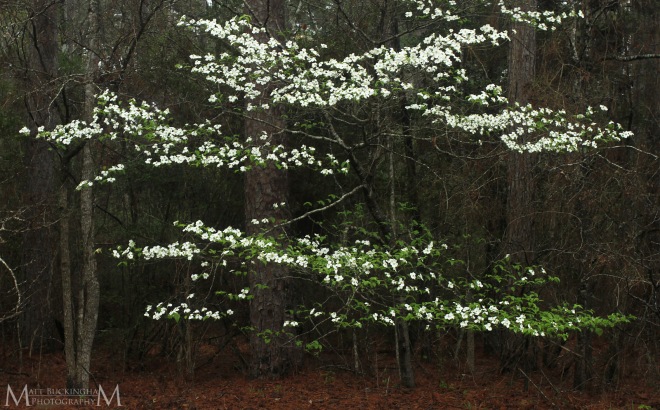
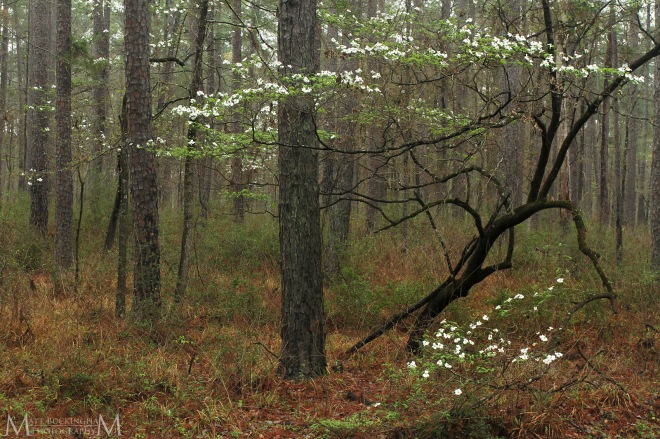
Among my favorite spring displays is that of the Flowering Dogwood (Cornus florida).  This small tree ranges throughout much of the eastern United States.  To me it is one of the emblematic spring blooms of East Texas.  Christian accounts claim that Jesus was crucified on the wood of a dogwood tree.  Story goes that they were once tall, stately trees that Jesus, following his crucifixion, morphed to their current gnarled form – presumably so no others could ever again be crucified upon their wood. Their “flowers” now appear as crosses each spring around Easter.

In reality the white “flowers” are modified leaves called bracts. The flowers are the yellow structures at the bracts’ centers.  In the late summer the tree will bear red fruits that are cherished by wild turkeys.  I also think that their growth form only lends beauty to this already stunning species.

IMG_7865

Flowering Dogwood

IMG_7810

Flowering Dogwood

IMG_8007

Flowering Dogwood in the understory of a longleaf pine savannah

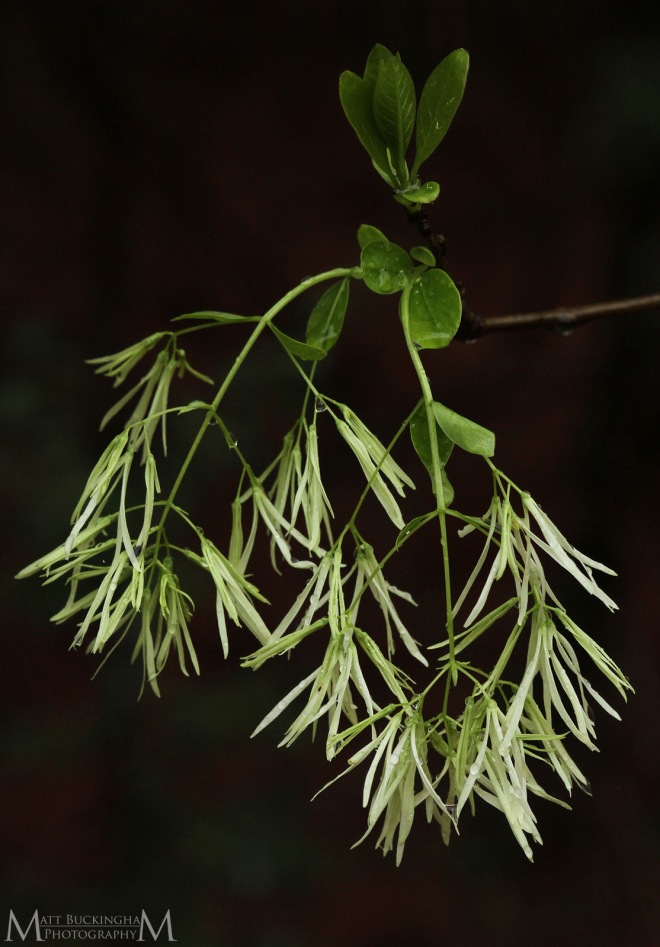
The Fringetrees (Chionanthus virginicus) seem to hit their peak as the dogwoods are beginning to fade.  Their wispy, whitish green blooms light up the forest edge and the understory in open woods.

IMG_7878

Fringetree

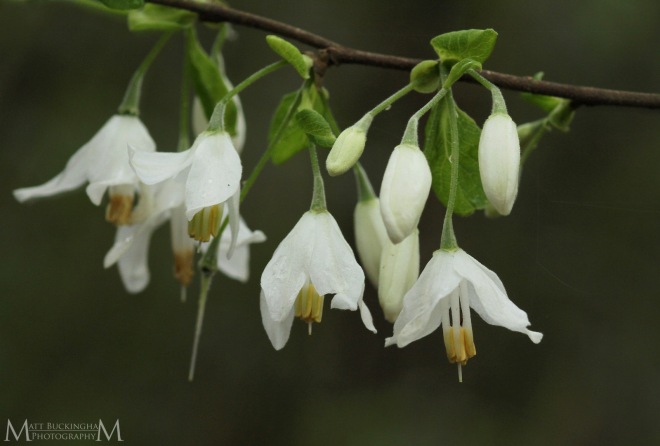
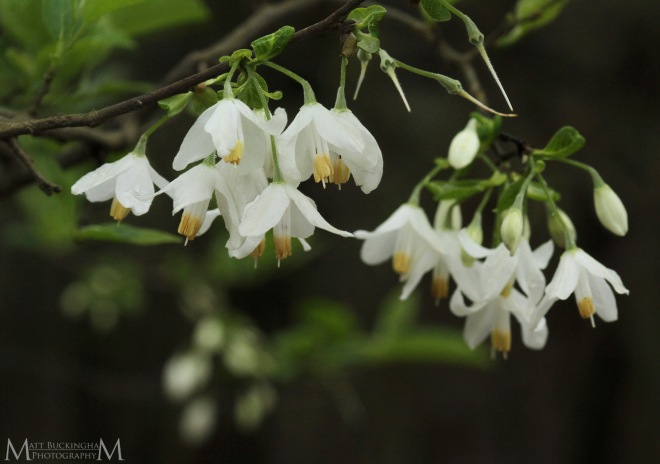
Dangling like little snowdrops are the blooms of the Two-winged Silverbell (Halesia diptera).  These attractive little trees are often found along streams and in moist stream bottoms.

IMG_7947

Two-winged Silverbell

IMG_7955

Two-winged Silverbell

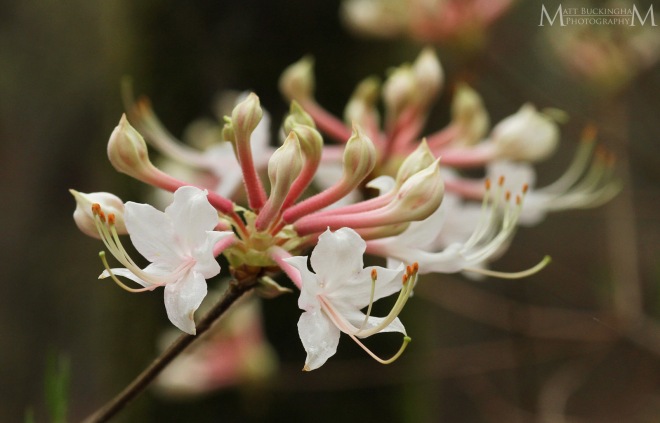
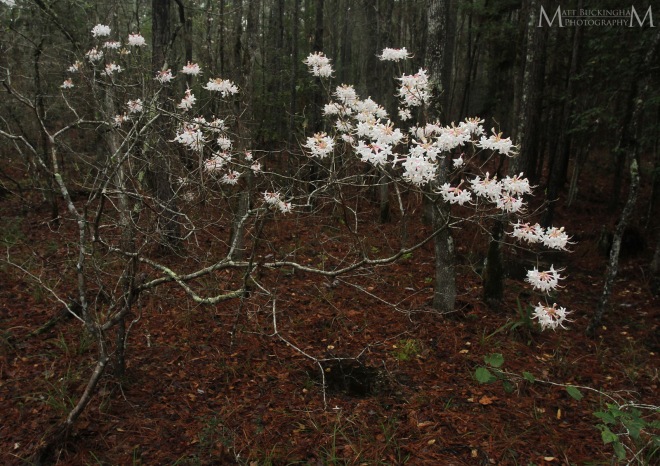
Azaleas are a favorite of gardeners and nature lovers alike.  In East Texas the Hoary Azalea (Rhododendron canescens) reaches the southwestern extent of its range.

IMG_7914

Hoary Azalea

IMG_7938

Hoary Azalea

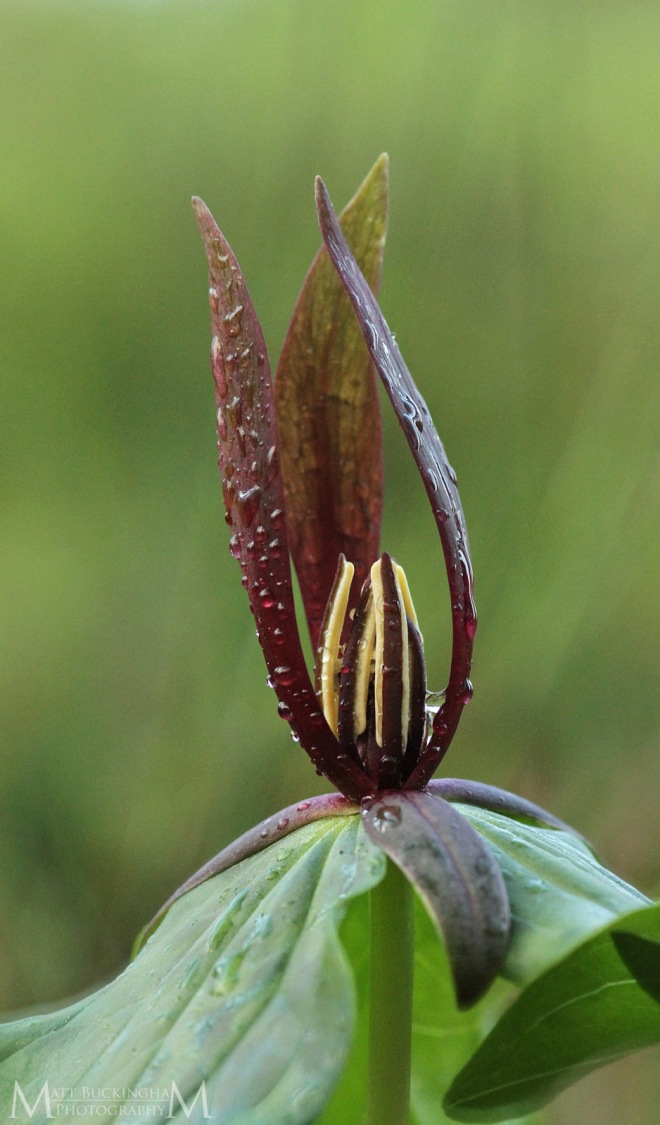
I couldn’t resist photographing a particularly large Sabine River Wakerobin (Trillium gracile).  This lovely trillium is endemic to rich forests in the Pineywoods of East Texas and western Louisiana.

IMG_8339

Sabine River Wakerobin

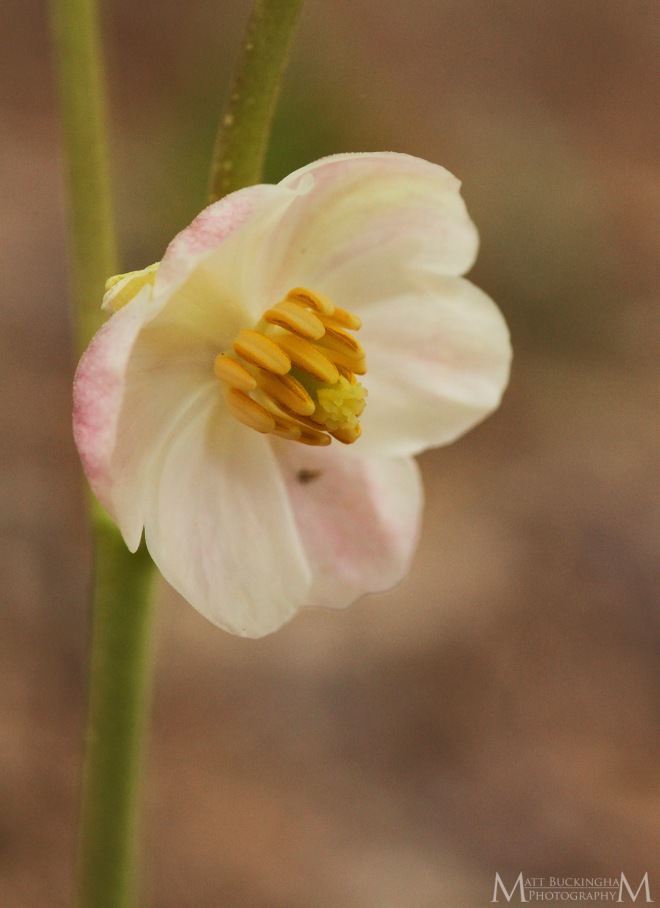
Another springtime favorite of mine is the Mayapple (Podophyllum peltatum).  This characteristic spring ephemeral of eastern forests can form large colonies in East Texas, often carpeting the forest floor.  The fluffy white blooms hang below the large umbrella like leaves.  Occasionally, as pictured below, the flowers may have a pink tinge to them.

IMG_6995

Mayapple

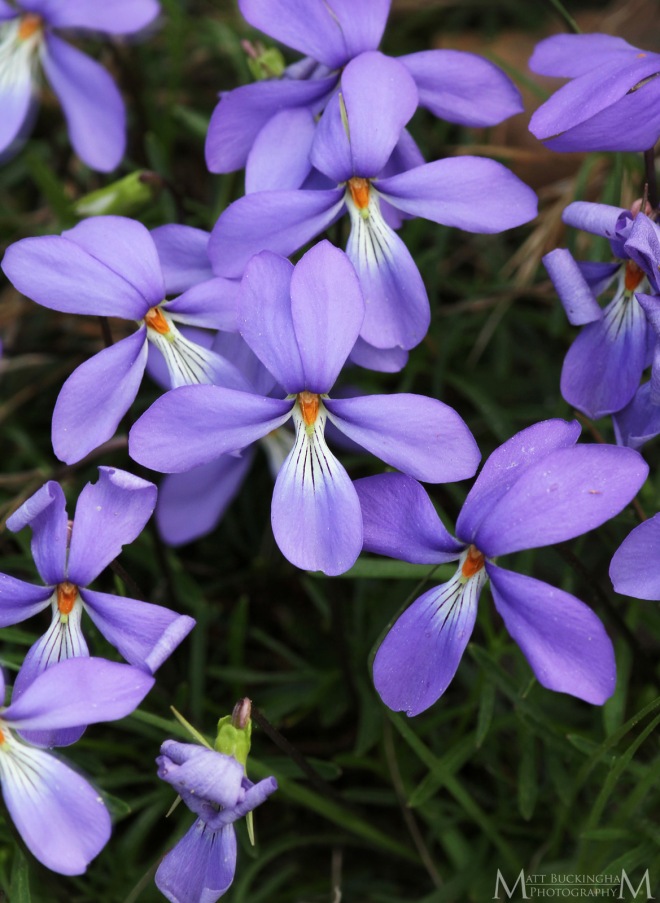
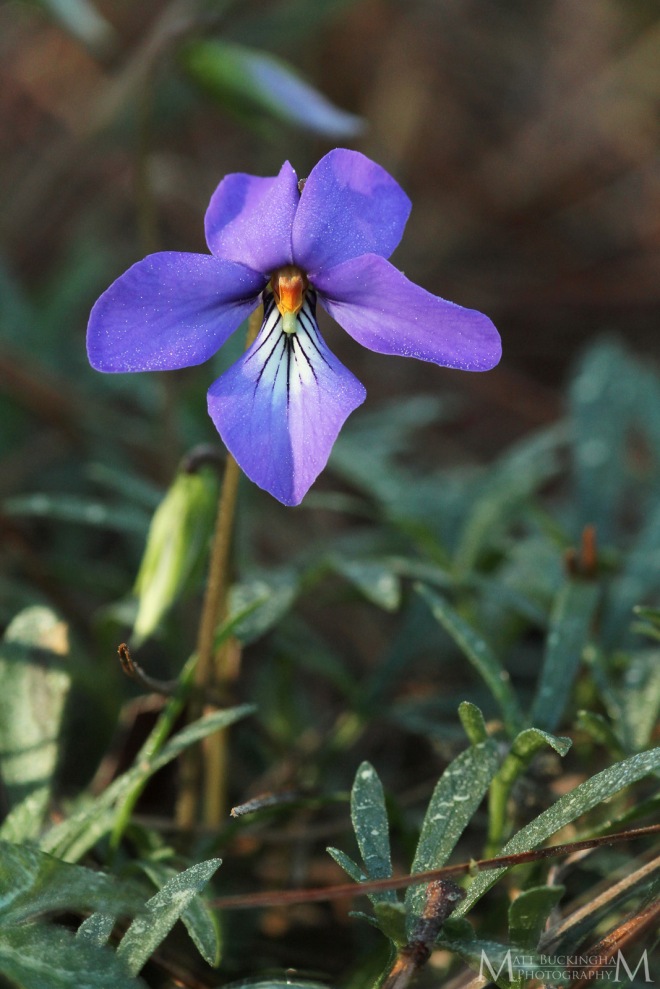
Though I photographed a few in February, I couldn’t resist stopping to photograph some roadside populations of Birdfoot Violets (Viola pedata) in early March.

IMG_1495

Birdfoot Violets

IMG_7368

Birdfoot Violet

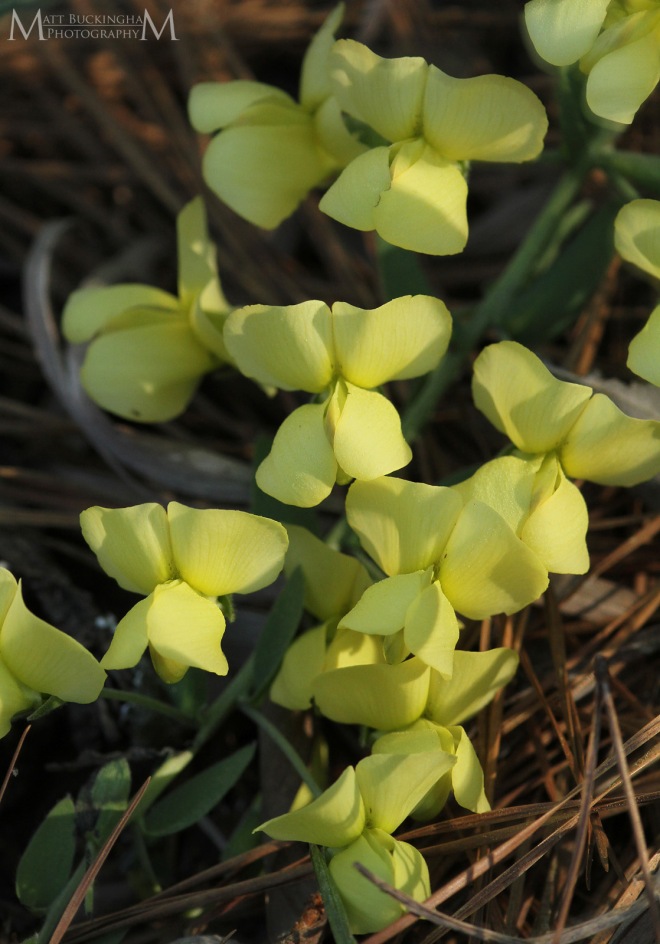
Also common along roadways and dry, open woods is the Plains Wild Indigo (Baptisia bracteata).

IMG_7416

Plains Wild Indigo

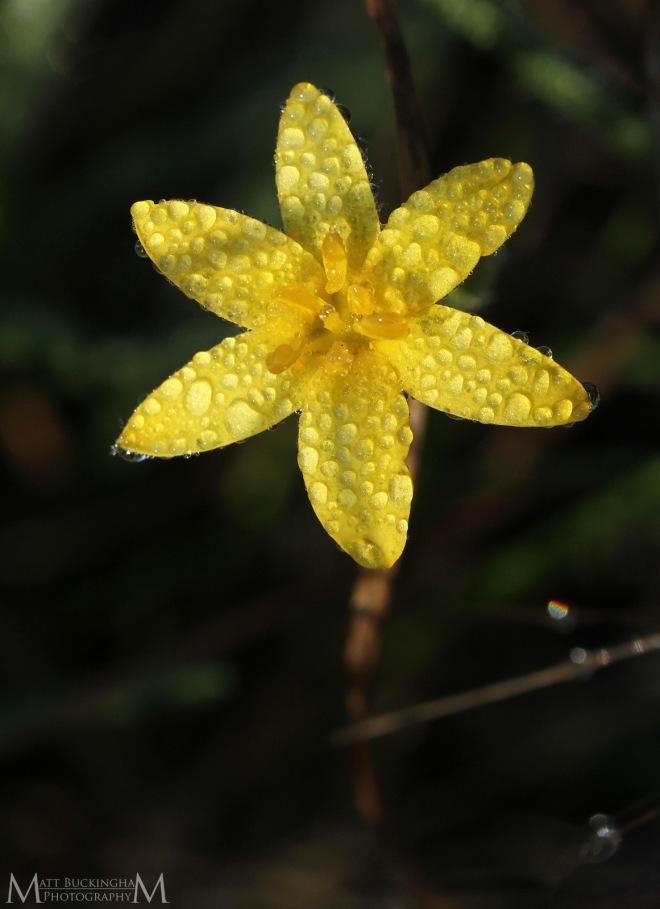
I photographed this Yellow Star-Grass (Hypoxis hirsuta) with fresh morning dew still clinging to the bloom.

IMG_7450

Yellow Star-Grass

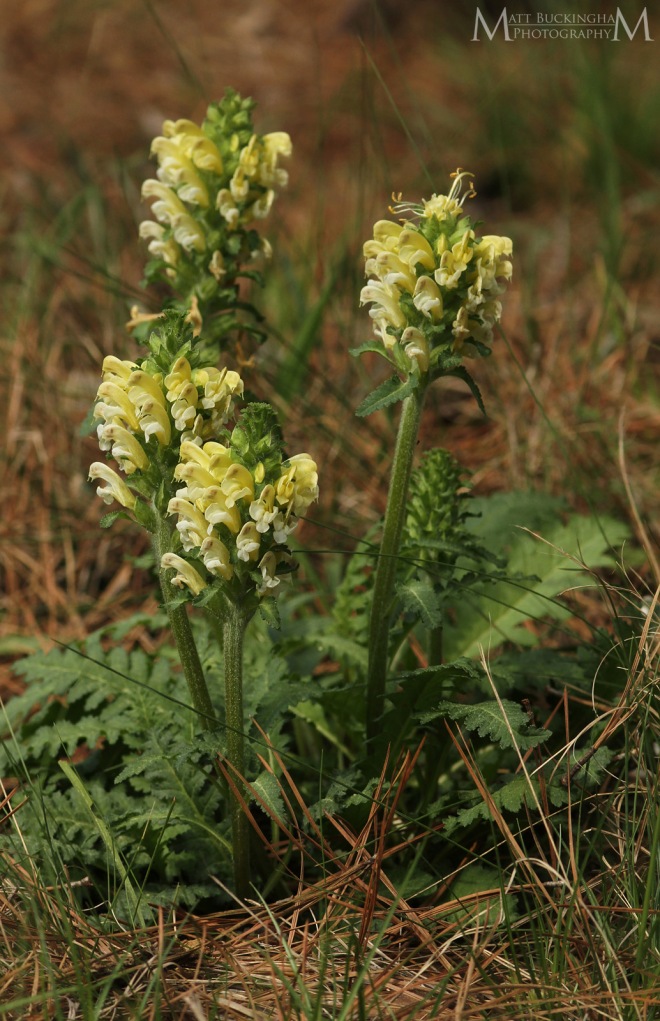
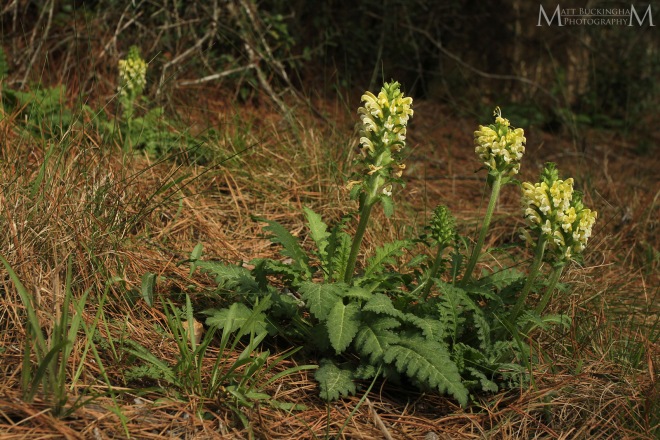
Another characteristically eastern forb that reaches its southwestern extent in East Texas is the Lousewort (Pedicularis canadensis).  Most of the flowers in Texas are yellow, however I have occasionally observed them with hints of maroon.  Lousewort is reported to provide a plethora of medical uses.  It’s roots have long been used to brew a tea that helps treat digestive and stomach problems and ulcers.  Its leaves can also reportedly be ground into a poultice that helps alleviate swelling, muscle pain, and several skin conditions.  Drinking its leaves in a tea is said to sooth sore throats, coughs, and headaches.  It is also said to act as a powerful aphrodisiac.

IMG_7630

Lousewort

IMG_7642

Lousewort

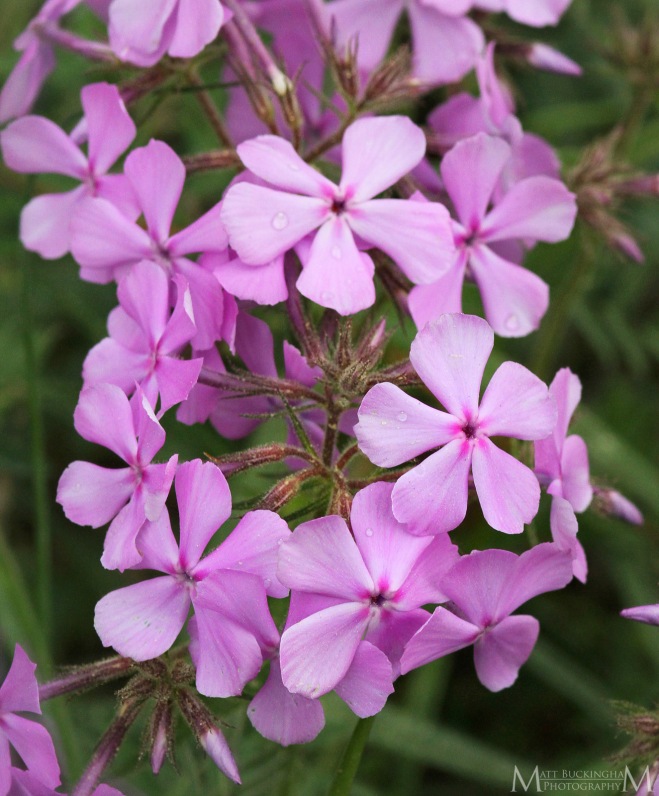
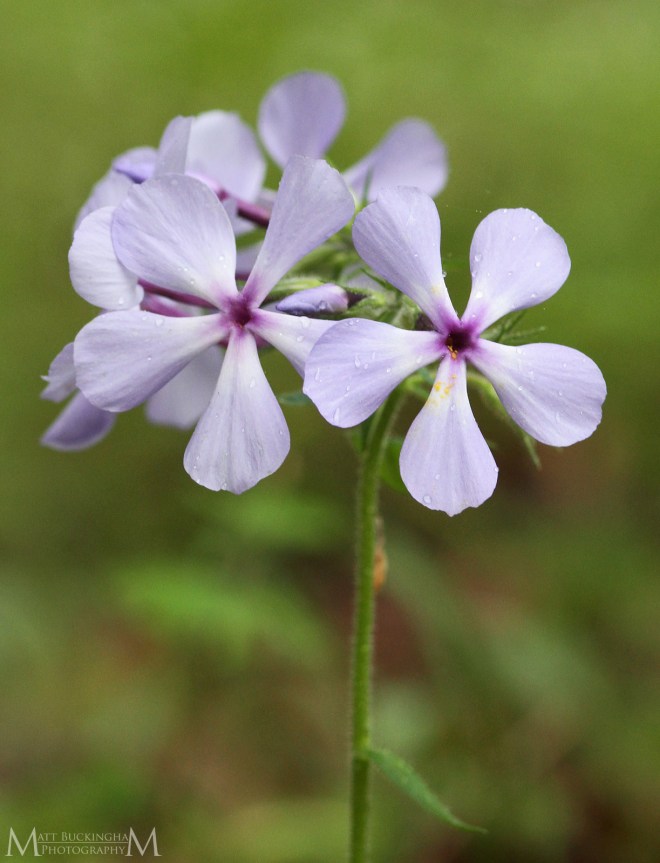
The beautiful Big Thicket Phlox (Phlox pulcherrima) is endemic to the forests of East Texas.  Like so many other species in this area of significant habitat modification by man, it is now most common along roadsides.

IMG_7679

Big Thicket Phlox

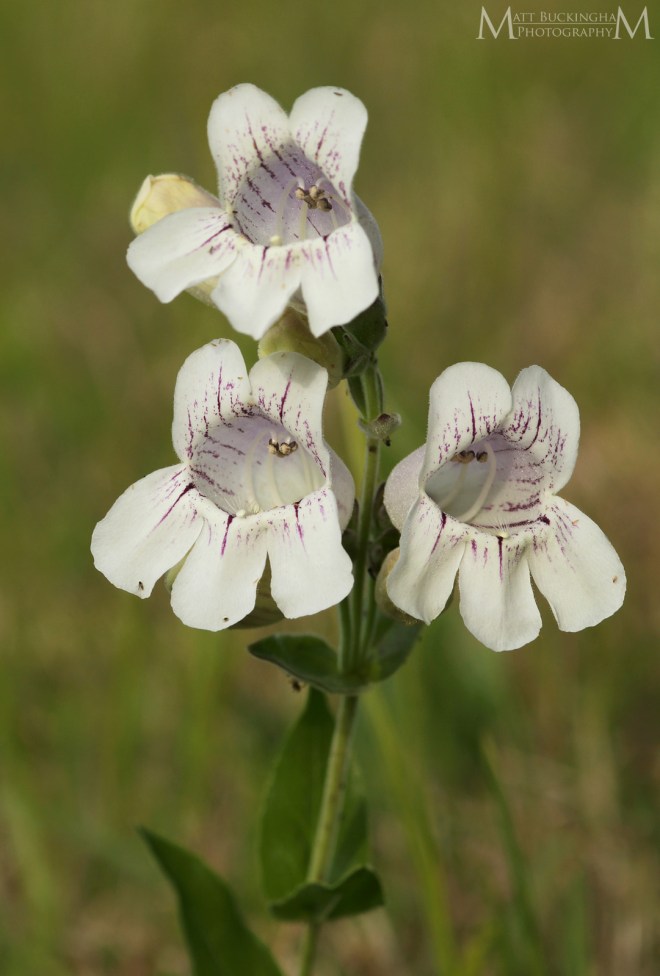
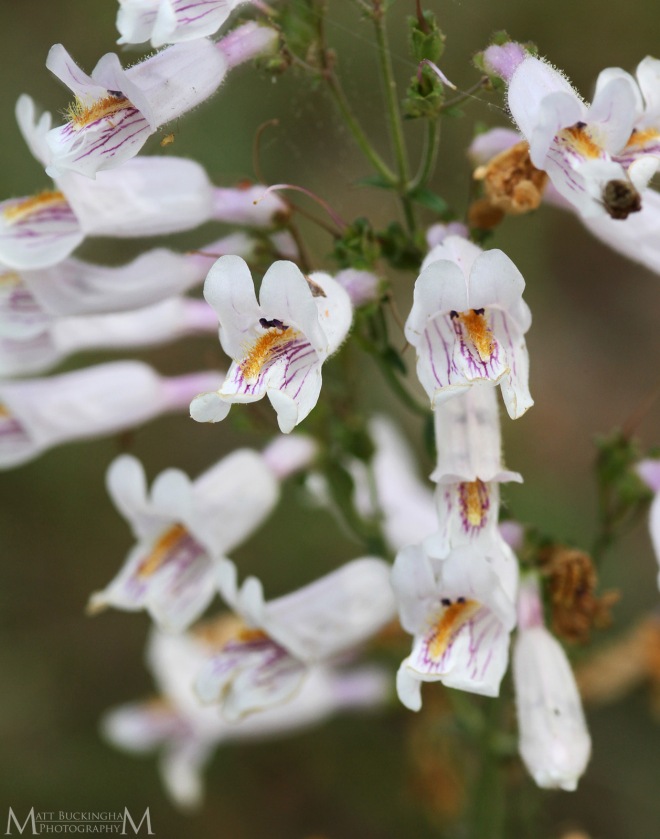
The Nodding Penstemon (Penstemon laxiflorus) is also common along roadsides.  It is so common that I never gave it much thought as a photographic subject, however this native has truly unique, beautiful flowers when viewed up close.

IMG_1479

Nodding Penstemon

During March I also made a few visits to the Big Thicket to check on a species that I checked off my list in February: The Federally Endangered Texas Trailing Phlox (Phlox nivalis ssp. texensis).  The plants were looking healthy and were still blooming mid-March.

IMG_8446

Texas Trailing Phlox

IMG_1599

Texas Trailing Phlox

Growing near the phlox I saw several Dollarleafs (Rhynchosia reniformis), a species of the coastal plain of the southeastern United States.

IMG_1610

I’ll close out this March recap with a beautiful scene from a longleaf pine savannah near one of the few known locations of Texas Trailing Phlox.  Here Rose Mock Vervain (Glandularia canadensis) thrives following a fire.  These showy blooms are a testament to fire’s ability to maintain and vitalize certain vegetative communities.

IMG_8489

With March of 2017 behind us, it’s time to move into April, where I hope to really start get going on my 2017 list of biodiversity goals.


Are we in East Texas or Appalachia?

IMG_8081

False Rue Anemone

I’m going to break my own rule again and make a post that is not about a species on my 2017 list of biodiversity goals to tell you about what may be, in my opinion, the nicest patch of forest in all of Texas.  A couple of years ago Carolina and I were fortunate enough to meet Susan and Viron through a mutual friend.  We joined them on a hike through the Sabine National Forest and it became clear that we were meant to be friends.  They shared our love for exploring wild places.  During our hike they talked about the property they owned in East Texas.  They mentioned some plants that they had on their property including bloodroot and trout lily, and naturally my ears perked up.  We parted ways with a promise to explore their land to see what other treasures it might hold.

We got our chance the next spring, and visited them at their home – a log cabin that they built themselves – nestled on a high ridge overlooking a steep, scenic slope.  As we approached the house I could already begin seeing drifts of Yellow Trout Lily (Erythronium rostratum) and clumps of Sabine River Wakerobin (Trillium gracile).  After visiting for a while we set out to explore.

IMG_0530

A mesic calcareous slope on private land rich in spring ephemeral forbs that are rare in Texas. Taken in March 2016

They took us down a trail that lead away from the house.  It climbed to the top of a hill covered in Mayapple (Podphyllum peltatum), and as we crested the ridge I was not prepared for the view that lay before me.  I saw a steep slope that was literally carpeted with thousands of spring ephemeral herbs that were flowering in spectacular profusion.  Thousands of Yellow Trout Lilies and Cutleaf Toothworts (Cardamine concactenata) had opened their blooms.  Both species are rare in Texas.  The scene seemed more appropriate for the slopes of the Great Smoky or Blue Ridge Mountains than East Texas.

There was also a species growing among them that I did not immediately recognize.  It turned out to be False Rue Anemone (Enemion biternatum), and I was unsure if it had been previously documented in Texas.  After returning home that evening I sent an e-mail to Jason Singhurst, the state botanist with TPWD and began doing a little research.  It turned out to be the second documented population in the state.  Having found the only other population, Jason was anxious to get out and explore the property to document this population and see what else this wonderful land might harbor.

IMG_8085

False Rue Anemone

He got his chance a couple of days ago on a warm, rainy spring day.  Jason and a group of excellent botanists joined me on the property, and while it rained on and off throughout the day, I could not find it in me to complain about the weather.  To me, days like this are the epitome of spring in the eastern forests.  Like me, Jason and the others could not believe their eyes.  After arriving we soon located the False Rue Anemone which was blooming by the thousands.

The mesic, calcareous slopes turned out to be far more extensive than I originally thought, stretching for acres across the property.  Perhaps the most dominant spring ephemeral forb was the Yellow Trout Lily, which had sent up hundreds of thousands of leaves.  While there were several blooms they remained closed throughout the day, as they only open under warm, bright conditions.  Fortunately I was able to photograph this species at the site the previous year.  Yellow Trout Lily is rare in Texas, known only from a few high quality mesic forests.  It is one of a few yellow-flowered in Eastern North America.  It is easily differentiated by the others by its erect flowers and tepals (combination of petals and sepals) that are not reflexed.

IMG_0611

Yellow Trout Lily. Taken in March 2016

Perhaps even more rare than the Yellow Trout Lily is the Cutleaf Toothwort.  It too was blooming by the thousands here.  This rare member of the mustard family (Brassicaceae) is a typical flower of eastern deciduous forests that is only known from a few locations in Texas.  It is one of the hosts for the Falcate Orangetip (Anthocharis midea).  Though we saw many of these beautiful butterflies during our visit, they were impossible to photograph as they refused to pause while bouncing from flower to flower in their quest for nectar.

IMG_0852

Cutleaf Toothwort. Taken in March 2016

Several flowering groups of Wild Blue Phlox (Phlox divaricata) were also present.  This showy phlox is rare in Texas, where it reaches the southwestern periphery of its range.  However it can be downright abundant in the hardwood forests of the Appalachians and eastern North America.

IMG_8052

Wild Blue Phlox

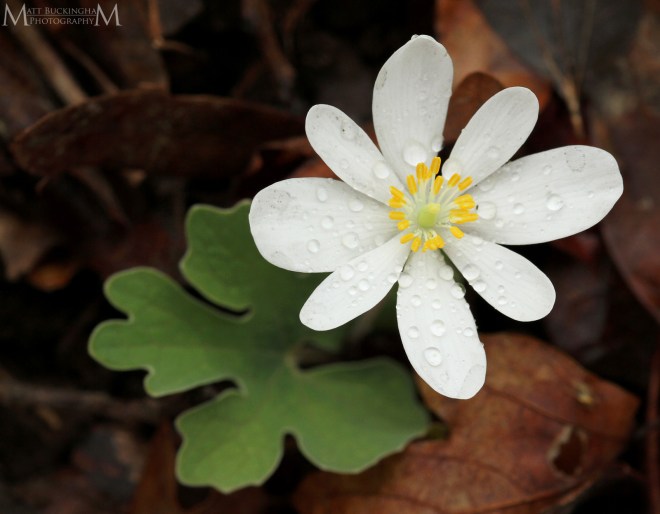
The rain presented several unique photographic opportunities.  The day must have been just warm enough for the Bloodroot (Sanguinaria canadensis) to open.  We found several of this quintessential forb of the eastern deciduous forest.  I captured this photogenic plant with fresh raindrops on the petals.  Like so many of the other plants at this site, Bloodroot is rare in Texas.  Probably never particularly common, it has suffered through more than a century of habitat destruction and over-collection for its medicinal properties.

IMG_8150

Bloodroot

Growing among the Bloodroot were several Southern Twayblade Orchids (Listera australis).  It was the only orchid species we located during our visit, but there is certainly potential for more to be out there.

IMG_0789

Southern Twayblade Orchid.  Taken in March 2016

The Sabine River Wakerobin was also up in force.  This attractive trillium is endemic to the Pineywoods of East Texas and western Louisiana.

IMG_2032

Sabine River Wakerobin.  Taken in March 2016

The understory was also full of flowering shrubs and small trees.  Perhaps the most notable were the thickets of Red Buckeye (Aescuslus pavia).  They seemed to have all bloomed in unison, and painted the understory red with their beautiful flowers.

IMG_8191

Red Buckeye

IMG_8218

Red Buckeye

The Flowering Dogwoods (Cornus florida) were also in bloom.  To me, this plant, more than other, represents the essence of spring in East Texas and eastern North America.

IMG_1986

Flowering Dogwood.  Taken in March 2016

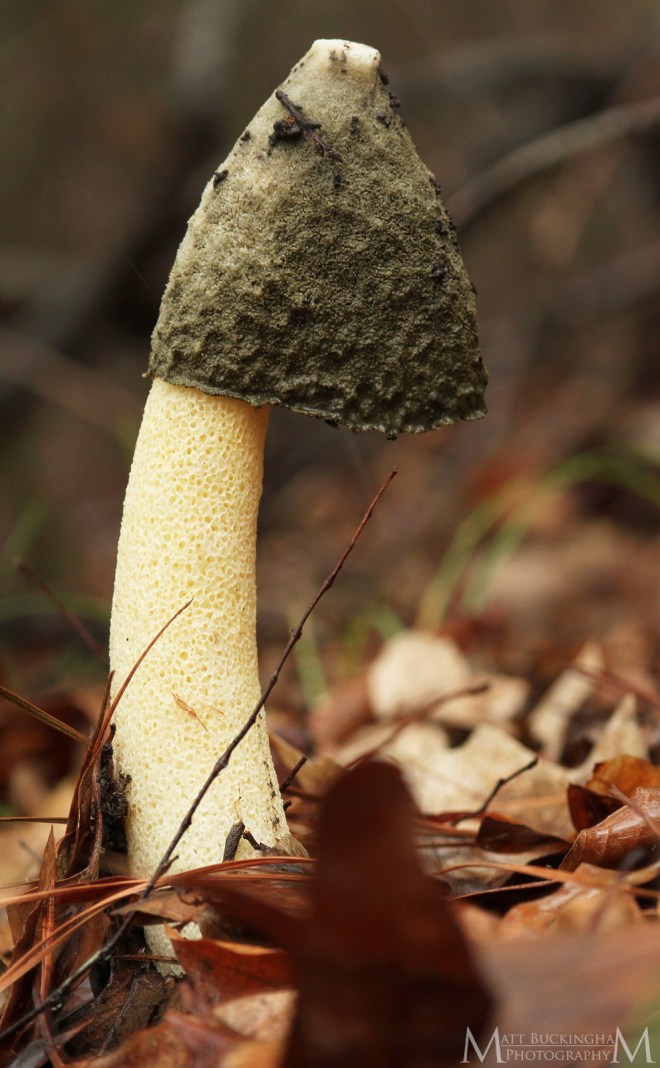
We took a break from searching for plants to admire this particularly robust Ravenel’s Stinkhorn (Phallus ravenelii) pushing up from the leaf litter.

IMG_8163

Ravenel’s Stinkhorn

There were many other rare plants that were not yet in flower including Indian Pink (Spigelia marilandica), Virginia Strawberry (Fragaria virginiana) and one species on my 2017 list: Starry Campion (Silene stellata).  The presence of these botanical treasures provided an added incentive to return, however in truth the only reason we need is the opportunity to spend a day in the woods with our good friends Susan and Viron.  After a long day, botanists and landowners parted ways content in seeing a bit of paradise nestled deep in the Pineywoods.


A Tale of Two Trillium

trillium-for-blog

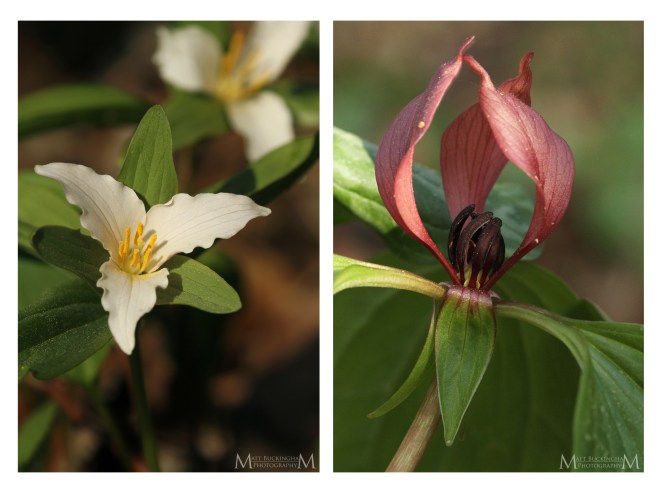
Left: Texas Trillium (Trillium texanum).  Right: Bloody Butcher (Trillium recurvatum).

This post does not include any of my 2017 biodiversity targets, however I had such a good time on a recent outing looking for two species of trillium in East Texas that I couldn’t resist posting about it.  Both species are also very rare in Texas and are certainly worthy of their own treatment in my blog.

Last Thursday was Texas Independence Day.  Working for the state I get all kinds of obscure holidays off.  Even so, I decided to go into work in the morning to rack up a few hours of comp time and left a little before lunch.  I set out in pursuit of two members of one of my favorite genera.  Their populations are within a half an hour of one another, and I figured I could visit both in an afternoon, despite my tendency to lose track of time.

img_7053

Texas Trillium

Texas Trillium (Trillium texanum) is one of the pedicillate trilliums (subgenus Trillium).  Members of this group have uniformly green bracts and flowers separated from the leaf-like bract by pedicels.  It is the only member of this group in Texas.  It was formerly considered a variety of Trillium pusillum.

trillium-texanum

County level distribution of Trillium texanum from http://www.bonap.org.  Yellow counties indicate that the species is present but rare.

Texas Trillium is extremely rare, occurring in only a few populations in East Texas and western Louisiana, though I recently heard from a botanist friend that it had been discovered in southwest Arkansas.  While other trillium species in Texas generally occur on rich, mesic slopes, Trillium texanum occurs in forested seeps, growing from permanently saturated ground amid sphagnum moss in the shade of Sweetbay Magnolia (Magnolia virginiana) and other tree species typical of these communities.

img_7096

Texas Trillium

I found thousands of plants in my short visit, however only a small fraction of them were in bloom, with most plants only put up single bracts.  The flowers were all fresh.  As they age they will gradually turn a deep shade of pink before the petals weather away.

img_7133

Texas Trillium

Growing near the Texas Trillium were several groups of Primrose-leaved Violet (Viola primulifolia).  This tiny violet is similar to Viola lanceolata but can easily be differentiated by its leaves.  It grows in similar saturated environments.

img_7164

Primrose-leaved Violet

After spending an hour or so with the Texas Trillium I was ready to move on to the next Trillium species.  As I’m driving I frequently glance on the roadside in search of any interesting plant that might catch my eye.  While travelling between the two trillium sites I glimpsed a large patch of Carolina Vetch (Vicia caroliniana), an uncommon denizen of rich forests that barely enters Texas in the eastern part of the state.

img_7181

Carolina Vetch

Trillium recurvatum has a number of common names, including Prairie Trillium and Red Trillium.  My favorite, however, is Bloody Butcher – no doubt a reference to the deep red flowers.  Bloody Butcher is one of the sessile-flowered trilliums (subgenus Phyllantherum).  These differ from the subgenus Trillium by having variously mottled bracts and sessile flowers.  Trillium recurvatum can be easily differentiated from the other sessile-flowered trillium of Texas by its petiolate bracts.

img_7255

Bloody Butcher

Trillium recurvatum is a fairly widespread species.  It is common throughout much of its range, but rare on the periphery, which includes Texas.  In contrast to the mucky seep where I found Trillum texanum, I found Trillium recurvatum growing on a rich mesic calcareous slope with a variety of mesophytic hardwoods and calciphilic forbs.

trillium-recurvatum

County level distribution for Trillium recurvatum from http://www.bonap.org.  Yellow counties indicate that the species is present but rare.

The majority of the plants I observed had deep maroon flowers, but a few were pale yellow.  In the past I have also observed individuals with lemon-yellow blooms at this site.  As is often the case with these East Texas rarities, at the few sites in the state that Trillium recurvatum does occur, it can be quite abundant.  I was fortunate enough to observe hundreds of blooms.

img_7301

Bloody Butcher with pale yellow flowers

img_7317

Bloody Butcher with pale yellow flower

Once again while driving I caught sight of an irregularity on the roadside.  This time it was not a plant, but one of our most spectacular insects: the Luna Moth (Actias luna).  Luna Moths may have as many as three generations per year in East Texas with the first emerging in early spring.  The individual pictured is a male, identifiable as such by its extremely feathery antennae.  These antennae are loaded with receptors that can detect the pheromones of a female from miles away.  They are members of the giant silk moth family (Saturnidae), and are among the largest moths in North America.

img_7214

Luna Moth

I ended the evening in the floodplain of the Attoyac River admiring a particularly expansive patch of Butterweed (Packera glabella).  The light was perfect, and I tried to capture a landscape image that showcased the beauty of these early spring wildflowers.  Growing among them were Springcress (Cardamine bulbosa) and hundreds of violets.  It was the perfect ending to a perfect afternoon.

img_7340

Butterweed in the Attoyac River floodplain