Finding Paradise in the Bandera Canyonlands

IMG_6516

Hill Country Waterfall

It’s a pilgrimage that many Texans undertake at some point – to see the fall colors of Lost Maples.  Despite living in Texas for over 20 years and extensively exploring all corners of the state, it was a trip I had yet to take.  This year we finally decided to see what the fuss was about.  It would turn out to be an adventure, filled with frustrations and rewards.

Carolina and I left early and made our way to the Bandera Canyonlands, a term used by the nature conservancy to describe the region in the western Hill Country that contains a labyrinth of canyons carved through the limestone over millennia by springfed streams.

We arrived at the Love Creek Preserve in the early afternoon.  We were granted special permission to visit this preserve which has limited public access.  The Love Creek Preserve is another example of the substantial conservation efforts of The Nature Conservancy in Texas.  Here they succeeded in protecting over 2,500 acres of excellent Hill Country habitat, home to rare plants and animals and numerous Texas endemics.  The preserve also protects several spring-heads which feed tributaries to the Medina River, which ultimately feeds the Edward’s Aquifer.  The Nature Conservancy truly has protected some of the most spectacular places in the Lonestar State.

It was a sunny day, and being early in the afternoon, the conditions were not ideal for photography.  I took my gear along anyway, as one never knows what they might encounter in a place such as this.  I carried my camera atop my tripod as I descended the precarious canyon walls with little difficulty.  I then rock-hopped my way across a wide stream without incident.  Then, after casually stepping on an innocuous boulder I somehow lost my footing and went down hard.  I was extremely unhappy, as Carolina can attest, but not hurt.  Then I looked at my camera, laying lens first in the cobble adjacent to the stream.  I feared the worst.  Miraculously my camera and lens survived unscathed, but my neutral density filter and circular polarizing filter had both been cracked.  I could live without the latter, but the polarizer is a crucial bit of gear for photographing fall color.  I was disheartened, to say the least.

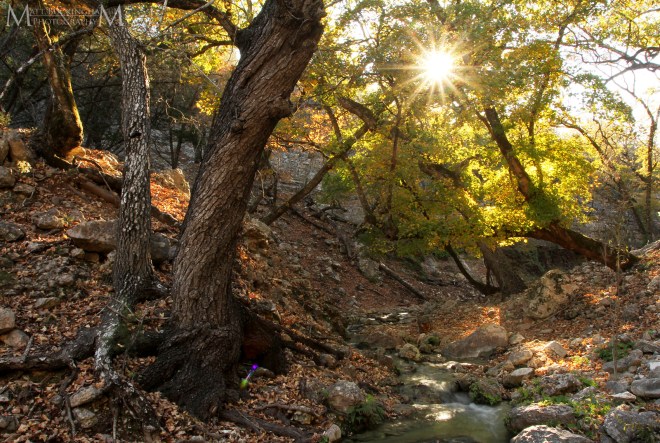
I tried not to let this bad news dampen my enjoyment of the small canyon that we had set out to explore.  Just being in such a place – taking in it’s sights, smells, and sounds, is a joy and a privilege that I feel fortunate to have experienced.  And as the sun drew closer to the top of the canyon walls I was able to capture a sunburst through the leaves of a Bigtooth Maple that quivered in a gentle Autumn breeze.
IMG_6122

Hill Country Canyon

As the daylight faded, we bid farewell to Love Creek, for the time being at least.  Our base camp, so to speak, for the trip was the Cool River Cabin, located on the Native American Seed farm near Junction.  Native American Seed is a fantastic company that grows a huge assortment of native plants and offers seeds and root stock for sale.  They rent out the cabin, which is actually a three bedroom house with two porches and a full kitchen!  It is a short walk from the Llano River, and contains scenic views and abundant wildlife.  I highly recommend staying here!

The next morning we set out to the Caverns of Sonora.  It was one of the more extensive cave tours I’ve taken in Texas cave country, and we marveled at the subterranean formations.  After exploring the caves we spent some time at the Eaton Hill Nature Center in Sonora.  We discovered this little gem by chance, and thoroughly enjoyed the exhibits which include several live rattlesnakes.

As the shadows grew longer we found ourselves at South Llano River State Park.  A good portion of the park remained closed due to the unprecedented flooding experienced by the region just a month before our visit.  There was still plenty to see, however.  Not long after entering the park we were greeted by a large Nine-banded Armadillo (Dasypus novemcinctus) foraging in a mowed area adjacent to some dense brush.  It was quite focused on its pursuit of dinner, and barely took a second to lift his head long enough for me to fire off a shot.  Armadillos are one of our more entertaining mammals, often allowing for a close approach due to their generally poor senses.  When they do finally realize that there is a perceived threat too close for comfort they will suddenly stop their activity, and bolt off, bounding erratically toward the safety of denser brush.

IMG_6220

Nine-banded Armadillo

We came upon a group of Woodhouse’s Scrub Jays (Aphelocoma woodhouseii) scouring a juniper thicket as the sun vanished behind the distant hills.  These intelligent, expressive birds are a joy to watch as they examine their surroundings.  They seem to display genuine curiosity and approach problem solving with some semblance of enjoyment.  Until recently these were considered Western Scrub Jays, but were split due to genetic evidence that suggest they, as well as the California Scrub Jay, Island Scrub Jay, and Florida Scrub Jay are distinct species.

There was very little light to work with, and I took the image below at 1600 ISO and 1/200 second.  The resulting image was grainy and softer than I would have liked.  I debated trashing the image, but decided that I liked the texture and colors on the bird, so I tried to clean it up through post processing.  I ended up with an image that i was happy with.  As digital photo processing technology continues to advance, I find myself saving more and more images that I would have otherwise thrown away.

IMG_6370

Woodhouse’s Scrub Jay

That night, I posed the idea of traveling the three hour round trip from our cabin to a Best Buy in San Antonio to buy a new polarizing filter, and Caro agreed.  I am very fortunate to have a wife that encourages my passions so.  We returned “home” that evening around at around 11 o’clock, with a new polarizing filter that I hoped would help my lens bring out the colors of the canyons.

The next day broke to gray skies.  We were up and out early, packing our things and bidding farewell to the Native American Seed Farm.  Our first destination would be Lost Maples State Natural Area.  This iconic park is extremely popular from mid October through November, particularly on the weekends, which just happens to be when we arrived.  We learned, as we watched vehicle after vehicle pour in, that it had been a less than stellar year for the maples in the park, apparently affected by the heavy rains a month prior.  Many of the leaves had simply turned brown and fallen from the trees.  The park was certainly beautiful, as we hiked along droves of other leaf peepers, but it did not provide that spectacular autumn color that I had hoped for.

Lost Maples gets its name for the relictual populations of Bigtooth Maple (Acer grandidentatum) that persist in the area.  Once more widespread throughout the region, as the glaciars retreated and the climate in the region warmed and dried, the maples were pushed to moist canyons along sprinfed streams and rivers.

The State Natural Area is not the only place to protect remnant groves of Bigtooth Maples however.  After spending a couple of hours hiking popular trails, we decided to return to Love Creek.  On the way we explored a few county roads to see what we might see.  The morning was cold, with temperatures never leaving the 40s.  The last thing I expected to find was a snake, however that’s exactly what I expected when we saw a group of Black-crested Titmice going crazy just a few feet off the ground.  They were chattering incessantly, crests raised, hopping from branch to branch staring directly at the ground.  Shaking off the cold I approached, and saw a gray and yellow striped serpent stretched out across the ground.

It was a young Baird’s Rat Snake (Pantherophis bairdi), not something I had expected to find here at the eastern edge of their range on such a cold November day.  They are restricted in range to the Trans-Pecos and western Edward’s Plateau of Texas, and adjacent northeastern Mexico.  They are one of our state’s most beautiful snakes, in my opinion, displaying shades of steely gray, yellow, and orange.  Despite the cold, this individual was feisty, and once disturbed never backed down from his coiled defensive posture.

IMG_6452.jpg

Baird’s Rat Snake

After spending some time in the company of the splendid reptile, we continued onto Love Creek  the sheltered canyons here were displaying spectacular color not seen at Lost Maples.  We marveled at the shades of orange and yellow that glowed like flames brightening the otherwise dreary day.

IMG_6508b

Bigtooth Maples at Love Creek

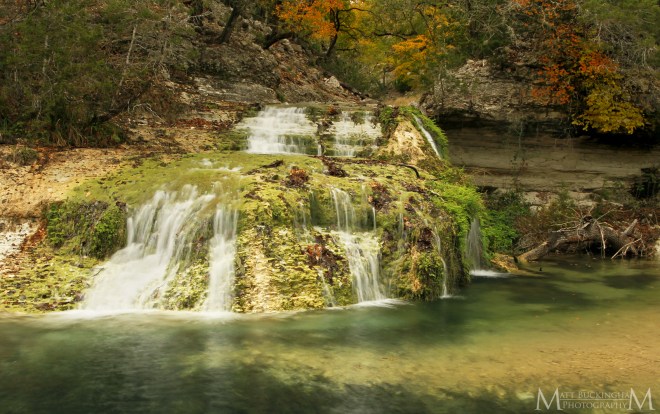
My friend David Bezanson of the Nature Conservancy told us where we could find a waterfall that drained the crystal clear springfed water of one of the many canyons that cut into the preserve’s limestone bluffs.  It was like an oasis in otherwise semi-arid country.  Mosses and Maiden-hair Fern clung to the rock, kept perpetually moist by spray from the falling waters.  I could imagine the water at the base of the falls stayed cool, clear, and deep even during the height of summer.

IMG_6519

Each angle of the falls provided some unique perspective.  The contrast of the aquamarine waters, the bright green ferns, and the yellows of overhanging witch hazel and orange of distant maples painted a scene that seemed almost impossibly beautiful.

IMG_6522ab

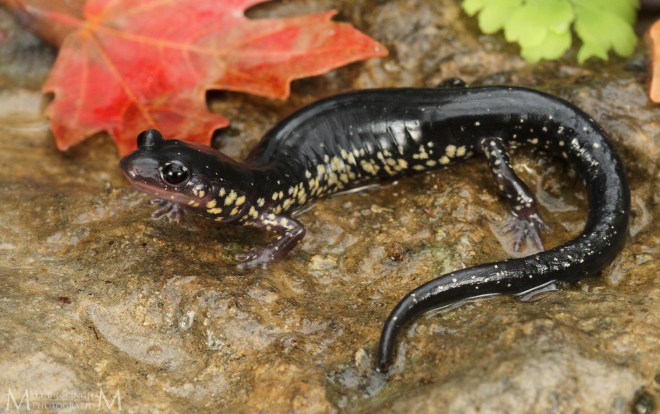
Venturing into the narrow canyon that fed the falls, we found a lush forest that seemed out of place in this region that is knocking on the desert’s door.  Towering trees shaded a thick layer of leaf litter that blanketed scattered boulders and smaller rocks.  Beneath this leaf litter we found several Western Slimy Salamanders (Plethodon albagula).  Another relict of cooler time, the central Texas populations of P. albagula are isolated from the the main portion of the species’s range by hundreds of miles, with the nearest known populations occurring in southwest Oklahoma.  Genetic analyses may reveal that this disjunct population is in fact a species unto itself.
IMG_6582

Western Slimy Salamanders

The trees here are remarkable as well, and include several other disjunct, relictual species like American Basswood, Chinkapin Oak, and Witch Hazel.  They join the Bigtooth Maples, Lacey Oak, Texas Red Oak, Texas Mountain Laurel, Texas Redbud, and more to create a diverse, layered, closed-canopy forest.

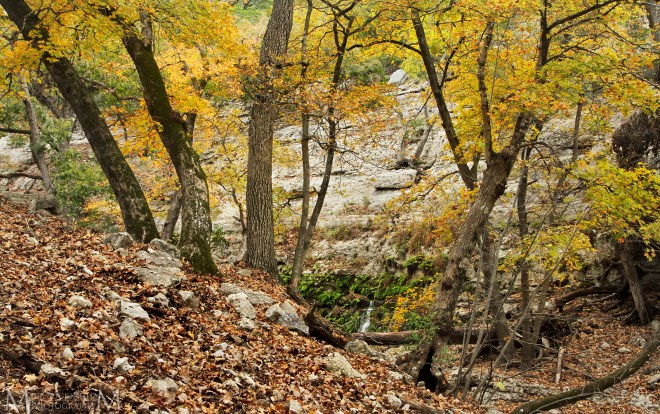
As we ventured deeper into the canyon we found the stream’s source.  Water was literally pouring out from the base of a massive limestone cliff, nourishing verdant Maiden-hair Fern, and what I imagined to be a profusion of spring wildflowers.  The water here is home to an endemic species of neotonic Eurycea.  It was humbling to see the literal source of so much life.
IMG_6600

Water pours from the base of a limestone cliff, fueling a lush, diverse canyon

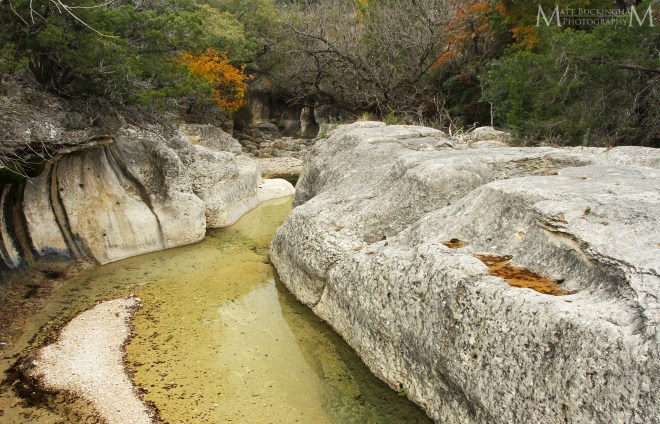
Deeper into the preserve we found a wider, drier canyon fed by a different spring.  Here the maples were absent, but Texas Red Oak (Quercus buckleyi) provided a splash of color to the scene.  I was truly blown away by the beauty of this place, an area unlike any other in the world.  I don’t proclaim to know if Heaven exists, but in my book, the Bandera Canyonlands are about as close to Heaven on Earth as one can get.
IMG_6666

Bandera Canyonlands
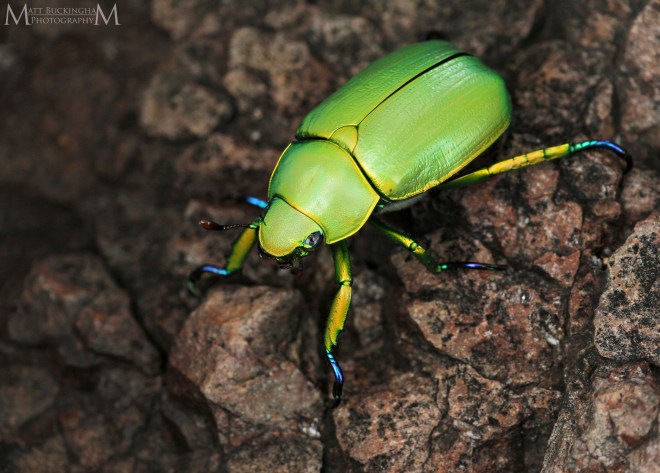
Chasing the Monsoon

IMG_0598

Davis Mountains Sunrise

It’s hard to resist the prospect of venturing west during the height of summer, when the monsoon rains drench the sky islands of the Trans Pecos, and bringing with them a lush, rich paradise in high elevation forests and canyons.  It has become a bit of an annual tradition for Carolina and I to visit the Nature Conservancy’s Davis Mountains Preserve during their open weekends in July or August.  This year would be all the more special, as we would be joined by our new friends Jim Fowler and Walter Ezell.  I have known Jim for years through Flickr.  Jim is an orchid expert from South Carolina who has authored two books, including Wild Orchids of South Carolina: A Popular Natural History.  Jim also maintains an excellent blog about his and Walter’s botanizing adventures (click here to check it out).  For some time Jim had been commenting to me on how he wanted to see a spectacular orchid that is known in the U.S. only from a few locations in Texas.  This orchid happened to be one of my all-time favorite species, the Giant Coralroot (Hexalectris grandiflora).

So I told Jim that he should join us on one of our trips to the Davis Mountains, as they are the best place to see this strange, beautiful orchid.  He would get his chance this past July, when he and Walter flew in from South Carolina and met up with Carolina and I.  We caravaned west, passing through the southern extend of the rolling plains and into the Permian Basin, and finally into Limpia Canyon.  That afternoon we planned to meet up with our friend and retired biologist Gary Freeman, who owns several hundred acres of Davis Mountain bliss.

The rains of the monsoons had arrived late this year, and had only recently begun.  The landscape was still dry and brown, exacerbated by a series of intense wildfires that spread through much of the area.  Better late than never, though, and they had arrived a couple of weeks prior to our arrival.  I hoped this would give enough time for the coralroots to emerge.  I would hate for Jim and Walter’s cross-country trip to have been in vain.

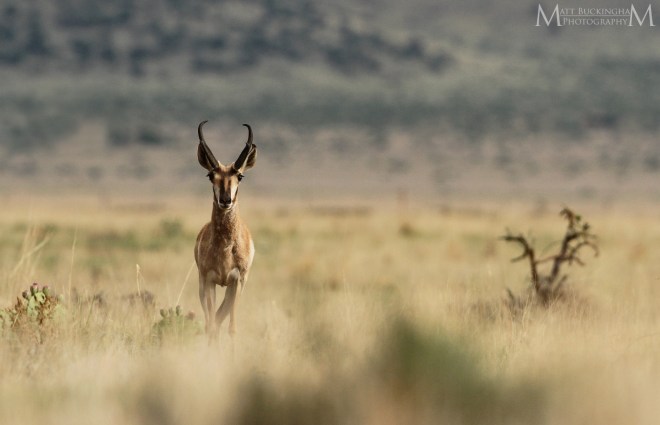
On the way to Gary’s home we spotted a large Pronghorn (Antilocapra americana) buck grazing just off the road.  It’s coat was still wet from a recent rain shower as it warily eyed us.  It never attempted to flee, however, as we approached to admire and photograph it.  My experience with Pronghorn is that they will allow for a fairly close approach, as long as they can see you.  I like to think that it is because, as the fastest land mammal in North America, they are confident in their ability to outrun me.

IMG_9683

Satisfied with our photos of this peculiar mammal, we continued on to the rugged road that led to Gary’s place.  As we drew nearer we could see that it was raining in the surrounding mountains, and hoped that we could avoid a downpour long enough to find a few orchids.  As we made our way down the wet, rough road to Gary’s, I worried that our timing was off, and the coralroots would not make an appearance.  How wrong I was.  Not long after the road climbed into a broad canyon with Ponderosa Pine, Alligator Juniper, and a variety of oak species, I heard Caro call out “STOP!!”  She had spotted a Giant Coralroot in bloom at the base of a massive boulder.

Jim and Walter excitedly gathered their photography gear and set about photographing the electric pink myco-heterotroph.  It was not in the best location for photography, and it was somewhat entertaining watching them formulate a plan on how to best approach capturing their desired images.  Carolina and I searched the area in the meantime, and found a few dried stalks and unopened buds.  We then continued on until the road became all but impassable, and turned into Gary’s dirt driveway.

Gary’s home is settled in the middle of a rich forest of Ponderosa and Pinyon Pines, Alligator Juniper, Texas Madrone, and a variety of oaks and other hardwoods.  It is transected by numerous washes and drainages that flow like mountain streams in years with ample rainfall.  We were warmly greeted by an enthusiastic Gary.  It is always a joy touring his land with him.  He is extremely knowledgeable, energetic, and full of interesting stories.  He is also always more than willing to share a glass of hard cider or two and plenty of camaraderie following a long hike through his canyons.

It wasn’t long after setting out that we spotted our first Giant Coralroot.  We would end up seeing many, but most were just emerging and in bud or barely open.  Jim was excited to see these and stopped to photograph each one.  While I was happy that we had found some, I really wanted to show them a fully opened flower, so they could come to know the true glory of this spectacular plant.  And then, finally, near a high elevation spring we found some.

IMG_9772

Giant Coralroot

Giant Coralroots are non-photosynthesizing myco-heterotrophs, meaning they do not possess chlorophyll and are uncapable of metabolizing energy from the sun.  Instead they utilize underground rhizomes and roots to obtain their energy and nutrients from the mycorhizzal fungi of tree roots.  An individual plant spends most of its life underground and may only bloom once every few years.  When they do bloom, however, it is a sight to see.  Their bright pink stalks push up through the leaf litter and may bear a dozen or more blooms that open in succession as the stalk grows.

IMG_9759

Giant Coralroot

Satisfied with our orchid hunting trip, we returned to Gary’s house and imbibed in the aforementioned hard cider.  As the sun fell low on the horizon we bid our reluctant good byes and went on our way.  Jim and Walter would stay in Fort Davis while Caro and I camped at Davis Mountain State Park.  Generally we would camp at the Davis Mountain Preserve, which has free camping during open weekends, however the preserve was closed to camping this year due to issues with the wildfires.

Fortunately the preserve would still be open during the day, and the next morning we set out to see what other interesting things we might find.  We made our way to one of my favorite places in the preserve, an area where I have seen many Giant Coralroots in the past, as well as Malaxis macrostachya and other interesting wildflowers.  We did succeed in finding several more Giant Coralroots, but other than that there was not much blooming.

IMG_9976ab

Giant Coralroot

As I was capturing the image above, the clouds opened up and let a deluge down upon the mountains.  I was reluctant to leave the scene, but finally retreated to my truck where we waited out the storm.  Eventually the rain let up and we continued to explore the area.  We were lucky to find several Desert Saviors (Echeveria strictiflora) in bloom.  This unique succulent is another species that Jim had really hoped to see.  In the U.S. it is only known from a few sites in far West Texas.

43246866584_4009e96d2e_o

Desert Savior

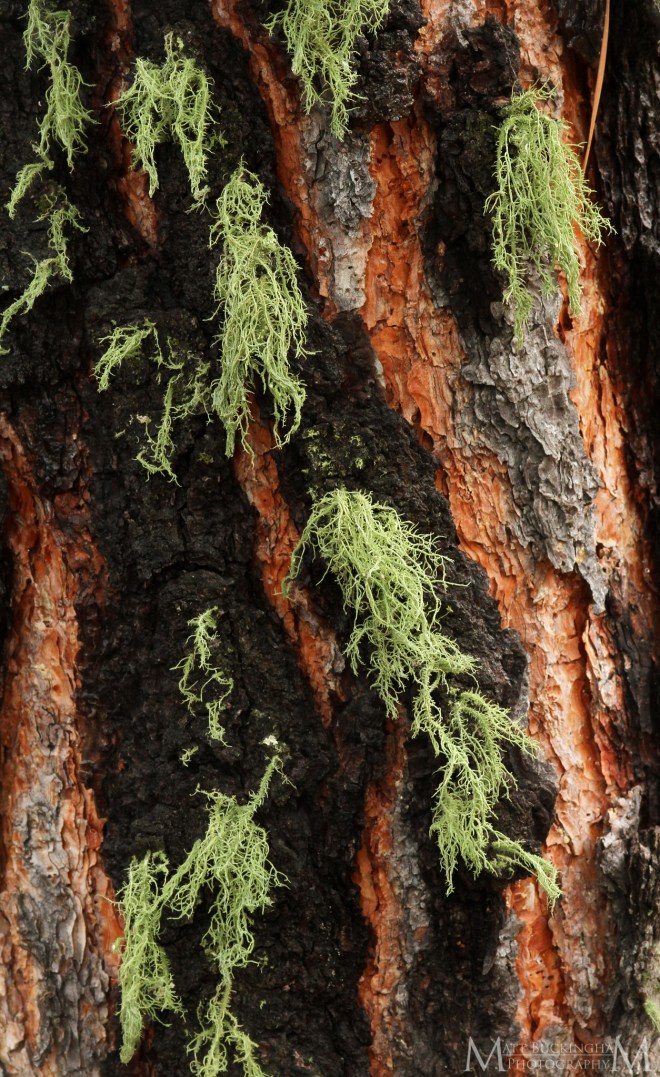
We then made our way into Tobe Canyon, where I hoped some other interesting plants might be blooming.  On our way up we passed many stately Ponderosa Pines.  In fact, the state champion is in this very canyon.  The textures and colors of the bark and Old Man’s Beard lichen caught my eye, and inspired me to capture the image below, which is a bit more abstract than most of my work.

IMG_0011

Patterns in Ponderosa

We continued up into the canyon, however it was getting late and the preserve would soon be closing for the day.  Many of the species I was hoping to see remained elusive, but we were rewarded with Cliff Fendlerbush blooming in the canyon, dotting the hills with their soft white blooms.

IMG_0054A

Cliff Fendlerbush

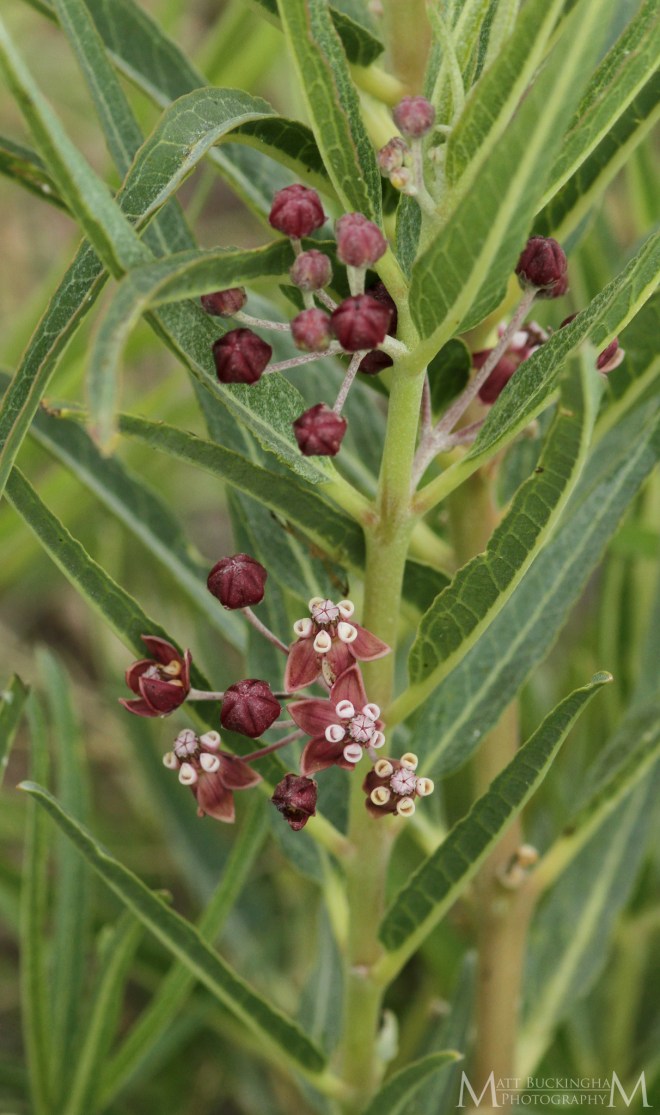
We descended Tobe Canyon and left the Preserve.  On our way back to Fort Davis we stopped to show Jim and Fowler several interesting places, including nice views of the Davis Mountains, the McDonald Observatory, and high elevation prairies.  Of particular interest to Jim were milkweeds, of which we saw many species.  One of my favorite is the Bract Milkweed (Asclepias brachystephana).

IMG_0088

Bract Milkweed

Jim and Walter would be leaving in the morning, and to thank us for showing them around they invited us to have dinner with them in Fort Davis.  We decided to head back to our campsite to clean up and rest a bit before heading into town to meet up with them again.  Back near camp Orange Fameflowers (Phemeranthus aurantiacus) were beginning to open.

IMG_0108

Orange Fameflower

IMG_0135

Orange Fameflower

We met up with Jim and Walter at the condo they were renting in Fort Davis.  There Walter prepared a delicious meal of pork chops and salad.  After we talked for some time, but eventually we had to bid our farewells and head back to camp.  We were sad that our time with our new friends was ending, but I was happy that I was able to show Jim the Giant Coralroot and a number of other interesting things along the way.

The next morning we woke early and explored the state park and adjacent Fort Davis National Historic Site, which defended the Trans Pecos in the mid to late 1800s.  By early afternoon the clouds began rolling in, and soon the monsoons drenched the earth once more.  After they passed we returned to exploring.  I chased a huge Western Coachwhip to no avail, and stalked Blue Grosbeaks (Passerina caerulea) in hopes of capturing a photograph.

IMG_0267

Blue Grosbeak

I also took a moment to photograph the ubiquitous White-winged Doves (Zenaida asiatica), which really are quite striking up close.

IMG_0280a

White-winged Dove

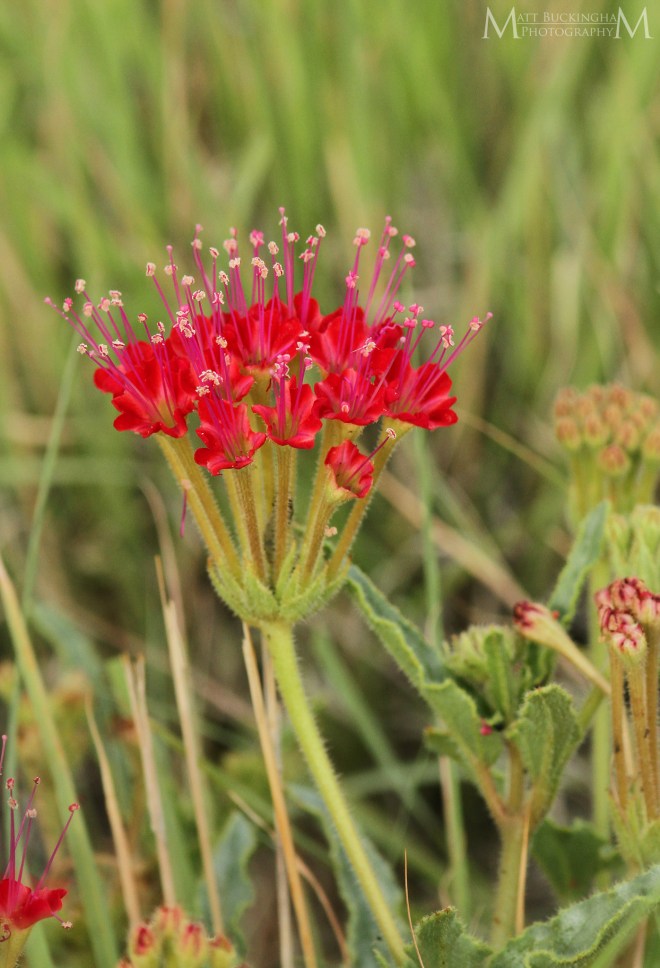
As the rain drenched the mountains, Caro and I decided to explore the grasslands around Fort Davis and Marathon.  To me, these special communities are just as interesting and diverse as those in the high country.  We spotted a number of interesting wildflowers in bloom, including the beautiful Devil’s Bouquet (Nyctagina capitata).
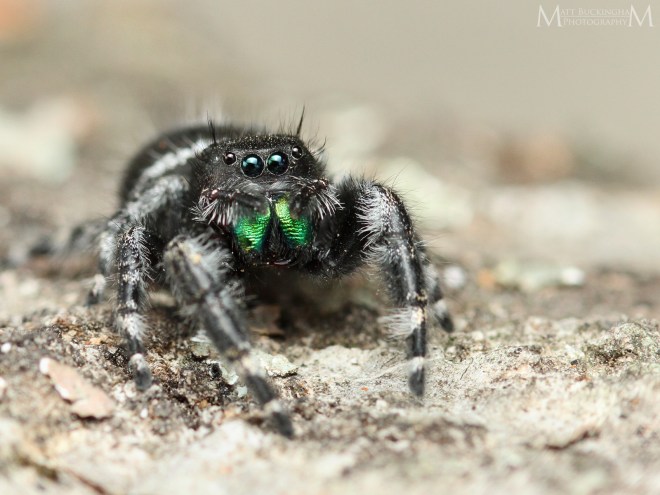
IMG_0309

Devil’s Bouquet

To my surprise, we also found several Plains Penstemon (Penstemon ambiguus) in bloom.  I was under the impression that this species bloomed earlier in the year, but perhaps the delayed onset of the monsoon impacted their phenology.  As I photographed them, I noticed a Scott’s Oriole singing from a fence post and a Swainson’s Hawk surveying its domain from the dried stalk of a Spanish Dagger bloom.

IMG_0517

Plains Penstemon

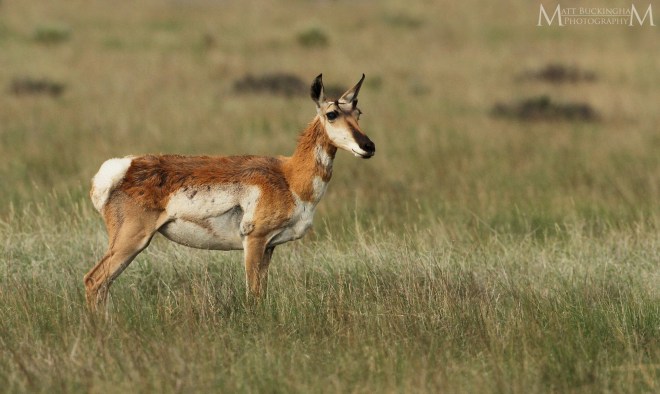
As we made our way across the prairie, I was hoping that I might have the opportunity to photograph some pronghorn in the interesting post-storm light.  I had my chance when we spotted a trio – two does and a young buck – near the road.  They did not immediately flee as I crept from my truck and tried to draw a bit nearer, but all three did perk up and look upon me with vigilant eyes.

IMG_0465

Vigilant Pronghorn

Often referred to as “antelope”, pronghorn only superficially resemble these old world ungulates.  They belong to the monotypic family Antilocapridae, and are actually more closely related to giraffes and okapis than true antelope.

Pronghorn are an iconic species of the American west, and it is always a treat seeing them in these semi-arid grasslands of West Texas.  Though once abundant, their numbers declined dramatically in the Trans-Pecos over the last 30 years.  They remain common in some areas around Marfa, Fort Davis, and Alpine, and their numbers seem to be rebounding following a number of reintroduction with animals from the Texas Panhandle.

IMG_0462

Pronghorn Doe

This buck below seemed indifferent to my presence, until I crouched down to get a low angle shot.  I must have triggered some primal response to concealed predators, because he perked up very quickly and began to snort and stomp his foot in displeasure.  They may be confident in their ability to outrun a predator in the open, but it seems the prospect of one concealed in the brush is another thing altogether.

IMG_0384

Pronghorn Buck

That night Caro and I went to see the Marfa Lights, and had a long debate about their possible source.  On the drive back to our campsite it seemed like every distant light was some mystical floating orb.  We saw a few Western Diamondbacks on the road, but otherwise it was an uneventful drive back.  The next morning we rose early and drove to the Skyline Drive in Davis Mountains State Park, where I captured the first image in this blog post.  Later, as we were breaking camp I spotted a freshly dead Wood’s Jewel Scarab (Chrysina woodii) that looked like it had flown into a tree a bit too fast.  I was really hoping to add to my collection of photographs of this species during our trip, but it was beginning to look like it wasn’t meant to be.  We had seen two others on Gary’s land while looking for orchids, but they were flying high in the canopy.

On our way out of Limpia Canyon we stopped to examine some walnut trees, the main food source for adult Wood’s Jewel Scarabs.  After some time we spotted one flying low enough to capture.  Easier said than done.  I ran about making futile grabs at the air hoping to catch one.  Caro took a different approach.  She waited until it landed in a small oak growing from a crevice in some large boulders.  Cautiously she climbed the boulders and snatched the prize.  I took a few photos of this spectacular insect and we sent it on its way.

IMG_0810

Wood’s Jewel Scarab

It was a long drive home to the Pineywoods, but we had plenty of memories to reflect on during our journey.  We thought in breathtaking landscapes, incredible creatures, fleeting wildflowers, and new friends.  Each trip to the Sky Islands of West Texas brings with it some uniquely profound experience, and leaves me feeling refreshed, inspired, and eager to continue my never ending quest for biodiversity.
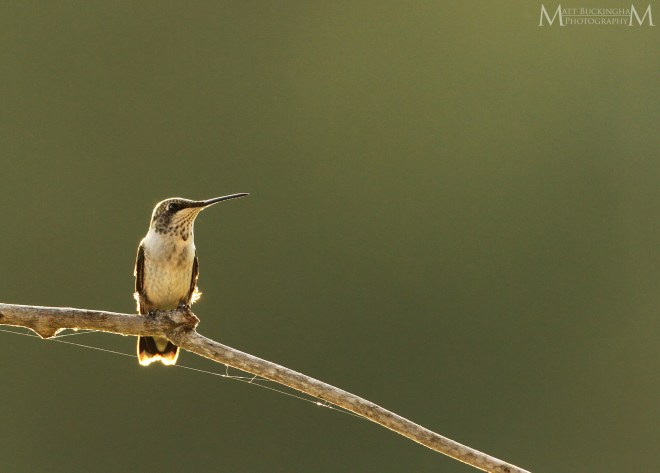
Reflecting on Summer in the Pineywoods

IMG_2657

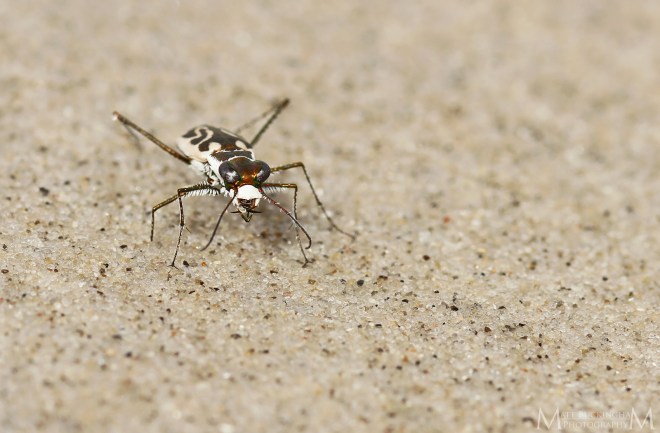
S-banded Tiger Beetle

With the arrival of our first “real” cold front of the season, and temperatures in the extended forecast barely creeping out of the 60s, I think it’s safe to say that fall has arrived.  The forests are full of fungi and fall-blooming asters.  And just the other day I found several Marbled Salamander, a true harbinger of fall.

But before I set out to bask in the beauty of Autumn, I find myself thinking back to a summer spent in the forests of my home.  This year’s was a particularly hot, dry summer.  After a few years of relatively mild summers, at least in terms of Texas, this one was intense.  Yet even in the midst of heat waves and drought there are natural treasures to be found by those willing to look.

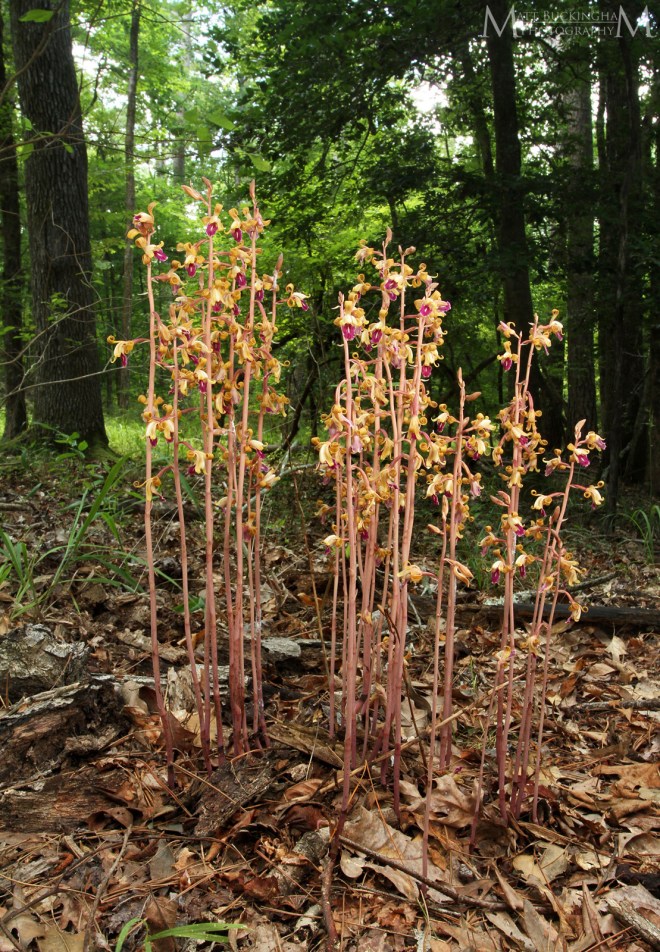
I found one such treasure on a sweltering day in late June.  On the advice of my friend Joe Liggio, author of Wild Orchids of Texas, I went to check on a local population of Crest Coralroot Orchids (Hexalectris spicata).  This is a wide ranging species, occurring from Arizona to Florida to Virginia.  In Texas they occur in scattered populations throughout the state, with the most robust populations being in the White Rock Escarpment of north-central Texas, the Edward’s Plateau, and the mountains of the Trans Pecos.  In the Pineywoods they are only known from a few localized populations.  Here they are generally found singly, or in small, scattered clumps.  This year however, we found a huge clump of over 30 stems.

The Crested Coralroot is a non-photosynthesizing mycoheterotroph, meaning that it lacks chlorophyll and has no real leaves to speak of.  It lives out its days a little more than an underground rhizome and small roots that penetrate the mycorrhizal fungi of tree roots in order to rob them of a portion of their energy and nutrients.  All that alerts the average forest-goer to their presence is the flesh colored flowering stalk and purple-streaked flowers that emerge all to briefly in the early summer.

IMG_8719WM

Crested Coralroot

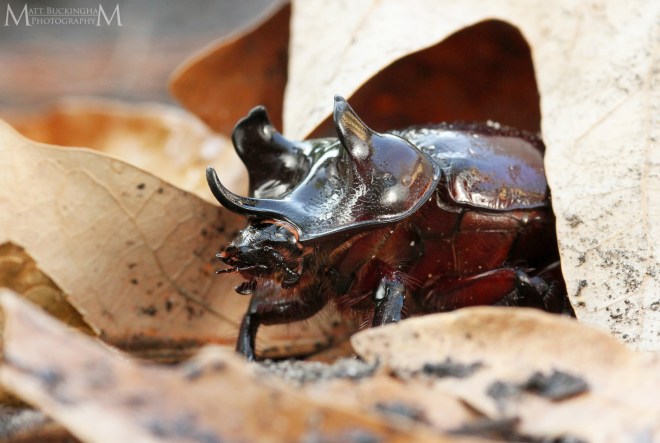
Emerging from forest floors rich in decomposing organic material in early June is the Ox Beetle (Strategus aloeus).  These massive coleopterans are among the largest insects in the United States.  The pronotums of males are decorated with three horns that are utilized in combat to win the favor of females.  These massive beetles are familiar visitors to porch and gas station lights on warm, humid, moonless summer nights.

IMG_9046

Male Ox Beetle

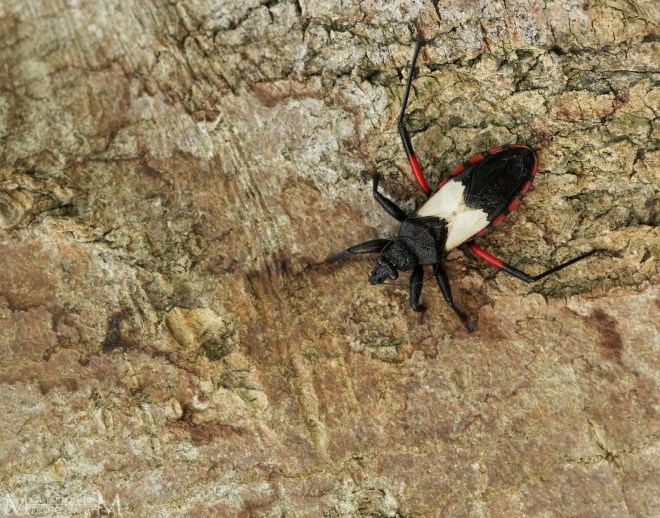
Another, much more occasional, visitor to night lights is the assassin bug known as Microtomus purcis.  So named for their tendency to ambush other insects and dispatch them with their long spear-like beak, assassin bugs come in a variety of shapes, sizes, and colors.  Microtomus purcis is one of the largest, and most striking.  When not visiting man-made lights in errors, they spend much of their time hidden beneath the bark of rotting tree trunks.

IMG_8951.jpg

Microtomus purcis

We spent much of July away from the Pineywoods, visiting the sky islands of West Texas and the beaches of the Upper Texas Coast.  I could not resist, however, seeking out the brilliant orange Platanthera orchids that light up the bog like tiny torches.  There are four species in Texas, however this year I would only photograph two of them.  Interestingly, I would find them both on the same day.

In late July we traveled to the Big Thicket, where deep in a mosquito infested baygall I spotted the brilliant inflorescence of the Crested Fringed Orchid (Platanthera cristata).  This is perhaps the second rarest of our Platanthera species, only known from a few sites in the central and southern Pineywoods.  In Texas they seem to prefer the shaded, highly acidic conditions of forested seeps, occurring either on their margins or interiors.  I have also found them at acidic seeps along springfed streams.  They are generally in the company of a variety of ferns, and other forest seep specialists like Nodding Nixie (Apteria aphylla).  This seemed a good year for them.  I often wonder what triggers an orchid bloom, as some years none will bloom, other years only a handful, and that rare year where many will bloom.  Rainfall no doubt plays some important roll, but as to when the rain should fall to trigger the bloom and what other factors may contribute, I am at a loss.

IMG_0878

Crested Fringed Orchid

After leaving the baygall we traveled east to a wetland pine savannah where we found the enigmatic Chapman’s Fringed Orchid (Platanthera chapmanii).  P. chapmanii occurs in scattered populations in Texas, Mississippi, Florida, Georgia, and North Carolina.  It is believed by many to have arisen from an ancient hybrid of P. cristata and P. cilliaris, seeming to display characteristics of both.  It can be differentiated from the former by its long beard and reflexed lateral sepals.  It differs from the latter by its hooked columns.  In Texas P. chapmanii is known from a few remnant wetland pine savannahs in the Big Thicket.

IMG_0968

Chapman’s Fringed Orchid

IMG_0964

Chapman’s Fringed Orchid in a wetland pine savannah

Growing alongisde the Chapman’s Orchids were a variety of carnivorous plants, including the conspicuous Pale Pitcher Plant (Sarracenia alata).  The leaves of these carnivores, known as pitchers, are hollow and form long tubes with pools of digestive enzymes at their base.  Unsuspecting insects that enter the pitchers may become trapped in the enzyme soup, where they are slowly digested, nourishing the plants.

IMG_1010

Pitcher Plants in Love

In early August Caro and I found ourselves in pursuit of another orange beauty, the Carolina Lily (Lilium michauxii).  Uncommon in Texas, the Carolina Lily grows in rich, mature forests, generally on hardwood slopes, though it may occur on rocky slopes dominated by Longleaf Pine.  We actually spotted our first lily of the season growing along a county road in a remnant patch of forest surrounded by pine plantations.

IMG_0899

Carolina Lily

A few days later we went to visit a population that Caro had spotted last year long after antithesis.  This year we found them in full bloom, and even spotted one plant that had three flowers, something I had never seen before.

IMG_1113

Carolina Lily

Carolina maintains our garden, which is full of a variety of native plant species.  A benefit to a diversity of native plants in our yard is that we are able to attract a variety of native pollinators.  And with the pollinators come the predators.  In essence we get to observe the food chain in action every day.  One of my favorite back yard predators is the Widow Skimmer, which stalks the garden and occasionally pauses for a brief photo shoot.

IMG_1234

Widow Skimmer

One of my favorite summer past-times is wandering along the numerous clear, cold, springfed streams that transect portions of the Pineywoods.  There is so much to see beneath the water, along the banks, and in the surrounding forests.  It was on the banks of one such stream that I spotted these striking red fungi.

IMG_1249

Fungi

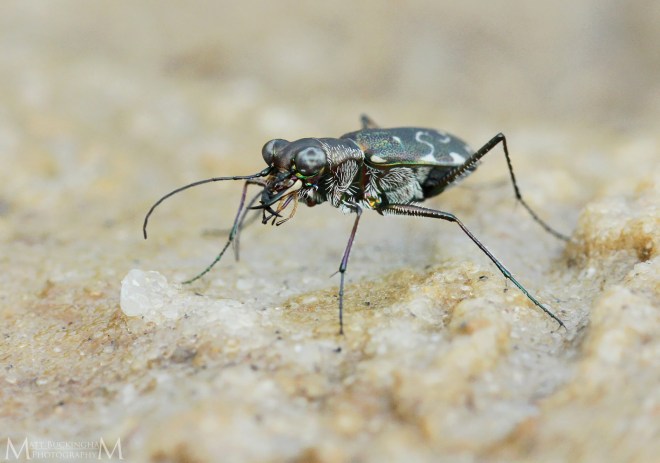
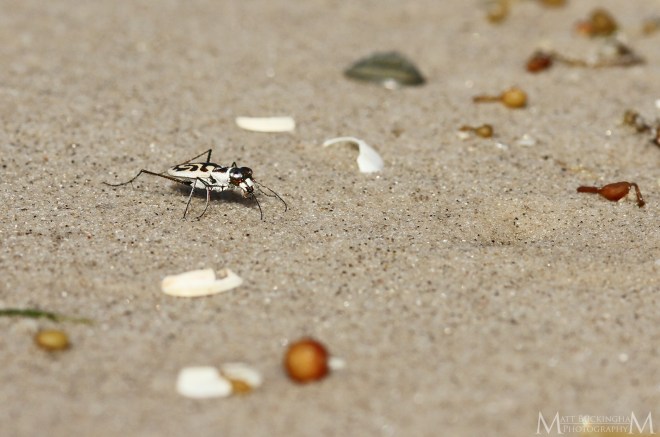
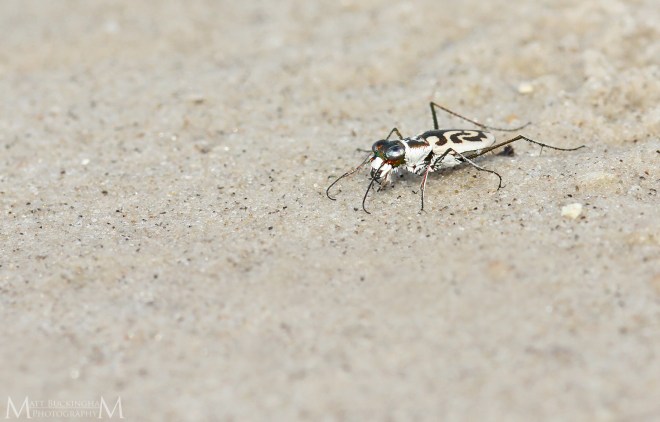
Late summer brings with it a peak in tiger beetle activity.  Undisturbed beaches along streams and rivers may literally be swarming with a variety of species, voraciously chasing down any prey item unfortunate enough to get in their path.  One species, the S-banded Tiger beetle (Cicindelidia trifasciata) was historically considered a species of the coast, however in recent years it has been found along waterways hundreds of miles inland.  In the Pineywoods it is now quite common in many areas.

IMG_2613

S-banded Tiger Beetle

IMG_2585

S-banded Tiger Beetle

The Bronzed Tiger Beetle (Cicindela repanda) is a wide-ranging, somewhat variable species.  Their elytra may appear dark brown, coppery, or even golden under the right light conditions.  They are commonly encountered on sandy stream banks and sandbars of streams and rivers.

IMG_2945

Perhaps the most commonly encountered Tiger Beetle in the Pineywoods is the Ocellated Tiger Beetle (Cicindelidia ocellata).  Unlike most species of the Pineywoods, which are characteristically eastern and at the western edge of their range, the Ocellated Tiger Beetle is primarily a species of the southwest and reaches the eastern limit of its range here.

IMG_3250

Ocellated Tiger Beetle

A visit to my good friend James Childress‘s farm is always good for turning up a few invertebrates.  The plants and woodpiles along his cabin harbor rich arachnid diversity, and we are always treated to a wealth of spider sightings.  Perhaps the most entertaining of all of the farm’s eight-legged denizens is the Bold Jumping Spider (Phiddipus audax).

IMG_3198

Bold Jumping Spider

Under a chair on James’s patio we found this large female Black Widow (Latrodectus mactans).  Perhaps the most famous/infamous spider in the country, the Black Widow has a reputation of being dangerous and ruthless due to its potent venom and tendency to cannibalize males seeking mating opportunities.  In reality, they are docile, gentle creatures disinclined to bite.

IMG_3105

Black Widow

As August turned to September, my friend Scott Wahlberg spotted something truly remarkable.  Deep in a mature hardwood stream bottom he caught a glimpse of a massive Canebrake Rattlesnake (Crotalus horridus) that we estimated to be pushing five feet in length and as thick as my upper arm.  Finding this snake was a reminder that all manner of fantastic creatures are hidden deep in the forest, many of which will never be seen by visitors to their woodland realm. We were fortunate, however, to see one of these elusive forest spirits.  In a time and place when so many seem determined to wipe these beautiful animals out based on unfounded fears and ignorance, it is nothing short of incredible that this snake would live long enough to attain such an impressive size. Spending a moment with this gentle giant truly was a gift from the forest.

IMG_3045

Canebrake Rattlesnake

Back at James’s farm the hummingbirds had arrived in force.  South-bound Ruby-throated Hummingbirds (Archilochus colubris) begin arriving in the Pineywoods in late summer.  Dozens of these tiny aerial acrobats were fighting for position among James’s feeders, eager to refuel and prepare for the continued journey south.

IMG_3320

Ruby-throated Hummingbird

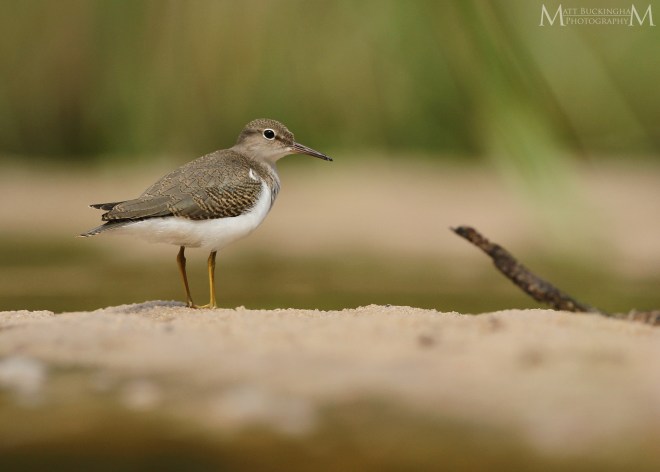
Many shorebirds also pass through the Pineywoods in East Texas as they migrate south.  In early September while laying flat on a river sandbar photographing tiger beetles I caught a blur of motion our of the corner of my eye. Slowly I turned my head to focus on this new distraction, and saw that it was a Spotted Sandpiper (Actitis macularis) darting back and forth in pursuit of invertebrate prey. Though the bird was only about 25 feet away, it was still too far for my macro to reach. Slowly I crept backwards, and then made my way to my truck to seek out my telephoto lens. I could only hope that the tiny hunter would stick around. As I retreated I watched the shorebird make several mad dashes in the area I had just left, undoubtedly snatching up some of the tiger beetles I had just been observing.

I made it to the truck and equipped my bird lens. I then cautiously made my way back to the sandbar. At first I couldn’t see the sandpiper, but after some time it became visible behind a small rise in the sand, tail a-bobbing. I got into the water and laid flat, trying to conceal as much as my form as possible. I slowly moved toward my quarry, and found it to be surprisingly tolerant. Most shorebirds are in their basic, or non-breeding plumage this time of year. In the Spotted Sandpiper, I find this look to be just as striking as its breeding plumage, particularly the fine details on the wing coverts.

I watched the sandpiper through my lens as it moved up and down the edge of the sandbar, stalking and pouncing on prey, and flipping leaves and other bits of cover to see what tasty morsels might lie beneath. After it had scoured most of the sandbar’s perimeter it took off upriver, flying southward with its characteristic erratic wingbeats. I was left with a few images and a fine memory of an unexpected encounter of the best kind.

IMG_3883

Spotted Sandpiper on the prowl

IMG_3872

Spotted Sandpiper

IMG_3868

Spotted Sandpiper

I can’t say that I’ll miss the summer heat, but I will miss many of the familiar species that vanish for the year as summer turns to autumn.  I can’t be too sad, however, as each season in the Pineywoods has a unique cast of characters, and each year I look forward to seeing familiar faces and those that I have not yet had the pleasure of meeting in these wonderful, diverse forests.

Birds and Blooms along the Upper Texas Coast

IMG_8222

Reddish Egret

Thunder rumbled in the distance as anvil-shaped storm clouds rose to the west of the Bolivar Peninsula.  I sighed in frustration; not because I disliked these May storms that form along the Gulf, but rather because the magic hour of perfect photographic light had just begun, and the clouds were soon to blot out the sun, leaving the beach cloaked in grey.  Desperately I searched for a subject to make the most of the few minutes of usable light that remained.  Soon I spotted one of my favorite birds, a Reddish Egret (Egretta rufescens) standing stoic in the surf.  Quickly I dropped to the sand, laying belly flat in an attempt to meet this special wading bird on its level.  Just as I set my lens on it I noticed that the world was rapidly darkening as the wispy margins of the storm clouds drifted in front of the sun.  What I found, however, was that this thin veil of clouds actually created a very special light that seemed to paint the egret.  I managed to take advantage of a window of less than a minute before the cloud’s dense heart crossed over the sun, robbing the evening of any further photographic opportunities, and captured the image above.

Before the clouds’ arrival I did manage to capture a few images of other avian beach dwellers.  American Avocets (Recurvirostra americana) were plentiful.  It was the end of May now, and many shorebirds are still making their leisurely journeys northward as their summer breeding grounds gradually thaw.  I consider avocets to be one of our most beautiful shorebirds, particularly when their heads and necks are painted burnt orange in their alternate plumage.

IMG_8026

American Avocets

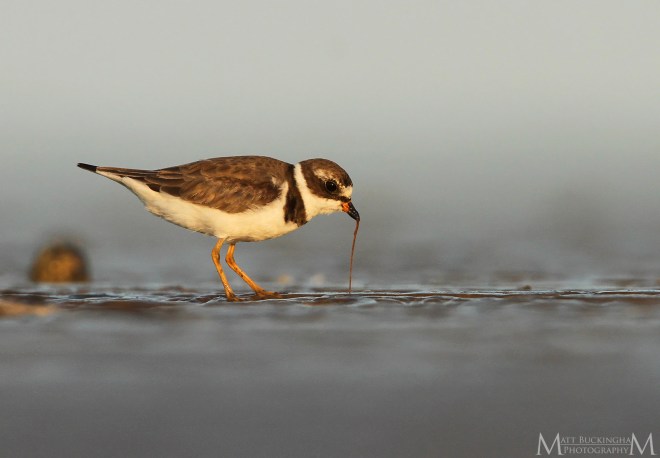
A variety of “peeps” were still present, and we spotted Sanderlings, Least Sandpipers, and a few Western Sandpipers.  Also present were several Wilson’s and Semipalmated Plovers (Charadrius semipalmatus).  The latter allowed for a fairly close approach as it probed the wet sand for worms and other invetebrates.

IMG_8183

Semipalmated Plover

Though they seem scarce along much of the coast, Reddish Egrets are quite common on this stretch of the Upper Texas Coast.  They are perhaps the most entertaining feathered-thing around, and I laid for several minutes watching them perform their elaborate predatory dances.  They seemed random yet choreographed in their movements, as if putting on some performance as they skipped and danced across the shallow water’s surface, stirring up tiny fish and fanning their wings above them, confusing their prey and shading them to make them more visible at the same time.

IMG_8069

Reddish Egret Hunting

img_8093

Reddish Egret Hunting

Ruddy Turnstones (Arenaria interpres) were also out in force.  Many had completed molting into their breeding plumage and were truly a sight to behold.

IMG_7814

Ruddy Turnstone

This stretch of beach is an important breeding ground for Least Terns (Sterna antillarum), a species of conservation concern.  Here they block off the main breeding area in order to protect the fragile nests, which are little more than scrapes in the sand.  The terns’ breeding efforts were kicking into high gear during our visit, and we were fortunate enough to be bombarded by several pairs that felt we were getting too close to their precious offspring, still developing within their calcium carbonate shells.

IMG_7944

Least Tern

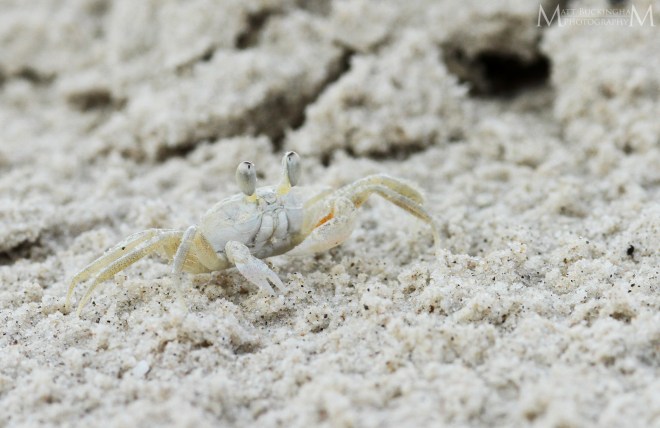
We left the beach as dusk was closing in and the Ghost Crabs left the safety of their burrows to scavenge the shore.  Caro and I watched an impressive display of lightning ahead of us, and before long the storm overtook us.  It was impressive and violent, a striking contrast to the serenity of the bird-filled beach.  Perhaps it is these contrasts – tranquility and exhilaration – that keep drawing us back to the coast.

The next day we found ourselves in the Columbia Bottomlands of Fort Bend County.  These seemingly out of place forests of ancient oaks and elms harbor staggering biodiversity including many species that are rare to uncommon elsewhere.  One such species is the Texas Pinkroot (Spigelia texana).  These dainty forbs are endemic to moist woodlands and prairie remnants in southeast Texas, with a few specimens known from isolated locations further north and west in the state.

IMG_8312

Texas Pinkroot

IMG_8364

Texas Pinkroot

Growing nearby were several Aquatic Milkweeds (Asclepias perennis).  This species is sporadically encountered in East Texas, though it seems most common in these bottomlands near the coast.
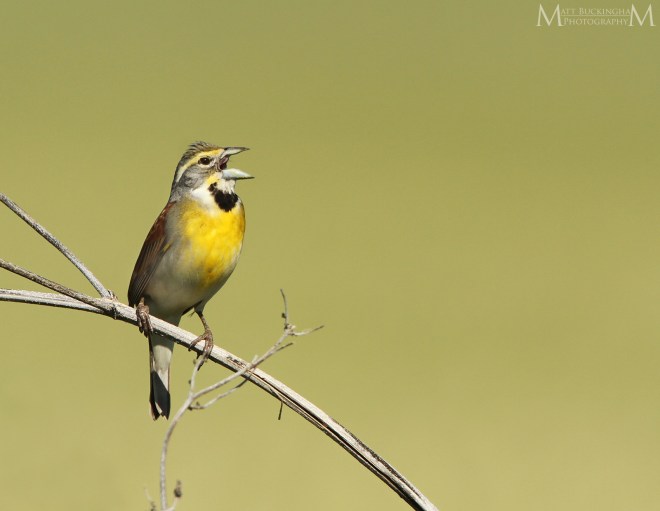
IMG_8541

Aquatic Milkweed

The Columbia Bottomlands are also home to a diversity of birdlife.  In the shallow waters of an ancient oxbow off the Brazos River we observed Anhingas, Great and Snowy Egrets, Great, Little Blue, Tricolored, and Green Herons, Yellow-crowned Night-Herons, White Ibis, Black-bellied Whistling Ducks, Common Gallinules, and more.  Prothonotary Warblers and Northern Parulas called from the trees lining the water’s edge and the call of a Barred Owl rang out in the distance.  Perhaps the most spectacular of all was the Purple Gallinule (Porphyrio martinicus), which dazzled us with its seemingly impossible sheen of iridescent blue and green.

IMG_8456

Purple Gallinule

In early July we found ourselves back on the coast.  This trip we spent more time on the beach and in the shops in Galveston, however we found ourselves in the saltmarsh of Galveston Island State Park during the final hour of daylight.  Here I struggled to capture images of Black-necked Stilts, Yellow-crowned Night-Herons, Roseate Spoonbills, and Scissor-tailed Flycatchers.  At the end of the day I found myself instead pursuing one of the most familiar coastal birds – the Willet (Tringa semipalmata).  Though common and by many accounts “drab”, I set out to capture an interesting image of these charismatic shorebirds.  I laid belly-flat in the mud and scanned the landscape to try and formulate a plan as hordes of mosquitoes drained my blood.  Soon, as I watched a Willet approach, I developed a concept in my head.  I framed the shot by turning my lens to an open patch of mud in front of me, and utilized the Salicornia and other halophytic vegetation in order to create a blurred foreground and background that I hoped would make the bird pop.  I lucked out as the bird moved into the frame and called out its displeasure, likely to my proximity to its nest or chicks I imagined.  And with some luck and patience, I captured the image below.

IMG_9246a

Willet

Each trip to the coast brings with it some new adventure and opportunity to witness a unique natural beauty not found elsewhere in the state.  It also offers some of our state’s best photographic opportunities, particularly for birds.  I look forward to many future trips, and hope that I may continue to document in some way the very special plants, animals, and natural communities that can be found there.

Rubber Duckies in the Longleaf

IMG_4486

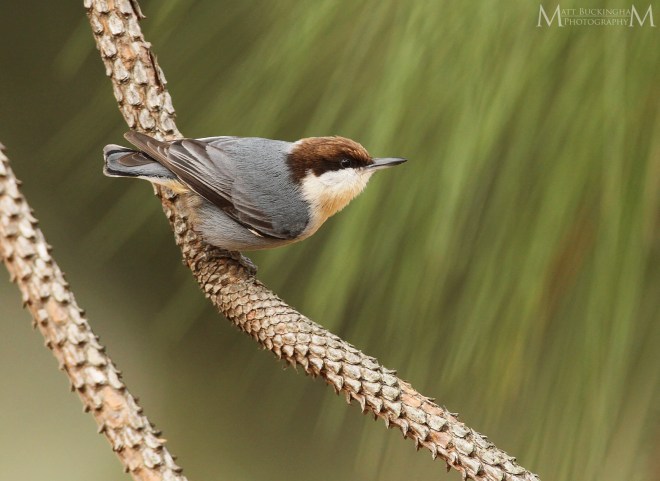
A Brown-headed Nuthatch perches on the branch of a Longleaf Pine

Dawn in the longleaf is a magical thing – as the first rays of light filter through outstretched needles, casting long shadows over broad expanses of Little Bluestem and Eastern Gamagrass.  The air is clean and still as the savannah comes to life.  First with the familiar calls of the Prairie Warbler and Indigo Bunting.  Occasionally the buzzy trill of a Bachman’s Sparrow and the drumming of Red-cockaded Woodpeckers sounds in the distance.  There is one sound, however, that seems strangely out of place.  I remember the first time I heard it; I found myself looking around to see if there was some dog wrestling with a chew toy.  It was a set of high pitched squeaks, generally occurring in pairs.  The best thing I could liken it to was someone squeezing a rubber ducky.

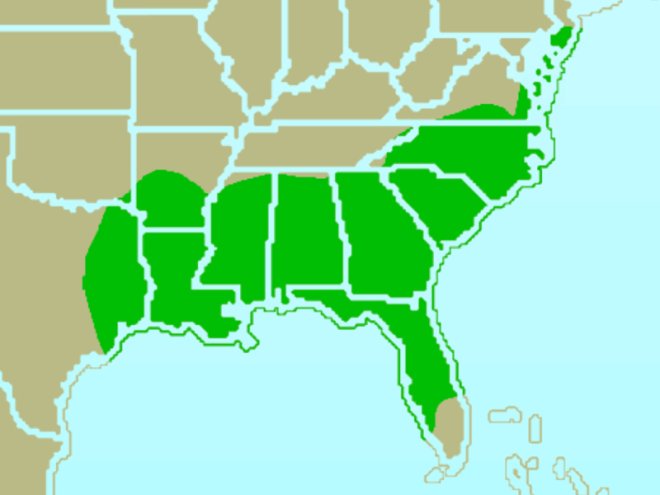
It was, of course, the song of the Brown-headed Nuthatch (Sitta pusilla).  This tiny songbird is an inhabitant of pine forests of the southeastern United States.  It’s range generally follows the coastal plain from the Delmarva Peninsula to East Texas.  Though it may be found in a variety of open pine-dominated woodlands, and even parks with scattered mature pines in the vicinity, it’s preferred habitat is the longleaf pine savannah.  This becomes clear when comparing the range of the nuthatch and the iconic southern pine.

Brown-headed_Nuthatch-rangemap

Brown-headed Nuthatch Range (Image from Wikipedia)

1024px-Pinus_palustris_range_map

Longleaf Pine Range (Image from Wikipedia)

Brown-headed Nuthatches are cavity nesters and may be secondary excavators (utilizing existing cavities and modifying them to their liking) or weak primary excavators (creating their own cavities in sufficiently soft parent material).  Males select the nest site, and generally prefer large standing snags.  They will, however, compromise, and I have seen them nesting in holes at joints in wooden fences.  They then line their cavities with soft materials such as feathers, dead grass, and pine straw.

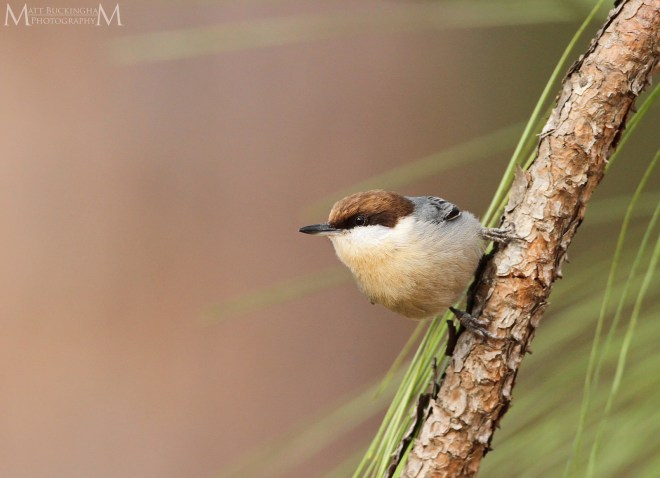
IMG_4267

A Brown-headed Nuthatch peers from its cavity

Nesting begins early in the year.  In East Texas they are often working on preparing their cavities by mid to late February.  A most interesting aspect of this nuthatch’s natural history is that it will often display cooperative breeding, a trait relatively rare among songbirds.  In a cooperative breeding system, offspring may remain in their parents’ territory for a year or more in order to help raise younger siblings.  These helpers will aid in defending territory, maintaining cavities, and gathering food for their altricial siblings.  This may be a benefit, evolutionarily speaking, as it allows these helpers to ensure that their genetic material persists by raising their siblings to maturity at a time when they themselves lack the strength and experience to pass on their genes the traditional way – by establishing their own territories, finding a mate, and successfully raising offspring.

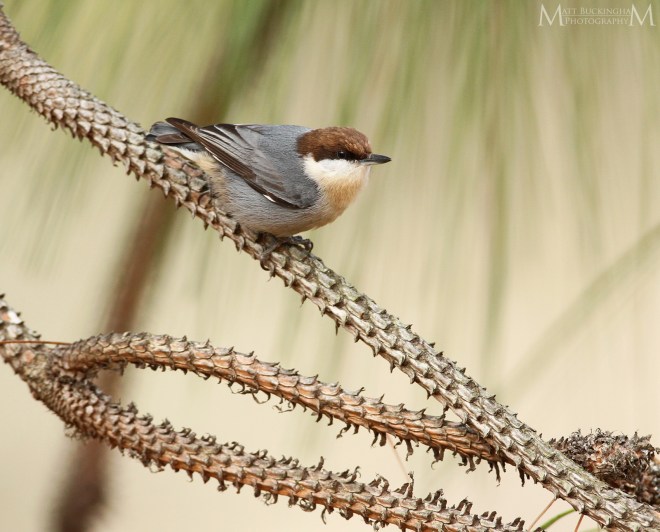
IMG_4359a

Brown-headed Nuthatch

Small invertebrates make up the majority of the Brown-headed Nuthatch’s diet.  They bounce from tree to tree, scanning the bark for any tasty morsel unfortunate to find itself in the tiny predator’s path.  They may glean insects from branches or use their narrow, piercing beaks to seek out spiders hiding in the cracks of the bark.  However these are no ordinary hunters.  Nuthatches have been observed utilizing tools, breaking off tiny flakes of bark with their beaks and using them as leverage to pry up larger pieces of bark in search of well-hidden pray.

IMG_4379

Brown-headed Nuthatch

Though they remain common in many areas of the southeast, the Brown-headed Nuthatch has not been immune to the widespread loss of longleaf pine savannahs and other mature pine-dominated habitats over the past two centuries.  The North American Breeding Bird Survey indicates a decline in detections along its routes of almost 25% in the past 50 years.  In East Texas they remain locally common in areas where large pines and open understories persist.  This is a species that may benefit from some forestry practices, such as prescribed burning, periodic thinnings, and leaving seed and shelterwood trees during final harvest.  As long as these sustainable practices are utilized, and large protected tracts of mature longleaf pine savannahs and other open pine-dominated woodlands remain, the outlook for this quirky, fascinating species in East Texas looks promising.

IMG_4492

Brown-headed Nuthatch

I photographed these special songbirds this spring with the help of my good friend James Childress, who set out in search of these birds with me and graciously lent me his 600mm lens.  Without the zoom and image quality of that lens, these photos would have never been possible.

Beach Tigers

Target Species: Eastern Beach Tiger Beetle (Habroscelimorpha dorsalis)

IMG_1363

A Tiger’s World – Eastern Beach Tiger Beetle

Sunday, August 5

I didn’t know what to expect, as we set out toward the coast.  We woke up late this morning, and I had no plans save to relax after a weekend of chores.  Carolina, however, had other plans, and presented me with an interesting idea.  She wanted to head down to explore the coast where Texas and Louisiana meet.  Outside a couple spring birding trips to the area over a decade ago, I had spent little time in that area, so I jumped at the idea.  By 11 am we were off.

This stretch of beach is actually the closest to our home, yet we always opt for the more obvious choice of Galveston Island and the Bolivar Peninsula.  The skies were gray as we made our way south on the Big Thicket National Preserve Parkway.  Just south of Woodville it began to rain, hard.  We wondered if this spur the moment trip would turn into a bust.  It rained almost until Beaumont, but stopped shortly after.  The storm left in its wake a thin veil of wispy clouds that dulled the sun’s rays.

We first made our way into southwestern Louisiana, and as we crossed Sabine Lake, a vast swath of coastal marsh came into view.  It was a beautiful thing to see, as Tricolored Herons, Roseate Spoonbills, Black-necked Stilts, and a wary Clapper Rail patrolled the roadside ditches.  We passed an American Alligator resting haphazardly a few feet from the shoulder of the roadway.  Before long we found a secluded stretch of beach and decided to sink our toes into the sand.

The coarse chatter of Royal Terns and Laughing Gulls filled the air as we scoured the beach.  I had no expectations for the day’s adventure, but that soon changed, when I saw a series of tiny blurs scatter before me.  There, where the gentle surf lapped at the sandy shore, I spied the Eastern Beach Tiger Beetle (Habroscelimorpha dorsalis).  This was a species on my list of biodiversity goals, and I came across it by the pure luck and happenstance of a spontaneous trip to the beach.

The first thing that struck me was the sheer number of them.  There were hundreds, the beach was literally crawling with them.  This is significant, I should note, as this species is rare and declining throughout its range.  They are dependent on pristine beaches and do not fare well in the face of human disturbance.  The northeastern subspecies (H. dorsalis dorsalis) has become so rare that it has been listed as a Federally Threatened species.

The reason it was so abundant here, I presumed, was that this particular stretch of beach was inaccessible to vehicles, and despite being undisturbed it was not particularly scenic, and therefore likely sees little human traffic.  In fact, we saw no evidence that anyone had been here for some time.

So I set out to photograph these little beach jewels.  Easier said than done.  The beetles were incredibly wary, and I couldn’t get close.  I did get one shot from above (the first image in this blog), which I think really communicates the natural history of this species.  It shows the beetle very small in the frame within a tiny patch of sand, likely no more than a few square feet.  Though seemingly minuscule to us, it is a vast landscape to the tiger.  They live out their entire lives on these tiny beaches, following the water’s edge with the ebb and flow of the tide, voraciously hunting down anything they can get their jaws around.  Even their larvae make their burrows in the sand just beyond the high tide line.

After several frustrating minutes I developed a strategy.  Ideally one would be armed with a 180 or 200mm macro lens and extension tubes to photograph such a tiny, elusive quarry.  Unfortunately I was only armed with a 100mm macro.  This meant I had to get close.  Very close – within a foot to capture the kind of image I was after. At first I tried belly crawling toward them, a strategy I have successfully used with other tigers.  They weren’t having it.  Any movement whatsoever sent them scattering.

They were so abundant here, that I thought to myself, what if I just lie in wait.  So I did.  Eventually they became somewhat accustomed to my presence.  If I could find a distant beetle moving in my direction and set it in my viewfinder, I could slowly change my focus as it moved closer and closer.  And so I had solved the problem of how to get close.  But before I could celebrate my victory, another problem presented itself.  On their endless pursuit of prey, they are constantly scurrying.  Tiger Beetles are, in fact, among the fastest organisms on the planet with respect to their body size.  I have read that they have to stop every second or so in order to reassess their surroundings, as they move so fast that they have trouble seeing the world around them when in motion.

But when they do stop, it is only for the briefest of milliseconds.  Not much time for me to adjust my focus.  And when shooting macro at this scale, focus is everything.  The beetles’ eyes and jaws need to be in focus to draw the viewer in.  So I ended up with dozens of shots that were just slightly blurred or had the focus just behind the eyes.  I was frustrated.  Then I saw a beetle that was moving much more slowly, stopping more frequently, and for longer.  And as luck would have it, it was coming my way.  Ecstatic, I fired away and captured a few shots in good focus.  It was only after I processed the image that I noticed it was missing the tarsus on one leg and had a large grain of sand on its mandibles.

IMG_1477

Eastern Beach Tiger Beetle

Though this hardened veteran of the Louisiana shore was interesting, it was not the image I was hoping for.  It’s hard to complain, however, when spending a day surrounded by such rare natural wonders.  I was getting nowhere fast with my efforts to photograph these beetles, so we spent some time combing the beach and swimming in the Gulf (despite the numerous warnings about bacteria levels).

That evening we crossed back into Texas and made our way to Sea Rim State Park.  Before heading back to the beach, we explored some of the surrounding marshlands.  Here we found a few Carolina Wolfberry (Lycium carolinianum) plants in bloom.  This halophytic (salt-loving) species occurs primarily along the coast of the southeastern U.S., with some inland populations in parts of Texas and Mexico.

IMG_1613

Carolina Wolfberry

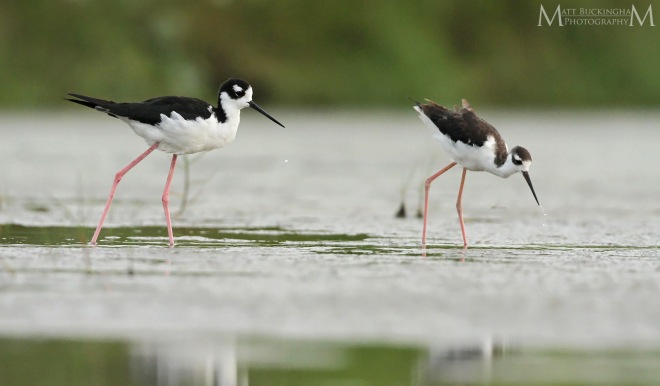
The scattered pools in the saltmarsh were flush with bird activity.  I set my sights on a group of Black-necked Stilts (Himantopus mexicanus) and laid on my side at the marsh’s edge.  The light was fading and the mosquitoes were relentless (seriously).  But I endured this discomfort to try to capture some images of these bizarre shorebirds.

IMG_1706a

Black-necked Stilts

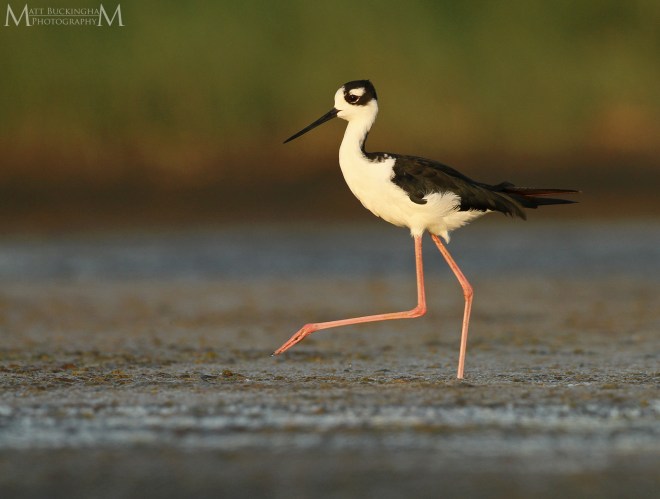
As I was photographing a distant group, a very vocal stilt flew in and landed close, apparently oblivious to my presence.  I was able to capture a few images before it wandered off to join the others.

IMG_1750ab

Black-necked Stilt

IMG_1766a

Black-necked Stilt

After photographing the stilts we went back to the beach, and I reveled in my own insignificance as I looked out onto the swaying waters of the Gulf.  We took to the water and enjoyed the day’s transition into dusk.  We then drove home, guided by the yellow lights of oil refineries that dotted the horizon like distant cities.  A sign of the times, I thought.

Friday, August 10

I still had tiger beetles on the brain as we made our way to Houston on this morning.  We had a meeting in the city, and had decided that afterward we would spend the remainder of the weekend on the coast.  After the meeting we drove to Port Arthur, checked into our hotel, and made our way back into Louisiana.  It was late afternoon when we arrived, and I was excited to once again try my luck photographing the beach tigers.

I laid down to try my proven technique once more, and soon encountered another problem.  While it was cloudy on my first attempt, today was sunny, and my head cast a broad shadow directly in front of me.  So now I had a narrow band of light on either side of the shadow that wouldn’t be too harsh or directional for photography.  I could have alternately tried to set up a flash system, but I decided instead to see if I could capture some images in natural light.

I had read that mating in the Eastern Beach Tiger Beetle typically occurred in the late afternoon and early evening.  It has been my experience that copulating beetles are much easier to approach, so I hoped I may be able to come across a mating pair.  After many failed attempts at single beetles I did find a coupled pair.  I managed to get a bit closer before the female finally shook the male off and they both scattered.

We spent the rest of the evening exploring the beach, the marsh, and a handful of scattered woodlots that no doubt hosted thousands of Neotropical migrant songbirds in the Spring.  On our drive back to the hotel the night sky was again interrupted with the distant lights of refineries, lighting up the night sky like dull orange stars.

IMG_2063

Copulating Eastern Beach Tiger Beetles

Saturday, August 11

Today we slept in a bit.  We spent the morning exploring the area around Port Arthur, and taking in the devastating toll that Harvey had on the residents of the region.  Such hurricanes, while undeniably tragic, are a normal occurrence which helped shape the natural communities of the coast. These systems evolved under the periodic disturbance of these strong storms.  This was evident as we drove through McFaddin National Wildlife Refuge, where the marsh looked as vibrant and healthy as ever.  I wondered how the tiger beetles weathered the storm, for their population certainly seemed as robust as ever.  Perhaps they too benefit from the storm’s aftermath in some way.

After exploring McFaddin and catching up with a friend from College who works the Chenier Plain Wildlife Refuge Complex, Caro and I made our way to Sea Rim.  Here driving is permitted on the beach, and I struggled to find beetles.  In fact, the only place where I found them abundant was in a small football field sized area closed off to vehicular traffic.  Here I found a few Habroscelamorpha dorsalis and several Coastal Tiger Beetles (Ellipsoptera hamata).  E. hamata is much larger and more approachable than H. dorsalis.  I found that my belly crawl technique worked well with them, and I managed to capture a few images.

IMG_2142a

Coastal Tiger Beetle

E. hamata occupies a broader range of habitats than H. dorsalis, occuring further into the dune and swale complex and salt flats adjacent to the beach.  The pattern of the maculations on their elytra are intricate and breath-taking when viewed close.  I watched them through my viewfinder, and smiled as the relentless Gulf breeze blew their antennae like errant strands of hair.

IMG_2149

Coastal Tiger Beetle

As the sun drew nearer to the horizon we set out to try our luck once more with the comically proportioned Black-necked Stilts.  Stilts have the longest legs relative to body size of any bird native to North America.  They can be found year-round on the Texas Coast.

IMG_2180a

Black-necked Stilt

IMG_2197

Black-necked Stilt

We returned to the beach when the sun was all but gone and the mosquitoes of the marsh had drank their fill.  We laid in the shallow water and watch as dusk painted the world.  The sand, the sky, the water, it all appeared the same hue of dull pink for a brief moment in time.  It was a fine end to a fine day.

Sunday, August 12

My original plan was to wake very early this morning and head out to the Marsh to capture some images as day broke.  The pillow had other plans for me, however, and we slept in until around 8:00.  I felt better as I looked out the window to gray skies.  The plan was to head back to southwest Louisiana for one last effort to photograph the Beach Tiger Beetle.  I still hadn’t captured “the one” – the image I was after.

It was still overcast when we arrived at the beach.  The Beach Morning Glory (Ipomoea imperati) was open.  These large, showy blooms open early and wither by mid day.   It is a plant adapted to the harsh conditions of the beach, and is primarily restricted to the sandy complex of dunes and swales adjacent to the shore.

IMG_2319

Beach Morning Glory

As I was made my way down the beach I caught site of the slightest hint of movement.  It was a juvenile Atlantic Ghost Crab (Ocypode quadrata)!  It scurried across the sand like a wispy cloud moving against a background of gray.  I had long wanted to photograph this ethereal beach dweller, but despite having seen many large adults, I could never quite get close enough for a good shot.  This juvenile, however, allowed me to approach close enough to capture it with my macro lens.

IMG_2342

Atlantic Ghost Crab

IMG_2360

Atlantic Ghost Crab

Satisfied with my Decapodean encounter, I moved to the water’s edge, where the Eastern Beach Tiger Beetles were hard at work, hunting and scavenging along the miniature wrack of shells and debris.  The light was good, and I settled in with my camera in hand.  Watching these remarkable insects through the viewfinder offered me a rare chance to capture a glimpse into their miniature world.  The subspecies in Louisiana and Texas is H. dorsalis venusta.  It is the smallest, and most boldly patterned of the H. dorsalis subspecies.

IMG_2391

Eastern Beach Tiger Beetle

It wasn’t long before they came scurrying in.  However, once again I found my 100mm macro to be a bit too short.  Capturing that perfect image was further complicated as I noticed that most beetles were thermoregulating in the relatively cool morning, keeping their bodies close to the ground wherever they stopped.  Not one to be dissuaded, I set out to make my best of the situation.  Unfortunately my camera had other things in mind, and as I was reviewing images I began to receive error messages from my card and camera.  Something was wrong, and several of the images had not recorded.

IMG_2416b

Eastern Beach Tiger Beetle

By this point my frustration had got the better of me, and I wondered if I just simply was not meant to photograph this beetle!  I went right away to download the images, and fortunately I was able to recover some of them.  In the end, the images I have included in this blog were the best I was able to get.  And while they may not be exactly what I had hoped for, I was happy with them.  I have since changed the card in my camera and it seems to be working fine.

With that, we left the beach and made our way north through western Louisiana.  The marsh in this part of the country is spectacular, and in some areas we could see a seemingly endless expanse of wetland grasses, sedges, and rushes.  I admired the subtle change in color and texture as broad stretches of Spartina grass were broken by pockets of Black Needlerush.  Eventually the marsh changed from saltmarsh to brackish to freshwater.  Before long we glimpsed our first oak trees, followed shortly by stunted pines.  And just like that, we were back in the Pineywoods, albeit the Louisiana side of things.

Tiger beetles are fascinating creatures, and photographing them can easily become an obsession.  Being so focused on getting the shot can sometime cause me to lose sight of the experience of being present in a place and moment of time.  Interestingly enough, however, by setting my lens on these bejeweled predators I was able to catch a unique glimpse into their captivating lives.  I watched as they stalked down and pounced on tiny flies, excavated burrows in search of some invertebrate prey, and tracked down mates.  Indeed, I can see myself returning at some point in the not too distant future to visit these voracious miniature tigers again.

Wandering through the Cross Timbers and Prairies: Part I

IMG_5938

Remnant Chalk Prairie

I must admit, the Pineywoods have always felt like a priority.  Beneath the towering trees is where I feel most at home.  It makes sense, of course, as it is my backyard.  It is where I spent my youth exploring, learning, developing as a naturalist.  But as more time passed, and I gained the means to do so, I came to realize that I didn’t have to limit myself so close to home.  In other words, what if my backyard were to get a lot bigger?

So I started branching out.  Carolina and I made occasional forays to the Edwards Plateau, to South Texas, to West Texas.  There remained one ecosystem, however, that I had left woefully unexplored – the vast prairies that dominated the northern part of the state.  I don’t mean the fingers of Blackland that reach into the Pineywoods, or the vanishing coastal prairies that I fought hard to protect years ago.  I longed to see seemingly endless expanses of prairie, with grasses and wildflowers stretching as far as the eye could see.  Places with names like “Grand Prairie”, that conjured up images of a land spectacular for its desolation, where trees would not hide the sun on its daily journey from horizon to horizon.  As is the story with so much of the state, such places have become rare.  Rare – but not lost.

So in late April Carolina and I decided to set out to explore this foreign land.  Being obsessed with our states natural history, many of the plants and communities we would encounter were already familiar to me.  We made our acquaintance over countless hours spent pouring over field guides, natural history books, inventories, and scientific papers.  But this would be my first time encountering so many of them in the flesh, so to speak.

We began our journey near the southern reaches of the Cross Timbers and Prairies, near where the Lampasas Cut Plains reach their northern extent.  Here we found remnant chalk prairies, some extensive with bare limestone outcrops and a bizarre flora that I was not accustomed to.  Perhaps the most prominent resident this time of year was the Purple Paintbrush (Castilleja purpurea).

IMG_5903

Purple Paintbrush

The dazzling array of color and diversity of plants on the chalk prairies was awe-inspiring.  Below the stately Prairie Penstemon (Penstemon cobaea) can be seen towering above Purple Paintbrush and Engelmann’s Sage (Salvia engelmannii).  The latter is a Texas endemic.

IMG_5913

Prairie View

We stayed in this special place as dusk took hold over the land and the moon shone in the skies above.

IMG_5954

Moon over the Prairie

We left as darkness enveloped the land and drove north into the heart of the Grand Prairie.  I had hoped that we might catch a glimpse of some crawling or slithering thing in the road in front of us, but the hour-long drive was uneventful.  We found a base of operations in a hotel in Decatur.  The next morning I rose an hour before dawn and as Caro caught some extra sleep I set out to try to capture some images in the early morning light.  Before the sun crested the horizon I captured the image below of Purple Paintbrush and Barbara’s Buttons (Marshallia caespitosa) in bud.

IMG_5982

Purple Paintbrush

I had no pre-conceived image that I was out to capture that morning; instead I planned to let my eyes wander, and hoped that the scene might present itself.  I enjoy this sort of photography, and it takes me back to part of what hooked me on photography in the first place.  These days I seem to always have a shot in mind, or some target that I’m seeking.  Sometimes it’s enjoyable to let the image find me for a change.  And so this large group of Missouri Evening Primrose (Oenothera macrocarpa) called to me, and I photographed them as the sun crested the horizon.  This classic prairie wildflower has huge flowers, and equally impressive fruits, which I unfortunately did not photograph.

IMG_5990

Missouri Evening Primrose – Chasing the Sun

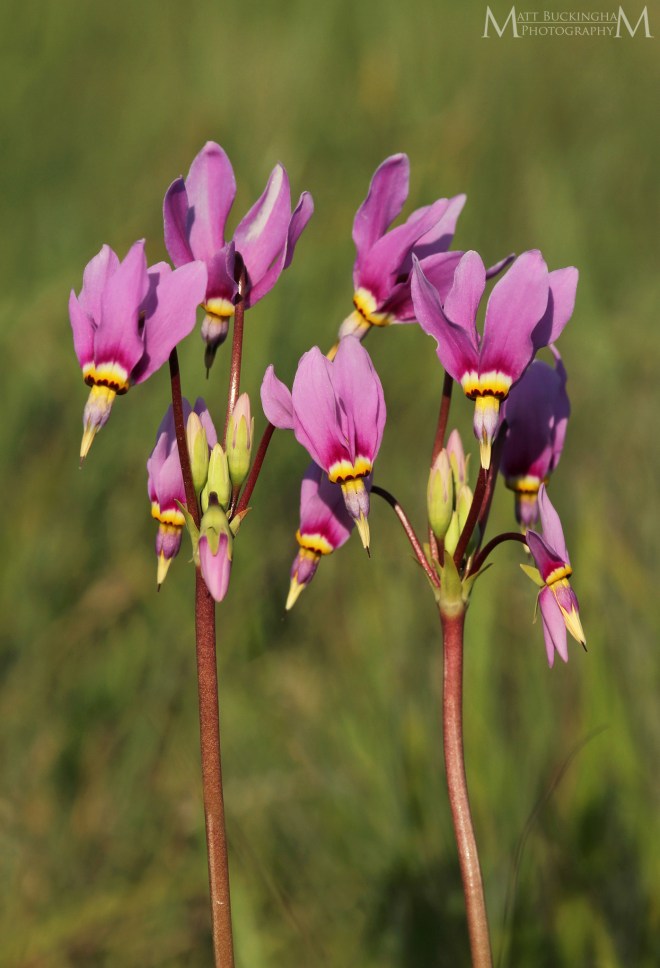
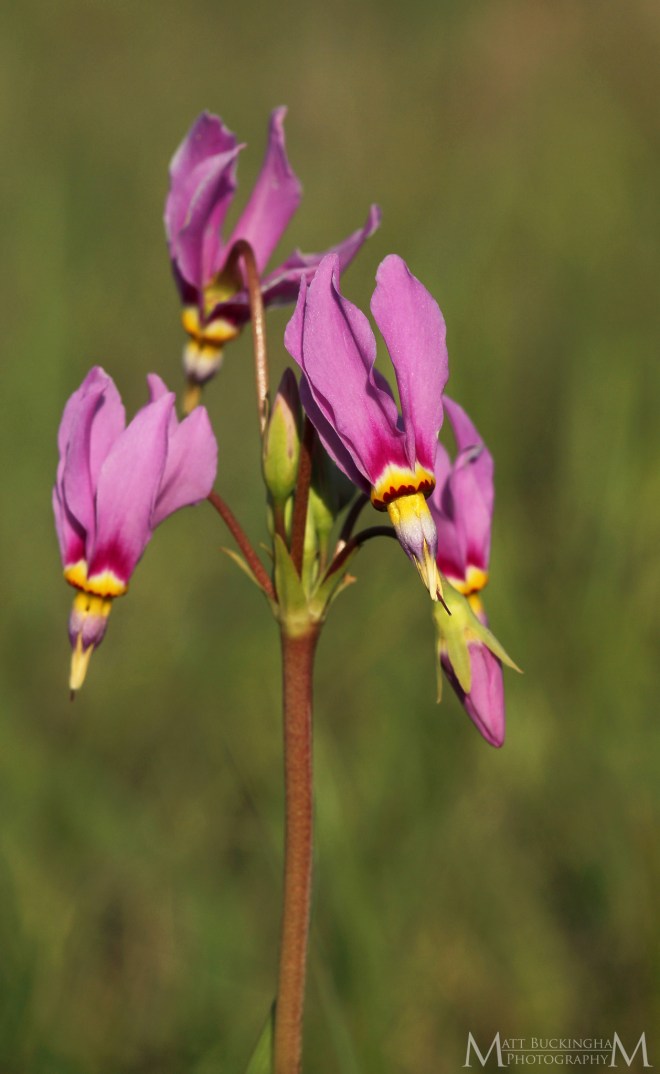
As the sun rose higher into the morning sky I returned to the hotel.  After breakfast, Caro and I set out to explore the Lyndon B. Johnson (LBJ) National Grassland.  Akin to the National Forests of East Texas, LBJ Grassland set aside parcels for multiple uses by the public.  Much of the area is suffering from the typical array of factors that result in the ecological degradation of prairies – encroachment by woody species due to a lack of cyclical disturbance such as grazing and fire – but we did find some areas where the prairie was still thriving.  It was in one such recently burned area that I caught a flash of pink.  It was a species I was very much hoping to see – the Eastern Shooting Star (Dodecatheon meadia).

IMG_6092

Eastern Shooting Star

As we explored the LBJ, we noticed several exposed limestone ridges.  It was here, I hoped, that I might find the Grooved Nipple Cactus (Coryphantha sulcata) and Beehive Cactus (Escobaria vivipara) in bloom.  While we were successful in finding both species, their fleeting flowers eluded us.  We were, however, rewarded with a fine consolation prize: several Missouri Foxtail Cacti (Escobaria missouriensis) in bloom.

IMG_6310

Missouri Foxtail Cactus

IMG_6326

Missouri Foxtail Cactus

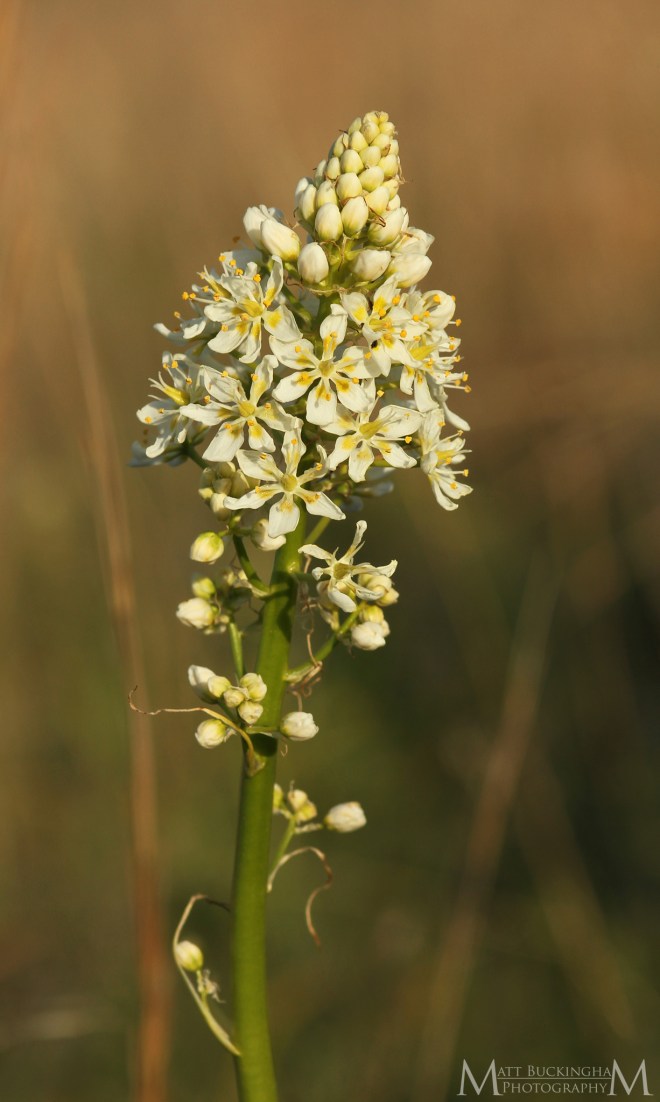
As the sun sank once more toward the horizon, we found ourselves on a high grassy ridge that overlooked a series of eroded canyons.  Here we found a large population of Nuttall’s Death Camas (Toxicoscordion nuttallii).  This species was on my 2017 list, and while I did find and photograph one individual the previous year, I found this prairie to yield a far more satisfying photographic experience.

IMG_6420

Nuttall’s Death Camas

IMG_6383

Nuttall’s Death Camas

Descending from the high ridge, we entered the fertile valley below.  Here we found interesting prairie plants like Buffalo Pea (Pediomelum cuspidatum) and Wright’s Skull Cap (Scutellaria wrightii).

IMG_6468

Buffalo Pea

IMG_6512

Buffalo Pea

As the sun retreated for the day, I returned to the ridge to capture some landscape images of the Nuttall’s Death Camas in the pink light of dusk.  It was a beautiful scene, which we breathed in under the darkening sky.

IMG_6553a

Death Comes to the Prairie

The next morning we rose early and pushed north toward the Red River, and deeper into the Grand Prairie.  As we were admiring the gently rolling terrain andorned with a mingling of prairie and woodland, a flash of pink once again caught my eye.  It was another group of Eastern Shooting Stars!  The Eastern Shooting Star is a species of open woodlands, glades, and prairie remnants in the eastern and central U.S. It reaches the southwestern extent of its range in the prairies and woodland openings of central Texas. Elsewhere in its range the blooms may be white, but in the Cross Timbers and Prairies they are deep pink.  In the Lonestar State, the Eastern Shooting Star occurs in remnant prairies and open woodlands in a few counties in the north-central and northeastern portions of the state, with a few isolated populations in similar habitats in the Edward’s Plateau.  It is among the most photogenic flowers I have ever put my lens on.

IMG_6578

Eastern Shooting Star

IMG_6586

Eastern Shooting Star

IMG_6608

Eastern Shooting Star

IMG_6649

Eastern Shooting Star

IMG_6715

Eastern Shooting Star

Growing near the shoting stars were several groups of Prairie Paintbrush (Castilleja citrina).

IMG_6680

Prairie Paintbrush

It wasn’t long before the sun rose high once again, and we had to be setting out on our return journey to the Pineywoods.  We opted to take a series of remote county roads to get back to the main highway.  All around the birds were active.  Lark Sparrows lined the fence rows while several Upland Sandpipers worked the fields on their northward journey to their breeding grounds.  Windows down, I could hear the incessant buzzy call of the Dickcissel.  I have never seen such a dense population of these grassland songbirds spread out over such a large area.  It seemed like every 100 feet or so a male Dickcissel had staked out his territory and was singing from some shrub or dried remnant of the previous year’s vegetation.  Despite the fairly harsh light, I couldn’t resist the opportunity to capture an image of one of these prairie treasures in full song.

IMG_6917

Dickcissel

Standing in some of these remnant prairies, it wasn’t hard to transport myself back in time.  To a time when the Tawakani and Wichita still made their home here, and vast herds of bison and pronghorn dotted the expansive plain.  In these moments it is easy to become frustrated and depressed at what was lost.  As I looked out at the swaying grass and palette of prairie wildflowers, I chose instead to focus on what we still have and ensure that it, too, does not become a story of what once was.  To learn what you can do to help protect native prairies visit texasprairie.org.

The Biodiversity of the Rio Grande Valley Part 1: The Birds

IMG_8914

Altamira Oriole

At first they appeared as flashes of brilliance – blurs of orange, blue, and green darting through the drab brush country.  It was when we sat still and silent that they revealed themselves to us.  A spectacular cast of avian characters emerged from the dense vegetation.  All around us Green Jays croaked and bobbed.  Plain Chachalacas switched between the earth and low hanging branches.  Only occasionally would an Altamira Oriole appear, descending from the tree tops for a brief moment, it’s bright orange plumage demanding our attention.  The trill of a Golden-fronted Woodpecker broke our concentration, competing with the Great Kiskadee for the loudest call in the thornscrub.

***

The Rio Grande Valley of Texas attracts birders from around the world.  A suite of characteristically Latin American species reach the northern limit of their range here.  This subtropical paradise is a naturalist’s playground.  Ecologically speaking, it shares more in common with Mexico than the rest of the Lonestar State.  When Carolina and I began discussing our South Texas vacation with our close friends James and Erin, birds were certainly one of the main targets that we planned the trip around.

Followers of my blog may remember previous posts where I talked about borrowing James’s 600mm lens for bird photography.  Fortunately another of my generous friends (and one of the finest photographers and naturalists that I know), Seth Patterson, offered to lend me his 500mm lens and teleconverters for the trip.  Though he is an excellent bird photographer, recently Seth is more focused on contributing to the “Meet Your Neighbours” project.  Armed with this new gear, James and I would be able to pursue our photographic targets at the same time, and wouldn’t have to worry about missing a shot.

This post contains some of the avian highlights of our trip, which spanned the diverse Lower Rio Grande Valley, from barrier islands and salt marshes, through ancient palm forests into the unforgiving Tamaulipan Thornscrub.

***

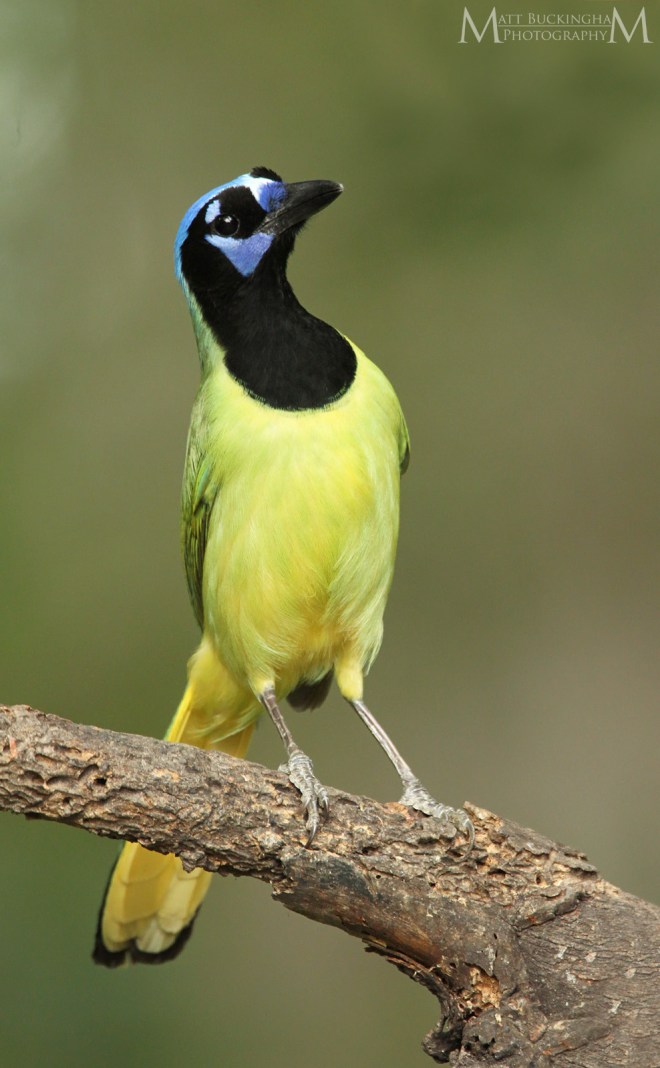
While there are many South Texas species on the top of birders’ wish lists, perhaps the most famous is the Green Jay (Cyanocorax yncas).  They range from southern Texas through Mexico into northern South America.  Intelligent, inquisitive birds, they are a common sight in the brush country.

IMG_8885

Green Jay

IMG_8876

Green Jay

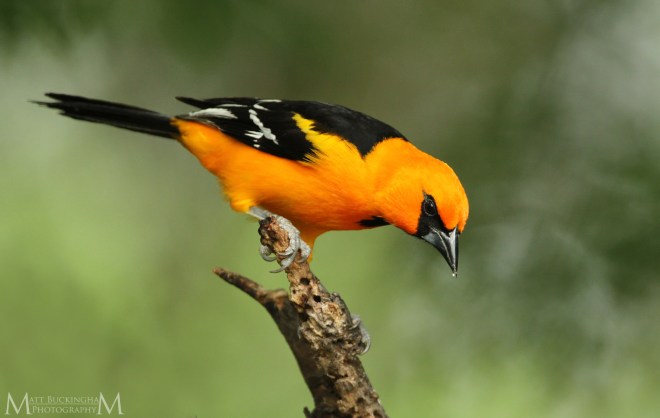
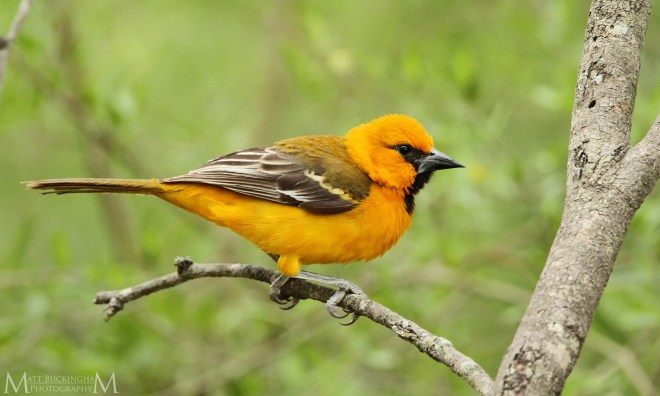
The Altamira Oriole (Icterus gularis) is the largest “true” oriole.  It takes these striking birds two years to attain their adult plumage, with first year birds being generally duller and lacking the bold black back and wings.  Altamira Orioles build pendant nests, which hang from tree branches.

IMG_8801

Altamira Oriole Adult

IMG_8316

First Year Altamira Oriole

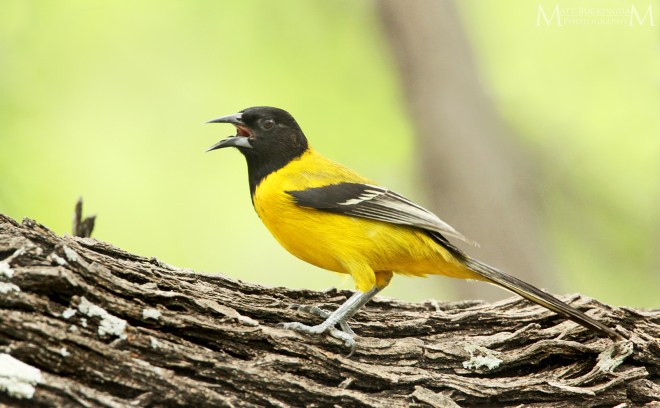
Smaller and less commonly encountered than the Altamira Oriole is the Audubon’s Oriole (Icterus graduacauda).  They too barely enter the United States in southern Texas.  The Audubon’s Oriole is poorly understood, with few data on their natural history.  What little data are available indicate that they may be on the decline, likely due to a combination of habitat loss and nest parasitism by increasing populations of Brown-headed Cowbirds.

IMG_0943

Audubon’s Oriole

Another species that South Texas visitors get excited about is the Great Kiskadee (Pitangus sulphuratus)  This boisterous flycatcher makes its home in resacas and riparian corridors.  I’ve been fortunate enough to observe this bird in South Texas, Costa Rica, and northern Argentina.  It certainly has one of the broadest ranges of any New World songbird.  Interestingly, both the English and Spanish names for this bird are onomatopoeas.  Kisk-a-DEE in English, and Bent-e-VEO in Spanish.  In Argentina it was locally known as “bicho feo” (ugly critter), both because this phrase also sounds like its call, and because its obnoxious vocalizations were enough to drive local communities sharing the Kiskadee’s territory crazy.

IMG_9091

Great Kiskadee

While enjoying an intimate view of the valley’s avifauna from the comfort of a bird blind, we witnessed an incredible moment.  The blind was especially productive, with several Green Jays, White-tipped Doves, Plain Chachalacas, Red-winged Blackbirds, and Northern Cardinals.  The occassional Altamira Oriole, Great Kiskadee, and Lincoln’s Sparrow would appear.  In an instant all of the birds scattered.  We could hear their wings cut through the still air as they vanished in a hurry.  The Plain Chachalacas (Ortalis vetula) retreated to some higher branches and began chattering furiously, sharply focused on the brush below.  It was at that moment that we noticed a series of small black blotches moving through the vegetation: the spotted pelage of a Bobcat as it slinked away, unsuccessful in its hunt.

IMG_8400

Plain Chachalaca vocalizing at a Bobcat

The Plain Chachalaca is a large chicken-like bird that skulks in the understory and forest floor.  They are social birds, generally found in small groups as they forage for fruits, seeds, and similar food sources.  Like the kiskadee, they are named for their raucous call.

IMG_8453

Plain Chachalaca

The White-tipped Dove (Leptotila verreauxi) also barely enters the United States in South Texas.  Though they are most frequently observed foraging on the ground in the shade of the dense underbrush, they would occasionally perch on low-hanging limbs.

IMG_8533

White-tipped Dove

Ranging deeper into the United States than the previously mentioned species, the Black-crested Titmouse (Baeolophus atricristatus) none-the-less, is one of the more range-restricted species that we observed during our trip.  It occurs from central Mexico through central and western Texas to extreme southwestern Oklahoma.

IMG_9216a

Black-crested Titmouse

The Ladder-backed Woodpecker (Picoides scalaris) is much more widespread, occurring throughout much of Central America and the southwestern United States.  Pictured below is a male, identifiable by its red crown.

IMG_1140

Ladder-backed Woodpecker

Travelling west into western Hidalgo and Starr Counties, the landscape begins to transition from forested brushland to a mix of thornscrub and desert scrub.  Here we were serenaded by Cactus Wrens (Campylorhynchus brunneicapillus) as we looked for the succulent plants that lend this large wren its name.  Erin spotted one particularly cooperative individual that sat atop the developing buds of a prickly pear and sang for several minutes.

IMG_9629

Cactus Wren

The ubiquitous Northern Cardinal (Cardinalis cardinalis) is ever-present in the valley.  I remember on a previous trip, 10 years ago or more with my family, a couple from western Canada excitedly proclaimed that they had just seen one of the “red jays”.  It was one of the birds they were most excited to see during their trip.  It’s easy to take the common birds for granted, but the Northern Cardinal really is a beautiful species.  The generally duller female has a subtle beauty that makes for a fine image.

IMG_8613

Northern Cardinal

Resacas are shallow ponds and wetlands that dot the landscape of the Lower Rio Grande Valley, most of which have formed in old oxbow scars of the Rio Grande.  The term “resaca” apparently originated from a corruption of rio seco, Spanish for “dry river”.  It also means hangover (at least in Argentina).  These Resacas are home to a variety of interesting bird species.  Green and Ringed Kingfishers fish from their banks, and Least Grebes and Masked Ducks breed here.  They are also an important habitat for wintering waterfowl.  We observed several species of duck here, including Cinnamon Teal (Anas cyanoptera), Green-winged Teal (Anas carolinensis), and Northern Shovelers (Anas clypeata).

IMG_1546

Cinnamon Teal

IMG_1770

Green-winged Teal

IMG_1873

Northern Shoveler

James and I spent one morning on our bellies in the tidal flats along the Gulf of Mexico.  We took advantage of the calm, shallow water to photograph foraging shorebirds and wading birds.  There were also large groups of Laughing Gulls, Royal Terns, and Black Skimmers Present.  After a while I had sand all over everything.  All over me, all over my camera.  So many grains of sand became trapped in the buttons of my camera that the shutter button became stuck in a depressed position.  As soon as I turned the camera on it would begin firing in rapid succession.  I was unable to change any settings.  Unfortunately as a result I missed some opportunities for shots of Marbled Godwits and a few other species.  Fortunately I was able to capture a few images prior to this malfunction, like this Short-billed Dowitcher (Limnodromus griseus) on the hunt for invertebrates.

IMG_7046

Short-billed Dowitcher

Perhaps my favorite of the long-legged wading birds, the Reddish Egret (Egretta rufescens) is an uncommon species that appears to be on the decline.  They are closely tied to coastal habitats, and most population estimates put the number of birds at less than 10,000 pairs globally.

IMG_7091

Reddish Egret

These handsome birds put on a truly spectacular show as they forage in the shallows.  They are famous for their graceful, acrobatic hunting technique. They seemingly dance upon the shallow water, running, turning, and waving their wings in a way that seems at the same time chaotic and choreographed. This technique startles small fish in the shallows, and the egrets will then cup their wings over their head to shade out the sun so that they may more easily spot their quarry.

IMG_7175

Reddish Egret oh the hunt

Fortunately, with the help of a needle and some compressed air, I was able to get the sand out of my shutter button, and captured many memorable photographs during our short time in the valley.  While we observed many spectacular landscapes and organisms on our trip, our time spent with the birds was truly special, and I’ll always cherish the memories of chasing after them, camera in hand.

How To: Bluebird Photography

IMG_3828a

Eastern Bluebird Male

For the past several years I’ve been collecting images for a book I hope to publish on the natural history of the Pineywoods.  I have set out to capture images of species both common and rare, and those unknown and iconic.  Some of our more iconic birds, however, can be difficult to capture in a natural setting.

Take one of our most iconic American birds, the Eastern Bluebird (Sialia sialis), for example.  This member of the thrush family can be found open areas, such as pastures, fallow fields, rural residences, golf courses, etc. provided that there are at least some trees in the vicinity.  They are most often seen perched on fence posts, telephone wires, or similar human constructs.  For my book, however, I wanted to capture them in a setting that would mimic their habitat prior to human settlement.

Before I get into how we went about creating the images, I would like to share a little information on my subject.  The story of the Eastern Bluebird is a long an interesting one, filled with ups and downs. Historic accounts indicate that as the first settlers pushed into the bluebird’s habitat they were restricted to open pine savannahs, mature woodlands with open understories, prairie inclusions within broader expanses of forests, and similar habitats. The bluebird likely benefited from the these early settlers, as they cleared small patches of forests, resulting in an increase of the open habitat preferred by the birds.

Bluebirds are secondary cavity nesters, meaning that they nest in cavities that have already been excavated by primary cavity nesters like woodpeckers. Historically they would have selected abandoned tree cavities. Unfortunately for the bluebird, in the late 19th century two invasive cavity nesters, the European Starling and the House Sparrow, were introduced from the Old World. They quickly proliferated and outcompeted native Bluebirds for cavity sites.

As the 20th century wore on land conversion continued, and in increased urbanization eliminated the habitats that the bluebird, and so many other species depend on. The one-two punch of habitat loss and competition from the invading cavity nesters caused a sharp decline in bluebird populations, until by the 1970s naturalists noted that they had become exceedingly scarce.

Around this time bluebird boxes began to gain in popularity, and landowners who were enthralled by the striking beauty of the little thrushes established “bluebird trails” on their property. Bluebird boxes are crafted in a way that they are unsuitable for use by European Starlings. This, coupled with increased environmental awareness and regulations enacted to protect native wildlife, has resulted in a steady increase in bluebird populations. Today this iconic species is once again a common sight throughout much of the American countryside.

Armed with the knowledge of their historic habitat, James and I set out to capture them in a naturalistic setting.  James has a large group of bluebirds that utilize the bluebird trail around the cabin on his ranch.  We looked around the area for ideas to create suitable natural perches, and came across a Shortleaf Pine (Pinus echinata), its branches laden with pine cones.  Similar to its cousin the Longleaf Pine, shortleaf often occurred in open, occassionally savannah-like uplands alongside scattered oaks and hickories.  I speculate that in their old growth condition, these forests would have been ideal Eastern Bluebird habitat.

So we selected some prime looking shortleaf boughs and fastened them to the back of the bluebird boxes and adjacent fence posts.  We then set up a portable blind and waited.  Once again James lent me his Canon 600mm lens.  A note on the photo below, following our photo session I forgot to take an image of the setup, so I asked James to grab one for me the next time he was at his property.  When he set out to do so he realized that his cows had pulled down all of our perches.  He set them back up the best he could, and the setup in the image is essentially the same as the one we used to capture the image.

Bluebird Setup

Bluebird Photography Setup

We waited for some time before the male bluebird came in to check on his box.  Almost immediately he landed on one of the perches.  Excitedly I rattled off a series of shots and as soon as he had arrived, he hopped down to the fence.

IMG_3745

Eastern Bluebird Male

Ecstatic that our idea had worked so effectively, we anticipated that any moment he would hop back up onto one of the perches for more opportunities, but instead he just sat on the fence.  Occasionally he went to examine his nest box, but soon returned to the fence or to forage on the ground nearby.  After a while a female and a few of last year’s offspring showed up.  They were much more willing to land on the perches than the showier mature male.

IMG_3784

Eastern Bluebird Female

Eventually he did return to some of the perches, each time providing us a few seconds to try and craft an image.  Though a setup like this requires a lot patience and downtime in the blind, ultimately it paid off with the type of images I was seeking.  If we can find a way to keep the cows from pulling down the perches, I think these limbs can also provide some benefit to the bluebirds.  Perhaps they will provide a better means to survey their territory, and attract invertebrates to provide an easy meal to their future offspring.  Either way, I’m happy for the opportunity to provide a glimpse into what the life of the Eastern Bluebird may have been like before the hand of man changed the landscape forever.

IMG_3909a

Eastern Bluebird Male

Back to my Roots: Fun with Bird Photography

IMG_9871

Blue-winged Teal

It was birds that first sparked my obsession with photography some 15 or so years ago.  I remember my excitement when I finally got a 3.2 megapixel camera with a 10x optical zoom, when digital cameras were still in their infancy.  Over the next few years I would receive my first digital SLR from my parents, which opened up a whole new world of photographic opportunities, followed shortly by a canon 100-400mm zoom lens.  I spent a lot of time photographing with that lens, and made some images that still rank among my favorites.  But over the years I began to branch out, and learned that photographing less erratic subjects, like reptiles and amphibians, wildflowers, and landscapes, while challenging in its own right, was much less frustrating than bird photography.  It was easier to get “the shot”, as I could control most aspects of the subject, and executing the shot fell largely on my skills as a photographer.  With birds, while one still must rely heavily on skill, we are at the mercy of our flighty subjects.

So bird photography took a back burner.  While I enjoyed the 100-400mm lens, it just didn’t produce the high quality images that I wanted on a regular basis.  Conditions had to be just perfect, and the subject extremely cooperative to get the type of shot I was after.  I honed my macro and landscape skills, and only occasionally returned to my feathered friends.

While I couldn’t say that I like birds more than flora or herps, it is true that in my professional career I have more experience with the Class Aves than any other group.  For my Master’s I studied the avian communities of Iguazú National Park in northeastern Argentina, where I would meet my future wife, Carolina.  I have also studied Snowy Plovers in the salt lakes and playas of the Texas Panhandle, and the rare and declining avifauna of the saltmarshes of the Delmarva Peninsula.  So as bird photography, and coincidentally birdwatching began to vanish from my life, it felt like I was left with some void.

As luck would have it, right around Christmas my good friend James Childress lucked into a fantastic deal on a very lightly used Canon 600mm.  In my book this is THE bird photography lens.  It is the lens that the pros I admired used.  It is the lens I always dreamed about but thought I would never have.  One thing that you need to know about James (and his wife Erin) is that they are extremely generous, and value shared experiences and good times over personal possessions.  Being that James and I spend a great deal of time in the field exploring and photographing together (he often credits (blames?) me for his own obsession for nature photography) , he told me that he would like me to help him test out the lens.  I was, of course, honored and overwhelmed at the thought of this dream come true.

IMG_3015

James with his new lens

Wanting to be a good friend, I not-so-reluctantly obliged to James’s generous offer.  So we set out to test the capabilities of the new lens.  While I will only be posting my images in this blog, I HIGHLY recommend that you check out James’s Flickr photostream (click here).

We took a weekend trip to the coast, where we first found several Ring-necked Ducks (Aythya collaris).

IMG_9433

Ring-necked Duck

IMG_9623

Ring-necked Duck

I was supremely impressed with how the lens captured the handsome diving ducks.  But wondered how it would work on smaller, more active birds.  I would soon get my chance.  It’s hard to imagine a bird much smaller or more active than the Ruby-Crowned Kinglet (Regulus calendula), but the lens captured it beautifully among the Spanish Moss draped on an old Cedar Elm.

IMG_9775

Ruby-crowned Kinglet

Just because I was growing interested in birds again doesn’t mean I was about to neglect the other photographic subjects I had grown so fond of.  We found this huge River Cooter (Pseudemys concinna) basking on a cold day.

IMG_0038

River Cooter

I was amazed at how well the lens captured the ambient light.  I opted for a low angle on this Common Gallinule (Gallinula galeata) to help isolate it from the wetland plants it was sheltering among.

IMG_0131a

Common Gallinule

Perhaps the highlight of our weekend trip to the coast was observing several American Bitterns (Botaurus lentiginosus).  Though they are quite large, these are very cryptic birds, and can be hard to isolate from their surroundings.  Thanks to the focal length and low aperture capabilities of this lens, however, getting this master of camouflage to pop was easy.

IMG_0337

American Bittern

We also tried our hand at capturing some in flight images along the Gulf of Mexico.  Admittedly, with the extreme focal length this was a bit challenging, however we soon began to get the hang of it and honed our skills on dozens of Black Skimmers (Rhynchops niger) that patrolled just off shore, skimming the shallows with their specially adapted lower mandible.  When it feels a fish it snaps shut with lightning-like speed, trapping a meal for this unique member of the gull family.

IMG_0754a

Black Skimmer

Nearby we saw waves of American White Pelicans (Pelecanus erythrorhynchos) coming in to roost.

IMG_1016

American White Pelican

As the tide began to creep in we spotted a group of small shorebirds bouncing around in the sand.  Among the mixed species group were a few Snowy Plovers (Charadrius nivosus), the species I had spent a summer collecting data on in the Panhandle.  The lens allowed us to create images where the foreground and background seemed to blend together.

IMG_1133a

Snowy Plover

Still reeling from the success of our trip to the coast, James and I wanted to try the lens out on our home turf.  So we spend several days exploring his expansive property in Angelina County, and documenting the birds as best we could.  I captured this American Goldfinch (Spinus tristus) on a frigid morning, when puddles from recent rains froze solid and frost clung to the leaves.

IMG_2035

American Goldfinch

I shot this Great Egret (Ardea alba) at a local park.  I couldn’t believe how far away from this bird I had to be to get the entire animal in the frame.  And even at a distance, the level of detail that the 600mm captures is astonishing.

IMG_2153

Great Egret

Back at James’s farm we spend some time strolling through the woods in search of resident and wintering birds.  Though they are common, I have always wanted to capture a good image of a Blue Jay (Cyanocitta cristata).  I think they are beautiful, and they are iconic woodland birds.  I captured this one as it called from a branch that was swaying in the breeze.  Utilizing high speed continuous shooting, I was able to catch it as the branched swayed away from the twig in the foreground, providing a clear shot at the bird.

IMG_2320

Blue Jay

I’m quite fond of this shot of a Tufted Titmouse (Baeolophus bicolor), another familiar bird of the eastern United States.

IMG_2794

Tufted Titmouse

This Chipping Sparrow (Spizella passerina) was one of a large group foraging on seed near James’s cabin.

IMG_3049

Chipping Sparrow

As we were wandering through the woods we saw and heard a Hermit Thrush (Catharus guttatus) foraging in the underbrush.  We found a spot to conceal ourselves as best we could and waited for over an hour while the bird teased us by flitting back and forth through dense vegetation before us.  Unable to get a clear shot, we were about ready to give up when it hopped out onto a large vine in the open.  Remarkably it sat still on this perch long enough for both James and I to take several shots.  See one of James’s photos here.

IMG_2937

Hermit Thrush

While we were busy photographing the songbirds, we heard a haunting call ring out above us.  It was a Barred Owl (Strix varia).  We came to realize that there was a pair in the treetops around us.  I struggled to get a clear shot until one of the owls flew and provided me a relatively unobstructed view.

IMG_2512

Barred Owl

Carolina and I are lucky to have friends like James and Erin Childress.  I know that James will make good use of his new lens, and look forward to spending many more hours with him in the field capturing images of the natural world we both love so much.