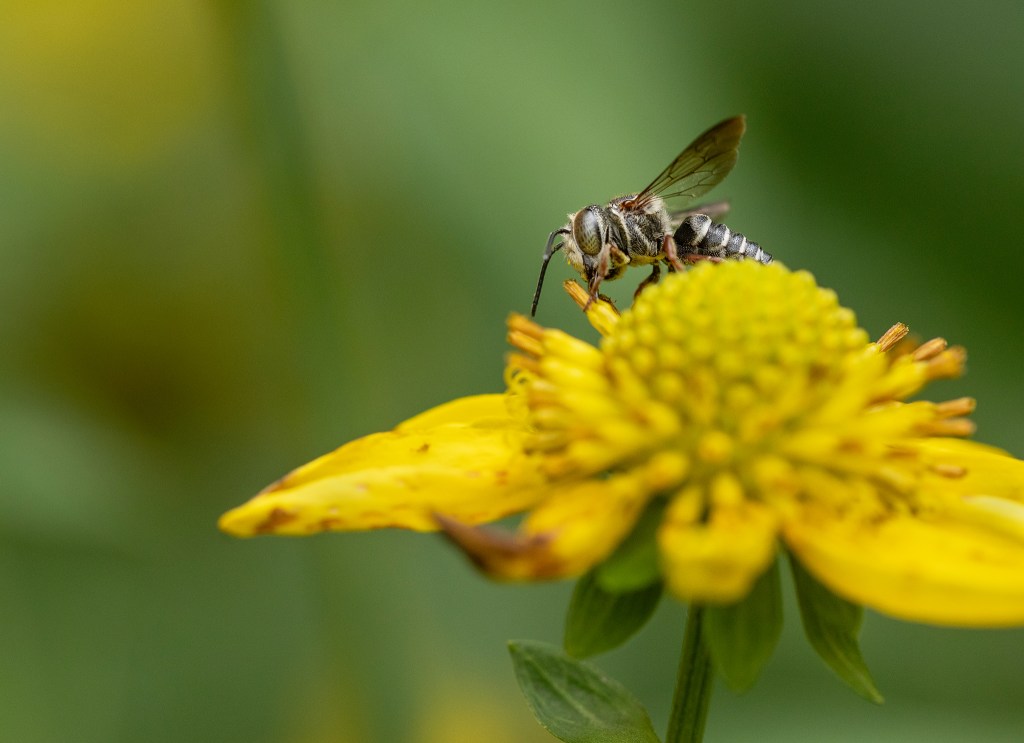
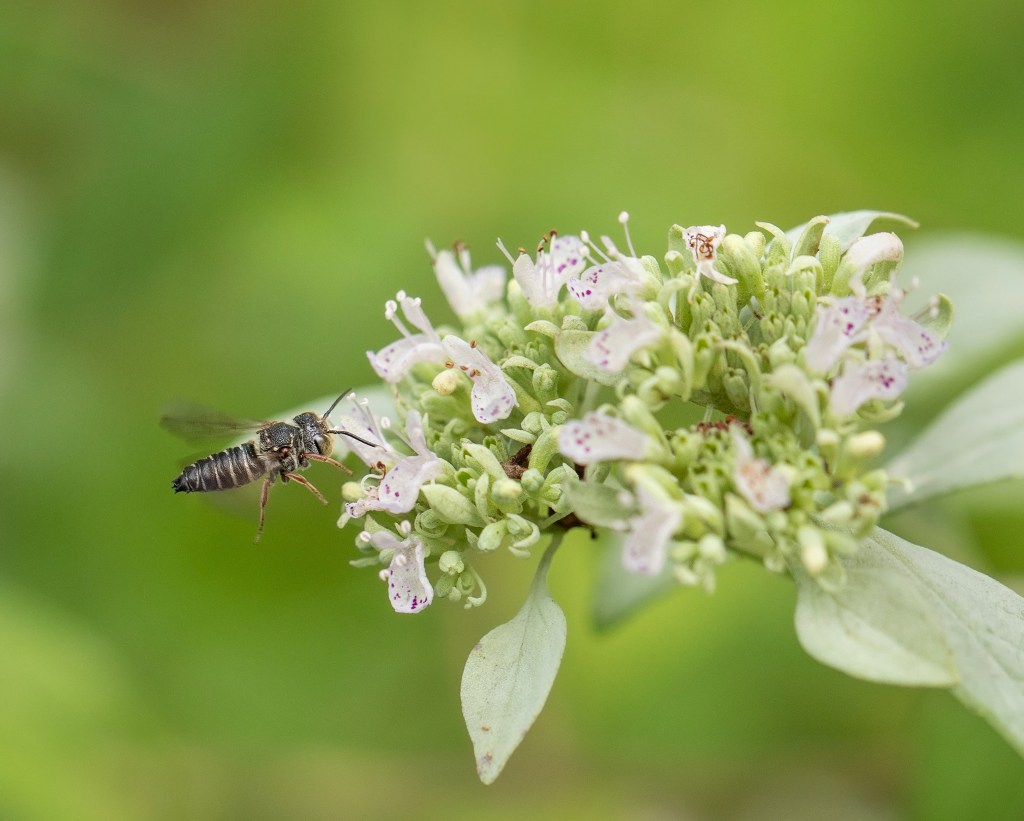
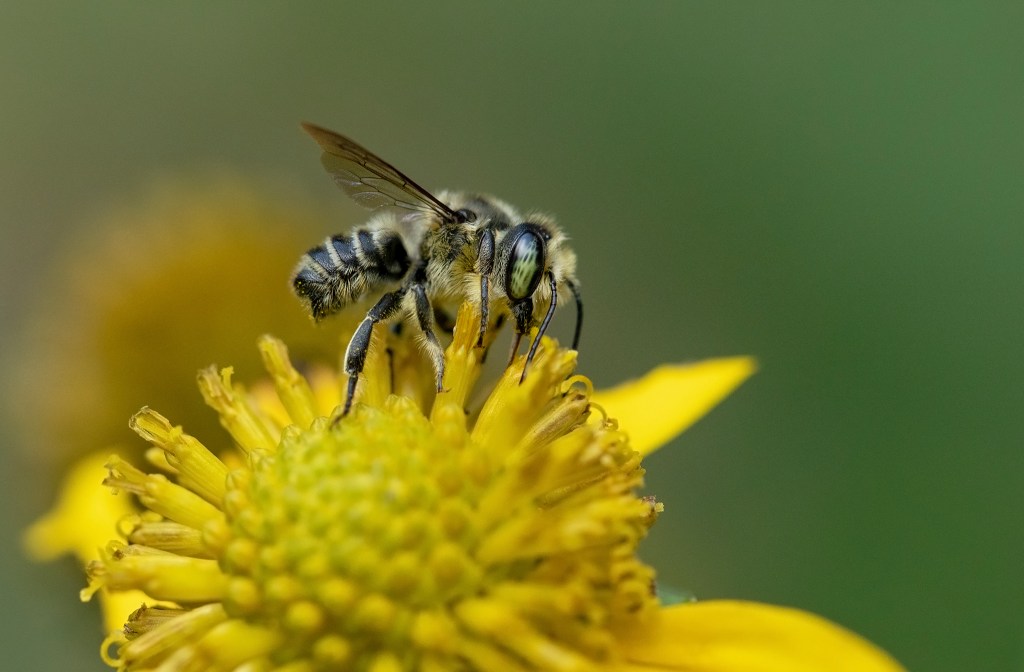
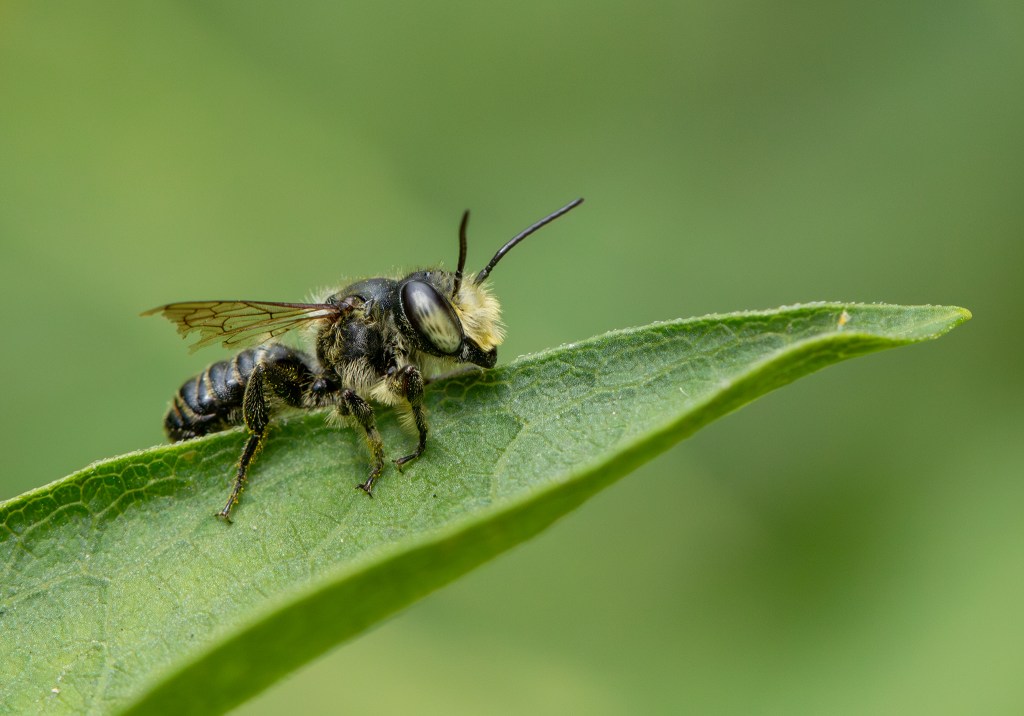
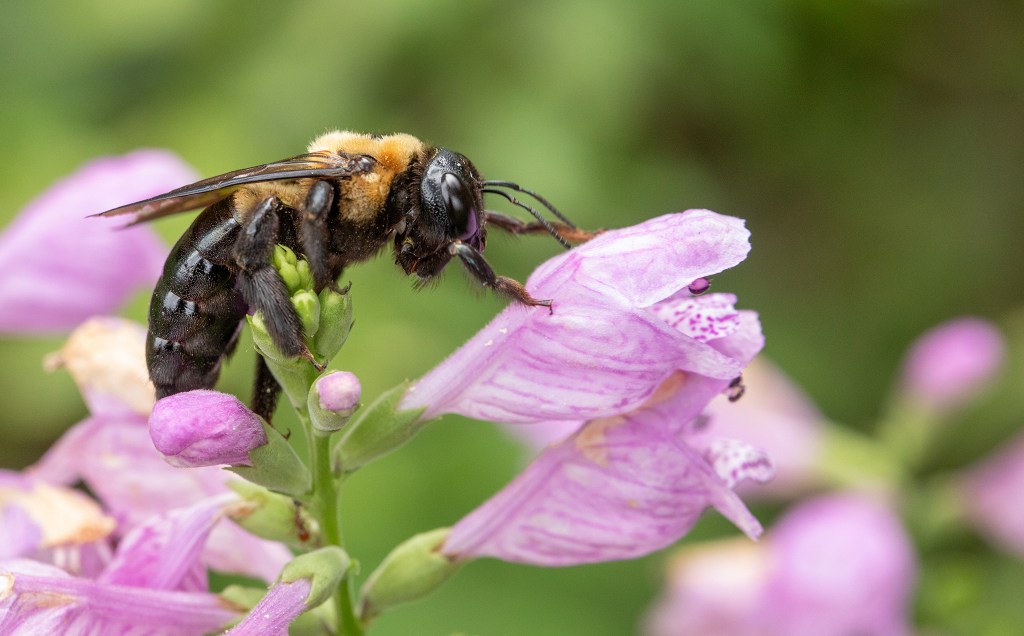
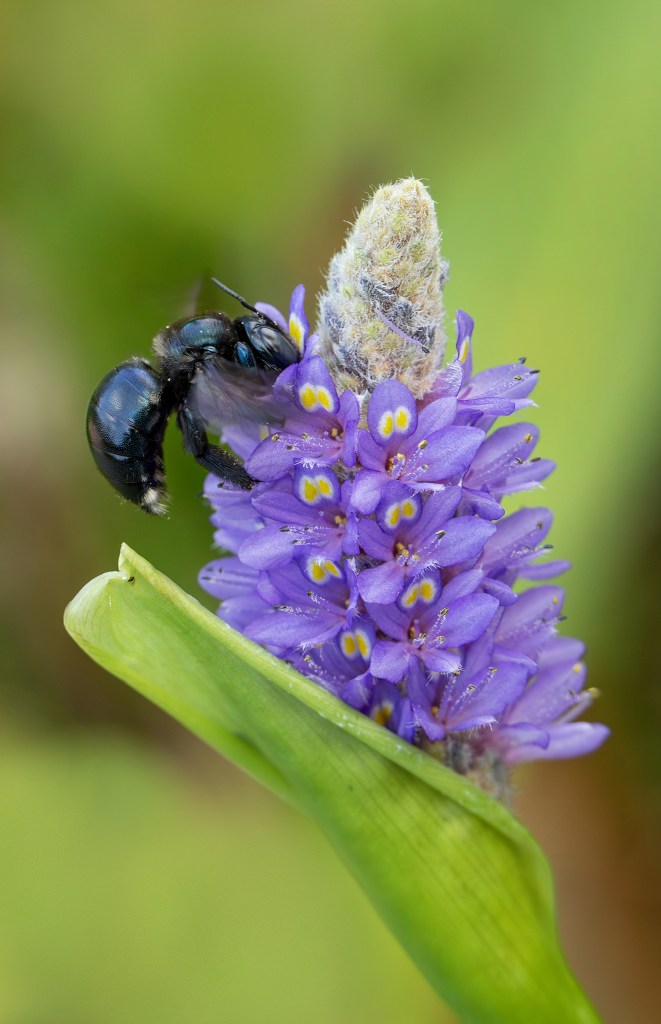
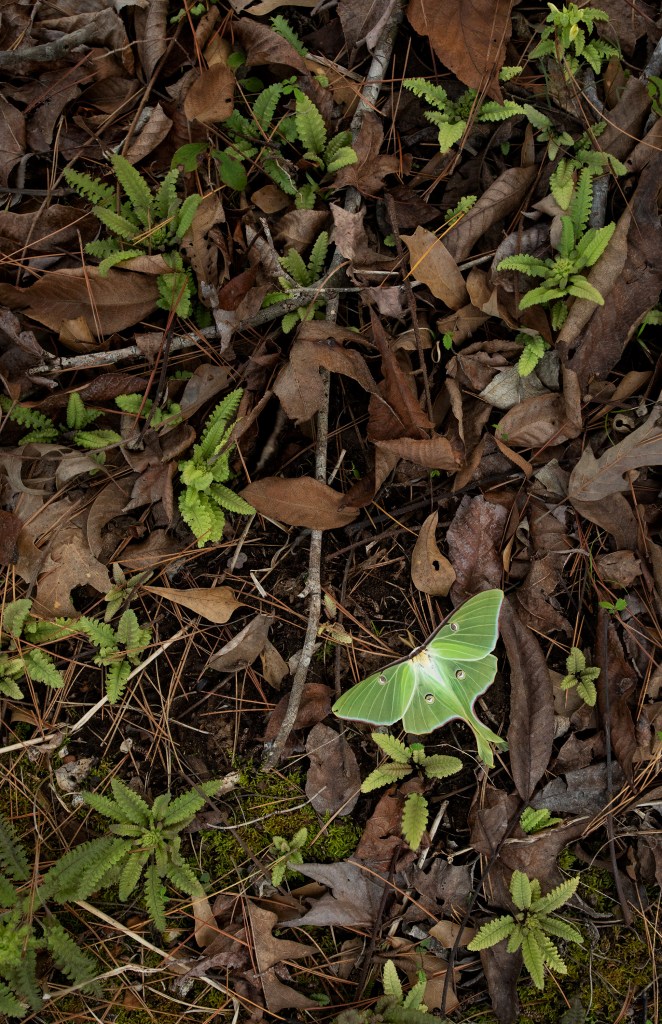
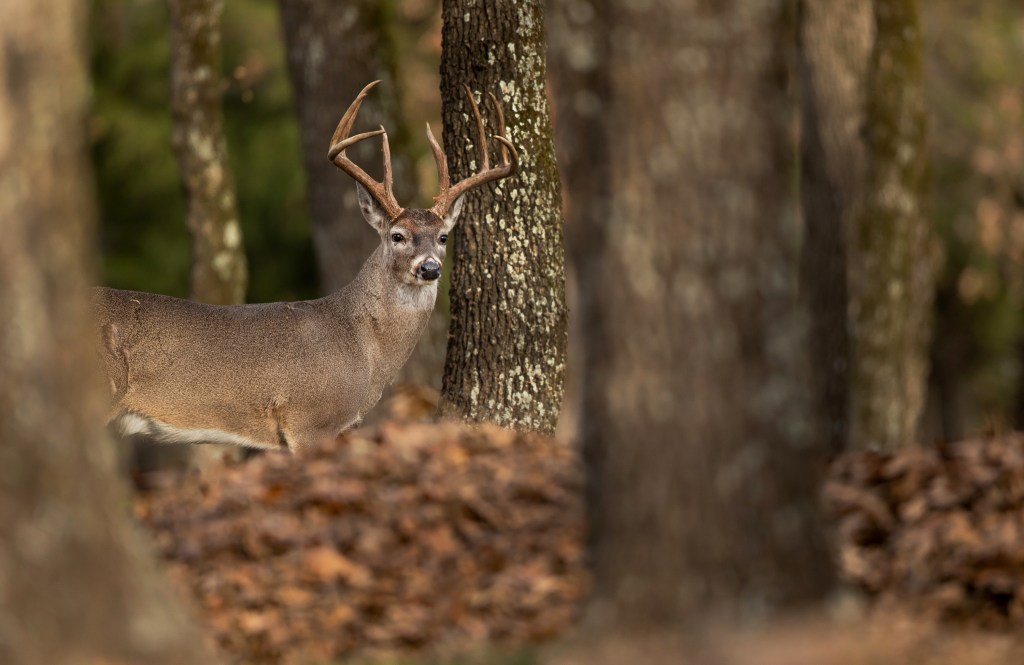
Top 24 of 2024

2024 was a significant year for my little family. In February I embarked on a new chapter when I started a position with the U.S. Fish and Wildlife Service working with protected species in east Texas and beyond. It was a really hard decision to leave the Texas Department of Transportation. I really came to love my little team of biologists, and that job brought me more joy than I ever thought it would. But it was the right move for my career and my family, and the new position has been fantastic. In 2024 we were also able to bring our son to Argentina to meet my wife’s side of the family for the first time. It was truly a gift to watch him interact with his abuelos, tios, y primos. While there, we were also able to experience wild places and biodiversity, and I managed to sneak in some photography that resulted in dozens of images I was really happy with.

This past year was especially productive photography wise. I started the year focusing on common native plants close to home, capturing species that I normally might overlook. This resulted in several images I really liked, but none made this short list. I spent most of the summer and early fall focusing on native pollinators and the biodiversity of insects and arachnids in our native garden and a variety of wild places nearby. This was a really fun project for me, and I managed to photograph dozens of new species, many of which I had no idea existed until I tried identifying them from the photos. Some of these images did make this list, including a number that I have not yet shared to social media.

I capped of the year with our family trip to Argentina, where I reconnected with family and with wildlife and landscapes that I hadn’t seen in over 10 years. It felt great to be back, and I created so many images I was incredibly happy with that it was hard to narrow them down to just a few. I came back a couple of weeks before the rest of my family, and took the opportunity to spend some time camping along and photographing the white-tailed deer rut in northern Texas. It was perhaps my most productive year yet photographing whitetails, which I think it’s safe to say have become my favorite photographic subject.

I hope you enjoy viewing the 24 images below, presented in chronological order, as much as I enjoyed capturing them. Every year I am more and more inspired by the natural world. There is so much beauty, diversity, and fascination to be found by those willing to explore it.

Please note that the blog initially shows images brighter and less contrasty than they are. To see the best version of each image, hover your cursor above them for about a second.

Moral Support

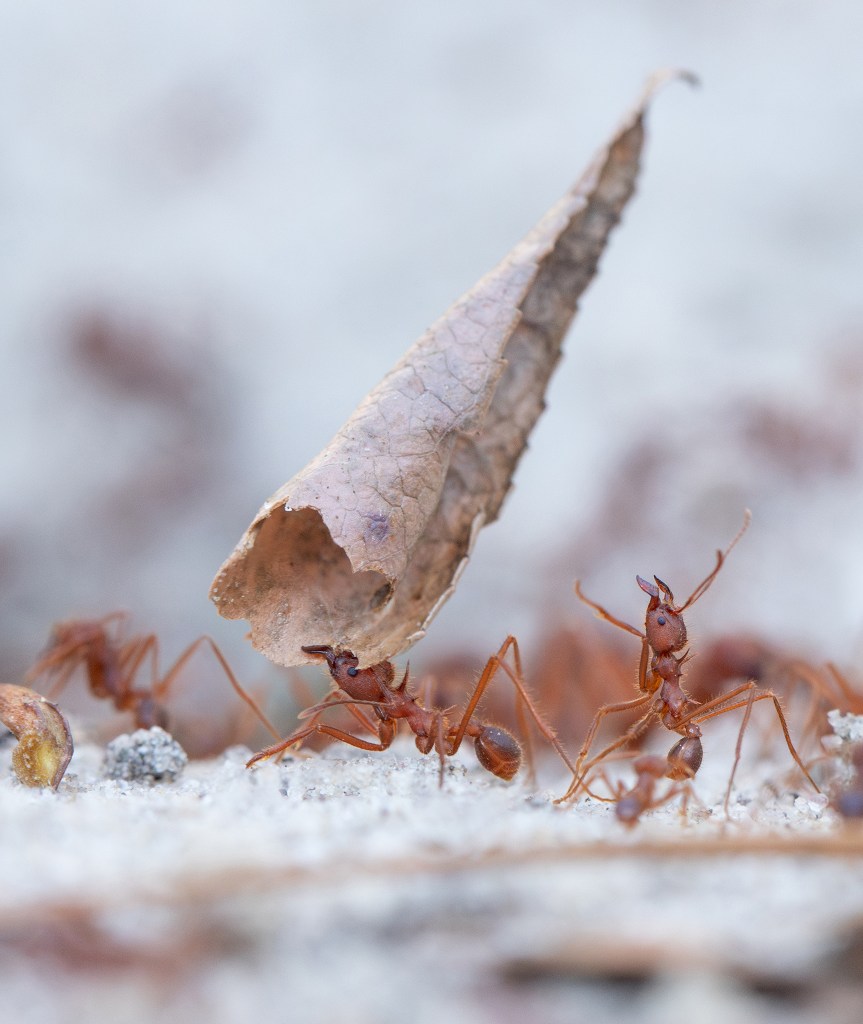
January 1, 2024 found us in an east Texas longleaf pine forest. Each year I try to make a few images of Texas leafcutter ants (Atta texana). I just think they’re so cool looking, and they have fascinating life histories! It’s so much fun to observe them as they cut leaves and haul them across the forest floor to the entrances of their colonies. Here, an ant hauls a leaf much larger than itself to fuel the underground fungus garden that will feed its colony. To me, it looks like the second ant is acting as a safeguard, ready to catch the payload should it fall backwards. In actuality I believe this ant may have been in a defensive posture, perhaps in response to my presence. Head up and mandibles open it seemed ready to defend this precious cargo.

Green Ghost

In April we found this rough green snake (Opheodrys aestivus) in one of our favorite local green spaces. These colorful creatures may be encountered on the ground or in trees, where they tend to blend in with the spring forest and even sway as they move as does a branch or a leaf in the wind.

Swamp Candle

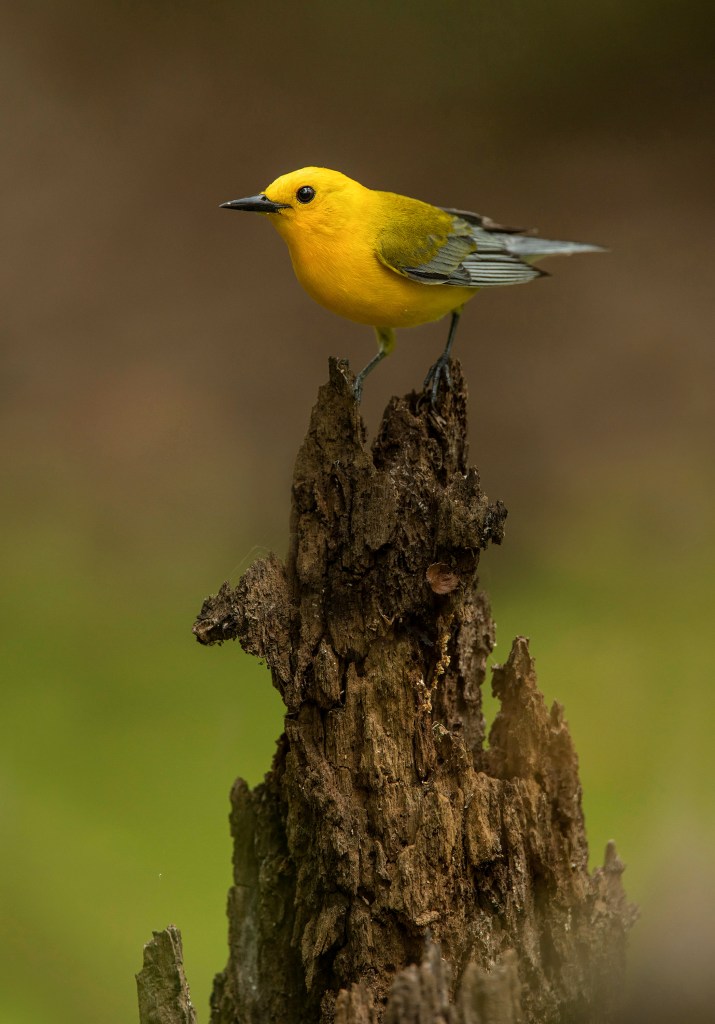
Spring and early summer songbird photography wasn’t a big priority for me this year. I embarked on just a couple of outings with these subjects in mind, and fortunately one paid off where I managed to capture this beautiful male Prothonotary Warbler (Protonotaria citrea) as he moved about the red maples lining the margins of a cypress swale in the Big Thicket.

Irisscape

Not far from where I photographed the above warbler I spotted several zigzag iris (Iris brevicaulis) in bloom. They were growing in a wet swale within some oak flatwoods. I really like these types of images that showcase native plants in their habitat, but pass on the opportunity to create them far too often. I’m glad I stopped and spent a few moments photographing this scene so I can transport myself back to that lovely spring day, when the irises were blooming and the Prothonotary Warblers were singing.

New Hope

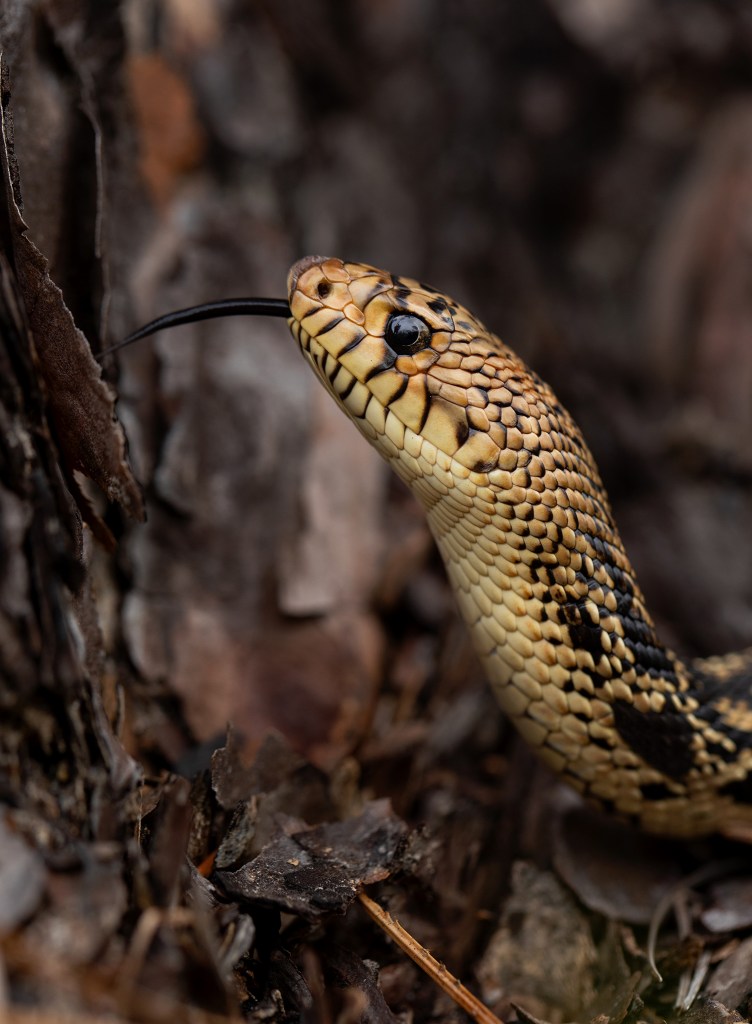
In May I was fortunate enough to participate in an incredible conservation effort – the release of captive bred Louisiana pine snakes (Pituophis ruthveni) back into their native range in the longleaf uplands of the Kisatchie National Forest in Louisiana. This release was part of an on going effort between various zoos, the U.S. Forest Service, and the U.S. Fish and Wildlife Service. The snakes we released this day were hatched and reared at the Fort Worth Zoo. Louisiana pine snakes historically ranged in sandy uplands of the West Gulf Coastal Plain from central Louisiana to east Texas. They primarily occurred within the longleaf belt, occupying sandy longleaf pine uplands and xeric sandhill communities where extensive Baird’s pocket gopher (Geomys breviceps) burrow systems were present.

Today their range has been greatly reduced due to a variety of factors including the loss and degradation of longleaf pine uplands, changes in historic disturbance regimes (i.e., fire suppression), and habitat fragmentation. They are currently presumed to persist in a few isolated areas in Louisiana and Texas, though there have not been detections in the Lone Star State for several years.

The reintroduction effort in Louisiana has been met with some success. Several released individuals have been captured in subsequent years and confirmed offspring of released snakes have been found, proving that the introduced snakes are reproducing in the wild.

Here one of these young snakes investigates its first longleaf pine. I hope that some of the snakes we released will survive and contribute to this growing population.

Blue Shank

Later in May I joined Texas Parks and Wildlife Department for some western chicken turtle surveys at a site near where I spotted a few basking individuals in 2021. We’re currently conducting a 12-month review on the western chicken turtle to determine if federal listing may be warranted. Unfortunately we did not find our target during this trip, but we did enjoy a good variety of other interesting encounters.

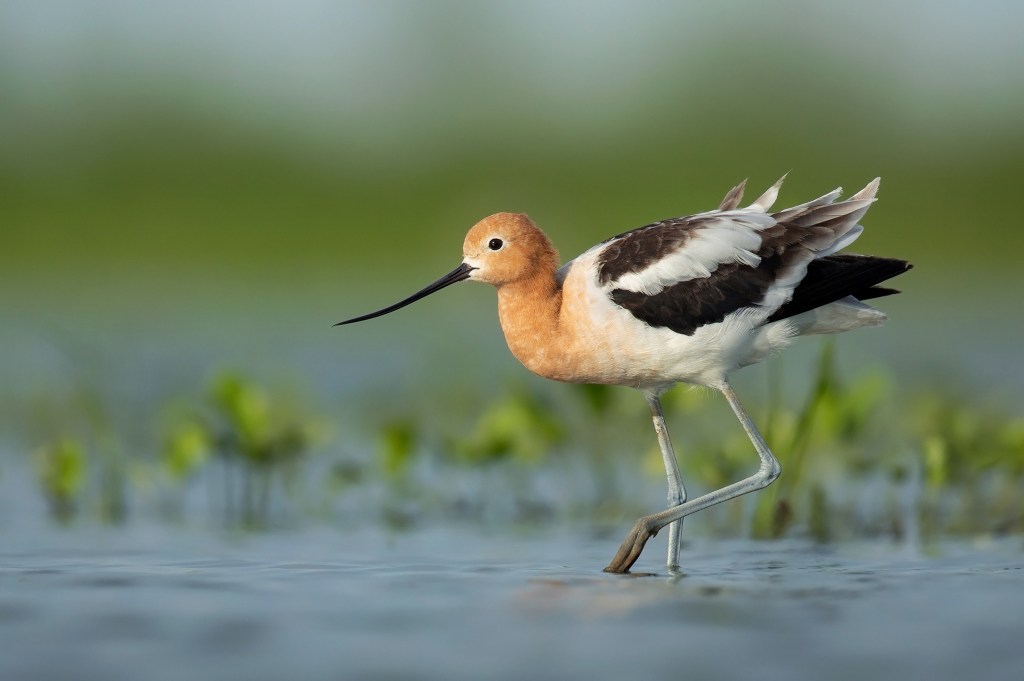
The top of that list was spending an evening with a group of American Avocets (Recurvirostra americana). After conducting systematic surveys earlier in the day, we spent the evenings in search of good chicken turtle habitat in hopes we might be able to spot a few out and about and help inform future survey efforts. We stopped to investigate a shallow freshwater wetland, and spotted dozens of avocets foraging within. It was the tail end of the spring shorebird migration in Texas, and the birds were looking sharp in their breeding plumage.

The rest of the group indulged me as I crept to the water’s edge and laid flat in the mud. I was rewarded with several avocets passing by in close proximity. For my money, these are among North America’s most beautiful, unique birds.

Imbibe

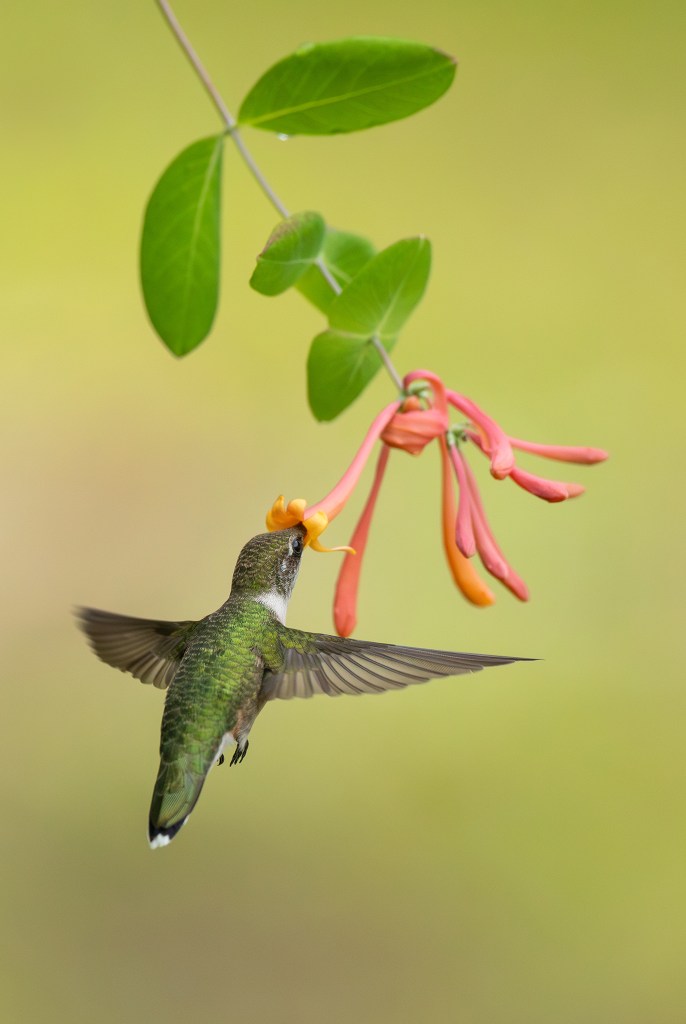
One evening in late June while pulling into my driveway after work I noticed a Ruby-throated Hummingbird (Archilochus colubris) feeding on the native coral honeysuckle (Lonicera sempervirens) that covers the fence along the side of the house. I quickly ran inside, said hello to my wife and son, grabbed my camera and ran back out to see if I could make an image. Luckily the bird was still there and after a few minutes visited the one bloom that had a clear and distant background. I was really thrilled with the result and this turned out to be one of my very favorite images of the year.

On another note, this honeysuckle has been an incredible addition to our garden. We started with a small plant rescued from the graded side of a county road and over a few years has completely overtaken one section of fence. It blooms fairly consistently from March to October, with a definite peak early in the year, and sporadic blooms through the summer and early fall. Hummingbirds are infrequent visitors, and I was thrilled to be able to capture this one, which I suspect has a nest in the area.

Apex

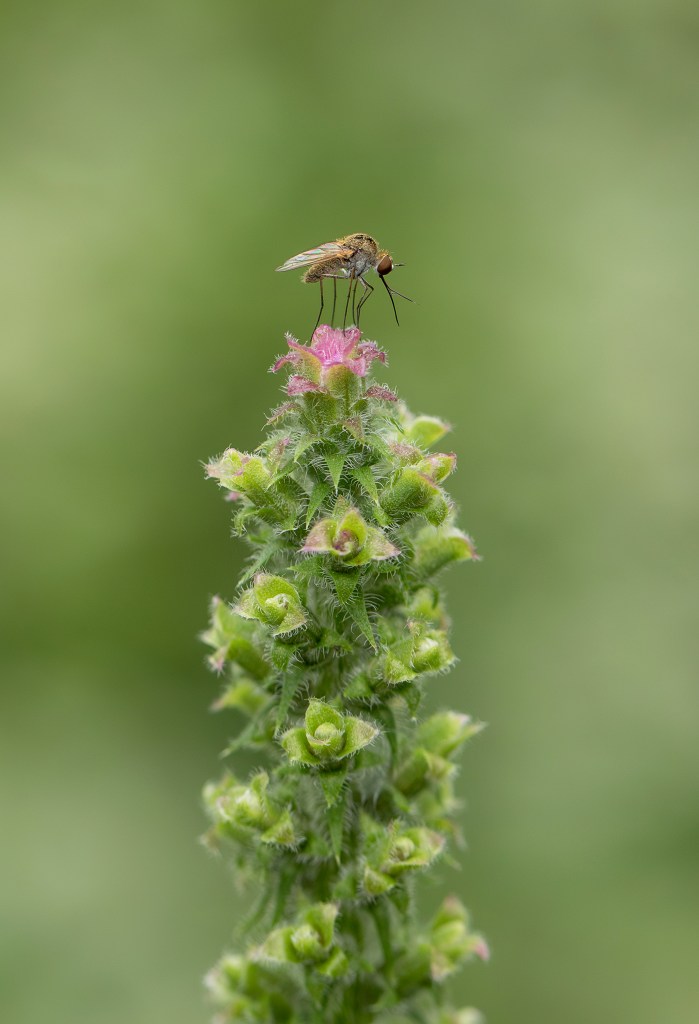
Between July and late October I captured several thousand images of various pollinators. I spotted this bee fly (Geron sp.) on prairie blazing star (Liatris pycnostachya) at a native demonstration garden near my office. Though it may look like a mosquito, this is actually a member of the Bombyliidae. Bombylid larvae are parasitic on other insects, and Geron apparently specializes in moth caterpillars. Adults feed on nectar and can be identified by their “hump-backed” appearance.

Nectarine

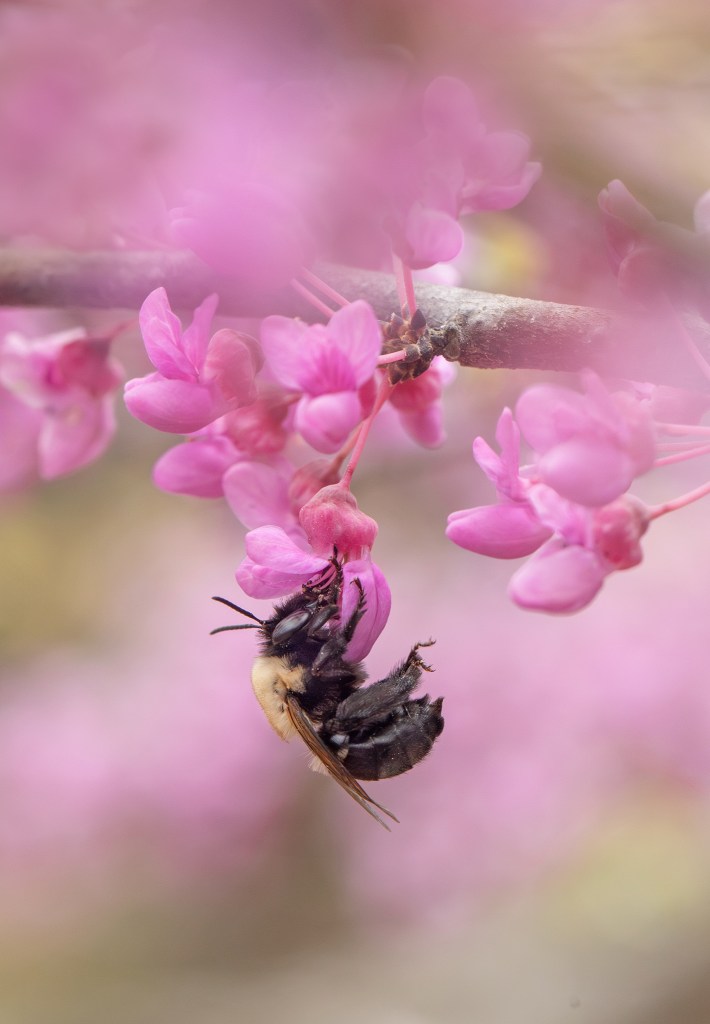
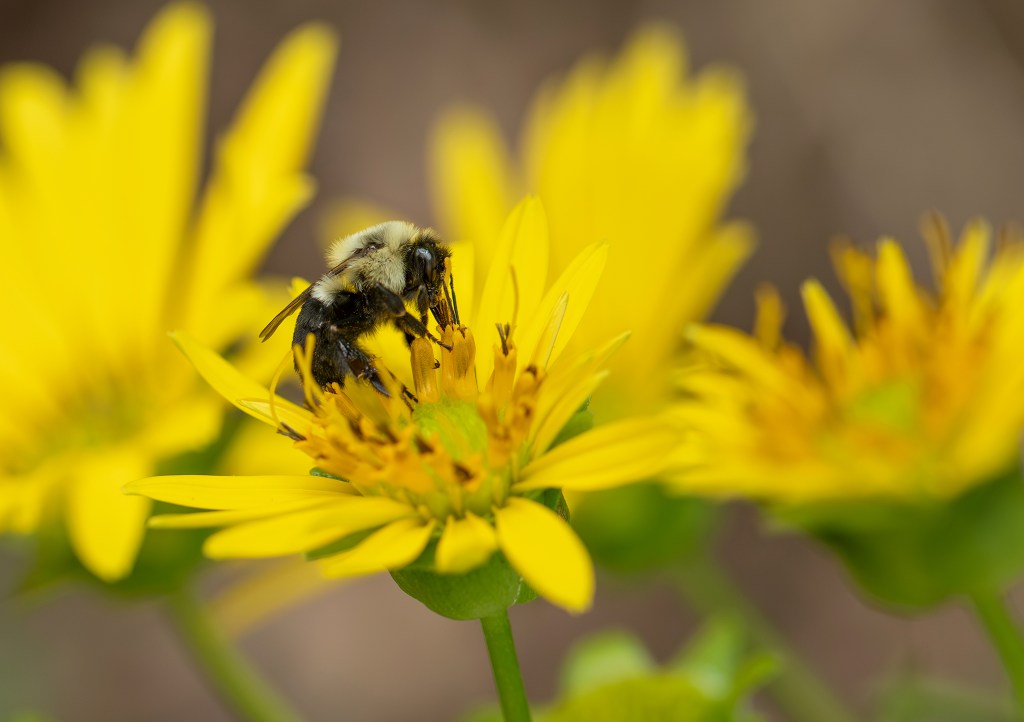
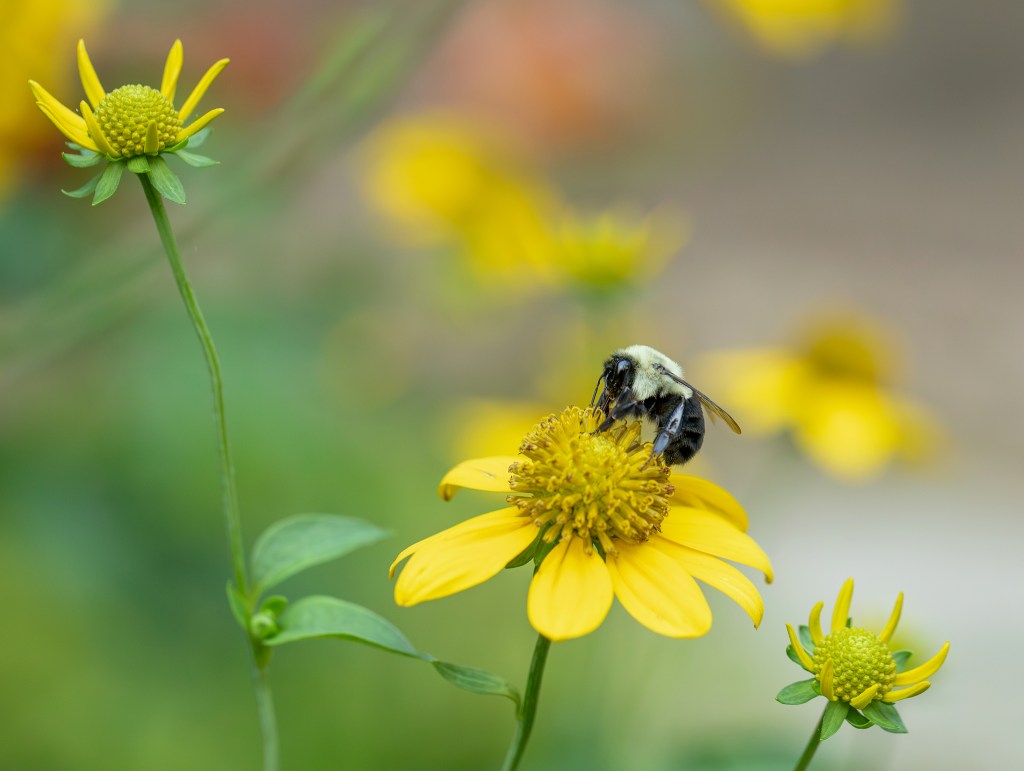
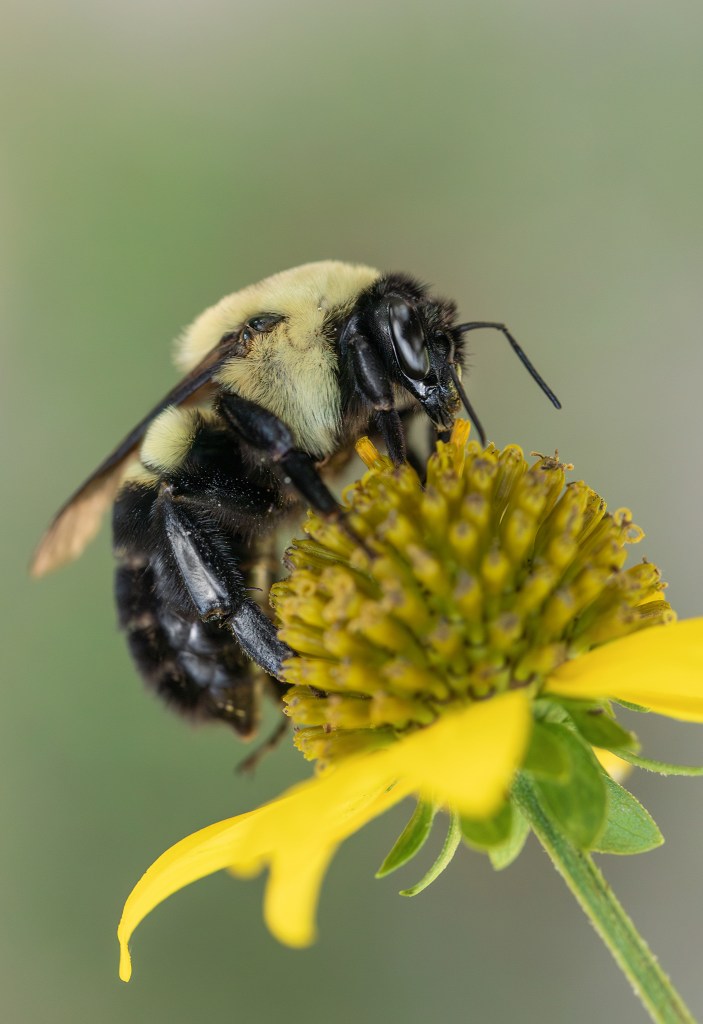
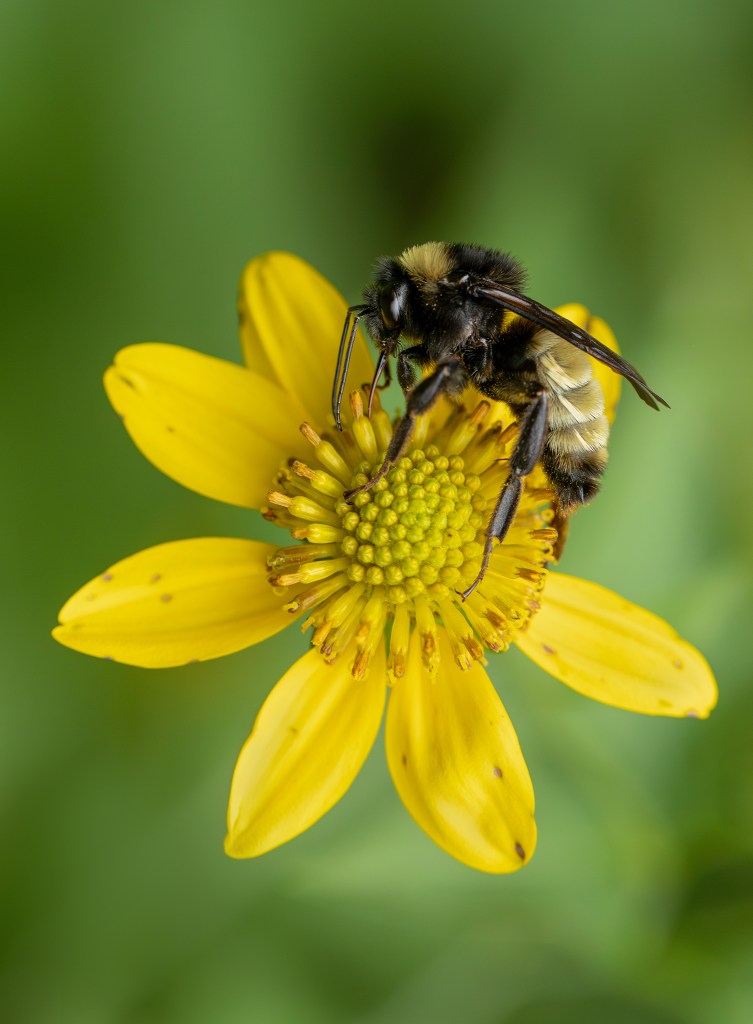
The prairie blazing star in our native garden started blooming in late July. It’s not our most popular nectar plant, but it still sees visitation from a number of bees and other pollinators. To me, bumblebees, like this eastern common bumblebee (Bombus impatiens) make especially engaging photo subjects. They are widespread and familiar. I expect that for many, it is a bumblebee that comes to mind if they are asked to picture what a bee looks like.

B. impatiens is the most frequently observed species in our garden. I can expect to see at least a few every time I step outside. Their abundance has allowed me to capture a variety of different images, and this turned out to be my favorite.

Pastel

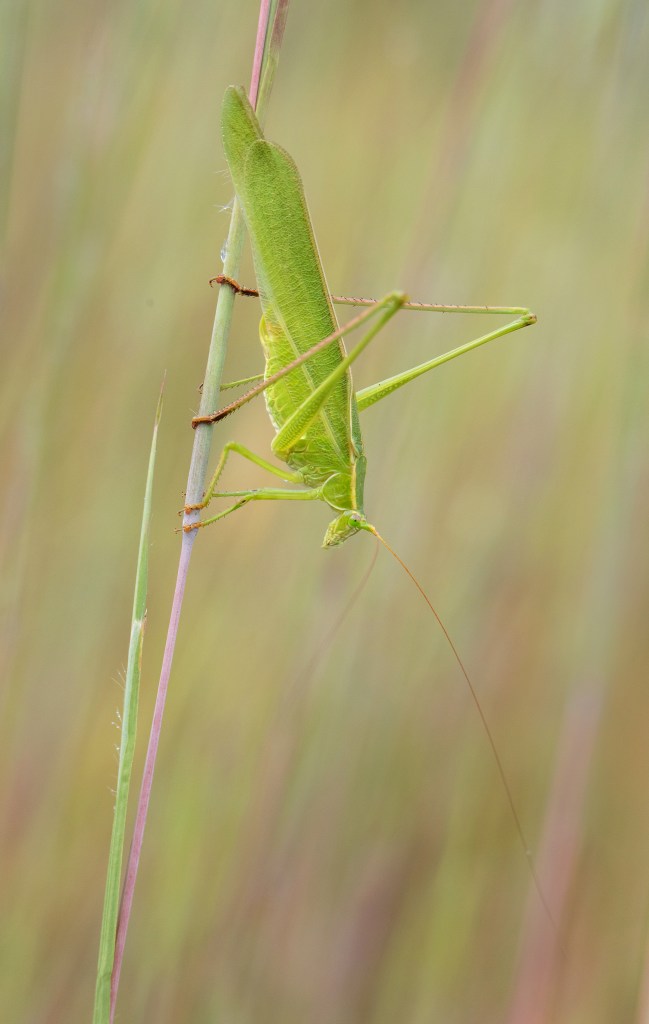
In late August I was invited by the U.S. Forest Service to visit some backland prairie remnants on the Sam Houston National Forest. The Forest Service has been working to restore these prairies and they were looking great. The little bluestem (Schizachyrium scoparium) was especially loverly and colorful, and made for a great perch and background for this katydid.

Flower Guard

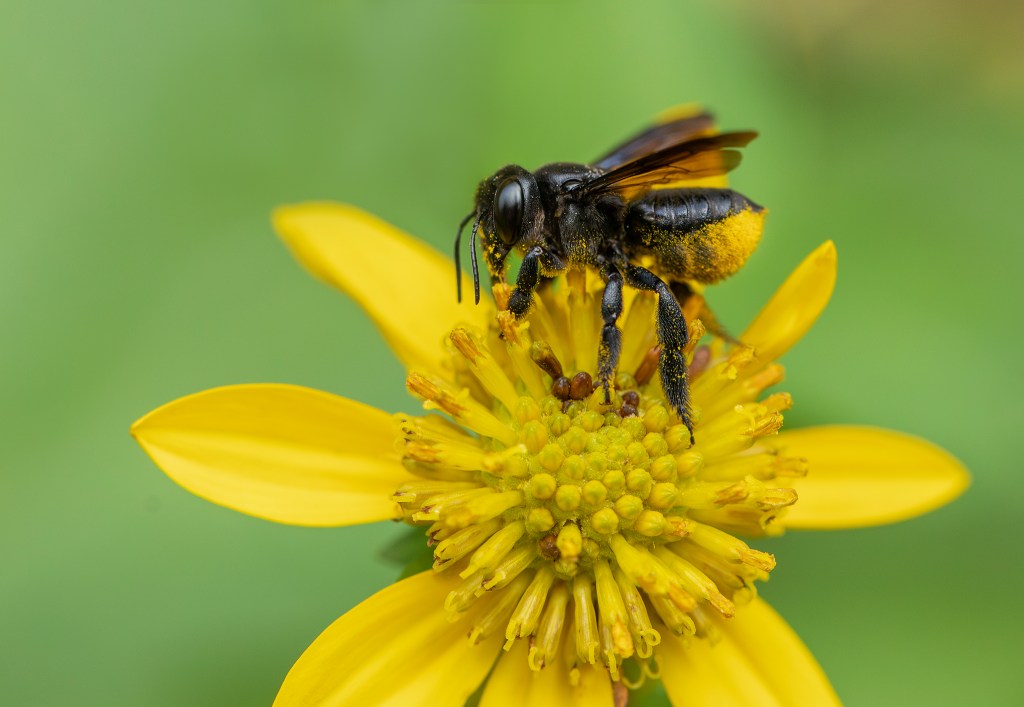
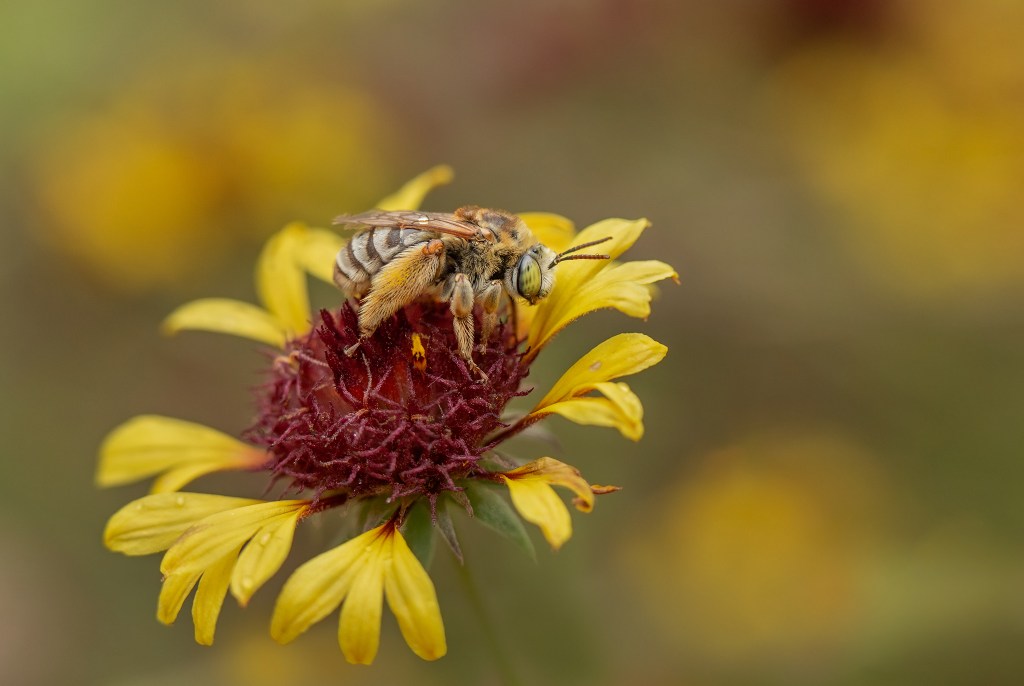
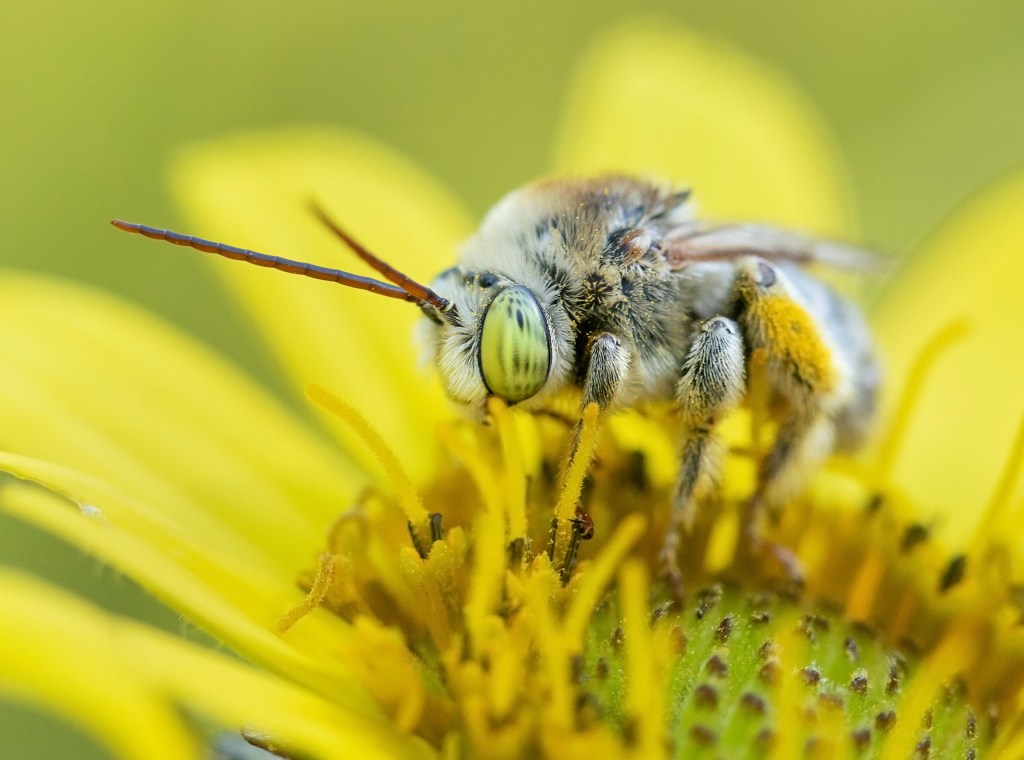
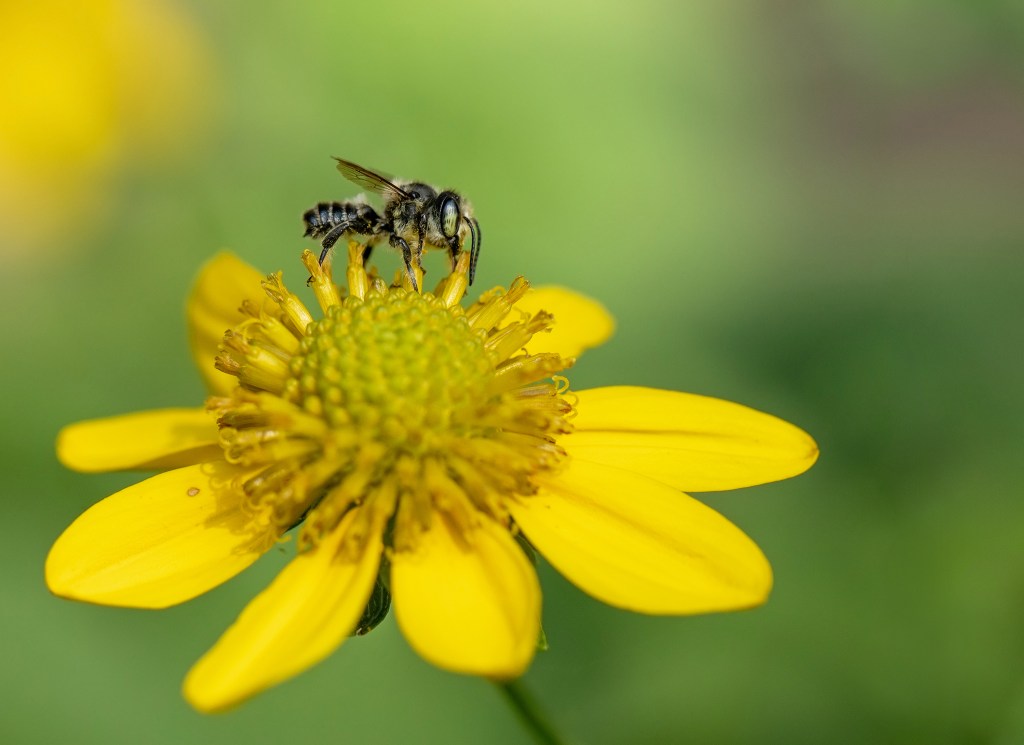
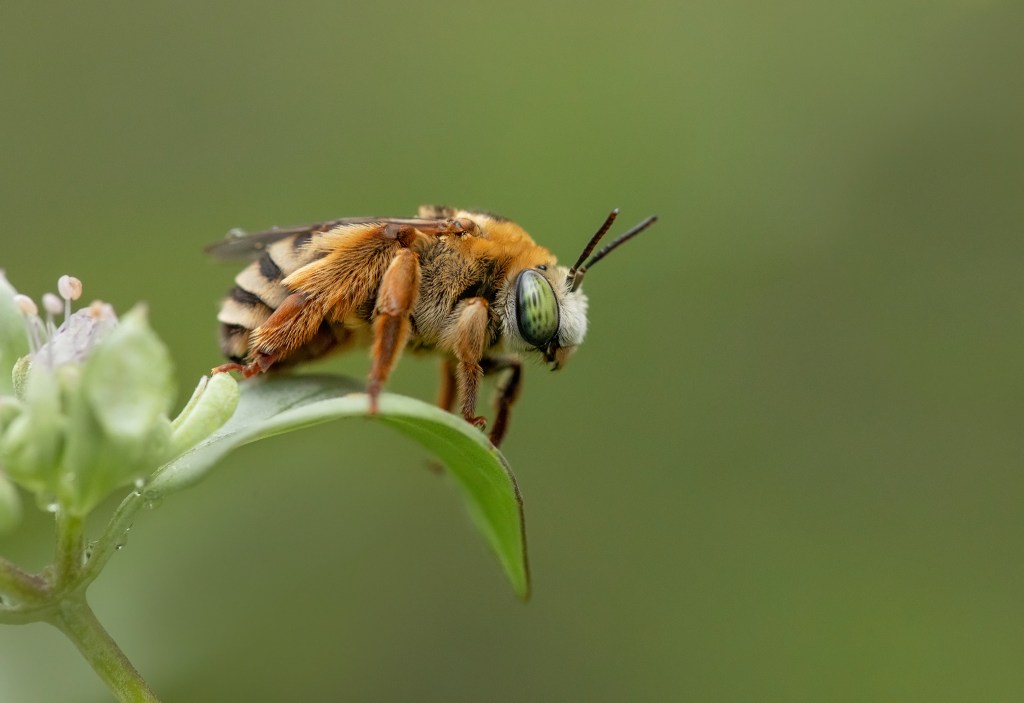
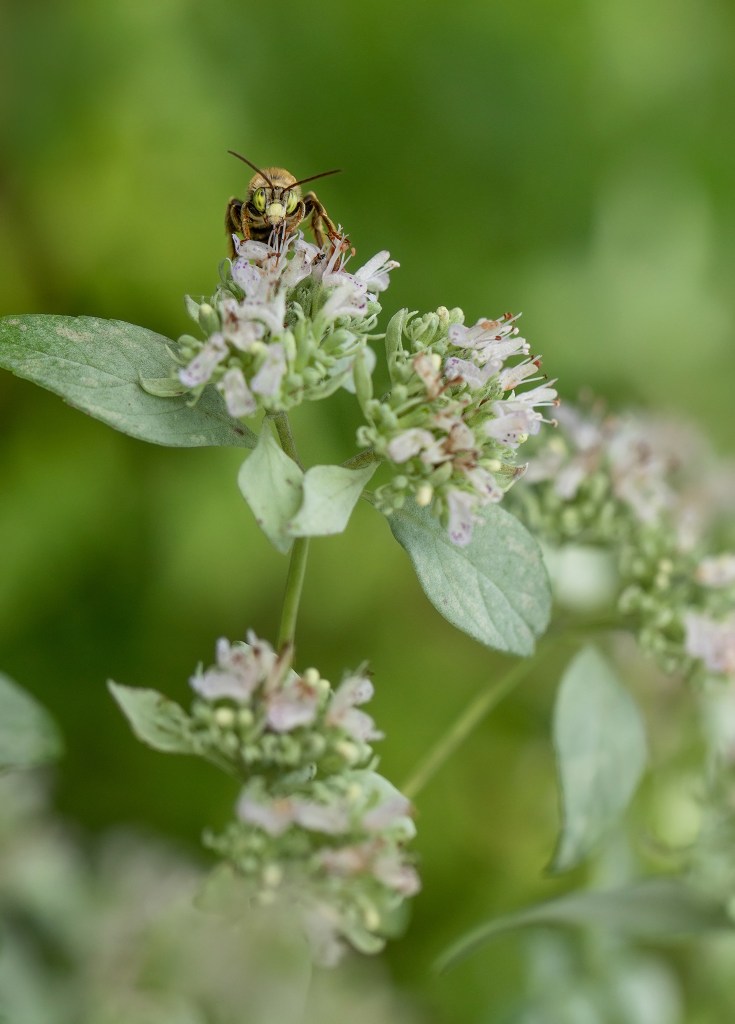
During my photographic pursuit of pollinators I was thrilled to capture an image of this female Svastra petulca, a long-horned bee, on a blanket flower (Gaillardia aestivalis). These native bees are so striking. They’re big, nearly the size of the smaller bumblebees, very fuzzy, and their bright green eyes are beautiful.

Cryptic

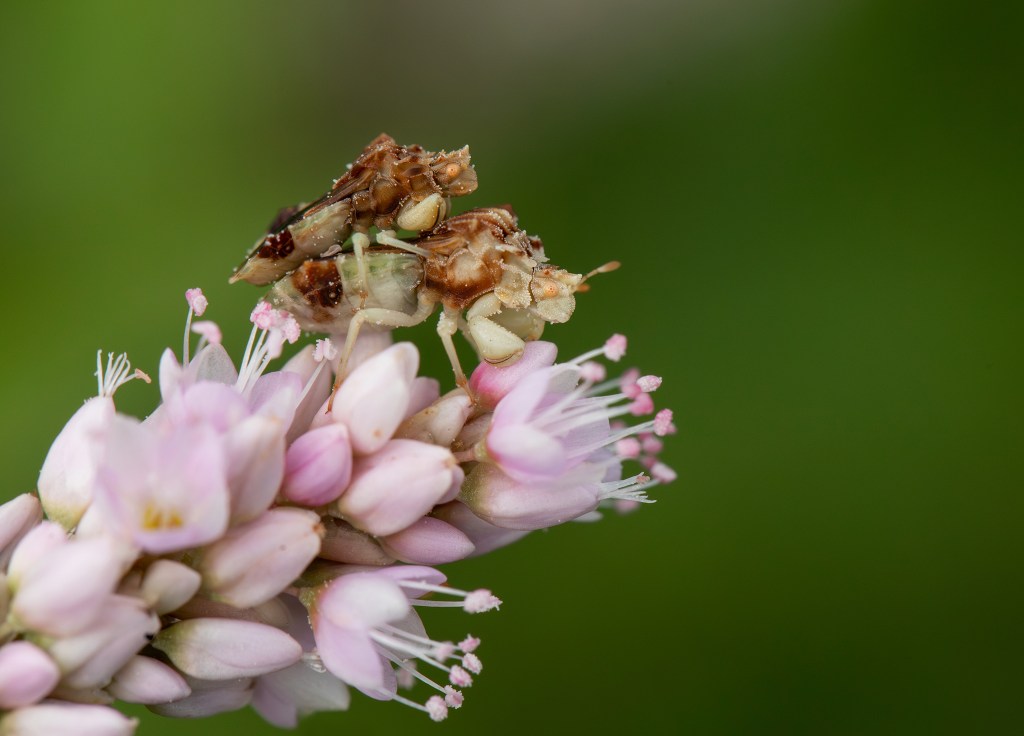
As late summer transitioned to early fall the yellows of golden rods (Solidago spp.) began to paint roadsides, pastures, and fallow fields. I visited several patches of these lovely plants, and found that they were almost always swarming with pollinators. The presence of so many nectar seeking insects invariably attracts predators. By mid-September nearly every goldenrod plant had at least one jagged ambush bug (Phymata sp.). I really liked this image that I captured of one of these ambush bugs that had captured a sweat bee (Lasioglossum sp.). I spotted the bee first, and it took a moment to spot the predator. I think this image shows off its incredible camouflage.

Solar

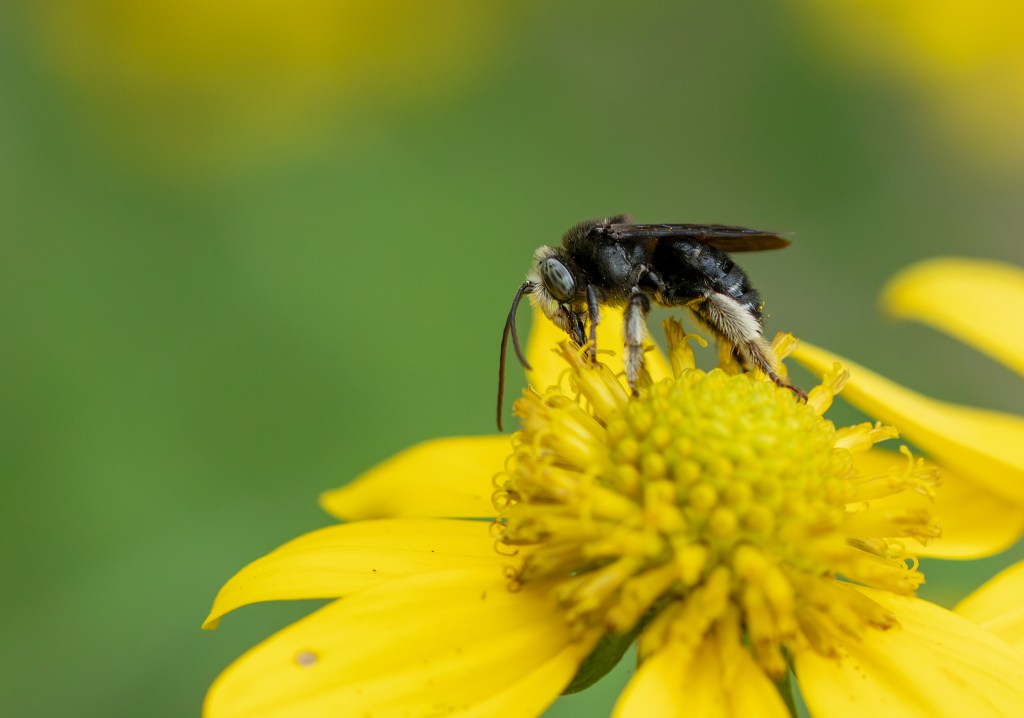
Swamp sunflower (Helianthus angustifolius) also blooms in the late summer and early fall. One evening in early October we went on a family hike to enjoy these striking wildflowers and I managed to photograph numerous pollinators. May favorite image from that day was of this long-horned bee (Melissodes sp.). This photo just makes me feel warm, like I’m taking in some sunshine on a chilly autumn day.

Turquoise

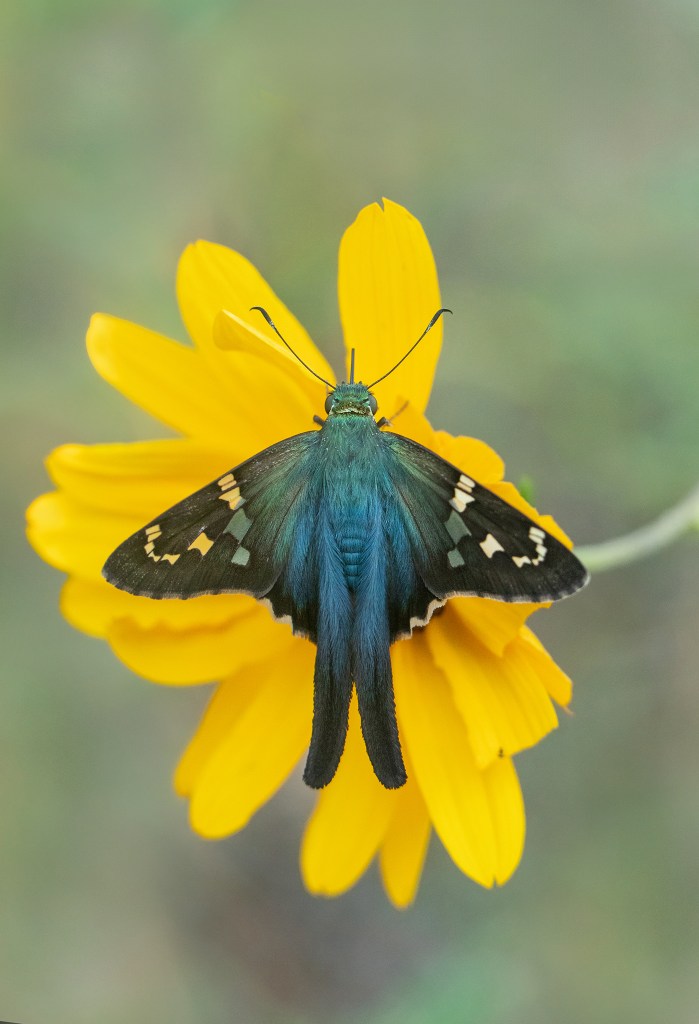
Shortly after photographing the bee above I spotted a long-tailed skipper (Urbanus proteus). These pretty butterflies are fairly common in east Texas during the summer and fall. I’ve photographed a number over the year, but always capture them with their wings folded, as this is how they typically rest. I’ve long wanted to capture an image of one resting with open wings to capture their brilliant metallic blue coloration, which is hidden when the wings close. Things finally worked out in my favor this day when this particular butterfly rested for several seconds showing off this beautiful coloration.

Las Lechucitas Vizcacheras

In early November we travelled to Argentina. I’m not sure I’ve discussed it much on this blog, but I lived in a research station on northeastern Argentina for almost a year while conducting my masters research back in 2010. While there I met Caro, my future wife. Following the completion of my thesis research I made frequent trips to visit Caro and her family. In 2014, Caro moved to the states and I had not returned since. This year marked 10 years since the last time I set foot in this beautiful country, and it was great to be back. We brought our son down to meet his Argentine family and it was so great to see everyone again and watch them interact with him.

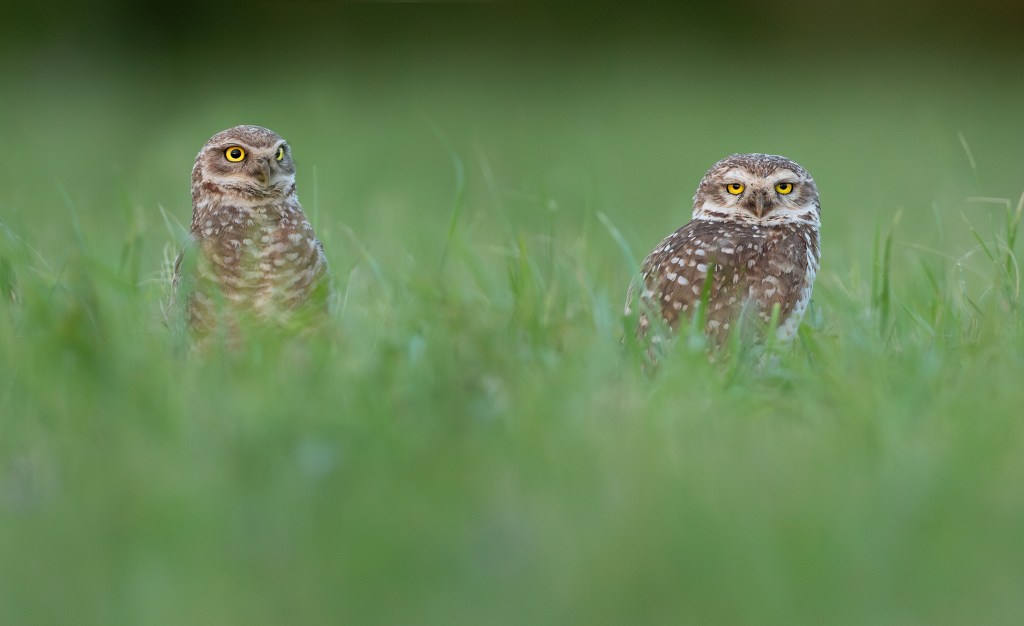
Caro’s parents live in a relatively rural part of Entre Ríos, the province north of Buenos Aires. There is plenty of open land around their home, and after a solid night’s sleep, we spent a part of our first full day in Argentina wandering around my wife’s childhood home. The pastures and green spaces there are full of Burrowing Owls (Athene cunicularia). They were nesting when we visited and very protective of their burrows. I watched as many a stray dog was dive bombed by the diligent little owls. In Argentina they often use burrows excavated by viscachas, hence the colloquial name lechucita vizcachera.

El Ciervo de los Pantanos

After spending several days in Caro’s home province, we took a trip with Caro’s parents to the Iberá wetlands – the second largest wetland complex in South America. I visited this magical place when I was living in Argentina when my parents came to visit for a couple of weeks. I was blown away by the biodiversity, and couldn’t wait to return.

When I did return this November, it was even more special than I remembered. As soon as we entered the boundaries of the Iberá Provincial Park we spotted this large marsh deer (Blastocerus dichotomus) buck just next to the road. It was a species I was really hoping to photograph, and within minutes of arriving I was able to capture frame filing portraits.

The marsh deer is a vulnerable species native to the central portion of South America. Today populations have been reduced to a fraction of their former range, and occur in isolated pockets in Argentina, Brazil, Bolivia, Paraguay, Uruguay, and Peru. They are slightly larger than white-tailed and mule deer. Unlike these species, marsh deer do not exhibit a specific rutting season, and their reproductive cycle is often linked to the dry/wet season cycle. Males are generally non aggressive toward each other and do not fight for breeding rights. Their antlers may be shed at any time of the year, and may be carried for nearly two years

El Pirincho

While visiting Iberá we stayed in a nice ecolodge in the community of Carlos Pellegrini, which is nestled right next to the wetlands, just a few short kilometers from the National and Provincial Parks. While not out exploring the parks or relaxing at the lodge, I wandered around the property’s grounds and the streets of Carlos Pellegrini. A diversity of birdlife abounds here, and I had photo opportunities within minutes of our door.

One species I was really hoping to photograph was the Guira Cuckoo (Guira guira), which I had encountered previously but always found them difficult to approach. I found a cooperative group near a campground in town. They are incredibly prehistoric looking, and unfortunately this image doesn’t show off their long tail, which completes their dinosaur-like visage.

I really like the light in this image. The sun was getting a bit harsh, but this individual hopped onto a tree branch illuminated by dappled sunlight. There it snatched a caterpillar and I was able to capture a few frames.

El Yetapá de Collar

Iberá National Park was established in 2018 and protects over 1.3 million acres of wetland, grassland, and woodland habitat in the Iberá region. It is adjacent to the Iberá Provincial Park/Reserve which protects over 3 million acres. Combined, they form the largest area of protected land in Argentina.

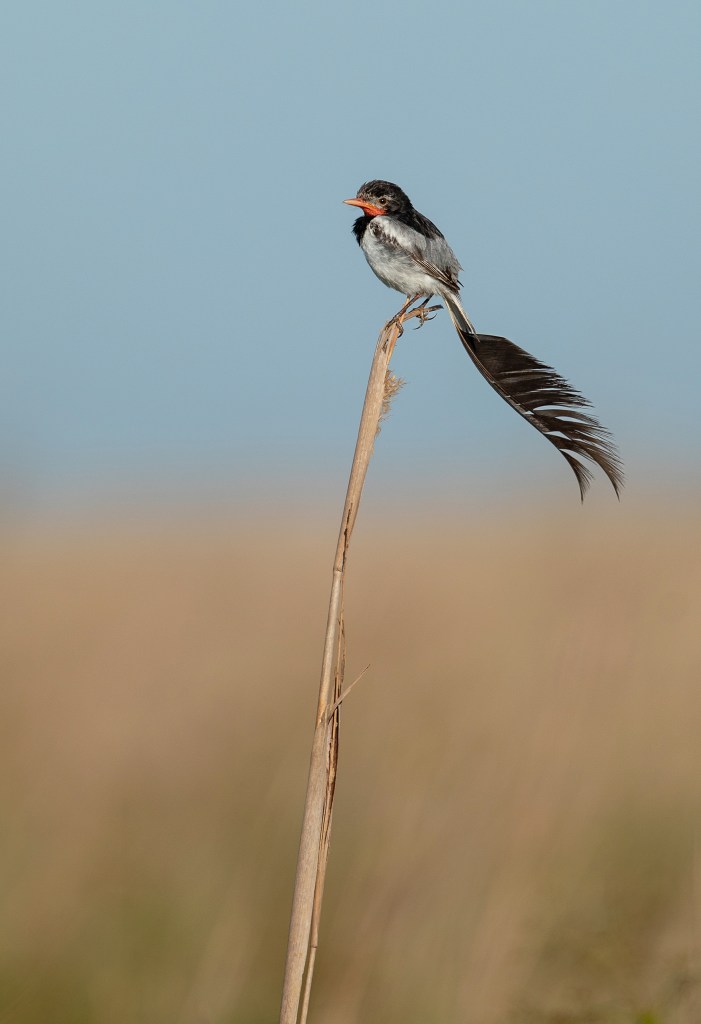
Perhaps the most iconic species of this region is the Yetapá de Collar – the Strange-tailed Tyrant (Alectrurus risor). This bird is truly spectacular. During the breeding season, the males develop a bright red throat and two massive comb-shaped plumes on their tail. These plumes are used in mating displays.

The Strange-tailed Tyrant inhabits high quality grasslands where males perch on the highest perches to survey their territory. They are found in northern Argentina, Paraguay, Uruguay, and Brazil. Their range has decreased significantly, and today they are known from relatively few, mostly isolated populations Iberá is largely regarded as the best place to observe them, and we found them to be quite common in appropriate habitat. On our last morning in the area, as we drove the road the cut through the park, we spotted several males, though most were at a great distance. Finally I spotted one close the road and shouted “STOP!”. My father-in-law slammed on the breaks and we came to a halt in the perfect position to capture this male perched high on his grass look out tower.

El Tuyango

During our last evening in Iberá, a front blew in, bringing with it strong winds and rain. The next morning as we drove out through the national park, the vegetation in the grasslands was still wet.

We spotted this Maguari Stork (Ciconia maguari) in a wetland off the road. It was just finishing swallowing what looked like a freshwater eel. This is one of three stork species found in the area, and I was hoping to photograph one. Luckily I got my chance in the eleventh hour as it slowly made its way from the brush and crossed the road in front of us, allowing me to capture this portrait.

The song “Psycho Killer” by Talking Heads runs through my head when I look at this image. The stork looks somewhat deranged, with its plumage ruffled by the weather. It’s bladelike bill adds to the impression, with the natural red coloration near its tip appearing like a blood stain, and actual drops of blood visible above it. What a bird – a phrase that came to mind often during this trip.

Pharos

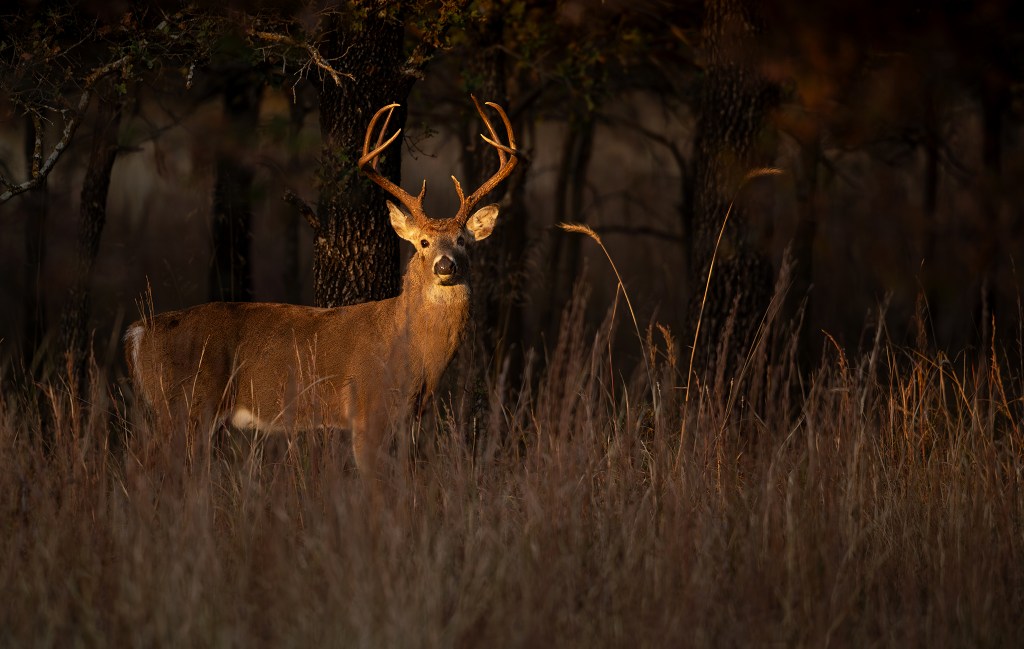
I returned from Argentina in mid-November, drawn back by work commitments, while my wife and son remained for a couple more weeks to soak up as much family time as possible. Every free day I had during this time I spent in the whitetail woods to photograph, and otherwise soak up the rut. This included several days I had off over Thanksgiving. In all I spent six nights camping in north Texas. By day six I had logged 20 miles or so through the backcountry. I had experienced numerous incredible encounters with multiple bucks and witnessed some quintessential rut behaviors. Would my trip have ended there, it would have been a good one – but I still hadn’t captured the shot I was really after. Over the previous days I clocked a few brief encounters with a handful of big, mature bucks that I really hoped to have good photo ops with. But with time running short, it was looking like that wouldn’t happen.

That morning felt especially cold as I crawled from my sleeping bag and suited up. My legs and back voiced their disproval, in their way, as they longed for a rest after lugging around heavy gear for miles on uneven ground over the last several days. I ignored their pleas and stepped out into the frigid predawn. As was my daily ritual, I began boiling water for coffee in the darkness. I mixed in a packet of Swiss Miss for good measure, and watched the world come alive around me. That particular morning, as I looked up after taking a sip, my headlamp caught the tapeta lucida of several eyes 30 yards or so from where I stood in my campsite. There were at least six does there. I watched them as I finished my coffee, and before long I spotted another set of eyes approaching, rather quickly, from the timber. I bumped up the intensity of my headlight and could see it was a buck. After a few minutes of observation I realized it was one of my target bucks, a big 8-point with chocolate antlers that I spotted briefly as it crossed a trail two days prior. After all my wandering, here he was, in the open, just before me. It would have made for an incredible image, were it not for the fact that it was still completely dark.

So I watched him, and as luck would have it, or so I thought, he stuck around as the sky began to turn from black to gray. I could see without my headlamp now as he moved about the does, apparently checking each one to determine their reproductive readiness. “Just stick around for another 15 minutes” I remember thinking. At that point, though perhaps not ideal, the light would be usable. Of course, as it always happens, about five minutes later the does scattered and he moved off back into the woods. I wasn’t giving up though, and I grabbed my camera and set out after him. For the next 20 minutes or so I followed him. At times I would lose him, and try to anticipate where he might emerge based on the terrain and the direction he was moving.

Eventually the day brightened enough that I would be able to capitalize, should he provide the opportunity. I lost him again, but moved ahead in the general direction he was moving to a clearing where a doe was feeding. Sure enough, a few minutes later he appeared at the woods’ edge. I could tell that he was interested in that particular doe, and began to allow myself to hope that I might get a shot at him. Just then, the first rays of sun began filtering through the autumn foliage of the tallest post oaks. Then the doe caught wind of the buck and set out across the clearing. “Ok,” I thought to myself. “This might be it. If he breaks for her I might just get a chance.” And then he did.

The big 8 broke from the timber and moved across the clearing. And then, like an actor hitting a mark, he paused in the one beam of light that had managed to penetrate the clearing. He looked at me for what felt like an eternity, though it must have only been a few seconds. I remember my hands shaking as I pressed the shutter button, and hoping against hope that I got the shot. As soon as he emerged, he was gone, tearing through the brush after the doe. As I looked at my LCD screen to review the images, I was hit by the emotion of it all. I’m incredibly happy with the photo, not only for its qualities, but also for the memory of that magical moment in time where all the hard hours of pursuit paid off. I had the image I was after, and despite covering miles and miles of prairie and woodland, it happened within earshot of my tent. It was one of nature’s incredible gifts that I feel so very fortunate to have received.

Apparition

Mature whitetail bucks are like ghosts haunting the woods. They may leave signs of their presence, yet they are so seldom seen. Even in areas where does and young bucks may be easy to observe, the big, mature bucks remain elusive. As I was moving through an area littered with deadfall from intense storms earlier this year, this buck materialized before me, its gray pelage blending in seamlessly with the trunks of oaks. I managed to shoot through dense tangles of the crowns of downed trees to create a sense that he is appearing through the mist. This image also feels cold to me – perhaps because it was quite cold when I captured it, or perhaps the gray tones remind me of winter in the Pineywoods. He gifted me a second or two to capture this image, and then he vanished, bounding through the trees and out of sight with barely a sound, and the woods were as if he was never there.

Dissolve

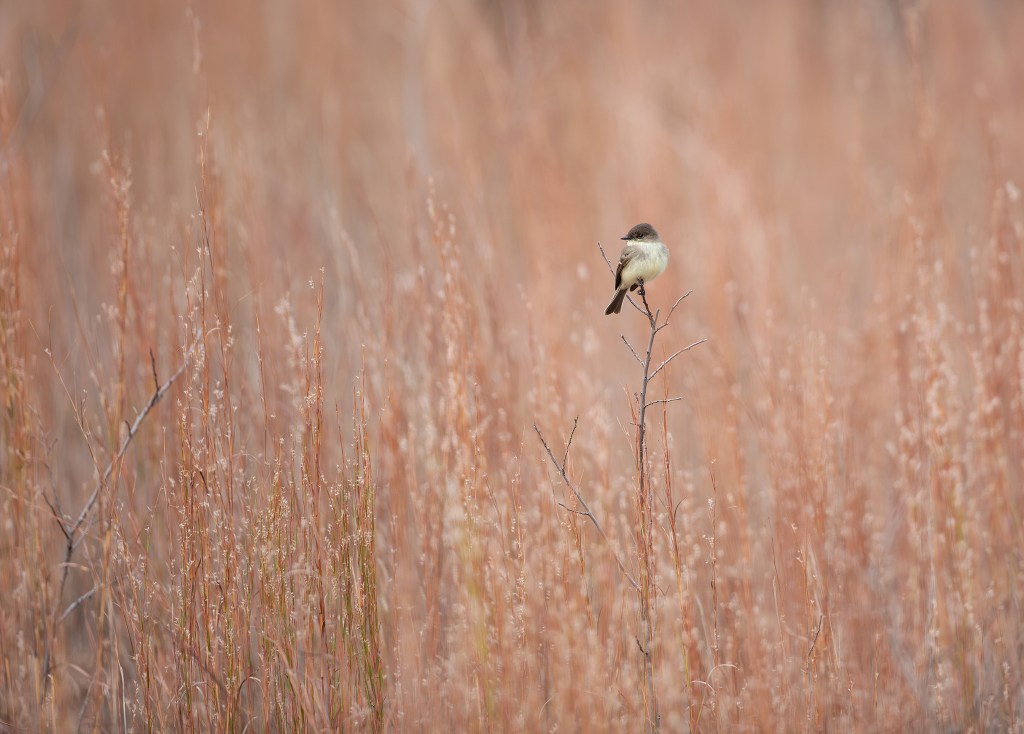
Eastern Phoebes (Sayornis phoebe) are very common in my part of the world, and any given day I can usually find several close to home. Despite this, I have long struggled to capture an image of the species I was happy with. That changed last month, while in pursuit of whitetails I came across this individual in a meadow full of little bluestem, and captured this small in frame image of it among the grass.

A Beast in the Bluestem

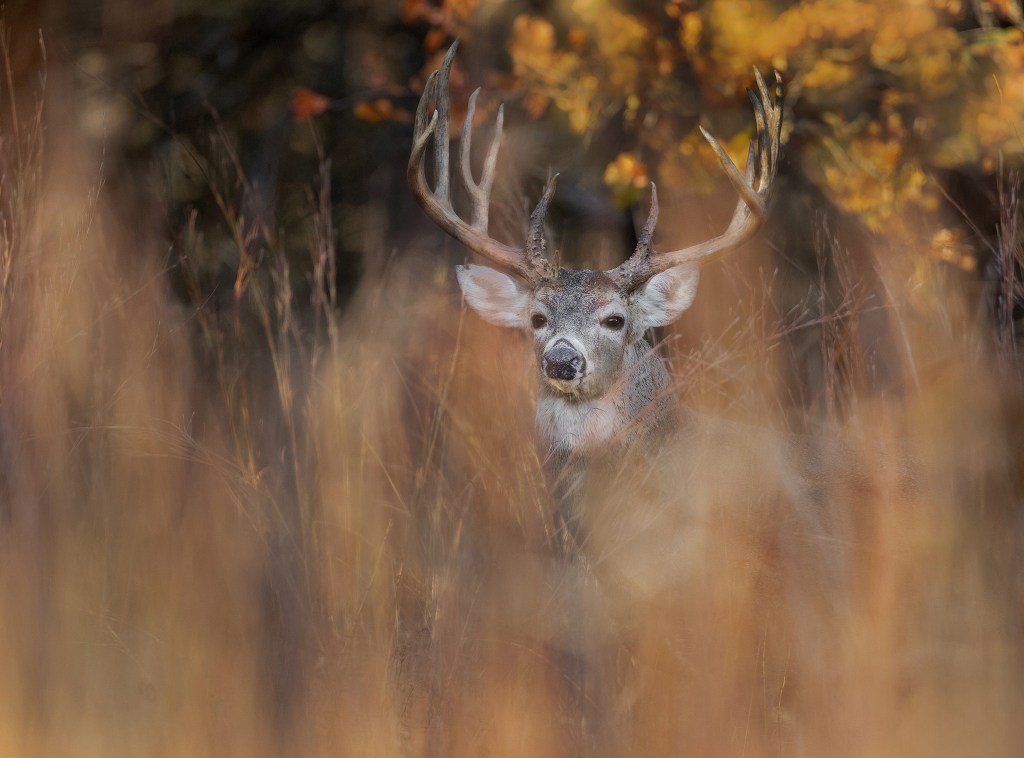
This deer was my number one target during the rut. I first photographed this huge buck in 2022, when he looked to be in prime condition. I found him again last year, and though he appeared to have regressed a bit, both in antler size and body condition, he was still an impressive animal. This year, however, he was really something to see. He’s a tank of a deer with a unique set of antlers.

The story of how I spotted him is a fun one. I was actually following a different buck through the tall grass, when it paused at the crest of a small knoll. He alternated his gaze between me, and something behind him, just downslope and out of view. Then I began to see what had caught his attention. First the tines appeared, and then the head, and in an instant, this beast materialized from the bluestem. I had really hoped to see him, though I wasn’t sure if he was around, or even alive until this moment, and I was filled with excitement as he appeared before me.

With the light fading, I stalked him through the grass and brush. I watched as he exhibit typical dominant buck behaviors, and stood in awe of how the other bucks, some of respectable size themselves, paid him the respect he had undoubtedly earned. Here I captured him lip curling among the grass. It’s amazing how such a large animal can nearly completely disappear in the tallgrass prairie.

Down in the Duff

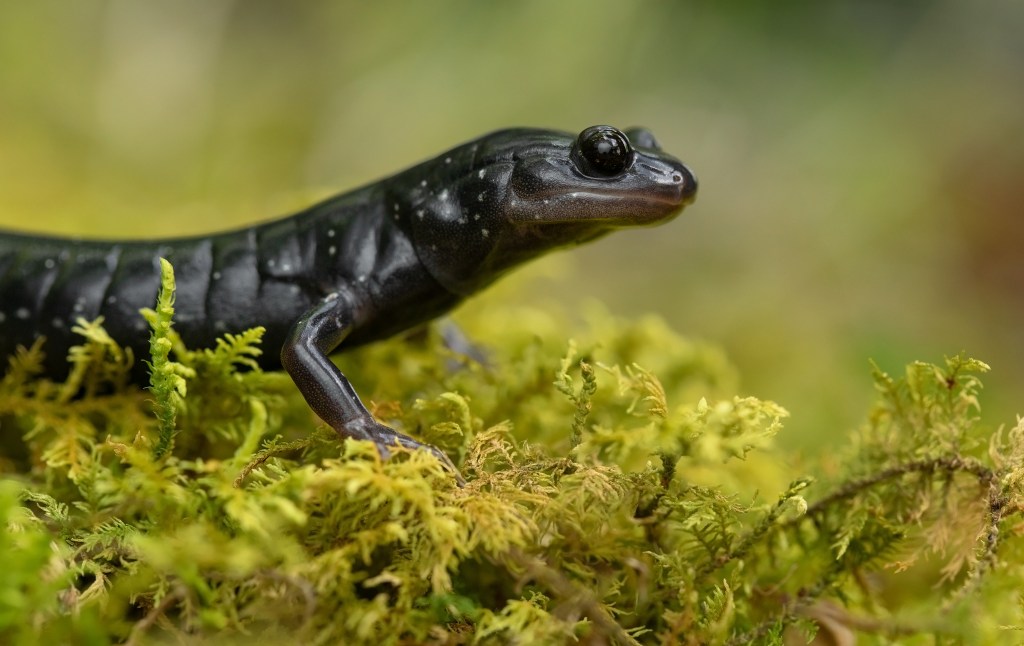
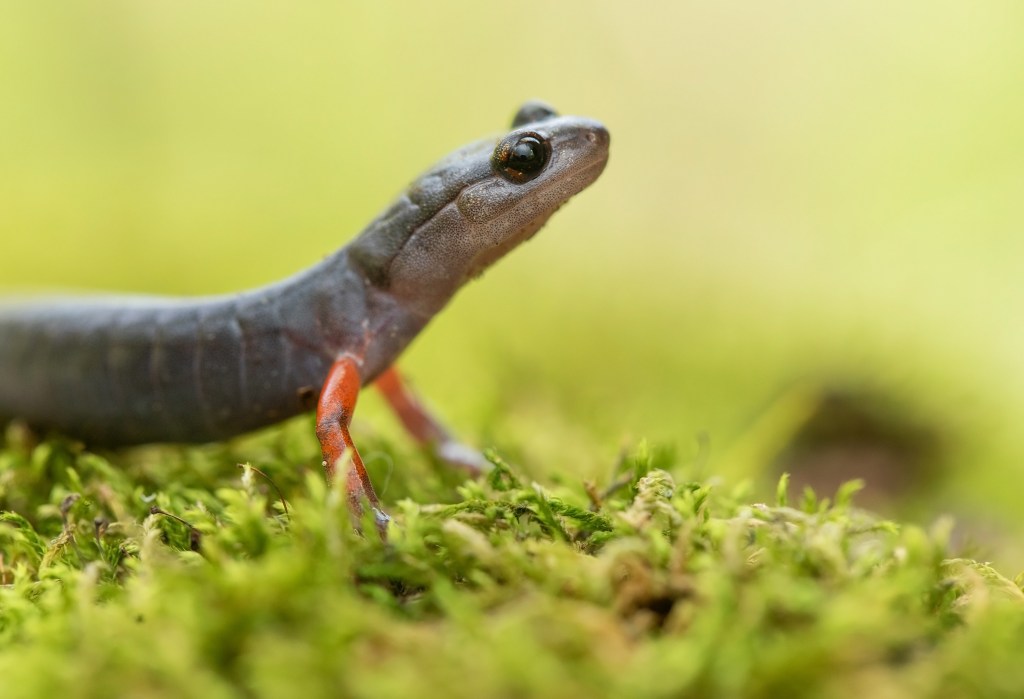
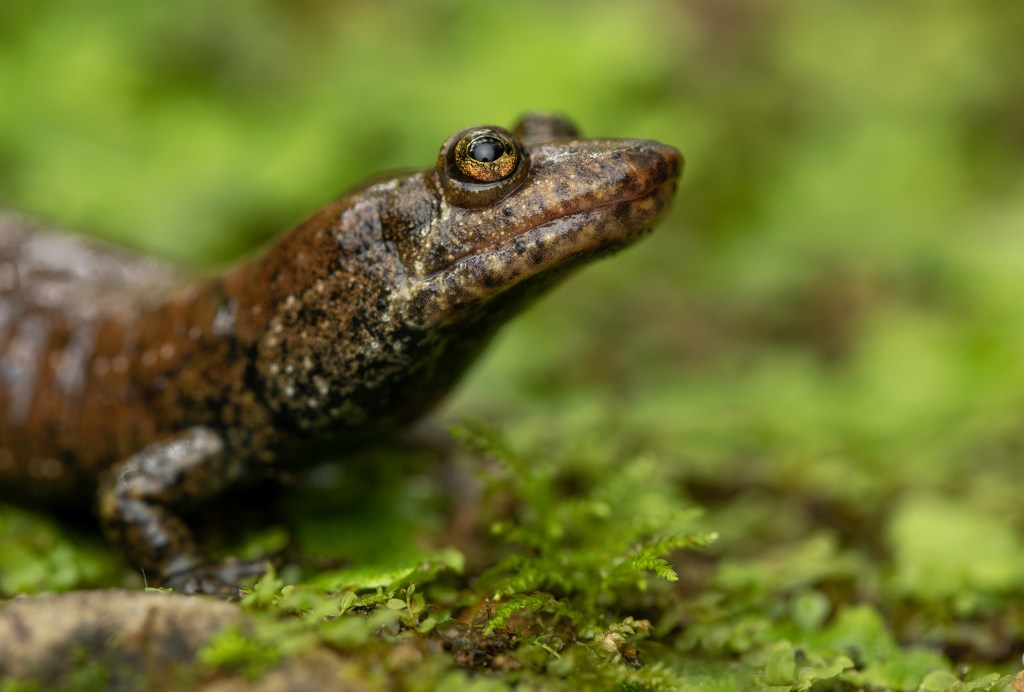
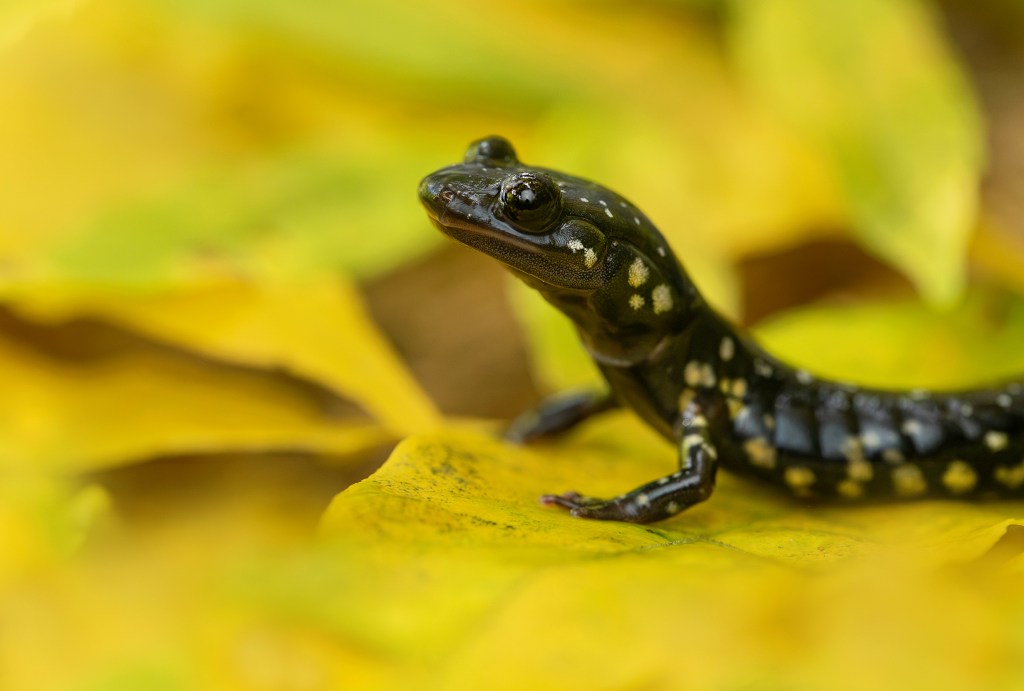
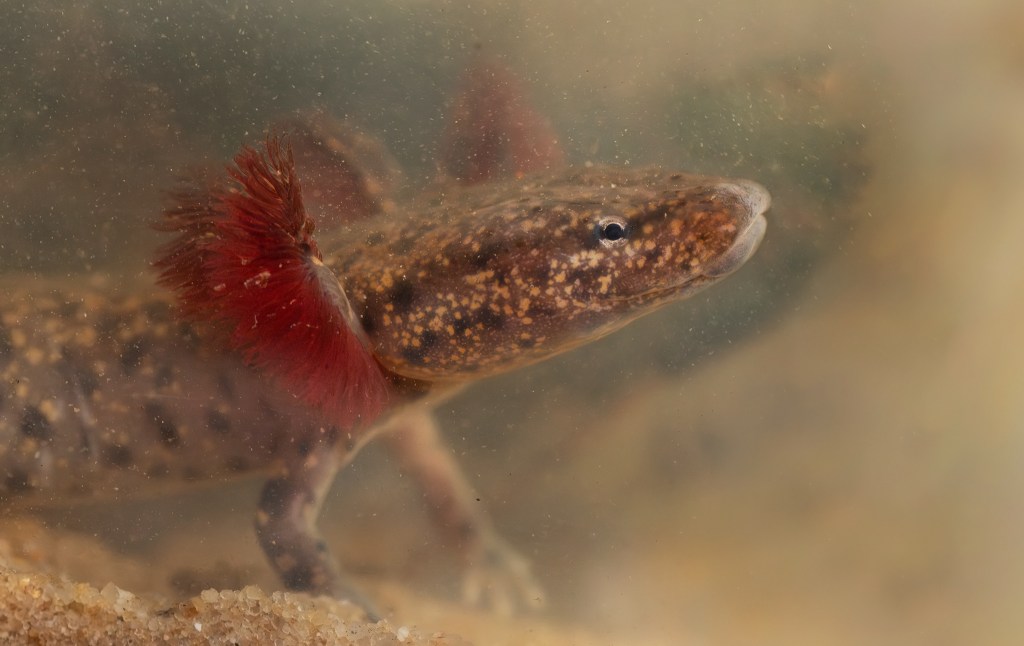
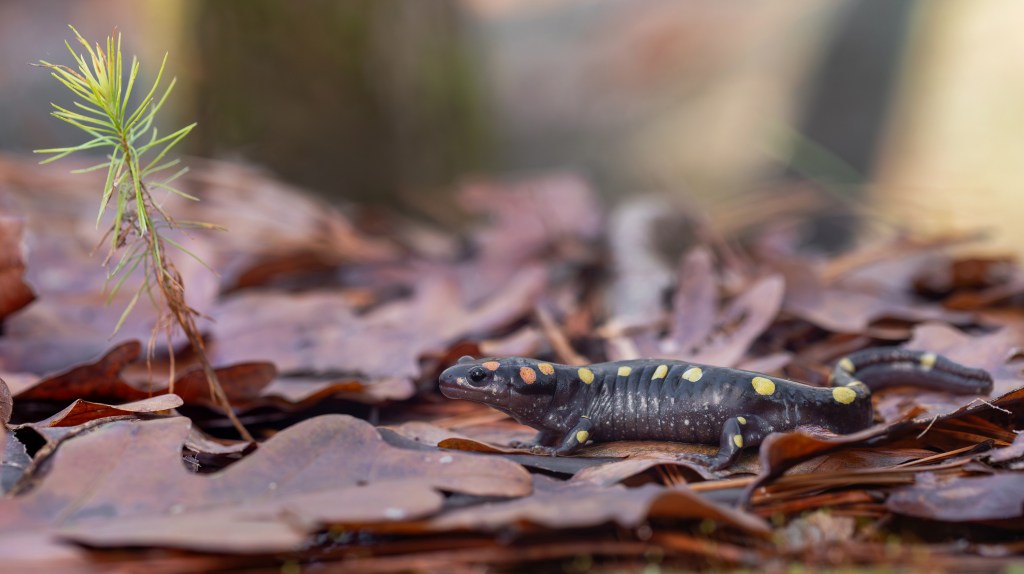
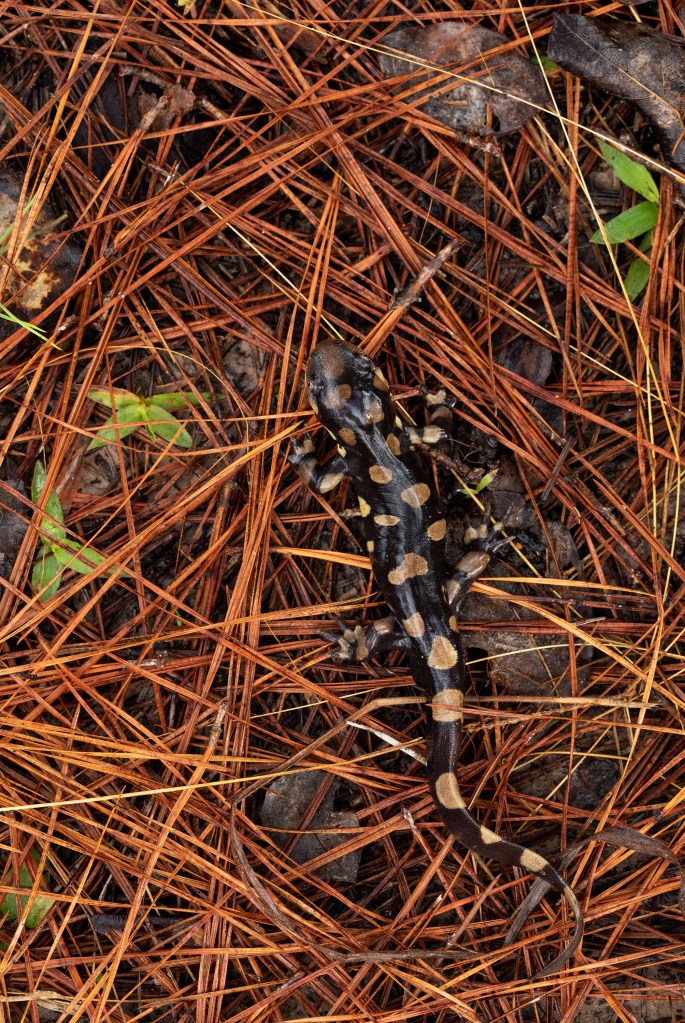
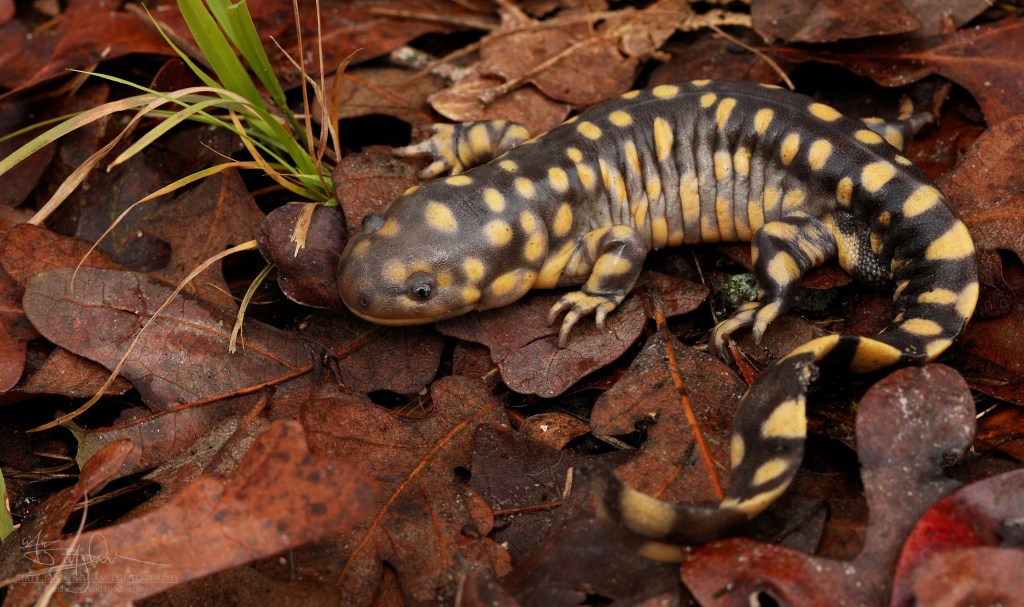
During the last days of 2024 east Texas was drenched by several powerful fronts that brought torrential rain. Normally this might trigger mass amphibian migrations this time of year, however I speculate that we haven’t seen enough cold days this winter, and as a result, the salamanders in particular, have not yet experienced their main breeding events. For that reason I felt particularly lucky to turn up this male spotted salamander (Ambystoma maculatum) close to its breeding pond. The spotted salamander is one of my all time favorite animals, and I never tire of seeing them. I think they’re one of the most beautiful organisms around and feel lucky that I can find them close to home.

Thank you for joining me for this tour of my favorite images of 2024. As I said at the start of this post, narrowing it down to 24 image was incredibly difficult. If you’d like to see more of my work from 2024 please visit my Flickr or Instagram pages. I wish you all a very happy and prosperous 2025.

Beating the Heat with Native Pollinators Part 4

Entypus unifasciatus on Ampelopsis [Nekemias] arborea.

*Note – on some monitors images may initially appear “washed out”. Please scroll over each image to see its intended presentation.

Before diving into our next set of pollinators, I thought I’d take a few moments to talk a little bit about photographing these tiny creatures. It has been challenging but rewarding. Many stunning macro images are made with techniques that include lighting via external flash, manual focus, and capturing multiple images that are stitched together in a process called “focus stacking” to maximize depth of field. In most cased I don’t employ any of these. I prefer to use natural light, however this means that I’m limited to shooting during overcast days or when the subject is in the shade. Sometimes shading the insects works, however bees and wasps often tend to flee when a sudden shadow overcomes them. This also means that I tend to shoot at higher ISO, though given today’s cameras and post processing software this isn’t a significant issue. I do sometimes use fill flash, particularly when I have relatively still subjects. In this case, natural light still does most of the work while the fill flash helps bring out the detail in shaded areas.

Most macro photographers utilize small apertures (f/8, f/11, or higher), and/or focus stack so that most of the insect appears in sharp focus. I tend to utilize larger apertures such as f/5. I like this look, and find it allows for some creative freedom with selective focus. It is also typically enough to get much of the insect in focus in profile poses. These large apertures also allow in more light, facilitating higher shutter speeds that help to freeze action, and they result in excellent background blur, even when there are other objects relatively close. Every so often a bee or other insect sits still long enough to allow a few frames that I can then manually focus stack in post processing.

Below is an image of a Megachilid (right) and a female Halictus ligatus sharing a bloom. I was lucky that both of their heads entered the same plane of focus for long enough to capture an image rendering the eyes of both species sharp.

Conventional macro photography also heavily utilizes manual focus. This is because the subjects are often so small and focus needs to be so precise. I agree this is best with still subjects, but I find it nearly impossible to manually focus on rapidly moving pollinators. My hit rate is much higher when I use autofocus in these situations. I’m still rolling with a DSLR, which doesn’t have animal eye tracking. With my setup, I find that single point focusing usually works best. When photographing certain subjects I like to move that point around to compose the shot in camera, but in these cases where the subjects are changing directions and moving back and forth, I tend to keep the point in the center and compose the image in post processing.

And now, back to the bugs!

Stinging Wasps

Recent studies suggest that bees are essentially specialized wasps. While bees have evolved to feed pollen to their developing larvae (or parasitize the pollen stores of other species), other wasps feed their larvae animal prey – typically other arthropods. Bees tend to have hairy legs and or abdomens, while other wasps often have spiny legs and smooth (or nearly smooth) abdomens.

The common name “wasp” is used to describe several clades in the order Hymenoptera, but more often than not it is used to describe “stinging” wasps. Below are representatives of a number of families currently included in this clade.

Family Crabronidae

Crabronidae (along with Sphecidae) are considered “Apoid” wasps. They are closely related to bees, which diverged from this family some 125 million years ago or so. There have been various recent works that have challenged the phylogeny of Apoidea and suggest that Crabronidae is a paraphyletic group. I won’t get too into the weeds on this here, and generally follow the taxonomy established on BugGuide.net.

Tribe Bembicini

Commonly known as “sand wasps”, there are some 200 species in this tribe in the United State and Canada. Prey sources for Bembicini are varied. Most species parasitize flies (order Diptera), though some prey on dragonflies and damselflies (order Odonata), butterflies and moths (order Lepidoptera), “true bugs” (order Hemiptera), and even other Hymenoptera.

Bicyrtes quadrifasciatus

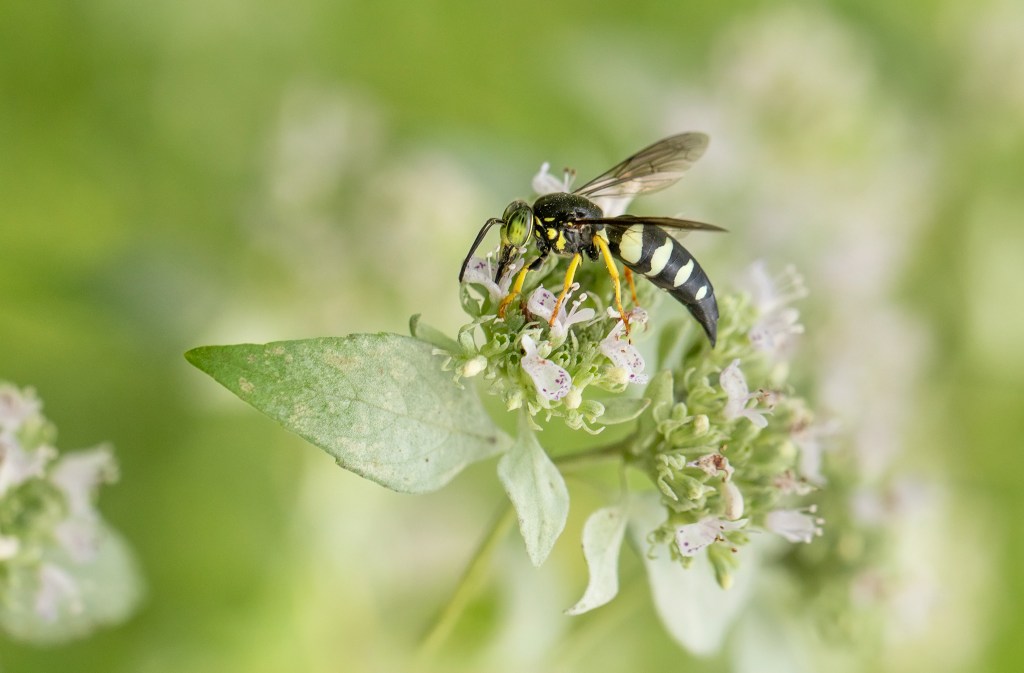
Commonly known as a “stink bug” wasp, females of this fairly large wasp species capture and paralyze true bugs (order Hemiptera, suborder Heteroptera). They then drag them to nests dug in the sand where they will provide food for their developing larvae. Adults feed on nectar like that of the Pycnanthemum albescens I photographed this one on.

Sphecius speciosus

The eastern cicada killer is one of the largest wasps in the country. Large females may approach two inches in length. They are thoroughly intimidating to look at, but though the female is capable of delivering a painful sting, they are not aggressive and only sting if being roughly handled. That said, I was still a bit nervous as I laid prostrate inches from these gentle giant as they buzzed all around me. There is a sandy patch of ground behind my office that has become home to several cicada killer burrows, and the males vigorously defend the entrances. At times they would lock up in aerial battle and land directly on top of me. To top it off, the area was thick with “cow killer” velvet ants (Dasymutilla occidentalis), a known parasite of the cicada killer! Imagine that, a flightless wasp that parasitizes one of our largest wasp species that parasitizes one of our largest insects, cicadas. I was very careful as to where I positioned myself on the earth, since velvet ants, while also non-aggressive, are capable of inflicting a sting that is purportedly even more painful than that of the cicada killer.

When we try and place the life cycle of most wasps in human terms, they’re really pretty brutal creatures. Imagine if there was some predator out there capable of overpowering us, delivering a paralyzing sting that immobilizes us, but keeps us alive so that our flesh stays fresh. They then drag us to a nest and either lay eggs near, on, or even inside of us. Those eggs then hatch into larvae which slowly eat us alive. Its gruesome, but also fascinating, and I dare say humans are capable of much worse.

Tribe Crabronini

Crabronini includes “square-headed wasps” and includes the genera Anacabro, Entomognathus, Crabro, and Ectemnius, among others. Many wasps are difficult to identify to species, but several in this tribe are difficult to narrow down to genus. Members of this tribe nest in the ground or rotting wood, and most provision their nests with flies (order Diptera).

Ectemnius decemmaculatus

Bugguide.net provides the following distinguishing features that separate Ectemnius from similar genera: recurrent vein ending in distal third of submarginal cell, ocelli forming a “low triangle”, lacking orbital foveae, and upper fronts evenly punctate. Hopefully this gives you an idea as to just how difficult insect identification can be.

That said, I believe that the species pictured below on Ampelopsis (Nekemias) arborea is a member of the genus, and that it is most likely E. decemmaculatus. This tentative ID is based of reddish femora on the handles and a silvery patch above the antennae. I think that these are some of our coolest looking wasps. Their squarish heads and huge bulging eyes make them look like tiny aliens.

Tribe Larrini

Tachytes sp.

The genus name Tachytes is derived from a Greek word meaning “swift”. These medium sized wasps are fast fliers, and hunt down grasshoppers and katydids (order Orthoptera) to provision their nests which are dug in sandy soils. There are a couple of similar species in our area. I played around with a key for a bit but it got to be a bit too dense for my casual curiosity. I photographed this individual on Mikania scandens at a local park.

Tribe Philanthini

Philanthus sp.

Members of this family are commonly referred to as beewolves due to their choice in prey. Adults feed on nectar of a variety of flowering plants like the Solidago ulmifolia below. The larvae, however, feed on small bees which the adults pursue and hunt down. They may intercept them on the wing, capture them at flowers, or even enter bee nests. Once a bee has been captured, the beewolf paralyzes it with a well placed sting and carries it to a subterranean nest. I have read that the females cultivate a beneficial bacteria in their antennae that they apply to their nests in order to combat potentially harmful bacteria.

I believe this is Philanthus gibossus based on the abdominal marking. This wide-ranging species preys on a variety of bees including Colletes and Sphecodes. They have also been documented capturing small wasps of the family Crossocerus.

Family Sphecidae

This is another family in the “Apoid” wasp group and includes the “thread-waisted wasps”, which are comprised of many distinctive species. These species are among our most familiar wasps, and many are familiar sights around homes. They provision their nests with a variety of invertebrate prey from katydids to spiders.

Ammophila procera

This thread-waisted wasps and others of its genus have very long, narrow abdomens (“waists”). This is one of the most widespread and frequently encountered Ammophila species in eastern North America. It does share its range with some similar congeners which typically require microscopic comparison of various morphological characteristics to differentiate. Adults feed on nectar and are frequently seen on flowers in the summer and fall. They provision their nests with paralyzed caterpillars (order Lepidoptera) and sawfly (order Hymenoptera) larvae.

Eremnophila aureonotata

E. aureonotata is similar to several species of Ammophila, but can be identified by its distinctive silvery patches on the side of the thorax, and lack of an orange band on the abdomen. They are similar in size and specialize on the caterpillars of a few butterfly and moth families such as skippers (Hesperiidae) and sphinx moths (Sphingidae), though they apparently have a special preference for prominent moths (Notodontidae). Females dig burrows in friable soil and provision them with a single paralyzed caterpillar, which will feed her developing larvae.

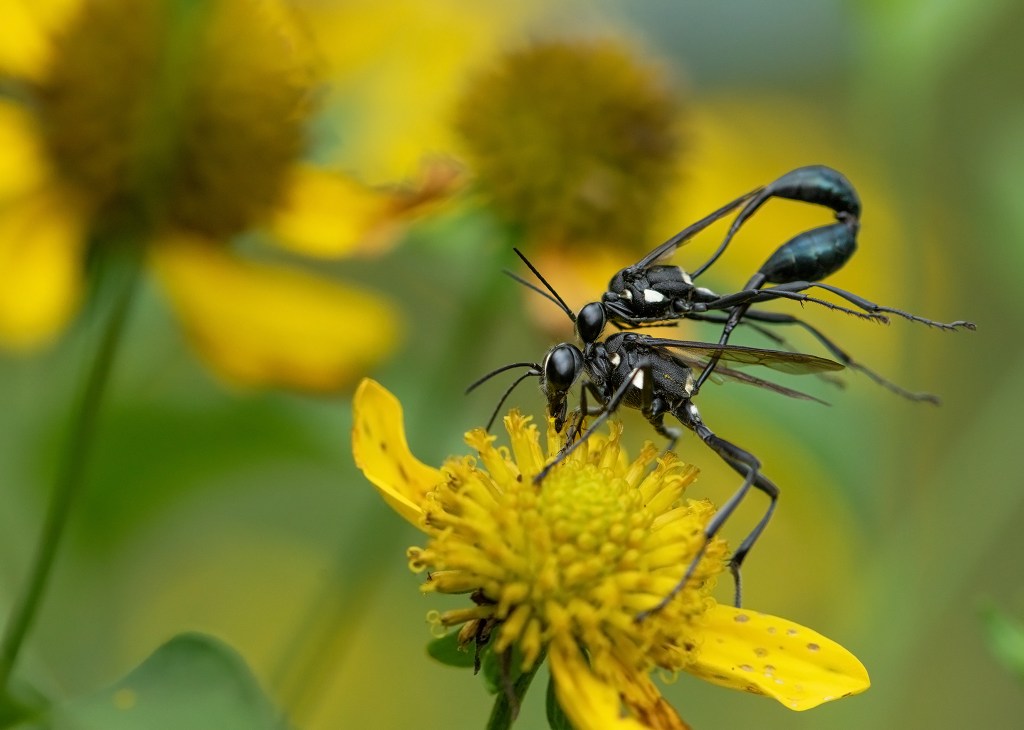
Apparently it is common to observe this species mating on flowers (even Bugguide.net mentions this). I did observe this several times in our garden, particularly in mid to late July. Coupled pairs would fly around together and the female would frequently land on flowers and feed during copulation.

Tribe Sceliphrini

This tribe includes species that are commonly referred to as mud or dirt daubers. These are large, charismatic wasps, and are frequently encountered around human habitations. I remember spending time admiring these wasps and their distinctive nests around my house growing up. Though they are harmless to people they can be quite intimidating due to their size and often bold nature. They feed their larvae paralyzed spiders which are stored in nests constructed of mud.

Chalybion californicum

Commonly known as the common blue mud-dauber wasps, this is a large, fast moving species with a brilliant iridescent midnight blue exoskeleton. They occur throughout North America. Females seek out protected areas to nests with mud which dry and contain various tunnels and chambers. These chambers are provisioned with multiple paralyzed spiders.

Sceliphron caementarium

This is probably one of our most familiar wasps, and is commonly referred to as the yellow-legged or black-and-yellow mud dauber. I love the specific epithet “caementarium“. It translates to mason or “builder of walls”, but sounds like a gothic cement prison, which is fitting for the mud nest where paralyzed spiders are imprisoned.

The yellow-legged mud dauber is an example of a species native to North America that has been introduced throughout much of the world, mostly accidentally. I find these wasps to be especially striking, with their sleek form and black and yellow markings.

Tribe Sphecini

This tribe contains two genera: Sphex and Isodontia. They specialize on crickets, katydids, and other members of the order Orthoptera.

Sphex ichneumoneus

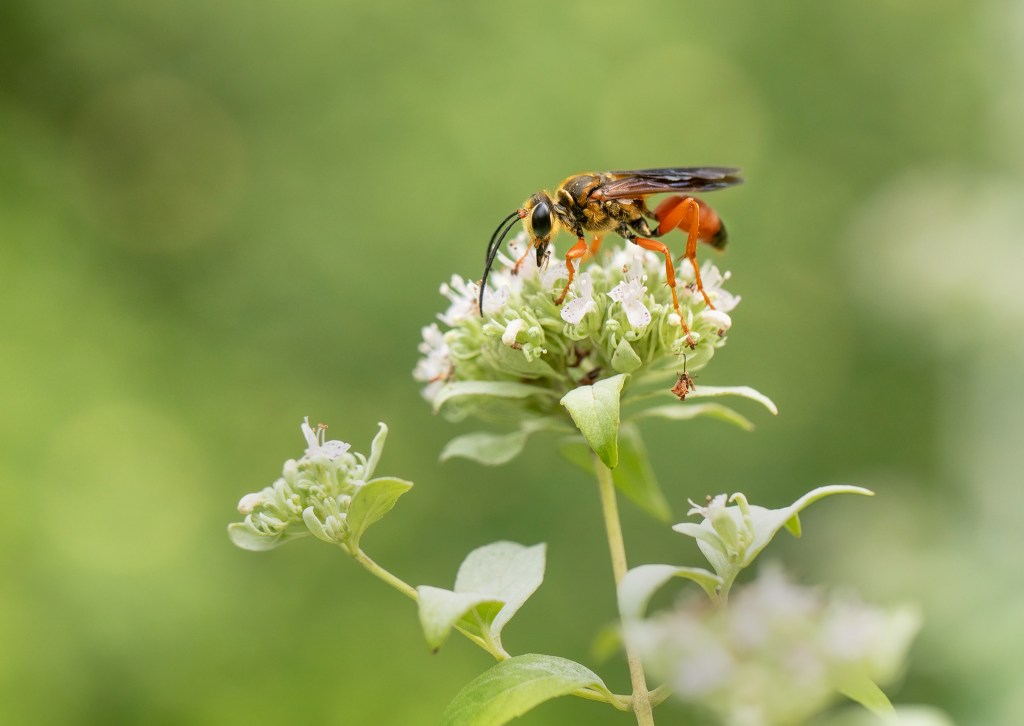
This large wasp is commonly known as the great golden digger wasp, and I think it’s a fitting name. I had my first encounter with this wasp back in the 7th grade, when I was working on an insect collection for my life sciences class. I captured one near my childhood home in the northern suburbs of Chicago and was instantly taken with it. I generally encounter a few every year, and each time I do I’m taken back to the excitement I felt all those years ago.

S. ichneumoneus digs burrows in sandy soil. Their burrows have a central vertical tunnel with several branches containing chamber like “cells”. Female wasps provision each of these cells with a paralyzed katydid and lay a single egg upon it. The leg will hatch into a larva with a free buffet of Orthopteran meat.

Sphex pensylvanicus

Large and intimidating looking, this species is commonly referred to as the great black digger wasp or just simply the great black wasp. They provision subterranean nests with large katydids. Like most other wasps, adults feed on nectars and the individual below was photographed on Eupatorium.

Isodontia auripes

Members of the genus Isodontia are collectively known as “grass carrying wasps”. They build nests in tree cavities or hollow stems and line the nest with blades of grass. They provision these nests with crickets and katydids.

Family Pompilidae

These are the spider wasps, so named for their behavior of paralyzing spiders to feed their larvae. Some species build nests where they drag paralyzed spiders to feed their larvae, while others enter the spiders nest, paralyze it, and leave it in its own home.

Tribe Pepsini

This tribe includes the tarantula hawks and their allies, which are some of the largest wasps in the country, though some species like those of the genus Epipompilus can be quite small.

Entypus unifasciatus

This is one of the largest wasp species in our area. They are distinctive with their bright orange antennae and wing tips. E. unifasciatus occurs across most of the United States and southern Canada. They parasitize wolf spiders and other large spider species, and though the adults primarily feed on flowers there have been observations of females taking liquids from spider extremities.

There are multiple subspecies of E. unifasciatus. East Texas is home to the nominate subspecies, E. u. unifasciatus which occurs in eastern North America. It is the only subspecies with bicolored wings – which are entirely orange in the others.

Tribe Pompilini

Poecilopompilus interruptus

At first glance, this species may look like a paper wasp (Polistes sp.), but it is in fact a solitary spider hunting wasp. They dig burrows in sandy soils where they prepare nests that are provisioned with orb-weaver spiders (families Areneidae and Nephilidae). This is somewhat unique among spider wasps, as most hunt spiders that do not form extensive webs (like tarantulas, wolf spiders, crab spiders, jumpingg spiders, etc.). I’ve read that tarantula hawks may use their legs to lightly disturb strands of webs outside of tarantula burrows to elicit a response. While I haven’t been able to find any resources describing Poecilopompilus hunting behaviors in detail, I wonder if they do something similar to orb weaver webs in order to draw them in closer.

Tachypompilus ferrugineus

Commonly known as the rusty spider wasp, I find this species to be particularly attractive. They’re fairly large with a mostly reddish orange exoskeleton and black to bluish wings. Females hunt large spiders including wolf and fishing spiders, paralyze them, and drag them to their nests. Once there, the female flips the spider over, affixes an egg to it, and covers it with soil.

To be continued…

Beating the Heat with Native Pollinators Part 3

A male long-horned bee on Helianthus

I’ve never wanted to be one with the animals – not really. In fact, it’s our differences that have always drawn me to them. Many children have dreams of being able to speak with animals, to understand their language. I had these dreams as well, but for me they were more like nightmares. Even at an early age I felt that having that ability would remove the sense of wonder I feel while observing, learning, and experiencing biodiversity. Each species is unique and should be, at least in my opinion, revered on its own merits, not those that we can liken to ourselves. That’s not to say I don’t feel empathy. Quite the opposite actually – I feel empathy to all creatures, great and small – revered and reviled. And though it’s clear that different species experience the world in different ways, I still try to imagine what life might be like were I born another creature.

I think that’s part of what fascinates me about insects. Their morphologies and life histories are so very different than ours. Imagine, for example, you were no less than a half inch long and weighed a fraction of a gram. Despite this, you still had to navigate the world – a world much much larger and more dangerous than the one we know.

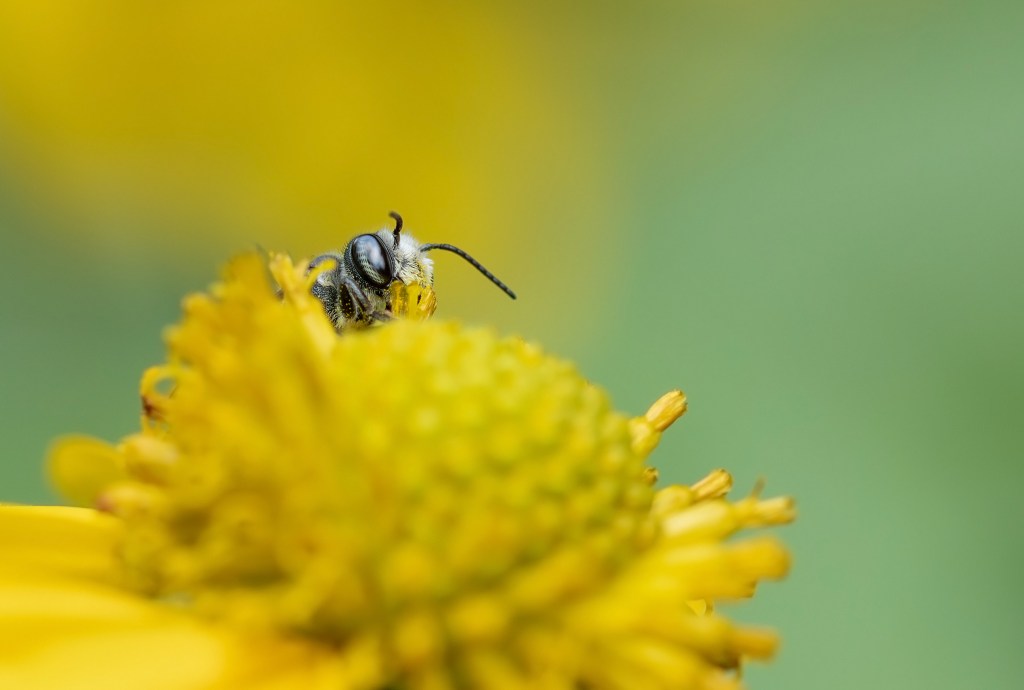
I was plunged into this state of contemplation today during my lunch break. Fortunately my office is a couple of blocks away from the Pineywoods Native Plant Center in Nacogdoches, Texas. I frequently wander the grounds during lunch and enjoy the abundant blooms, birds, and bugs. Today while admiring some late summer/fall blooming plants I spotted a male longhorn bee sleeping on a sunflower (Helianthus sp.). I’m still not sure which species, but have been trying to compare phyllaries to possible suspects and will update once I figure it out. ***Edit – after looking into it further, I now believe the flower belongs to Silphium asteriscus***. I was planning to continue my treatment of Hymenoptera today by moving onto the wasps, but today’s experience inspired me to focus on a single species – a single individual no less worthy of our admiration.

When I first spotted him and realized he wasn’t moving, it was instantly clear that he was sleeping. This isn’t unusual, and bees frequently take catnaps on flowers during the day. This was different though, and this little long-horned bee seemed to find the perfect little bed.

Admittedly I haven’t tried very hard to identify him to species yet. I believe he is a member of the genus Sastra. I have seen both S. petulca and S. obliqua at this site. I suspect this due to his antennae that, while long, seem shorter to me than those of other similar genera of Eucerini (refer back to my first installment of this summer pollinator series for more information on long-horned bee taxonomy). This individual looked a bit different, however. Particularly his coloration. He was very light, with light gray hairs that seemed to have an ever so slight bluish hue on the abdomen.

I watched him for around half an hour and he never left this flower. Occasionally he would stir from his slumber and walk circles around the disk flowers forming the bloom’s center, lapping up nectar with his glossa (tongue-like mouthpart). Then he would stop again, catch a few more minutes of z’s, and get back to eating. He even took a moment to play a game of peek-a-boo with me (or more likely just to use the hairs of his foreleg to clean bits of pollen and other debris from his compound eyes).

I really enjoyed this experience, and it brought me more joy than one might expect half an hour of staring at a lazy bee might (forgive my anthropomorphism of an animal that is anything but lazy). The natural world never ceases to amaze me, and there really is endless wonder to be found in observing our planet’s incredible biodiversity. From the drama of the elk rut, where massive warriors weighing hundreds of pounds and adorned with lethal weaponry clash and may meet their deaths, to the beauty and tranquility of a tiny bee clad in an adorably fuzzy exoskeleton allowing me a glimpse into his life from mere centimeters away, countless experiences await those willing to seek them out. It brings me great joy and comfort that in my forty years, which have been filled with more time in nature than most, I haven’t even scratched the surface of the fascinating life forms that call this planet home.

Beating the Heat with Native Pollinators Part 2

Halictus ligatus on Rudbeckia laciniata

Today’s post continues my coverage of the more common native bees of my area. Please enjoy this tiny subset of our incredibly rich apifauna.

*Note – on some monitors images may initially appear “washed out”. Please scroll over each image to see its intended presentation

Family Colletidae

This diverse family contains a variety of solitary bees with common names like cellophane bees, polyester bees, and plasterer bees. This name comes from secretions that dry to form a plastic like barrier and are used to line their nests. There are five genera in the U.S.

Colletes sp.

Cellophone bees of the genus Colletes can be identified by their unique mouth parts which include a “tongue” that is forked and shorter than most bees. Colletes are ground nesting bees that line their nests with a cellophane like material that is waterproof. We haven’t seen any Colletes in our garden, but when photographing wasps with James at Childress Farm, this individual landed on his hand, presumably to lap up the sweat generated in the sweltering July heat.

Family Halictidae

This diverse family includes bees that occupy a wide range of habitats and carry out a variety of different life histories. Its species exhibit a wide range of sociality, from solitary to eusocial, though the eusocial species may vary their behavior depending on a variety of factors, being solitary in some conditions and establishing colonies with defined castes like queens and workers in others. While worker honey and bumblebees are sterile, worker Halictids can assume reproductive roles if a queen is lost. Most species are ground nesters, though a few nest in rotting wood. Some members of this family are brightly colored, displaying metallic greens.

Tribe Halictini

Halictini includes the sweat and furrow bees. Sweat bees are so named for the propensity to land on human skin and lap up sweat for its sodium content. It should be noted that they are not the only bees to do this, as evidenced by the Colletes sp. pictured above.

Halictus ligatus

This small bee was incredibly common in our garden in July. It is widespread across North America and is polylectic, visiting many different plant species for pollen. They nest in the ground and rotting wood and individuals may utilize the same nest site multiple years assuming it remains in tact and the surrounding habitat remains suitable.

H. ligatus is a dark bee with well defined bands on the abdomen. Like many bee species, H. ligatus is sexually dimorphic. Males (above and below) have a long, slender look to them and have proportionately longer antennae. The lower portion of the clypeus and the mandibles are yellowish.

Females (below) have large, blocky heads. They have noticeably long mandibles and a tooth-like projection on the bottom of the head near where it connects with the thorax. The females have harrier legs which are efficient at collecting pollen (see the image below).

H. ligatus is one of the primitively eusocial Halictids. In “poor” conditions, such as harsh climates and extended periods of harsh weather conditions, the species may be solitary or form very loosely structured colonies with little division of labor. Under optimal conditions, however, large colonies with defined roles can develop. These are different from truly eusocial bees as individual bees may facultatively assume or abandon specific roles. Colonies are established by a foundress, which is analogous to a queen, and large colonies may have multiple queen-like egg producing bees. Worker-like bees collect food and tend to the colony, but are also capable of reproducing and in some situations may produce significant numbers of eggs.

A similar species, H. poeyi was split from H. halictus based on differences in mitochondrial DNA. They are visually identical, but fortunately their ranges do not overlap in our area. H. poeyi is restricted to the east Coast.

Lasioglossum

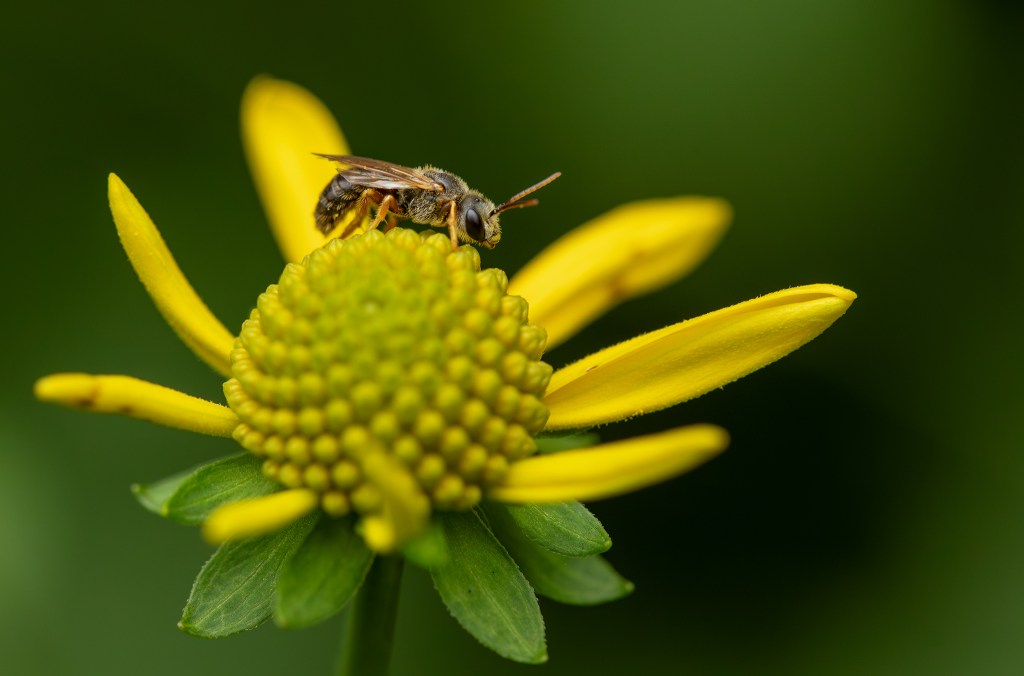
I’ve read that Lasioglossum is the most diverse of all be genera. There are nearly 300 species in North America and 1800 species worldwide. Many of these are tiny, with some measuring just a few millimeters in length. Differentiating the species is a daunting task and can require microscopic examination of the texture of the thorax and pattern of wing venation. I believe we had at least two species in our garden this summer.

The more common of the two is a metallic bronzy green (pictured above on Rudbeckia laciniata and below on Conoclinium coelestinum). Like Halictus, Lasioglossum exhibits a wide range of sociality. I believe that bee so tiny do not forage far from their colony, so I spent a fair amount of time seeking out potential sites to no avail.

When looking at bees, our gaze is immediately drawn to their large compound eyes. These eyes are made up up numerous “simple eyes”, which contain lenses and light detecting cells. Compound eyes allow them to interpret their surrounding, detect objects and sense depth. Bees (and wasps) also have three eye like structures on the top of their head known as ocelli (visible in the image of Lasioglossum sp. below). Ocelli don’t allow them to see detail, but sense light and movement and are helpful in flight.

Below is another species of Lasioglossum from our garden. It is less common, larger, and more robust than the individuals pictured above, and is matte black in color rather than metallic green. Admittedly, the relative size could be related to social status as well, however I still suspect it is different.

Below is yet another species of Lasioglossum – at least I think it’s a different species. Some species can be somewhat variable making identification all the trickier. This one is nectaring on a Ludwigia sp. bloom in the Davy Crockett National Forest. I regularly see bumblebees and carpenter bees visit Ludwigia. Those species span nearly the entire flower and frequently knock the petals off while feeding. Lasioglossum on the other hand look tiny in the blooms’ centers.

Family Megachilidae

This highly diverse family contains bees of a variety of shapes and sizes. The family name references the large mouthparts. Some construct nests in wood while others “squat” in burrows of other insects, or in crevices such as pine cones. Members of this family may heavily utilize “bee houses”, which are generally collections of hollow sticks.

Tribe Anthidiini

This tribe contains a variety of mostly small but stout bees. Many are wasplike in appearance with few hairs on the legs and body. Like many Megachilids, females of many species have scopa on their bellies to collect pollen, however some, like the species below are kleptoparasitic, meaning that they don’t feed on a host, but rather steal food from them (think kleptomaniac!)

Stelis louisae

This uncommon bee is a kleptoparasite of other bees in its own family. As promised in last week’s post, today we’re diving deeper into kleptoparasitism (sometimes spelled cleptoparasitism). Females lay their eggs in a host nest as its being built, and the female of the host species will eventually seal them in with their own eggs. The S. louisae then hatch and the larvae kill the eggs or larvae of the host and feed on the pollen stores left by the host female to provision her own larvae.

As they don’t collect pollen to feed their larvae, S. louisae are not hairy and can be easily mistaken for small wasps. I first noticed hem in our garden a few years ago. They seem to be fairly common, and I can usually find a few from mid June to mid August.

Tribe Megachilini

This tribe includes species with common names like leafcutter, resin, and sharptail bees. It is the most diverse tribe within the family Megachilidae.

Coelioxys mexicanus

Members of the genus Coelioxys are commonly referred to as sharptail bees or cuckoo leafcutter bees. Like the Stelis louisae above, they are kleptoparasites of other bees in their family. They also lack dense pollen collecting hairs. C. mexicanus is widespread in the southeastern U.S., and extends into Central America.

This is an example of a group of bees I was unaware of until I started paying closer attention earlier this summer. Initially I mistook them for true leafcutter bees (Megachile), but when examining the images I noted several morphological differences, notably the pointed tails and general lack of dense hairs.

C. mexicanus is uncommon in our garden. It’s not a species that’s present every day (or at least, not at the times I went out to look), though with diligent searching I could usually find a couple in a given week. I also observed a few at the Pineywoods Native Plant Center foraging on Pycnanthemum albescens (below). Though they do not collect pollen, the adults still feed on nectar.

Megachile

This genus includes the leafcutter and resin bees. They are very common and can be found on a variety of flower species. I struggled to identify many of these to species, so I’m including a collection of images that may or may not be members of the species. Females collect pollen via dense scopa on the “belly” (bottom of the abdomen). Males often have very hairy “faces”.

Flying around in constant search of nectar and pollen takes its toll, and most bees live short lives. Eventually wing damage, like in the individual pictured below, can ground them, causing them to lose access to valuable food sources. This individual was still capable of flying, though not as effectively as its cohorts.

Leafcutter bees are so named for the females’ leaf collecting behavior. With large, powerful mandibles, they cut circles out of leaves and use them to partition egg chambers in their nests, which are established in hollow stems or subterranean burrows. (Note the yellow color on the bottom of the abdomen in the image below. This is caused by pollen stuck to the scopa, which will be used to provision each egg chamber.)

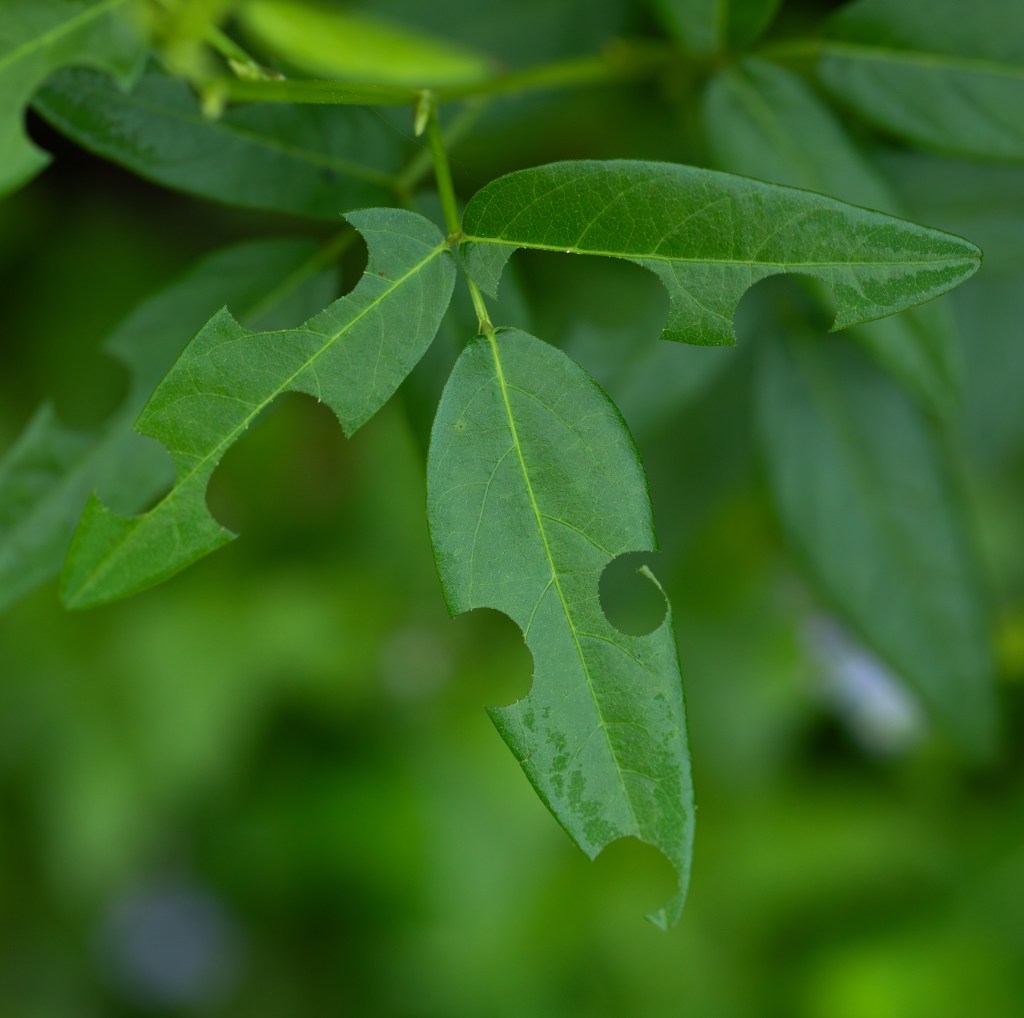
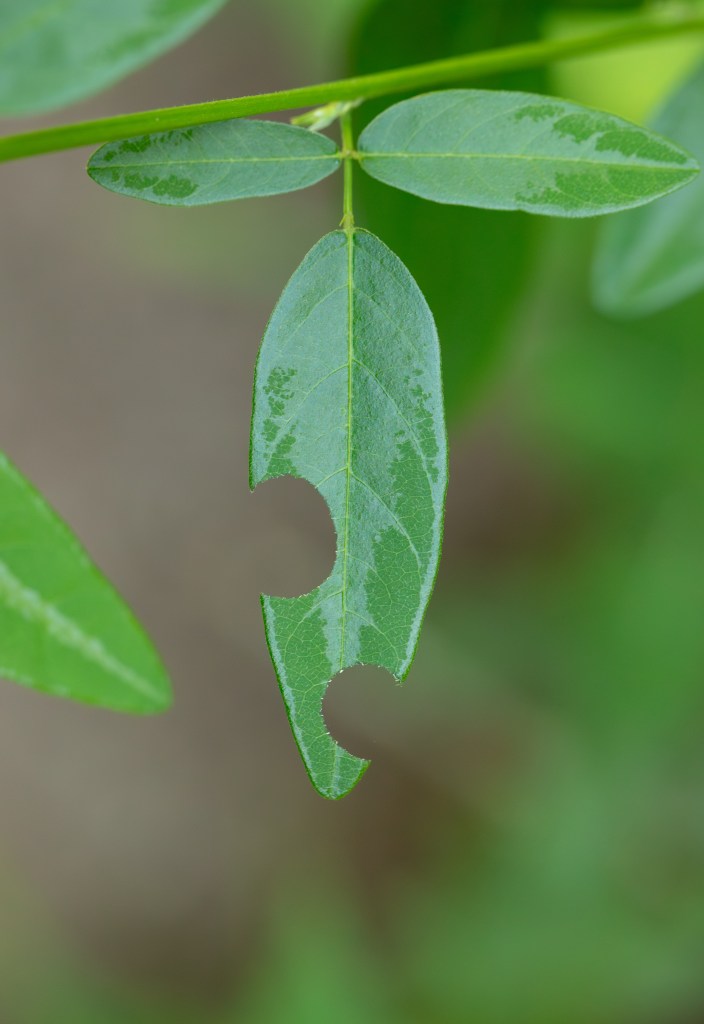
In our yard, Megachile seem to show a preference for Desmodium (Fabaceae; following two images) and Vitis (Vitaceae). They often cut nearly perfect circles or ovals. Though there is ample evidence of their activity throughout our yard, try as I might I have only observed them actually cutting their leaf pieces a handful of time, and have struggled to photograph it.

Megachile xylocopoides

Some Megachile are fairly easy to identify and M. xylocopoides is one of them. The specific epithet xylocopoides refers to the similar appearance to large carpenter bees (Xylocopa). They are large and dark. Females are entirely black, while males, like the one pictured below, often have yellow hairs on the head, thorax, and abdomen.

Males also have enlarged, hairy basitarsi (the basal part of the tarsi, which also include the skinny tarsomeres, to which the pronged foot is attached). These structures are used to cover the eyes of females during mating.

This striking male M. xylocopoides is the only individual to have visited our garden. We saw him a couple of times over the course of a single day. We have observed other individuals at some of our local green spaces in previous years.

Tribe Osmiini

This tribe includes the mason bees, so named for the tendency of some species to use earth and mud in the construction of their nests. Not all species in this tribe make earthen nests, however, but rather exhibit a wide range of nest building behaviors.

Heriades sp.

Heriades is one of several polyphyletic genera commonly referred to as resin bees. Instead of using leaf pieces or mud to construct partitions in their nest chambers, they use plant resin. They have a long, slender look and their abdomens often appear curled downwards. There are only a few species in the eastern U.S., however they are very difficult to separate.

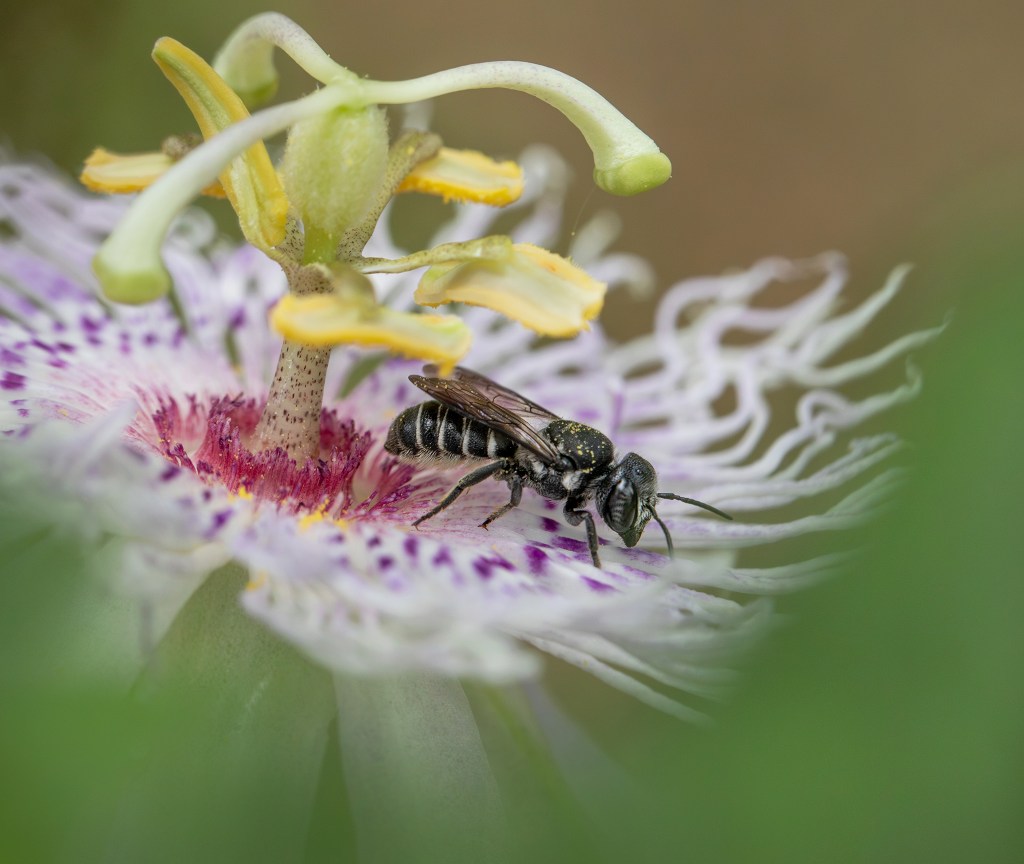
Heriades are fairly common in our garden. They visit a variety of flowers, and I have seen them on Amorpha, Liatris, Rudbeckia, and Passiflora (below). When feeding on Passiflora, the bees clung to the androgynophore (the base of the large structure emerging from the flower that supports the reproductive structures) and dug their mouthparts deep into the nectaries beneath the flowers’ deep pink center.

One afternoon while observing pollinators in the garden I noticed a common on one of the Rudbeckia laciniata blooms. There I saw three Heriades bees grappling. I believe this is a “mating ball”, where multiple males attempt to mate simultaneously with a single female.

Utilizing a macro lens has really allowed me to appreciate the compound eyes of these bees and other insects. The compound eyes in particular can be truly stunning, with rich colors and intricate patterns.

To be continued…

Beating the Heat with Native Pollinators Part 1

A male Melissodes bimaculatus on Rudbeckia laciniata

I think it’s safe to say that visiting East Texas during the height of summer is on very few people’s bucket list. Sure, we have our tragically large reservoirs that might draw a few boaters, anglers, and swimmers, but by and large the weather is just too brutal. Days of stifling humidity and temperatures of 95 or even 100°F are the norm rather than the exception. For a naturalist there are some cool things to see. Some of our showiest flowers like Lilium michauxii, Silene subciliata, and a few different orchids in the genus Platanthera bloom during this time, but I’ve already spent my fair share of time with those characters, and though I’d love to see them again each year it’s currently a little harder for me to justify disappearing all day to trek through the sweltering, mosquito filled woods with a little one at home. That’s why this year I was thrilled to really put the time into discovering and chronicling the incredible biodiversity that exists much closer to home.

Over the years we (and by we I mean mostly Caro) have established an impressive native pollinator garden, stocked with regional plants that were either salvaged from development sites or from seed collected from local populations. Caro has a green thumb and enjoys gardening with native plants. She has played around with planting, seeding, composting, watering, and everything else that goes into establishing a garden, and now our little green space is thriving. Highlights include several species of Rudbeckia, including R. laciniata, R. maxima, R. grandiflora, R. triloba, and R. hirta. Some early bloomers include Ribes curvatum, Zizia aurea, Viola sororia, Phlox pilosa, Tradescantia hirsutiflora, and T. ohiensis. We have some species that are uncommon in the region such as Silene subciliata, Eutrochium fistulosum, and Manfreda virginica. We also have showstoppers like Physostegia digitalis, P. pulchella, and Silphium radula along with native garden staples including Liatris pycnostachya and Echinacea purpurea. The latter is admittedly not from East Texas stock, but we do also have Echinacea sanguinea from Angelina County and E. pallida from Bowie County. In all we have over 70 native plant species in a little patch of around 500 square feet or so. In the past I have spent some time observing the pollinators here, specifically focusing on some of the more obvious and well known species like the American bumblebee (Bombus pennsylvanicus), but it wasn’t until this year that I really paid attention and realized the fascinating tiny world that existed just outside our kitchen window.

It’s been a long time since I found something in the natural world that sparked my fascination so and sent me back into that wonderful childlike sense of experiencing things for the first time. For weeks it seemed like I was learning about some new creature every day. Seeing (or rather observing) each one for the first time, photographing it, and then pouring through resources to try and identify it and learn about its life history. I really did feel like a kid again.

Soon I decided to branch out, and began bringing my camera with me the days I went to the office in Nacogdoches. I spent my lunch breaks at the Pineywoods Native Plant Center, where several demonstration gardens with a variety of native plants are open to the public. Here I found a different cast of pollinating characters than the one presently in my back yard. I also took the family over to the Childress Farm, where we went exploring with James and Erin Childress (whose names regular readers of the blog will recognize). There we found another different pollinator community! Each time I saw a new species visit a flower before me I could hardly contain my excitement as I trained my camera on it and hoped I might be able to capture a worthy image.

Sceliphron caementarium on Nekemias (Ampelopsis) arborea at Childress Farm

It really was fascinating. For example, at my house, where the main blooming plant during the height of summer is Rudbeckia laciniata, established from the only known site in Texas, the community is very bee heavy. I documented 14 species of bee, three species of wasp, six species of fly, and three species of butterflies and moths. In this context, documented means that I captured what I consider a high quality photograph of the species. There were numerous other species of each group that evaded my lens. At the Pineywoods Native Plant Center I documented three bee, five wasp, three fly, and one butterfly species. Most of these were feeding on Pycnanthemum albescens. Lastly, at Childress farm I documented 10 wasp, one bee, and three fly species, primarily on Nekemias (Ampelopsis) arborea blooms. Admittedly I only spent one afternoon here, and observed several other species, including a variety of bees. The diversity and abundance of insects visiting the peppervine growing along their pond and fencerows was staggering.

This is the first in a series of blog posts will highlight the species I’ve documented over the past few weeks. I started preparing a massive post but soon realized I had amassed a cast of over 50 species. It’s really amazing how much biodiversity can be found close to home. Most of these species were photographed at the three locations above, however some were captured during various outings around eastern Texas. I try to note these in the text. While I’m confident in the identifications I’ve made for most species, some of these taxa are incredibly difficult to pin down to species, and some are even difficult to key to genus. I fully admit there may be some errors made here, and would welcome any corrections from those more experienced with these groups. I’ve more or less broken it down by taxonomy and provided information such as family and tribe where it makes sense. Most of this information has come from the incredibly helpful bugguide.net. With that, please enjoy this small subsection of an incredibly diverse community of east Texas pollinators.

*Note – on some monitors images may initially appear “washed out”. Please scroll over each image to see its intended presentation

Order Hymenoptera

Hymenoptera is one of the most diverse insect orders, with over 150,000 described species worldwide. It includes sawflies, bees, wasps, and ants. Like butterflies and beetles, Hymenopterans undergo complete metamorphosis, with distinct life phases of larva, pupa, and adults. They exhibit a broad range of life histories, and some species have evolved incredibly complex social structures that include unique morphologies of individuals to complete specific tasks for the colony. There are some 17,000 to 18,000 species recognized in North America.

Bees

Bees are the quintessential pollinators. While wasps, flys, beetles, butterflies, birds, and a variety of other groups can and do incidentally pollinate plants as they move from flower to flower, bees have evolved specifically to carry pollen. This is because they feed pollen to their developing larvae. While honeybees produce that familiar sweet substance we all know and love, our native bees are not honey makers. Instead most develop tasty pollen balls that are placed in the nest with their young. And while we’re familiar with the sociality of honeybees, most of our native bees are solitary. There are nearly 4,000 species of native bees in the U.S., of which approximately 1,000 occur in Texas, with diversity increasing as one moves west. While most collect and deliver pollen to their young, there are some nest parasites, most notably the cuckoo bees, which lay their eggs in the nests of other bees, leaving the rearing of their larvae to strangers.

A leafcutter bee – Megachile sp. on Rudbeckia laciniata

Though most people cite colony collapse and the plight of honeybees as a significant ecological issue, it should be noted that the western honeybee (Apis mellifera) is not native to North America. The species was introduced by early colonists in the 17th century. Marked declines in recent decades have been observed in many of our native bees. This is a phenomenon primarily driven by habitat loss, though other factors such as global warming, which can affect flower phenology, is a serious issue, especially for some of our specialist bee species. Many of our bees are polylectic, meaning that they collect pollen from a variety of plant families. Some, however are oligolectic, meaning that they collect pollen from a narrow range of plants, typically only a single family, a single genus, or even a single species. For these species, shifting a host plants bloom time by even a couple of weeks could be detrimental.

Family Apidae

This family includes some of our most familiar bees, such as the dutiful honeybees and bumblebees, the teddy bears of the bee world. They are generally very hairy and range in size from tiny Ceratina carpenter bees to gargantuan queen bumblebees.

Tribe Bombini

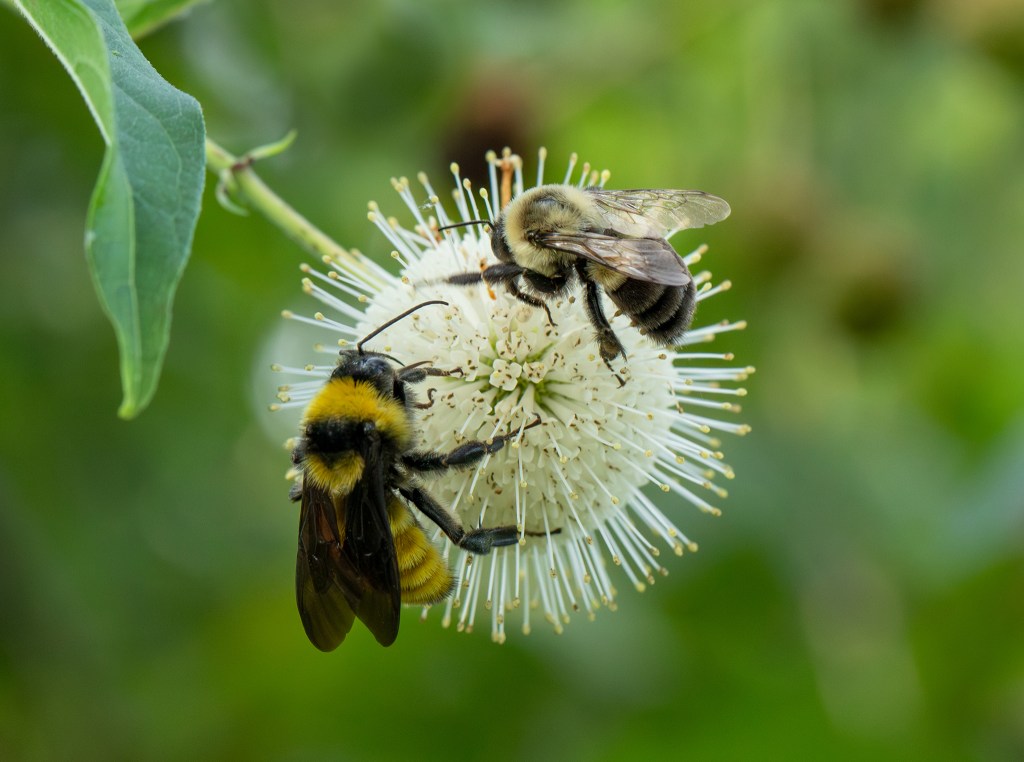
I’d wager most people would consider bumblebees to be archetypical bee – fuzzy, with varying bands of black and yellow. Bumblebees are among the few native bees that are eusocial – meaning a single female produces the offspring of a colony. Bumblebee colonies are much smaller than those of honeybees – on the scale of hundreds of individuals compared to thousands or even tens of thousands. They are comprised of a queen, sterile female workers that collect pollen and tend the nest, and males who leave the nest in search of other queens to breed with. Females can be identified by the “pollen baskets” on their legs, and by having six abdominal segments compared to seven in males. Below an American bumblebee male (drone; left) can be seen alongside a common eastern bumblebee worker (right) on buttonbush (Cephalanthus occidentalis) in the Davy Crockett National Forest.

Bumblebees, along with many other bees, are capable of “buzz pollination”. This is a technique in which a bee will grasp a flower and rapidly vibrate its flight muscles to dislodge stubborn pollen held tightly to anthers. Some familiar plants that require buzz pollination are blueberries, tomatoes, and eggplants. Though honeybees are important pollinators, they are incapable of buzz pollination. This makes bumblebees and many other types of native bees important pollinators of some of our favorite food crops.

Bombus impatiens

The common eastern bumblebee (Bombus impatiens) is the most common bumblebee in my area, and one of the most commonly seen bees in our garden. There are a variety of factors that can be used to help identify bumblebees. This includes the coloration on the thorax and abdominal segments (known as terga or herbal segments), the color of the face and vertex (back of the head/top of the neck), the color of the wings, and the malar space (similar to a cheek). In B. impatiens the thorax is primarily yellow with a broad area of dark hairs in the center. The first tergum is yellow and the rest are black. The vertex is yellow and the wings are clear.

B. impatiens start their day earlier and end it later than most of the bees in my garden. I’ve observed them foraging on a variety of flowers at the three sites where photos were captured for this blog. Examples include Liatris pycnostachya (above), Helianthus spp. (below), Rudbeckia laciniata, Pycnanthemum albescens, Hydrolea ovata, Amorpha fruticosa, Chamaecrista fasiculata, and many more.

I can always count on there to be a few B. impatiens around when I head out with my camera. This abundance allows me to try and capture a variety of unique compositions, including looser ones that showcase the animals small in frame and incorporate some of the surrounding plant. An example of this is the image below of B. impatiens foraging on Pycnanthemum albescens.

Below is another example of a looser composition that I really liked. This is actually a gyne, or newly emerged queen (more on this in the next species entry). I thought the framing of the fully open Rudbeckia laciniata bloom among two that were just beginning to open made for an interesting image.

I also enjoyed playing around with tigher portraits and poses, including the head on look below as the bee emerged over the top of a blooming Liatris pycnostachya.

Bombus griseocollis

The brown-belted bumblebee (Bombus griseocollis) appears, at first glance, quite similar to B. impatiens. Closer examination, however, reveals a number of differences. Like B. impatiens, B. griseocollis has a primarily yellow thorax. Instead of a broad area of dark hairs in the thorax center, B. griseocollis has a small hairless patch that looks almost like a hole at the thorax center. B. griseocollis also has yellow on the first tergum and yellow, brown, or a mix of both on the second tergum. The vertex of B. griseocollis is blacks, and the wings are black, and not as transparent as those of B. impatiens.

Queen B. griseocollis are among the first bees to emerge in the spring. As in most bumblebees, the queen, who mated the previous year and overwintered in her nest, begins collecting pollen as the days grow longer and the temperatures warm. She builds a few brood cells where she lays eggs. A few weeks later they emerge as sterile adult female workers that tend to the nest and collect pollen for the colony. Later in the summer the queen begins producing reproductive male bees known as “drones”, and finally new queens known as “gynes”. The drones and the queens set out to mate. The drones die shortly thereafter, and the gynes will overwinter, destined to become queens of their own colonies the following year. In all, the life cycle of a bumblebee nest is about a year.

The gyne pictured here is the only B. griseocollis that I’ve seen in our garden. She came flying through late one morning in early August. She was absolutely huge, easily one of the largest bees I can remember seeing. I followed her around the garden for some time, trying and failing to capture an image until she landed on a Rudbeckia laciniata bloom and promptly fell asleep. I frequently observe bumblebees taking micro naps in the garden, but it was special to have her rest mere inches from me. After a few minutes she slowly began to wake up and I was able to capture a few images as she stretched and prepared to continue on her way. I never saw her again, but hope she found a drone and a good nest site nearby so that perhaps I might see a few more B. griseocollis in the yard next year.

Bombus pennsylvanicus

The American bumblebee (Bombus pennsylvanicus) is common and widespread in the eastern half of the United States, with a range that expands into Mexico and southern Canada. Though not as common as B. impatiens, they are regular visitors to our garden and I frequently see them both in wilderness and more developed areas. They are distinctive and unlikely to be confused with any other species in my area. The anterior half of the thorax is yellow and the posterior half is black, and there is yellow on the first three terga. They are the largest bumblebees in East Texas.

B. pennsylvanicus has become a species with significant conservation concerns in recent decades. While numbers in Texas seem to be holding, elsewhere significant population declines have been recorded. This has been especially severe in the northern portion of its range. In Michigan, for example, populations appear to have declined by as much as 98%. Factors contributing to this decline include habitat loss and degradation, the use of certain pesticides that are harmful to bees, and the spread of pathogens from introduced European bees. Due to these concerns, the species is currently under review by the U.S. Fish and Wildlife Service to determine whether or not listing under the Endangered Species Act may be warranted.

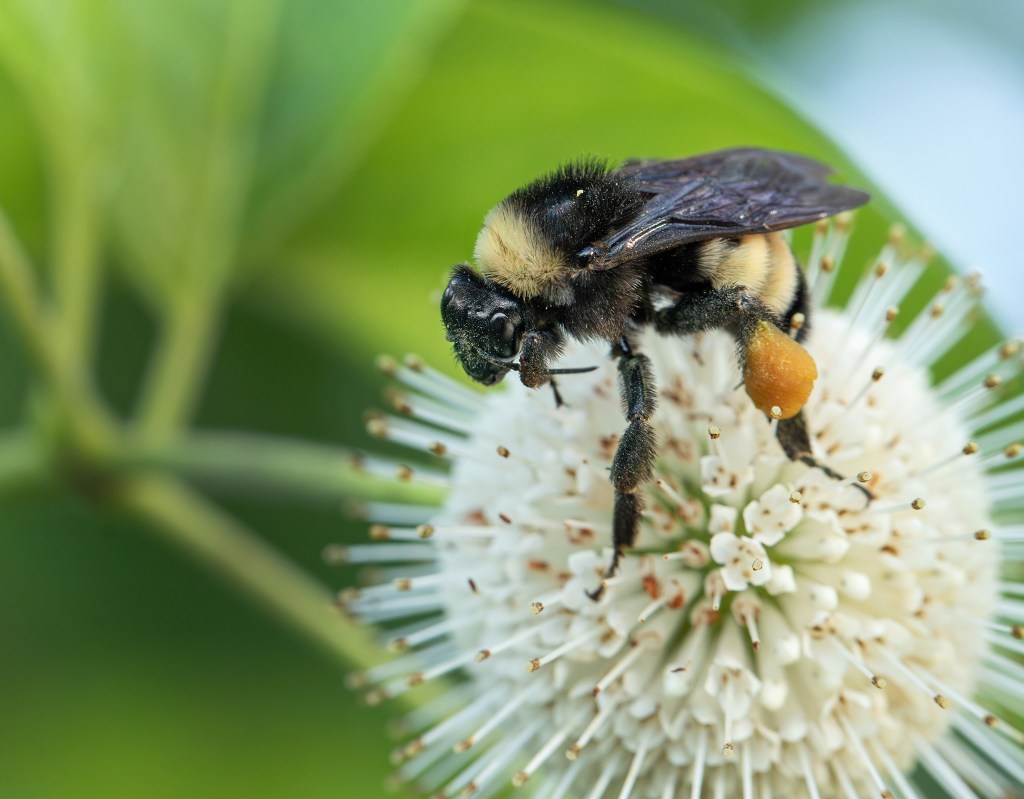
Similar to honeybees, bumblebees carry pollen in structures in their hind legs called corbiculae, or “pollen baskets”. These structures are comprised of hairs around a portion of the tibia that are arranged into a concave basket-like shape. The bees keep the corbiculae and the developing pollen balls moist, and frequently pass their leg over their body, where their dense hairs have been collecting bits of pollen from the numerous flowers they visit. The image below shows a well developed pollen ball on the corbicula of a preening B. pennsylvanicus on Cephalanthus occidentalis in the Davy Crockett National Forest.

I tend to try and capture images of bees from angles that I think are most engaging. This usually involves a clear view of the eyes taken more or less at eye level. These angles aren’t always the best for identification purposes. If you’re inclined to photograph bees (and especially if you hope to contribute data to citizen science networks), it’s important to try and capture images from a variety of angles. For bumblebees, a clear view of the thorax and abdomen are important. The image below of B. pennsylvanicus on Liatris pycnostachya in our garden is an example of an angle that can be useful for identification purposes.

Though B. pennsylvanicus typically only has yellow on the first three tergal segments, there can be some variation. Some individual, like the one pictured below can have more extensive yellow on the abdomen. They can also occasionally have some yellow in the posterior portion of their thorax. This is especially common in males, but can be seen in females as well (see the image below and the image of B. pennsylvanicus and B. impatiens on Cephalanthus occidentalis in the description of Tribe Bombini above).

Tribe Eucerini

This tribe is the most diverse in the family Apidae and contains the various genera of “long-horned bees” as well as squash bees. They are so named for the proportionately long antennae of males. Most species collect pollen with dense, feather-like pollen collecting hairs known as scopa on the hind legs. There are over 200 species in North America.

Melissodes bimaculatus

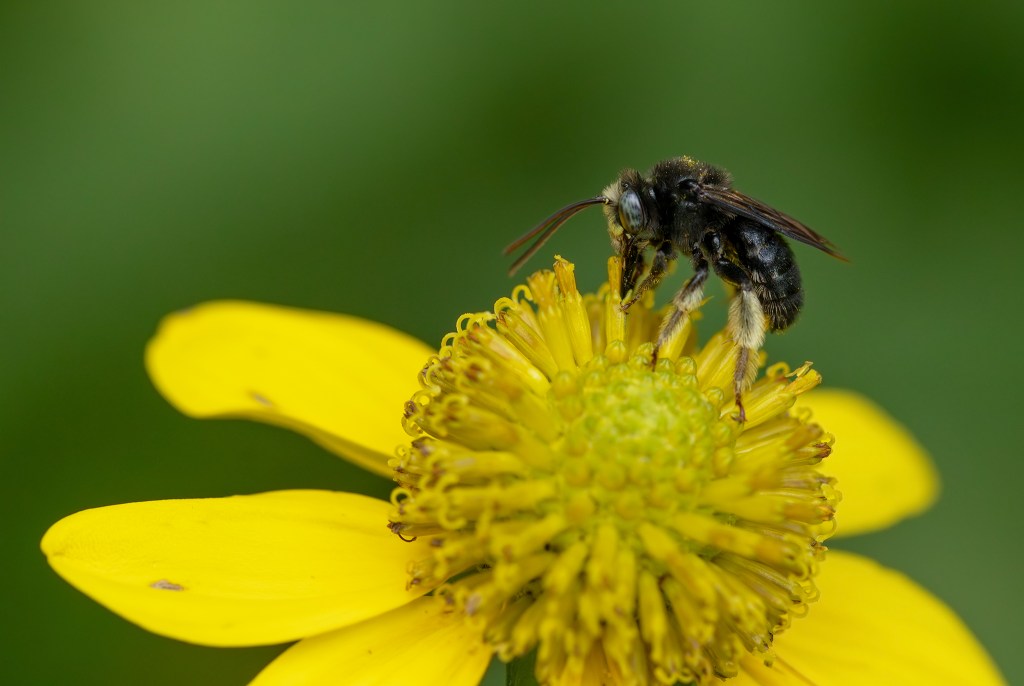
The two-spotted longhorn bee (Melissodes bimaculatus) is one of the more distinct Eucerini. They are generally black with two white spots on the end of the abdomen. Males have white hairs on the face and legs and a yellow clypeus, the shield like structure between the compound eyes and above the mouth. They also have noticeably long antennae.

B. bimaculatus is polylectic, feeding on flowers of a variety of different families. In our garden they fed heavily on Rudbeckia laciniata. Like many other bee species, they sleep while gripping plant stems with their mandibles, occasionally in congregations.

Female B. bimaculatus have shorter antennae and a black clypeus. Their fore and mid legs are black and their hind legs have dense brown scopa. They nest in the ground, and like most of our native bees they are solitary, though multiple females may nest in the same general area. Each nest may contain multiple chambers. The female lays a single egg in each chamber and fortifies it with a pollen ball.

Svastra petulca

Sastra is another genus of long-horned bees. To me they look particularly “furry”. It’s a relatively small genus, with less than 20 species in the U.S, five of which occur in the east. S. obliqua is the most widespread, however I believe this is S. petulca based on the broad banding on the abdomen and lack of dark patches on the thorax. Note the short antennae and dense scopa on the hind leg of the female below.

The male below was observed following a rain shower and looked a little worse for the wear. To us rain seems such an innocuous thing, but I imagine to insects an afternoon shower can be a harrowing affair. Note the longer antennae and the lack of feathery scopa on the hind legs.

I find these bees to be particularly attractive, especially the eyes. Unfortunately we don’t get these in our garden. All of these were photographed on Pycnanthemum albescens at the Pineywoods Native Plant Center.

Tribe Epeolini

Epeolini is a tribe in the subfamily Nomadinae, which includes the diverse kleptoparasitic cuckoo bees (more on kleptoparasitism later). As they do not collect pollen to feed their young, they lack the dense hairs of most other bees and appear wasplike as a result.

Triepeolus sp.

As my interest in bees grew over the last couple of months, I dug back through my photo archives and found an unprocessed image of a bee sleeping while grasping a twig captured in the Angelina National Forest in October of 2018. It was a long-horned cuckoo bee. As best I can determine it’s a member of the genus Triepeolus, possibly T. lunatus, though Triepeolus can be difficult to differentiate from Epeolus. Triepeolus are kleptoparasites of long-horned bees (Tribe Eucerini), and Epeolus are kleptoparasites of bees of the genus Colletes.

Subfamily Xylocopinae

This subfamily includes the small carpenter bees (Ceratina; Tribe Ceratinini), which are among the smallest bees in the country, and the large carpenter bees (Xylocopa; Tribe Xylocopini), which are among the largest. Xylocopa nest in dead wood – typically old stumps, however they can occasionally nest in the wood of manmade structures. They are capable of chewing their own holes into wood. Ceratina nest in dead standing stems of woody and semi woody plants such as Sambucus and Rhus.

Ceratina sp.

There are around 25 species of Ceratina in North America, many of which are difficult to differentiate. They are small, and typically black or iridescent blue or green. Their small size and active nature makes them difficult to photograph.

Note the pollen aggregated on the hind leg of the individual below. We began seeing Ceratina in our garden in mid July, and by early August they were gone. They were never particularly abundant, and most days I could only locate one or two individuals.

I photographed most of the bees in our yard on Rudbeckia laciniata, and found this to get a bit redundant. One interesting aspect of this, however, is that it allows for some size comparison. For example the minuscule Ceratina is barely as long as one of the disk flowers, while the beefy bumblebee can span nearly the entire breadth of the inflorescence.

Xylocopa virginica

Despite being common in our area, we’ve only seen a couple of X. virginica in our garden. They are very large and superficially resemble bumblebees. They can be differentiated by their abdomens, which are shiny and much less hairy in carpenter bees. Males can be identified by their white clypeus (visible in the image below, which I captured in May when this individual visited our blooming Amorpha fruticosa).

Carpenter bees can be intimidating, as males patrol the vicinity of nests and may buzz humans that approach too closely. The males can’t sting, however, and it’s all for show. The females can sting, however they are not aggressive. They may nest singly, or a few females may share a nest. In the latter situation there may be a loose partitioning of roles, with the oldest female laying most of the eggs. A younger female may lay some eggs, but also cares for the brood and the nest. The youngest female may simply utilize the nest in her first year, and will assume additional roles in the next season.

Though having carpenter bees excavate nests in the wood of one’s home is concerning, they don’t eat the wood like some other pests. That said, extensive nests can compromise the integrity of certain structures. Using treated wood and providing more desirable nest sites near the home are effective ways at preventing damage.

The image below shows a female X. virginica feeding on Hyptis alata at the Houston Arboretum and Nature Center.

Carpenter bees will sometimes “cheat the system” when feeding on nectar. On plants where the nectaries are difficult to reach, like the Physostegia virginiana pictured below, they will use their powerful mandibles to chew a small hole near the base of the flower to gain access to the nectar, foregoing contact with the anthers and therefore not aiding in pollination.

Xylocopa micans

The “southern carpenter bee”, X. micans is very similar to X. virginica. Their ranges overlap in the southeastern U.S. where separating the two species can be tricky. X. micans can best be identified by its bluish to purplish sheen, visible over the entire body of the dark females (like the individual below feeding on Pontedaria cordata below), or on the abdomen of the males, which have yellowish hairs on the thorax and the first tergum.

After watching several large carpenter bees visit blooming P. cordata, I believe I witnessed them engaging in buzz pollination. I’m not sure if this plant requires buzz pollination, and it certainly seemed like the anthers were accessible, however the bees would periodically vibrate their wings vigorously as if trying to shake loose bits of pollen from within the flower. I have read that P. cordata exhibits tristyly, a condition where flowers of a species exhibit different morphologies that include styles, and typically stamens of different lengths. In this case, they may be located deep in the flower, and buzz pollination would likely be required to extract the pollen.

To be continued…

Top 23 of 2023

I turned 40 this year. It honestly affected me more than I thought it would. Not in the sense that forces me into terms with my own mortality, but more in the sense that results in introspection – the ‘ol who am I and who do I want to be? My son turned one this year, which is a-whole-nother kind of milestone. His personality is really starting to shine through and his energy is boundless. 2023 also saw changes in my professional life. Following the passing of a friend and colleague, I became a team lead and took on several new responsibilities. I also worked more to develop my freelance side gig, spending many hours scouting the woods, writing, and submitting articles. All of this to say that 2023 was busy. So busy in fact, that I spent fewer days out with my camera than I have in the last 15 years or so. I have to admit I struggled with this. Nature photography has become inextricably linked to my sense of identity. It connects me with the natural world and serves as an important stress reliever and mental reset. It brings me clarity and joy, and a unique sense of purpose beyond the responsibilities of every day life. If I go too long without capturing a frame I simply don’t feel like myself. At the same time, I tried to look at this reduced time afield as an opportunity – a chance to maximize each outing and try to come away with new and unique images that tell the story of these subjects that mean so very much to me.

Below, in no particular order, are a few of my favorite images of 2023. Thank you for viewing.

Please note that the blog initially shows images brighter and less contrasty than they are. To see the best version of each image, hover your cursor above them for about a second.

Undetected

My 2023 began, as it does most years, with a salamander hunt. This year’s was special, however, as it led to a discovery I thought I’d never make – an eastern tiger salamander (Ambystoma tigrinum) in deep east Texas. Consult most range maps for this species and it will show them as being present throughout east Texas. This is misleading, however, and records from the Pineywoods are scant. The distribution and ecology of A. tigrinum in Texas are poorly understood. In general, they seem to prefer isolated clay-bottomed vernal pools in a matrix of sandy oak or pine savanna. Most records come from belts of Eocene sand deposits in the Post Oak Savanna, so it was a thrill spotting this male in a tupelo swale amid a longleaf pine savanna. I captured this top down image to show how he might wander across a bed of longleaf needles during a wintry rain to arrive at the pond of his birth, and engage in an ancient ritual that will found the next generation of Pineywoods tigers.

Flair

In early March I was invited to serve on a panel for a screening of Deep in the Heart, an incredible “blue chip” nature documentary about Texas. Caro joined me, and we made a brief weekend excursion out of it, leaving our little one with my parents. Early one morning I set out to a nearby green space to try my luck at photographing what might be one of the most ridiculously showy birds in the country – the Wood Duck (Aix sponsa). 

This particular area experiences heavy foot traffic, and though these ducks were fairly accustomed to people, it was still a challenge photographing them. I made sure to get out at first light, and I was glad I did. Within a couple of hours, the crowds grew and the ducks disappeared. There really weren’t any good spots to get down low and photograph them on the water, and they were slightly too skittish to approach when they were on land. After spending a good part of the morning observing them, I realized that the males were frequently hopping up onto the posts of a bridge that crossed a small stream. It wasn’t the most photogenic setting, but fortunately there were some shrubs nearby. I was able to position myself behind the shrubs so that I could work them into the image as a foreground element, largely obscuring the bridge, while at the same time concealing myself enough that they came in close. It was a fun morning, and I came away with a variety of images.

Treasure Hunt

This image combines two of my favorite things: luna moths (Actias luna) and spring ephemeral wildflowers, in this case the lousewort (Pedicularis canadensis). In early March we took a family trip to one of our favorite nature parks. This time of year I can usually count on finding a few luna moths with some diligent searching (and Caro’s eagle eyes). This year we came across one among the emerging leaves of lousewort, or wood betony – a lovely, fairly uncommon spring wildflower.

Harbinger

This image was also captured in early March. I set out one morning to a park close to home to look for spring wildflowers and early migrant songbirds. I was fortunate enough to see my first Northern Parula (Setophaga americana) of the year. This is one of the first migrant breeding warblers to return. I framed him here among the freshly emerging spring leaves of a Florida maple (Acer floridanum). That morning came a gentle shower. The rain mixed with the cold spring air was invigorating, and proof that one doesn’t always have to travel far afield to feel immersed in nature.

Contour

Later in March, while at the trailhead of another favorite nearby natural area, we spotted several birds coming to feeders set out near an observation deck. Growing nearby were several baldcypress trees. Many of the birds, including this Carolina Chickadee (Poecile carolinensis), would stage in the cypress branches before hopping down to the feeders. New leaf bundles were just breaking bud, turning twigs into decorative green bottle brushes.

A Snake in the Sorrel

At the end of March, Caro and I spent the day with our friend John Williams exploring the Columbia Bottomlands of southeast Texas. This unique community harbors impressive plant and animal diversity, and John knows the region better than anyone I know. We were specifically looking for snakes, and were lucky enough to turn up several individuals of multiple species. This striking western ribbon snake (Thamnophis proximus) was a nice find. For many years I focused on capturing images of an entire snake posed into some curled position. Recently, however, I’ve really come to enjoy capturing close-up headshots. I think it connects the viewer more to the subject, and provides a glimpse into their world, which is on a scale vastly different than ours.

As a side note, John co-authored a book with another friend of mine, Suzanne Simpson. It’s called Wild Houston, and it’s all about the natural history of the Bayou City. It includes 25 different field trips for folks looking to explore the regions plants, animals, and natural communities. I highly recommend it!

Ophidian

While wandering the woods with John we spotted several copperheads (Agkistrodon contortrix). Copperheads are among the most common snakes locally, and as a result, even folks interested in snakes tend to get bored with them. Those who are not interested in snakes often fear them. Either way, they get an undue bad rap. In my opinion, copperheads are some of the most beautiful snakes in the country, with beautiful colors and patterns, and striking eyes. I was able to time this one just right, as the snake let out its tongue to gather information about the world around it.

Creek Walker

In early April the family and I set out to wander a beautiful local creek. As we began our trek I began hearing the sweet song of a special bird ring out from the trees lining the water’s edge. Though they lack the eye-grabbing colors of many other wood warblers, the Louisiana Waterthrush (Parkesia motacilla) is one of my favorite species. They reach the southwestern extent of their breeding range in mature hardwood dominated forests of east Texas. Here they are one of our more uncommon breeding warblers.

I followed this melody across a clear stream flowing over a bed of stone stratified with bands of lignite coal. I caught a glimpse of our singer hunting along the bank. I moved ahead and laid directly in the cold water. After some time, he and his mate appeared in very close proximity, wading through the shallow flowing water, snatching up tiny aquatic invertebrates and caterpillars floating on the surface. The next 15 minutes or so were pure magic as these atypical warblers went about their daily lives mere feet from me, in clear water reflecting the greens of emerging foliage in the canopy above.

Illuminated

This April we celebrated my parent’s 50th anniversary, a special milestone by any measure. To celebrate they rented a large cabin in the Wichita Mountains of Oklahoma so that the entire family could come together in memory of a wonderful partnership. While the trip was certainly focused on family time, we did make a couple of excursions out into the surrounding hills. I spent some of this time chasing after eastern collared lizards (Crotaphytus collaris), which was an absolute blast. Also known as the “mountain boomer”, they are the state reptile of Oklahoma, and the individuals from the Wichitas are absolutely stunning. I followed this male as it scurried across ancient granite boulders, and considered myself lucky when it stopped in a narrow shaft of light cutting through two of the lichen-laden rocks long enough for me to capture a few frames.

Radiant

Caro’s sister came to stay with us for the month of May. It was exciting hosting her for her first trip to the states and we made many wonderful memories. One the two of them took my son for a walk as I worked from the home office. I received a call that they had encountered a three-toed box turtle (Terrapene carolina triunguis) a couple of blocks down the road. This isn’t particularly uncommon, and we usually see a few a year either in our yard or elsewhere in our neighborhood, and it’s always a special treat when we do. This individual was particularly striking, with the most ornate shell I’ve seen on a three-toed. When I first saw it, I had to do a double take to ensure I wasn’t looking at an ornate box turtle (Terrapene ornata), a species that is much rarer in my neck of the woods.

Obscured

In mid May I ventured a few hours north to explore some of my favorite Silveus’ dropseed prairie remnants in northeast Texas. I was hoping to encounter several ragged fringed orchids (Platanthera lacera), but after several hours of searching, this was the only individual I encountered. This widespread eastern orchid barely enters Texas in a few northeatern counties, where it is apparently very rare.

I spent some time with this orchid, wanting to tell its story to the best of my ability. Perfect, clean portraits of plants and animals are nice to look at. While I do capture those types of images, recently I’ve been trying to look at things with a fresh perspective. Here I dropped my camera down into the grasses to try and capture what’s it’s like to be a part of this orchid’s world.

Sextet

A couple of weeks later I travelled a couple of hours in the opposite direction, down toward the coast. My first stop was at a coastal prairie remnant in the southern reaches of the Big Thicket where I photographed this group of Texas coneflowers (Rudbeckia texana). This coastal prairie indicator species is endemic to the West Gulf Coastal Plain. Generally it persists in numbers in high quality remnants, and occasionally along roadsides where routine mechanical disturbance mimics historic natural disturbance regimes.

This is an impressive Rudbeckia, reaching five feet or more in height. It is highly visible, making it easy to spot and identify potentially diverse prairie remnants. Generally where R. texana grows other good things can be found, so if you spot these in an accessible area, it’s definitely worth a look!

Emerald

From the coastal prairies I continued southward to the saltmarsh that lines the coast. My target birds were saltmarsh specialists like Seaside Sparrows and Clapper Rails, however everywhere I wandered I heard the cheery song of the Common Yellowthroat (Geothlypis trichas). Near a small rise lined with eastern baccharis I found myself surrounded by them, so I settled in for a photo session, and ended up with this small in frame capture that spoke to me.

Hidden Gaudiness

There is a wildlife management area close to home that includes a variety of habitats, including restored prairie, freshwater ponds and marshes, and mature bottomland hardwood forest. Along with these varied habitat comes excellent bird diversity. It is a great birding spot, and happens to be one of my go to locations to photograph some of our most colorful summer birds. On this evening in late May I was sitting camouflaged in the grass when I became witness to a territory dispute between two male Painted Buntings (Passerina ciris). They bounced all around me, taking turns vocalizing their displeasure at the other’s proximity to their territory. These sorts of disputes are not uncommon in the songbird world, particularly in high quality habitats where numerous males may try to stake out a territory in a relatively small area. Painted Buntings are famous for their ferocity with potential rivals, and fights to the death have been recorded. Fortunately for me and the birds, after several minutes of squabbling, one finally relented and flew off to another patch of ground.

Delicate

Summer comes early to east Texas, and by early June it was in full swing. On one particularly hot and humid day I went to visit some friends in Sabine County. They built a stunning cabin on a few hundred acres of some of the nicest woods in east Texas. This day I explored a bit and took the opportunity to refresh myself in a swimming hole deeper than I am tall. All around their woods this lovely woodland forb was in bloom. Yeatesia viridiflora sometimes known as yellow bractspike, is one of the few things to bloom deep in the woods this time of year. It’s small white flowers may not look like much from a distance, but upon closer inspection I find them to be quite lovely.

Scarce

Nearly two months passed before I picked up my camera again. In late July I travelled across the Lone Star State for work. I was joining biologists from the Texas Parks and Wildlife Department to help survey for and discuss the conservation of Kinosternon hirtipes, an enigmatic little turtle that goes by such aliases as the rough-footed mud turtle, Mexican mud turtle, or Big Bend mud turtle. In the United States, this species is known only from water sources along a single drainage in Presidio County. It is speculated that it was historically a creek dwelling species, however as the streams it depended on dried up, it has since been forced into other permanent water sources, such as cienegas and stock ponds.

K. hirtipes is considered by many to be one of the rarest turtles in the country. It was a privilege to see decent numbers of them in seemingly out of place wet habitats nestled in the expansive Chihuahuan Desert. Research being conducted by Texas Parks and Wildlife and various conservation organizations is ongoing, and will continue to provide glimpses into the natural history, threats, and conservation needs of this special species. 

Perseverant

Another two months would pass before I found myself behind the lens again. In late September James Childress and I escaped one of the hottest and driest Texas summers in recent memory, and made for the cool clean air of the Colorado Rockies. Somewhere among the cold mountain air carrying battle cries on the wind I again found inspiration in the natural world. It had been buried but not lost, set behind the duties of fatherhood and increasing workloads.

Exhaled breath turned to steam as James and I looked into the dim pre-dawn light. James and I share a kinship closer to brotherhood than friendship, and I was grateful to be sharing this experience with him. I could sense that he too needed a reset that can only be brought on by those most inspiring of experience.

And what could be more inspiring than standing among the wapiti (Cervus canadensis) in a frosty valley surrounded by snow capped peaks stretching miles into the sky? We had come to spend time with these incredible animals during one of the natural world’s greatest spectacles – the annual Rocky Mountain elk rut.

To me, this image nearly perfectly embodies this experience. A majestic bull elk stands before a gooseberry bush awash with autumn color presenting like flames on the grass. The wound on his side hints at an intense battle that enacted a heavy toll. Yet despite this undoubtedly crippling injury, he perseveres. The intense look on his face communicates to his potential rivals that he may appear broken, but he is not beaten. We watched this bull for some time as he marched through the ponderosa pines, issuing bugle after bugle, communicating his presence and battle readiness to the world. Experiencing this sight, in this place, with my brother James at my side was exactly what I needed.

Royal

This is another image of the same bull, taken a few minutes later. These animals never cease to amaze and inspire me. They are also closely linked to early formative memories of family camping trips out west that helped cement my love for the outdoors. Their size and prowess truly can’t be conveyed through an image, however I did my best to do that here. An intense stare and patterned background made for a simple, yet powerful portrait that was one of my favorite images from the trip.

Sunbather

Our time in the Rockies was short – we had only five days, and two of those would be consumed with ~18 hours of driving each way. Since James had never been before, we wanted to make the most of it, and after spending a morning with the elk, we drove up to above tree line. With labored breath, we explored the alpine tundra and were delighted when we heard the high pitched squeal of an American pika (Ochotona princeps). We soon found the tiny Lagomorph and watched as it scurried about the rocks, alternating between shade and sun. It stopped for a brief moment near the edge of this boulder where a shaft of light filtered through the mountaintops to cast a spotlight upon it.

Ouzel

The next day, down to (relatively) lower elevations, we found ourselves walking along mountain streams in search of a special bird that makes its home here. Immediately visible were bright white stains on dozens of rocks that I recognized as sign that an American Dipper (Cinclus mexicanus) had been in the area. It wasn’t long before one zipped past us, headed downstream and low to the water. We caught sight of where it landed, and positioned ourselves on the bank downstream, the direction it was moving.

I have to say, this experience ranks among the most uncomfortable photography sessions I’ve participated in. James laid flat over river rocks of various sizes, but there wasn’t room for me to lay next to him, so I had to lay flat on a slightly higher bank and position my camera a couple of inches lower at the water’s edge to get the low angle I was looking for. This meant that I had to crane my neck downward at a very unnatural and unpleasant angle.

It was worth it, though, as we watched the chunky ball of feathers come bouncing toward us, hopping from rock to rock and making short forays into the rushing water, bobbing, or “dipping” all the while. Eventually he passed too close for 500 millimeter lenses to focus.

In all we spent about an hour with the little Water Ouzel, another name for this unique songbird. We watched as it caught a tiny fish, and sang from mossy branches overhanging the water. It was a wonderful experience, and one of the highlights of a trip filled with special moments.

Diminutive

After returning from Colorado, another month and a half went by until one evening while on a walk with my son I happened upon a serendipitous encounter. I spotted a tiny line sprawled out on the road a few blocks from home. Initially appearing as little more than a stick or a bundle of pine needles, upon closer examination it turned out to be a little reptile that is quite uncommon in Texas – the smooth earth snake (Virginia valeriae). I consider myself to be lucky to live in a neighborhood with a few tracts of intact forest ranging from around one to five acres. Over the years we have seen numerous box turtles of various age classes and several interesting snake species including speckled and prairie king snakes. It goes to show that even small amounts of green space within an otherwise suburban setting can harbor impressive biodiversity, and may serve as a refuge for some rare and declining species.

Scavenger

I took the last two weeks of November off from work. The family and I took one of those days to head south to visit my parents in the north Houston suburbs. On the way we stopped to explore the Sam Houston National Forest. Near an old hunter camp we spotted this Turkey Vulture (Cathartes aura) perched near a pile of discarded deer guts, heads, and legs. It was close as I would get to posting a photo of a turkey for Thanksgiving. When you think about it though, Turkey Vulture make a pretty good surrogate. Not only do they have turkey in their name, but they are one of nature’s biggest fans of leftovers.

Beacon

The white-tailed deer (Odocoileus virginianus) might just be my favorite animal to photograph. Perhaps it is the highly secretive nature of mature bucks, or their status of one of the most familiar mammals in the country – something about them just appeals to me. Each year I make an effort to get out during their annual rut to observe their behavior and try to capture a few images. This year I managed only one day to get away for deer photography. The stars aligned on Thanksgiving, and I was on the road by 3 A.M. I arrived at my destination by dawn, and just before the sun made its daily appearance, I spotted this impressive buck as it tore through the brush, hot on the tail of a doe. I followed them for a few hundred yards, hoping to get an image through the clutter. Just as the sun began filtering through scrubby oaks and elms, he emerged into a clearing and paused among the bluestem. It would be my last major photo excursion of the year, and I was happy to end my year in photos on a high note.

I enjoyed having you along as I recounted some of my favorite moments in nature and photography in 2023. It always means so much to me that y’all take the time to look at my images and read my words. I wish all of you a very happy and prosperous 2024, and hope that it is filled with the people, places, and things that you love.

Top 22 of 2022

2022 was one for the record books. In January we learned that Caro was pregnant, and our son was born in September. I also became an uncle to a niece born in January. Work and my freelance side gig were busier than ever, and a variety of other events in my personal life kept me occupied and regrettably away from posting here. Despite this, I was able to get into the field a few times for some nature and photo therapy. Below are my favorite images of the year. Note that the blog initially shows images brighter and less contrasty than they are. To see the best version of each image, hover your cursor above them for about a second. I’m working on correcting this for future posts.

“Hidden World”

The first subject to capture my lens this year was what may be my favorite animal of all time – the spotted salamander (Ambystoma maculatum). Each winter I look forward to searching for them and seeing one up close never gets old. After taking pictures of hundreds of individuals over the years, however, I have become a bit bored with photographing them. This has pushed me to approach salamander photography in a new way, looking for unique settings, angles, and compositions to challenge myself to capture something different. I hope to embrace this challenge over the coming weeks and to add some interesting images to my spotted salamander portfolio that help tell the story of this incredible amphibian.

“Beast of Burden”

In mid-January we enjoyed watching a colony of Texas leaf cutter ants (Atta texana) dutifully carting leaves down the trunk of an old yaupon holly. Leafcutters are a fascinating component of our fauna that utilize the leaves they harvest to cultivate a fungus that will feed the colony. I had a great time photographing these guys with my macro in a setting that allowed for interesting lighting and composition.

“Marbled Salamander”

In late February Caro and I visited our friends James and Erin Childress at their sprawling farm. We decided to take a late afternoon walk through the woods on their place, and as we were looking for fungi and early spring plants I heard James call out in excitement, exclaiming his disbelief at what he had found. It was a beautiful marbled salamander (Ambystoma opacum), the first he had found on his land after decades of exploring. Being a wildlife enthusiast, he was understandably excited, as were we. Ambystoma salamanders depend on high quality habitats, and this little guy’s presence at Childress Farm is a testament to their stewardship.

“Spring Ephemeral”

White trout lilies (Erythronium albidum) are, in my opinion, among our prettiest wildflowers. Despite this, they can be difficult to photograph. They only open on sunny, or very warm overcast days, and often only for a few hours, and have blooms that nod and face the ground. This makes photographing the pistil and stamens, which are often the most engaging parts of a flower, difficult. Over the years I have amassed a collection of trout lily images that I’m proud of. This year I had an opportunity that was, for my money, as good as it gets.

Caro spotted this individual isolated from the rest. In a given year many to most trout lilies in a colony won’t bloom, instead emerging as only a single mottled leaf. When they do bloom, two leaves emerge with the dainty flower between them. Even in the presence of hundreds of flowering individuals, it is difficult to find one that has the flower and leaves arranged in the perfect position for a portrait. This special lily provided me just that, with both leaves fairly erect with interesting curves, and the flower nodding and facing the right direction. The setting was clear, allowing for isolation of the subject. The light was bright overcast, and a recent rain shower left tiny water droplets on the plant. I was very pleased to add this to my collection of trout lily images on a perfect day in the spring woods.

“Whorled Pogonia”

In early April I photographed the wonderfully weird whorled pogonia (Isotria verticillata), one of our most unique native orchids. To me it resembles some kind of mythical beast, with a gaping maw (petals and labellum [lip]), blunt tongue (column), and three formidable horns (sepals). They are rare in Texas, though individuals are admittedly very difficult to spot, even when in full bloom, and some populations may be evading detection.

I. verticillata is quite picky about its habitat, at least in Texas. It’s kind of like the Goldilocks of the orchid world. The forested seep, with its permanently saturated ground and extreme acidity is too hot. The rich beech slope, with its fertile loam and deep duff is too cold. But the very narrow strip where one community transitions to the other is just right.

“Green and Gold”

I was thrilled when I stumbled upon this scene of blooming golden groundsel (Packera obovata) in one of our favorite patches of forest near the western edge of the Pineywoods.

“Drapery”

When looking for wildflowers in mid April I came to hear the familiar trill of a Northern Parula (Setophaga americana) singing from the treetops. I was lucky enough to catch him out in the open as it sang from a baldcypress branch draped in spring foliage and Spanish moss.

“Spellbound”

At the end of April I found myself in Red River County, one of my favorite parts of the state. Very little public land exists here, however it is so rural that large expanses of mature forests and pockets of remnant prairies maintained for generations as hay fields still exist. I was lucky to be granted access to this incredible forest that I could not wait to explore. My excitement enhanced by the knowledge that this tract of old growth oak, hickory, and pine contained one of the few remaining populations of southern lady’s slippers (Cypripedium kentuckiense) in the state.

I set out to find them, armed with maps and descriptions provided by the landowners and the state plant ecologist. So I walked through the woods, completely absorbed in an atmosphere of spring. The crisp morning air cooled my skin. All around me newly arrived migrant songbirds were singing. In the span of half a mile I heard Northern Parulas, Black-and-white Warblers, Kentucky Warblers, Hooded Warbler, Yellow-throated Vireos, Acadian Flycatchers, Wood Thrush, and more. Southern leopard frogs leapt into small streams and depressional wetlands nestled in the forest floor.

And then there they were. Near the top of a gentle slope carpeted in mayapple and covered in huge trees. They had seemed to find the spot where little else grew to stake their claim in these old growth woods. They were in perfect bloom, though one had been recently nipped off by some hungry creature seeking a sweet snack. Each of Texas’s lady slipper populations has a unique look to them, and these were among the prettiest. They were particularly stately, with deep yellow labella (the egg shaped “slippers”, which are actually modified petals).

I spent some time with them that morning, photographing and simply admiring them. To my knowledge this population had not been visited in several years, at least not for the purpose of an official survey. I collected information on the number of stems and surrounding habitat to report back to the land managers. I was sad to see them go, but happy to know that these relics of a bygone time are still eking out an existence in this very special forest at the northeastern corner of the Lone Star State.

“Yellow-breasted Chat”

In May and June I focused heavily on Neotropical migrant songbirds that nest in the Pineywoods and winter in Latin America. One such bird is the Yellow-breasted Chat (Icteria virens). Chats are birds of early successional habitats. In forested systems, these types of habitats occur naturally in the wake of major events like tornadoes, hurricanes, intense fires, or devastating floods that remove canopy cover and open up the ground for invasion by grasses, forbs, and other early successional species. In my part of the world, pines are among the first trees to colonize these habitats, and young pine forests provide excellent habitat for Yellow-breasted Chats and a variety of other famously colorful Neotropical migrant songbirds. Today these habitats are more widespread on the landscape thanks to modern forestry practices. I’ve photographed many a chat, bunting, and grosbeak at young pine stands regenerating a few years after harvest.

Yellow-breasted Chats were formerly considered our largest wood-warbler, however recent taxonomic revisions suggest they are more closely related to blackbirds, and they have been placed in their own family: Icteriidae (not to be confused with the New World blackbird family Icteridae).

“Swamp Candle”

Two of my favorite images of the year, the above and below, came from the same session with the same bird. This rarely happens, but I’m happy it did on a muggy, mosquito-laden May morning. It was initially cloudy when I photographed this Prothonotary Warbler (Protonotaria citrea) perched atop a rotting stump, appearing as a flickering flame upon a decaying candle deep in the swamp.

“Swamp Song”

A moment later the sun emerged from behind the clouds and cast a beam of light through the shade of a canopy of stately cypress, tupelo, and oak. The shaft of sun caught the brilliant yellow of the Prothonotary Warbler as he sang his “sweet sweet sweet” song, which carried through the forest, above the mire.

“Prairie Song”

The next day we took a short trip to the coast, where I captured this Eastern Meadowlark (Sturnella magna) defending his territory in a remnant coastal prairie along the upper Texas coast. Though they remain common in many areas, Eastern Meadowlarks have experienced sharp population declines over the past century, and are emerging as a significant species of concern.

“Secrets of the Marsh”

While down on the coast I had an incredible encounter with a family of Clapper Rails (Rallus crepitans), one of my all time favorite birds. I captured this image of an adult announcing its presence to the other denizens of the marsh. They are not particularly flashy, but Clapper Rails have a fascinating life history, are entertaining to watch, and inhabit some of my favorite places. They, like most inhabitants of salt and brackish marshes, are threatened by habitat loss and sea level rise.

“Nemesis No More”

In late June I returned to northeast Texas in pursuit of breeding warblers. For years I’ve been trying to get an image of a Hooded Warbler (Setophaga citrina) that I’m happy with. I don’t know how many hours I’ve spent sitting in wait hoping that one might present me the opportunity, but it finally did that day, when this male sang from a young sassafras in the deep woods.

“Yellow-throated Warbler”

Shortly after spending some time with the Hooded Warbler I found this male Yellow-throated Warbler (Setophaga dominica) in a stand of hardwoods.

“Nom Nom”

Over the next few months a combination of the oppressive heat and humidity of the East Texas summer and a very pregnant wife kept me from spending much time in the field. To help quell the antsiness I feel when I don’t get out to shoot, I spent some time in our garden observing and photographing pollinators and tiny predators. I watched this green anole (Anolis carolinensis) hunt among the flowers and leaves, snatching several small bees and wasps in the process.

Anoles are common and familiar here in the south, and many (myself included) have been guilty of considering them boring. I think they deserve more credit. Their propensity to occur in yards and green spaces in otherwise developed area makes them a great wildlife ambassador for people who don’t otherwise get out into nature, and they have no doubt sparked an interest in reptiles for countless young backyard explorers. They’re also quite interesting, able to change colors from deep brown to bright green. Some even have hints of blue when at their brightest.

“Carolina Mantis”

In late August, we spotted this healthy female mantis on our neighbor’s mailbox. I decided to relocate her to our yard in hopes that it might improve her chances of survival and procreation. I managed to capture a few images of her before sending her on her way.

“Fetid”

A couple of weeks after the previous image was captured our son arrived and the next couple of months found us mostly homebound getting to know each other and navigate the world of being parents to a newborn. One day in early November we set out to take him on an adventure to a nearby state park, where we encountered a group of Black Vultures (Coragyps atratus). To many, wildlife photography seems like such a glamorous pursuit. And sometimes it is! But sometimes it’s photographing a vulture perched on a dumpster full of rotting fish carcasses.

“Autumnal”

Later in November we braved our first overnight trip with the tadpole. We set out to north-central Texas in hopes of observing the white-tailed deer (Odocoileus virginianus) rut. I was lucky enough to encounter and photograph several mature bucks, including this bruiser. My experience from this cold November morning inspired me to write the following:

Dawn comes on quick this time of year. It brightens the cross timbers, first bringing light to the prairies and then to the post oak woodlands which occur as a mosaic sprawling over rolling hills.

These are ancient places, at least the ones that have not been scrubbed clean for state of the art housing developments, pastures, or crops that thrive in pockets of Blackland interspersed among the otherwise sandy belt of cross timbers that breaks the vastness of the plain from southern Kansas to north-central Texas.

This November morning brings with it a chill, blowing hard on the heels of a cold front sweeping south across the continent. The light is still gray when the deer first become visible, moving like silent specters through the grass and leaves and brush. Does, mostly, some with this year’s fawns still in toe. Browsing and scanning and not doing little else. Little else until a larger specter emerges from a tangle of limbs and vines, this one bearing curved and pronged blades on his skull like a crown.

It is lighter now. The horizon is orange and colors begin to paint the landscape. The antlered specter moves cautiously, revealing his brawny form. At first he is careful to avoid the open and risk exposure, but all caution is thrown to the wind when catches a whiff of a doe in heat, and bursts from the brush, head down in pursuit.

The white-tailed deer rut has begun.

“Under the Cover of Darkness”

The next morning I encountered another mature buck in the dim pre-dawn light. Mature white-tailed deer bucks are wary, elusive beings. Even during the rut, when they seem singularly focused on the continuation of their bloodline, they are almost mythical in their ability to outwit us. This is especially evident in areas with heavy hunting pressure. It’s not by chance that they’ve managed to avoid the arrow and the bullet for so long. And though during the rut many bucks will remain active well into the day, much of their activity occurs in the dark of night, and some of the more wary bucks remain almost exclusively nocturnal.

I spotted this beautiful buck just the veil of darkness over the land began to lift for the day, pulled back by the sun still far below the distant horizon. It was very dark when aimed my camera toward him. He was in a small clearing at the woods’ edge. Though the background was quite dark, it was still very cluttered and at first I thought I had little more than a documentation image. But I decided to spend some time with it, since I really liked the buck and his hyper-alert pose.

I decided to take things a bit farther than I normally do in the digital darkroom. Though I didn’t add or remove any elements, I went heavy on the dodging and burning and selectively darkened most of the image while trying to draw focus to the bucks head, neck, and antlers. My hope was to create the illusion that he was illuminated by the light of the moon in a dark autumn night.

Though I acknowledge that this walks the line between photography and digital art, I’m ok with that in this instance, because it created something that I really enjoying viewing, and that helps tell the story of one of North America’s most beloved animals.

“Life Underfoot”

This year the Pineywoods experienced an especially colorful autumn. Though I wish I had more time to photograph it, I was fortunate enough to get out for a couple of hours one afternoon and wander the woods. I captured this image of a fallen log, which can harbor an incredible diversity of life – a tiny ecosystem hidden among the leaf litter.

“The Woods’ Phantom”

In late December we set out again to look for whitetails. This is a particularly special image for me. Despite capturing thousands of frames of whitetails in the state, I’ve never photographed a mature buck in east Texas – where we’ve made our home. I attribute this, at least partly, to the fact that they are especially elusive here. Mature bucks do stalk these woods, but decades of hunting pressure have made them wary, and few sizeable sanctuaries exist where they can become habituated to human presence. Fortunately I found one in an unexpected place and was able to observe mature free ranging east Texas whitetail bucks at close proximity. Despite this, photographing them was still a challenge. Though we could drive within feet of them, any attempt to step out of the truck or approach on foot sent them scattering for cover. Over the course of two days I was able to slowly accustom them to my presence and capture a few images. I was particularly happy with this one, with a handsome eight-point among the oaks, taking a break from foraging on acorns to scan his surroundings for potential threats.

Thanks for joining me on this journey through my favorite images of 2022. I hope it won’t be another year before I post here again. I wish you all the very best in 2023, and hope your year is filled with nature, family, and whatever brings you joy.

-Matt

Top 21 of 2021

As the year draws to a close, it’s normal for us to look back on its highs and lows. 2021 was a good year for us. Despite an insane market, we were able to buy a house, and despite being incredibly busy both in and outside of work, we were able to find time to escape to the natural world. Unfortunately, as a side effect of a short supply of free time, my blog suffered. I hope to rectify this in 2022, but in the meantime, I continue to make almost daily posts on Flickr (www.flickr.com/photos/mabuckingham) and Instagram (@naturalistjourney).

For my 2021 year-end post I’ve decided to highlight my favorite 21 images of the year, presented in chronological order. Only a few of these were featured in earlier posts, and the rest are new to the blog. I hope you’ll join me for a look back at some incredible encounters, spectacular biodiversity, and special places.

1. Eastern Tiger Salamander

The year kicked off in a big way. On New Years Day, Caro and I met our dear friend John Williams at the edge of the Post Oak Savanna in pursuit of a creature of near mythical status in Texas, the eastern tiger salamander (Ambystoma tigrinum). I wrote about this experience at length in my first blog post of the year, and if you haven’t already, I highly recommend reading about our adventure there.

2. Northern Shoveler

Also in January, Caro and I took a trip with James and Erin Childress to north-central Texas in pursuit of waterfowl. We were fortunate to find and photograph several species. My favorite image of the trip was this stunning Northern Shoveler (Anas clypeata) in water reflecting winter leaves illuminated by the rising sun.

3. American Robin

The end of January found Caro and I exploring familiar areas closer to home. On the last day of the month we found ourselves surrounded by a massive flock of American Robins (Turdus migratorius). I opted to lay down in the fallen leaves and before long the robins were foraging mere feet from me, flipping leaves in search of tasty morsels underneath.

4. Red-breasted Merganser

In early February, Caro and I took a weekend trip to the upper Texas coast. There I had an incredible encounter with the generally elusive Red-breasted Merganser (Mergus serrator). I wrote at length about the experience here.

5. North American River Otters

In February Texas was hit with a historic winter storm. While the storm was devastating in many ways, it also transformed the Pineywoods into something beautiful and created once in a lifetime conditions for photography. The first day of the storm, Caro and I set out to a local green space park to see what we might find. Much to our surprise and delight, we were treated to a trio of North American river otters (Lontra canadensis) playing in the snow and icy water. I covered this incredible experience in another post earlier this year.

6. Fox Sparrow

The snow from Winter Storm Uri lingered for a few days. The harsh conditions brought with them an influx of bird species seldom seen in numbers in the Pineywoods. The most notable were the Fox Sparrows (Passerella iliaca). We went from never having seen one in our neighborhood to having a dozen or more in our back yard at once. To capture this image I laid in the snow and covered myself in a white sheet, concealing my presence and allowing the birds to forage undisturbed mere feet away from my lens.

7. Cedar Waxwing

After the storm cleared and the snow melted, our neighborhood was invaded by Cedar Waxwings (Bombycilla cedrorum). They came in the thousands, filling the air with their sweet whistling, stripping ornamental trees of their berries, and bombarding the streets with their purple droppings. Despite their overwhelming numbers, photographing them in a natural setting was a challenge. This image was actually captured in the road of a nearby cul-de-sac as the waxwings dropped to the ground to drink from water accumulated in the curb.

8. Blue Butterwort

For Spring Break, Caro and I rented an AirBNB in Tallahassee, Florida and used it as a base to explore the panhandle. We trekked through wet pine savannas, flatwoods, and hardwood hammocks and were treated to a diverse flora that included numerous carnivorous species. One of the most striking was the blue butterwort (Pinguicula caerulea). I liked this image for its simplicity. Sometimes less is more.

9. Golden Club

While in Florida, we spent a good amount of time exploring the Apalachicola National Forest. In this magical place we came to a small drainage literally carpeted in golden club (Orontium aquaticum). The day’s light was nearly gone as I stepped into the murk and muck to capture this image. After I finished, Caro and I were treated to numerous bats gleaning insects from just above the water’s surface.

10. Luna Moth

Most years we’re treated to a few luna moth (Actias luna) encounters during our spring wanderings. This year Caro spotted one on a small stick in a rich hardwood stream bottom. It was a flawless specimen, and we watched as it took its first flight. Graceful and awkward at the same time, it took a few broad flaps and ended up landing on the ground a few feet away, in the most spectacular of settings among the leaves of emerging violets and a downed black cherry branch.
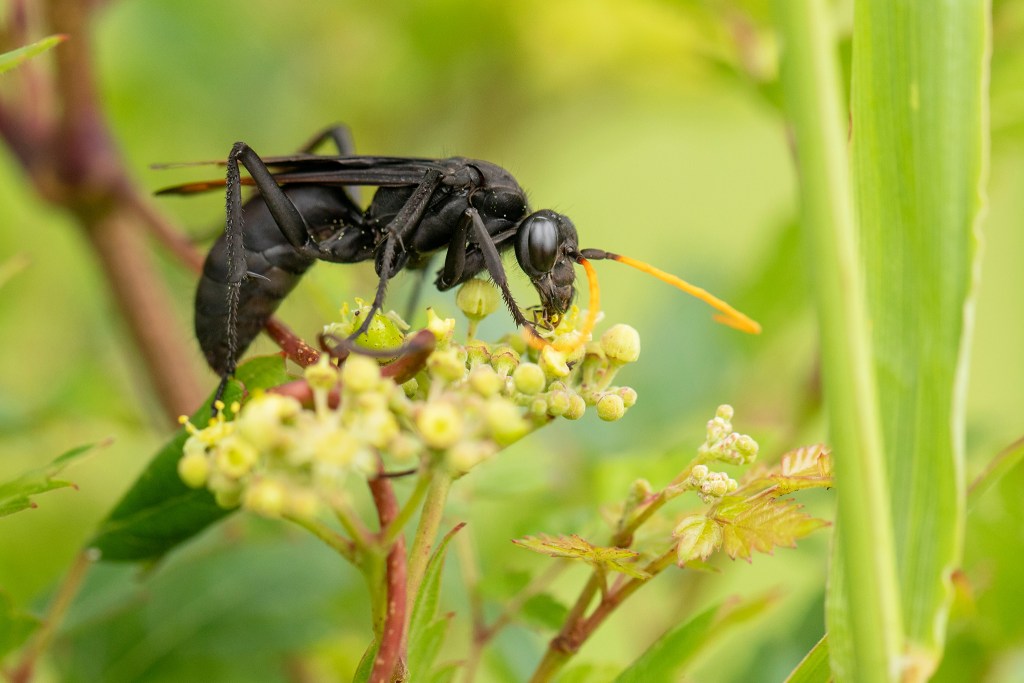
11. Vernal Forest

There is nothing like wandering through a rich hardwood forest in spring. The ground comes to life with emerging plants and wildflowers, and bird returning north fill the air with their varied songs. This was one of my favorite scenes from spring of 2021, a forest floor abloom with mayapple (Podophyllum peltatum) and golden groundsel (Packera obovata).

12. Southern Lady’s Slipper

For my money, there are few wildflowers as charismatic as the southern lady’s slipper (Cypripedium kentuckiense). This year I was fortunate to visit and photograph most of the remaining known populations in Texas. The most special of these was finding and photographing a perfect bloom for the first time in northeast Texas. More on this incredible outing can be found here.

13. Canebrake Rattlesnake

In early May, James spotted this striking canebrake rattlesnake (Crotalus horridus) on his farm. I was thrilled to capture an intimate portrait of this ever-docile species, and wrote a piece about their maligned, misunderstood nature. Shortly after, James and I found a fresh shed nearby, which we surmised was from the same snake.

14. Painted Bunting

I spent some time in May chasing breeding songbirds. While most outings proved fruitless, I was able to capture a few images. I think this was the most interesting, of a gorgeous male Painted Bunting (Passerina ciris) atop a pine sapling, presented in high key against a grey sky.

15. Pronghorn

In August, we took another trip with James and Erin, this time to the Davis Mountains of west Texas. We cooked chili and watched skunks in our campsite, visited old friends with land in the mountains, and were treated to one of the finest monsoon seasons in recent memory. I took the opportunity to spend some time with one of my favorite animals, the pronghorn (Antilocapra americana). I spent one evening with this group and was treated to numerous photo ops. This image was my favorite, with the buck looking toward a seemingly indifferent doe in the foreground.

16. Scaled Quail

On our last morning in west Texas, James and I were treated to a cooperative Scaled Quail (Callipepla squamata) that was running about his territory. He afforded us several good looks on a variety of perches. The air smelled of fresh rain as we laid in the damp ground to photograph him from his level. It was the perfect way to close out a memorable rip.

17. Pygmy Nuthatch

In mid-October, Caro and I found ourselves in Colorado enjoying the tail end of a Rocky Mountain autumn. While hiking in Rocky Mountain National Park, we found ourselves among a flock of Pygmy Nuthatches (Sitta pygmaea). They were everywhere! I soon found, however, that trying to chase after them for a photo would not work. So I sat down with my back against a ponderosa pine and waited. Within minutes they were foraging all around me, and I captured this image of one near the ground with a nut in its bill.

18. American Bison

While in Colorado, we visited Rocky Mountain Arsenal National Wildlife Refuge. There we photographed plains bison (Bison bison), and even saw our first black-footed ferret! To learn more about the incredible story of this refuge check out my write-up on Flickr.

19. White-tailed Deer Doe and Fawn

Earlier in December I had to travel to Austin to present a research proposal examining the impacts of erosion control blankets on wildlife. The meeting fell on a Friday, so I took the opportunity to visit my brother and get out to some area nature preserves. Over the past couple of years, white-tailed deer (Odocoileus virginianus) have quickly become one of my favorite photographic subjects. While it is always exciting to photograph mature bucks during the rut, it is equally as special to capture tender moments between a fawn and its mother.

20. White-tailed Deer Buck

The following week, Caro and I traveled to south Texas to observe and photograph the white-tailed deer rut, which kicks off later there then elsewhere in the state. I witnessed a myriad of interesting rutting behavior, including an intense fight between two mature bucks. Photographically speaking, the most exciting moment for me came together in this image. I saw this buck in an open field. There was a crooked old mesquite nearby, and I thought to myself “wouldn’t it be amazing if he went to that tree to scent mark.” Then, much to my disbelief he began walking straight for it. I positioned myself in hopes that everything might come together, and sure enough, he visited and marked a licking branch at the old mesquite. A nice buck in perfect light in a beautiful setting – everything lined up for this one in a way that seldom happens.

21. Sandhill Cranes

The week before Christmas, we took our last big trip of 2021. We again found ourselves traveling with James and Erin, this time to south-central New Mexico. There we spent much of our time at Bosque del Apache National Wildlife Refuge – a place famous for wintering Sandhill Cranes (Grus canadensis), Snow Geese, and a variety of waterfowl. One evening we found ourselves watching throngs of cranes come into a shallow pond to roost. The conditions were perfect, and as they descended, we were able to capture them silhouetted against a fiery sky.

I think this image is a fitting end to my journey through 2021. The sun is setting on this year but will rise again in 2022. I hope the New Year brings you much joy, laughter, opportunity, and time in wild places. Thank you all for coming on this journey with me, and I wish you a very safe, happy New Years.

A Day with the Thrashers

Brown Thrasher Parent and Chick

Sometimes life gets in the way. There are various things – life events, obligations, and the like, that have kept me from updating this blog, and have severely limited my time in the field with my camera. Fortunately most of these are good things, and though I miss looking through the viewfinder and connecting with my readers, I know that this is only temporary, and soon I hope to be back in full force. I have several ideas for future posts that I very much look forward to sharing.

For now, I want to share a short, picture heavy story about an incredible experience that Caro and I had a few weeks back on Memorial Day. Read the captions of the image below for the story about our day with the thrashers – a story of parenthood that I found fitting for my Mom’s birthday.

Early on Memorial Day I went out in the back yard and spotted a pair of Brown Thrashers displaying in a small space between our vegetable garden and our native pollinator garden. They seemed unconcerned with my presence and remained for some time before they flew off, and I returned to the air conditioning.
I was thrilled to see this. Though I wouldn’t call them rare, Brown Thrashers are relatively uncommon, and seeing one is always exciting. They are far less common than their close relative, the Northern Mockingbird, which is the state bird of Texas (as well as a few other states).
A short while late, Caro excitedly called for me to come outside. She had found something in the garden. There, nestled among the tomato plants was a fledgling Brown Thrasher, clearly fresh from the nest.
Nearby we saw one of the adults foraging on the ground, seeking out beetles and other insects. With a beakfull, the parent flew over to the chick and fed it right before our very eyes. Realizing that the birds were quite tolerant of our presence, I quickly went inside for my camera. This is a behavior that occurs countless times a day in neighborhoods everywhere, but it is so seldom that one is able to witness this. I didn’t want to pass up this opportunity.
Caro and I set up some chairs a respectable distance away and sat, and watched as the parent went about the yard looking for tasty morsels for the hungry chick. It returned to feed its begging offspring several times.
Suddenly we caught some movement on the roof, and saw another fledgling scurrying across the shingles.
Eventually we lost sight of it, but then it turned up again and slowly made its way to our rosemary bush.
The parent then began alternating between the chicks, ensuring that each had plenty to eat. In lean times, adult birds might favor the largest, healthiest chick, however in times of plenty they will distribute their time between them. And this certainly seemed like a time of plenty. The parent was a very successful hunter, and we even watched it return with two five lined skinks, which it promptly dismembered and distributed the pieces to its young.
At times the adult came too close for me to focus. I always enjoy seeing birds up close, where one can admire their incredible colors and feather details.
Caro and I were so enthralled with the day’s entertainment that we decided to cancel our plans and spend the day with the birds. At lunchtime we planned to run out to pick up some takeout, but just as we were getting ready to leave we spotted a third chick in the crook of the live oak in our front yard.
Nearby, in the branches of the oak we spotted the other parent.
This parent devoted its time to the third chick, and we watched it provide a variety of prey items, including some juicy earth worms.
Down the hatch!
It took a few tried, but the chick finally got it all down.
This parent continued to hunt in the front yard, while the other spent its time in the back. We were amazed at their ability to divide and conquer.
The pair in front were even willing to pose for a family portrait.
The chicks liked to move around, and they spent their time hopping from branch to branch, shrub to shrub, and bouncing around on the ground. We knew that it was only a matter of time before they would be gone.
We never saw the two chicks from the back yard again. I spotted the chick from the front yard sporadically over the next three days, then it too was gone. We still occasionally see the adults, who appear in the yard from time to time to forage. Hopefully all three chicks are somewhere out there, feeding and growing so that one day they may return with fledglings of their own.

The Perfect Storm

A trio of River Otters (Lontra canadensis)

8:00 AM – Monday, February 15, 2021

The world had changed overnight. Looking out our bedroom window I could see that our yard had transformed from browns and emerging greens to white. Pure white. Everything was covered in ivory powder, and snow descended from on high and settled in a thickening blanket over leaves, grass, and spring forbs. We we warned that the storm was coming, but it was still a shock to see such a marked change. Quickly we donned our warmest winter garb and set out into the cold. We measured the depth of the snow off our back porch – five inches and counting! We caught perfect snowflakes on our sleeves, which kept their unique forms in the frigid air. It was cold, concerning, and beautiful and serene.

Incredibly, this was the second winter storm to pass through the Pineywoods in as many months. The first came the second week of January and dropped over six inches of snow. We were soon to find that this second storm, named Uri, would be much more serious. For the moment, however, we were enamored with the winter wonderland around us.

The flooded Neches River Bottoms photographed in the second week of January during our first winter storm of the year.

Not wanting to squander an opportunity to observe wildlife and capture images in these unique conditions, Carolina and I set out to a nearby nature preserve. Slowly we drove over the roads, their asphalt coated in a slurry of snow, salt, and ice. The thermometer in my truck read 17°F (-8°C). Save a few nights winter camping in the high country of the Guadalupe Mountains, I do believe this is the coldest temperature I’ve experienced since moving to Texas from Chicago over 20 years ago. And it was soon to get colder.

The snowfall had mostly ceased by the time we arrived at our destination, save a few flakes that seemed suspended midair. Forsters Terns, Ring-billed Gulls, and American Tree Swallows were gliding over the surface of the park’s lake, where rafts of Double-crested Cormorants floated among wintering Canvasbacks, Buffleheads, Lesser Scaups and Ruddy Ducks. Killdeer and Wilson’s Snipes took refuge along snowbanks developing along the shore, and American Pipits ventured out to forage on the rapidly forming ice.

A Killdeer (Charadrius vociferus) hunkers down amid a historic winter storm.

I trusted in my waterproof jacket and laid in the snow right at the water’s edge, in hopes that the ducks might venture a bit closer. The water was much warmer than the air, and a thin veil of steam rose from its surface. Ironically, the difference in temperatures also created heat distortion, which wreaked havoc on my autofocus, blurred the scene, and seriously hampered my waterfowl photography efforts. I was able to capture a single image of a lovely drake Bufflehead that I hope conveys the bleak mood of the scene. I watched the handsome duck as it dove repeatedly into the frigid depths, insulated by its water-tight plumage.

A drake Bufflehad (Bucephala albeola) braves the cold.

“Time to pack it up,” I thought, when Carolina excitedly called out and directed my attention to three sleek forms slicing through water rendered gray by the day’s gloom. River Otters! They were moving toward a bridge on a berm that separated two portions of the lake. Quickly I moved to the edge of the water on the opposite side of the berm, hoping to anticipate their movements and put myself in the best position to capture some images. Soon one did appear, but it stayed low in the water and found the ice overtaking the lake to be too thin to support it. As quickly as it arrived, it crossed back under the bridge and out of view. I stood and swiftly moved back toward my original position. That’s when I saw fresh tracks in the snow. Caro told me that one of the otters had left the water and walked to within ten feet of me. I was devastated. I have a long history of otters sneaking up on me while I was distracted. But this time would be different. The otters regrouped in the water, then one went ashore again ahead of us. I got low and managed a few frames before it returned to the water.
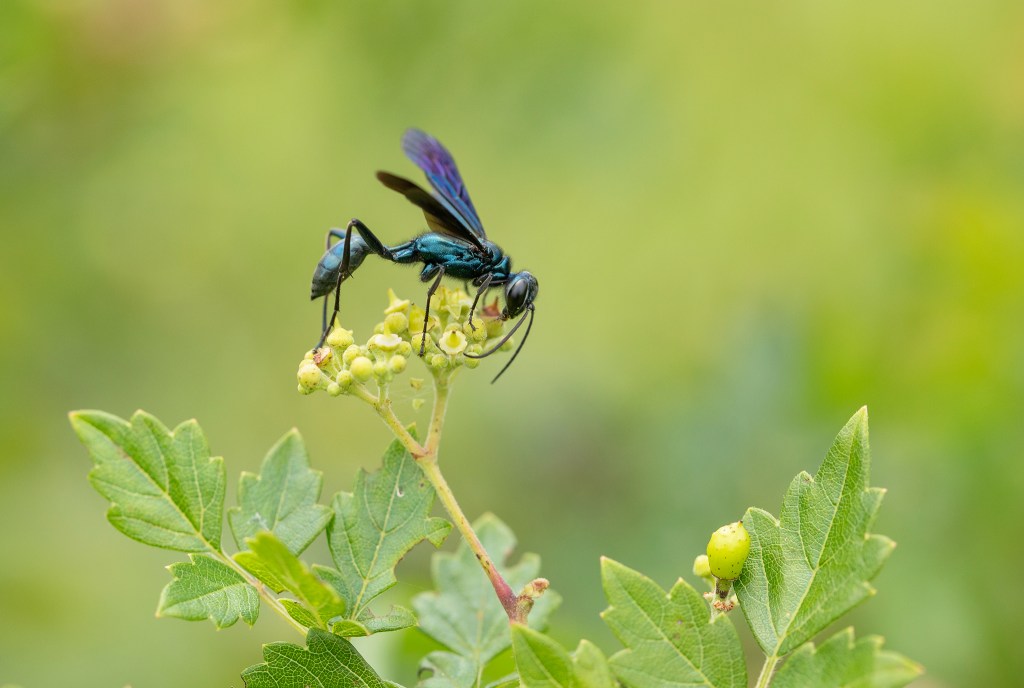
A River Otter enjoys the snow.

Then something truly magical happened, and a once in a lifetime photographic opportunity unfolded before me. The otters approached the remains of a pine that long ago fell to the lake. On warm, sunny days this log will support dozens of basking turtles and the occasional American Alligator. Today, however, it would be the stage for a wonderful otter watching experience. At first they sat on submerged branches, as if lounging in some frigid spa.

A trio of River Otters in the frigid water. The third otter can be scene here swimming toward me. I didn’t notice it until Caro pointed it out AFTER I had processed the image!

They then returned to the water, made a short lap, and hopped up onto the snow-covered log. Otters are supremely insulated against the cold by a dense, water-repellant coat of fur, and they seemed to genuinely delight in the icy conditions. I watched as they buried their faces in the snow and then shook the white powder off. They rolled around in it, nudged one another, and rough-housed in it. Like many Texans, this year is likely the first time these otters have experienced real snowfall. It was a new element in their habitat that provided a seemingly endless source of entertainment.

River Otters playing in the snow.

My pursuit of wildlife photography has resulted in countless memorable experiences. Yet few, if any, have been as special as this one. Being able to photograph not one, but three North American River Otters, in the snow, in East Texas is something I can honestly say I never would have thought possible before that day, and something that I doubt I will ever experience again. I feel extremely fortunate to have been able to both witness and document it.

River Otters posing perfectly for a very content photographer

After their brief log-top romp, the otters returned to the water and quickly swam in the opposite direction. So we continued on the trail, and soon spotted a group of birds foraging near the water’s edge. It was a mixed flock of Swamp Sparrows, White-throated Sparrows, Song Sparrows, and Rusty Blackbirds. The blackbirds were a particularly exciting find, as the species is quite uncommon and by all accounts declining rapidly.

A Rusty Blackbird (Euphagus carolinus) foraging at the water’s edge.
A Swamp Sparrow (Melospiza georgiana) ponders its reflection from a snowy perch.

From there, the trail takes a sharp turn and meanders through the woods. The canopy here is dominated by towering loblolly pines and massive post oaks. The understory is choked out by exotic Chinese privet and native, yet invasive yaupon holly, and every time I wander through here I can’t help but think that a good burn would do wonders. Still, there is a wonderful diversity of plant and animals here. Eastern redbuds, flowering dogwoods, and mayapples put on a floral display in the spring while Indian pipes and scores of goldenrods bloom in the fall. In addition to the otters, we have encountered a variety of wildlife here. We have seen numerous snakes species, two of which – the smooth earth snake and red-bellied snake are quite rare in the region. Northern Parulas sing here in the summer and scores of ducks can be found in the winter. Bald Eagles nest in tall pines at the water edge while alligator snapping turtles patrol its depths. It is a naturalists paradise, and it’s only minutes from home. I’ve found that often the most memorable encounters occur places familiar rather than some exotic destination.

Me on the trail of an Eastern Cottontail – Photo by Carolina. We never did find the bunny.

The snow was riddled with fresh tracks. Some were easy to identify, like those of the Eastern Cottontail. Others were more ambiguous, and guesses ranged from skunk to fox to hawk. While examining these calling cards left in the fresh powder, I heard a familiar whistling from the tree tops. This cacophony of high pitched buzzing could mean only one thing: Cedar Waxwings were near! We soon saw a small flock working privet and greenbrier berries in the midstory. We watched them for several minutes until one finally perched on a nearby brier vine, all puffed up to insulate against the biting cold.

A Cedar Waxwing (Bombycilla cedrorum) takes a break from feasting on privet berries.

While out exploring the winter woods, a call came in from my good buddy James Childress. He excitedly reported that his property had been invaded by a flock of at least a hundred Fox Sparrows. “Damn,” I remember thinking. “I wish I could make it over there.” Fox Sparrows winter in the Pineywoods, but most years they are scarce, or at the very least hard to find. In a given winter, if I’m lucky I’ll see one or two if I’m out beating the bush. I’ve certainly never had a good opportunity to capture photos of one. And here James was, sending me images of the LCD screen on the back of his camera of these elusive Emberizids in the snow and filling the frame. The roads were certainly too dangerous to make the trek out to his remote cabin. I was admittedly jealous of James, but it was hard to feel bummed after the incredible wildlife encounters we had just experienced.

Carefully we returned home and went about peeling off our winter layers and making a pot of hot coffee. I happened to glance out the window, and spotted a chunky reddish bird hopping around the snow in the back yard. It was a Fox Sparrow! I could hardly believe it. The next few days we had several seeking precious calories in the yard alongside American Robins, Chipping Sparrows, Dark-eyed Juncos, and more.

My mind quickly went to work envisioning the Fox Sparrow images I wanted to capture. I knew I wanted to get low and get close, and to capture them in the snow. So I snuck out into the backyard, laid flat on the snow, and covered myself in a white sheet. This rudimentary camouflaged worked wonders, and at times the sparrows were foraging within ten feet of me. By shooting from ground level I was able to create images with Fox Sparrows seemingly rising up out of a sea of white.

An inquisitive Fox Sparrow (Passerella iliaca) in the snow.
A Fox Sparrow forages by scraping at the snow and leaves to reveal any tasty treats underneath.

We woke Tuesday to what was certainly the coldest temperature I’ve experienced in Texas. Our thermometer read 5°F, but some stations in the area were reporting temps as low as -1. All around the state power grids were failing, and millions of Texans were without power and potable water. Yet for us, it was still mostly business as usual. We hadn’t lost power and I was even able to work most of the day, until our internet began to fail to the point that it made work from home impossible. We were feeling incredibly fortunate to have made it through the storm unscathed.

8:00 AM – Wednesday, February 17, 2021

Then came Wednesday. I started work at 7, per my normal routine. Outside a drizzle of rain and ice was falling, and all of the branches were coated in glistening icicles. It almost looked as if they had been coated in blown glass. At around 7:30 I began hearing echoing CRACKS of splintering wood, followed by scraping and thunderous booms as massive branches broke free from the trees in our neighborhood. Laden with ice, many became too heavy for the trees to bear, and they came crashing down on lawns, fences, and roofs. The pine trees were hit particularly hard, and a number of old, 80 to 100 foot tall trees completely uprooted and fell, crushing anything in their trajectory to the earth. We were concerned for our old live oak, with its massive branches arching over most of the house.

At roughly 8 AM we lost power. The lights flickered a few times, and then it was gone. We had no idea when it might return, so we gathered our camping gear and made a few preparations. Soon the generators to our water supply failed and we were placed on a boil water notice. We were without power for the next 55 hours or so, and without potable water for another few days. The temperature in the house dropped to 51, which was chilly but tolerable. We boiled water for coffee, made hamburgers and “torta fritas”, an Argentinean dish akin to fry bread. We played games by candlelight, and listened to a small transistor radio.

When there was enough light to do so, I passed the time by photographing birds from our back porch. They desperately sought calories to keep warm, and I was lucky to capture a few as they paused in icy settings. The storm took its toll on wildlife, and reports soon came in of hundreds of birds, bats, and other animals that perished from the harsh conditions it wrought. It was a somber reminder of the hard lives these species lead.

A Fox Sparrow on ice laden branches.
A Chipping Sparrow (Spizella passerina) photographed during the ice storm.
A Yellow-bellied Sapsucker (Sphyrapicus varius) works pre-drilled sapwells in pursuit of a sugary meal to help stave off the cold.
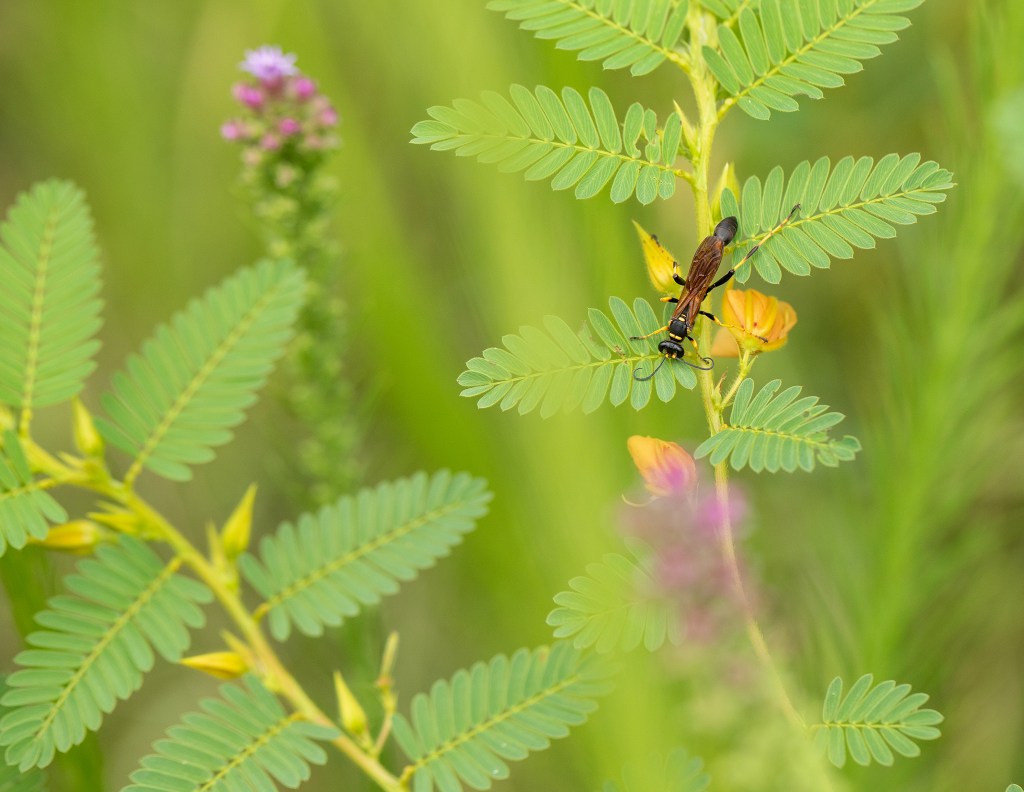
A Tufted Titmouse (Baeolophus bicolor) in the frozen canopy.
A Hermit Thrush (Catharus guttatus) in the winter woods.

Power returned Friday afternoon and the house quickly warmed. Our live oak did loose a few large branches, but luckily the house was spared the brunt of their weight. One that fell near the street sank its fracture point nearly a foot into the earth. But now, over a week later, it’s almost as if the storm had never occurred. A few piles of brush remain at the curb awaiting bulk pickup. A few roofs and fences are still being patched, and there is still a higher than usual volume of traffic from vans of plumbing and heating/air companies.

The Fox Sparrows left as soon as the snow and ice had melted. In the week following the storm we had several days that approached 80°F, and spring arrived in full force. Uri was both a gift and a curse. It left us with wonderful memories of once in a lifetime wildlife viewing and photographic opportunities. It also took from many families, and we still consider ourselves very fortunate to have emerged no worse for the wear. At one point over 4.5 million Texans were without power. For some, it has not yet returned. For others the loss was much greater, and at least 70 deaths have been directly or indirectly attributed to the storm. Nature is harsh and unforgiving. But it is also rewarding and beautiful, for those willing to see it for what it is. Our memory of two days without power will soon fade, but those of playful river otters, unexpected Fox Sparrows, and other natural wonders will stay with me for the rest of my life.