Blaze of Glory

Target Species: Gulf Blazing Star (Liatris tenuis)

IMG_5296

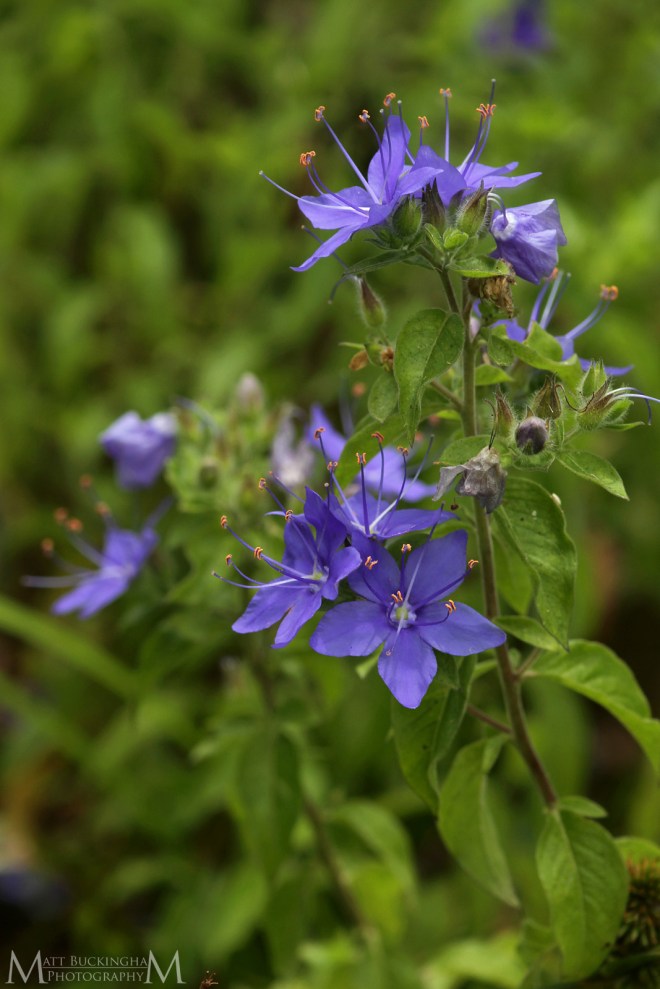
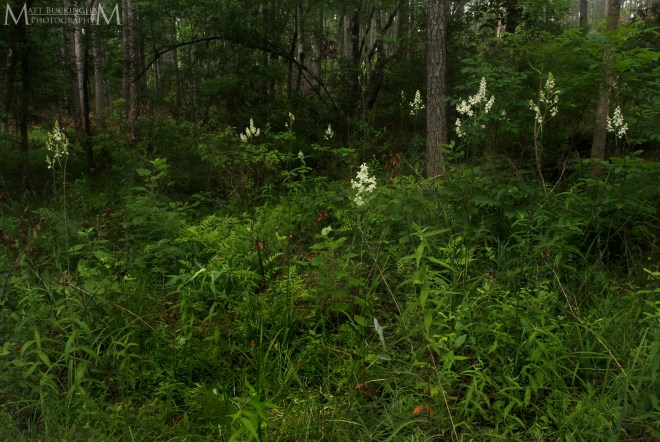
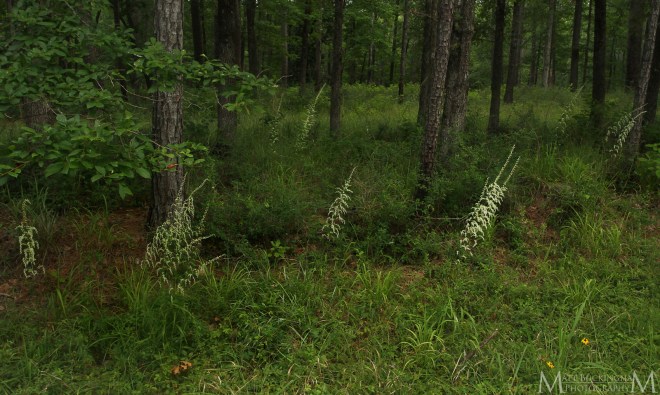
One of the Gulf Coastal Plain’s major centers of endemism occurs in the Pineywoods of East Texas and western Louisiana, and to a lesser extent southeast Oklahoma and southwest Arkansas.  Many of these species are concentrated in the xeric sandhills and longleaf pine savannahs of the region.  The Gulf Blazing Star (Liatris tenuis) is one such species.  It primarily occurs in longleaf pine savannahs, sandhills, and sandstone barrens.

Members of the genus Liatris can be difficult to differentiate.  Two similar species, Liatris squarrosa and Liatris squarrulosa can occur in similar areas.  L. tenuis is best identified by its narrow leaves, few florets per head, and short involucre.

Liatris tenuis

One possible explanation for the high levels of endemism in the longleaf pine and xeric sandhill communities is a break in the range of longleaf pine and bands of geological formations with deep sand deposits created by the Mississippi River Delta.  This has created barriers to gene flow for species with very specific habitat requirements.  This isolation has led to the evolution of different lineages, resulting in speciation over time.

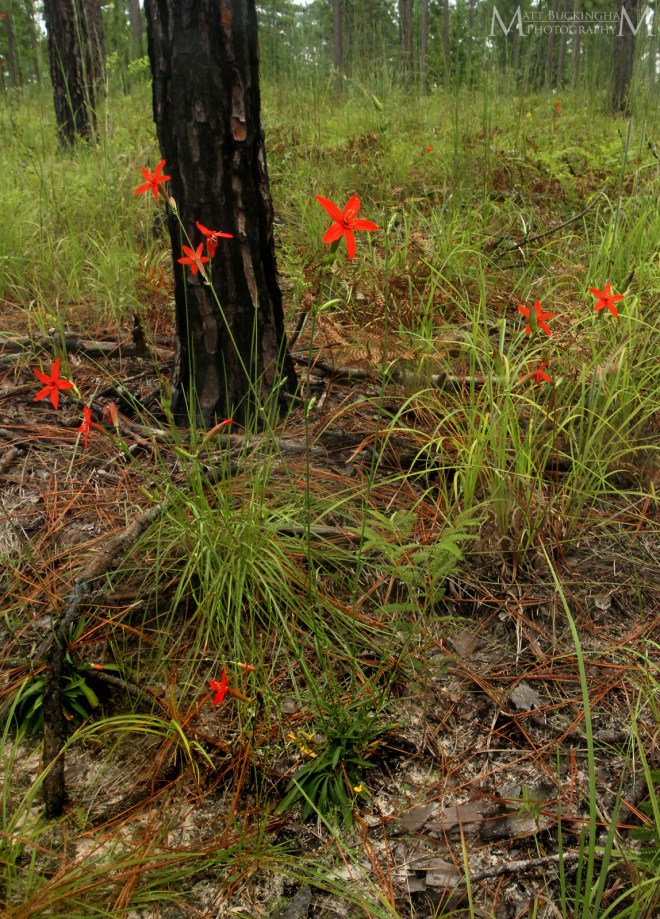
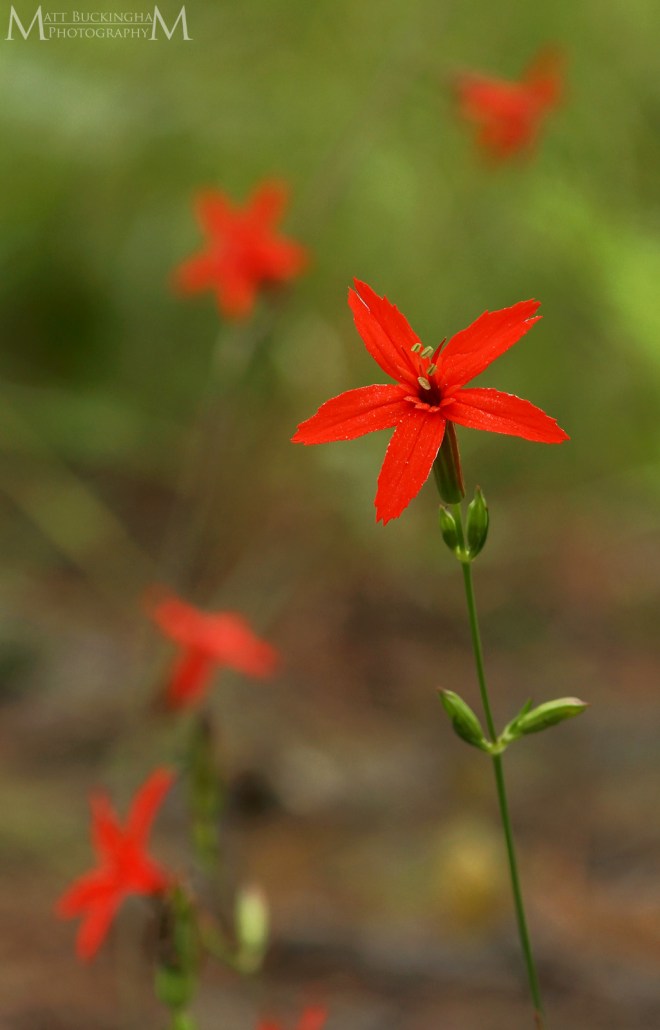
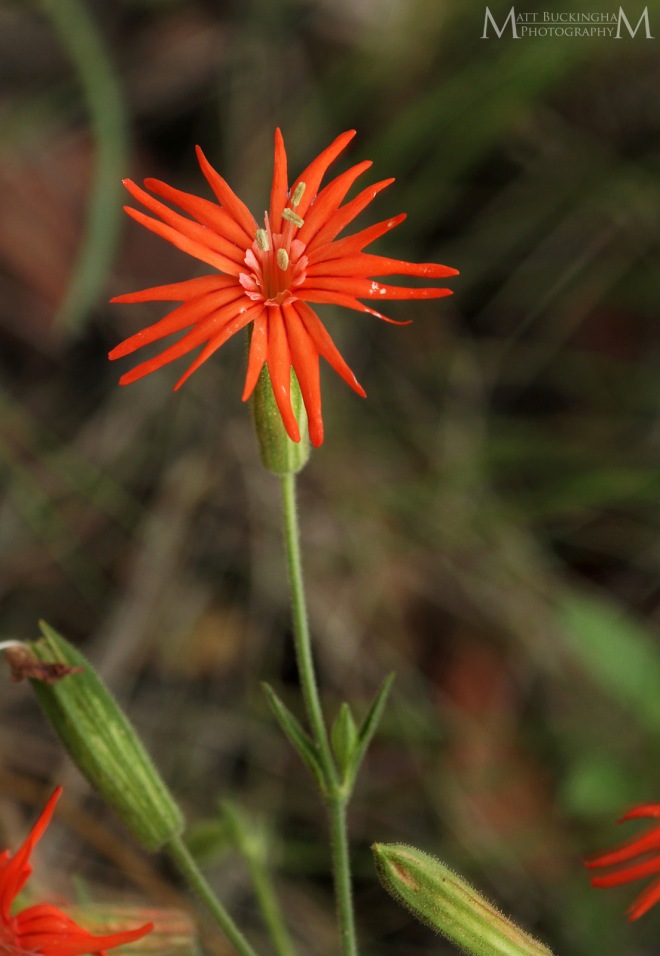
Another endemic of the West Gulf Coastal Plain that can often be found growing in close proximity to Liatris tenuis is the Scarlet Catchfly (Silene subciliata).  This aptly named catchfly blooms from mid summer through most of the fall.

IMG_5277

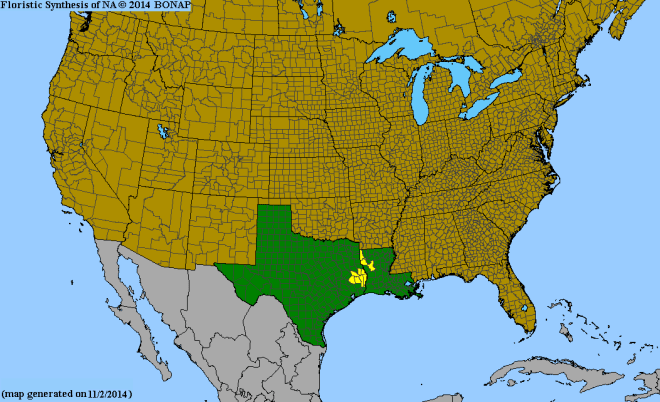
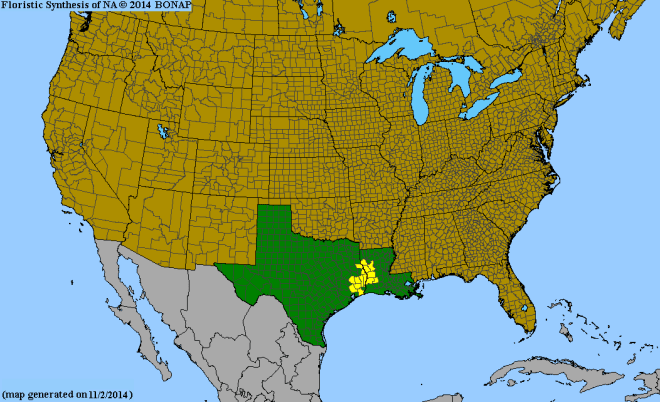
Note the similarity of range between Silene subciliata and Liatris tenuis.  As mentioned before, this same pattern is shared by many of the Pineywoods’ plant species.  Silene subciliata occurs on deep sands in longleaf pine savannahs and xeric sandhills.

Silene subciliata

Both L. tenuis and S. subciliata are species of conservation concern in both Texas and Louisiana, where they are formally listed on the state’s rare plant lists.  Like so many species of the longleaf pine savannahs, their numbers of been reduced dramatically by loss of habitat and land use conversion.  Today they remain in only a handful of scattered populations.  Fortunately some of these have been protected by entities like the U.S. Forest Service, Big Thicket National Preserve, and the Nature Conservancy of Texas.

IMG_5192

IMG_5227

Return to Sky Island

IMG_4424

Mountain Short-horned Lizard

Target Species:

Mountain Adder’s Mouth (Malaxis macrostachya)

Wood’s Jewel Scarab (Chrysina woodii)

Mountain Short-horned Lizard (Phrynosoma hernandesi)

The sky islands of West Texas have been woven into the fabric of my being.  Each trip to these high elevation oases of the desert brings with it a sense of wonder and euphoria, and a longing to return.  Since returning from our trip in July, not even a month ago, I have been desperate to get back to the high elevation grasslands, shaded canyons, and montane forests.  There is so much to see.  Such plant and animal diversity, such natural beauty.  Here among the cool mountain peaks I feel at home.

When I approached Carolina with the idea of returning to the Nature Conservancy’s Davis Mountains Preserve for another open weekend in August, it didn’t take much convincing.  We decided we would return, and this time we would be bringing our good friends James and Erin Childress with us.  So we set out in the blackness of early morning on a great pilgrimage to the Trans-Pecos.

By the time the sun rose, the towering Loblolly Pines and stately hardwoods had mostly vanished in the rearview.  As dawn broke they gave way to gnarled post oaks sprawled over verdant grasslands.  Gradually the post oak gave way to mesquite, and the grass became more and more sparse, until bare rock seemed more abundant than plantlife.  We passed over the Ozona Arch into the desert scrub of the Permian Basin, and finally after what seemed like an eternity, the foothills of the Davis Mountains came into view.

We took our time on the scenic loop, admiring the scenery in every direction, and watching for plants and wildlife along the road.  When we finally arrived at the preserve, we stepped out into the cool mountain airs and paused a moment to take it all in.  We could see Madera Canyon in the distance, as it worked its way toward the slopes of Mount Livermore, the highest peak in the Davis Mountains, and the fifth highest in Texas.

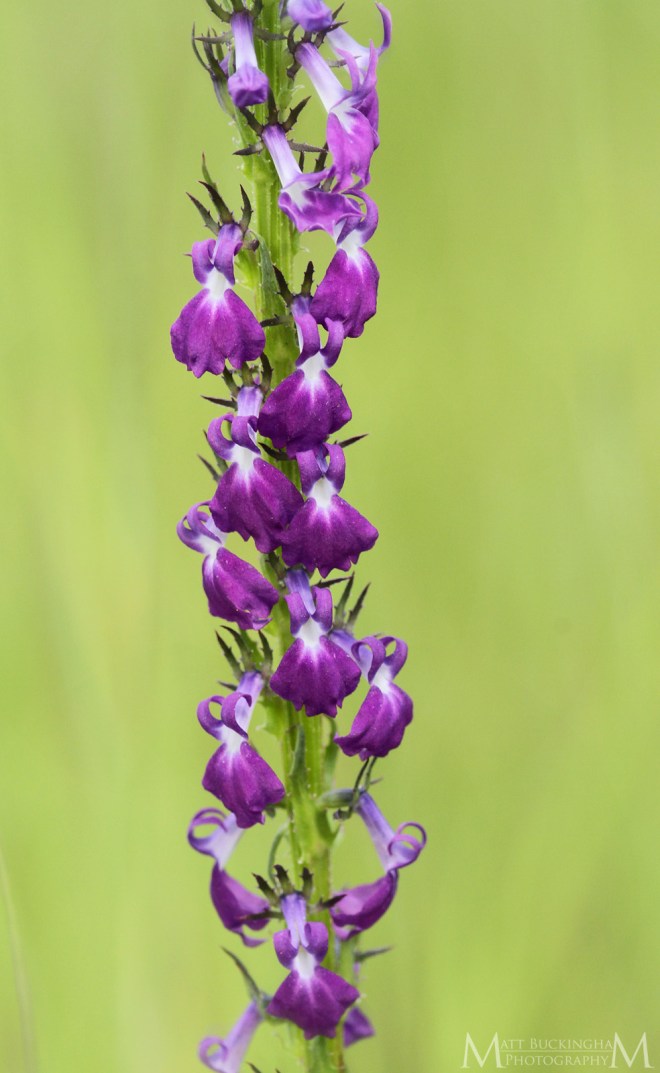
We visited a moment with our friend and local landowner Gary before venturing into the preserve.  We made camp in a flat basin among scattered Alligator Juniper and Pinyon Pine growing above a rich layer of forbs and grasses.  Among this herbaceous layer I spotted the purple flowering spikes of Lobelia fenestralis, the Fringeleaf Lobelia.  This striking sky island specialist barely enters the U.S. in extreme West Texas and one county in western New Mexico.
IMG_3500

Fringeleaf Lobelia

After setting up camp we journeyed into Madera Canyon.  We admired the birds as we went, watching as a Common Black Hawk flew from the crown of an Alligator Juniper, and a Montezuma Quail burst from the grasses and across the road before us.  We were serenaded by Western Kingbirds, Blue Grosbeaks, and Say’s Phoebes while the occasional hummingbird shot past like a bullet, offering little opportunity to identify it to species.

As we scoured the slopes along Madera Creek in hopes of glimpsing one of the many interesting things that dwell there, I heard Carolina call out that she had found one of my targets.  Sure enough, between the large rocks at the base of a Ponderosa Pine was a single green leaf.  My search was now narrowed and intensified, as I made my way along the steep, rocky slopes hoping to catch one of these bizarre plants in bloom.  I looked and looked, until I saw what I was searching for: the single leaf and ten-inch flowering spike of the Mountain Adder’s Mouth Orchid (Malaxis macrostachya).

IMG_3598

Mountain Adder’s Mouth

The Mountain’s Adder Mouth is an orchid of the montane forests of the southwestern U.S. and Mexico.  In Texas it is known only from the high elevation slopes of the Davis Mountains.  Though the plant itself may reach a foot in height, the flowers themselves are tiny, and a hundred or more may decorate the raceme.  This long, narrow raceme has earned this orchid the colloquial name “Rat-tail Malaxis”.  We searched the area for more orchids to no avail, and I counted myself lucky to have found such a fine specimen.

IMG_3621

Mountain Adder’s Mouth

As the sun vanished behind the distant peaks we slowly began making our way back to camp.  In the fading light of dusk we spotted a brown blur moving across the road ahead.  Drawing nearer we made out the shape of a large bobcat vanishing into the grass.  We paused a moment and watched, hoping that we might catch another glimpse of this elusive feline.  Our efforts were rewarded, as it occasionally appeared between breaks in the vegetation as it silently and meticulously made its way through the dark forest of pinyon and juniper.

We arrived back at camp with little light to spare.  James and I strung a large white sheet between the branches of two trees a short distance from our site.  We then propped a small florescent bulb on my tripod and aimed it at the sheet.  Our trap had been set.

As the sheet collected our six-legged quandary we prepared a meal of dehydrated broccoli cheese soup, and settled in to watch the skies.  The heavens seemed locked in some violent battle, as tailed balls of light danced across the sky,  flying from horizon to horizon.  In truth we weren’t witnessing some celestial war, but rather the peak of a perseid meteor shower, when the constellation Perseus scatters massive particles throughout space.  When our eyes and necks could no longer take in the wonder of the skies we shut off our light trap and retired for the evening.

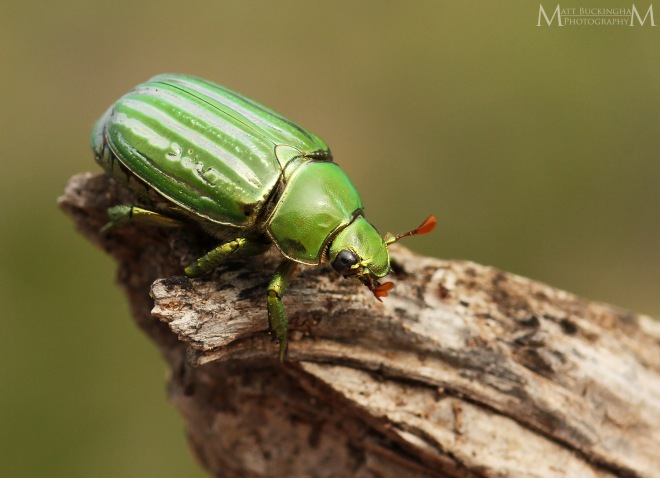
We rose early the next morning.  The first order of business was photographing a most spectacular creature that we had found the day before.  I was lucky enough to catch a fresh Wood’s Jewel Scarab (Chrysina woodii).  Carolina spotted the brilliant beetle as it flew about a pecan tree that had been planted at a picnic area in the foothill’s of the Davis Mountains.  As this species evolved to specialize on walnut leaves, it is not so surprising that it would also make use of Pecan, a close relative.  Anxious to arrive at the preserve, we held onto the beetle to photograph later.

IMG_3776

Wood’s Jewel Scarab

Now, in the beautiful early morning light we set it in our viewfinders.  I have always dreamed of finding a live Chrysina woodii.  A desire that has only been fueled after finding numerous crushed bits and pieces over the years.  C. woodii is endemic to the sky islands of West Texas, eastern New Mexico, and northern Mexico.  In Texas it has been documented in the Davis and Guadalupe Mountains.  The beetles actively feed during the day and are regularly attracted to lights by night.

IMG_4473

Wood’s Jewel Scarab

Chrysina woodii is also known as the Blue-legged Jewel Scarab.  It’s easy to see why, when admiring its brilliant metallic blue tarsi.  C. woodii is named for Dr. Horatio C. Wood, a pharmacologist who also published numerous papers on botany and entomology.  Wood collected a number of brilliant metallic green beetles in West Texas and gave them to his friend, George Henry Horn.  Horn was a pioneering coleopterist (entomologist specializing in beetles) active in the southwest during the late 1800s.  Horn presented the specimens at an entomological congress in 1883, and formally described Chrysina woodii in 1885.

IMG_3737

Wood’s Jewel Scarab

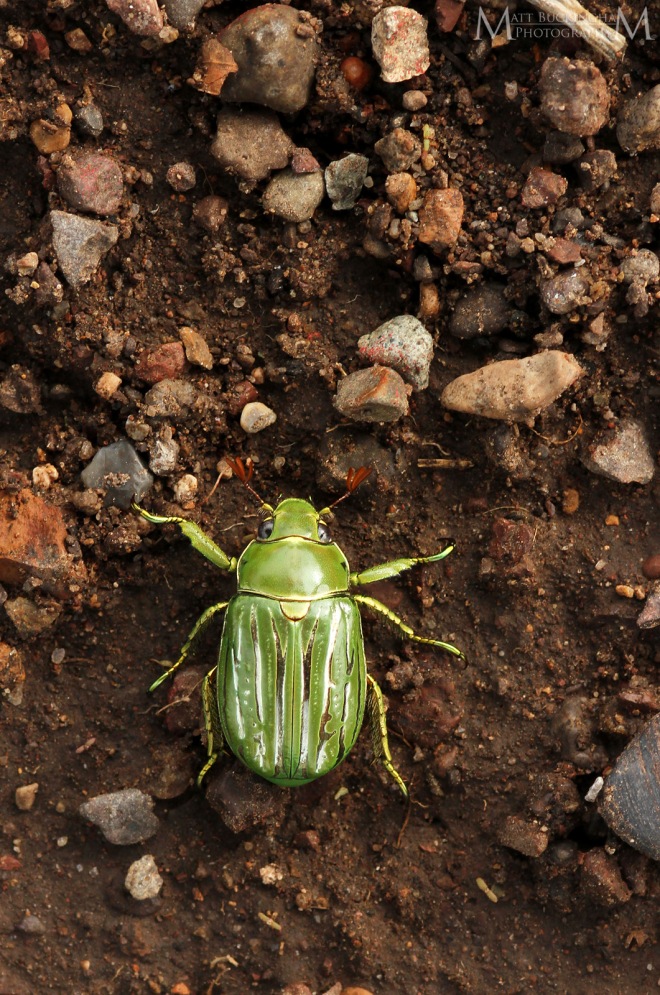
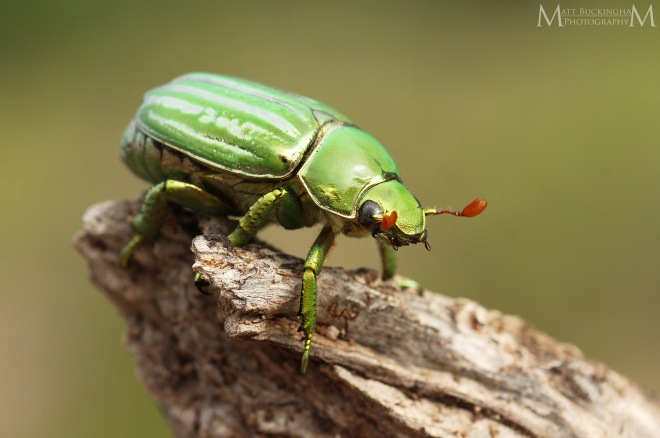
The light trap that we set the previous night was a success.  Among the flurry of moths that I was woefully under-prepared to identify, Erin spotted a creature of metallic green decorated with bright silver streaks: a Glorious Scarab (Chrysina gloriosa).  We held onto it until morning, when we opted to photograph it on the leaves of an Alligator Juniper, one of the primary food sources of the adults.  Despite the beetle’s gaudy appearance, it is incredible just how cryptic it was among the blue-green juniper leaves.
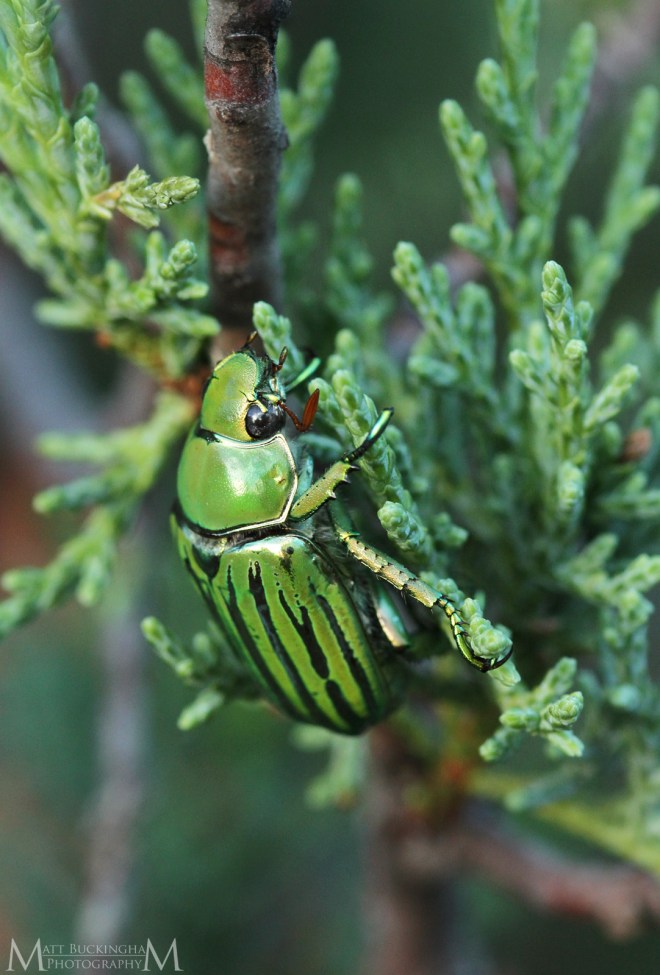
IMG_3718

Glorious Scarab

After breakfast and our coleopteran photo session we set back out into Madera Canyon.  Once again we paused to admire the incredible array of birds that flit about the trees, filling the mountain air with their sweet songs.  In the early morning hours the showy blooms of the Torrey’s Crag Lily (Echeandia flavescens) had opened.  By midday they will have closed, and the plants will become invisible among the sea of grass that surrounds them.

IMG_3806

Torrey’s Crag Lily

Along the bases of the large rocks lining Madera Creek I spotted the succulent Havard’s Stonecrop (Sedum havardii).  This species is known in the U.S. only from the Davis and Chisos Mountains of West Texas.
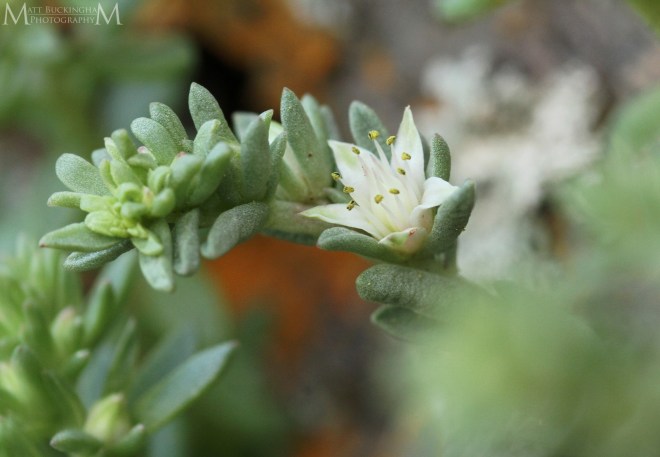
IMG_3853

Havard’s Stonecrop

Deep in Madera Canyon we turned into one of the many side canyons formed by ephemeral streams feeding Madera Creek.  We were spread out along the gradual slope when we heard Carolina call out “snake”.  I’ll admit that it took me a moment when she struggled to draw our attention to the serpent before her.  But sure enough, there, among a downed alligator juniper sat a Mottled Rock Rattlesnake (Crotalus lepidus lepidus).  The cryptic viper was nearly invisible due to its remarkable camouflage.  We all delighted in observing and photographing the beautiful reptile.  Despite its potent venom, it remained docile throughout our encounter, and would not display even the slightest bit of aggression toward us.

IMG_3973

Mottled Rock Rattlesnake

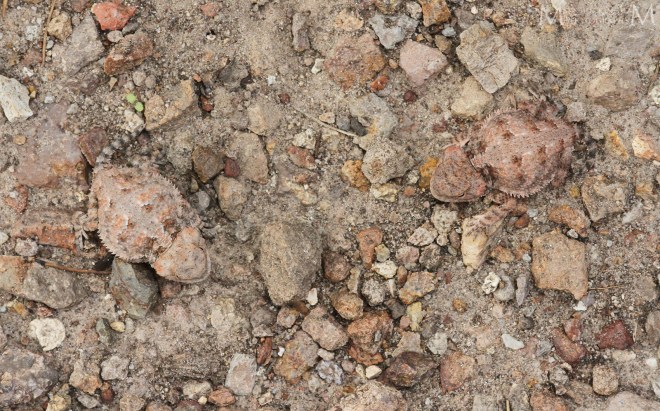
We bid the rattlesnake farewell, and ventured deeper into the canyon, until it flattened out into a broad high elevation basin.  The ground here was littered with small rocks.  Soon we came to realize that here some of the rocks move.  James was the first to catch movement among the pebbles, as one stone seemingly jumped out of his way.  Baffled, we looked closer, only to reveal that what looked like nothing more than one of the basin floor’s countless stones was actually a neonate Mountain Short-horned Lizard (Phrynosoma hernandesi).

IMG_4070

Mountain Short-horned Lizard

It soon became clear that these tiny lizards were all around us, and within the span of an hour we saw more than a dozen.  Their abundance that day is likely a product of their reproductive biology.  The females give live birth to as many as 40 or more of these living stones in July and August.  The neonates are then left to fend for themselves as they scatter about the surrounding area.  It is truly remarkable just how well-camouflaged these tiny dragons are.
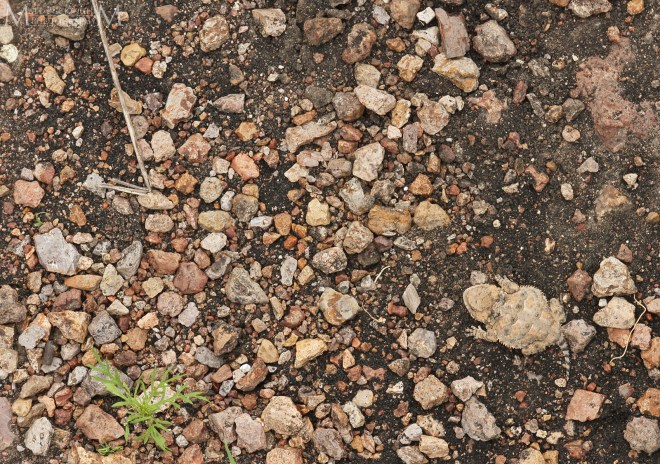
IMG_4148

Mountain Short-horned Lizard

IMG_4196

Mountain Short-horned Lizards

Spotting the baby lizards became something of a contest.  And while I was genuinely thrilled to have seen them, I couldn’t help but hope that we might encounter an adult.  Deeper into the basin we pushed until a distant rumble drew my attention to the peaks behind us.  Behind the mountains a massive storm was building, sending broad black clouds towering to the sky.  It was fast approaching.  Deciding that we would prefer not to wait out a storm at the base of some pine or juniper we decided to retrace our steps.

The storm drew nearer and nearer still as we retreated toward the safety of my truck.  Between the cracking thunder that echoed from the canyon walls, Erin called out “a big one! A big one!”  My eyes followed her finger to the rocky earth, where it took them a moment to spot the large Mountain Horned Lizard sitting still among the stones.

IMG_4262

Mountain Short-horned Lizard

Despite the impending deluge, we settled in to admire this incredible creature.  Thunder rang and the sky darkened as our shutters closed in rapid succession, forever freezing a moment of the lizard’s life in time.  I couldn’t help but imagine what a bizarre, frightening experience this must have been for it.  Fortunately, for a lizard photographer, at least, most horned lizards rely on their camouflage as a defense mechanism, and are prone to hunker down in an attempt to avoid being seen.

As a group, the horned lizards of the genus Phrynosoma are often referred to as “horny toads”.  A misnomer, of course, as toads are amphibians and these are very much reptilian.  Phrynosoma hernandesi is among the most widespread of the horned lizards, occurring across much of the western U.S. and Mexico and into southern Canada.  They generally occur in high elevation woodlands, prairies, and savannahs in the southern portion of their range, and grasslands and forested foothills to the north.  In Texas they are primarily restricted to the Davis and Guadalupe Mountains, with a few scattered populations in other ranges around El Paso.

IMG_4410

Mountain Short-horned Lizard

The Mountain Short-horned Lizard is one of a number of the Phrynosoma that is able to shoot blood from the corner of its eye.  This tactic appears to primarily be utilized against canine predators.  Fortunately it did not deem us a sufficient enough threat to warrant such an attack.

IMG_4339

Mountain Short-horned Lizard

We spent some time in the lizard’s company, and hastily returned to the truck.  On four wheels we were able to get ahead of the storm, and after a lunch of tuna sandwiches we set out to explore the scenic loop that winds around the Davis Mountains.  We stopped a moment at the McDonald Observatory, and continued on to Fort Davis.  As we neared the small grocery store in town, the rain finally caught up with us.  It is a magical experience, rain in the desert.  The dusty earth dampens and releases its sweet, distinctive aroma to the air.  We soaked in the rain, both literally and figuratively, as we restocked some supplies and prepared to continue on the loop along the southern and western edge of the Davis Mountains.

The rain was letting up as we spotted a large Pronghorn buck and his harem of six does not far outside of Fort Davis.  We watched them as lightning descended distant clouds on the horizon.  After spending a few moments with North America’s fastest land mammal, we continued down the road where we saw a large Mule Deer Buck browsing among the cholla and desert grasses.

Scaled Quail and Roadrunners darted across the road before us as we made our way further down the scenic loop.  We stopped at the Point of Rocks Roadside Park, where James chased after a Canyon Towhee with his camera, Carolina and Erin explored the massive rock outcrop, and I prepared a dinner of macaroni and tuna.  The sun had begun to peak through the clouds, casting its rays to distant rain showers that transformed its light to a myriad of brilliant colors arching across the sky.  After dinner we returned to the loop where we found a number of Western Diamondback Rattlesnakes before returning to our campsite around 11 pm.

The next morning we broke camp and said farewell to the Davis Mountains Preserve.  Our time in this remarkable sky island, however, was not yet over.  We were off to visit Gary at his property on the other side of the range.  He lives in a remote corner of Limpia Canyon far from paved roads.  The creek that helped form the canyon was running.  Its crystal clear waters pouring over boulders among the towering Ponderosa Pines looked more a scene from Colorado than West Texas.  We would later learn from Gary that it might run only a month or two out of the year.

I had visited the forested canyon on Gary’s property last year and I couldn’t wait to show James and Erin this hidden paradise.  I hoped that we might spot some Giant Coralroot Orchids (Hexalectris grandiflora).  We had looked for them on the preserve, but only succeeded in finding spent, wilted flowering stalks.  As we followed Gary up the canyon he regaled us with stories of the “Republic of Texas“, a militia group that believed that Texas should never have become part of the United States, and took it upon themselves to secede.  There were still signs and artifacts of their presence on his land.

It wasn’t long before we spotted the first group of coralroots.  It was a cluster of fresh plants, but unfortunately the flowers were all closed and drooping, a phenomenon that is fairly common among the genus Hexalectris.  We took their presence to be a good sign and continued on.  We (more accurately Carolina) spotted several Mountain Adder’s Mouth Orchids.  They seemed to be more numerous here than in Madera Canyon.

Just as we were debating turning around, James pointed out a splash of color in the deep shade of some low hanging branches of an Emory Oak.  It was a pair of Giant Coralroots in perfect bloom.  I had grown accustomed to seeing only one or two open flowers on any given individual at a time.  One of these, however, had three that were clustered closely together.  After a long, uncomfortable photo session we bid the orchids farewell and returned down the trail as an afternoon thunderstorm, typical of the monsoon season, began to build behind the peaks surrounding the canyon.
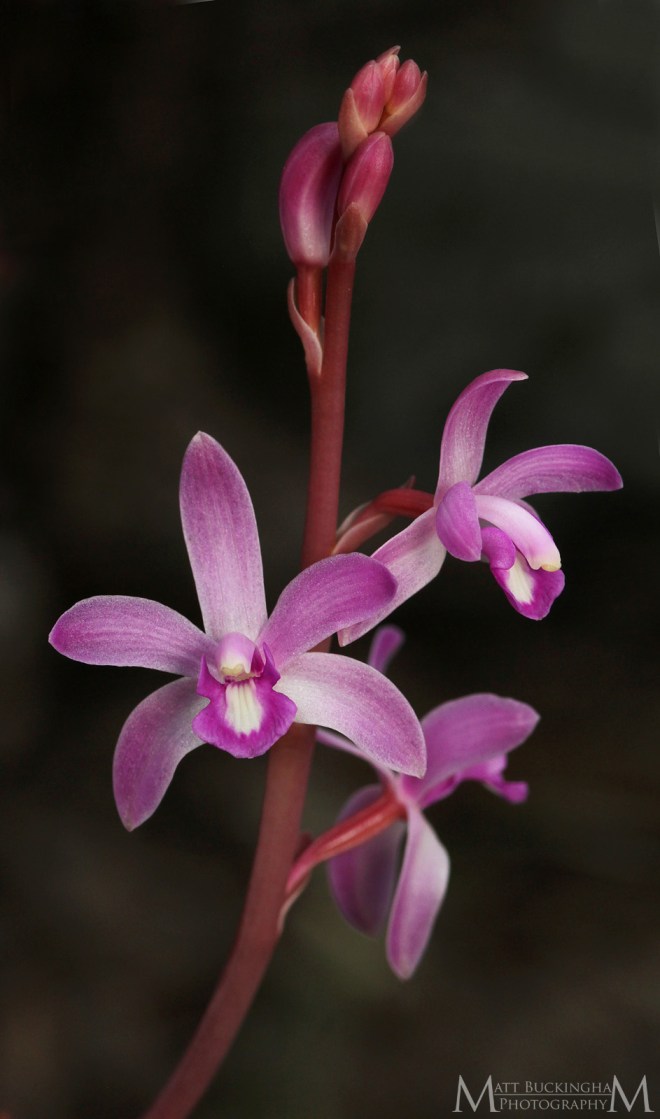
IMG_4795

Giant Coralroot

Gary invited us in for snacks and alcoholic cider, an offer that was hard to turn down.  We enjoyed his company and knowledge of the area’s natural and cultural history.  After visiting a while James and I set out to photograph the wealth of scenery around Gary’s home when James spotted a peculiar pattern on a nearby boulder.  “Do you see what I see?” he asked pointing at the rock.  It took a moment, but finally I saw it – a young Mottled Rock Rattlesnake resting still and silent.  In that moment our photographic priorities changed and we set about capturing the beautiful snake.  Just as we were finishing the building clouds reached their critical mass and began releasing their moisture in the form of an afternoon downpour.
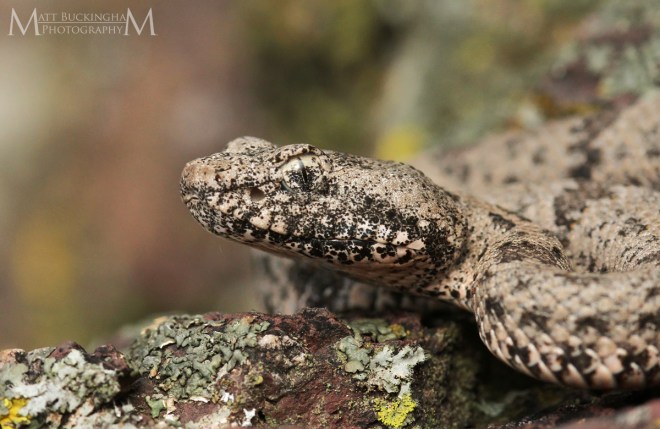
IMG_4915

Mottled Rock Rattlesnake

We bid our reluctant “good bye’s” to Gary and the mountains he calls home.  That night we would descend from the sky islands and make our camp in the desert scrub around Lake Balmorhea.  Here we watched a large group of Clark’s Grebes on the water, while we listened to a Pyrrhuloxia call from among the impenetrable thorn fortress of the surrounding desert.  Carolina spent the evening rock hounding in search of the elusive Marfa Agate while James and I looked for signs of life and Erin enjoyed one of her favorite books in the spectacular setting of the Chihuahuan Desert.  Carolina was lucky enough to find a few choice pieces of agate while James and I spotted a number of large Tarantula Hawks and Western Green June Beetles.  All of our attention, however, soon turned to the horizon, where the setting sun painted a rainbow on the black clouds of a distant thunderstorm.  It was a fine final chapter to an incredible Trans-Pecos adventure.

36637933825_3fc24bb99d_o

A distant thunderstorm rages over the desert scrub near Balmorhea.

July Recap

IMG_3479

Cow Killer

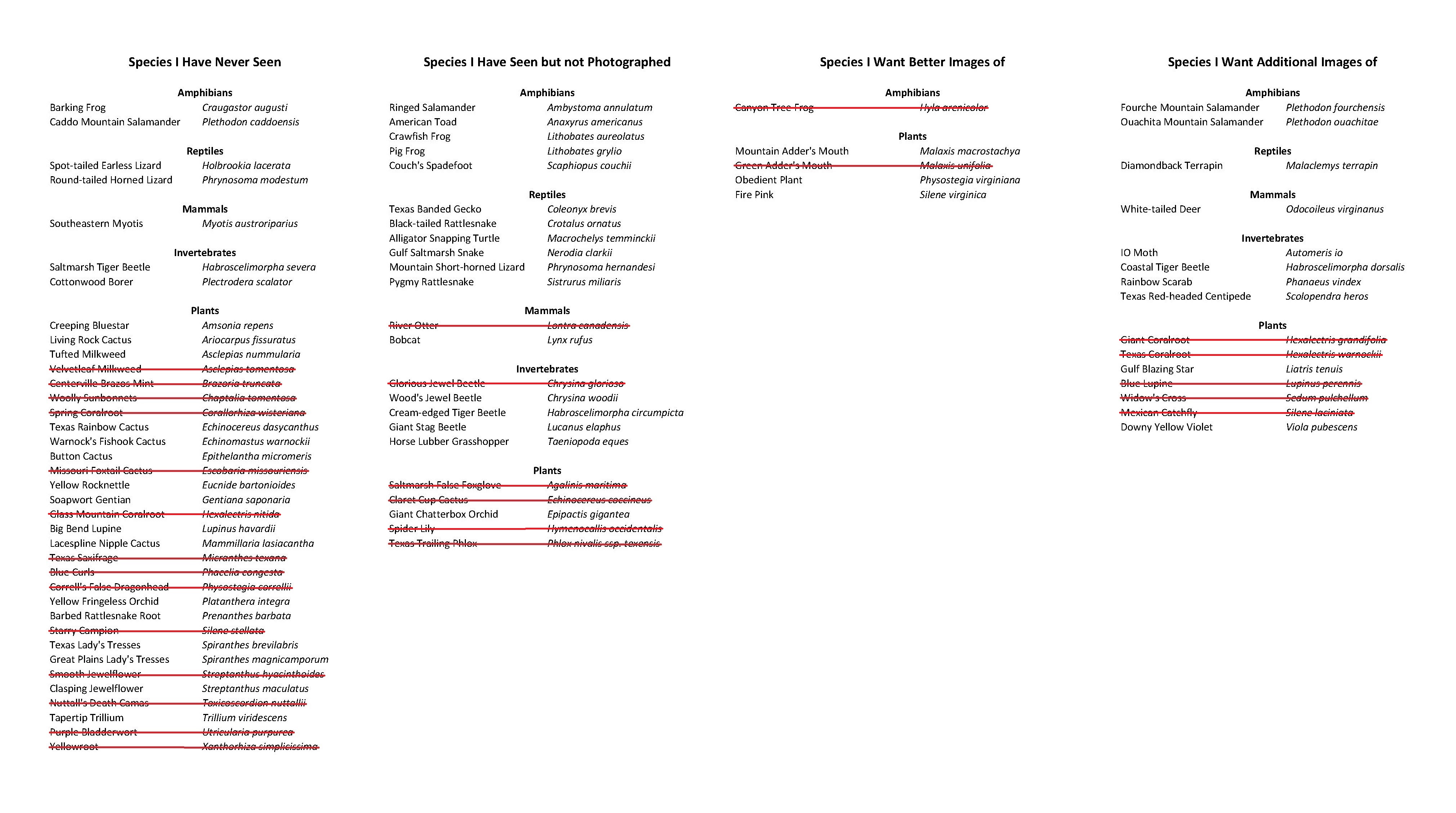
July has been my most productive month yet.  Due in large part to a trip to the Davis Mountains I was able to check 7 species off my list:

Spider Lily (Hymenocallis occidentalis)

Texas Coralroot (Hexalectris warnockii)

Glass Mountain Coralroot (Hexalectris nitida)

Giant Coralroot (Hexalectris grandiflora)

Mexican Catchfly (Silene laciniata)

Glorious Scarab (Chrysina gloriosa)

Canyon Tree Frog (Hyla arenicolor)

2017GoalsJuly

One of the most interesting photographic experiences of July came toward the end of the month, when a female Red Velvet Ant a.k.a. Cow Killer (Dasymutilla occidentalis) came wandering through our yard.  These large wasps have always fascinated me, and I’ve long wanted to get a good photo of one. I’ve tried a few times in the past but found them nearly impossible to photograph. They are surprisingly fast and never stop moving.  The females are flightless, while the males are winged.

Despite their ominous name, which eludes to their supposedly highly painful sting, my wife offered to help. I captured it in a cup and then led it onto a 3-foot long stick. My wife held the stick, switching hands as it paced rapidly from one end to the other. Occasionally it would stop at the edge for the briefest of moments. I ended up taking over 100 shots. I got some that were very sharp, but she was in an awkward position, and others where she was in the perfect position, but the focus wasn’t right. This one ended up being my favorite. When we finished I let her continue on its way.

Cow killers are parasites of parasites, and when we encountered her I assume she was on the hunt for a suitable host for her offspring. They seek out the larvae of Cicada Killer wasps (Sphecius speciosus), and lay their own eggs into the larvae of the Cicada Killers, which have been laid on a live, paralyzed cicada. They will also parasitize a number of other ground nesting wasps and bumblebees.

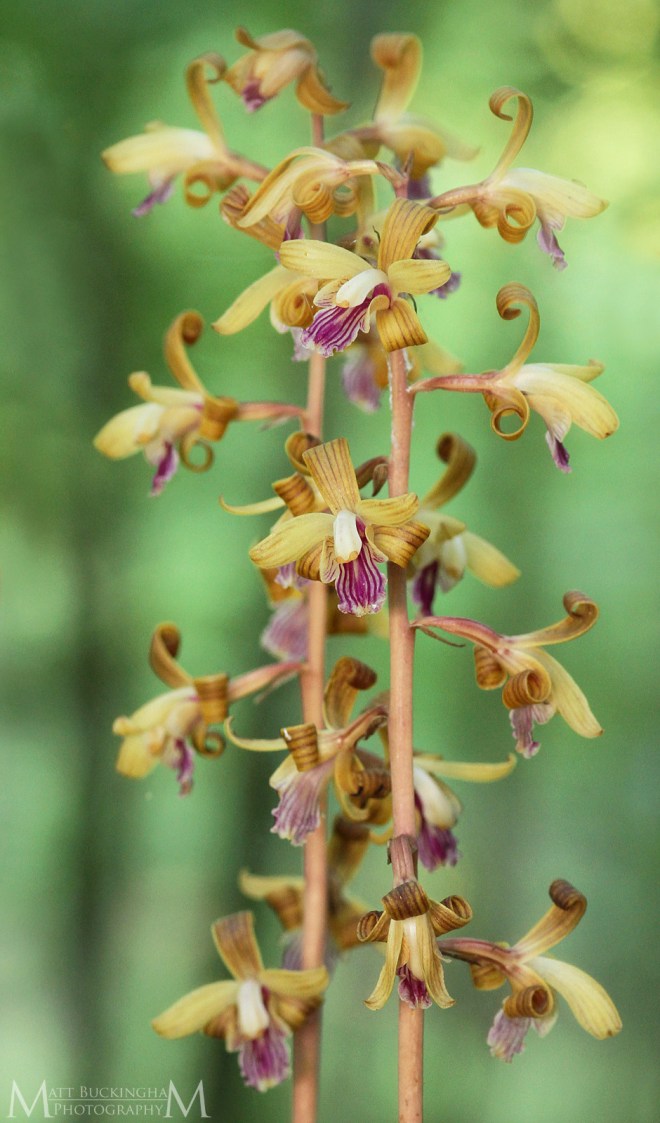
In early July I went to visit a population of Crested Coralroot (Hexalectris spicata) in the Davy Crockett National Forest.  Despite significant damage from feral hogs to the dense leaf litter at the site, I found several blooming plants.  Though most were past their prime, i found a few fresh, interesting blooms.  It’s hard to imagine a flower having a personality, but the flowers of Hexalectris spicata certainly look like they could.

IMG_0876

Crested Coralroot

En route to the Crested Coralroot spot I stopped along a forest road to relieve myself.  As I was doing so I spotted several Little Ladies’ Tresses (Spiranthes tuberosa) blooming alongside the road.  These diminutive orchids bloom in the summer in open woodlands.

IMG_0924

Little Ladies’ Tresses

I photographed this Bog Coneflower (Rudbeckia scabrifolia) in a herbaceous seep on private land.

IMG_0935

Bog Coneflower

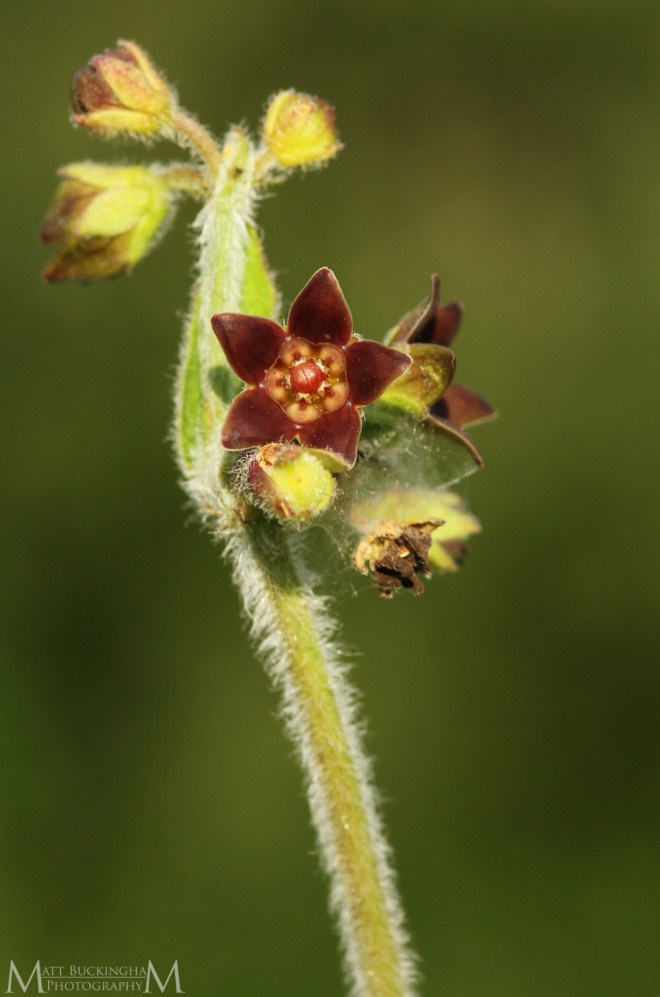
I have been wanting to photograph Climbing Milkweed (Matelea decipiens) for a while.  I found a plant with a single cluster of blooms along a springfed stream.

IMG_0992

Climbing Milkweed

The striking Blue Waterleaf (Hydrolea ovata) is common in herbaceous wetlands in the eastern third of the state.

IMG_1097

Blue Waterleaf

Hydrolea ovata can often be found growing with Looseflower Water-Willow (Justicia lanceolata).

IMG_1132

Looseflower Water-Willow

Toward the end of the month I visited a high quality longleaf pine savannah on private land with my friend James.  During our visit we were fortunate to catch the rare Scarlet Catchfly (Silene subciliata) in bloom.

IMG_3250

Scarlet Catchfly

I’ll end my July recap with a photo of a Slimleaf Milkweed (Asclepias stenophylla) that we saw on our way back from Dallas, where we photographed Hexalectris warnockii and H. nitida in early July.  This is one of the rarer milkweeds of Texas. It is primarily a species of the Great Plains, occurring on dry, sandy prairies that have not experienced significant soil disturbance. In Texas it occurs in scattered populations from the Rolling Plains to the Blackland Prairies, where it appears to be rare and declining.

IMG_1626

Slimleaf Milkweed

Sky Island

Target Species:

Giant Coralroot (Hexalectris grandiflora)

Mexican Catchfly (Silene laciniata)

Canyon Tree Frog (Hyla arenicolor)

Glorious Scarab (Chrysina gloriosa)

IMG_2995

Glorious Scarab

There are those profound moments in life that help shape who we are.  Experiences that put things into perspective, and fill us with a sense of purpose and being.  Moments that bring clarity to an otherwise murky sea of questions, concerns, and uncertainty.  For me most of these moments occur when I’m in the natural world – in places where the advance of civilization and the concrete world is less evident.  These wild places are my “church”, for it is here that I seek the direction and advice that guides me, and puts me on my path.  Make no mistake, I do not hold any misconceptions that Mother Nature reciprocates my feelings toward her, but rather I take comfort in my insignificance in the grand scheme of the natural cycle.  In these moments I know that my life will be fulfilled, for I could never hope to run out of new natural wonders to discover.

One such moment occurred recently in the Davis Mountains of West Texas, when Carolina and I stood high in a narrow canyon overlooking the rain-drenched valley below.  We were soaked from head to toe, yet our spirits were not dampened as we pondered the denizens of the forests and meadows that lay below us.  On the walk up we had passed groves of massive Ponderosa Pines (Pinus ponderosa), one of the many Rocky Mountain relicts that persist in these sky islands.  Among these pines was the largest individual recorded in the state of Texas.

IMG_2483

High Elevation Valley with Ponderosa Pine, Texas Madrone, and a variety of oaks

Rain in West Texas is a beautiful thing.  You can literally see the world come to life as it rains.  You can smell it, hear it, feel it.  It’s a difficult sensation to describe.  Though in these sky islands, rain is not as scarce as one might think.  Sky islands are unique habitats that occur in isolated mountain ranges in the desert southwest.  Here warm air cools as it rises up the slopes and moisture accumulates.  This combines with annual monsoons that typically begin in July and last into September, soaking the mountains with nearly daily afternoon thunderstorms.  The result is annual levels of rainfall that may be 4 times greater or more than the surrounding desert.  Temperatures are significantly cooler as well.  These conditions result in the presence of several species typical of the Rocky Mountains as well as species of the desert southwest.  Couple this with the fact that West Texas and northern Mexico is a a significant center of endemism, and the importance of the Davis Mountains for biodiversity becomes clear.

We were exploring the Davis Mountains Preserve, owned and managed by the Nature Conservancy in Texas.  This 33,000 acre preserve protects the highest and most spectacular portion of the Davis Mountains.  It joins approximately 70,000 acres of additional land protected through acquisition and private landowner conservation partnerships.  The result is the protection of over 100,000 acres of sky island habitat that is critical for a number of rare and declining species and natural communities.  Here we observed an array of fascinating plant and animal species typical of these sky islands.

IMG_2252

A rain-drenched montane woodland with an overstory of large Ponderosa Pines and an understory of oaks and Texas Madrone

Topping out at over 8,000 feet, the Davis Mountains are the tallest, and largest mountain range confined entirely to the Lonestar State.  Though the Guadalupe Mountains are indeed taller and more extensive, we share them with New Mexico.  The Davis Mountains were the last refuge for Mexican Gray Wolves and Grizzly Bears in Texas.  Those these apex predators are gone, the Mountain Lion still roams here, and Black Bears are making a comeback.  Today, the Davis Mountains remain one of the final strongholds in Texas for a variety of plant and animal species.  Perhaps the most spectacular of which is the Giant Coralroot (Hexalectris grandiflora).

The rain was just beginning to let up when Carolina spotted them.  A clump of pink beacons shining against the wet rocks and grasses.  She had found the Giant Coralroot.  It is hard for me to describe the sense of wonder and excitement that overcomes me while I observe such an elusive treasure.  The clump of orchids had at least 10 stems with dozens of flowers in various stages of development, from bud to senescent blooms.  Over the next two days we would end up observing four clumps and a total of approximately 15 plants.

IMG_2513

Giant Coralroot

Previously the Giant Coralroot was thought to occur in the United States only in the moist pine-oak-juniper canyons of the Davis Mountains.  Though it remains restricted to Texas, it has since been discovered in the Chisos Mountains within Big Bend National Park, the White Rock Escarpment of north-central Texas, and oak-juniper woodlands of the Edward’s Plateau.  They seem to be exceedingly rare in these areas, however, and their real stronghold in the U.S. remains the Davis Mountains, where they are relatively common in high elevation forests dominated by Alligator Juniper, Pinyon and Ponderosa Pines, Texas Madrone and a variety of oaks.

IMG_2275

Giant Coralroot

Giant Coralroots are myco-heterotrophs, obtaining energy and nutrients from the mycorrhizal fungi of tree roots.  Unlike most plants they do not photosynthesize, and therefore do not require chlorophyll-containing leaves.  They spend most of their lives as nothing more than an underground rhizome and roots, but following the onset of the summer rains, they begin to send up stalks that may bare a dozen or more bright pink blooms.  They seem to bloom sporadically from late June to mid September, likely peaking in mid to late July in most years.

IMG_2183

Giant Coralroot

These spectacular orchids are easiest to find growing beneath trees and at the base of rocks where moisture and organic material accumulate, providing ideal conditions for both the plants and the fungi they depend on.  Though there is a lot of respectable competition, the combination of their beautiful blooms, interesting life history, and the spectacular places that they inhabit make this my favorite species of orchid.

IMG_2581

Giant Coralroot

IMG_1788

Giant Coralroot

Growing near the orchids was Mexican Catchfly (Silene laciniata).  This striking wildflower occurs in the mountains of the southwestern United States and northern Mexico, barely entering Texas in the mountains of the Trans-Pecos.  It’s name comes from its sticky stem, which can trap insects in order to protect the plant from predation.

IMG_1708

Mexican Catchfly

A number of milkweed species occur in the West Texas sky islands.  We observed Asclepias latifolia and Asclepias brachystephana in the lower elevation grasslands.  Higher up we came across Asclepias texanaAsclepias subverticillata, and Asclepias engelmanniana in bud.  The true star of the high elevation milkweeds was the Nodding Milkweed (Asclepias glaucescens).  We found one robust flowering plant growing alongside a rocky stream in a canyon shaded by Alligator Juniper and Pinyon Pine.

This large, showy milkweed is primarily a species of the mountains of Mexico.  It barely enters the United States in the sky islands of West Texas, and southern Arizona and New Mexico.  In Texas they are restricted to the Davis, Chisos, and Guadalupe Mountains.

IMG_1789

Nodding Milkweed

Like Asclepias glaucescens, the U.S. distribution of Threadleaf Phlox (Phlox mesoleuca) is largely restricted to the sky islands of the southwest.

IMG_1868

Threadleaf Phlox

In addition to species that are primarily Mexican in their distribution, the Davis Mountains provides refuge for a variety of Rocky Mountain relicts.  Purple Geranium (Geranium caespitosum), for example, occurs primarily in Ponderosa Pine savannahs and other coniferous woodlands of the Rockies from Wyoming to northern Mexico.

IMG_1995

Purple Geranium

IMG_2005

Purple Geranium

The Harebell (Campanula rotundifolia) has an even broader distribution, occuring in the formerly glaciated northern United States and Canada down through the Rocky Mountains, and into the sky islands of the southwestern United States and Canada.  It is common in the high elevations of the Davis Mountains and puts on a spectacular show during the summer monsoon.

IMG_2020

Harebell

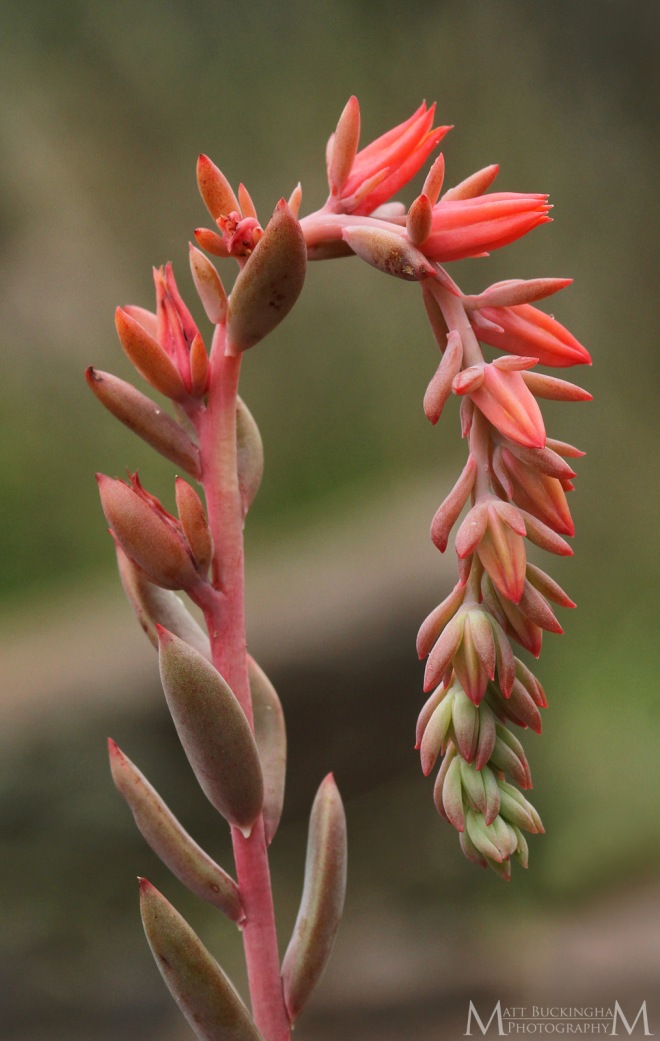
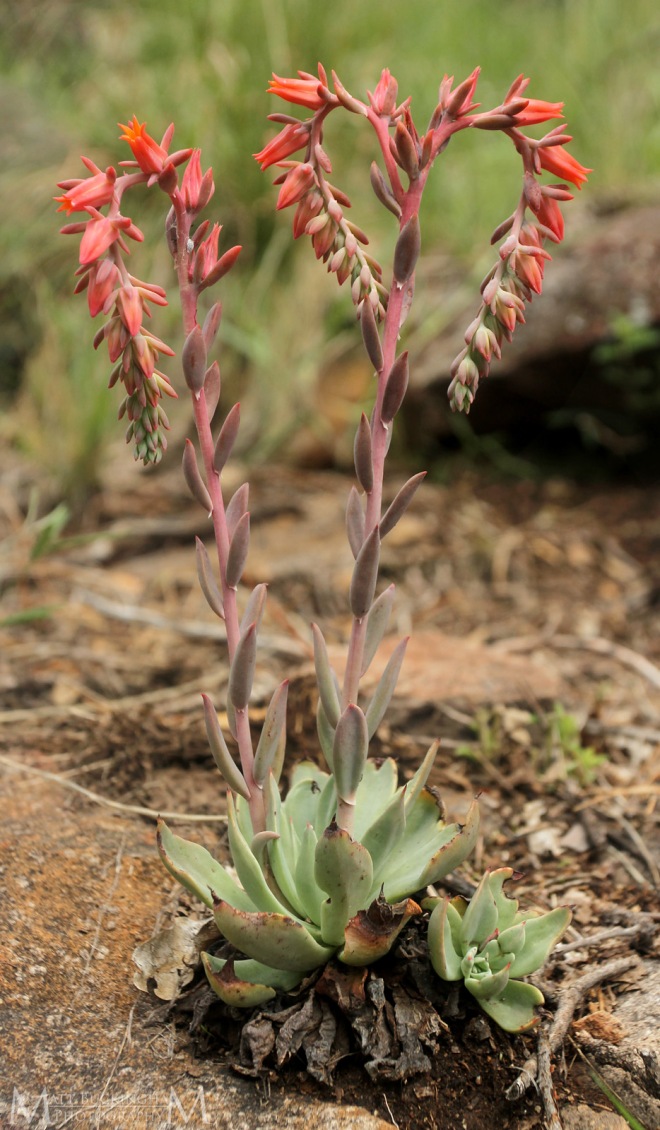
One of the Davis Mountains most spectacular botanical residents is the Desert Savior (Echeveria strictiflora).  This succulent member of the stonecrop family (Crassulaceae) is primarily found on rocky canyon walls and slopes of central and northern Mexico.  In the United States it is known only from Jeff Davis, Brewster, and Presidio Counties in far West Texas.

IMG_2058

Desert Savior

We found several growing from rock crevices and the bases of boulders at elevations above 6000 feet.  Here they were able to take advantage of minute amounts of soil and moisture that collect over time.  In the Davis Mountains they seem to be found primarily in exposed rock outcrops and canyon walls adjacent to rocky streams.

IMG_2125

Desert Savior

The Desert Savior is a truly spectacular plant.  It’s stalk of waxy, fiery flowers reaches up to a foot and a half over it’s thick, grayish green succulent leaves.  Each curled stalk may bare 2 dozen or more flowers that gradually open, unfurling the stalk as they develop and fade.  Hummingbirds are likely an important pollinator of these succulents, as evidenced by their bright red coloration, somewhat tubular flowers, and the fact that their peak blooming seems to coincide with the start of hummingbird migration of late summer.

IMG_2227

Desert Savior

IMG_2721

Desert Savior

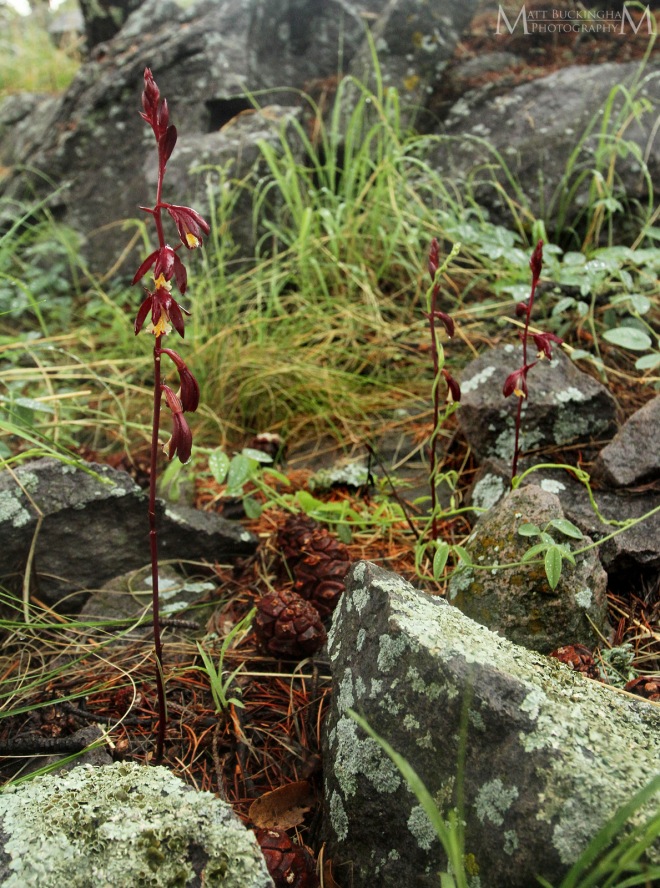
The mountains of Trans-Pecos Texas boast more species of Hexalectris orchids than anywhere else in the country.  For some time I had communicated with North Texas botanist Matt White on our shared interests.  As luck would have it, while returning to the Davis Mountains Preserve visitor center, our friend, The Nature Conservancy volunteer, and local landowner Gary was talking to a man that he introduced as Matt White.  This chance encounter led to Matt guiding us to a population of Texas Coralroots (Hexalectris warnockii) that he had stumbled across on a remote rocky ridge a few hundred meters from the preserve’s main road.  He made a comment that caught my attention – that these plants and their ancestors have likely been at this spot for hundreds of years.  And in all likelihood we were the first humans to ever see them, and the last that ever will.  I smiled at the prospect, and hoped it to be true.

IMG_2333

Texas Coralroot

Following a long day of exploring the Davis Mountains Preserve, we decided to spend the evening resting our legs by taking a leisurely drive along the scenic loop that surrounds the range.  I use the term resting loosely, for it seemed like every few hundred feet we were stopping to explore some new biological or geological wonder.  After a while we passed below Sawtooth Mountain.  The mountain is a prominent landmark in the area, its peak reaching nearly 7,700 feet above sea level, and rising nearly 1500 feet above the surrounding slopes.

Like the Davis Mountains Preserve, Sawtooth Mountain and its surrounding habitat is protected by the Nature Conservancy.  However the mechanisms that protect the two are quite different.  While the Davis Mountains Preserve is owned outright by the conservancy, Sawtooth Mountain remains private, and instead is protected through a conservation easement.  Conservation Easements are legally binding documents that place restrictions on land use in order to achieve certain conservation objectives.  Sawtooth is another piece of the puzzle that has led to the protection of over 100,000 acres of these sky islands.

IMG_2396

Grassland grades into pinyon-juniper-oak woodlands on the slopes of Sawtooth Mountain

IMG_2407

Sawtooth Mountain looms over an interest rock outcrop

In addition to their unique flora, the Davis Mountains supports an equally interesting faunal community, melding species of the mountainous west, the desert southwest, and those primarily Mexican in their distribution.  In a single day one can hear the call of the Stellar’s Jay alongside that of the Cactus Wren and Painted Redstart.  Rare vagrant bird species turn up here, and reptiles like the Greater Short-horned Lizard thrive in one of the few areas of suitable habitat in the state.

The monsoon rains bring with them an increase in amphibian activity.  We observed many Red-spotted Toads (Anaxyrus punctatus) during our visit.  These large, handsome amphibians occur in a variety of habitats throughout most of the southwest, down into central Mexico.

IMG_2450

Red-spotted Toad

One of the most memorable experiences of any trip to the Davis Mountains is hunting for Canyon Tree Frogs (Hyla arenicolor) as they sit perfectly camouflaged among boulders adjacent to pools in high elevation canyon drainages.  In Texas the Canyon Tree Frog is restricted to a handful of mountain ranges of the Trans-Pecos.  Though most are brown to gray with dark brown blotches, occasionally a striking green or green-spotted individual turns up.  Carolina spotted one such animal camouflaged among the lichen on a large boulder.

IMG_2697

Canyon Tree Frog

As a child, I remember being captivated with the insect community in West Texas.  My parents indulged me as I ran about the desert with a net in hand, eagerly trying to capture and identify the staggering array of flying and crawling six-legged wonders that call the Trans-Pecos home.  There are few places in the country that provide as wonderful an entomological playground as West Texas.

One of the most conspicuous members of the insect community is the Arizona Sister (Adelpha eulalia), a member of the brush-footed butterfly family (Nymphalidae).  On warm, sunny days that can be seen dancing about the canyon floor and rocky outcrops seeking moisture and areas of mineral deposits.  At some such deposits its not uncommon to see dozens of different species sharing the same space in search of essential nutrients that their nectarivorous diet does not provide.

IMG_2768

Arizona Sister

The Orthopterans (grasshoppers, katydids, and crickets) of the Trans-Pecos range from species of muted camouflage to those with fitting, gaudy names like the Rainbow Grasshopper.  Carolina spotted this blue-winged grasshopper (Trimerotropis sp.) resting among the pebbles in a mountain wash.  Though they initially appear to be adorned in dull, muted tones, when they jump they reveal their translucent blue hind wings and cobalt blue markings on the inside of their hindlegs.

IMG_2892

Blue-winged Grasshopper

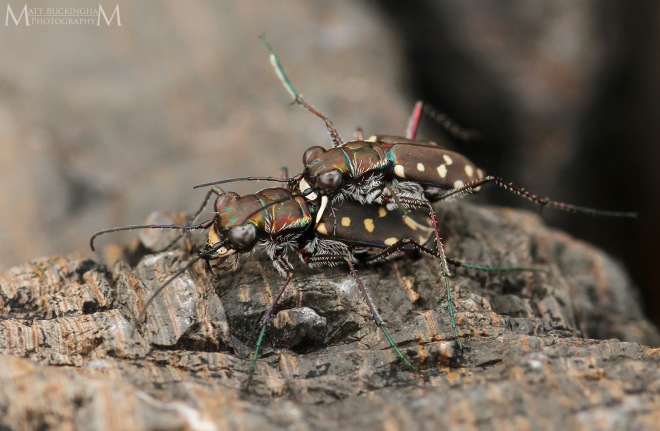
It’s always a treat observing tiger beetles.  Ruthless predators, tiger beetles are lightning fast and armed with deadly mandibles.  We observed these Western Red-bellied Tiger Beetles (Cicindelidia sedecimpunctata) scurrying about rocks adjacent to a mountain stream.  This species, like so many others in the area, barely enters the U.S. in extreme western Texas and southern New Mexico and Arizona.

IMG_1746

Western Red-bellied Tiger Beetle

The Western Rhinoceros Beetle (Xyloryctes thestalus) is one of the largest, most abundant beetles of the Davis Mountains.  Following the onset of the monsoon they emerge in droves and seek out ash trees (Fraxinus spp.), their primary food source.

IMG_3157

Western Rhinoceros Beetle

The real gems of the sky islands, however, are the beetles of the genus Chrysina.  There are five species in the United States, two of which occur in Texas.  In what I suspect is a common occurrence among lifelong naturalists, I have certain species that I always admired and dreamed of one day seeing while pouring endlessly through field guides and other nature books as a kid.  One of these species was the Glorious Scarab (Chrysina gloriosa).  It is a species that looks more at home in the tropics, in places well out of reach.

I had looked for this species on many previous trips to the Davis and Chisos Mountains, and had always left having only caught glimpses of elytra discarded by some predator, or some smashed semblance of what once was a Glorious Scarab on busy roads and trails.  But on this trip, much to my delight, a lifelong dream was realized when I saw a live Chrysina gloriosa crawling on the ground on our final evening in the mountains.  I must have made some strange gleeful sound as I reached down to pick it up.  I examined it closely, taking delight in this serendipitous encounter.

IMG_3089

Glorious Scarab

Chrysina gloriosa is highly sought after by collectors, and it is easy to see why.  Fortunately they remain common in sky islands from Arizona to West Texas.  The beetle’s brilliant greens were impossible to capture on “film”, but that didn’t stop me from trying.  The elytra (hardened outer wings) of Chrysina gloriosa are decorated with metallic silver streaks that brilliant reflect the light.  It is believed that the bright coloration and streaked pattern help break out the outline of the Glorious Scarab when it feeds on the juniper leaves that it depends on, helping to camouflage it from would-be predators.  In all we would find five individuals that night and the following morning.  It truly was the perfect ending to a spectacular trip that was rich in biodiversity.

IMG_2982

Glorious Scarab

The Davis Mountains truly are one of Texas’s natural treasures.  We can take comfort knowing that the biodiversity, scenery, and cultural history will be protected for generations to come thanks to the conservation efforts of the Nature Conservancy, Texas Parks and Wildlife, and landowners with a passion for the area.  I hope to return many times in the future, in an endless attempt to document but a mere fraction of the beautiful and interesting plants and animals that call this sky island home.
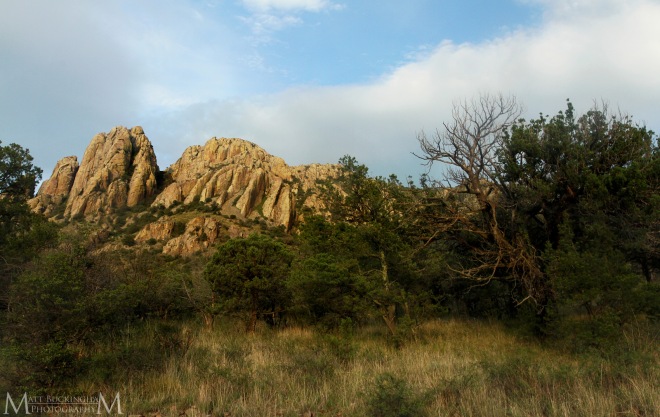
Among Spiders

Target Species: Spider Lily (Hymenocallis occidentalis)

IMG_1054

Hymenocallis occidentalis

Spider Lily is an appropriate common name for members of the genus Hymenocallis.  Hymenocallis diversity is greatest in the southeast, specifically Florida.  In Texas there are only 2 species.  The familiar Hymenocallis liriosme blooms in the spring in wet ditches, wet pastures, wet prairies, marsh edges, and similar wetland habitats.  The less familiar Hymenocallis occidentalis is typically a species of open woodlands and mature forests.
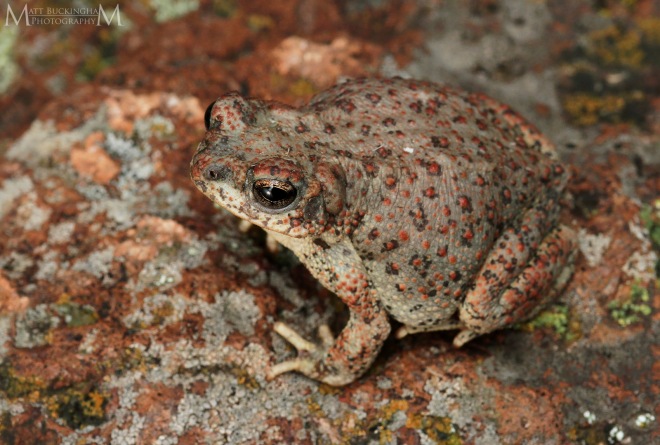
IMG_1034

Hymenocallis occidentalis

Hymenocallis occidentalis blooms in the heat of summer.  However, it can easily be located in the spring when it puts up its thick, fleshy leaves.  It seems to be uncommon in Texas, occurring in a handful of scattered counties in the state’s eastern third.  Texas plants are assigned to the variety eulae.  In H. occidentalis var. eulae the leaves typically wither prior to flowering.  There has been some debate as to whether or not this variety merits being elevated to the species level.

IMG_1013

Hymenocallis occidentalis

I have seen both the leaves and blooms of H. occidentalis on numerous occasions, but have never succeeded in getting a photograph I was satisfied with.  I hoped to change that by adding it to my 2017 biodiversity list.  I have been to a few remote locations where I have seen hundreds of leaves carpeting the forest floor in the spring.  Unfortunately I didn’t have time to make it out there this summer, and instead settled for photographing this roadside population I discovered last year just 30 minutes from my house.  Some of the species on my list are a real challenge to find and photograph.  Fortunately, Hymenocallis occidentalis wasn’t one of them!

June Recap

IMG_0308

Eastern Featherbells (Stenanthium gramineum) bloom in a mature pine-hardwood forest.

June got off to a slow start, but I finished strong, checking four more species off my list:

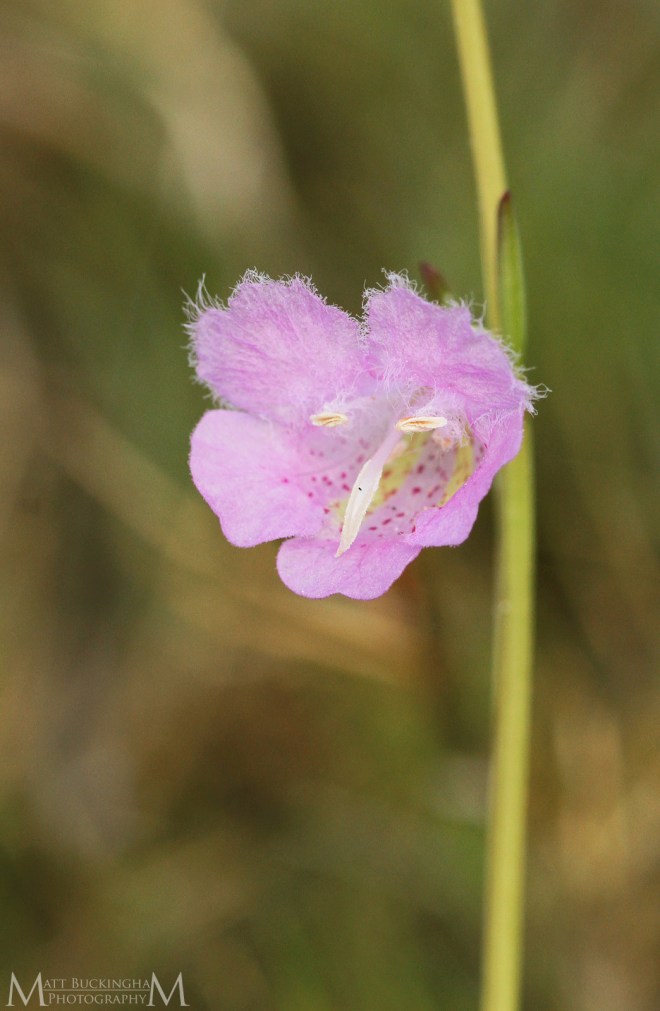
Saltmarsh False Foxglove (Agalinis maritima)

Velvetleaf Milkweed (Asclepias tomentosa)

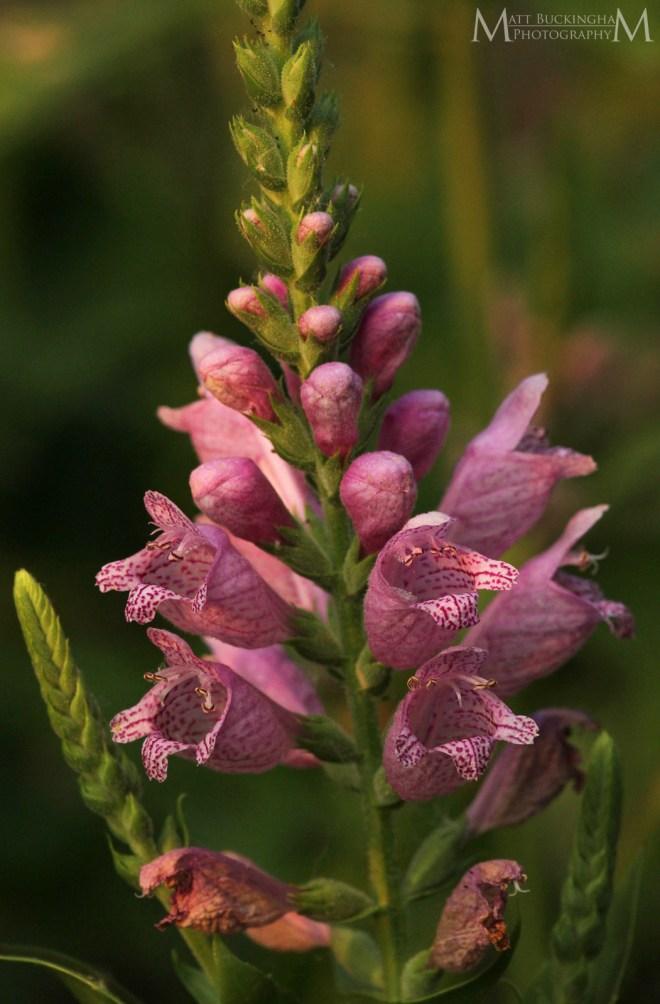
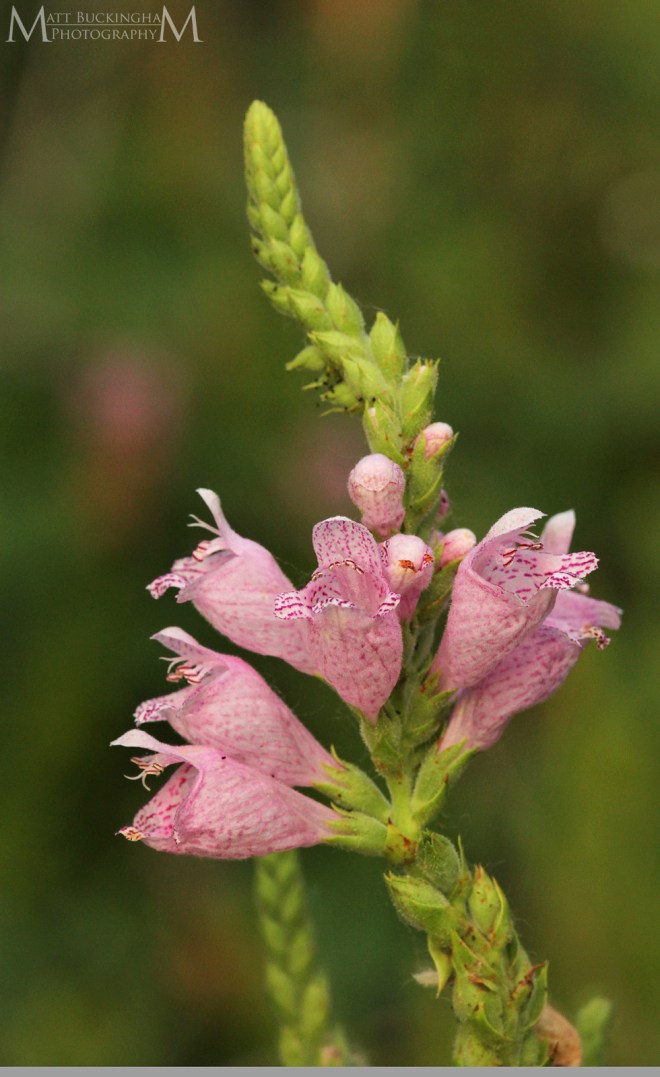
Correll’s False Dragonhead (Physostegia correllii)

Starry Campion (Silene stellata)

2017GoalsJune

In early June I photographed this pair of ox beetles (Strategus antaeus) with my good friend James Childress.  We have two species of ox beetles in East Texas.  Strategus antaeus is smaller, with proportionately longer, pointed horns.  Strategus aloeus is much larger, with blunt tipped horns.  S. antaeus is primarily a species of the coastal plain, with East Texas marking the southwestern limit of its range.  It occurs in open, sandy woodlands, savannahs, and prairie openings.  The large horns of the male are used in combat to with other males to win the favor of a female.

IMG_8577

Strategus antaeus

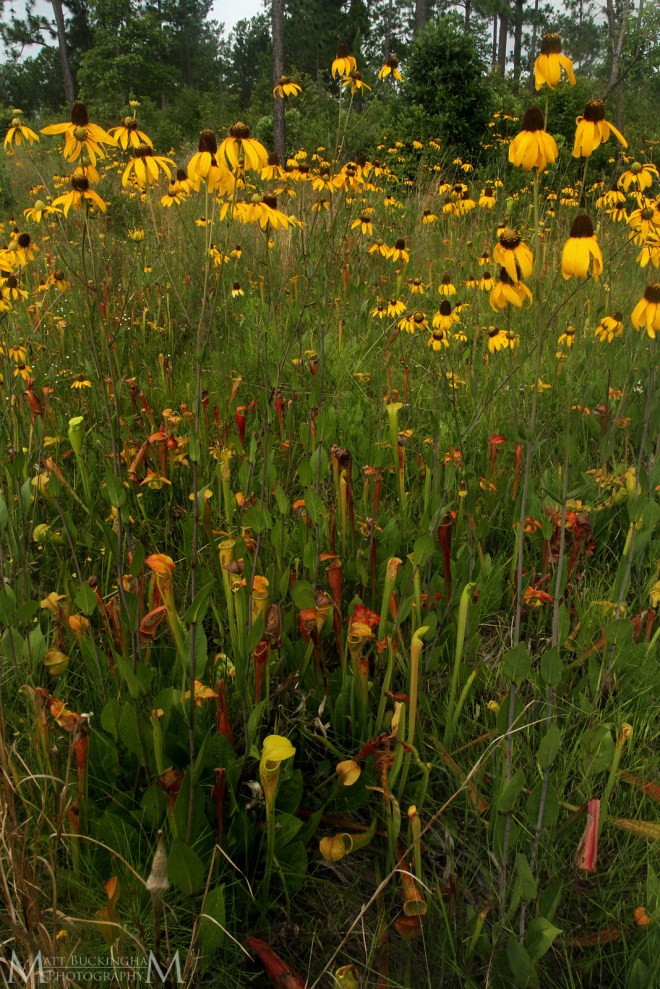
In mid June I visited one of my favorite vegetative communities: the herbaceous hillside seep.  This particular site is on private land that is managed by a combination of fire and mechanical clearing.  Historically these communities would have been kept free from woody vegetation through a combination of frequent lightning-ignited fires and poor, saturated soils.  These communities are home to a variety of rare and interesting species including carnivorous plants and a variety of orchids.  Pictured below are Pale Pitcher Plants (Sarracenia alata) and blooming Pinewoods Rose Gentians (Sabatia gentianoides).  I hope to highlight this community more in a future blog entry.

IMG_9565

Herbaceous Hillside Seep

One of the herbaceous seep’s most striking summer displays comes from the Bog Coneflower (Rudbeckia scabrifolia).  This rare plant is confined to extreme eastern Texas and western Louisiana.  Here it’s habitat has all but disappeared over the past century and a half.

IMG_9506

Bog Coneflowers bloom in a herbaceous hillside seep.

Similar to the herbaceous hillside seep, but occurring in areas where fire historically did not penetrate is the forested seep.  These areas are locally known as “baygalls” in reference to two typically dominant species: Sweetbay Magnolia (Magnolia virginiana) and Tall Gallberry Holly (Ilex coriaceae).  Like the herbaceous seep, baygalls are home to many rare species.  Pictured here are the blooms of the toxic Virginia Bunchflower (Veratrum virginicum).  These handsome plants may reach a height of 7 feet.

IMG_9600

Virginia Bunchflower blooms in an East Texas baygall

Another impressive summer bloomer is Physostegia digitalis, one of the false dragonheads.  They can reach heights of six feet or more and bear dozens of pale pink flowers.  Like the Bog Coneflowers, they are a species endemic to the West Gulf Coastal Plain, and are limited to East Texas, western Louisiana, and extreme southwestern Arkansas.  They are quite common in East Texas, existing in open sandy woodlands and highway right-of-ways.

IMG_9727

Physostegia digitalis

IMG_9742

Physostegia digitalis

Ongoing survey efforts for the extremely rare Louisiana Pine Snake (Pituophis ruthveni) on private land produced this Northern Scarlet Snake (Cemorphora coccinea copei).  Though they may be locally common in appropriate habitat, their preferred habitat, which includes sandy longleaf pine savannahs, xeric sandhills, and similar habitats has all but disappeared.  Scarlet snakes are specially adapted for burrowing, and they spend most of their time below ground. In East Texas their greatest periods of surface activity seem to coincide with the peak season for reptile nesting. During this time they seek out their favorite prey: reptile eggs.

IMG_9777

Northern Scarlet Snake

IMG_9784

Northern Scarlet Snake

I photographed this jewel beetle (Acmaeodera sp.) as it went about unwittingly pollinating Woodland Poppymallow (Callirhoe papaver).

IMG_9854

Acmeodera sp.

This has been a good year for Eastern Featherbells (Stenanthium gramineum).  I prefer landscape shots that showcase their whispy blooms over detailed shots of individual flowers.  Eastern Featherbells is one of a suite of species typical of the eastern United States that reaches it southwestern limit in the Pineywoods of East Texas.  It seems to be uncommon to rare throughout most of its range.

IMG_9872

Eastern Featherbells in a dry-mesic forest.

A number of milkweed species bloom in the height of summer.  One of the more easily overlooked species is the Whorled Milkweed (Asclepias verticillata), whose tiny flower clusters hardly look like blooms from a distance.

IMG_9975

Whorled Milkweed

The Federally Threatened Neches River Rosemallow (Hibiscus dasycalyx) occurs in just a few East Texas Counties.  It can be differentiated from the similar Halberd-leaved Hibiscus (Hibiscus laevis) by the dense hairs on its calyces.

IMG_0507

Neches River Rosemallow

As the Texas summer wears on, spending time outside becomes more and more unpleasant, however some of our most interesting species are most active and easiest to see in these sweltering months.  I look forward to seeing what July has in store.

In the Stars

Target Species: Starry Campion (Silene stellata)

IMG_0580

Starry Campion

Sometimes good things happen when you least expect it.  Such was the case when I checked the Starry Campion (Silene stellata) off my 2017 biodiversity list.  The botanist for the National Forests and Grasslands in Texas informed me of a new population of the Crested Coralroot (Hexalectris spicata) in Houston County.  While I had photographed this orchid before, it is so spectacular that I could’t resist checking out this newly discovered population.  I received a vague set of directions to the site, but thought that I had it figured out, so I set out to find it.

It turns out that I had gone to the wrong spot.  I arrived to where I thought the orchids would be and found nothing.  What I did find, however was what I believe is the first vouchered population of Silene stellata in Houston County.  I was not expecting to see it here, and a subsequent search of published range maps and herbaria did not turn up any records for Houston County, so I believe this is the first.

IMG_0574

Starry Campion

Starry Campion occurs in scattered populations throughout most of the eastern United States.  It prefers rich mesic to dry-mesic slopes, where it typically grows in the shade of hardwoods.  In Texas it tends to prefer calcareous sites.  It is primarily pollinated by moths, and it’s large, fluffy-looking blooms open in the evening and remain open throughout the night.  They begin to close the following morning.  I found several plants scattered about the lower reaches of a rich mesic slope.

IMG_0566

Starry Campion

It was hard to be disappointed about not finding the coralroots when the “wrong” path led me to one of my target species – one that I have never seen in bloom.  However, after some clarification on the directions I was able to make it to the Crested Coralroots after all.  These are, in my opinion, one of the most striking orchids in the country.  They occur in scattered populations in wooded areas throughout much of Texas.  It seems that a rich, undisturbed layer of leaf-litter is a prerequisite.  They are mycoheterotrophic, obtaining nutrients and energy from fungus living within the soil.  I spent the evening photographing them, and left feeling content in having found both the expected and unexpected.

IMG_0748

Crested Coralroots

IMG_0787

Crested Coralroot

IMG_0730

Crested Coralroots.  Though they are brightly colored when views up close, they can be very difficult to spot from a distance.

Chasing the Dragon

Target Species: Correll’s False Dragonhead (Physostegia correllii)

IMG_0464

To many I’m sure that my relentless, often obsessive pursuit of the natural world seems like an addiction.  I can understand why.  I truly crave spending time in the natural world, and when I go very long without setting foot in some wild place, I begin to have withdrawals, which affect my mood and well-being.  But to me it’s not an addiction, but rather a part of me.  It has been with me since I can remember, the itch to explore nature gnawing at me and pulling me to the wilderness.

Last weekend Carolina and I traveled to Kyle to help my brother move.  We arrived a day early so we would have some time to explore.  First we took the tour at “A Cave Without a Name”.  This cave system really is a hidden gem.  It is not as well known as many of the other cave tours in central Texas, but it was spectacular and the tour guide was very knowledgeable and the tour informative.  Following the cave tour we spent some time swimming in the Guadalupe River nearby.  Here we delighted in the various species of damselflies that would land on our heads.  We soon realized that we could get them to land on our fingertips if we stuck them above the water like a makeshift perch.  Carolina’s sharp eyes also spotted a young Guadalupe Spiny Softshell Turtle (Apalone spinifera guadalupensis) among the rocks in the shallows.

IMG_0416

After a couple of hours we ventured to another river system: the Colorado.  The Colorado River and a handful of tributaries are one of the last strongholds for a rare and seemingly vanishing plant, the Correll’s False Dragonhead.  After several failed searches of stream banks that I thought might harbor this rarity, I finally found it along the mucky banks of the Colorado itself.

IMG_0480

Physostegia correllii is an impressive plant.  Some of the individuals I observed were taller than I was.  This species is a bit of an oddity, as it occurs in a variety of different habitats.  The only common denominator seems to be the presence of some kind of channel.  They grow along rivers and streams like the Rio Grande in South Texas and northern Mexico to drainage ditches along roadways in Louisiana.  It seems strange, then that it has become so rare.  Sometimes we might consider a plant to be rare, when in reality it is only easily overlooked.  This is not the case with the Correll’s False Dragonhead, however.  This plant sticks out like a sore thumb and would immediately capture the attention of anyone passing by it.  That begs the question: why is it so rare.  I don’t believe it has to do with it’s reproductive biology or proclivity to germinate, as it is easily propagated in captivity.  I have been unable to find a good answer to this question, but that certainly doesn’t mean that one doesn’t exist.

Physostegia correllii

Physostegia correllii is named for botanist Donovan Stewart Correll.  Correll was an influential figure in Texas botany.  He was instrumental in developing monumental works like Orchids of North America, North of MexicoAquatic and Wetland Plants of the Southwestern United States; and the Manual of the Vascular Plants of Texas which is the most comprehensive treatment of our flora.

IMG_0492

Finding Correll’s False Dragonhead was particularly special for me, as it was the last species of the genus Physostegia in Texas that I had yet to see.  Texas, particularly southeast Texas, is the center of diversity for Physostegia, with 7 of the 12 recognized species occurring here.  There are records of P. correllii from Harris, Montgomery, Galveston, and Chambers Counties, but to my knowledge they have not been recently observed here.

IMG_0450

I always found members of the genus Physostegia to be extremely photogenic.  They have interesting shapes and most have rich colors and intricate patterns on the blooms.  I enjoyed photographing several individuals in the group I encountered in the fading evening light.

IMG_0457

Growing alongside the dragonheads were several American Water-willows (Justicia americana).  A wetland species, J. americana ranges over much of the eastern United States, reaching the southwestern extent of its range in southwestern Texas and northern Mexico.  To me, the attractive little blooms are reminiscent of orchids.

IMG_0501

With the light quickly fading we traveled further along the Colorado to the Congress Avenue Bridge where we watched in excess of one million Mexican Free-tailed Bats spill out from their daytime roosts into the night sky.  It was the perfect end to a perfect day.


Exploring the Upper Texas Coast

Target Species: Saltmarsh False Foxglove (Agalinis maritima)

IMG_9275

Saltmarsh False Foxglove

The Upper Texas Coast is a naturalist’s paradise.  It is one of the country’s premier birding sites, and harbors an interesting flora and fauna including many species that are limited to coastlines and their associated habitats.  This region was historically largely a patchwork of coastal prairie, freshwater marsh, brackish marsh, and saltmarsh.  Trees and woody vegetation was primarily limited to larger river drainages.   Today the habitat has been heavily modified, however remnants of historic vegetation still remain.

IMG_9264

Saltmarsh False Foxglove

I had previously observed the Saltmarsh False Foxglove while passing through bands of saltmarsh leading to the beach.  For whatever reason I never stopped to photograph it, despite the fact that it was an interesting species restricted to a thin band of habitat directly adjacent to the Gulf and Atlantic coasts of North America.  Here it occurs in tidally influenced saltmarsh.

Agalinis maritima

County-level distribution of Agalinis maritima from http://www.bonap.org

This year I made a point to capture some images.  Last weekend Carolina and I took a trip to the Upper Texas Coast.  The first evening of our trip we passed through saltmarsh where I had seen it in bloom around this time last year.  I was disappointed, as I didn’t see any blooms.  I thought that I had missed my best shot at checking Agalinis maritima off my list.  The next morning, however, while revisiting the beach I saw several in bloom.  I came to the conclusion that the blooms open in the morning, and throughout the day as the relentless coastal winds hammer the marsh the blooms quickly fade and fall from the plant.  The wind made photography a challenge, but I was able to capture a few images of the Saltmarsh False Foxglove’s beautiful, bizarre-looking flower.

IMG_9284

Saltmarsh False Foxglove

There were many other showy plants blooming alongside my target.  One of the most striking was the Texas Bluebells (Eustoma exaltatum).  This is a wide-ranging species that seems to thrive in the coastal prairies and drier margins of the saltmarsh, though they can be found well inland in open habitats as far north as Wyoming and North Dakota.

IMG_9233

Texas Bluebells

The large, bright blooms of the Saltmarsh Morning Glory (Ipomoea sagittata) were also prevalent.  The blooms open in the early morning and are mostly closed by early afternoon.

IMG_9440

Saltmarsh Morning Glory

Plentiful rains prior to our visit resulted in an abundance of rainlilies (Cooperia spp.).  I was excited to discover that a few were the uncommon Traub’s Rainlily (Cooperia traubii), which is limited to a few coastal and near coastal counties in Texas and extreme northeastern Mexico.  It can be differentiated from the similar, more widespread Evening Rainlily (Cooperia drummondii) by it’s elongated style, which extends well beyond the anthers.  The style of the Evening Rainlily is either shorter than the anthers, even with the anthers, or barely longer.

IMG_9325a

Traub’s Rainlily

Cooperia traubii

County-level distribution of Cooperia traubii from http://www.bonap.org.  Yellow counties indicate that the species is present and rare.

The taxonomy of prickly-pears (Opuntia spp.) is a bit of a mess.  Experts offer differing opinions of how the various species and populations should be classified.  The prickly-pears of the upper Texas Coast follow this pattern.  Two species are especially contentious.  Some experts suggest that these cacti are individuals of the more widespread Opuntia lindheimeri and Opuntia stricta, while others suggest that there are two species endemic to the Upper Texas Coast: Opuntia bentonii and Opuntia anahuacensis.  If Opuntia bentonii is a valid taxon, the image below is of this species.

IMG_9306

Opuntia sp.

Venturing less than a mile from the coast the marsh slowly transitions from salt to brackish to fresh water.  At the margins of a handful of freshwater marshes in the Upper Texas Coast a real gem of a plant can be found: the Fewflower Milkweed (Asclepias lanceolata).  The Fewflower Milkweed is a species of the coastal plain that reaches its western limit in Southeast Texas.  Here it historically occurred in wetland pine savannahs and wet coastal prairies.  Today it exists in only a handful of populations in the Big Thicket and along the Upper Texas Coast.

IMG_8654

Fewflower Milkweed

IMG_8671

Fewflower Milkweed

Blooming in profusion within the freshwater marsh were scores of Swamp Rosemallow (Hibiscus moscheutos).  The spectacular blooms of this species open fully in the early morning, and close by the afternoon.

IMG_9428

Swamp Rosemallow

Every trip to the Upper Texas Coast provides unique, memorable encounters with the natural world.  There are several other species on my list that call this region home, and with any luck I’ll return soon to seek them out.

IMG_9388

Retreating tides and advancing clouds on the Upper Texas Coast

IMG_9393

Retreating tides and advancing clouds on the Upper Texas Coast


May Recap

IMG_8361

Gulf Crayfish Snake

May saw four more species crossed of my 2017 list of biodiversity goals, including my first animal.  While I am lagging behind on my list, I was able to capture images of some interesting species not on my list, as well as some beautiful landscapes.  The following are the target species I was able to photograph in May:

Smooth Jewelflower (Streptanthus hyacinthoides)

Centerville Brazos Mint (Brazoria truncata var. pulcherrima)

Purple Bladderwort (Utricularia purpurea)

River Otter (Lontra canadensis)

2017GoalsMay

I explored a variety of habitats in May, however it was largely dominated by forays into a number of xeric sandhills.  Both the Smooth Jewelflower and Centerville Brazos Mint make their home in these unique communities, and more information can be found in their blog entries linked above.  The following images are of a pair interesting West Gulf Coastal Plain near endemics.

IMG_5343

Prairie Milkvine (Matelea cynanchoides)

IMG_5376

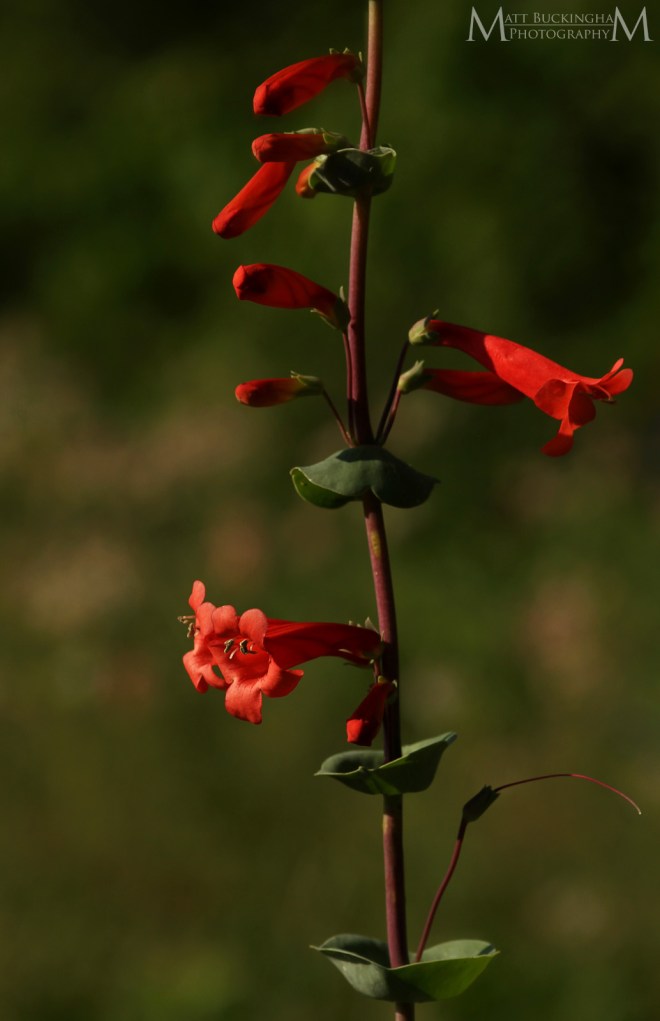
Scarlet Penstemon (Penstemon murrayanus)

Each year in May I look forward to visiting the wetland pine savannahs and hillside seeps of the Big Thicket.  This is the peak bloom time for the spectacular Grass Pink Orchid (Calopogon tuberosus).  In East Texas, they typically grow in the company of the carnivorous Pale Pitcher Plant (Sarracenia alata) which captures insects in its tubular leaves.  Here they are trapped and slowly digested to provide nutrients to the plant so that it may thrive in otherwise nutrient-poor soil.

IMG_5708

Grass Pink Orchids and Pale Pitcher Plants

While I was photographing the orchids, Carolina found this blooming Sweetbay Magnolia (Magnolia virginiana) at the margins of a baygall nearby.  The sweet aroma of these large flowers fills the air for much of May.

IMG_5728

Sweetbay Magnolia blooms at the margin of a baygall.

While exploring a wetland near my house I found a large patch of blooming Lizard’s Tail (Saururus cernuus).  Though I didn’t have my camera with me at the time, I couldn’t pass up the opportunity to photograph this scene, and returned later.  Lizard’s Tail grows in a variety of shallow wetlands.

IMG_5765

Lizard’s Tail blooms in a forested wetland.

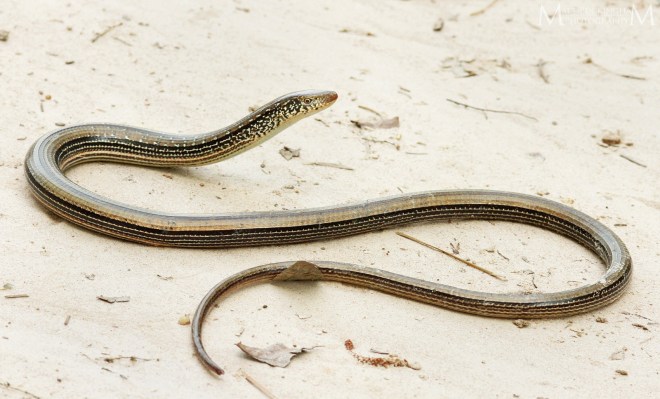
We spent our fair share of time among the Longleaf Pines as well.  My friend James spotted this Slender Glass Lizard (Ophisaurus attenuatus).  The common name glass lizard comes from this genus’s propensity for caudal autonomy.  This is the familiar action of a lizard dropping its tail in response to a predator threat.  In the glass lizard, however, the tail makes up over half of its body, and contains several fracture points.  This can result in an individual seeming to break into pieces when being captured by a potential predator.  Though they may seem fragile, careful, gentle handling helps ensure that they remain in tact.  Though they are typically associated with sandy habitats, they are not proficient burrowers, but rather “swim” through dense grasses.

IMG_5853

Slender Glass Lizard

IMG_6003

Slender Glass Lizard

While on a gem/mineral hunting expedition Carolina and I spotted this Spicebush Swallowtail (Papilio troilus) nectaring on Butterfly Weed (Asclepias tuberosa).

IMG_6100

Spicebush Swallowtail nectaring on Butterfly Weed

The impressive blooms of the Giant Coneflower (Rudbeckia maxima) can sit atop stalks that might reach 8 feet tall.  R. maxima is endemic to the West Gulf Coastal Plain.  In East Texas it occurs in scattered populations in open woodlands and prairie pockets.

IMG_6158

Giant Coneflower

Carolina spotted this Black Swallowtail (Papilio polyxenes) while we were photographing Giant Coneflowers along the roadside.  To me this is one of our most beautiful larval insects.

IMG_6246

Black Swallowtail Caterpillar

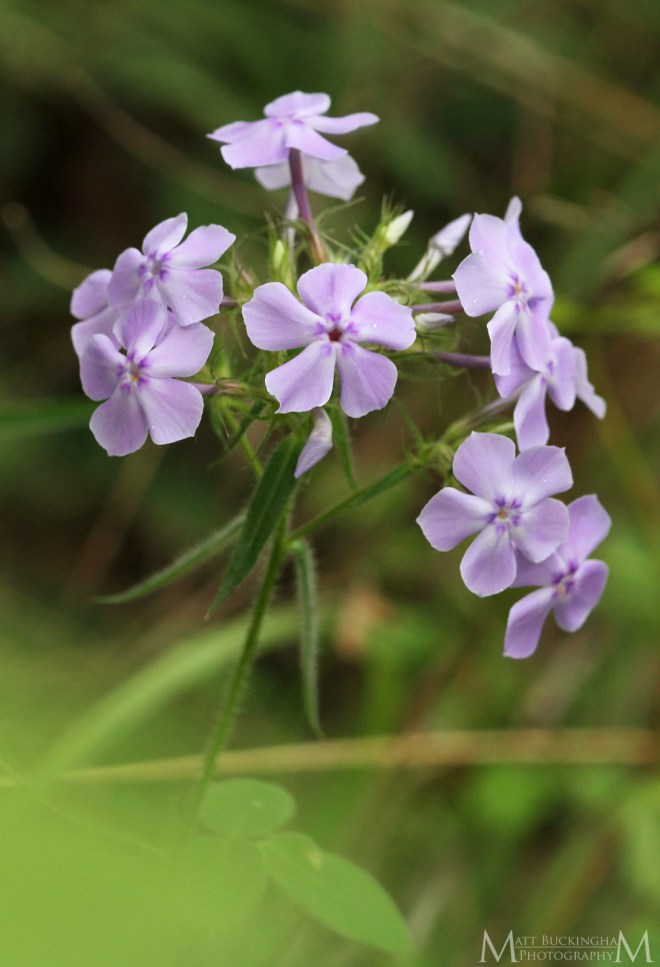
Pointed Phlox (Phlox cuspidata) is primarily a species of Central Texas, however it enters Deep East Texas in the understory of Longleaf Pine Savannahs, where it is much less common.

IMG_7943

Pointed Phlox

Fire is an integral part of maintaining Longleaf Pine Savannahs.  In the image below Butterfly Weed can be seen blooming following a prescribed burn.

IMG_7977

Butterfly Weed blooms following a prescribed burn

I found this flowering Groundnut (Apios americana) in a park near my house.

IMG_8022

Grountnut

Growing near the Groundnut was this Anglepod (Gonolobus superosus).  This member of the milkweed family (Asclepiaceae) forms vines in open woods and forest edges.

IMG_8044

Anglepod

Our close friends James and Erin recently built a cabin on their 200+ acres in Angelina County.  The property contains pasture, fallow fields, mixed pine-hardwood forest, a forested stream, and several ponds.  It makes for excellent herping opportunities.  During our visit we went out to see what we might turn up.

IMG_8201

Eastern Mud Turtle (Kinosternon subrubrum)

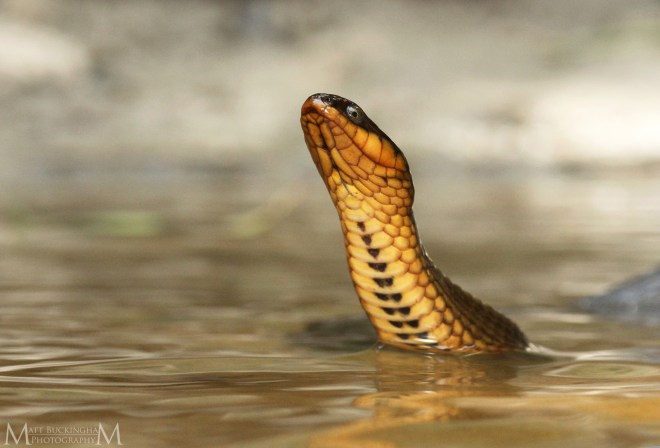
I caught this large, attractive Yellow-bellied Water Snake (Nerodia erythrogaster flavigaster) at one of the ponds at night.  For those who have never caught a water snake, they are notoriously foul-tempered and have an extremely offensive musk, which they promptly rub all over their captor.  It makes handling them an unpleasant experience, but I’m glad we hung on to this one for photos the next day.

IMG_8417

Yellow-bellied Water Snake

IMG_8493

Yellow-bellied Water Snake

After catching we continued to walk along the pond.  It wasn’t long before Carolina called out that she had seen another snake.  I rushed to her spot and saw the head of a Gulf Crayfish Snake (Regina rigida sinicola) poking through the aquatic vegetation.  I quickly grabbed it.  We held onto it as well, and the next day we had a photo session with both snakes nearby.  When we were done, we released the snakes where we caught them.

IMG_8328

Gulf Crayfish Snake

IMG_8358

Gulf Crayfish Snake

May provided several excellent opportunities for nature observation and photography.  I look forward to what June will bring.