South Texas Part I: Along the Coast

IMG_9617

Coastal Dunes with Beach Morning Glory

When I was developing my 2017 list I added several species that were contingent on a spring break trip to Big Bend.  Unfortunately I did not plan ahead enough, and by the time I tried to make arrangements out west everything was already booked up.  Fortunately there are so many biodiversity hot spots in Texas that it was not hard to find a substitute.  We decided on the varied subtropical habitats of Deep South Texas.  Here one can encounter a suite of endemics and Mexican specialties that are found nowhere else in the country.  It may come as no surprise that immediately after posting my 2017 list I began thinking about my 2018 list, in which I planned to include many of the South Texas specialties.

So Carolina and I began an adventure with my entire family: my brother, Seth, my mom, Jolynn, and my dad, Jack.  We traveled south in two vehicles intent on seeking out plants, birds, herps, and good food.  Our first couple days were allocated for time along the coast, from Port Aransas to South Padre.

The South Texas coast contains several extensive dune fields, primarily along the barrier islands.  Some are ever shifting, and some have been stabilized with vegetation and debris.  One might be surprised to find plants clinging to life in these sandy wastelands, however several species thrive in these shifting sands.  The most conspicuous species during our trip was the Beach Morning Glory (Ipomoea imperati), which is a coastal specialist ranging from the Atlantic Coast from North Carolina to Florida to the Gulf Coast of Florida to Texas.  We enjoyed the view from the base of the dunes as Sanderlings (Calidris alba), Ruddy Turnstones (Arenaria interpres), Willets (Tringa semipalmata), and Black-bellied Plovers (Pluvialis squatarola) chased the receding waterline only to swiftly retreat with each incoming wave.

IMG_9619

Beach Morning Glory

Beyond the dunes lie a variety of habitats including wet and dry prairies and marshes.  Marshes vary from saline to brackish to freshwater, depending on the influence of tidal waters.  We spent time exploring some high quality saltmarshes, one of my favorite communities, where we observed several bird species including Long-billed Curlews (Numenius americanus), Marbled Godwits (Limosa fedoa), Spotted Sandpipers (Actitus maculatus), Greater Yellowlegs (Tringa melenaleuca), American Oystercatchers (Haematopus palliatus), Clapper Rails (Rallus crepitans (formerly R. longirostris)), American Coots (Fulica americana), Common Moorhens(Gallinula chloropus), Osprey (Pandion haliaetus), Redheads (Aythya americana), Northern Pintails (Anas acuta), Blue-winged Teal (Anas discors), Black-bellied Whistling Ducks (Dendrocygna autumnalis), and Mottled Ducks (Anas fulvigula). Mottled Ducks are coastal specialists that range from Florida to central Mexico.  These close relatives of the Mallard have experienced population declines throughout much of their range as coastal habitat has been lost to development and sea level rise.

IMG_9375

Mottled Duck

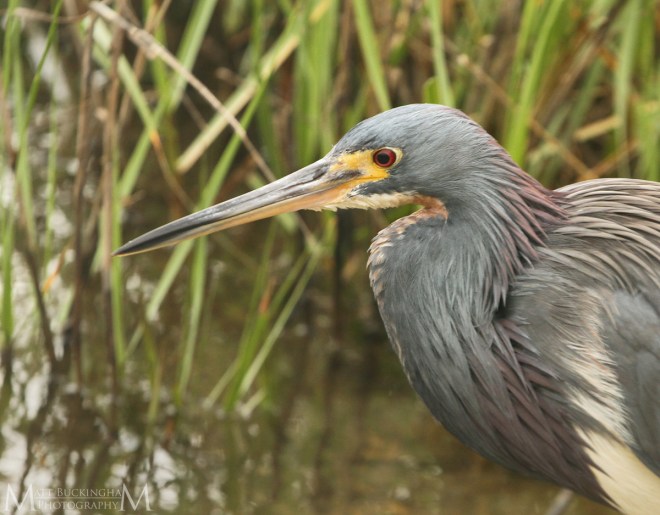
The marshes were also home to a variety of wading birds including American Bitterns (Botaurus lentiginosus), Roseate Spoonbills (Platalea ajaja), White Ibis (Eudocimus albus), Green Herons (Butorides virescens), Great Blue Herons (Ardea herodias), Great Egrets (Ardea alba), Snowy Egrets (Egretta thula), Reddish Egrets (Egretta rufescens), Yellow-crowned Night-Herons (Nyctanassa violacea), Black-Crowned Night-Herons (Nycticorax nycticorax), and some cooperative Tricolored Herons (Egretta tricolor) and Little Blue Herons (Egretta caerulea).
IMG_9175

Tricolored Heron

IMG_9224

Little Blue Heron

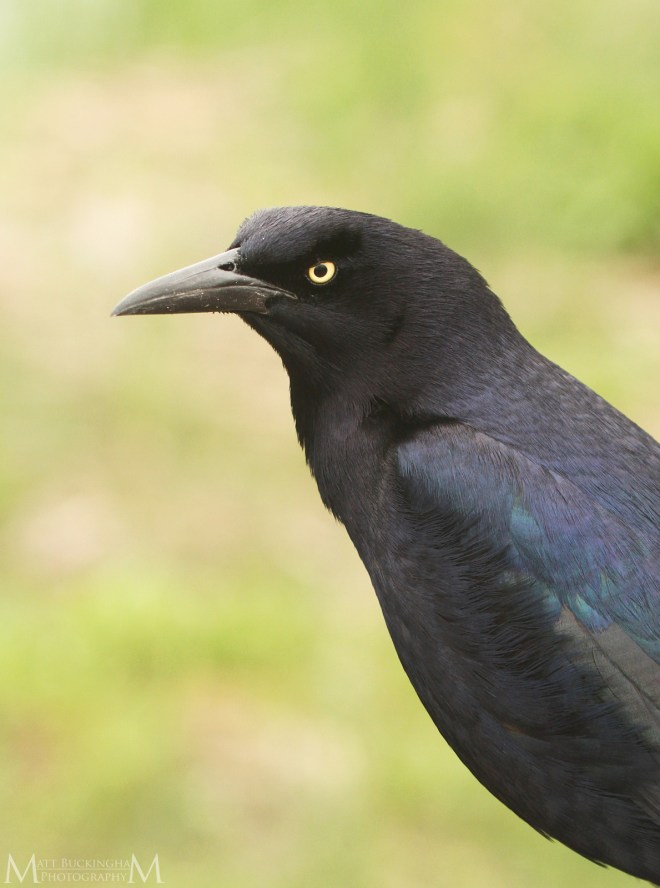
A number of songbirds were also present.  We observed several Common Yellowthroats (Geothlypis trichas) and scores of Red-winged Blackbirds (Agaleius phoeniceus) and Great-tailed Grackles (Quiscalus mexicanus).  The Grackles were particular tame, and would perch on the boardwalk support posts mere feet away from us.
IMG_9306

Great-tailed Grackle

Slight variations of topography along the coast result in vastly different vegetative communities.  On small sandy crests and ridges dry prairies and scrublands persist.  These prairies are dominated by a variety of grasses and forbs.  The most visible member of this community is the Spanish Dagger (Yucca treculeana).  These stately yuccas are common in these dry prairies, and in the United States are restricted to southern Texas, New Mexico, and Arizona.

IMG_8849

Spanish Dagger

IMG_8838

Spanish Dagger Flowers

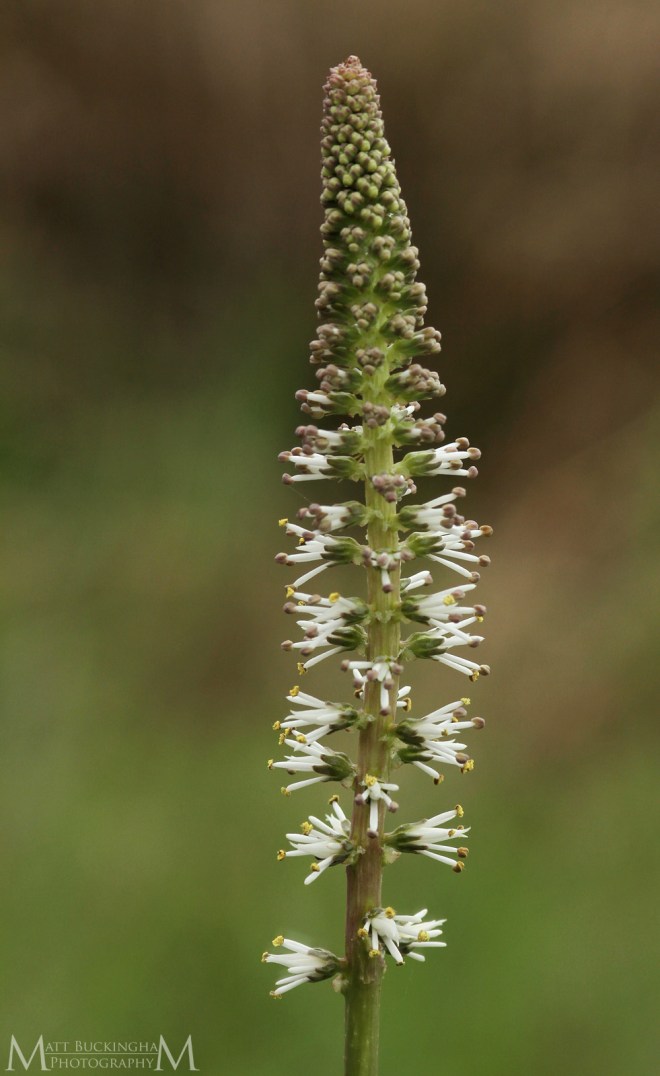
Along the wetter transition zone between marsh and prairie Carolina spotted a pair of Texas Feathershanks (Schoenocaulon texanum).  These bizarre members of the lily family can be found in south, central, and west Texas and southwest New Mexico.
IMG_8749

Texas Feathershank

IMG_8754

Texas Feathershank

The contact zone between the dunes and coastal prairie also harbor an interesting flora.  Arkansas Lazy Daisy (Aphanostephus skirrhobasis) is a widespread species of the south central states that can be common in this community.

IMG_9555

Arkansas Lazy Daisy

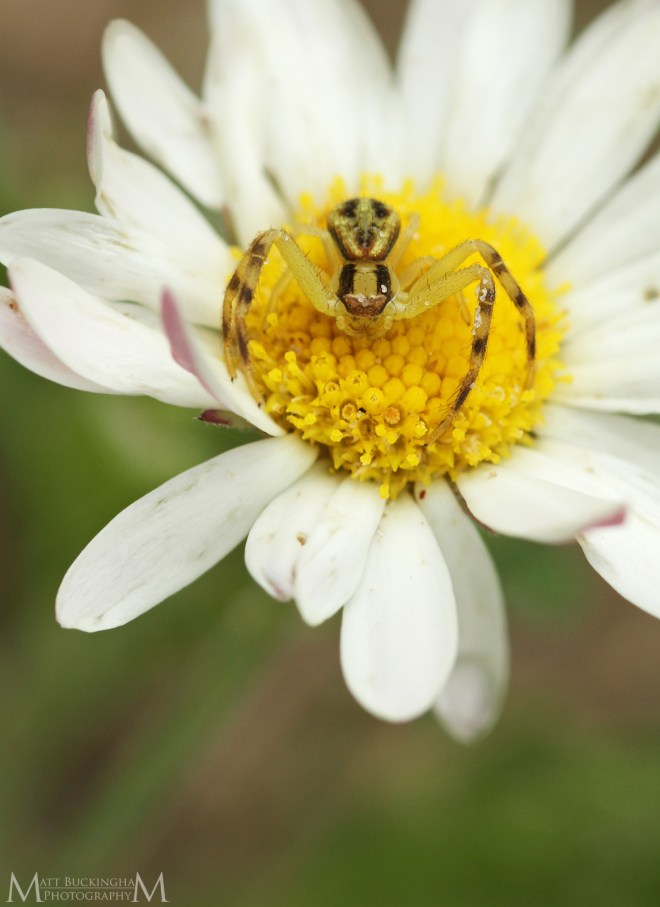
The lazy daisy is popular with pollinators, and coincidentally with their predators like this crab spider (Misumenoides formosipes) that awaits a hungry pollinator to fall into its trap.
IMG_8809

A crab spider awaits an unsuspecting pollinator

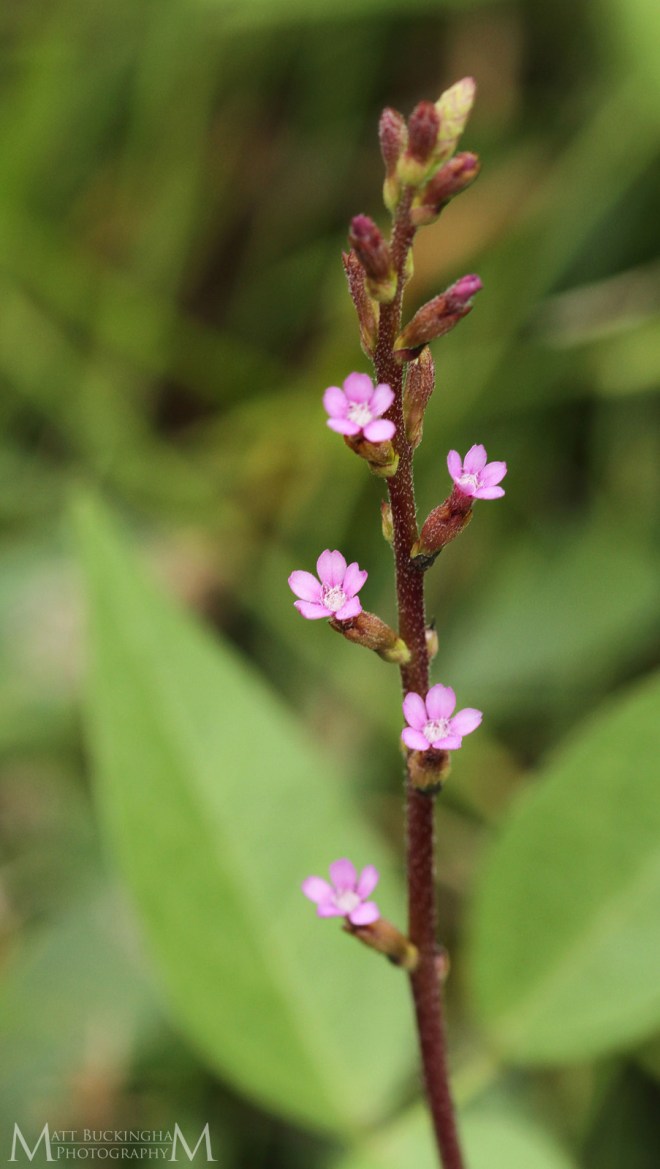
American Bluehearts (Buchnera americana) was also fairly common in this community.
IMG_9521

American Bluehearts

I have always been a fan of milkworts.  I was delighted to see several White Milkworts (Polygala alba), which we don’t have in East Texas.

IMG_9533

White Milkwort

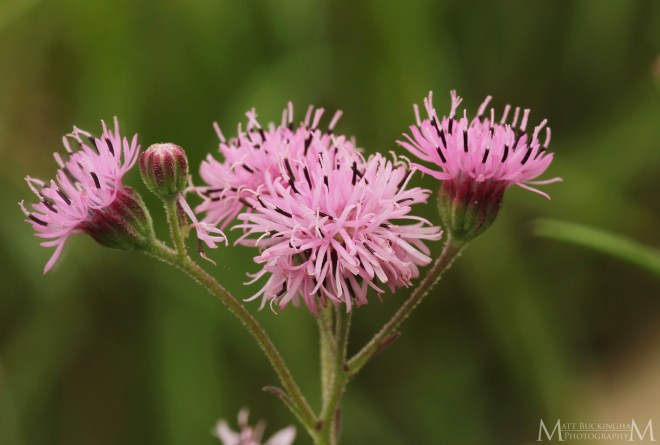
Texas Palafox (Palafoxia texana) is primarily restricted to southern Texas.  Its brilliant pink blooms added a splash of color to the primarily brown grasses of the coastal prairie.
IMG_9581

Texas Palafox

I observed this wasp, Campsomeris tolteca (thanks to Seth Patterson for the ID), feeding on the nectar-rich flowers of the Texas Palafox..

IMG_9586

Campsomeris tolteca

IMG_9576

Campsomeris tolteca

Scattered along the coast are a series of woodlots primarily dominated by Live Oak (Quercus virginiana and Quercus fusiformis) and Hackberry (Celtis laevigata).  Here we observed a variety of Neotropical Migrant birds including Yellow-throated Vireos (Vireo flavifrons), Northern Parulas (Setophaga americana), Black-and-white Warblers (Mniotilta varia), and Yellow-throated Warblers (Setophaga dominica).

These woodlots are also home to Drummond’s Hedgenettle (Stachys drummondii).  This member of the mint family is restricted to the Texas Coast and the Rio Grande Valley.

IMG_9682

Drummond’s Hedgenettle

IMG_9828

Drummond’s Hedgenettle

Stachys drummondii

County Level Distribution for Drummond’s Hedgenettle from http://www.bonap.org

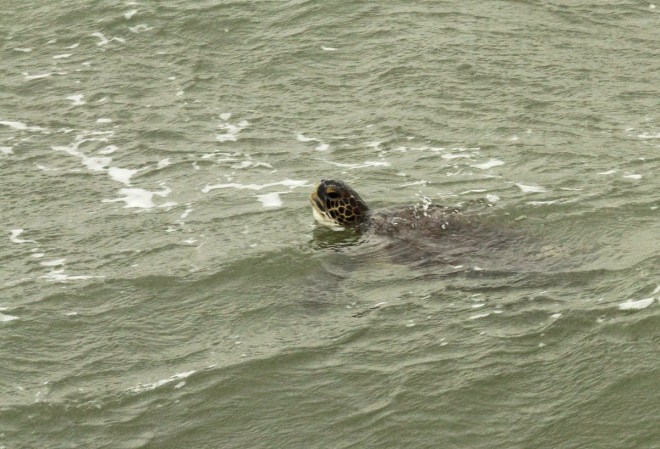
The wealth of biodiversity along the coast was not limited to land.  We observed a variety of shells, jellyfish, and dead fish along the shore, as well as a number of dolphin pods on the move offshore.  The most exciting encounter of the trip, however, came in the form of this juvenile sea turtle, which I believe is a Mexican Green Sea Turtle (Chelonia mydas).  Thanks to a tip from my good friend John Williams, we were able to observe several foraging just offshore.  Despite the cool morning, 40 mile per hour winds, and spitting rain, everyone enjoyed watching this rare marine reptiles as they surfaced for a breath before returning to the depths.
IMG_9068

Green Sea Turtle

The South Texas Coast was good to us, however the trip had only begin.  Next we would be venturing into the South Texas Brush Country, famed for its biodiversity and specialty species that can be found nowhere else in the country.

 

Slow and Steady

The first month of 2017 has passed by and I have yet to cross any species off my list.  Most of the species I put on the list are seasonal, so I spent January focusing on the few resident species that I included, namely the North American River Otter (Lontra canadensis).

Recently my good friend James Childress found a population close to home.  My wife Carolina and i began visiting the site on the weekends, sometimes 2-3 times per day to no avail.  However the waterway and adjacent wetlands and pine-oak uplands are rich with wildlife, and I found many photographic subjects in the otters’ absence

img_2868

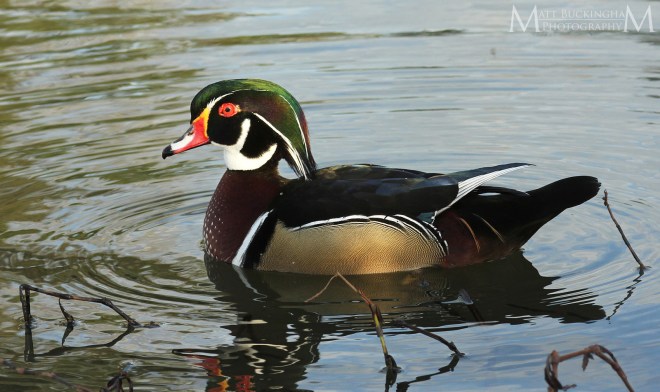
Wood Duck Drake

.One group that is noticeably missing from my list are birds.  I didn’t include them because though I love bird photography, it is a difficult endeavor, and results are often unpredictable.  If I were to have made a list, however, I would have incorporated the Wood Duck (Aix sponsa).  These denizens of creeks, backwater sloughs, flooded oxbows, and ephemeral ponds can be abundant in parts of The Pineywoods.  Unfortunately they are wary and secretive, and typically all I have to show from encountering one is a memory of splashing, their whistle like vocalization as they retreat, and if I’m lucky a distant glimpse of them flying through the trees.  While pursuing the otters, however, I found a less wary subject and with a bit of patience and luck I was able to finally capture some images of what many consider to be North America’s most beautiful duck.

img_2925

Wood Duck Drake

img_2919a

Wood Duck Drake

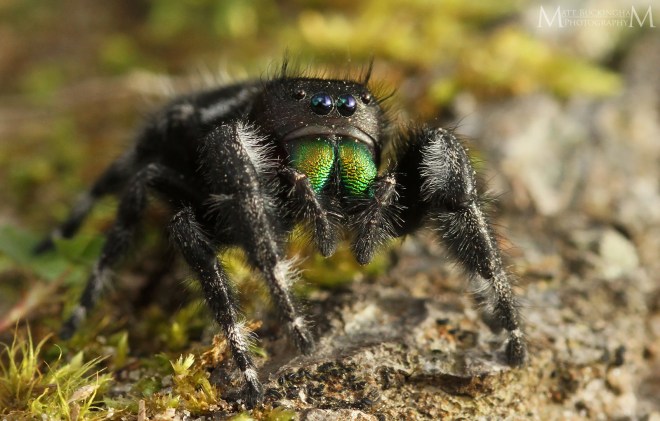
One afternoon, as I was trekking with my photographic gear to a spot where we expected the otters might show themselves, I heard my wife call out frantically.  Not in fear, but rather a sense of urgency that I might miss the treasure she had stumbled upon.  She had found a large Regal Jumping Spider (Phidippus regius).  I had tried numerous times to photographic this species, but found them too wary and difficult to approach.  But on this warm January day I found a bold, curious specimen that made for a perfect photographic subject.

img_4151

Regal Jumping Spider

img_4078

Regal Jumping Spider

I have been photographing the Pineywoods of East Texas for many years now.  While this species list project is a way to add a little spice to my photographic pursuits, I still love wandering the woods with a camera in hand, and no particular goal in mind.  On New Year’s Day Carolina and I went to one of our favorite spots.  We wandered the longleaf pine forest, admiring the fungi taking advantage of the moisture and humidity that remained after some recent rains.  As is typical in our forest wanderings, Carolina had the best find of the day – A pair of Indian Pipes (Monotropa uniflora) pushing skyward from the dense carpet of longleaf pine needles.  I was surprised to see it blooming so late in the season.  The habitat also seemed unusual to me, as I was accustomed to seeing it in the rich loams of moist slopes and stream bottoms.  Pleased with the days observations, we sat among the longleaf pines as the day faded, and contemplated the adventures to come.

img_2478

The Fly Agaric (Amanita muscaria) is showy, highly toxic mushroom that appears in pine-dominated forests following late fall and winter rains.

img_2513

Ravenel’s Stinkhorn (Phallus ravenelii)

img_2495

Unlike most plants, which obtain energy through photosynthesis, Indian Pipe is a mycoheterotroph.  It obtains its energy and nutrients from the mycorrhizal fungi of tree roots.  I have read that it is named for an old Cherokee legend that states that these plants grow where old chiefs are buried so they may have something to smoke in the afterlife.

img_2529

Longleaf Pine Savannah

img_2516

An old, gnarled post oak growing among longleaf pines in an upland savannah.

img_3675

Merlin

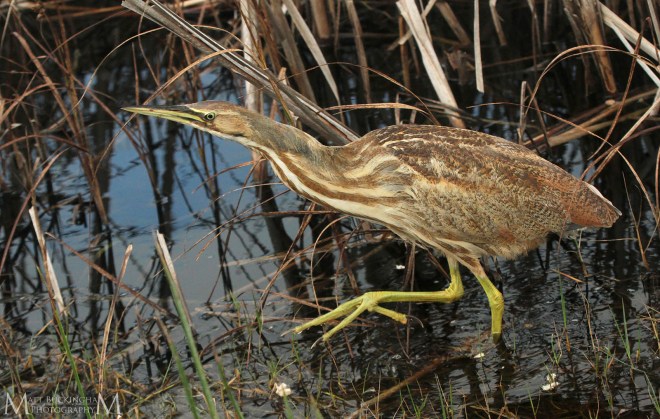
Opting for a change of scenery, we decided to take  our pursuit of the North American River Otter to the coast.  I used to see them regularly in the wetlands around Anahuac National Wildlife Refuge when I worked there, and had heard of some recent sightings.  Hoping that we might get lucky Carolina, my mom and I spent a day exploring the Upper Texas Coast.  Though our mammalian quarry eluded us, we did see a number of birds including a variety of wintering waterfowl and wading birds.  The highlight of the day was toss up between a cooperative male Merlin ((Falco columbarius) that perched on a rustic fence post in perfect light, and an American Bittern (Botaurus lentiginosus) that foraged in a ditch next to the road.  Relying on its camouflage it allowed us to approach to within feet of it, as it slowly stalked the reeds.

img_3860ab

American Bittern

img_2985z

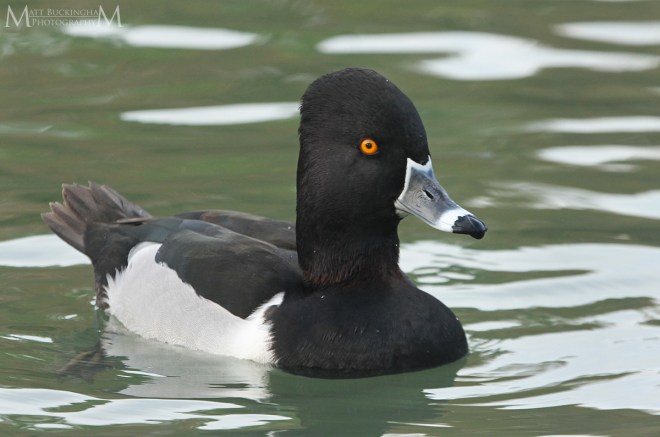
Ringneck Duck (Aythya collaris)

img_4201

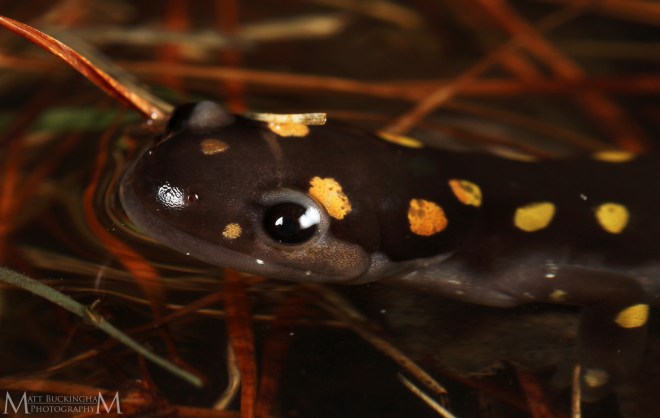
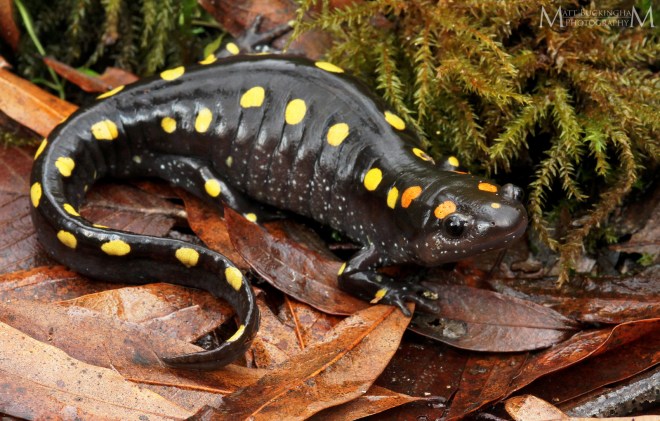
Spotted Salamanders en route to a vernal pool.

Back in the Pineywoods I checked the weather daily, awaiting the conditions that would bring about one of nature’s great events – the Spotted Salamander migration.  Among the world’s most spectacular amphibians, the Spotted Salamander (Ambystoma maculatum) makes its home in the forests of the eastern United States.  Spotted Salamanders spend the majority of the year underground, hidden from the world in small burrows that have been excavated by rodents or other species.  In response to warm rains in later winter/early spring they emerge en masse and migrate to their breeding ponds, where they form large breeding congresses in order to propagate the next generation.  Finally we had a night with the perfect conditions and Carolina and I visited some breeding sites with our friends James and Erin Childress, where we observed hundreds of Spotted Salamanders and a handful of Mole Salamanders (Ambystoma talpoideum) swimming about the vernal pools.

img_3917

A Spotted Salamander male awaits the females’ arrival to his breeding pool.

img_4270a

A gravid female Spotted Salamander

img_3977

A gravid female Mole Salamander

img_4245

A false bottomland in the East Texas Pineywoods.  False bottomlands are unique communities that occur in clay-bottomed dpressions located within upland communities.  They typically flood during the winter and spring, and become dry during the summer.  Though not associated with waterways, the community is somewhat similar to bottomland hardwood forests.  Dominant species include willow oak, overcup oak, and mayhaw.  The ephemeral nature of flooding in these communities makes for excellent amphibian habitat.

img_4232

An unidentified fungus growing on a fallen tree.

The salamanders were a nice distraction, but it was soon time to return to my pursuit of the river otter.  For Christmas my wife got a remote game camera.  Following the news that James had seen otters, she began setting the camera in areas where we observed ample otter sign.  For a couple weeks she came up empty handed.  One day, while en route to set up the cameras I caught a glimpse of something moving across the leaf litter.  It turned out to be a Red-bellied Snake (Storeria occupitomaculata), a small snake of the eastern U.S. that reaches the southwestern extent of its range in East Texas.  Though common throughout most of its range, the Red-bellied Snake is quite rare in Texas, and I took our encounter to be a good sign for things to come.

img_4471

Florida Red-bellied Snake (Storeria occipitomaculata obscura)

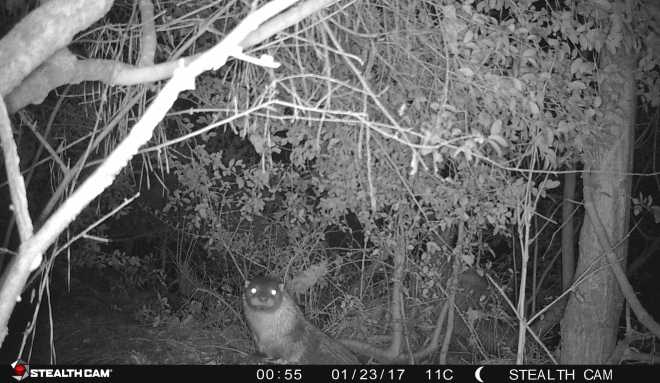
Carolina chose a place to set the camera adjacent to some logs that were covered in otter scat and hoped for the best.  Sure enough, the next time we checked the camera’s accumulated images, among the hundreds of photos of branches blowing in the wind, songbirds, and rats, we caught sight of our objective – a North American River Otter.

stc_0127

With renewed energy I will continue to pursue the aquatic mammal in hopes of capturing its photograph, because slow and steady wins the race.