
Target Species: Texas Trailing Phlox (Phlox nivalis ssp. texensis)

The Federally Endangered Texas Trailing Phlox (Phlox nivalis ssp. texensis)
The day broke to a bleak, gray scene. Dense clouds blotted the sun and a gentle spring rain had begun to fall. It was not exactly the scene I was hoping to wake to, as I was planning to stop to look for one of my 2017 targets on the way down to visit my parents in Houston. But it was hard to be disappointed. Despite the problems they pose to photography, these are my favorite kind of spring days. Warm and gray, they gift a cool, nourishing rain to the earth – one that the plants will no doubt make good use of in the days to come. Despite the dreary conditions, we were not deterred. Carolina and I packed up and began heading south. The further south we traveled the lighter the sky became until slivers of sun began to filter through the gray.
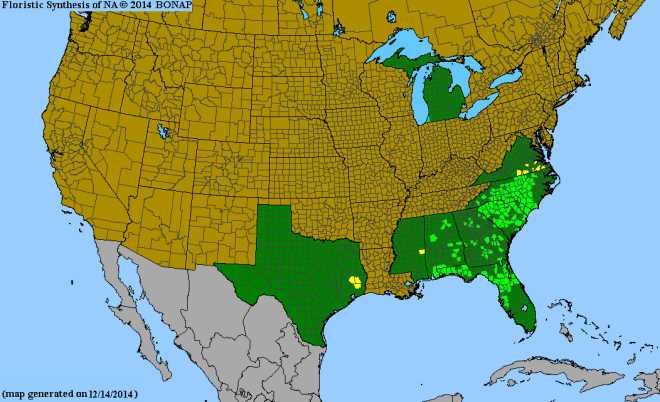
To me, including this beautiful little phlox in my 2017 biodiversity goals was a no brainer. Though I had seen the plant before, I had never seen it in bloom. Phlox nivalis is primarily a species of the Eastern Gulf Coastal Plain, where it can be relatively common in some areas. The disjunct population in Texas, however is anything but. Recognized as a subspecies of the broader ranging Phlox nivalis, Texas Trailing Phlox occurs in only three counties, where it is known from only a couple of sites. Here it can be found on deep sands in longleaf pine savannahs and certain open longleaf pine-hardwood forests. It is evergreen and fire-dependent. Though the above ground portion of the plant may be scorched by a passing fire, the plants thrive from the flames’ affect on opening the understory and providing rich nutrients to the soil. This plant is so rare and its habitat in such peril that it has been listed as Endangered under the Endangered Species Act by the U.S. Fish and Wildlife Service.

Texas Trailing Phlox Flower Detail
We stopped first at one of the very few remaining extant natural populations. I did not know what to expect in terms of phenology for this species, other than accounts that I read claiming they bloom primarily in March and April. With everything being so early this year, I was 50/50 as to whether or not there might be a few blooms. We had reached the population, which is located within the Big Thicket National Preserve. Though the leaves are distinctive, when not in bloom the plants themselves can be very difficult to detect. We spent several minutes scouring the area to no avail, until I finally caught sight of a few bright pink blooms. After regaining my composure I excitedly began photographing them, a task made difficult by the fluctuating light conditions and sporadic wind gusts. In all I counted 6 plants in the area, only 2 of which were in bloom. Another was in early bud.
After admiring the natural population, we set out to explore an area within the National Preserve where the phlox had been reintroduced. By now it had began to rain again, and the air was filled with the fresh, rejuvenating scent of the woods on a wet spring day. The reintroduction site was large. It consisted of at least a couple of acres, where we counted hundreds of plants. Though only a few were in flower, I left feeling very satisfied that the efforts by the U.S. Fish and Wildlife Service, National Park Service and other conservation groups was paying off, helping to save this Endangered Species from the brink.
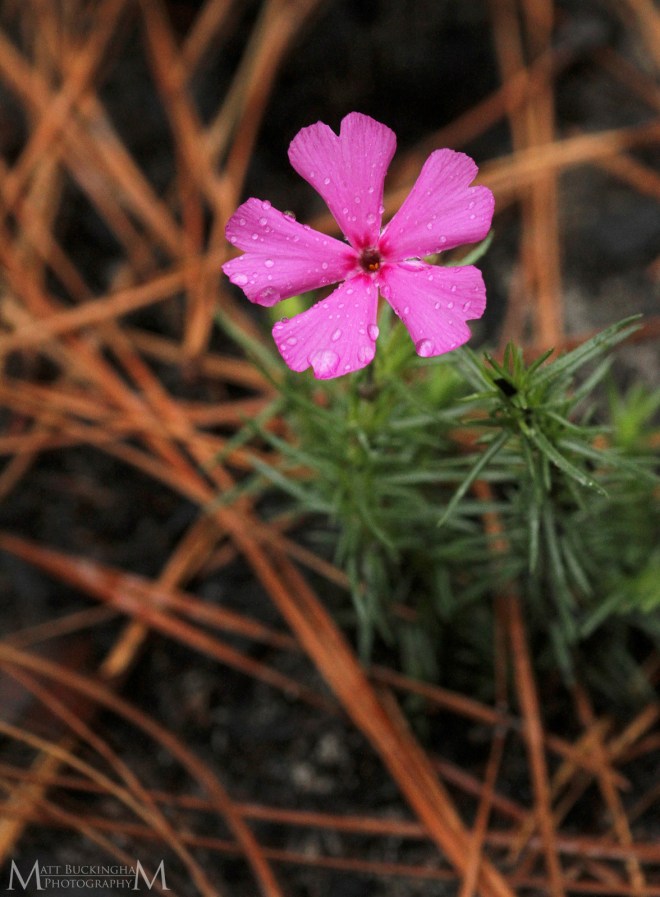
Texas Trailing Phlox. Note the needle-like evergreen leaves.
Texas Trailing Phlox is only a small part of these interesting communities. We observed many other natural wonders during our afternoon in the Big Thicket, including Texas Woodsorrel (Oxalis texana) which occurs in sandy woodlands primarily in Texas, Louisiana, and Arkansas, with a rare, disjunct populations in Alabama and Florida. The bright yellow flowers of Oxalis texana are very large compared to other woodsorrels, and are decorated with red lines near the center of the corolla.
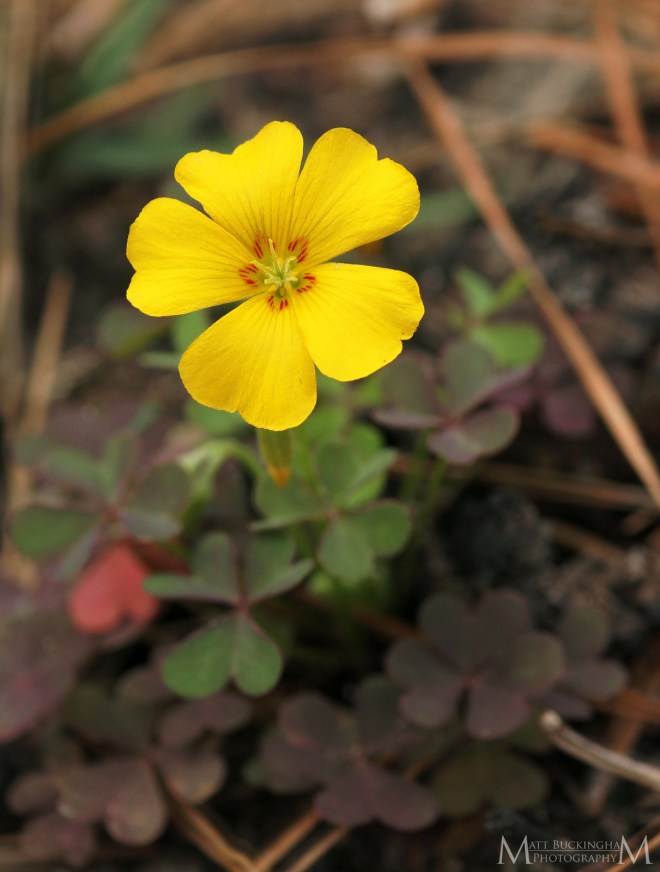
Texas Woodsorrel

Texas Woodsorrel
A habit I am trying to break myself of is my tendency to pass over the most common botanical subjects. Take Rose Mock Vervain (Glandularia canadensis) for example. In the spring it is one of the most abundant wildflowers along forest roadways in East Texas. I suppose that for this reason I take it for granted and never really took the opportunity to photograph it. However this day I could not ignore the many clumps scattered about recently burned patches within the longleaf pine savannahs. Here they literally seems to be rising from the ashes.
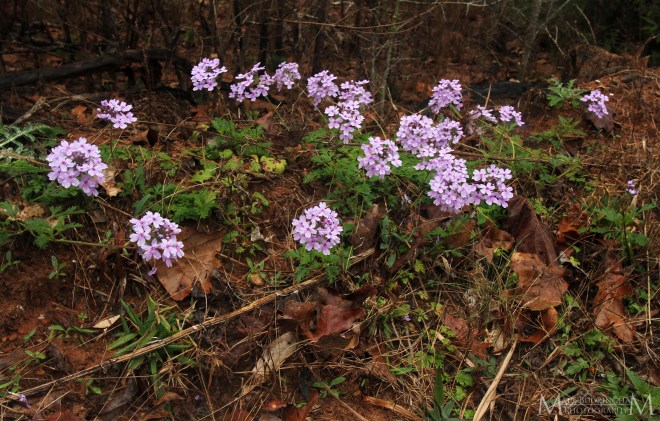
Rose Mock Vervain
While exploring an open spot within the forest that I thought might harbor some interesting flora, I heard my wife excitedly call out for me to come to her, quick. As usual her keen eyes found an incredible sight. A mating pair of Pipevine Swallowtails (Battus philenor) in one of the patches of Glandularia. Rightfully thinking that this find would be hard to top, we decided to call it a day and continue our trip south to spend some time with family. Yet I must confess, that as soon as the longleaf pines disappeared in my rearview mirror, I was already contemplating the next species on my list.

Copulating Pipevine Swallowtails




 A Naturalist's Journey