Cure-All

Target Species: Yellowroot (Xanthorhiza simplicissima)

img_7600

Yellowroot

I wasn’t sure that I’d be able to check this one off my list.  I first learned that Yellowroot occurred in Texas while looking through Geyata Ajilvsgi’s book Wildflowers of the Big Thicket.  I then saw it mentioned in a couple of scientific publications and decided to do a little research.  There are very few records from Texas, and those that exist are fairly vague as to the species’ location.  Looking at the publications I had an idea where to look, but I had no idea if the plant would be common at that location, easy to see, or when it might bloom.  I tried my best to guess the bloom time in East Texas based on the species’ phenology in other states.

A couple of weeks ago I caught a break.  While attending the Texas Black Bear Alliance meeting I was chatting with a friend that works for a large timber company who happened to be a naturalist and plant enthusiast.  He has access to hundreds of thousands of timber company lands and a penchant for exploring wild places.  I casually asked him if he has ever seen yellowroot on timber land, and he said that he had, though he hadn’t seen it in bloom.  We talked about getting out to look for it, and finally made it happen yesterday.

xanthorhiza-simplicissima

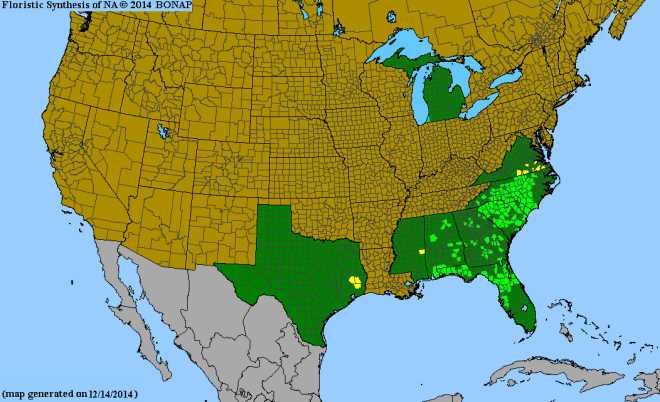
County-level distribution of Xanthorhiza simplicissima from http://www.bonap.org

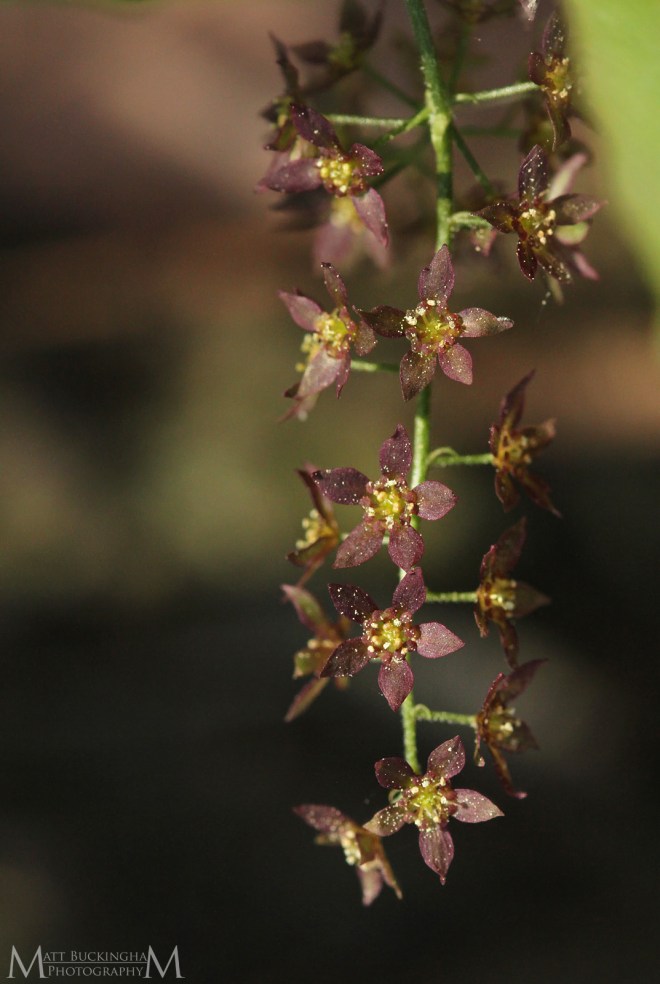
Yellowroot is a subshrub that primarily occurs in the southern Appalachians.  There is a disjunct population in East Texas and western Louisiana.  Here it is very rare, occurring at only a handful of sites.  It’s tiny flowers hang on drooping, branched panicles originating from the main stem.  It grows on the banks of small streams that wind through sandy, acidic soils.

img_7549

Yellowroot Panicles

My friend first took us to a site that I have visited before.  We were joined by another friend with a love for the outdoors.  We found many plants growing along the margins of a clear, spring fed stream just before it poured from a 20-foot waterfall.  Seeing it here, one wouldn’t expect it to be so rare in the state.  The sandy stream edge was lined with thousands of plants, many of them in full bloom.

img_4760

East Texas Waterfall.  Photographed in July, 2016.

Yellowroot is so-named for it’s bright yellow roots which contain berberine, an alkaloid with numerous medicinal properties.  Native Americans and settlers used Yellowroot as a die and as a cure for a variety of ailments.  Yellowroot tea was used to treat sores and other issues in the mouth and gums, congestion, allergies, stomach ulcers, upset stomachs, and indigestion.  Crushed roots were used in salves that treated sores, cuts, rashes and swelling.  Contemporary research has shown that Yellowroot has the potential to lower blood pressure and improve liver health and function.  Advocates of homeopathic remedies still utilize Yellowroot tea as a natural cure-all.

img_7558

Yellowroot Flowers

Perhaps these medicinal properties helped spell doom for Yellowroot populations in East Texas.  It is entirely possible that over collection, along with habitat loss contributed to its current scarcity.

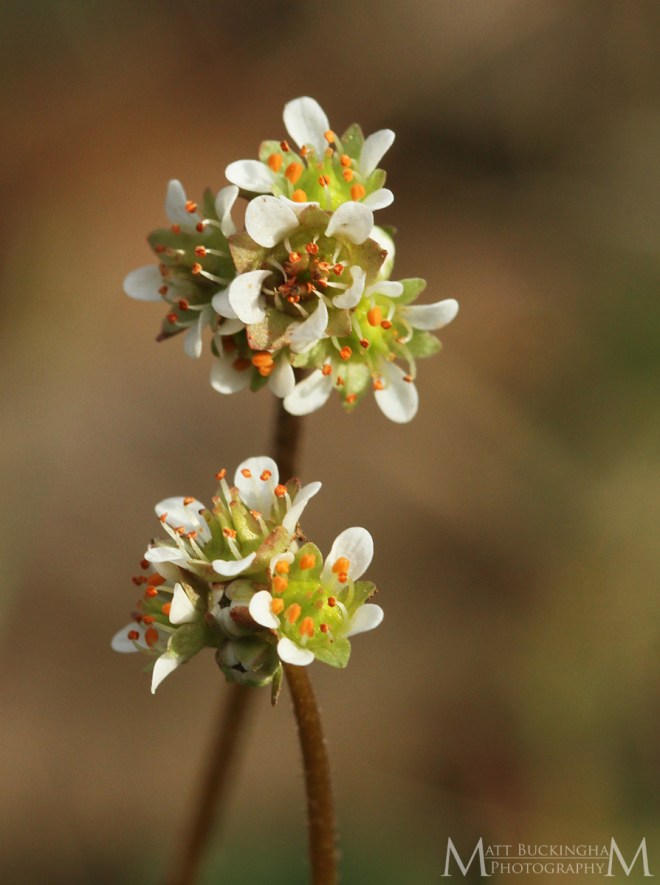
The tiny flowers are really striking, though they require some magnification to appreciate.  We saw blooms ranging from brown to purple to greenish yellow.  We wandered along the creek for a while enjoying the warm spring air and cold, clean water.

img_7568

Yellowroot Flower detail

After leaving the falls we traveled to another site where we found Xanthorhiza simplicissima growing in great abundance.  This site is also home to a slew of other plants that are exceedingly rare in Texas, including Silky Camelia (Stewartia malacodendron) and Common Serviceberry (Amelanchier arborea).

img_7597

Typical Yellowroot habitat along a clear, springfed stream.

My friend has a great knowledge of East Texas culture, history, and pre-history.  He regaled us with stories of Native Americans and recent residents.  It was fitting that while in search of a plant so important to native cultures that we would find an artifact alluding to a time long ago before East Texas was colonized by Europeans.  We found this arrowhead along one of the streams we were exploring.  Not a day goes by that I don’t long to see the East Texas that the native tribes experienced.

IMG_7586.JPG

Arrowhead

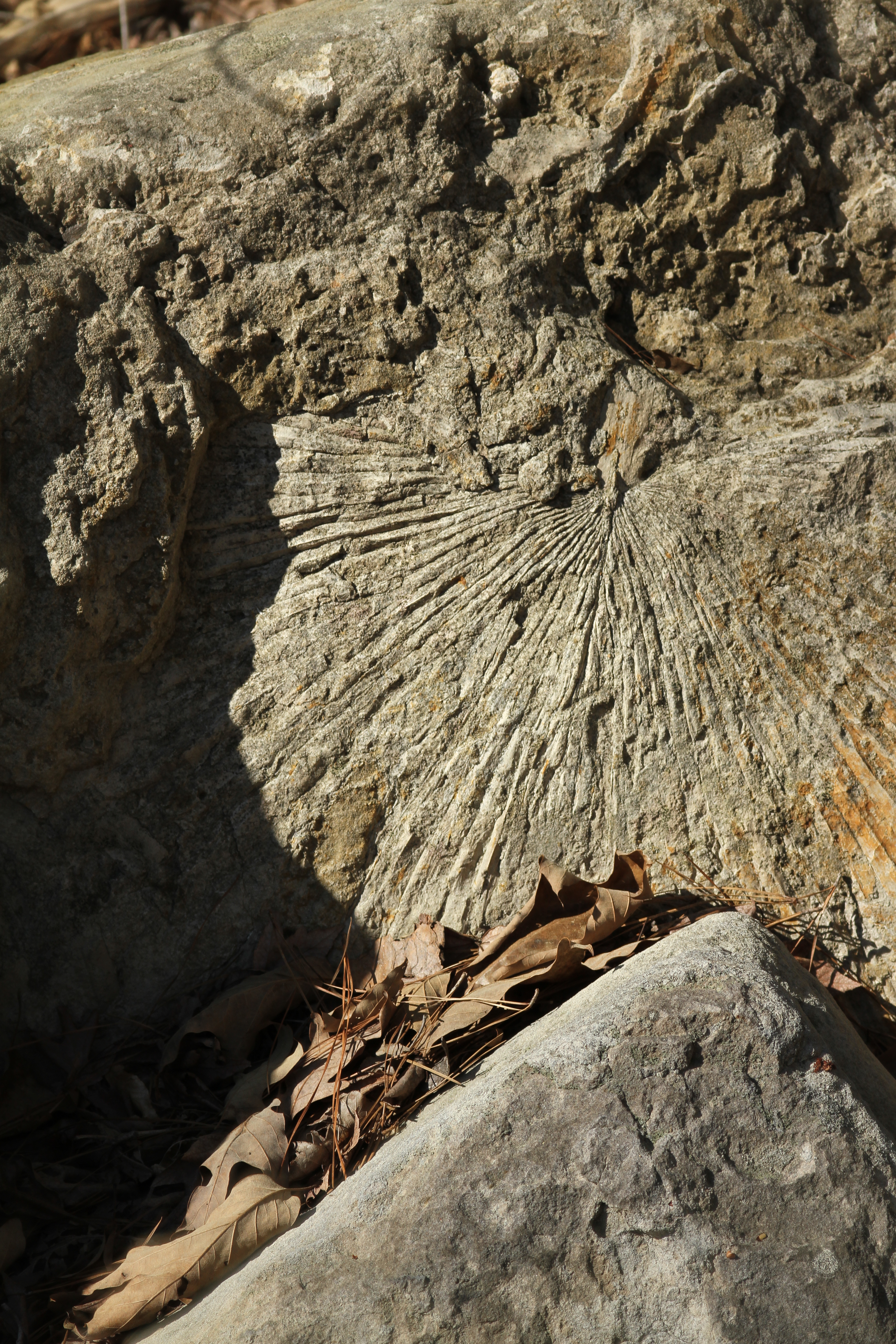
Before going our separate ways, my friend had one final surprise in store for us.  He took us to a relict dating even further back, to a time prior to human habitation, and possibly predating the speciation of Homo sapiens.  This ancient palm fossil lies on exposed boulder of the Catahoula formation.  It was a fine day spent in fine company.  I learned a lot, particularly about the history of the region.  I look forward to returning soon to find what other treasures this country is hiding.

IMG_7610.JPG

February – Chronicles of an Early Spring

Thanks in part to an exceptionally early spring this year, I have been able to get a good start of my list, knocking off four species in February.  These species include:

Woolly Sunbonnets (Chaptalia tomentosa)

Texas Saxifrage (Micranthes texana)

Texas Trailing Phlox (Phlox nivalis ssp. texensis)

Spring Coralroot (Corallorhiza wisteriana)
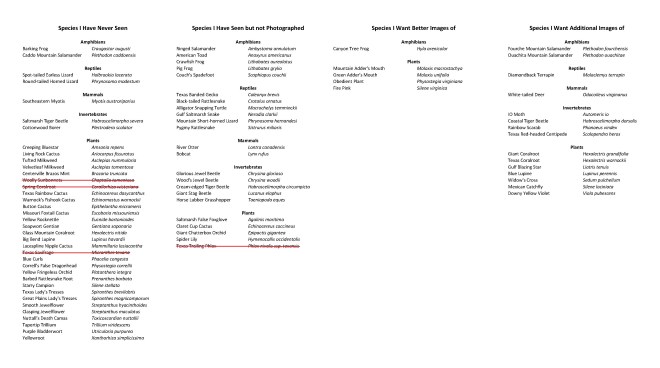
2017GoalsFEb.jpg

I’m slowly making progress on my 2017 Species List

Though tracking down the species on my list has become a priority in my explorations of the natural world, I could never neglect the special places and familiar species that I have come to love over the years.  I look forward to seeing them each year, and regardless of how many photos of a given species I might have, I can never resist the urge to try and capture new details, compositions, and natural history aspects.

I spent much of early February exploring the woods with my good pal James Childress.  On one such outing we were lucky enough to find a gravid Smallmouth Salamander (Ambystoma texanum) under a log in a false bottomland.

img_4801

Smallmouth Salamander

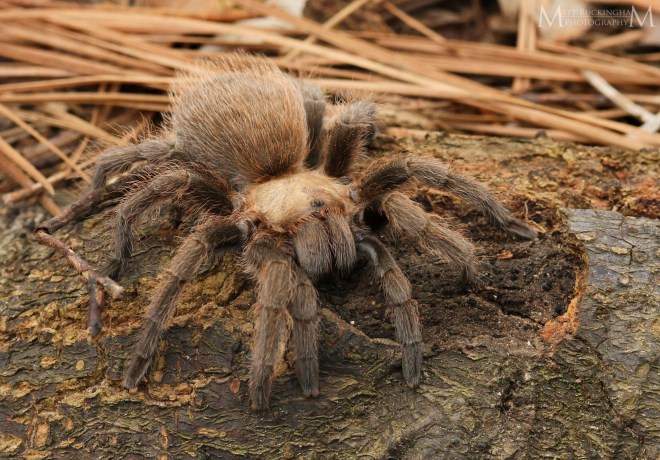
A few days later I received a text message from James that included a photo of a seldom seen sight: an East Texas tarantula.  Tarantulas are typically associated with deserts, however the Texas Brown Tarantula (Aphonopelma hentzi) ranges as far east as East Texas and western Louisiana, Arkansas, and Missouri.  It is an unexpected thing to see one in the forests of the West Gulf Coastal Plain, but here they persist, though their populations seem to be declining.  I have spoken to lifelong residents of the area who remember seeing many as children, and few to none in the past 20 years.  James found this female, identifiable as such by its large abdomen, crawling in his driveway one evening.  He was kind enough to hold onto it so that I may photograph it.  It’s only the fourth tarantula I have seen in the Pineywoods, and the only female.
img_5008

Texas Brown Tarantula

img_5021

Texas Brown Tarantula Portrait

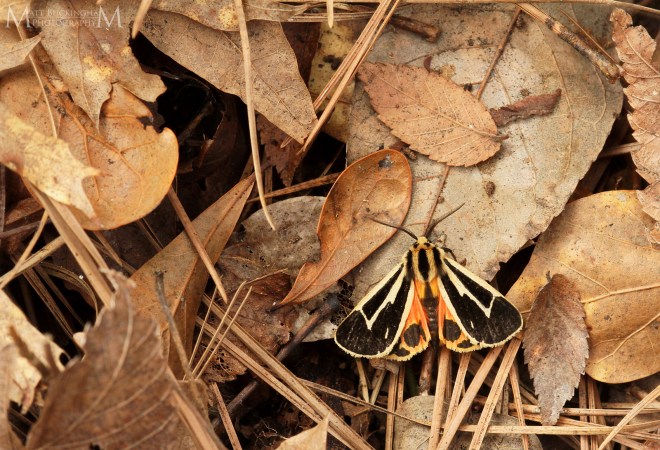
When I met James for our tarantula photo session he brought another surprise with him – a Banded Tiger Moth (Apantensis vittata) that had been attracted to his garage lights.  This boldly patterned moth is equipped with bright hindwings that it will flash in an attempt to intimidate a potential predator.
img_5082

Banded Tiger Moth

After admiring these invertebrates we went on to visit a rich mesic stream bottom that supports a variety of spring ephemeral herbs.  Representing what is essentially the southwestern limit of the range of eastern deciduous forests, East Texas is on the periphery of the range of a suite of spring ephemerals.  Spring ephemerals as a group are adapted to deciduous, hardwood forests, where they can carry out the majority of their life cycle in the early spring, when an abundance of sunlight reaches the forest floor prior to leafout of the canopy.  Species are generally less common on the periphery of their range.  As a result of this coupled with habitat loss over the past century and a half, several of these species have become rare in East Texas.  These eastern forest elements are perhaps my favorite part of the Pineywoods.

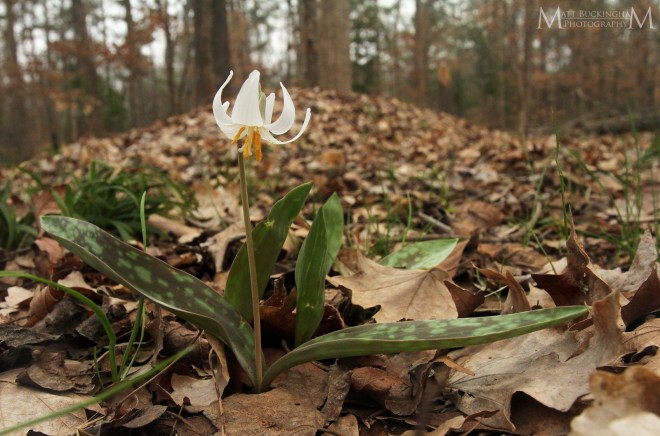
The White Trout Lily (Erytrhonium albidum) is one such spring ephemeral.  It’s leaves begin to emerge by early February and are mostly gone by late April.  Members of the genus Erythronium are known as trout lilies in the eastern U.S. due to the resemblance of their leaves to the skin of the brook trout.  In the western U.S. they are often known as fawn lilies, as the leaves look like the spotted pelage of young fawns.  In Europe, they are usually referred to as dogtooth violets, a reference to the shape of the underground bulb.  Erythronium albidum is rare in the Pineywoods, with larger populations in the Post Oak Savannah and Dallas region.
img_5117

White Trout Lily

One of my all-time favorite flowers is the Bloodroot (Sanguinaria canadensis).  Another characteristic spring ephemeral of the eastern deciduous forests, it too is rare in Texas.  In a typical year I can expect to see Bloodroot blooming at this site around February 20.  This year many were already in fruit on February 10.  Bloodroot is named for the thick red sap that oozes from it’s root when injured.  This sap has a myriad of health benefits, and its abrasive nature makes it a good ingredient in toothpaste.  These desirable properties have likely led to over collection of this species, adding to its rarity in the state.

img_5229

Bloodroot

One of the more difficult to spot spring ephemerals is the Southern Twayblade Orchid (Listera australis).  It’s tiny brown stems and flowers are practically invisible against the leaf litter.  They are only betrayed by two green leaves near the base of the stem.

img_5250

Southern Twayblade Orchid

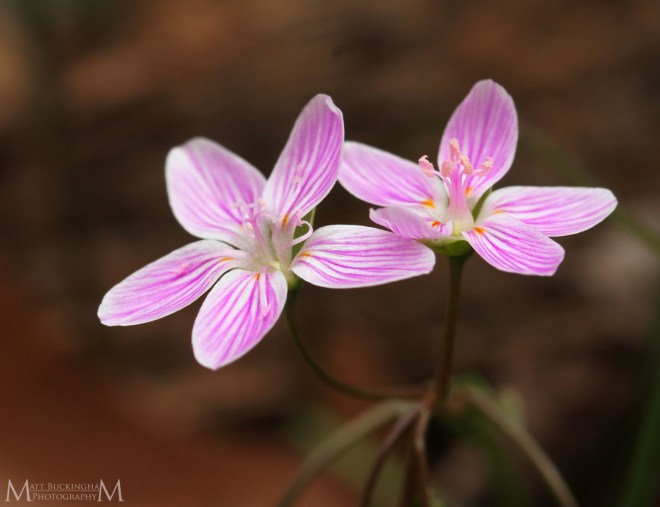
Spring Beauty (Claytonia virginica) is an abundant spring ephemeral throughout much of East Texas.  Though it is easiest to find on lawns and other cleared areas, I prefer to photograph the individuals deep in the forest, where they are less commonly seen.
img_5178

Spring Beauty

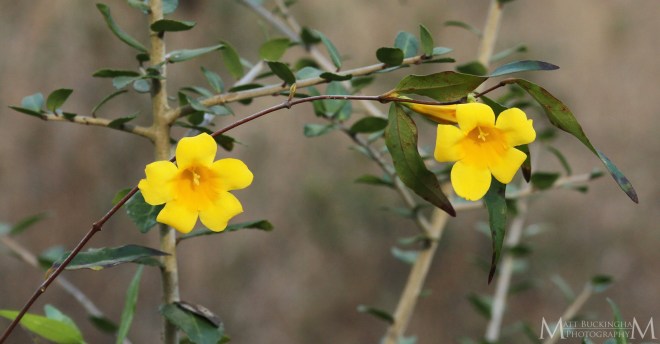
Carolina Jessamine (Gelsemium sempervirens) is a common woody vine of the southeastern U.S.  It slowly works its way from the ground to the canopy, and in early spring it paints the forest yellow with its large, tubular flowers.
img_5604

Carolina Jessamine

It is interesting just how many species have Carolina in their common name, or some variation of it in their specific epithet.  The reason is because many species native to the eastern U.S. were initially described in the far east, including the Carolinas.  Virginia also frequently occurs in taxonomic vernacular.  I take it as a good sign that my wife lends her name to so many pretty things.

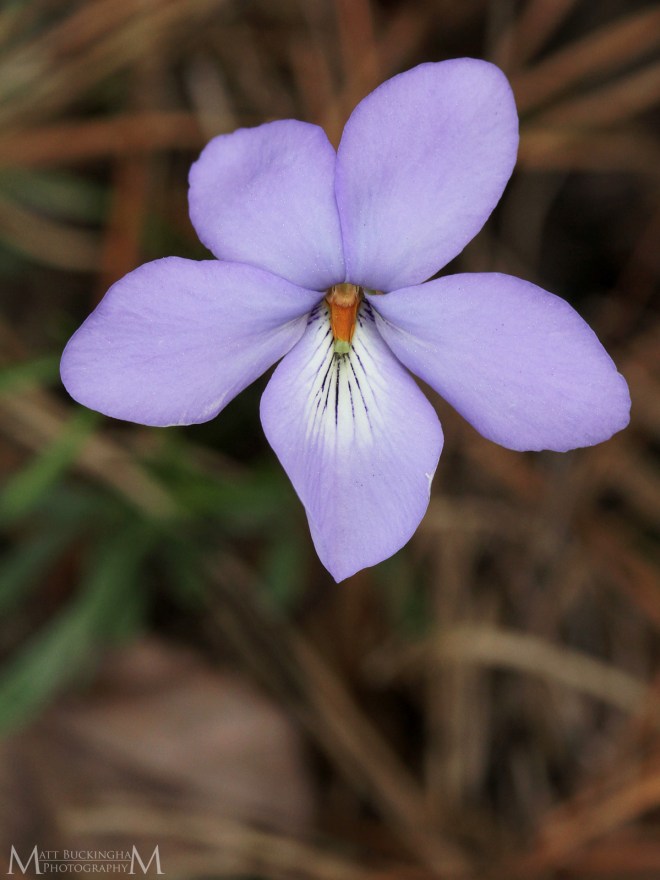
Last Sunday Carolina and I had a very productive outing chasing after spring ephemerals in Deep East Texas.  We covered a lot of ground and saw a lot of species.  One of the most striking was the Birdfoot Violet (Viola pedata), named for its leaves which bear a superficial resemblance to bird’s feet.  These are our largest violets, easily twice the size of the more common species.  It occurs in scattered populations in East Texas, where it favors open dry mesic mixed pine-hardwood forests.
img_6730

Birdfoot Violet

The Wood Violet (Viola palmata) prefers slightly moister sites with a greater hardwood element.  With a few exceptions (Birdfoot Violet being one of them) the flowers of East Texas’s violets are difficult to differentiate.  Wood violet is identified by its deeply lobed leaves.

img_6787

Wood Violet

Violet Woodsorrel (Oxalis violacea) was also blooming.  This native is often mistaken for the much more common Pink Woodsorrel (Oxalis debilis), a native of South America.

img_6743

Violet Woodsorrel

The occurrence of the Louisiana Wakerobin (Trillium ludovicianum) in Texas was only recently discovered, as botanists closely examined a group of unusual-looking sessile-flowered Trillium.  They had long been masquerading as the Sabine River Wakerobin (Trillium gracile).  Differentiating the two species is a painstaking task that requires close examination of the flowers.

img_6812

Louisiana Wakerobins

Trilliums are classic spring ephemeral flowers that occur in rich woods across much of the country.  Their center of diversity, however, is in the eastern deciduous forests.  Trillium ludovicianum occurs on rich mesic slopes dominated by American Beech and other hardwoods.  Since its discovery in Texas, the Louisiana Wakerobin has only been found at a handful of sites.

img_6818

Louisiana Wakerobin

img_6890

Louisiana Wakerobin

While exploring the rich woods I stumbled upon this scene, and could not resist.  The perfect clump of trillium with the similarily rare Wild Blue Phlox (Phlox divaricata) in the background represents to me, what is most magical about spring – exploring rich forests in search of ephemeral forbs and other interesting things that are awakening following a long period of dormancy.  To me, the forest feels most alive in the springtime, and so do I.  This shot ended up being one of my favorites from 2017 thusfar.

img_6838

Rich mesic forest with Trillium ludovicianum and Phlox divaricata

This site is also one of the few areas where Wild Blue Phlox can be found in Texas.  It too is a typical denizen of the rich eastern deciduous forests that reaches the southwestern extent of its range in East Texas.  And like so many of the previously mentioned species it is rare here.

img_6822

Though one might not think it so if they were to visit this particular spot, where it blooms in spectacular profusion on the banks of a clear East Texas stream.

img_6930

Flowering trees are at their peak this time of year, and many species are beginning to decorate the understory with splashes of white and pink.  Pictured below is one of the hawthorns (Crataegus sp.).  Though habitat gives some clue, identification to species is difficult without the leaves present.

img_6949

Hawthorn in Bloom

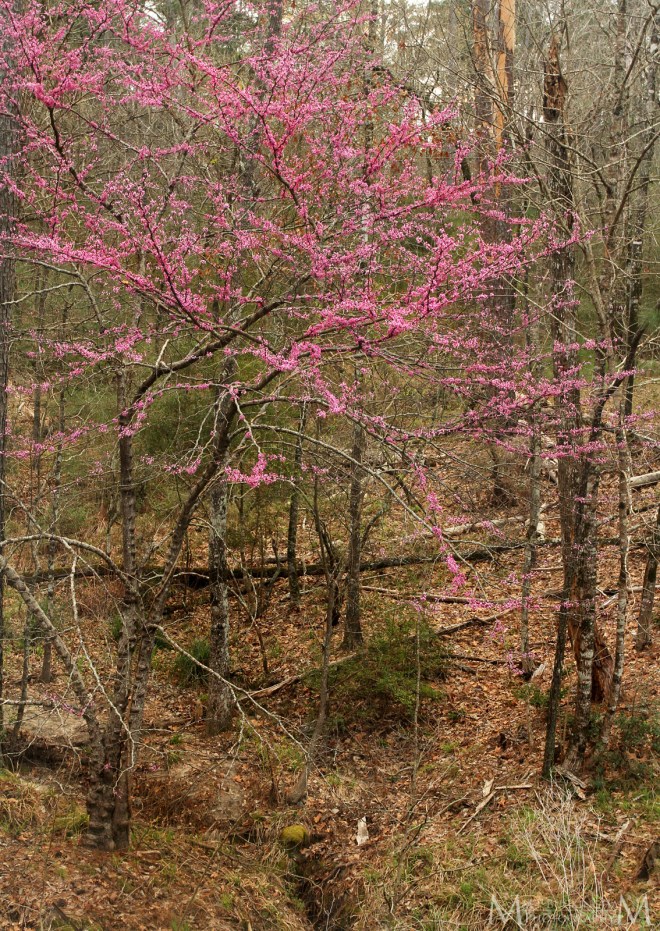
Near the hawthorn, Carolina and I stopped a moment to admire this beautiful redbud along a small ephemeral stream.  Though it was getting late and the day was growing dim, the pink blossoms of the Eastern Redbud (Cercis canadensis) brightened the woods around us.
img_6971

Eastern Redbud

I spent February busily pursuing plants, but I have not neglected the other taxa of my list.  Carolina and I continue to visit the local otter population on a weekly basis.  Though we have not yet seen them, Carolina’s remote camera captured some incredible video of a male scent marking.  Unfortunately I’m unable to upload it here, but I will leave you with the following image, otter tracks along a stream near the Trillium ludovicianum and Phlox divaricata site.  Though I have yet to capture one on camera, the elusive river wolf continues to make its presence known.

img_6941

American River Otter Tracks


Among the Leaf Litter

Target Species: Spring Coralroot Orchid (Corallorhiza wisteriana)

img_6516

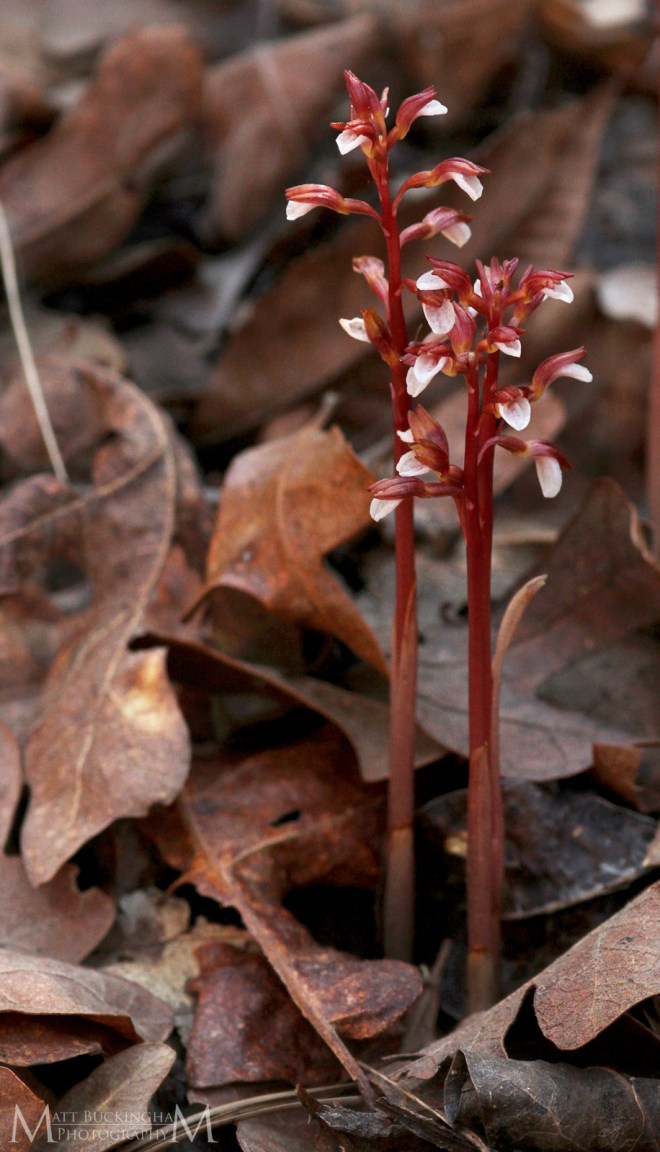
Spring Coralroot

I’ve always had a thing for myco-heterotrophs.  Those rebels of the plant world that decide that they don’t need the one thing that students of biology most associate with plants: chlorophyll.  Chlorophyll is that green pigment that we all learn about in biology class.  It gives leaves their characteristic green color and it is instrumental in the process of photosynthesis, where plants utilize sunlight, carbon dioxide, and water to create glucose, which provides energy for the plant.  Less commonly taught is the story of the myco-heterotroph: a plant that does not undergo photosynthesis, and as such does not contain chlorophyll.

img_6506

Spring Coralroot

How then does the myco-heterotroph obtain its energy?  It is, in fact a parasite, obtaining its food and nutrients from the mycorrhizal fungi of plant roots.  These fungi form complex relationships with plants in which they bolster the plants ability to absorb water and nutrients, and in turn receive glucose and other carbohydrates from the plant.  Many orchids are myco-heterotrophs, most notably in our area are those of the genera Corallorhiza and Hexalectris.  The Spring Coralroot (Corallorhiza wisteriana) is one such example.  Ironically, the orchids themselves depend on mycorrhizal fungi for their own survival.

img_6601

Spring Coralroot

The Spring Coralroot is the most widespread member of the genus Corallorhiza.  It occurs throughout most of the United States and parts of Mexico.  Here it occurs in a variety of habitats with a common factor: dense, undisturbed leaf litter that is conducive to the formation of large populations of mycorrhizal fungi.  Coralroots and other similar orchids were long described as saprophytic, obtaining their nutrients from decaying organic matter, however recent studies have identified their parasitic nature.  Corallorhiza wisteriana is likely one of the more common orchids in East Texas, however I had never been fortunate enough to see one in bloom, despite having spent considerable time in seemingly suitable habitat.  It is entirely possible that I have walked passed many without knowing.  These diminutive orchids are nearly impossible to see against the leaf litter.  Fortunately, I had some help in checking this species off my 2017 list.  My botanist friend Sonnia Hill found a large population on her property a few years ago.  She read about my list and was kind enough to offer her assistance.  After periodically checking on the progress of the orchids, we arranged a date for Carolina and I to visit and attempt to capture their beauty on film – or more appropriately compact flash card.

img_6591

Spring Coralroot

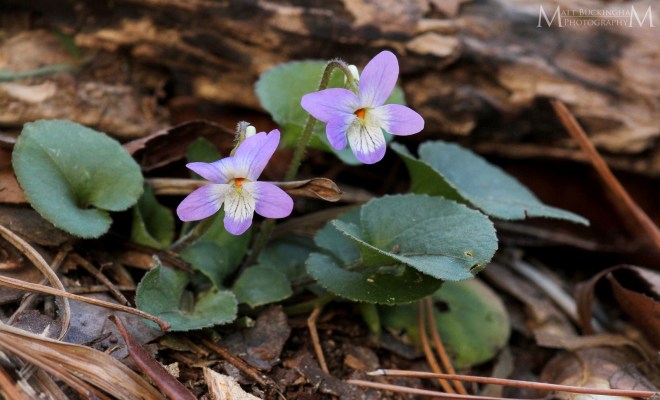
Sonnia’s property is in a unique area, combining elements of three Texas ecoregions: the Pineywoods, Post Oak Savannah, and Blackland Prairie.  Her ranch is home to a rich and interesting flora beyond the lovely coralroots.  Though it was still early for most things to be blooming, she did point out several Carolina Violets (Viola villosa) near the orchids.  I had yet to photograph this species and delighted in the opportunity.

img_6620

Corolina Violet

En route between our house and Sonnia’s property we crossed a high ridge just north of Jacksonville.  This ridge rises a few hundred feet from the valley below.  The top of this ridge provides what is perhaps the most expansive view of East Texas.  Along the ridge the Eastern Redbud (Cercis canadensis) was in full, spectacular bloom.  I couldn’t resist stopping to capture its brilliance against the blue afternoon sky.

IMG_6684.jpg

Eastern Redbud

Though not rich in number of species, this trip was rich in the quality of those species observed, scenery, and camaraderie between friends with shared interests.  As we journeyed home I hoped that the splashes of pink from the redbuds lining the roadway were a sign of good things to come.

Gem of the Pinewoods

Target Species: Texas Trailing Phlox (Phlox nivalis ssp. texensis)

img_6126

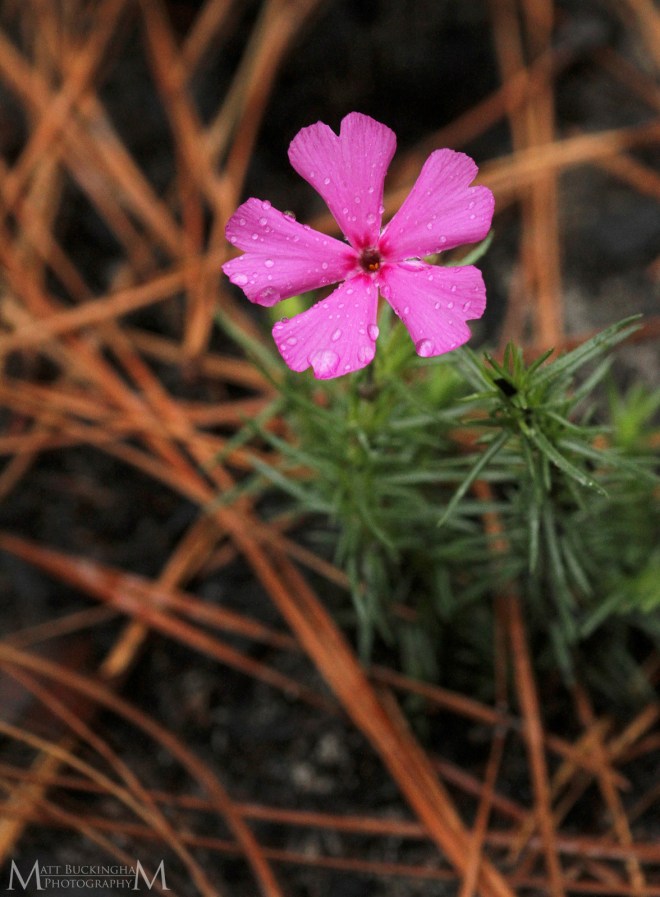
The Federally Endangered Texas Trailing Phlox (Phlox nivalis ssp. texensis)

The day broke to a bleak, gray scene.  Dense clouds blotted the sun and a gentle spring rain had begun to fall.  It was not exactly the scene I was hoping to wake to, as I was planning to stop to look for one of my 2017 targets on the way down to visit my parents in Houston.  But it was hard to be disappointed.  Despite the problems they pose to photography, these are my favorite kind of spring days.  Warm and gray, they gift a cool, nourishing rain to the earth – one that the plants will no doubt make good use of in the days to come.  Despite the dreary conditions, we were not deterred.  Carolina and I packed up and began heading south.  The further south we traveled the lighter the sky became until slivers of sun began to filter through the gray.

phlox-nivalis

To me, including this beautiful little phlox in my 2017 biodiversity goals was a no brainer.  Though I had seen the plant before, I had never seen it in bloom.  Phlox nivalis is primarily a species of the Eastern Gulf Coastal Plain, where it can be relatively common in some areas.  The disjunct population in Texas, however is anything but.  Recognized as a subspecies of the broader ranging Phlox nivalis, Texas Trailing Phlox occurs in only three counties, where it is known from only a couple of sites.  Here it can be found on deep sands in longleaf pine savannahs and certain open longleaf pine-hardwood forests.  It is evergreen and fire-dependent.  Though the above ground portion of the plant may be scorched by a passing fire, the plants thrive from the flames’ affect on opening the understory and providing rich nutrients to the soil.  This plant is so rare and its habitat in such peril that it has been listed as Endangered under the Endangered Species Act by the U.S. Fish and Wildlife Service.

img_6191

Texas Trailing Phlox Flower Detail

We stopped first at one of the very few remaining extant natural populations.  I did not know what to expect in terms of phenology for this species, other than accounts that I read claiming they bloom primarily in March and April.  With everything being so early this year, I was 50/50 as to whether or not there might be a few blooms. We had reached the population, which is located within the Big Thicket National Preserve.  Though the leaves are distinctive, when not in bloom the plants themselves can be very difficult to detect.  We spent several minutes scouring the area to no avail, until I finally caught sight of a few bright pink blooms.  After regaining my composure I excitedly began photographing them, a task made difficult by the fluctuating light conditions and sporadic wind gusts.  In all I counted 6 plants in the area, only 2 of which were in bloom.  Another was in early bud.

After admiring the natural population, we set out to explore an area within the National Preserve where the phlox had been reintroduced.  By now it had began to rain again, and the air was filled with the fresh, rejuvenating scent of the woods on a wet spring day.  The reintroduction site was large.  It consisted of at least a couple of acres, where we counted hundreds of plants.  Though only a few were in flower, I left feeling very satisfied that the efforts by the U.S. Fish and Wildlife Service, National Park Service and other conservation groups was paying off, helping to save this Endangered Species from the brink.

img_6284

Texas Trailing Phlox.  Note the needle-like evergreen leaves.

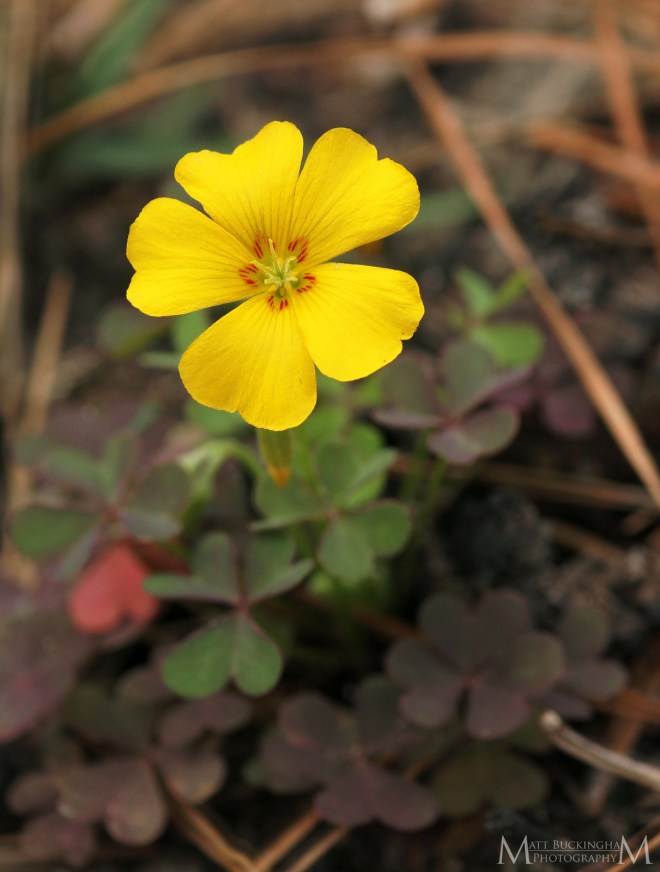
Texas Trailing Phlox is only a small part of these interesting communities.  We observed many other natural wonders during our afternoon in the Big Thicket, including Texas Woodsorrel (Oxalis texana) which occurs in sandy woodlands primarily in Texas, Louisiana, and Arkansas, with a rare, disjunct populations in Alabama and Florida.  The bright yellow flowers of Oxalis texana are very large compared to other woodsorrels, and are decorated with red lines near the center of the corolla.

img_6206

Texas Woodsorrel

img_6209

Texas Woodsorrel

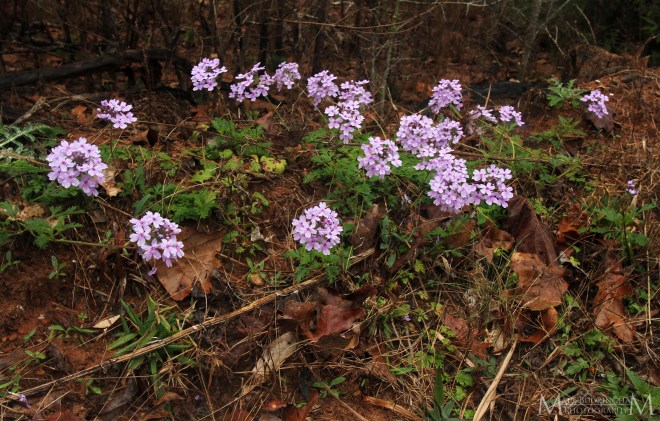
A habit I am trying to break myself of is my tendency to pass over the most common botanical subjects.  Take Rose Mock Vervain (Glandularia canadensis) for example.  In the spring it is one of the most abundant wildflowers along forest roadways in East Texas.  I suppose that for this reason I take it for granted and never really took the opportunity to photograph it.  However this day I could not ignore the many clumps scattered about recently burned patches within the longleaf pine savannahs.  Here they literally seems to be rising from the ashes.

IMG_6236.jpg

Rose Mock Vervain

While exploring an open spot within the forest that I thought might harbor some interesting flora, I heard my wife excitedly call out for me to come to her, quick.  As usual her keen eyes found an incredible sight.  A mating pair of Pipevine Swallowtails (Battus philenor) in one of the patches of Glandularia.  Rightfully thinking that this find would be hard to top, we decided to call it a day and continue our trip south to spend some time with family.  Yet I must confess, that as soon as the longleaf pines disappeared in my rearview mirror, I was already contemplating the next species on my list.

img_6267

Copulating Pipevine Swallowtails

Beauty in the Barrens

Target Species: Texas Saxifrage (Micranthes texana)

img_5861

Texas Saxifrage

Some reading this may wonder why I chose to include this tiny, not particularly showy flower on my 2017 species list.  I have always been fascinated with rare, unique ecological communities and the flora and fauna that reside in them.  The Texas Saxifrage grows in some particularly unique communities.  It tends to prefer places with harsh soil conditions that create an environment where most plants would struggle to survive.  By utilizing these habitats it helps avoid competition from other plant species that would try to monopolize its resources.  In the Pineywoods of East Texas it has been recorded in two particularly interesting communities: Catahoula Barrens and Weches Glades.

img_5901

Texas Saxifrage

I set out to find this species alone.  And while I missed Carolina’s company, I treasure alone time in nature.  It is far and away the best way for me to clear my head and put things in perspective.  On a warm, mostly sunny February day I set out to an extensive Catahoula Barren less than an hour from home.  Catahoula Barrens were probably never abundant on the landscape.  They occur on coarse, shallow soils over the Catahoula formation.  These soils are acidic, and often high in aluminum content.  Taken together these conditions are not favorable for tree growth.  That is not to say, however, that trees do not occur here.  Widely scattered Longleaf Pines, and Bluejack and Blackjack Oaks can be found as stunted, gnarled versions of their counterparts elsewhere.  An old growth Longleaf Pine here, for example, may be little more than 10 inches across and thirty feet tall.

img_3613

Typical Catahoula Barren.  I captured this image in July, 2016.

Catahoula Barrens are home to a rich, diverse flora that is not observed anywhere else in East Texas.  Many of these species are globally rare, and others are rare in the state.  Typical species include Nuttall’s Rayless Goldenrod (Bigelowia nuttallii), Yellow Hedge-Hyssop (Gratiola flava), Least Daisy (Chaetopappa asteroids), San Saba Pinweed (Lechea san-sabeana), Maryland Milkwort (Polygala mariana), Smooth Phacelia (Phacelia glabra), Barbara’s Buttons (Marshallia caespitosa), Sunbright (Phemeranthus parviflorus) and Blazing Star (Liatris mucronata).  Rare species found here include Texas Sunnybells (Schoenolirion wrightii), Navasota Fox Glove (Agalinis navasotensis), Gulf Blazing Star (Liatris tenuis), and Texas Saxifrage.

img_5765

Texas Saxifrage

I had visited this Catahoula Boulder many times in the past, but never so early in the year.  I worried that these miniscule plants would be elusive, however it didn’t take me long to find them among the dried grasses and fallen oak leaves.  Though tiny, I find the flowers of Micranthes texana to be quite beautiful.  Their tiny size, however makes photographing them a real challenge.  The slightest breeze makes focusing on the anthers, a standard practice of wildflower photography, almost impossible.

img_5932

Texas Saxifrage

After spending some time with this remarkable plant, I set out to see what else might be blooming in the barrens.  As one might expect so early in the year, blooms were sparse, however I was able to locate a few other wildflowers in the area.  I observed several Carolina Anemone (Anemone caroliniana) blooms on the barren’s margins.

img_5969

Carolina Anemone

Yellow Hedge-Hyssop is endemic to eastern Texas and extreme western Louisiana.  This tiny plant is scarcely 3 inches tall, and if it weren’t for its propensity to grow on exposed Catahoula boulders, it would be all but invisible.

img_6001

Yellow Hedge-Hyssop

After spending the afternoon in the barren I ventured over to the adjacent longleaf pine savannah.  Here I sat and watched a colony of Texas Leafcutter Ants (Atta texana) busily tending to their maze of subterranean tunnels and chambers, and harvesting bits of leaves by the thousands.  They do not actually consume the leaves, but rather store them in an underground chamber to cultivate a fungus that will feed the colony.  I have always been fascinated with these invertebrates, and usually try my luck at photographing them every year.  It is a challenge, but the results can be extremely rewarding.

img_6042

Texas Leafcutter Ant

With another 2017 target under my belt, I left the woods to return to civilization, if only to plan and ponder my next opportunity to escape it.


Fun in the Sun

Target Species: Woolly Sunbonnets (Chaptalia tomentosa)

img_5379

Woolly Sunbonnets in a Wetland Pine Savannah

Spring came early this year, with many wildflowers blooming as much as three weeks earlier than in an average year.  It has made planning botanical outings to find species on my 2017 target list a challenge.  Fortunately I had some help with Chaptalia tomentosa, the first species that I would check off the list.  Someone on a Facebook group I moderate (Texas Flora) posted an image of one looking for help identifying it.

chaptalia-tomentosa

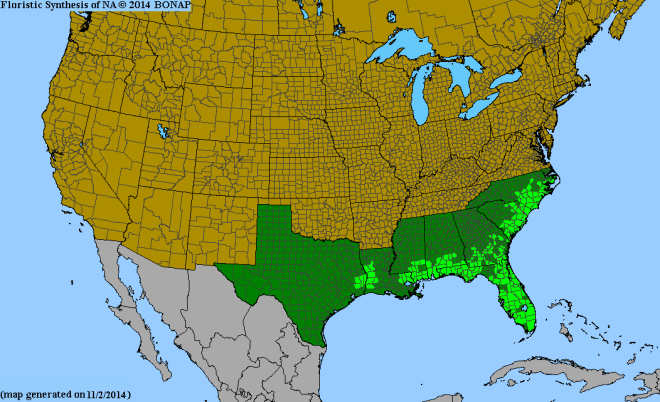
County Level Distribution of Chaptalia tomentosa from http://www.bonap.org

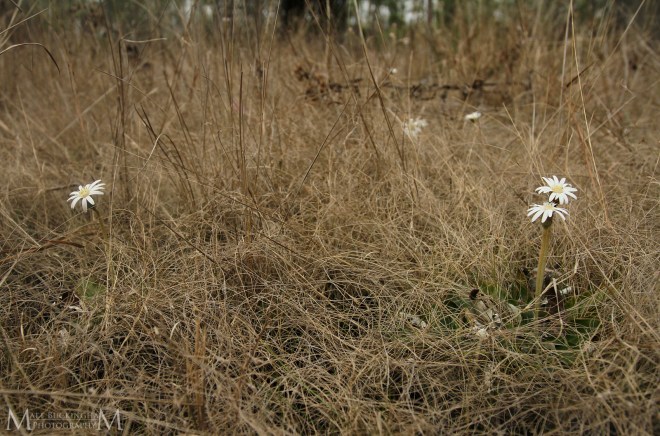
Woolly sunbonnets is a species of the coastal plain, ranging from North Carolina to extreme eastern Texas.  It occurs in herbaceous seeps and wetland savannahs where highly acidic soil remains perpetually saturated.  These communities are typically associated with longleaf pine uplands.  In East Texas longleaf pine typically occurs on sands of moderate depth.  Rainfall quickly percolates through the coarse sand, however if, on its journey through the soil, it encounters a dense clay layer, it will sit or gently flow, as clays are much more difficult to pass through.  Where these clay layers meet the surface, the water may pool or seep out forming a unique vegetative community.  The movement of water through these areas leaches essential nutrients and organic material tends to accumulate over time.  These harsh, damp habitats are home to interesting species including a variety of carnivorous plants and orchids.

img_5360

Woolly Sunbonnet

I have spent considerable time exploring wetland pine savannahs and forested seeps in East Texas, but never in the early spring.  Spurred by the image posted on Facebook my wife, Carolina, and I visited some locations of specimen records and other areas that I knew had suitable habitat.  I am lucky to have such a great adventuring companion.  Carolina not only makes for great company, she also has excellent eyes and spots my targets more frequently than I do.

img_5282

Woolly Sunbonnets

Also known as the Pineland Daisy, Chaptalia tomentosa is a member of the sunflower family (Asteraceae).  The white blooms open midday under warm, bright conditions.  This is an adaptation shared by many plants in order to maximize exposure to potential pollinators.  At night and on cool days when most pollinators are not active, the flowers close in order to protect the pollen and the plants’ sexual structures.  We were lucky to find many open flowers on our outing, and mostly cloudy skies made for ideal photographic conditions.

img_5576

Woolly Sunbonnets

Chaptalia tomentosa was not the only species active in the bog.  Fresh spring pitchers of the Pale Pitcher Plant (Sarracenia alata) were beginning to emerge and the unmistakable red rosettes of sundews (Drosera spp.) covered the ground.  One particularly quirky plant, the Small Butterwort (Pinguicula pumila) was blooming alongside the sunbonnets.  This tiny carnivorous plant has concave leaves lined with hairs coated in sticky enzymes.  When an unsuspecting ant or other small invertebrate comes into contact with the enzymes they find themselves stuck as the leaf envelopes them like a hot dog bun.

img_5551

Small Butterwort

White Bog Violets (Viola lanceolata) were also blooming.  This attractive little flowers are common in areas with saturated soil.

img_5472

White Bog Violet

While walking through one of the wetland pine savannahs Carolina called out that she had spotted a frog.  Sure enough, at least 50 feet away was a Green Tree Frog (Hyla cinerea).  Resting on the bleak winter vegetation, it stuck out like a sore thumb.

img_5499

Green Tree Frog

After an eventful day photographing vernal bog flora Carolina and I ventured to the adjacent longleaf pine uplands to enjoy the sun’s final rays and the day’s retreat into night.  There is something about a high quality longleaf pine forest and its associated seepage communities that provide me with a feeling of wonder and excitement that is sought after yet elusive for so many.  As the light faded away we returned home, content in a day spent in some of our state’s most biodiverse habitats.

img_5612

Longleaf Pine Savannah


Slow and Steady

The first month of 2017 has passed by and I have yet to cross any species off my list.  Most of the species I put on the list are seasonal, so I spent January focusing on the few resident species that I included, namely the North American River Otter (Lontra canadensis).

Recently my good friend James Childress found a population close to home.  My wife Carolina and i began visiting the site on the weekends, sometimes 2-3 times per day to no avail.  However the waterway and adjacent wetlands and pine-oak uplands are rich with wildlife, and I found many photographic subjects in the otters’ absence

img_2868

Wood Duck Drake

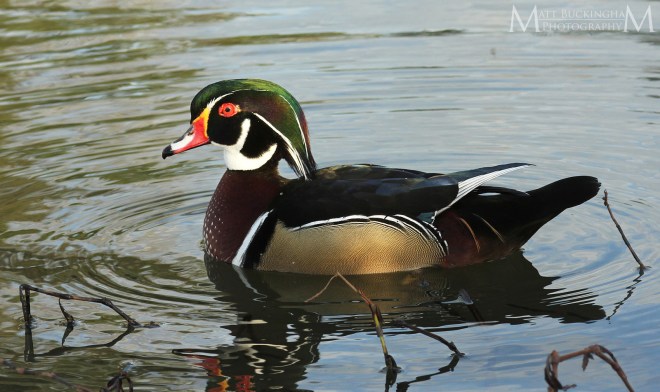
.One group that is noticeably missing from my list are birds.  I didn’t include them because though I love bird photography, it is a difficult endeavor, and results are often unpredictable.  If I were to have made a list, however, I would have incorporated the Wood Duck (Aix sponsa).  These denizens of creeks, backwater sloughs, flooded oxbows, and ephemeral ponds can be abundant in parts of The Pineywoods.  Unfortunately they are wary and secretive, and typically all I have to show from encountering one is a memory of splashing, their whistle like vocalization as they retreat, and if I’m lucky a distant glimpse of them flying through the trees.  While pursuing the otters, however, I found a less wary subject and with a bit of patience and luck I was able to finally capture some images of what many consider to be North America’s most beautiful duck.

img_2925

Wood Duck Drake

img_2919a

Wood Duck Drake

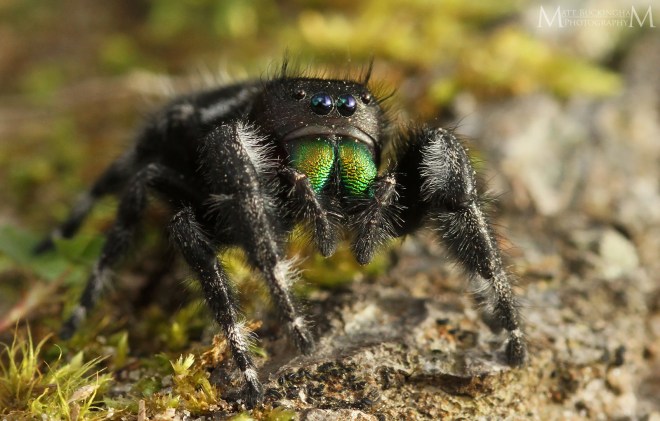
One afternoon, as I was trekking with my photographic gear to a spot where we expected the otters might show themselves, I heard my wife call out frantically.  Not in fear, but rather a sense of urgency that I might miss the treasure she had stumbled upon.  She had found a large Regal Jumping Spider (Phidippus regius).  I had tried numerous times to photographic this species, but found them too wary and difficult to approach.  But on this warm January day I found a bold, curious specimen that made for a perfect photographic subject.

img_4151

Regal Jumping Spider

img_4078

Regal Jumping Spider

I have been photographing the Pineywoods of East Texas for many years now.  While this species list project is a way to add a little spice to my photographic pursuits, I still love wandering the woods with a camera in hand, and no particular goal in mind.  On New Year’s Day Carolina and I went to one of our favorite spots.  We wandered the longleaf pine forest, admiring the fungi taking advantage of the moisture and humidity that remained after some recent rains.  As is typical in our forest wanderings, Carolina had the best find of the day – A pair of Indian Pipes (Monotropa uniflora) pushing skyward from the dense carpet of longleaf pine needles.  I was surprised to see it blooming so late in the season.  The habitat also seemed unusual to me, as I was accustomed to seeing it in the rich loams of moist slopes and stream bottoms.  Pleased with the days observations, we sat among the longleaf pines as the day faded, and contemplated the adventures to come.

img_2478

The Fly Agaric (Amanita muscaria) is showy, highly toxic mushroom that appears in pine-dominated forests following late fall and winter rains.

img_2513

Ravenel’s Stinkhorn (Phallus ravenelii)

img_2495

Unlike most plants, which obtain energy through photosynthesis, Indian Pipe is a mycoheterotroph.  It obtains its energy and nutrients from the mycorrhizal fungi of tree roots.  I have read that it is named for an old Cherokee legend that states that these plants grow where old chiefs are buried so they may have something to smoke in the afterlife.

img_2529

Longleaf Pine Savannah

img_2516

An old, gnarled post oak growing among longleaf pines in an upland savannah.

img_3675

Merlin

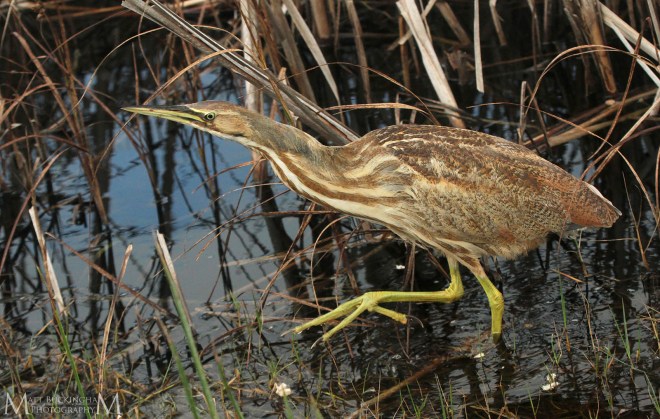
Opting for a change of scenery, we decided to take  our pursuit of the North American River Otter to the coast.  I used to see them regularly in the wetlands around Anahuac National Wildlife Refuge when I worked there, and had heard of some recent sightings.  Hoping that we might get lucky Carolina, my mom and I spent a day exploring the Upper Texas Coast.  Though our mammalian quarry eluded us, we did see a number of birds including a variety of wintering waterfowl and wading birds.  The highlight of the day was toss up between a cooperative male Merlin ((Falco columbarius) that perched on a rustic fence post in perfect light, and an American Bittern (Botaurus lentiginosus) that foraged in a ditch next to the road.  Relying on its camouflage it allowed us to approach to within feet of it, as it slowly stalked the reeds.

img_3860ab

American Bittern

img_2985z

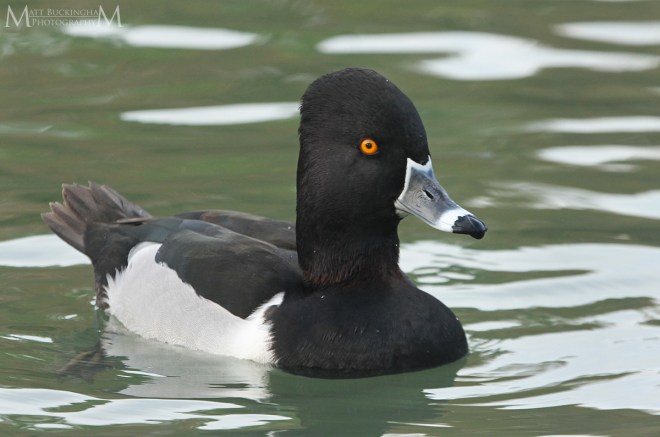
Ringneck Duck (Aythya collaris)

img_4201

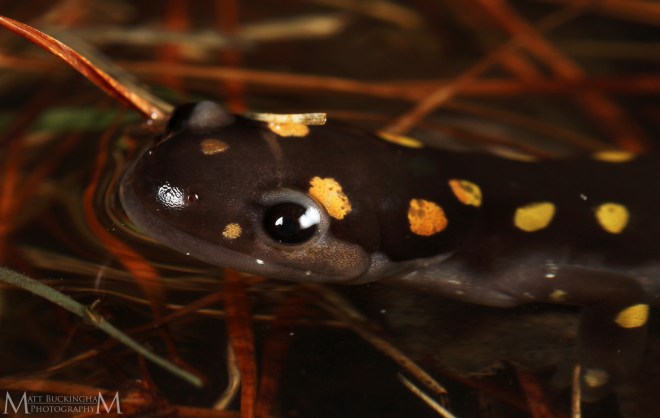
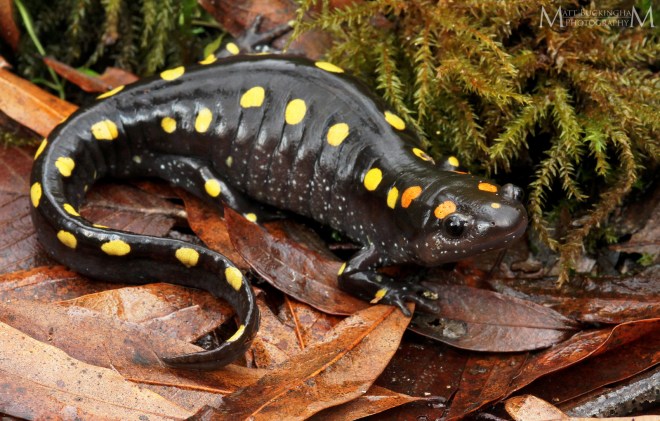
Spotted Salamanders en route to a vernal pool.

Back in the Pineywoods I checked the weather daily, awaiting the conditions that would bring about one of nature’s great events – the Spotted Salamander migration.  Among the world’s most spectacular amphibians, the Spotted Salamander (Ambystoma maculatum) makes its home in the forests of the eastern United States.  Spotted Salamanders spend the majority of the year underground, hidden from the world in small burrows that have been excavated by rodents or other species.  In response to warm rains in later winter/early spring they emerge en masse and migrate to their breeding ponds, where they form large breeding congresses in order to propagate the next generation.  Finally we had a night with the perfect conditions and Carolina and I visited some breeding sites with our friends James and Erin Childress, where we observed hundreds of Spotted Salamanders and a handful of Mole Salamanders (Ambystoma talpoideum) swimming about the vernal pools.

img_3917

A Spotted Salamander male awaits the females’ arrival to his breeding pool.

img_4270a

A gravid female Spotted Salamander

img_3977

A gravid female Mole Salamander

img_4245

A false bottomland in the East Texas Pineywoods.  False bottomlands are unique communities that occur in clay-bottomed dpressions located within upland communities.  They typically flood during the winter and spring, and become dry during the summer.  Though not associated with waterways, the community is somewhat similar to bottomland hardwood forests.  Dominant species include willow oak, overcup oak, and mayhaw.  The ephemeral nature of flooding in these communities makes for excellent amphibian habitat.

img_4232

An unidentified fungus growing on a fallen tree.

The salamanders were a nice distraction, but it was soon time to return to my pursuit of the river otter.  For Christmas my wife got a remote game camera.  Following the news that James had seen otters, she began setting the camera in areas where we observed ample otter sign.  For a couple weeks she came up empty handed.  One day, while en route to set up the cameras I caught a glimpse of something moving across the leaf litter.  It turned out to be a Red-bellied Snake (Storeria occupitomaculata), a small snake of the eastern U.S. that reaches the southwestern extent of its range in East Texas.  Though common throughout most of its range, the Red-bellied Snake is quite rare in Texas, and I took our encounter to be a good sign for things to come.

img_4471

Florida Red-bellied Snake (Storeria occipitomaculata obscura)

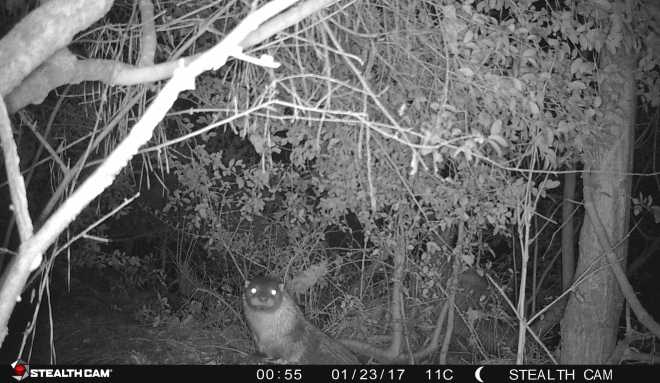
Carolina chose a place to set the camera adjacent to some logs that were covered in otter scat and hoped for the best.  Sure enough, the next time we checked the camera’s accumulated images, among the hundreds of photos of branches blowing in the wind, songbirds, and rats, we caught sight of our objective – a North American River Otter.

stc_0127

With renewed energy I will continue to pursue the aquatic mammal in hopes of capturing its photograph, because slow and steady wins the race.